Why Foundation Problems Often Get Worse After Winter: What Canadian Homeowners Should Check in Spring
By Collaboration
Updated on August 11, 2026
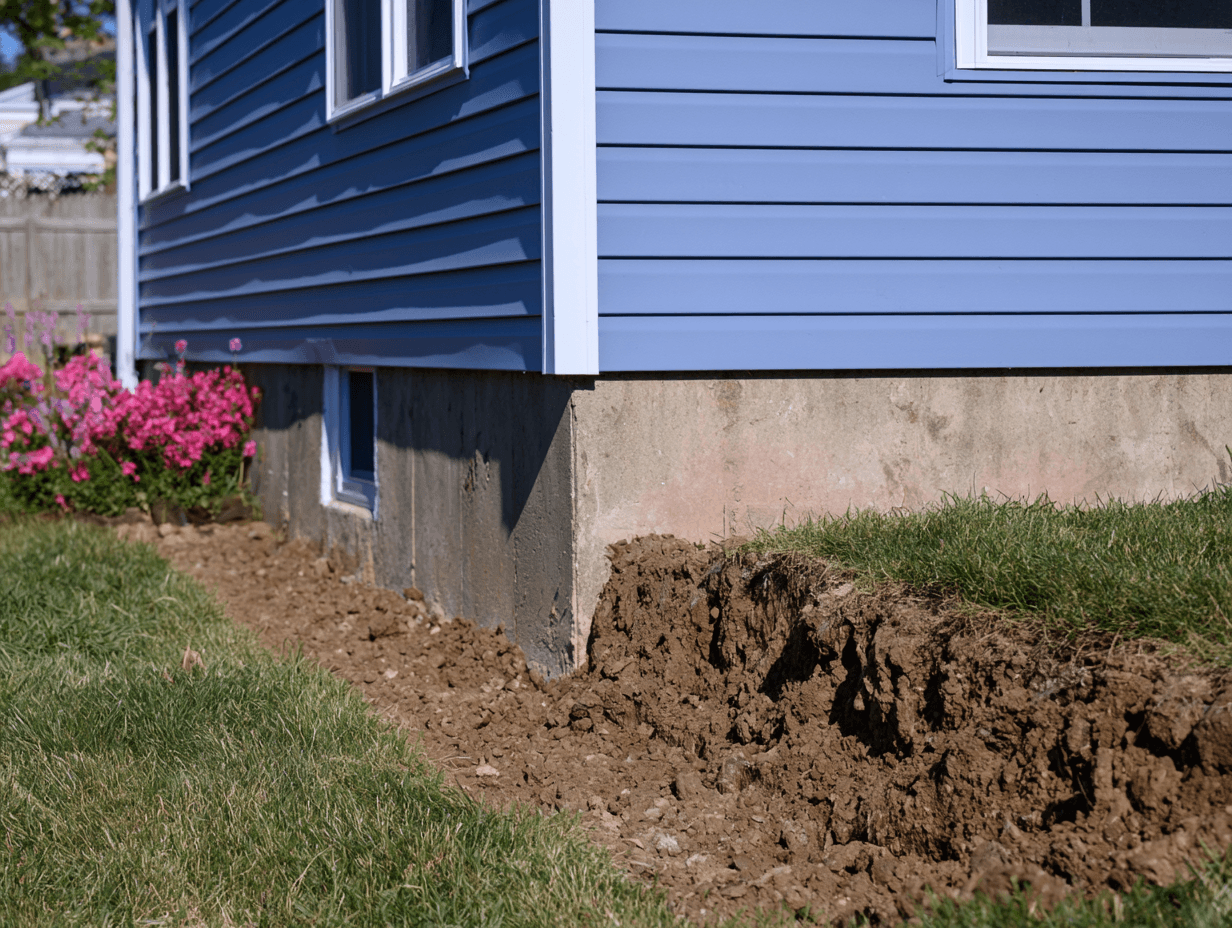
Canadian winters can be tough on a home, and the foundation is no exception. Months of freezing temperatures, heavy snow, fluctuating weather, and frozen ground can put considerable stress on concrete and the soil surrounding a house.
The effects are not always obvious in the middle of winter. In many cases, homeowners first notice something is wrong when temperatures rise, and the snow begins to disappear. Spring is therefore an important time to walk around the property, inspect the basement, and look for changes that may have developed over the colder months.
Understanding what winter can do to a foundation can help homeowners identify potential problems before another season makes them worse.
Why Winter Can Be Hard on Foundations
Source : RenoQuotes
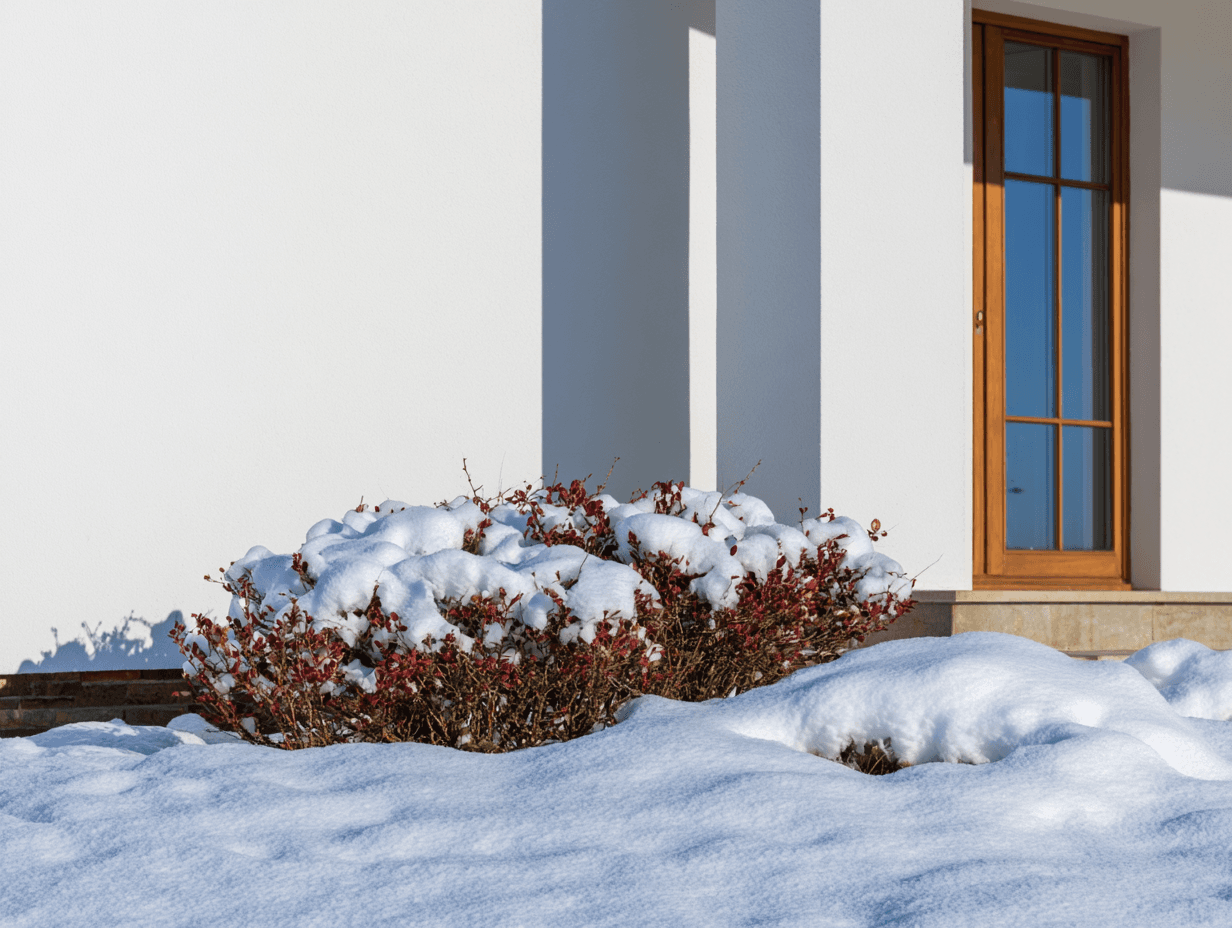
A foundation has to deal with both the temperature outside and changes taking place underground. When moisture in the soil freezes, it expands. Depending on soil conditions, this can increase pressure around foundation walls and contribute to ground movement.
The problem becomes more complicated when temperatures repeatedly move above and below freezing. Water can enter small openings, freeze, expand, thaw, and repeat the process throughout the season.
Not every crack or change means that a foundation has suffered serious damage. However, seasonal movement can aggravate existing weak points, which is why comparing the condition of a home from one season to another can be useful.
Check for New or Widening Foundation Cracks
One of the first things homeowners should inspect in spring is the visible concrete around the exterior of the house.
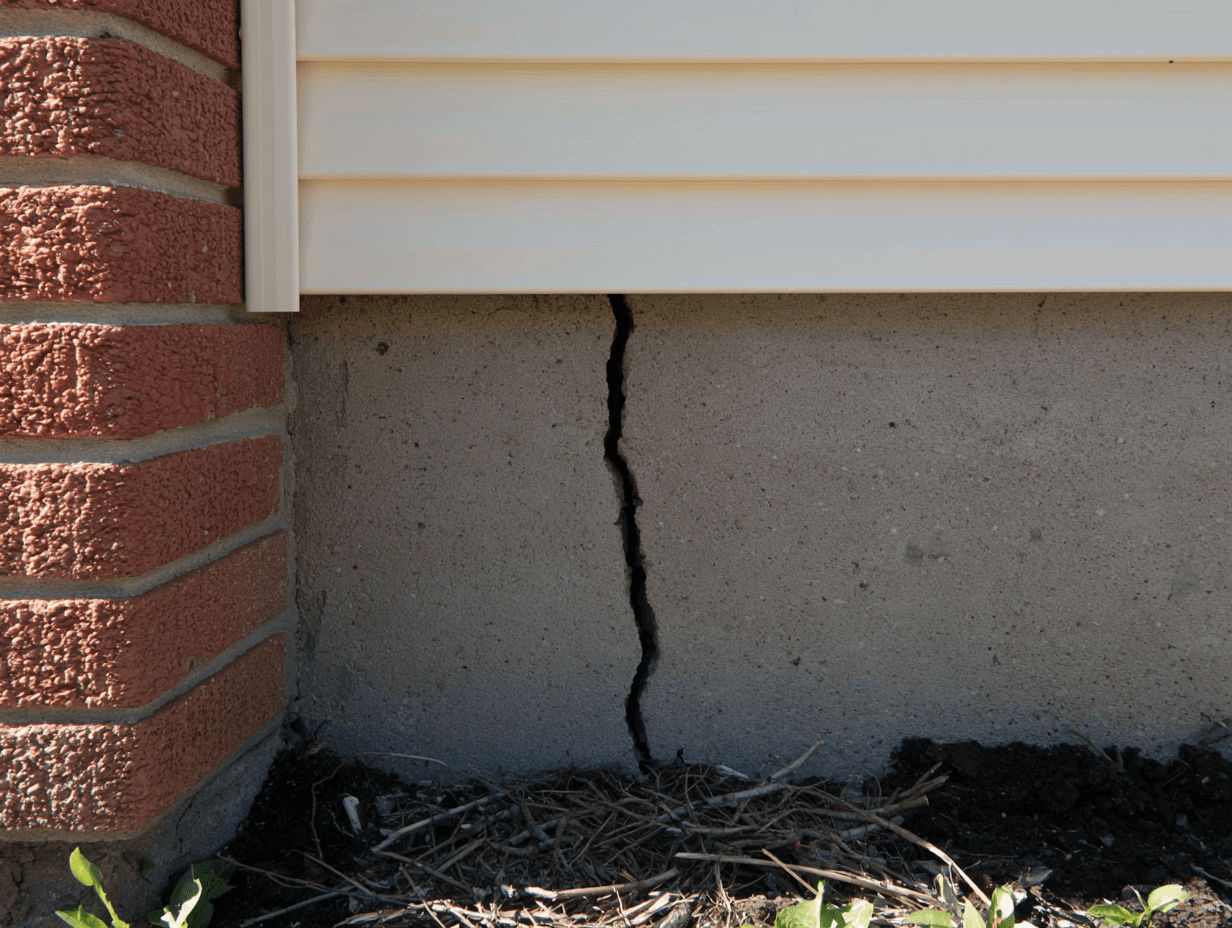
Look for cracks that were not there before winter or existing cracks that appear to have become longer or wider. Pay attention to their location and direction as well.
Small cracks can occur naturally as concrete cures and a building settles. Changes over time are generally more important than simply finding a crack.
Taking dated photographs can make monitoring easier. If the opening continues to change or appears alongside other signs of movement, getting it professionally assessed may be worthwhile.
Look for Water After the Snow Melts
Spring snowmelt creates another test for a home’s foundation.
A large amount of snow can release significant moisture over a relatively short period. If that water collects beside the house instead of moving away, it can saturate the surrounding soil and increase water pressure against foundation walls.
Inside the basement, homeowners should watch for damp areas, water stains, peeling finishes, musty odours, or visible water near the floor or walls.
Even a small amount of moisture deserves attention if it repeatedly appears in the same place. Finding out how the water is entering is more useful than repeatedly drying the affected area without addressing the source.
Inspect the Ground Around the House
The condition of the soil surrounding a foundation can change considerably after winter.
Once the snow is gone, walk around the home and check whether the ground still slopes away from the foundation. Low spots can allow rainwater and melting snow to collect next to the house.
Also look for areas where the soil has settled, washed away, or pulled away from the foundation.
These changes do not necessarily indicate structural damage, but they can affect how water behaves around the property. Correcting obvious surface water problems can reduce unnecessary moisture near the foundation.
Check Gutters and Downspouts
Not every foundation moisture problem starts below ground.
Gutters and downspouts play an important role in moving roof runoff away from the house. Ice, snow, leaves, and debris can interfere with that system over winter.
In spring, check that gutters are clear and that downspouts are directing water away from the foundation rather than releasing it immediately beside the wall.
During the next rainfall, it can also be useful to watch how water moves around the property. Overflowing gutters, disconnected downspouts, and pooling water can sometimes reveal problems that are difficult to notice on a dry day.
Watch for Changes Inside the Home
Foundation-related movement may sometimes show up elsewhere in the building.
Doors that suddenly rub against their frames, windows that become difficult to operate, or new cracks around doorways and windows can be worth monitoring. Homeowners may also notice changes in floors or gaps developing between certain interior finishes.
These symptoms can have many causes, including ordinary seasonal changes, so they should not automatically be treated as evidence of foundation failure.
The important question is whether several changes appeared around the same time or continue getting worse.
Examine Basement Walls for Moisture Clues
A basement can provide useful clues about what is happening outside.
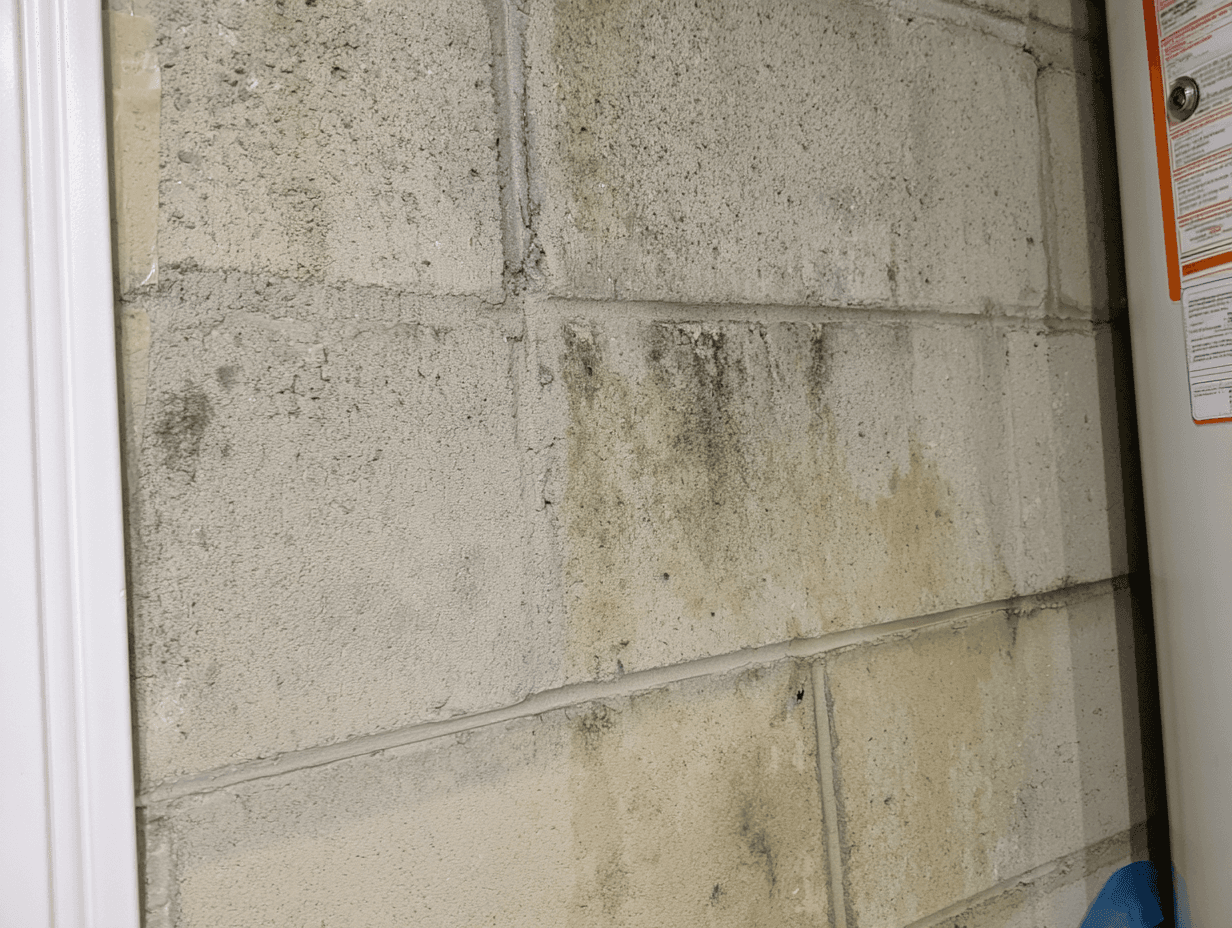
Check unfinished foundation walls for damp patches, staining, deterioration, or white powdery deposits. The latter is commonly known as efflorescence and can appear when moisture travels through masonry or concrete and leaves mineral deposits behind.
Efflorescence itself is not the same thing as structural damage, but recurring deposits can indicate ongoing moisture movement.
Finished basements require a little more attention because the concrete may not be visible. Watch for swollen baseboards, damaged drywall, unusual staining, or persistent damp smells.
Don’t Ignore Problems That Return Every Spring
Source : RenoQuotes
A basement that becomes damp during spring year after year is telling the homeowner something.
Temporary measures may deal with the immediate inconvenience, but recurring water entry can indicate a problem with drainage, grading, cracks, waterproofing, or another part of the system surrounding the foundation. This is where identifying the actual cause becomes important. Canadian foundation repair specialists can assess cracks, moisture entry, and signs of movement to help determine whether repairs are necessary and what type of solution is appropriate.
The goal should be to address the source of the problem rather than simply covering up its visible symptoms.
Keep Records of Changes
Homeowners do not have to rely entirely on memory when monitoring their foundations.
Take photographs of noticeable cracks and record the date. Photograph the same areas again after several months or following the next winter. Measurements can also help determine whether an opening is actually changing.
The same approach works for recurring moisture. Keeping track of when water appears, where it enters, and what the weather was like beforehand can provide useful information when the problem is eventually assessed.
Spring Is a Good Time for a Foundation Check
Source : RenoQuotes
Winter foundation problems do not always announce themselves dramatically. Sometimes the first indication is a slightly wider crack, a damp basement corner, disturbed soil, or a door that no longer closes quite the way it used to.
That is why a simple spring inspection can be worthwhile for Canadian homeowners.
Once the snow has disappeared, check the exterior foundation, grading, gutters, downspouts, basement walls, and any existing cracks. Most importantly, pay attention to changes rather than assuming every imperfection is a major structural problem.
Catching a developing issue early provides more time to understand its cause and decide on the appropriate response before another Canadian winter arrives
Looking for something else?
Related articles
The latest industry news, interviews, technologies, and resources.

Amanda Harvey
•08 Nov 2023
We often discuss decor and design on the blog, but we usually focus on the home front. This allows our readers to find inspiration to help create the perfect layout for their interiors and exteriors. But what about those looking for ideas for their business?
Cynthia Pigeon
•18 Sep 2026
In 2026, a mould test in Quebec can cost $40 to $100 for a home testing kit, $250 to $450 for a basic professional inspection, and approximately $500 to $700 for a comprehensive assessment that includes multiple samples and, depending on the service selected, thermal imaging.

Editorial Team
•08 Nov 2023
Want to build a home theatre to watch your favourite movies all snuggled up during winter? To make this project—which will really please the cinephiles under your roof—a reality, you’ll need a fair amount of inspiration!

Editorial Team
•29 Jan 2025
Making dinner consists of twists, turns, dips and bends, and as a result, designers, architects and homeowners alike are beginning to pay attention to the ergonomics of the kitchen. The science of ergonomics leads to the encouragement of productivity, efficiency as well as control. Using a combination of appliances and fixtures with ergonomic design alongside proper room layout and planning, cooking and working in your kitchen can become comfortable.

Amanda Harvey
•08 Nov 2023
Regardless if you’re a renovation novice or an expert, a contractor even, the world of building permit requests is tricky to navigate. Of course, if you’ve taken on a renovation project or two, then you’re most likely aware of everything that's of importance, like applying for permits in the first place. In 1976, Ontario established the Building Code Act, to regulate and increase renovation quality control while offering homeowners protection. Therefore, if you’re renovating a structure in the City of Ottawa, you have to determine whether or not a work permit is required.