Hardwood Floor Refinishing vs. Replacing: The 2025 Cost-Benefit Analysis
By Léa Plourde-Archer
Updated on September 23, 2026
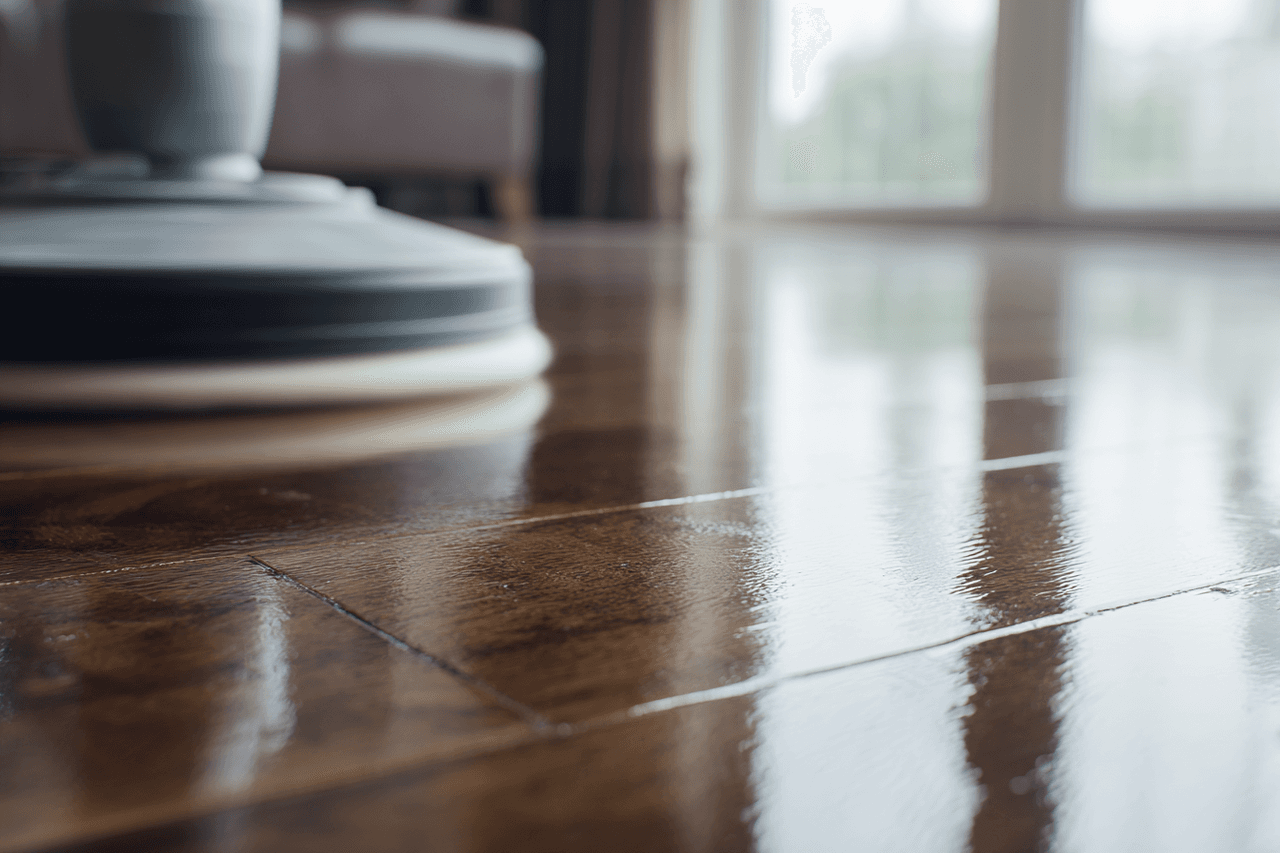
One of the great advantages of wood flooring is its durability. That being said, signs of wear and tear are inevitable, especially in high-traffic areas of the home. When a wood floor shows significant signs of deterioration, you must choose between repairing or replacing it.
To help you determine the necessary work to restore your floor to good condition, here are the questions we will answer in this article:
What are the signs that you need to repair or replace your wood floor?
How do you know if you can repair the floor or if you will need to replace it?
How do you compare the costs of replacing and repairing a floor?
Damaged floor: repair or replace?
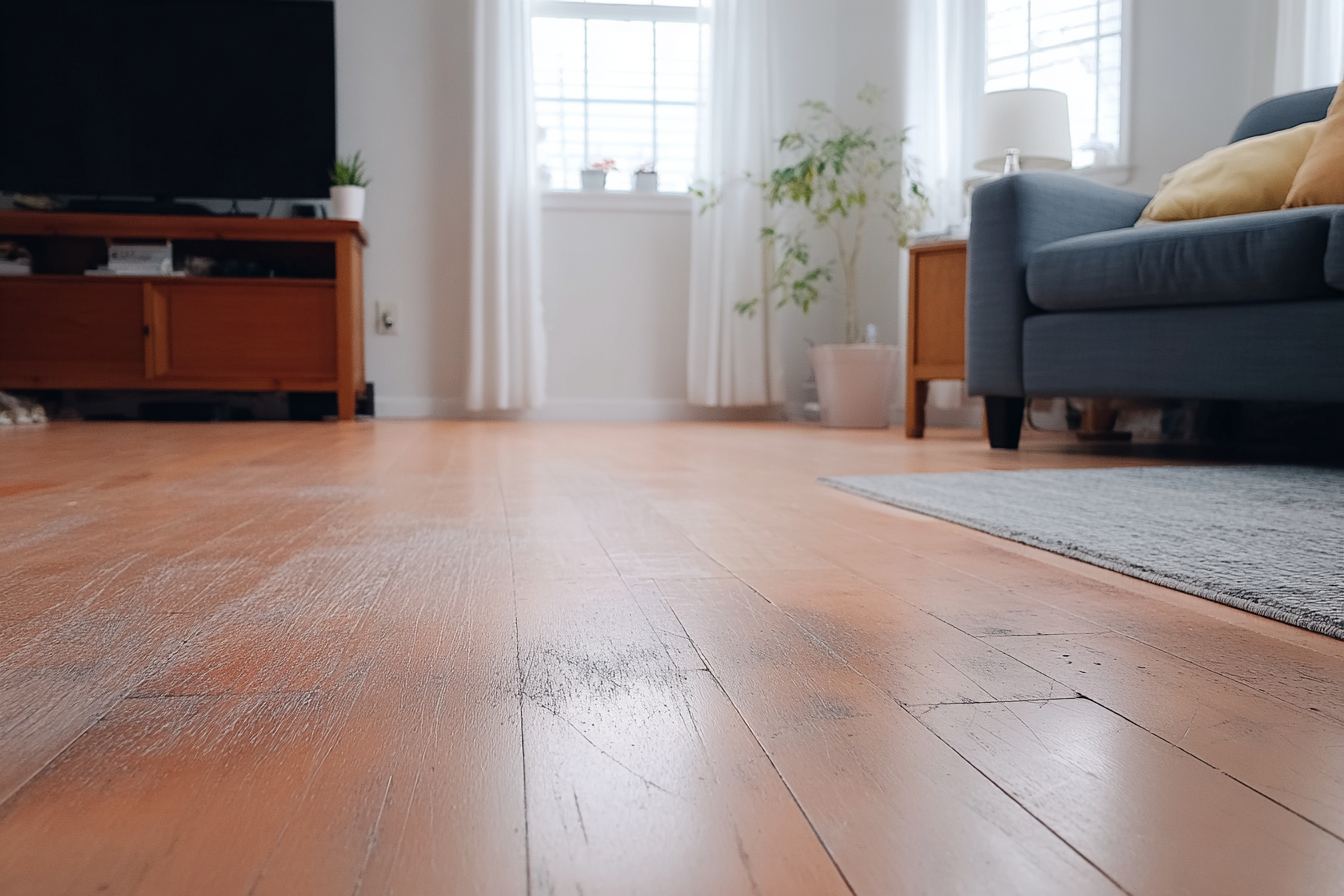
Source : RenoQuotes
First and foremost, you need to assess the condition of your floor. To do this, you must consider various factors, including the type of flooring and the material it's made of. In the following paragraphs, we will discuss the three main types of wood flooring:
Solid Hardwood Flooring
We begin with the most durable type of wood flooring: hardwood flooring. If properly installed and maintained, it can last for decades. When damage is not too severe, a few repairs will be enough to restore its original appearance.
Signs of Wear on a Hardwood Floor
To diagnose the condition of your hardwood floor, here are the signs to look for:
Minor (can be repaired)
Scratches;
Cracked or missing varnish in certain sections;
Change in varnish color and sheen (faded, darkened, yellowed, or orange);
Slight expansion between the wood planks;
Wood planks that lift very slightly;
Planks that make noise or move when walked on (creaking).
Major (replacement needed)
Black stains that are spreading (could indicate a mould problem);
Wood planks that are warping and lifting;
Deep cracks between the wood planks;
Sagging floor, unstable floor areas (likely a structural problem);
Unpleasant odor
Techniques for Repairing a Hardwood Floor
When the signs of wear on a solid hardwood floor are relatively minor, a few aesthetic repairs are usually enough to restore everything to good condition.
Some minor repairs can be done yourself if you have the necessary manual skills and patience. However, as soon as the integrity of the floor (surface, structure, durability) is compromised, it's best to call in the experts.
Here are the typical tasks involved in minor repairs to a hardwood floor:
Sanding the floor: Sanding hardwood floors - What are the techniques?
Stripping: How to strip a hardwood floor
Staining: How to flawlessly stain hardwood floors
Varnishing: Choosing a varnish for your wood floor
Deep cleaning: Hardwood floor maintenance techniques
Replacing a hardwood floor: when is it preferable?
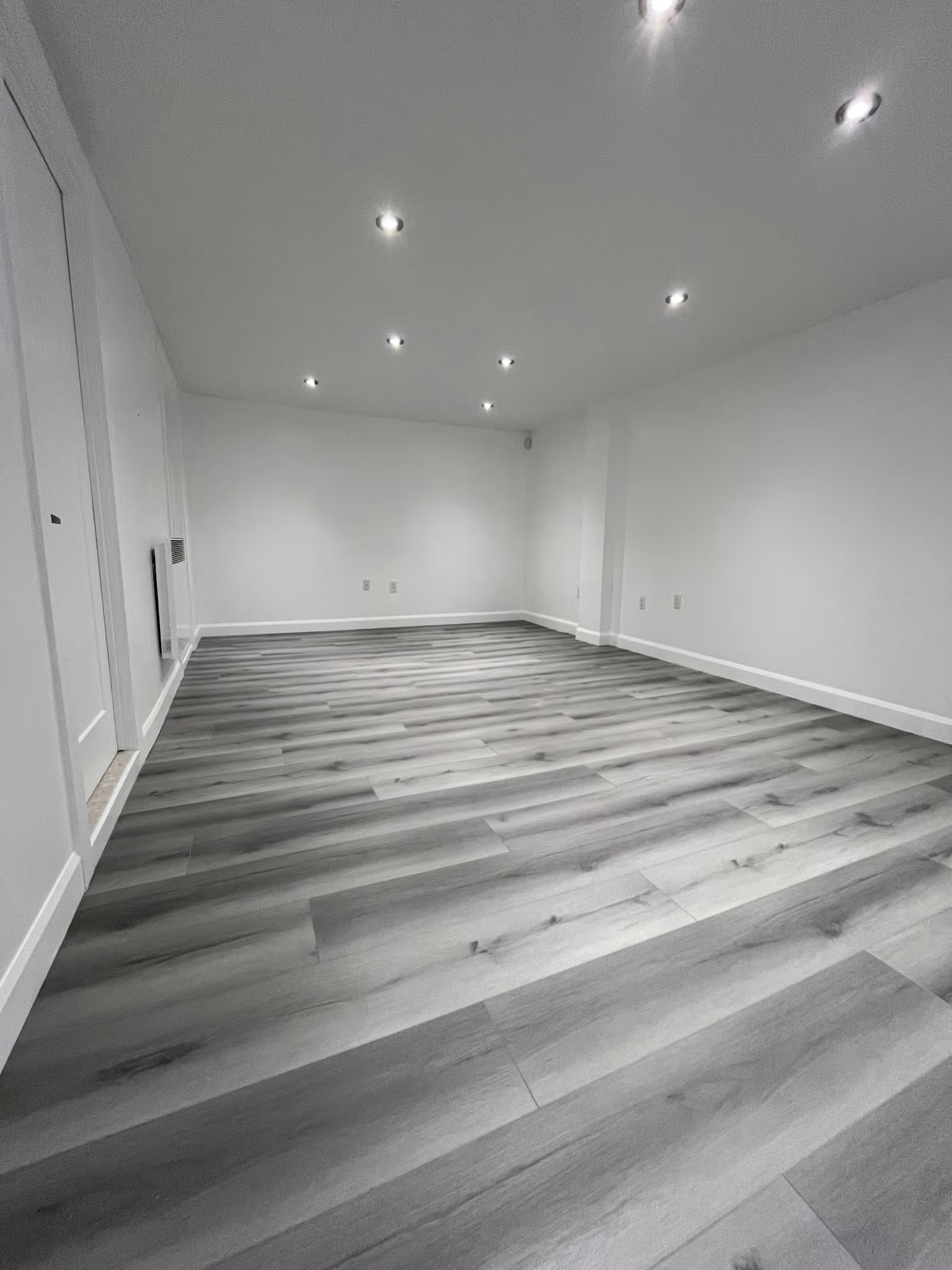
Source : Melianco inc.
If you've checked even one of the major signs of wear on your hardwood floor, there's a good chance you'll need to replace it. This is especially true if the floor's condition is due to structural issues or a health problem (mould).
To get a clearer picture, seek the advice of a flooring renovation expert. For added peace of mind, you can even have several specialists come and assess the situation, allowing you to compare their impressions and diagnoses.
Our other articles on hardwood flooring:
Engineered wood flooring
The difference between hardwood and engineered wood is that the latter is produced through a manufacturing process where a real wood veneer is bonded to a substrate layer (plywood, HDF, or oriented strand board). The wear layer (surface layer) on hardwood flooring is thicker and therefore more durable in the long term.
The advantages of engineered wood are as follows:
Can be installed in damp rooms (with the appropriate substrate).
Easy to maintain.
Can be installed directly on concrete.
Highly heat resistant.
Less prone to warping than wood.
Less prone to warping than laminate flooring.
Techniques for repairing engineered wood flooring
If the problem is on the surface, use a repair wax paste (available at home improvement and renovation stores). Apply the wax to the cracks following the instructions on the product.
For sanding, staining, and varnishing, it's best to consult a flooring specialist before attempting any repairs. Because the wood layer is thin on this type of flooring, you won't be able to sand the floor more than two or three times. Since there's no room for error, it's best to leave the job to a professional.
Replacing engineered wood flooring: when is it preferable?
As soon as basic repairs are no longer sufficient to restore the engineered wood floor to good condition, it's a sign that a complete floor replacement is necessary.
Some signs to watch for:
Deep cracks.
Sections of flooring that are starting to come loose.
Large stains on the surface.
Our articles on engineered wood flooring:
Floating Wood Flooring
The term “floating floor” doesn't refer to a type of wood, but rather to an installation method. It's an engineered wood, laminate floor that is installed without glue or nails, by interlocking the wood planks. Therefore, this floating flooring isn't fixed to the subfloor and can easily be removed, repaired, and replaced.
Signs of wear on a floating floor
Minor signs:
Surface scratches.
A single damaged plank.
Dirty buildup.
Major signs:
Floor lifting/buckling (often due to poor ventilation in the room or faulty installation).
Problems with the expansion joints between the planks.
Several planks are damaged.
Techniques for repairing a floating floor
If a deep cleaning isn't enough to restore the laminate floor to good condition, you will likely need to replace one or more floorboards.
Do you already have some spare planks? If so, follow the manufacturer's instructions to replace the damaged planks. Otherwise, contact a flooring expert who may be able to find the same model of planks and install them. Of course, the laminate flooring may no longer be available. In that case, you will need to replace the entire floor.
Replacing a floating floor: when is it preferable?
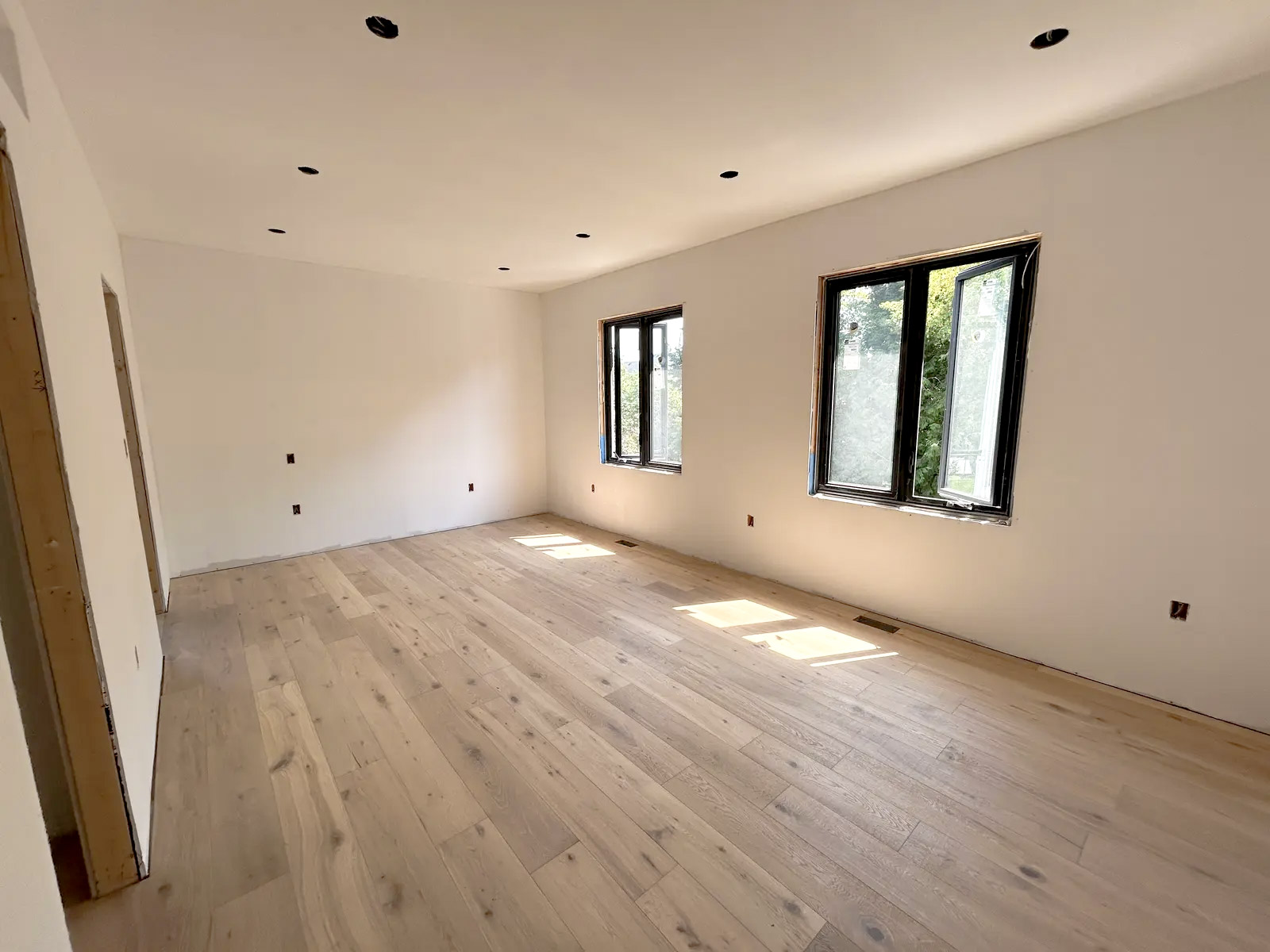
Source : V&W Floors and Stairs
As with the other types of flooring mentioned in this article, replacement is necessary if the damage is too extensive to be repaired.
Unsure of your ability to assess the situation? Contact a flooring expert to help you gain a clearer understanding.
Our articles on floating floor :
Choosing the right floating floor : Characteristics
Installing Floating Floor: How to Proceed
Repairing vs. Replacing a Wood Floor: Comparing Costs Per Square Foot
We understand that price is also a factor in your decision between repairing and replacing your wood flooring.
Here is a comparison chart showing the prices per square foot for repairing or replacing a hardwood floor:
Floor Type | Sanding/Varnishing (Price per Square Foot) - Done by a Professional | Complete Replacement (Price per Square Foot for Materials) | Complete Replacement (Labor) | Complete Replacement (Remove Old Flooring) | Complete Replacement (Replace Subfloor) | Complete Replacement (TOTAL) |
Hardwood Flooring | $1 to $7 per square foot | $2 to $19.50 per square foot | $2.50 to $7 per square foot | $2 to $5 per square foot | $0.50 to $6 per square foot | $7 to $37.50 per square foot |
Engineered Wood Flooring | $1 to $7 per square foot | $6 to $10 per square foot | $3 to $11 per square foot | $2 to $5 per square foot | From $0.50 to $6 per square foot | $11.50 to $32 per square foot |
Floating floor | $1 to $7 per square foot | $1.50 to $12 per square foot | $1 to $4 per square foot | $2 to $5 per square foot | $0.50 to $6 per square foot | $5 to $27 per square foot |
The prices in this table are approximate and subject to change, given current fluctuations in construction prices.
FAQ on wood flooring
How to clean a wood floor on a regular basis ?
At least once a week, mop the floor to prevent dirt buildup. Be careful not to use too much water on the floor surface. Use cleaning products
Mop the floor at least once a week to prevent dirt buildup. Be careful not to use too much water on the floor surface. Use mild cleaning products suitable for your type of flooring. Occasionally, you can also polish certain sections of the floor.
What types of flooring are suitable for a kitchen?
For the kitchen, you need a solid floor with a surface that resists water, food stains, and heavy foot traffic. The following materials should be considered for this room:
Hardwood.
Engineered wood.
Tile (ceramic, natural stone).
Vinyl.
Concrete.
Epoxy.
Which type of flooring has the longest lifespan?
The most durable floor coverings are those made of wood (hardwood or engineered), natural stone (granite, slate, marble), tile (ceramic or porcelain), and vinyl (high-end).
Looking for something else?
Related articles
The latest industry news, interviews, technologies, and resources.
Editorial Team
•22 Jan 2025
You can now reap the unique benefits of marble while leveraging the functional qualities of ceramic tiles. The all-new marble-look tiles are suited to all rooms in a home, spanning traditional and modern styles. Whether used throughout or subtly, design and colour are both striking, resulting in a definite eye-catching result that resonates with all.
Editorial Team
•05 Sep 2024
In most rooms, flooring is subject to a lot of wear and tear from constant foot traffic, shifting furniture, falling objects, etc., making it a key surface to consider when designing the floor plan of any room.
Editorial Team
•21 Aug 2024
It's impossible for a human being to detect asbestos or lead in plain sight, as neither can be seen or smelt by the human alone. However, both are incredibly dangerous for the health when ingested, and actions must be taken immediately if there is any suspicion of either material.

Editorial Team
•23 Feb 2026
A construction estimator is the person who turns an idea or a set of plans into credible numbers. Their job is to forecast the real cost of a project—materials, labour, subcontracting, logistics, and risk—so a client, contractor, or financial institution can make an informed decision.

Editorial Team
•21 Jan 2026
Tile has become a must-have choice for adding personality to any home, and the trend shows no sign of slowing down in 2026. This year, tile stands out with bold styles, diverse patterns, and innovative formats, offering endless inspiration to bring character to every living space. In this article, discover 17 key trends that will help transform your home to match your style.