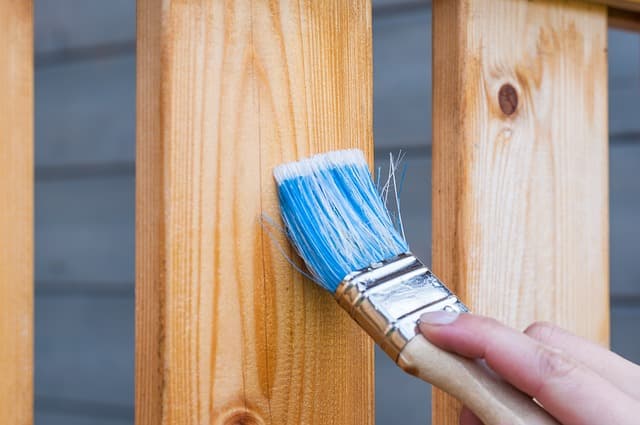
A fence protects the exterior of your home, and when well maintained, can add some serious curb appeal to any property. Since this structure is left outside day and night, it comes up against some severe conditions: snow, rain, sleet, heat, both freezing and melting water. Therefore, it's only natural that the paint on an outdoor fence should easily wear and fade.
Not only does paint look pretty but it serves a purpose, as proper staining and painting creates a barrier and prevents moisture from deteriorating the wood or material of the fence. With that in mind, look outside and see if the paint on your fence is due for an update. If you noticed that it does, then follow our step-by-step guide to giving your fence a brand-new coat!
Here are RenoQuotes.com's tips on how to correctly paint a fence!
To Paint or To Stain a Fence?
Experts recommend painting your fence every 2-3 years. But the best way to check if your fence needs a fresh coat of paint is to look for beading. If water is soaking into the surface of your fence, this is a sign that it's time for an update. Take into consideration the region you live in. If it rains often, then it’s possible that you’ll need to update the coat of paint on your fence more often.
Also, there is some debate about whether painting or staining your fence will help to preserve its longevity. Painting is less expensive but may require more maintenance, as well as additional preparation. Staining will be costly, as more is needed to complete the job. However, a stain's longevity outweighs paint and keeps the natural look of wood present rather than covering it up.
Plan!
Before starting, plan for any required help in advance. If you have a large fence, it's great to request the service of a friend or family member. Plan a small budget to take care of any tools or materials that you require, including gloves and a face mask which should always be used when working with chemicals. Other materials might include sandpaper, a small roller, a 4-inch paint brush, a piece of cloth, a scraper or wire brush as well as a 1-inch brush or angled/cutting brush.
Now, choose the right paint for the job. Use an outdoor paint on your fence. This type of paint has been treated to hold up against the effects of weather. However, there are still a variety of types to choose from, these include:
Acrylic: This type of paint is durable and provides an excellent layer of protection for your fence. However, if your surface is untreated, make sure to apply a primer before moving forward with painting.
Acrylic Stains: Stains enhance the natural elements of wood and don’t require the primer coats that paints do. Stains require minimal surface prep and are easy to re-coat.
Enamels: If you are painting an iron fence, you should be working with enamel paint. Start by treating the surface with a rust-enhancing primer.
Automotive epoxy paint: This is a very durable paint which only requires 1-step to apply. However, a hardener will need to be mixed in with this type of paint, which shortens the length of the paint job, as you risk the paint drying before the application process is completed.
Fence Painting Preparation

source: Max Pixel, Creative Commons -CC0
The preparation is a significant phase of painting a fence. You will want to keep all moisture away from the surface by trimming the grass and/or bushes before beginning to paint. Furthermore, this will help to protect the grass from the chemicals you’re using. Go one step further and spread a cloth or plastic sheet under the section of the fence you are painting. If possible, use a leaf blower to remove any dirt or grass clippings that have collected by the fence line.
Bring along a kit of basic fence repair tools, that way if your fence needs repair, you can get this out of the way before beginning to paint. Also, it is important to check your local forecast to make sure the weather is optimal for taking on a painting project. Keep in mind you will be outside for an extended period, and any poor weather conditions will greatly affect this project. Also, take into consideration the time it will take the paint to dry. If it's calling for rain later in the day or during the afternoon following, it's probably better to postpone painting your fence.
If the fence was previously treated, make sure to scrape away loose or flaking paint. If your fence is new, pressure wash or sand the wood. Check for any insect damage or signs of termites. Remove burs and splinters and create a surface that will be receptive to the application of new paint. This will help paint to adhere smoothly. If you’re working with an iron or metal fence, it is necessary to use a steel brush to remove rust, then, sand down the surface with a medium-grit sandpaper. If there are sections of the fence that you don’t want to paint, seal or tape these off.
Get Down to Business and Paint!
Depending on the size of your fence or the amount you intend on painting, your method of operation will vary. Work on the fence in small sections, about 5 boards at a time. If you paint too much at a time, you risk having dried lines or paint mounds, which must be scraped off. If you work in a small area, you'll be able to clean up any mistakes right away, aiding in a better result.
Start at the top of fence boards, working downwards on each individual board. A small brush might be required depending on the design of your fence. If you have something protecting the grass, you can paint right down to the bottom.
If your fence is particularly long, it might be in your best interest to use an industrial spray to complete the project. With the sprayer, aim lengthwise along the grain of the wood. Make sure to wear a respirator and spray downwards. Cover any plants in the area to protect them from the spray. Finish the job by doing minor touch-ups with a small brush.
If you are working with a wrought-iron fence, it is best to paint by hand to deal with its intricacies. Use a heavy coat of enamel or automotive epoxy paint to complete this job!
Get 3 renovation quotes for your fence painting project
RenoQuotes.com will put you in contact with 3 reliable contractors for your fence painting project. Fill in the form on our homepage (it only takes a few minutes), and you will receive quotes from trusted professionals.
Dial 1-844 828-1588 to speak with one of our customer service representatives
Looking for something else?
Related articles
The latest industry news, interviews, technologies, and resources.
Cynthia Pigeon
•09 Sep 2026
In Quebec, basement water infiltration is the most common type of residential insurance claim. According to the Insurance Bureau of Canada, water damage accounted for 68% of home insurance claims paid in Quebec in 2024. Harsh winters, major spring thaws, and heavy summer rainfall place considerable hydrostatic pressure on the below-grade portions of our homes.

Editorial Team
•08 Nov 2023
Natural light is an essential element for creating a healthy and pleasant living environment. Of course, windows do their part to allow this light to enter our interiors.

Editorial Team
•08 Nov 2023
The lighting within a home is one of the most important and noteworthy features, as it determines how a space is divided, highlighted and conquered. There are plenty of options on the market for providing the right light for a space, from moveable lamps to bulbs fully embedded into the walls of the home. Options are endlessly creative to suit the need of all homes.

Karine Dutemple
•08 Nov 2023
In the early stages of a renovation project, there are several options to consider before making your final decisions, including comparing each option before starting anything. Materials, contractors and prizes are all examples of the different choices that will be presented to you during your research.

Editorial Team
•05 Dec 2025
Energy efficiency in a home is a key issue, especially during the winter months, and even more so if it is an older structure. Having effective insulation is frequently listed as the first step to reducing heating costs.