Canair Heat Pump: Top 5 Models for Canadian Homes
By Editorial Team
Updated on June 9, 2026
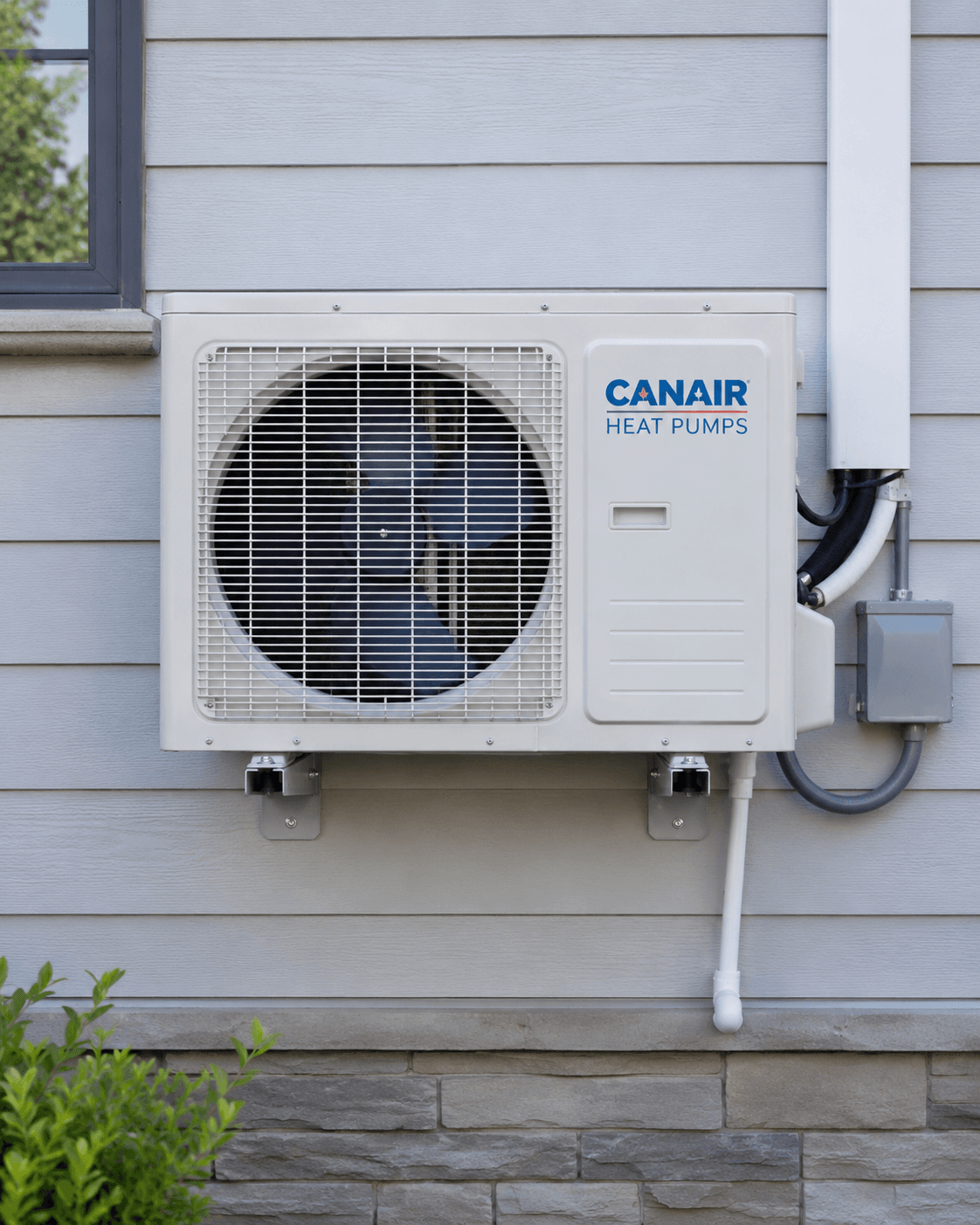
A Canair heat pump can be a practical option for Canadian homeowners who want heating and cooling from one system. Because Canada has a wide range of climates, from milder coastal winters to extreme cold in parts of the Prairies, Ontario, Quebec, and Atlantic Canada, the right model depends on your home’s layout, insulation, existing HVAC system, and local installer support.
This guide compares five Canair heat pump options across different needs, including single-zone wall-mounted systems, multi-zone ductless systems, and central systems. It will help homeowners understand which model family may fit their home, what details to verify before buying, and which questions to ask when requesting installation quotes.
Top 5 Canair Heat Pumps for Canadian Homes
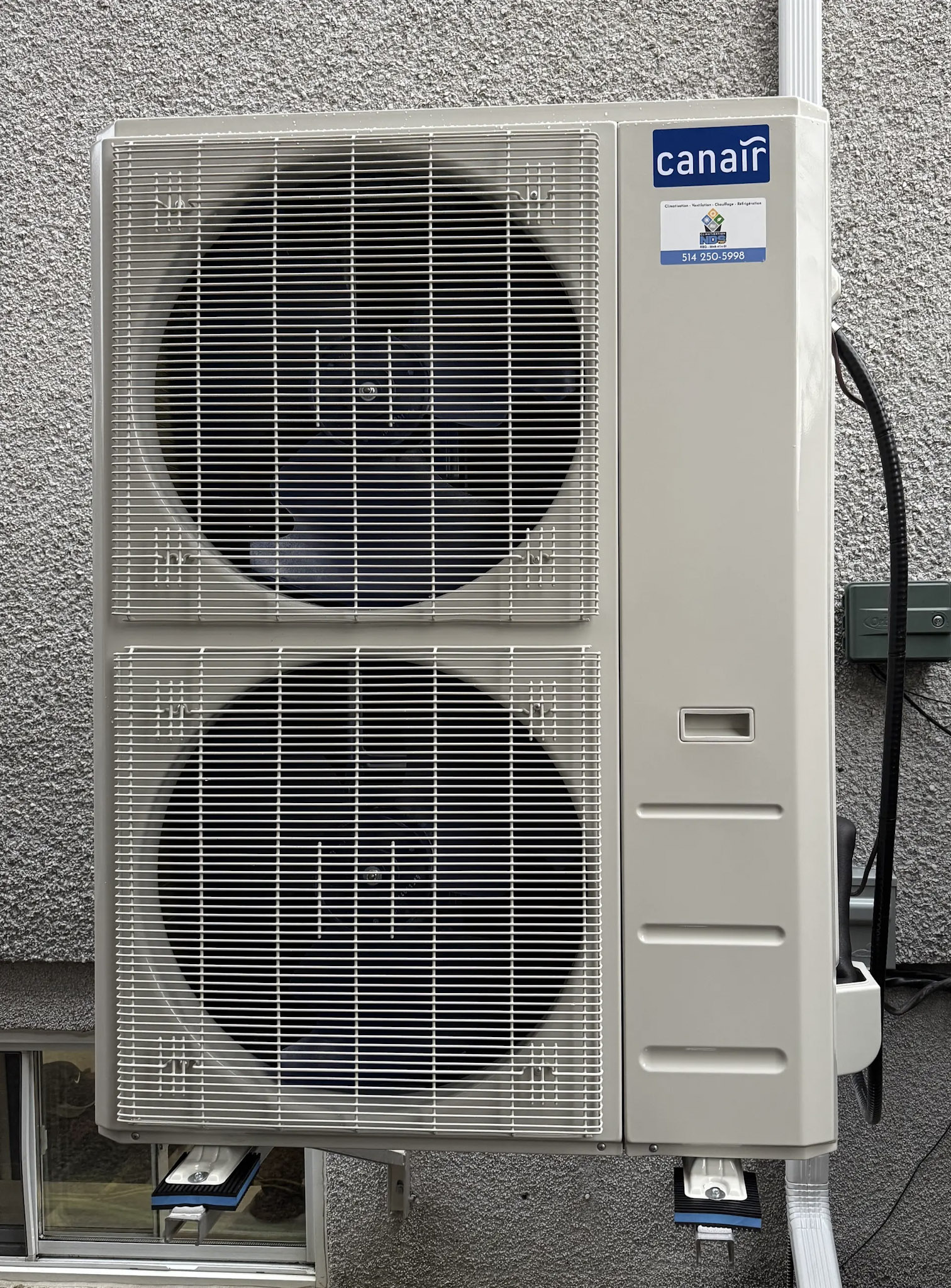
Source: Climatisation NDS-Pro
1. CANAIR 4C28 Single-Zone Mini-Split Ductless Heat Pump
The CANAIR 4C28 single-zone mini-split is the strongest Canair option to consider first if you want one wall-mounted heat pump for a main living area, basement, addition, garage conversion, condo, or open-concept space. Canair lists the 4C28 as a single-zone mini-split ductless heat pump, and the available capacities in the 4C28 brochure include 9,000, 12,000, 18,000, 24,000, and 33,000 BTU/h options.
This model family is especially relevant for colder parts of Canada because the 4C28 brochure lists heating operation down to -30°C, along with performance up to 27.4 SEER2 and 13.5 HSPF2, depending on the exact capacity and system pairing. It also lists R-454B refrigerant, outdoor heat cables, A2L refrigerant leakage detection, silent mode, self-cleaning, turbo mode, and optional Wi-Fi control.
The 4C28 single-zone model is best for homeowners who need reliable comfort in one important area rather than whole-home distribution. Before choosing it, ask the contractor to confirm the exact indoor and outdoor model numbers, heating capacity at low temperatures, ENERGY STAR status, rebate eligibility, sound ratings, and warranty coverage.
2. CANAIR 4C28 Multi-Zone Mini-Split Ductless Heat Pump
The CANAIR 4C28 multi-zone mini-split is designed for homes that need heating and cooling in more than one room without adding ductwork. Canair lists multi-zone 4C28 configurations, including 18MULTI, 28MULTI, 36MULTI, and 48MULTI options, making this model family more flexible than a single wall-mounted unit for homes with multiple bedrooms, separate floors, or closed-off rooms.
A multi-zone system can be useful for Canadian homes where one indoor unit cannot distribute air evenly. For example, it may work better than a single-zone system in a two-storey home, a home with additions, or a layout where bedrooms are far from the main living area. It can also allow different indoor temperature settings in different zones, depending on the installed configuration.
The main caution is sizing. The 4C28 brochure notes that performance can be affected when the combined capacity of the indoor units exceeds the rated capacity of the outdoor unit, especially in heating mode. For that reason, this model should be sized by a qualified HVAC contractor rather than selected only by square footage.
3. CANAIR 4C22 Single-Zone Mini-Split Ductless Heat Pump
The CANAIR 4C22 is another single-zone ductless option in the Canair lineup. Canair lists 4C22 models in 9,000, 12,000, and 18,000 BTU/h capacities, with 115V and 230V options depending on the model. Public Canair product information lists features such as quiet mode, self-cleaning, turbo mode, automatic startup, cold draft prevention, optional Wi-Fi, Follow Me function, compact design, and easy maintenance.
This model family may be suitable for a smaller room, home office, bedroom, workshop, addition, or secondary living space. It can also be worth considering when the home does not need the higher-capacity or higher-efficiency options associated with the 4C28 lineup.
Compared with the 4C28, the 4C22 should be treated as a more basic or mid-range Canair heat pump unless the installer provides official documentation showing otherwise. Before buying, verify the exact SEER2, HSPF2, low-temperature performance, refrigerant, warranty, and rebate eligibility for the specific model being quoted.
4. CANAIR 4CDH Central Heating and Cooling System, Side Discharge
The CANAIR 4CDH central heating and cooling system is a side-discharge central heat pump option for homes with existing ductwork or homes being retrofitted for a central air system. Canair lists 4CDH models in 2.5T, 3T, 4T, and 5T sizes, with features such as quiet mode, self-cleaning, turbo mode, automatic startup, cold draft prevention, optional Wi-Fi, outdoor heat cables, and A2L refrigerant leakage detection.
This type of Canair heat pump is better suited to homeowners who want more even whole-home comfort than a wall-mounted unit can usually provide. A central system can be useful when the home already has usable ductwork, when the homeowner wants a cleaner indoor look without wall-mounted heads, or when several rooms need consistent heating and cooling.
Because ductwork quality has a major impact on comfort and efficiency, the installer should inspect duct sizing, air leakage, insulation, static pressure, and airflow before recommending a central system. Ask for the exact system match, efficiency ratings, low-temperature capacity, and electrical requirements before approving the quote.
5. CANAIR CDH Central Heating and Cooling System, Side Discharge
The CANAIR CDH side-discharge central system is another central heating and cooling option in the Canair range. Canair lists CDH models from 1.5T to 5T, with several models marked as top sellers on its official product page. Listed features include quiet mode, self-cleaning, turbo mode, automatic startup, cold draft prevention, optional Wi-Fi, Follow Me function, compact design, energy efficiency, sturdiness, and easy maintenance.
This model family may be appropriate for homeowners replacing an older central heat pump, upgrading from central air conditioning, or planning a central heating and cooling retrofit. It is also worth comparing with the 4CDH lineup when a contractor recommends a side-discharge central system.
Before choosing between CDH and 4CDH models, ask the installer to explain why one is better for your home. The answer should be based on heating load, cooling load, ductwork, backup heat, local climate, available space, warranty coverage, and total installed cost.
Summary Table
Canair Heat Pump Model | Energy Efficiency | Cold-Weather Performance | Noise Level | Durability and Warranty |
|---|---|---|---|---|
CANAIR 4C28 Single-Zone Mini-Split | Up to 27.4 SEER2 and 13.5 HSPF2, depending on model and pairing | Brochure lists heating operation down to -30°C | Varies by capacity and fan speed; silent mode listed | R-454B, outdoor heat cables, A2L leakage detection, copper coil; warranty depends on selected coverage |
CANAIR 4C28 Multi-Zone Mini-Split | Varies by outdoor unit and indoor-unit combination | Designed for multi-room comfort; performance depends heavily on sizing | Varies by indoor and outdoor unit | Multi-zone flexibility; proper system design is important |
CANAIR 4C22 Single-Zone Mini-Split | Exact verified ratings depend on the quoted model | Best confirmed through the exact product sheet | Quiet mode listed by Canair | Compact design, optional Wi-Fi, easy maintenance; warranty should be confirmed in writing |
CANAIR 4CDH Central Side-Discharge System | Exact verified ratings depend on the matched system | Designed for central heating and cooling; ask for low-temperature heating capacity | Quiet mode listed by Canair | Canair states 10-year compressor and parts warranty for side-discharge central systems, with optional labour warranty |
CANAIR CDH Central Side-Discharge System | Exact verified ratings depend on the matched system | Best suited to whole-home comfort when properly sized | Quiet mode listed by Canair | Several CDH models are listed as top sellers; confirm warranty terms with the dealer |
What to Know Before Choosing a Canair Heat Pump in Canada
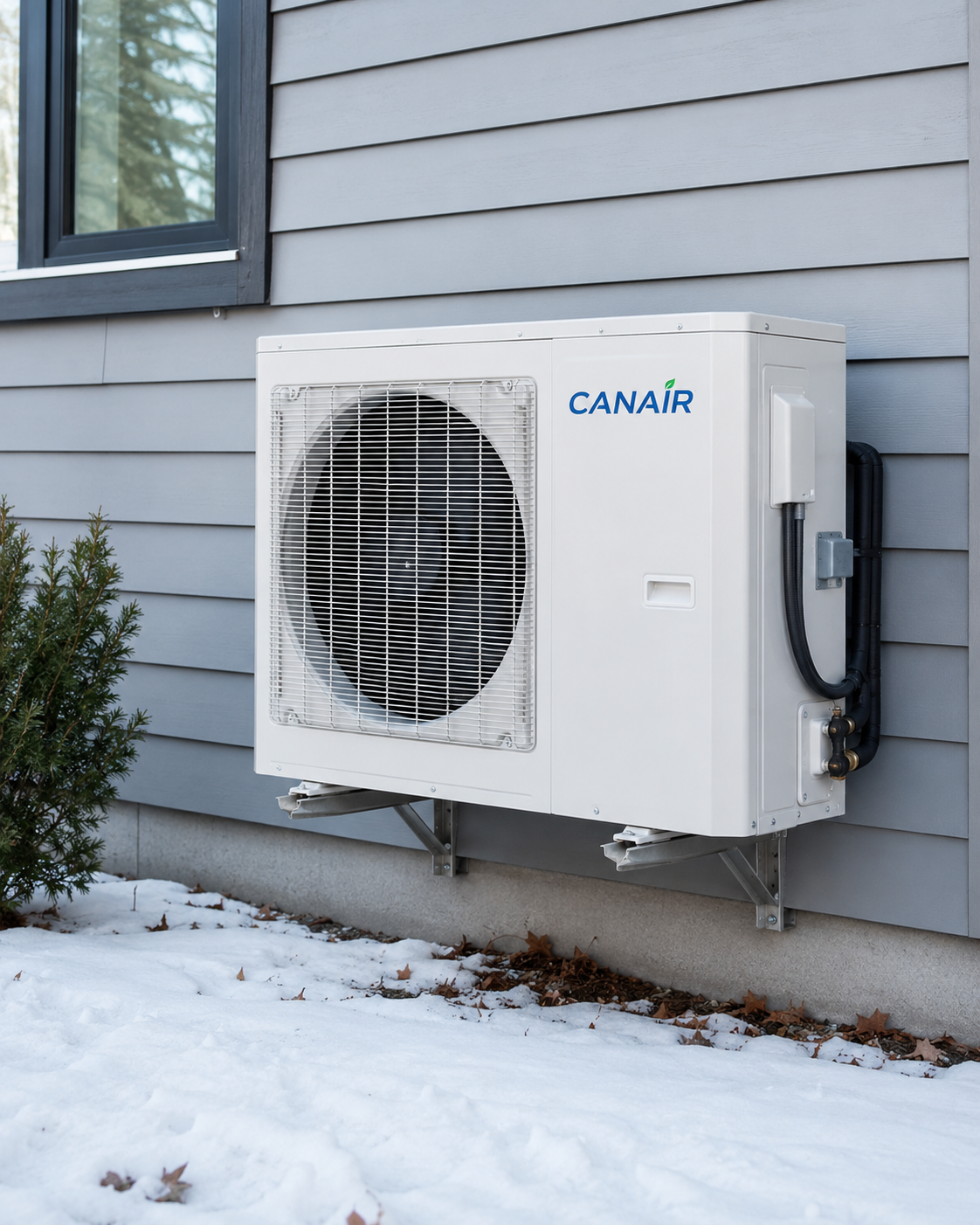
Source: Reno Quotes
Adaptation to Canada’s Local Climate
A Canair heat pump should be selected based on the climate in your part of Canada. A homeowner in Vancouver may care more about damp winter comfort and summer dehumidification, while a homeowner in Winnipeg, Ottawa, Montreal, Edmonton, Moncton, or rural Ontario may need to focus more heavily on low-temperature heating capacity and backup heat.
For colder regions, do not look only at the minimum operating temperature. A heat pump may be able to operate at a very low outdoor temperature while producing less heat than the home requires. Ask your contractor for heating capacity at specific outdoor temperatures, such as -8°C, -15°C, -20°C, or colder, depending on your region.
For milder regions, the deciding factors may be comfort, sound level, humidity control, efficiency, installation quality, and maintenance access. In larger homes, central systems or multi-zone systems may provide better comfort than one oversized wall-mounted unit.
Energy Efficiency, Rebates, and Environmental Standards in Canada
Canair describes inverter technology as a system that allows the compressor to operate at variable speeds rather than simply turning fully on and off. In practical terms, this can help a heat pump maintain steadier indoor temperatures and adapt output to the home’s heating or cooling demand.
For Canadian homeowners, rebate eligibility depends on the province, utility, equipment certification, income rules, installation date, and exact model combination. Natural Resources Canada’s Oil to Heat Pump Affordability program requires eligible equipment to be purchased in Canada, and its searchable product list advises homeowners to verify that the brand name and model numbers match the contractor’s quote exactly.
The former Canada Greener Homes Grant should not be treated as a simple open rebate for every new heat pump purchase. Current support is more program-specific, such as the Oil to Heat Pump Affordability program and provincial or utility incentives. In Quebec, Hydro-Québec states that heat pumps installed on or after November 26, 2025 must be ENERGY STAR certified to be eligible for LogisVert financial assistance.
Before signing a contract, ask the installer to confirm the exact indoor model, outdoor model, AHRI or verification reference where applicable, ENERGY STAR status, and current rebate eligibility for your province.
Canadian Availability, Distribution, and Support
Canair is closely tied to the Quebec HVAC market. Canair’s official site describes Descair as the exclusive distributor of Canair products in Quebec, and Descair is part of Groupe Deschênes.
For a Canada-wide article, the safest conclusion is that Canair appears to have especially strong Quebec distribution, while homeowners elsewhere in Canada should verify local availability. This matters because heat pump ownership is not only about the equipment. It also depends on the availability of trained installers, replacement parts, warranty handling, and after-sales service.
Before choosing a Canair dealer, ask whether they regularly install the exact model being quoted, whether they can provide parts locally, who handles warranty claims, whether labour is covered, and what maintenance service is available after installation.
Warranty and After-Sales Support
Canair’s warranty coverage varies by system type. Canair states that single-zone and multizone heat pumps, as well as central air systems with top discharge, come with a 5-year compressor warranty and 1-year parts warranty, with additional warranty options available up to 10 years for compressor and parts. Canair also states that central air systems with side discharge come with a 10-year compressor and parts warranty, with an optional 10-year labour warranty.
This means homeowners should not assume that every Canair heat pump automatically includes full 10-year parts, compressor, and labour coverage. Warranty details should be confirmed in writing before installation.
Ask specifically about compressor coverage, parts coverage, labour, diagnostics, travel fees, refrigerant, maintenance requirements, registration deadlines, and whether the warranty is handled by the installer, dealer, distributor, or manufacturer.
How to choose the right Canair heat pump?
Start with your home layout. A single-zone mini-split is usually best for one open area. A multi-zone system is better for several rooms without ductwork. A central system is usually better when the home already has ductwork or when the homeowner wants more even whole-home comfort.
Then consider your climate. In colder regions, prioritize low-temperature heating capacity, not only SEER2 and HSPF2. In milder regions, comfort, noise, humidity control, and installation quality may matter just as much.
Finally, compare full quotes, not just equipment names. A proper quote should include the indoor unit model, outdoor unit model, capacity, electrical work, line-set length, drain setup, warranty, labour coverage, rebate documentation, maintenance requirements, and total installed price.
In Conclusion
A Canair heat pump can be a good fit for Canadian homeowners who want a system with options for single-zone, multi-zone, and central heating and cooling. The CANAIR 4C28 single-zone is the strongest verified cold-climate wall-mounted option in this list, while the 4C28 multi-zone is better for several rooms and the 4CDH/CDH central systems are better for homes with ductwork or whole-home comfort goals.
Because Canada’s climate varies widely, the right model depends on your region, home size, insulation level, layout, backup heating system, and local installer support. Before choosing a Canair model, confirm the exact product sheet, ENERGY STAR or rebate eligibility, low-temperature heating capacity, warranty, labour coverage, parts availability, and total installed price with a qualified HVAC contractor.
FAQ
Is a Canair heat pump good for Canadian winters?
Some Canair models are designed for cold-climate use. The CANAIR 4C28 brochure lists heating operation down to -30°C, but homeowners should still ask for the exact low-temperature heating capacity for the model being quoted. Minimum operating temperature and actual heat output are not the same thing.
Which Canair heat pump is best for one room?
For one room or one open-concept area, the CANAIR 4C28 single-zone mini-split is the strongest option in this comparison because its public brochure provides clear cold-climate and efficiency details. The CANAIR 4C22 may also work for smaller or simpler single-zone projects.
Which Canair heat pump is best for multiple rooms?
The CANAIR 4C28 multi-zone system is the better fit for several rooms without ductwork. It allows multiple indoor units to connect to one outdoor unit, but it must be sized carefully to avoid reduced performance, especially in heating mode.
Are Canair heat pumps eligible for rebates in Canada?
Eligibility depends on the exact model combination, province, utility, program rules, and installation date. Natural Resources Canada advises homeowners to verify that the model numbers match the contractor quote exactly when checking eligible equipment.
Does every Canair heat pump have a 10-year warranty?
No. Canair states that single-zone and multizone heat pumps have a 5-year compressor warranty and 1-year parts warranty, with optional extended coverage. Canair states that side-discharge central systems come with a 10-year compressor and parts warranty, with optional labour coverage.
Are Canair heat pumps environmentally friendly and eligible for government rebates?
Yes, many Canair heat pump models are designed to be energy efficient and eco-friendly, using less electricity and producing fewer greenhouse gas emissions compared to traditional heating systems. Several models qualify for government rebates and grants, but eligibility depends on the specific model, its ENERGY STAR certification, and your province’s current programs. Always check with your installer and verify that your chosen model meets the latest environmental standards and rebate requirements.
Looking for something else?
Related articles
The latest industry news, interviews, technologies, and resources.
Cynthia Pigeon
•22 Jun 2026
Dual-energy heating is designed to address environmental concerns by reducing household energy consumption. This can also have a direct impact on the cost of your heating bill. What makes this system especially appealing is that it doesn’t require homeowners to sacrifice comfort.
Editorial Team
•27 Jan 2026
With the rising summer temperatures typical of Quebec’s climate, having a reliable air conditioning system has become almost essential to keep your entire home comfortable. But how much does an air conditioner really cost? Which model should you choose—portable, wall-mounted, or central? And most importantly, what factors influence the price of an air conditioning system?

Editorial Team
•09 Oct 2026
Whether you’re installing a new light fixture, upgrading your electrical panel, or connecting an EV charging station, one question always comes up: how much does it cost in 2025? Do all types of electrical work require a professional? What factors affect an electrician’s pricing? In this article, we’ll explore the different types of electrical work—from interior lighting to smart home systems—and help you understand pricing, identify DIY-friendly tasks, and decode your quotes.

Amanda Harvey
•08 Nov 2023
When building a new home, air barriers are not always part of the equation. However, air barriers are crucial structures that assist in aiding with energy efficiency as well as maintaining a comfortable and cozy home environment.

Editorial Team
•01 Oct 2026
A home inspection costs $300 to $800 in Canada, with most buyers paying between $400 and $600. A condo runs $300 to $450, a standard detached house $450 to $650, and a large or rural property $850 to $1,500.