Construction Estimator: Role, Field Realities, Career Path, and More
By Editorial Team
Updated on February 23, 2026

A construction estimator is the person who turns an idea or a set of plans into credible numbers. Their job is to forecast the real cost of a project—materials, labour, subcontracting, logistics, and risk—so a client, contractor, or financial institution can make an informed decision.
Join Our Network and Receive Real Leads!
Do you want to start getting some real leads with serious customers?
In the podcast, Danny Pineault from Précision DP sums up the job with a simple image: "Ça mange des plans," meaning the job is all about digging into plans—detail, rigor, and method.
The Estimator’s Role: Much More Than Giving a Price

Source: Menuiserie CJV
An estimate is first and foremost a way to structure a project. It helps set a realistic budget, compare scenarios, prepare a bid/quote, and most importantly reduce the surprises that push costs off track during the job. For a homeowner, it’s often the tool that confirms whether the project is feasible before spending big. For a contractor, it’s the foundation of a healthy bid and a profitable execution.
It’s also important to remember that an estimate isn’t automatically the final price: the result depends on the level of detail provided, the assumptions used, and what will actually be included in the contract.
When to Contact an Estimator
Many people reach out too late, when the key decisions have already been made. In the podcast, Danny Pineault is very clear about the right timing: "I will let you know before contacting the bank, just to be sure we have a good budget."
The idea is simple: the earlier you validate the ballpark cost, the less likely you are to build a project around an unrealistic financial assumption. A shaky budget can force you to step back, revise plans, choose materials that don’t match your real capacity, or create extra delays.
How to Choose an Estimator
Before signing, clarify a few basics: the type of estimate, what’s included, the assumptions, how many revisions are included, whether the deliverable is usable for financing or tendering, and how risk and contingency are handled.
The Main Steps of an Estimate
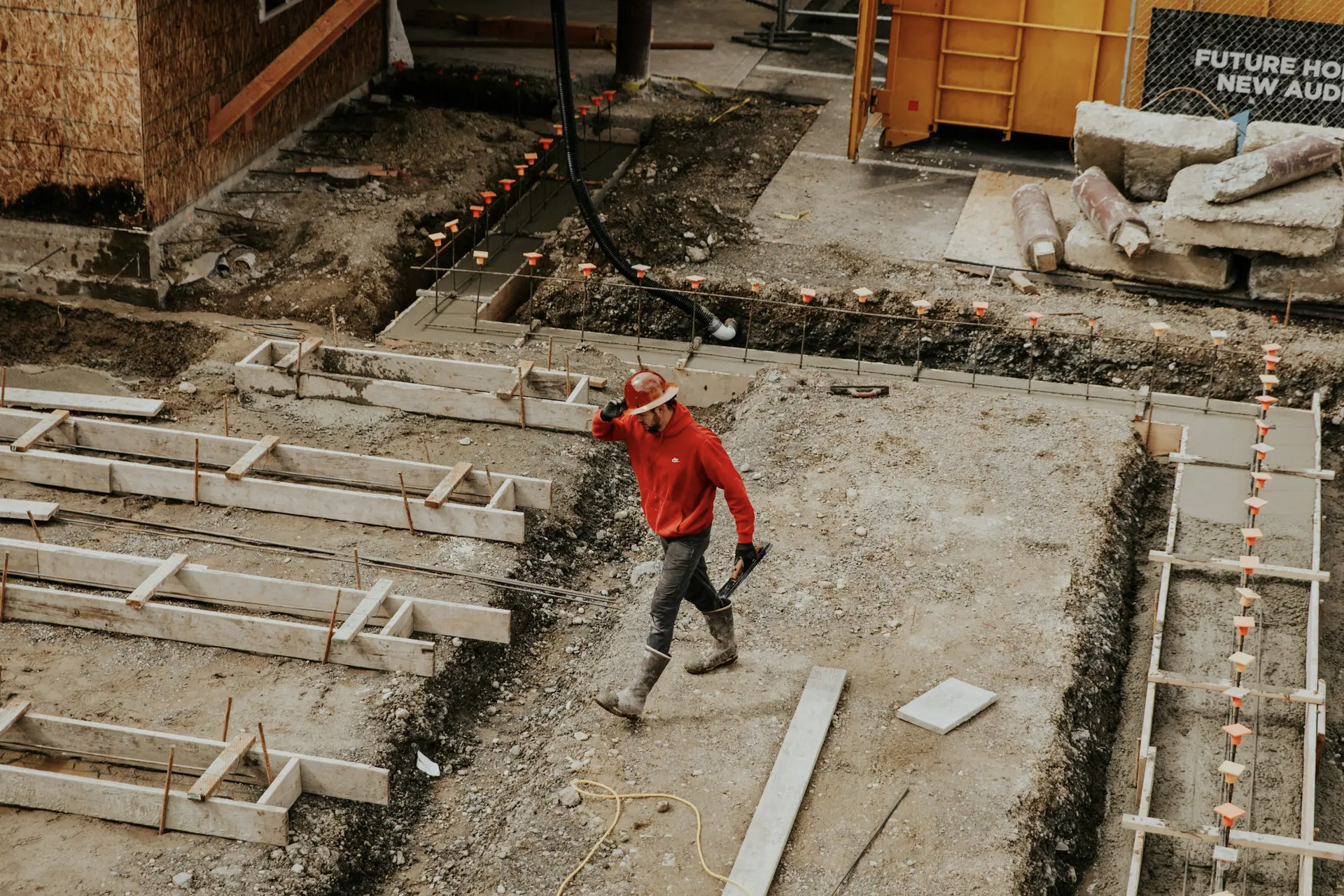
Source: SunStar
1. Understanding the Project and Its Scope
The estimator begins by clarifying what is included and excluded, the expected level of finish, and the project constraints such as timelines, site access, occupancy, and phasing. This step is particularly important in renovation, where two projects that appear similar can require very different levels of effort once on site.
2. Reviewing the Plans or Reconstructing Missing Information
When the drawings and specifications are complete, the estimator reviews them trade by trade: architectural, structural, building envelope, mechanical and electrical, finishes, and so on. When the information is partial—which is often the case in renovation—they may conduct a site visit and document existing conditions. In the podcast, Danny Pineault also explains that they can use survey tools such as 3D scanning to capture dimensions and make it easier to structure the estimate once back at the office.
3. Quantifying and Pricing
Next comes the quantity takeoff phase: areas, lengths, volumes, units, and work items by trade. Based on these quantities, direct costs are calculated: materials, labour, subcontracting, as well as indirect costs such as equipment, coordination, supervision, logistics, and so on. This step requires consistency, because a project is not a list of isolated items—it is a whole in which technical choices and site organization greatly influence the actual cost.
4. Anticipating Risk with a Logical Contingency
Contingency is a topic that often creates misunderstandings. In the podcast, Danny Pineault of Précision DP sums up the issue very well: “Yes, but what does the contingency actually represent?”
The idea behind this question is simple: a contingency should not be a percentage added out of habit. It must be tied to identified risks, such as uncertainties about existing conditions, technical complexity, difficult access, a tight schedule, price volatility, multi-trade coordination, or specific site conditions.
5. Delivering a Useful Output
Depending on the need, the estimator may provide a budget estimate, a detailed estimate broken down by line item and by trade, sometimes accompanied by a material list or optimization recommendations. The objective remains the same: to provide a document that can be used to make decisions, plan, secure financing, or submit a bid.
Education, Diplomas, and Career Paths to Become a Construction Estimator
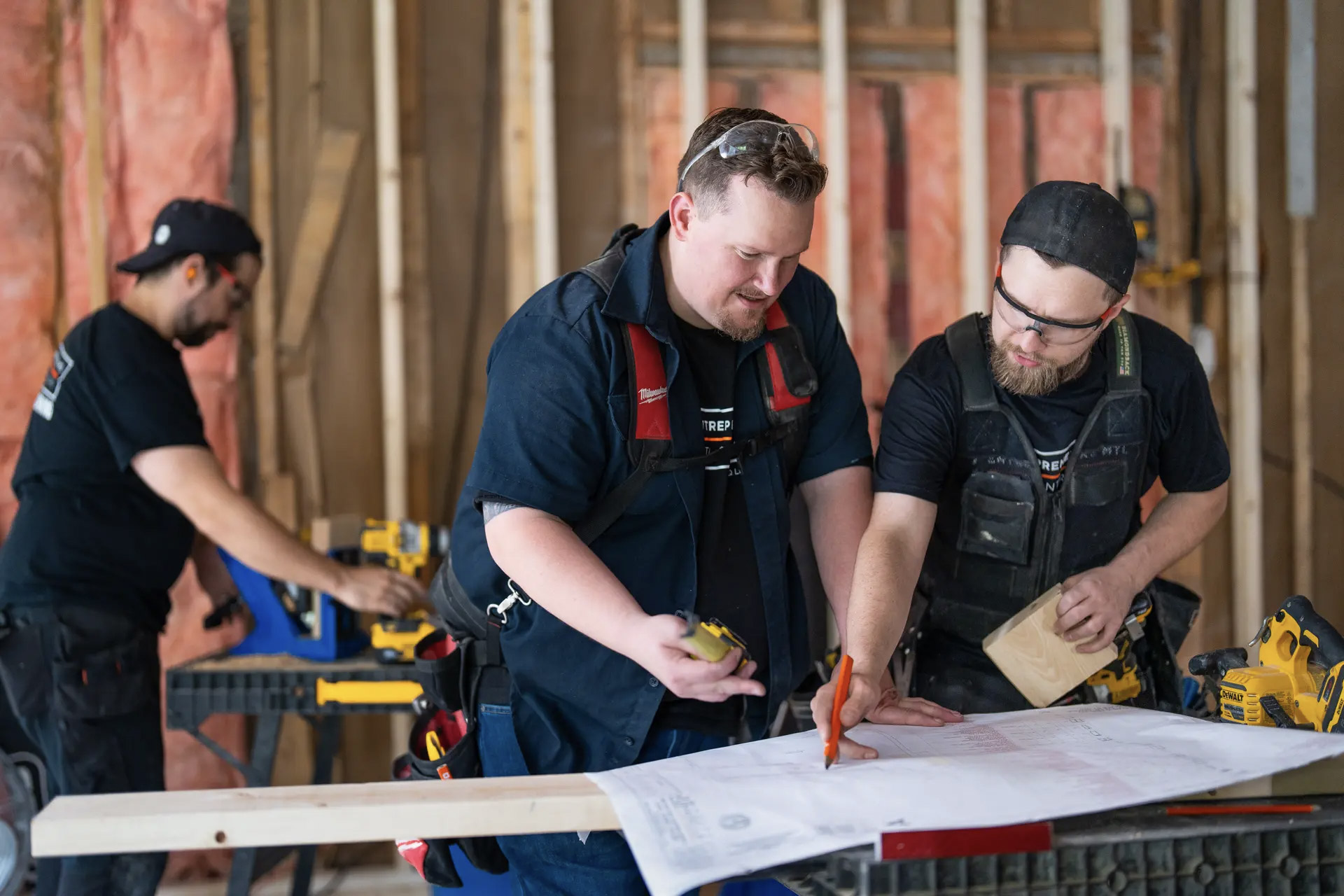
Source: MTL Contractors
There isn’t just one path to becoming an estimator; in fact, there are several common routes that people take.
In Québec, one of the most traditional pathways is to complete a DEC in Building Estimation and Evaluation Technology, which provides a strong foundation in the technical and theoretical aspects of the field. In addition to this, there are numerous continuing education programmes available, many of which are designed to address specific needs within the industry, such as advanced estimating techniques, software training, or specialized sectors like civil engineering or renovations.
Furthermore, many estimators enter the profession after gaining practical field experience in a construction trade or technical position, such as working as a foreman, technician, or junior project manager. This hands-on experience is especially valuable, particularly in renovation projects, because it equips estimators with an understanding of the real-world conditions and unexpected challenges that may not be fully captured in the project documents.
Certifications and Titles: A Boost to Employability
Some certifications can strengthen credibility, especially in senior roles, consulting, or more formal environments. Earning a recognized certification demonstrates a commitment to professional standards and ongoing development, which can be particularly valuable when seeking leadership positions or working with clients who prioritize formal qualifications. A common example in Canada is the CEC (Certified Estimating Consultant) designation managed by CIQS (Canadian Institute of Quantity Surveyors), which is well-respected within the industry and can open up additional career opportunities.
The Skills That Make a Strong Estimator
Technically, you need to read plans and specs, understand construction methods, and think trade-by-trade: structure, envelope, mechanical and electrical, finishes. Analytically, you need to structure data, verify coherence, compare scenarios, and clearly document assumptions.
There’s also a people side: an estimator must ask the right questions, explain assumptions simply, and make the budget impacts of a choice easy to understand.
Finally, staying current matters. Prices move, and practices change. In the podcast, Danny Pineault from Précision DP puts it plainly: "I listen to the market."
Salary: Ranges, Growth, and What Influences Pay

Source: Reno Quotes
Salaries vary by region, sector, company type, and experience, but there are useful benchmarks. Across Canada, you generally see a clear progression from entry-level to mid-level to experienced profiles. In Québec, public data also offers hourly ranges that help position the market, with differences by region.
The factors that influence salary are often the same: location, company size and type, sector, experience, ability to handle complex files, and specialised skills such as tendering, mechanical/electrical estimating, and software proficiency.
Job Outlook and Career Progression
The market for construction estimators tends to be steady over time, but it’s also cyclical. Hiring often rises when there’s a strong pipeline of projects (housing, infrastructure, industrial builds, commercial renovations) and cools when projects get delayed or financing becomes tighter. In practical terms, this means your opportunities can vary by year and by region—even within the same province.
Market Outlook in Canada and Québec
Recent labour-market outlooks generally point to a moderate outlook over the next few years in major provinces, including Québec and Ontario. That “moderate” rating usually reflects three realities happening at the same time:
employers still need estimators to price work accurately and manage risk
some openings come from retirements and normal turnover
there’s also a meaningful pool of experienced candidates in the market, so competition can exist depending on the region and sector
Over the longer term, national projections suggest that job openings and job seekers are expected to be relatively balanced for construction estimators across the decade. In other words: it’s not typically an occupation with a dramatic shortage everywhere, but there is consistent demand—especially for candidates who can handle complex files, deliver accurate takeoffs, and work comfortably with multiple trades and scopes.
Where Demand Is Often Strongest
Opportunities are usually more concentrated in:
large urban markets (more volume, more projects, more bid activity)
regions with strong industrial and infrastructure investment
sectors that rely heavily on formal estimating and tendering (public projects, commercial/industrial, large-scale residential)
Some recruiting and labour-market sources frequently highlight big hubs like Toronto and Calgary as particularly active markets for estimator roles, largely because of sustained construction and industrial activity.
What Employers Value Most Right Now
Because estimating sits at the intersection of technical reading, pricing logic, and risk management, employers typically favour candidates who can show:
strong plan/spec reading and consistent quantity takeoffs
realistic pricing built on up-to-date market inputs (suppliers, subs, productivity)
clear documentation of assumptions, inclusions/exclusions, and risk allowances
comfort working with estimating software, spreadsheets, and cost databases
the ability to communicate clearly with project managers, site teams, clients, and subs
In many companies, the strongest estimators are the ones who can move beyond “pricing” into preconstruction thinking: phasing, constructability, schedule constraints, procurement lead times, and scope gaps.
Career Progression Paths
A typical progression looks like:
Junior Estimator: takeoffs, supplier requests, assisting on bids, learning internal cost systems
Estimator / Intermediate: owning full divisions or medium-sized bids, managing subs quotes, building bid packages
Senior Estimator / Lead Estimator: high-value or complex bids, mentoring, bid strategy, risk reviews, value engineering
Preconstruction Manager / Estimating Manager: managing an estimating team, standardizing systems, coordinating precon across departments
From there, it’s common to branch into adjacent roles, depending on interest and strengths:
Project Management (translating estimate logic into execution and cost control)
Contract Administration / Procurement
Cost Consulting (owner-side estimating, lender support, due diligence)
Claims, changes, and dispute support (scope, pricing, documentation)
Specialization in structural, civil, mechanical, or electrical estimating
Independent consulting once you’ve built credibility and a repeatable method
Fees and Billing Models for Estimating Services
Here, we’re talking about professional services—an independent estimator or a firm—not an in-house salaried estimator.
In the market, you’ll typically see hourly billing, flat fees per deliverable or per phase, and very often hour-banks. Some public offers structure hour-banks by mandate size: budget estimate versus detailed estimate, with or without a materials list, with or without an on-site survey. The logic stays consistent: the more complex, urgent, and detailed the mandate, the higher the service cost.
What Influences the Cost of Estimating Services
Two projects of the same size can cost very different amounts to estimate. Typical drivers include complexity, document quality, the required level of detail, urgency, the number of revisions, travel and surveying time, and the jobsite context.
In Summary
Being a construction estimator means making a project “costable” by accurately assessing all expenses and resources required, helping to reduce uncertainty before it becomes expensive on site. This role requires a strong appreciation for detail and logic, as well as a deep understanding of real-world construction processes. Above all, you must be able to explain complex numbers and calculations in a clear and simple way so that everyone involved in the project can understand the financial implications and make informed decisions.
Looking for something else?
Related articles
The latest industry news, interviews, technologies, and resources.

Editorial Team
•08 Oct 2025
Are you having a hard time finding qualified workers to fill vacant positions within your company? Since we can assume that your schedule is booked solid with the upcoming warmer seasons, we’ve decided to speed up the process and help you find new employees!

Editorial Team
•08 Nov 2023
Are you in the process of renovating a part of your home and would like to create an impeccable finish? Adding moulding, like quarter rounds, is indispensable in this regard and will surely add a lot in terms of aesthetics. Want to know more about this type of moulding? Keep reading!

Cynthia Pigeon
•08 Nov 2023
Roofing underlayment isn’t a luxury. It’s the one element that guarantees a decent and weather-protected structural design.

Cynthia Pigeon
•14 Apr 2026
Indoor air quality in Canadian homes is contingent on a delicate balance between airtight construction and proper ventilation. To maintain healthy air, it’s essential to keep humidity levels between 30% and 50% (depending on the season), test your basement for radon, and ensure your heat recovery ventilator (HRV) is regularly maintained. Clean indoor air helps prevent mould growth and reduces the risk of asthma and serious respiratory conditions linked to household pollutants.

Editorial Team
•11 May 2026
The Canadian renovation industry continues to flourish, with homeowners already planning upgrades to improve comfort, increase property value, and adapt to new lifestyles. For renovation contractors, this creates a strong opportunity—but also a race against time. To win the best projects, you need to plan your marketing and lead generation early, get organized now, and start booking spring jobs before competition increases.