Glass shower – Common mistakes to avoid before installation
By Léa Plourde-Archer
Updated on September 23, 2026
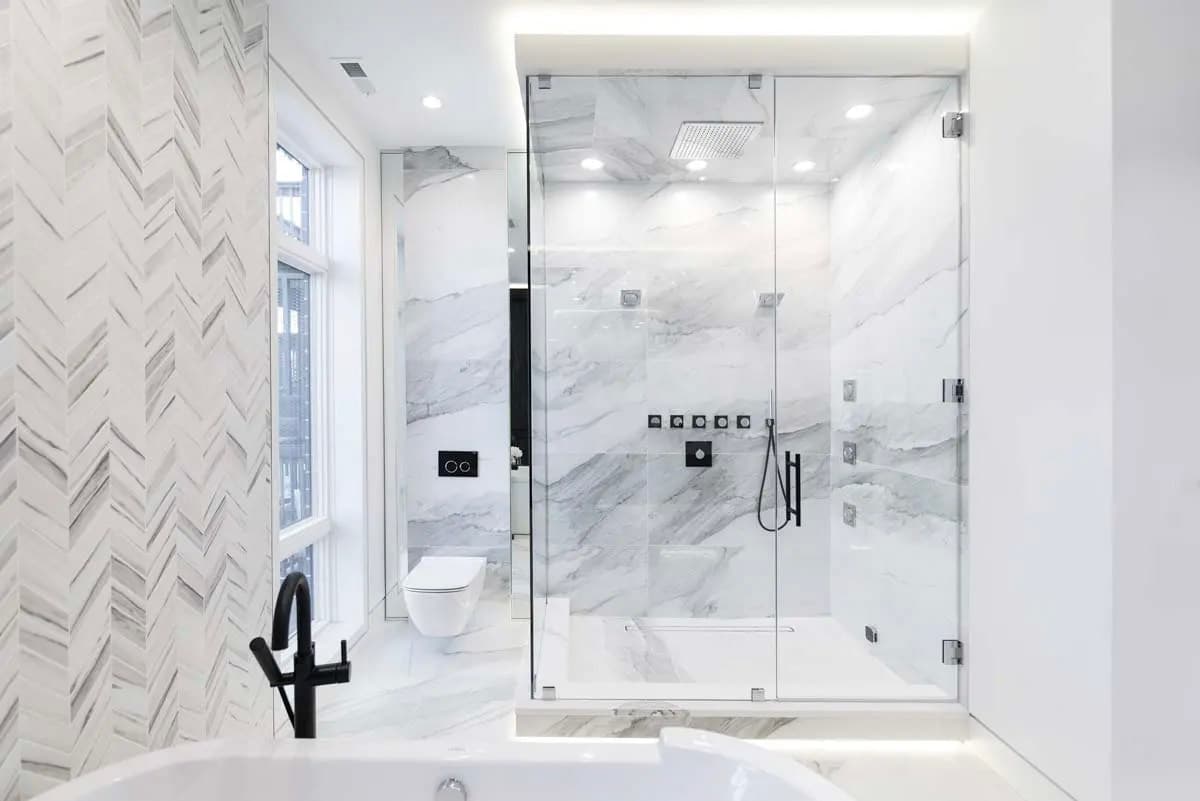
Installing a glass shower is an investment that increases your property value, but it leaves no room for error in waterproofing or construction. To ensure a successful project, you must guarantee a perfectly level base, choose tempered glass at least 10 mm thick, and use high-quality sealants to prevent mould growth.
Avoiding errors in slope, hardware, and structural planning will ensure a safe, stylish, and easy-to-maintain bathroom for the next twenty years.
Glass Shower: Common Mistakes to Avoid Before Installation
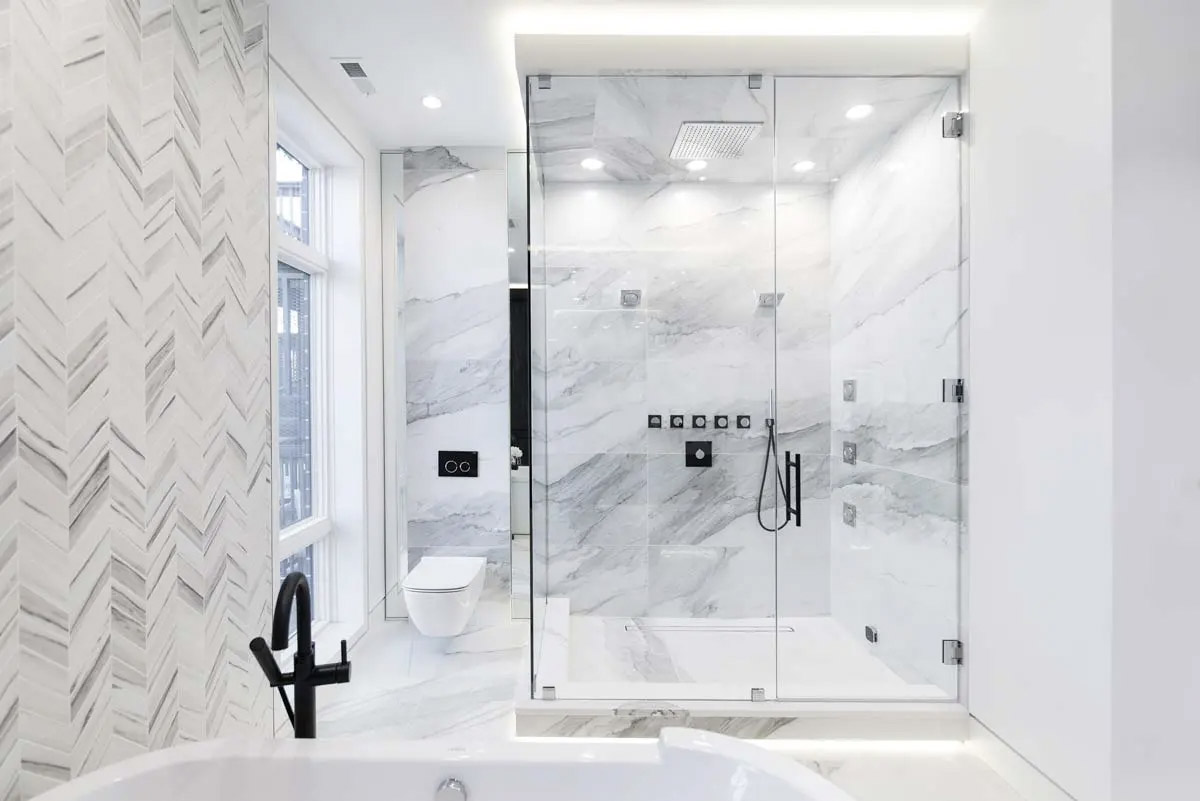
Source : Ethan and Brother building contractor
Installing a glass shower is often the highlight of a bathroom renovation in Canada. It creates a feeling of spaciousness, increased natural light, and an undeniable touch of luxury that appeals to potential buyers.
However, behind this apparent simplicity lie major technical challenges. Between the extreme temperature variations of our seasons and strict building code requirements, every detail counts. A glass shower project is not simply an impulse purchase at a big-box store, it's a complex combination of physics, engineering, and design.
Here's a comprehensive guide to help you navigate the most common pitfalls and ensure the success of your project.
Underestimating the importance of wall structure and preparation
The most costly and difficult-to-correct mistake often occurs even before the glass is ordered. A glass shower, especially with 10mm or 12mm panels, is extremely heavy. A single fixed panel can weigh over 100 pounds.
The Lack of Structural Reinforcement (Blocking)
Many homeowners and novice DIYers forget to install solid wood lumber (usually 2x6s or 2x8s) behind the drywall or cement board. These pieces must be securely anchored to the studs at the precise locations where the door hinges and fixed panel brackets will be screwed in.
Drywall, even water-resistant drywall, is a brittle material. Without these blocks, the constant weight and movement of the door will eventually put stress on the screws. Over time, the door will sag, rub against the floor or other panels, and could even come loose.
Technical Note: In certain parts of Canada, with the freeze-thaw cycle that can slightly shift the foundations of older homes, a rigid wall structure is even more crucial.
An Uneven Shower Base
If your shower base (whether acrylic, polymer, or tile) isn't perfectly level at its edges, you'll face a logistical nightmare. Glass is a rigid, inert material; it can't be "adjusted" or bent to compensate for a curve or slope in the floor.
A poorly installed base will inevitably lead to:
Persistent water leaks: Water will always find its way to the lowest point, often outside the shower area.
Uneven pressure: The weight of the glass won't be evenly distributed, which can cause cracking or breakage over time.
Poor visual alignment: The silicone sealant will be uneven (very thin on one side and very wide on the other), ruining the clean, minimalist look you're aiming for.
Choosing the Type of Glass: Don't Sacrifice Safety for Price

Source : Kim Lacharité designer d'intérieur
Not all glass is created equal. In the shower industry, the term "safety glass" isn't just a suggestion; it's a legal requirement.
Understanding the Thicknesses
6 mm (1/4") glass: This is the standard for entry-level shower enclosures sold in boxes. This glass almost always requires a full aluminum frame to maintain its rigidity. It vibrates when closed and gives a somewhat unsettling feeling of fragility.
10 mm (3/8") glass: This is the "sweet spot" in the industry. It's heavy enough to offer a high-end, solid feel while remaining compatible with most standard hardware.
12 mm (1/2") glass: The epitome of luxury. It's used for large panels or walls without any visible supports. It's the preferred choice for an "ultra-minimalist" shower.
Why Untreated Glass is a Bad Idea
In Canada, water hardness varies considerably. In some parts of the country, well water can be rich in minerals. Standard glass is porous at a microscopic level. Without treatment, soap scum and limescale become embedded in the pores, creating a white film that is impossible to remove.
A common mistake: Forgetting to order factory-treated glass (such as ShowerGuard or EnduroShield). While this adds to the initial cost, it reduces cleaning time by 90% and preserves the resale value of your home.
Measurement Errors: that Pesky Extra Millimeter
In glassmaking, there are no "second chances." Once the glass has gone through the tempering oven, it becomes impossible to recut, grind, or drill an additional hole. If your measurement is off by just 3 mm, the panel could be unusable.
Poor planning of the work
The classic mistake is taking final measurements before the tiles are laid. You think, "I know the thickness of my tile, I just have to subtract." This is a risky calculation. The thickness of the tile adhesive (mortar bed) and variations in tile flatness can unpredictably change the final dimensions.
Golden rule: only measure glass once the shower is completely finished, tiled, and grouted.
Ignoring Out-of-Plumb Walls
In many Canadian homes, perfectly straight 90-degree walls are rare. If your wall slopes inward by even 1/4 inch, a perfectly rectangular glass panel will leave a huge gap at the top or bottom. A professional will use a laser to detect these slopes and order glass with an out-of-plumb cut to perfectly fit the shape of your wall.
Waterproofing and water management: an exact science
A frameless glass shower is never an aquarium. It is designed to deflect water, not to be submerged.
Shower Head Positioning
This is a common design mistake. Shower heads are often installed facing the door for aesthetic reasons. However, the direct pressure of the spray on the door seals will inevitably lead to leaks.
Expert Tip: Always direct the spray towards a solid wall or a fixed glass panel. Avoid placing "body spray" jets that point directly at the hinges.
The Importance of Threshold Slope
If you choose a ceramic or stone threshold, it should have a slight slope towards the inside of the shower (approximately 1/8 to 1/4 inch). If the threshold is level or, worse, slopes outwards, the water that collects on the edge will inevitably run onto the bathroom floor.
To ensure a flawless installation, it is often best to entrust this step to experts. You can request a quote for your shower to compare the certifications of contractors in your area.
Hardware: Don't Neglect Metal Quality
The hardware is the skeleton of your shower. It undergoes constant cycles of humidity and drying, in addition to supporting dynamic loads (opening and closing the door).
The dangers of zinc : many inexpensive imported hardware pieces are made of zinc with a stainless steel-look plating. After 12 to 24 months, the plating flakes off and the metal oxidizes. Opt for solid brass or 304 stainless steel.
Opening direction: according to safety standards, a shower door must open outwards. This is crucial so that if someone becomes unwell and falls in the shower, their body doesn't block the door from opening inwards.
Clearance: make sure the handle doesn't hit your new vanity or that the door doesn't bang against the toilet. This seems obvious, but it's a very common planning mistake.
Using Sealants: Silicone Isn't Everything
Silicone is essential, but it shouldn't be used to plug holes in a poor design.
Product Quality: use only 100% pure, commercial-grade silicone containing strong fungicides. Cheap "quick-drying" silicones tend to yellow or peel off prematurely when exposed to cleaning products.
Application: a silicone joint that's too thick is not only unsightly, but it's also more prone to mould growth. The precise measurements mentioned earlier allow you to maintain joints of 2-3 mm, which is ideal.
If you'd like a more accurate idea of the budget required to avoid these pitfalls, see this article on bathroom shower prices in Canada.
The Myth of DIY Tempered Glass Installation
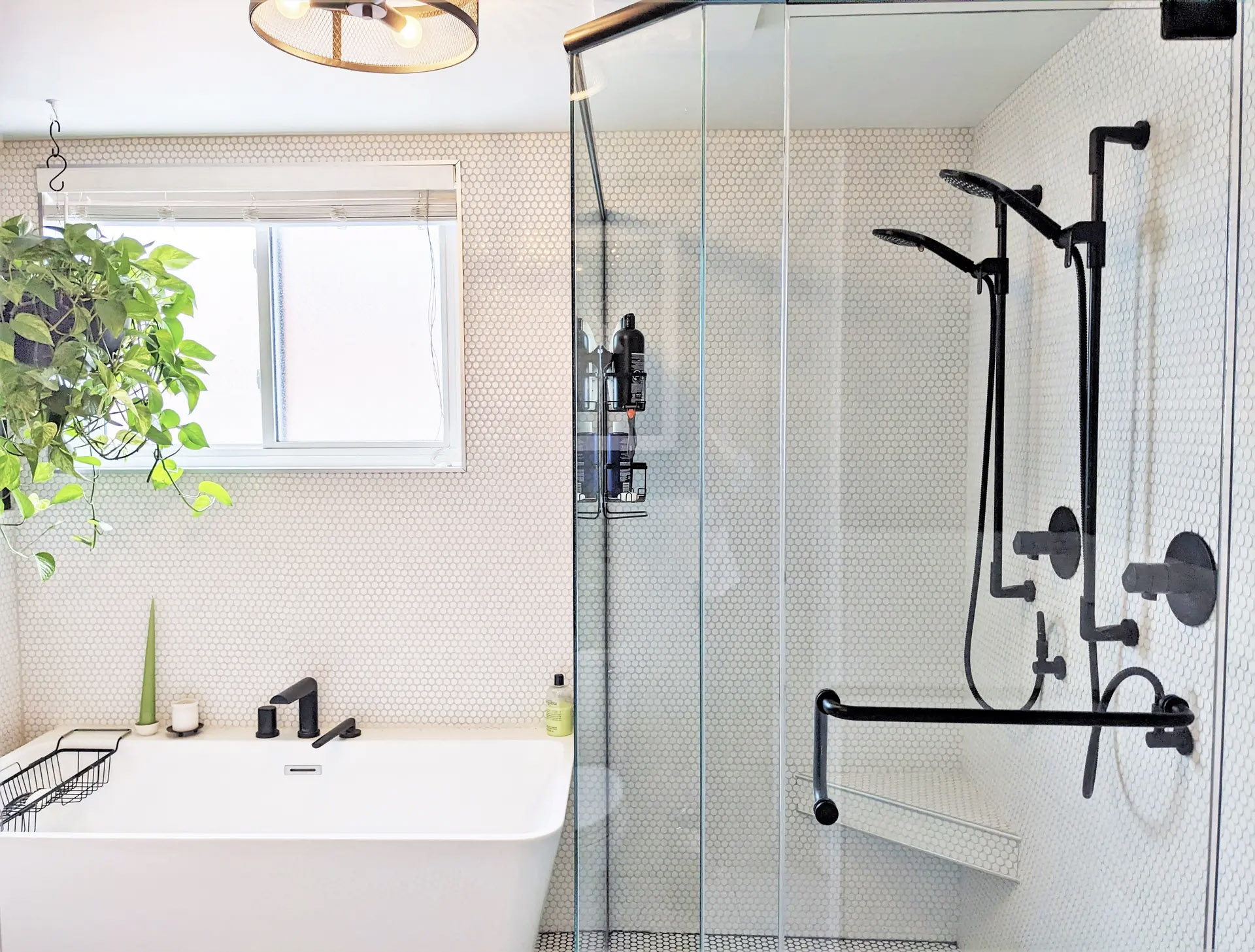
Source : Versa Style Design
Tempered glass has incredible internal tensile strength. It can withstand a punch to its flat surface, but a simple bump to one of its corners (its Achilles' heel) will shatter it into thousands of tiny, granular fragments.
Why avoid doing it yourself?
Transportation: hauling 80-inch-high panels in an unsuitable trailer or truck is a recipe for disaster.
handling: a professional uses industrial suction cups and knows how to place the glass on plastic or rubber blocks to prevent direct contact with the tile.
Hinge Adjustment: adjusting a door to be perfectly balanced requires experience that video tutorials cannot replace.
Post-Installation Maintenance: Protecting Your Investment
Once your shower is installed, the biggest mistake you can make is treating it like a plastic shower.
The enemy: abrasives. Never use scouring pads or abrasive powders on the hardware or glass. This creates micro-scratches where bacteria and limescale will thrive.
The solution: a squeegee. It's the most cost-effective habit you can adopt. Just 30 seconds after each shower is enough to keep the glass sparkling for years.
Ventilation: make sure your bathroom fan is working properly. Prolonged high humidity will degrade silicone sealant and promote corrosion of even high-quality hardware. According to Hydro-Québec, a well-ventilated bathroom also helps reduce heating costs in winter by preventing the accumulation of moisture.
Legal and Insurance Considerations
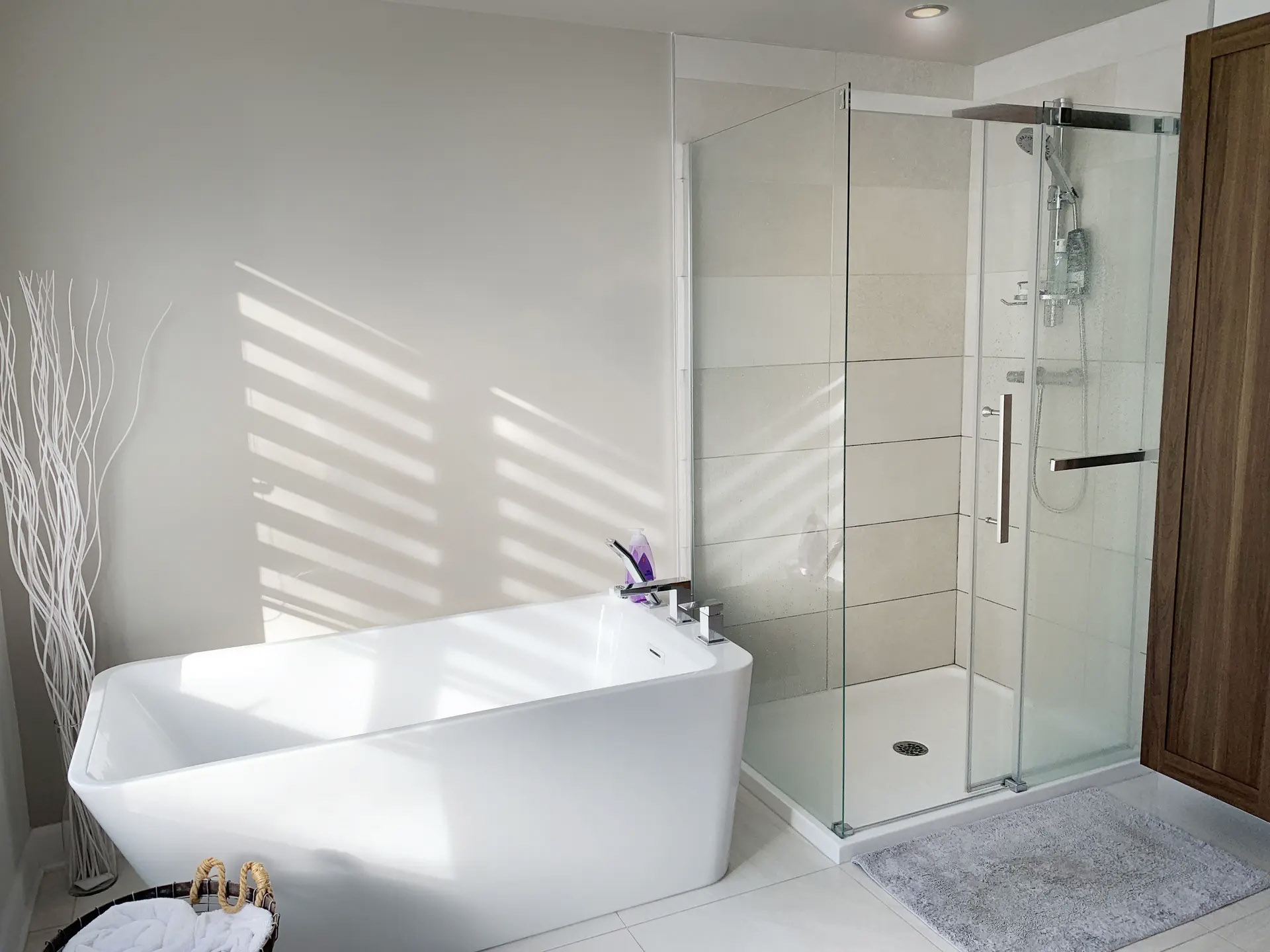
Source : Agencé Conception
In Quebec, plumbing and structural work must often be carried out or supervised by RBQ (Régie du bâtiment du Québec) licensed professionals. If you live in another province, know that requirements vary from one area to another. Contact your local government for more information.
A common administrative mistake: failing to declare your renovations to your insurer. A poorly installed shower that causes water damage on the main floor or in the basement can lead to a claim being denied if the work was not done according to standards or by a certified professional. Always keep your installation invoices and the technical specifications of your glass.
Summary Table: Critical Inspection Points
Step | What to look for | What happens if something is done improperly |
Structure | Presence of solid wood behind the walls. | Door sagging and risk of breakage. |
Measurements | Taken only after ceramic tile installation. | Unusable glass (cannot be cut). |
Watertightness | Threshold sloping inwards. | Water infiltration on the main floor. |
Safety | Door opens outwards. | Non-compliance with safety standards. |
Glass | Factory anti-limescale treatment | Difficult maintenance and permanent stains. |
Conclusion
A glass shower is much more than just a decorative feature; it's a precision piece of work that requires meticulous planning. By avoiding cost-cutting measures on the structure, opting for 10 mm treated glass, and entrusting the measurements to an expert, you'll ensure peace of mind for decades to come.
The Canadian climate, with its specific challenges and building codes, demands even greater precision. Take the time to carefully select your contractors and materials: a successful bathroom renovation always begins with a solid foundation and precise measurements.
Looking for something else?
Related articles
The latest industry news, interviews, technologies, and resources.
Cynthia Pigeon
•21 Oct 2026
Installing a walk-in bathtub can make a bathroom more accessible and safer, particularly for seniors and people with reduced mobility. This type of bathtub makes getting in and out easier while helping people maintain their independence at home.

Editorial Team
•08 Nov 2023
Many couples, families and even those living alone struggle to keep a small bathroom organized, with all moving parts under control. The standard bathroom found in most households is snug, barely fitting a sink, shower and vanity comfortably. Maintaining all these fixtures plus a sense of aesthetic appeal can be a serious challenge. On top of these aspects, there's ergonomics. Luckily, we live in a modern world where designers have taken the time to come up with various solutions to these traditionally small spaces.

Editorial Team
•11 May 2026
Plastic is a hugely exploited building material since it’s durable, waterproof, supple, and lightweight. However, just like its many other daily uses, it definitely has a bad reputation. Subsequently, several companies are looking to take major steps to reduce its harmful effect on the environment.

Karine Dutemple
•10 Sep 2026
Any amateur or professional landscaper will love shrubs, which have a remarkable number of advantages. Whether they are appreciated for their ability to enhance the façade of a house or for their ability to create an area away from prying eyes, they are always a sure bet.

Editorial Team
•11 May 2026
Softwood doesn’t have the same wood-burning potential as dry wood, which is much better for firewood. As such, it can’t be swapped out under any condition.