Landscaping in Front of the House: 27 Creative Ideas
By Editorial Team
Updated on June 10, 2026
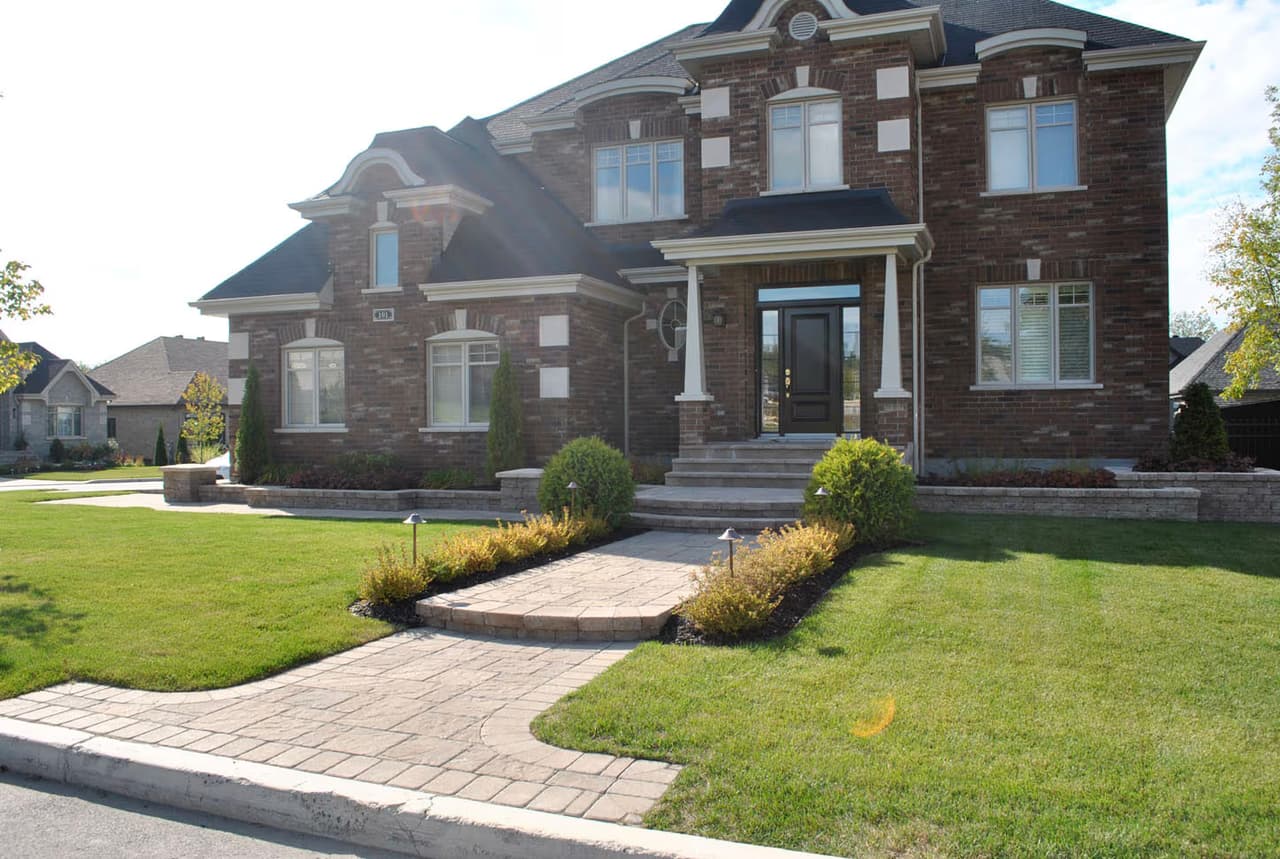
The proper front yard landscaping can completely change how your property looks from the street. A thoughtful front yard design makes the entrance feel welcoming, improves curb appeal, and helps your home look more polished throughout the year.
Whether you like modern clean lines, cottage-style plantings, natural stone pathways, or low-maintenance flower beds, the best front yard landscapes combine structure, colour, texture, and practical maintenance. Use these ideas as inspiration to shape a front yard that fits your home, climate, budget, and lifestyle.
Start With a Front Yard Landscape Plan
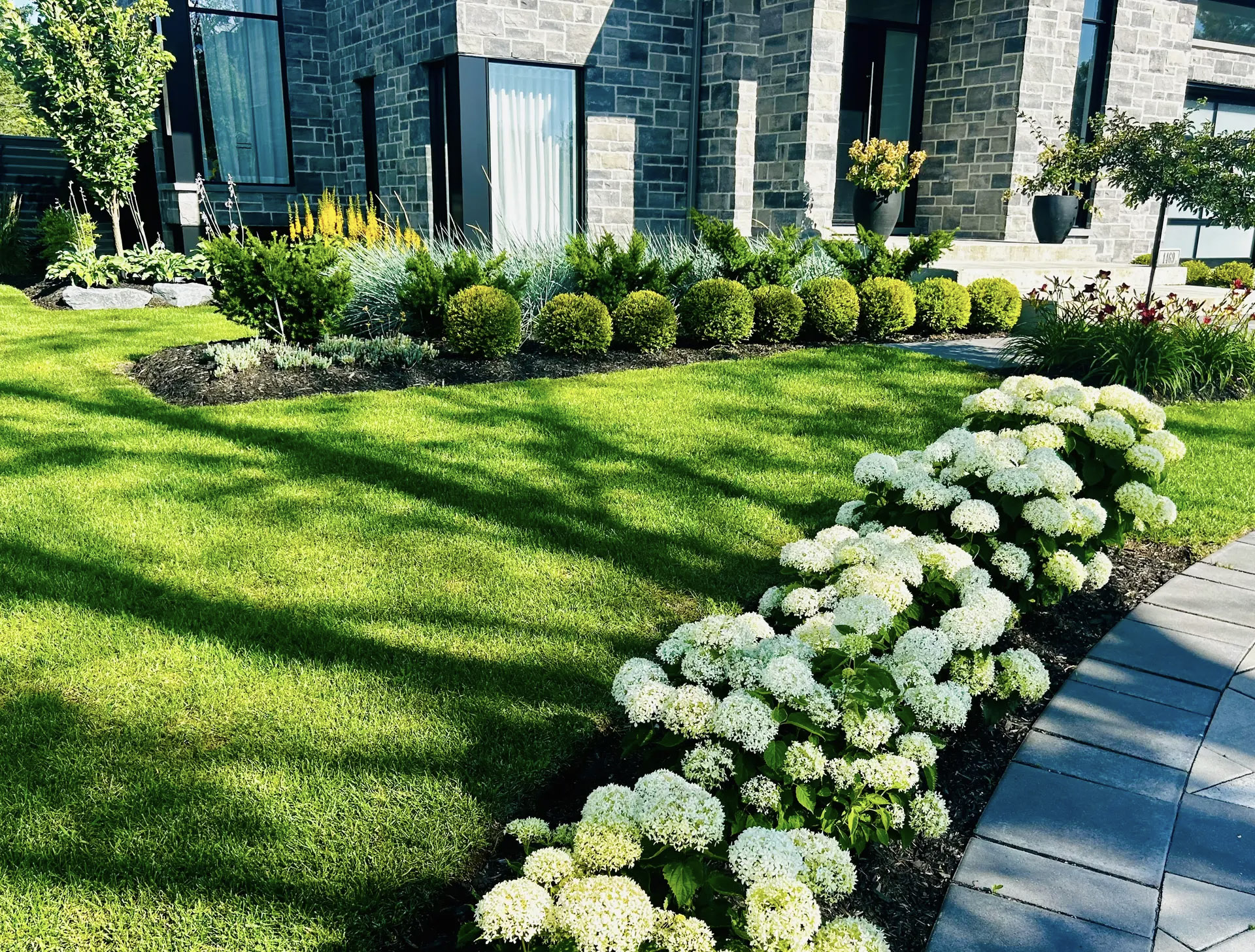
Source: Aménagement paysager Demeter
Before choosing plants or installing hardscaping, take time to look at the front of your home as a whole. The most attractive landscapes usually feel intentional rather than random.
Consider:
The architectural style of the house
The size and shape of the front yard
Sun, shade, wind, and drainage conditions
Existing trees, walkways, driveways, and slopes
How much maintenance you realistically want
How the yard will look in every season
A good front yard design uses balance, proportion, unity, variety, colour, and texture. For example, a modern home may look best with a geometric layout, right angles, concrete planters, and ornamental grasses. A traditional home may suit symmetrical plantings, brick pavers, and layered foundation shrubs. A cottage-style house may look better with curved pathways, perennial flowers, and natural stone.
Pick a Front Yard That Suits Your Taste

Source: Renovation Semax
1. Create Symmetrical Plantings Around the Entryway
Symmetrical plantings are one of the easiest ways to make a front entrance look organized. Matching shrubs, planters, or small evergreen trees on both sides of the door create balance and draw attention to the entryway.
This idea works especially well for traditional, colonial, and formal home styles.
2. Add a Curved Sidewalk for a Softer Look
A curved sidewalk can make the front yard feel more inviting than a straight path. It adds movement and gives you more room to create planting beds along the walkway.
Border the path with perennial flowers, low-maintenance ground cover, mulch, or ornamental grasses for a finished look.
3. Use Layered Foundation Plantings
Foundation plantings soften the area where the house meets the ground. Instead of planting one row of identical shrubs, use layers.
A simple layout includes:
Taller evergreen shrubs at the back
Medium flowering shrubs in the middle
Perennials, ground cover, or mulch in the front
This creates depth and helps the landscape look full without feeling overcrowded.
4. Build Raised Planting Beds
Raised planting beds add structure and can make the front yard easier to maintain. They are useful near entrances, along walkways, or on properties with poor soil or drainage issues.
Common materials include natural stone, brick, concrete blocks, and landscape timber.
5. Design a Cottage Garden Front Yard
Cottage gardens are colourful, relaxed, and full of texture. They work well for homeowners who want a softer, more romantic look.
Consider mixing:
Coneflowers
Black-eyed Susans
Lavender
Salvia
Peonies
Climbing and vining plants
Pollinator plants
Use repeated colours or plant types to keep the design from looking messy.
6. Add Natural Stone Pathways
Natural stone gives a front yard a timeless, high-quality appearance. Flagstone, stepping stones, and irregular stone paths work well with cottage gardens, rock gardens, native plants, and woodland-style landscapes.
Stone pathways can also help guide visitors clearly from the driveway or sidewalk to the front door.
7. Install Landscape Lighting
Landscape lighting improves both curb appeal and safety. It helps visitors see walkways, steps, entryways, and changes in elevation after dark.
Use lighting to highlight:
Pathways
Front steps
Entryways
Trees
Foundation plantings
Stone walls or fountains
Warm, subtle lighting usually looks better than overly bright fixtures.
8. Add a Rock Garden
Rock gardens are a good choice for homeowners who want texture and lower maintenance. They can be especially effective in sunny, dry areas.
Combine river rock, decorative stone, drought-resistant perennials, succulents, ornamental grasses, and mulch for a natural but organized appearance.
9. Create an All-Season Landscape
A strong front yard design should not rely only on summer flowers. For all-season interest, combine plants that look good at different times of the year.
Include:
Evergreen trees and shrubs
Spring bulbs
Summer perennials
Fall foliage plants
Ornamental grasses
Winter-interest shrubs or branches
This helps the front yard avoid looking empty in late fall and winter.
10. Upgrade the Driveway With Pavers
Driveway pavers can make a major difference in curb appeal. Brick pavers, concrete pavers, and natural stone accents add pattern, texture, and visual interest.
For a cohesive look, repeat similar materials in the walkway, landscape edging, or front entry area.
11. Frame the Home With Native Trees
Native trees can add shade, structure, and long-term beauty to the front yard. They also support local wildlife and often adapt better to regional conditions than poorly suited ornamental species.
Choose tree sizes carefully so roots, branches, and mature height fit the available space.
12. Add Window Boxes for Seasonal Colour
Window boxes are a simple way to bring colour closer to the house. They are especially useful for smaller front yards where there is limited planting space.
Use annuals in containers for seasonal changes, or combine flowers with trailing plants and small evergreens.
13. Define Beds With Landscape Edging
Landscape edging creates clean lines between lawns, mulch beds, gravel, and walkways. It also helps reduce grass spreading into planting beds.
Popular edging materials include:
Natural stone
Brick
Steel edging
Concrete borders
Decorative river rock
Clean edging can make even a simple front yard look more professionally maintained.
14. Replace Part of the Lawn With Ground Cover
Large lawns require mowing, watering, fertilizing, and weed control. Replacing part of the lawn with ground cover can reduce maintenance and add texture.
Options may include creeping thyme, sedum, clover, or native ground covers, depending on your climate and site conditions.
15. Install a Stone Fountain as a Focal Point
A stone fountain can become a strong focal point near the entryway or within a circular planting bed. It adds movement, sound, and visual interest.
Keep the design proportional. A small front yard usually needs a simple fountain, while a larger yard can handle a more dramatic feature.
16. Create a Modern Geometric Layout
Modern landscaping often uses clean lines, right angles, limited plant varieties, and strong contrast.
Common features include:
Concrete planters
Gravel walkways
Ornamental grasses
Low hedges
Rectangular planting beds
Paver paths
This style works well with contemporary homes and minimalist architecture.
17. Add Container Gardens Near the Entrance
Container gardens are flexible and easy to update. They work well beside front doors, garage entrances, steps, and small patios.
Use containers for annual flowers, compact shrubs, ornamental grasses, or evergreen accents.
18. Incorporate Ornamental Grasses
Ornamental grasses add movement, texture, and softness. Many varieties are relatively low maintenance once established.
They pair well with modern designs, rock gardens, drought-tolerant front yards, and naturalistic planting schemes.
19. Design a Pollinator-Friendly Front Yard
Pollinator gardens can be both beautiful and eco-friendly. They support bees, butterflies, and beneficial insects while adding colour and seasonal variety.
Use native plants, perennial flowers, flowering shrubs, and plants with different bloom times.
20. Add Terraces to a Sloped Front Yard
A sloped front yard can be difficult to mow and maintain. Terraces help divide the slope into usable levels.
Retaining walls, edging stones, and raised beds can help control erosion while creating attractive planting zones.
21. Use White Rock Landscaping for Contrast
White rock landscaping can create a clean, bright look, especially against darker siding, green foliage, or modern architecture.
Use it carefully. Too much white stone can feel harsh in sunny areas, so balance it with plants, mulch, or darker natural stone.
22. Build a Small Paver Patio
A small paver patio near the front entrance can create a welcoming seating area. Add a bench, container gardens, or wrought-iron outdoor furniture to make the space feel intentional.
This works especially well for homes with a deep front yard or a wide entry area.
23. Create a Rain Garden
A rain garden can help manage stormwater runoff while adding natural beauty. It is usually planted with species that tolerate both wet and dry conditions.
Rain gardens are especially useful near driveways, downspouts, or low areas where water naturally collects.
24. Install Evergreen Trees and Shrubs
Evergreens provide year-round structure. They are useful as foundation plantings, privacy screens, entryway accents, and background plants.
Mix evergreens with flowering shrubs, perennials, and ornamental grasses so the yard does not look too heavy or flat.
25. Add Stepping Stones Through Planting Beds
Stepping stones make garden beds easier to access for pruning, weeding, and seasonal care. They also add charm and help guide movement through the landscape.
Use natural stone for a relaxed look or concrete pavers for a more modern style.
26. Use Mulch Beds for Easier Maintenance
Mulch beds help reduce weeds, retain soil moisture, and give the front yard a clean appearance.
Organic mulch is commonly used around trees, shrubs, and perennials. Keep mulch away from direct contact with trunks and stems to reduce moisture-related problems.
27. Combine Hardscaping and Softscaping
The best front yard landscapes usually combine hardscaping and softscaping. Hardscaping gives the yard structure, while plants add softness, colour, and seasonal change.
A balanced design may include:
A clear walkway
Defined planting beds
Landscape edging
Foundation shrubs
Perennial flowers
Mulch or stone
Outdoor lighting
A focal point near the entrance
Hardscaping and Structural Features That Add Lasting Value
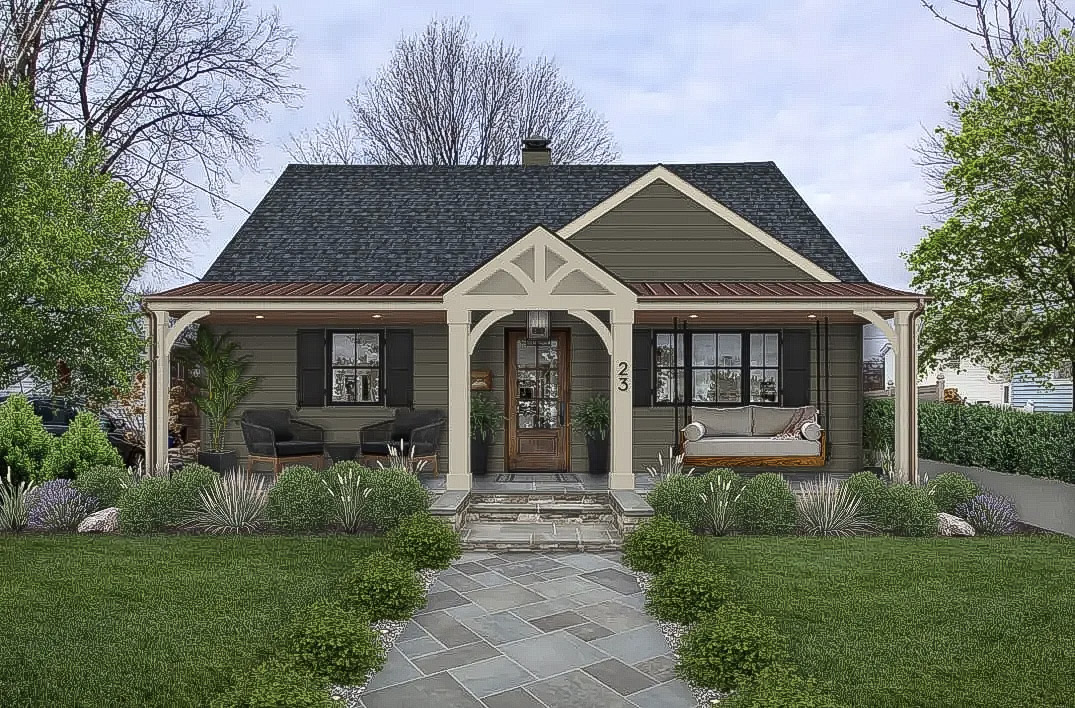
Source: 2327579 Alberta Ltd.
Hardscaping is the permanent framework of your front yard. It includes walkways, patios, edging, retaining walls, driveway pavers, fences, planters, and decorative features. These elements are important because they still provide structure even when plants are dormant.
Pathways and Walkways
A front walkway should be attractive, safe, and easy to follow. Straight pathways suit formal or modern homes, while curved pathways feel softer and more natural.
Good material options include:
Flagstone
Brick pavers
Concrete pavers
Gravel walkways
Stepping stones
Natural stone slabs
Choose materials that complement the home’s exterior. For example, brick pavers may suit a traditional brick house, while large concrete slabs may better match a modern home.
Landscape Edging
Edging creates separation between lawn, mulch, gravel, and garden beds. It also helps keep the yard looking tidy between maintenance visits.
Natural stone edging works well in rustic or cottage-style landscapes. Steel edging creates clean lines for modern designs. Brick edging can connect nicely with traditional homes and paver walkways.
Retaining Walls and Terraces
Retaining walls are useful when the front yard has a slope. They can create level planting areas, reduce erosion, and make maintenance easier.
Terraced designs can include:
Low stone walls
Raised planting beds
Steps between levels
Layered shrubs and perennials
Gravel or mulch between plantings
For taller retaining walls or drainage concerns, it is best to work with a qualified professional.
Fences, Walls, and Borders
Low fences, stone walls, and decorative borders can frame the front yard without making it feel closed off. They can also separate the lawn from the sidewalk, define planting areas, or create a more private entry.
Keep the height and style appropriate to the home. A small cottage may suit a low picket fence, while a modern home may look better with simple horizontal fencing or stone walls.
Benches, Planters, and Focal Points
A front yard does not need many decorative elements. One or two well-chosen features usually look better than several competing pieces.
Good focal points include:
A bench near the walkway
Large concrete planters
Window boxes
A stone fountain
A small paver patio
Decorative urns near the entrance
Place focal points where they naturally draw the eye, such as near the front door, at a walkway curve, or at the centre of a planting bed.
Outdoor Lighting and Safety Ideas for Front Yard Landscaping
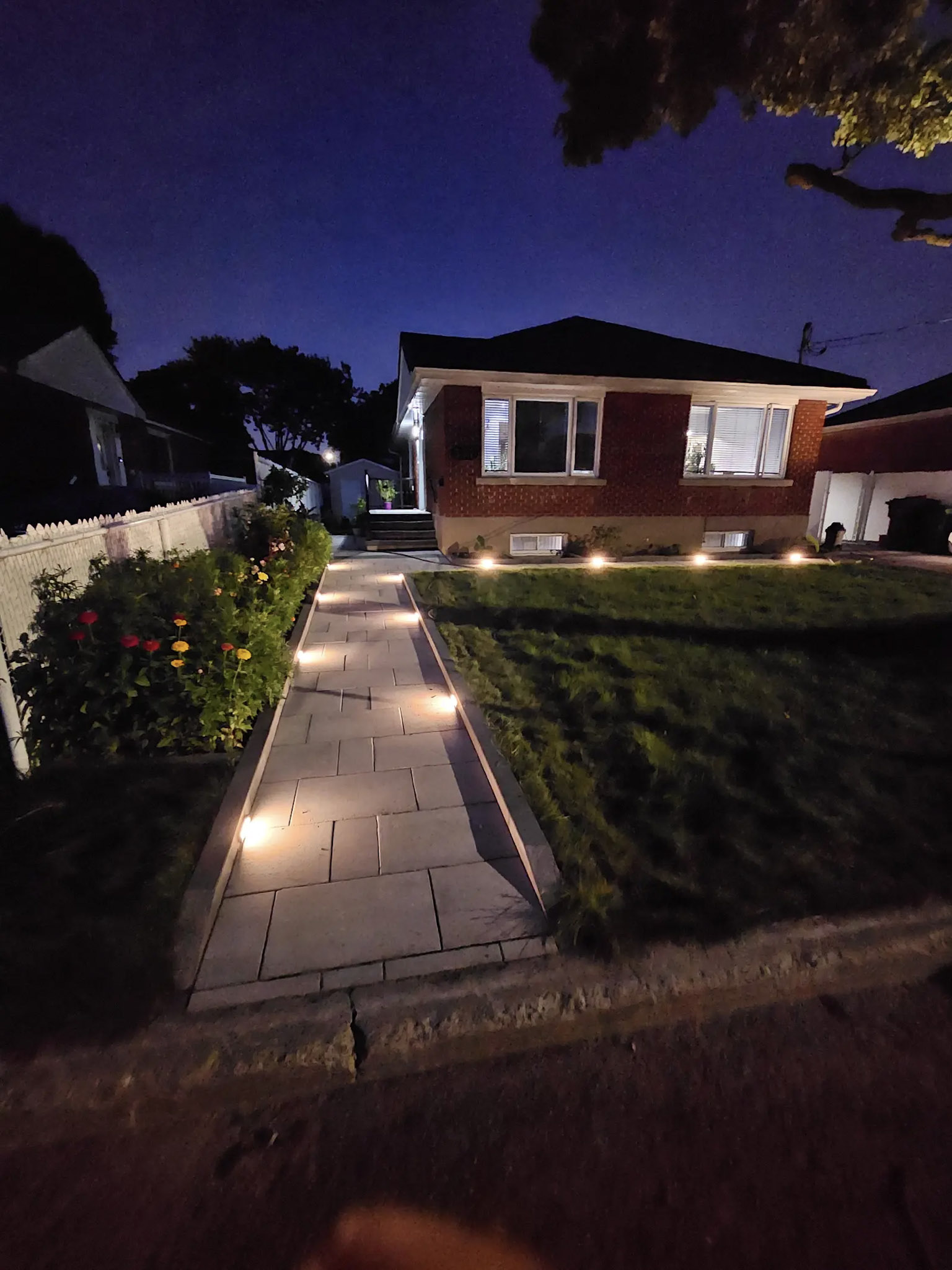
Source: Jet Électrique Inc.
Outdoor lighting helps your front yard look finished after dark. It also improves safety by making paths, steps, and entryways easier to see.
Light the Main Walkway
Walkway lighting is one of the most practical front yard upgrades. Low-voltage LED lights, solar-powered lights, and recessed step lights can help guide visitors safely to the front door.
Space lights evenly, but avoid placing them in a perfectly runway-like line unless that suits the design. A staggered layout often feels more natural.
Highlight the Front Entrance
The entryway should be one of the brightest and most welcoming parts of the front yard. Use wall sconces, overhead porch lighting, or landscape lighting near the steps.
A lighting timer or smart control can help keep the entrance consistently lit in the evening.
Use Accent Lighting Carefully
Accent lighting can highlight trees, stone walls, fountains, or architectural details. The goal is to create depth, not to flood the yard with harsh light.
Use warm LED lighting for a softer look. Avoid aiming lights directly into windows, neighbouring properties, or drivers’ sightlines.
Improve security around dark areas
Motion-activated lights near garages, side yards, and driveways can improve visibility. Flood lights can be useful, but they should be positioned carefully to avoid glare.
Good lighting improves safety without making the front yard feel overly bright or commercial.
Choose Durable Outdoor Fixtures
Front yard lighting must handle rain, snow, ice, and temperature changes. Choose fixtures rated for outdoor use and inspect them seasonally.
Check for:
Damaged wires
Tilted path lights
Broken lenses
Corrosion
Burned-out bulbs
Loose fixtures after freeze-thaw cycles
Maintenance and Care Tips for Front Yard Landscaping

Source: Reno Quotes
A beautiful front yard is easier to enjoy when it is realistic to maintain. The best maintenance plan depends on your plants, lawn size, soil, climate, and hardscape materials.
Create a Seasonal Maintenance Schedule
Breaking tasks down by season helps prevent the yard from becoming overwhelming.
Spring maintenance:
Remove winter debris from beds and walkways.
Cut back dead plant material where needed.
Prune winter-damaged branches.
Divide overgrown perennials.
Refresh mulch beds.
Edge garden beds.
Check irrigation systems.
Add compost where appropriate.
Summer maintenance:
Water deeply during dry periods.
Deadhead flowering plants.
Weed regularly.
Monitor for pests and disease.
Mow at a healthy height.
Trim fast-growing shrubs.
Check containers more often, as they dry out quickly.
Fall maintenance:
Remove excess leaves from lawns and walkways.
Plant spring-flowering bulbs.
Cut back selected perennials.
Protect sensitive plants where needed.
Add mulch before winter.
Clean and store garden tools.
Winterize irrigation systems.
Winter maintenance:
Keep walkways clear and safe.
Avoid piling heavy snow on delicate shrubs.
Watch for broken branches after storms.
Use de-icing products carefully near plants and hardscaping.
Keep Mulch Beds Fresh
Mulch is one of the simplest ways to reduce front yard maintenance. It helps suppress weeds, retain moisture, regulate soil temperature, and give planting beds a clean look.
For best results:
Keep mulch a few centimetres away from tree trunks and plant stems.
Replenish mulch as it breaks down.
Remove weeds before adding a new layer.
Avoid piling mulch too deeply.
Too much mulch can hold excess moisture and affect plant health.
Water Deeply Instead of Constantly
Frequent shallow watering can encourage shallow roots. Deep, less frequent watering usually supports stronger plants.
Drip irrigation and soaker hoses are useful because they deliver water directly to the root zone. They also reduce water waste compared to overhead sprinklers.
Container gardens, new plantings, and sunny beds usually need more attention than established shrubs and perennials.
Prune Plants at the Right Time
Pruning keeps shrubs, trees, and perennials healthy and proportional to the space. It can improve shape, remove dead growth, increase airflow, and prevent plants from blocking windows or walkways.
Avoid cutting everything into the same rounded shape. Natural pruning usually looks better and is healthier for many plants.
Before pruning, consider whether the plant blooms on old wood or new growth. Pruning at the wrong time can reduce flowering.
Control Weeds Before They Spread
Weed control is easier when handled consistently. A few minutes each week can prevent weeds from taking over flower beds.
Good weed control includes:
Mulching exposed soil
Pulling weeds before they seed
Keeping plants dense enough to shade soil
Maintaining clean bed edges
Avoiding bare patches in lawns and garden beds
Healthy plantings are often the best long-term weed prevention.
Maintain the Lawn or Choose Alternatives
If you keep a front lawn, regular care is important. Mow at the correct height, avoid cutting too short, water during dry periods when needed, and repair bare spots before weeds move in.
For lower maintenance, consider reducing lawn size with:
Ground cover plantings
Mulch beds
Native plants
Perennial borders
Gravel or stone features
Drought-tolerant front yard designs
Lawn alternatives can reduce mowing and watering while adding more visual interest.
Feed Plants Carefully
Fertilizer can help when soil lacks nutrients, but more is not always better. Too much fertilizer can cause weak growth or harm nearby waterways through runoff.
A soil test can help determine what your front yard actually needs. Compost is often useful for improving soil structure and supporting long-term plant health.
Divide and Refresh Perennials
Many perennials become crowded over time. Dividing them helps maintain plant health, improve flowering, and fill empty areas elsewhere in the yard.
Signs a perennial may need dividing include:
Reduced blooming
Dead centres
Overcrowding
Plants spreading beyond their space
Spring or fall is often the best time for dividing, depending on the plant.
Maintain Hardscaping Annually
Hardscaping needs care too. Inspect walkways, pavers, walls, and edging at least once a year.
Look for:
Uneven pavers
Cracked concrete
Loose stones
Sinking areas
Weeds between pavers
Drainage problems
Damaged retaining walls
Small repairs are usually easier and less expensive than waiting until the problem grows.
Clean and Inspect Outdoor Lighting
Lighting fixtures can shift, corrode, or become blocked by plant growth.
Seasonal lighting maintenance should include:
Replacing burned-out bulbs
Cleaning lenses
Adjusting fixture angles
Trimming plants away from lights
Checking timers
Inspecting visible wiring
This keeps the front yard safer and more attractive at night.
Plan for Plant Growth
One of the most common landscaping mistakes is planting too close together. Small nursery plants can become much larger within a few years.
Before planting, check mature height and width. Keep shrubs away from windows, siding, walkways, stairs, and utility areas. This reduces future pruning and prevents the front yard from feeling crowded.
Low-Maintenance Landscaping in Front of the House
For a lower-maintenance front yard, choose durable materials and climate-appropriate plants from the beginning.
Good options include:
Native plants
Drought-resistant perennials
Evergreen shrubs
Ornamental grasses
Mulch beds
Ground cover plantings
Rock gardens
Drip irrigation
Simple hardscaping
Low-maintenance does not mean no maintenance. It means choosing a design that reduces constant watering, mowing, pruning, and replanting.
Common Front Yard Landscaping Mistakes to Avoid
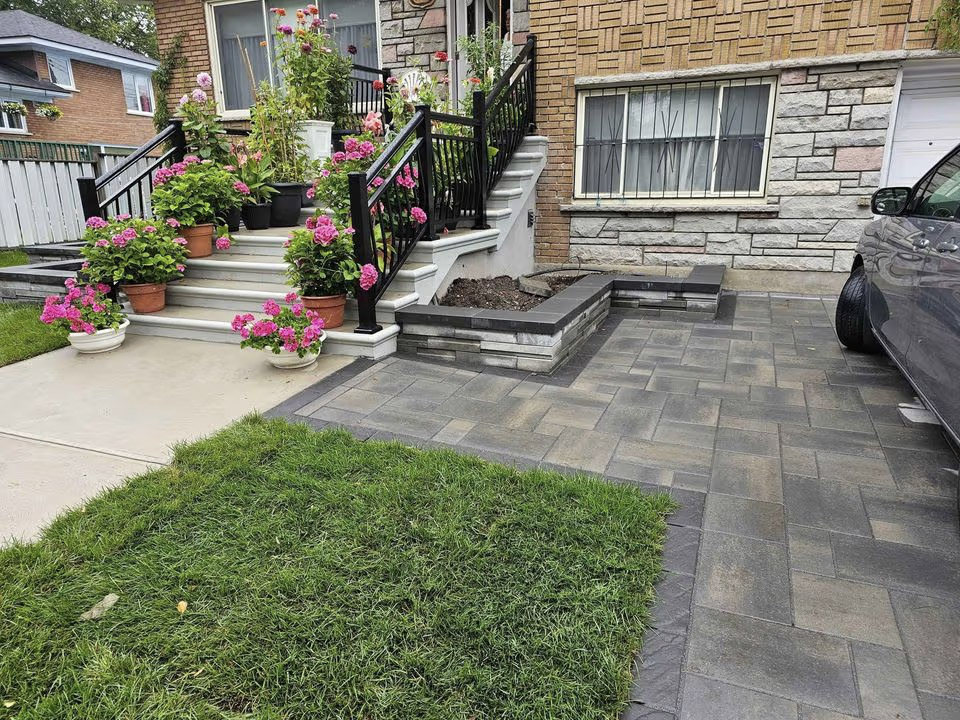
Source: Le Roi Du Pave
Overcrowding Plants
Plants need room to grow. Crowded beds can lead to poor airflow, extra pruning, and a messy appearance.
Ignoring Mature Size
Always consider mature height and width before planting trees, shrubs, or ornamental grasses.
Using Too Many Materials
Too many stone types, colours, and edging styles can make the yard feel busy. Repeat materials for a more unified look.
Forgetting Winter Appeal
Evergreens, grasses, bark texture, and structural hardscaping help the front yard look good outside the growing season.
Making Maintenance Too Complicated
A design that looks beautiful but requires constant care may become frustrating. Match the landscape to the time you can realistically spend maintaining it.
In Conclusion
Landscaping in front of your house is one of the most effective ways to improve curb appeal and create a more welcoming property. The strongest front yard designs combine plants, pathways, lighting, hardscaping, and seasonal interest in a way that suits the home’s style.
Whether you prefer a cottage garden, a modern geometric layout, a low-maintenance rock garden, or a layered front yard full of native plants, planning makes the difference. With the right structure and a realistic maintenance routine, your front yard can stay attractive, practical, and inviting throughout the year.
FAQ
What is the best landscaping for the front of a house?
The best landscaping depends on the home’s style, yard size, climate, and maintenance preferences. A balanced mix of foundation plantings, pathways, mulch beds, lighting, and seasonal colour usually creates strong curb appeal.
How can I make my front yard look better on a budget?
Start with cleaning up beds, adding mulch, edging the lawn, pruning overgrown shrubs, and planting perennials. Small changes near the entryway often create the biggest visual impact.
What are the best low-maintenance front yard landscaping ideas?
Native plants, evergreen shrubs, ornamental grasses, ground covers, mulch beds, rock gardens, and drip irrigation are popular low-maintenance options.
How do I landscape a small front yard?
Use compact plants, layered foundation plantings, containers, window boxes, and a clear walkway. Avoid oversized shrubs or too many decorative features.
How often should front yard landscaping be maintained?
Basic maintenance should happen throughout the growing season. Weeding, watering, mowing, and deadheading may be weekly tasks, while pruning, mulching, dividing perennials, and hardscape inspections can usually be done seasonally.
Should I use landscape lighting in the front yard?
Yes, landscape lighting can improve safety and curb appeal. Focus on walkways, steps, entryways, and key features such as trees, stone walls, or foundation plantings.
Looking for something else?
Related articles
The latest industry news, interviews, technologies, and resources.
Cynthia Pigeon
•08 Nov 2023
Since summer is a short-lived experience every year in Quebec, most of us try to squeeze the most out of the season by designing outdoor spaces to fully enjoy sunny days. Building a patio is a good idea should you want to have an outdoor seating area, paired with a table, barbecue, and sunshade.

Cynthia Pigeon
•08 Nov 2023
One of the most common types of roof in Canada, the gable roof, is all the rage right now, in due part to its modern aesthetic, but also because of the many positive features it adds to a house. So, are you thinking of building a gable roof over your house? If so, you might be looking for more information about gable roofs to know for sure whether you’re making the right choice. Check out the following to learn more about the different types, advantages, coverings, and accessories available for gable roofs.
Editorial Team
•21 Aug 2024
It's impossible for a human being to detect asbestos or lead in plain sight, as neither can be seen or smelt by the human alone. However, both are incredibly dangerous for the health when ingested, and actions must be taken immediately if there is any suspicion of either material.

Editorial Team
•07 May 2026
What was once considered a luxurious service reserved for hotels and restaurants is now increasingly sought-after by homeowners. Interior designers are called upon to revamp living rooms, kitchens, and bathrooms. Hiring the services of an interior designer can be a wise choice if your goal is to tailor your home to your favoured aesthetic, rather than settling for something that vaguely resembles it.

Editorial Team
•05 Dec 2023
The dining room is the gathering place of the home and according to the definition associated with these words, must be convivial and accessible. Some use their dining room every day while others reserve it for special occasions. In either case, this room should be adapted to the needs and tastes of the occupants.