What Are the Best Marketing Tools for Your Construction Company?
By Editorial Team
Updated on January 27, 2026

There’s a plethora of marketing tools available, and without early planning, it’s easy to get overwhelmed or burn through your budget—especially when the renovation season is approaching fast. Between management platforms, competitive analysis tools, and keyword research tools, many contractors struggle to know where to focus or what will actually help them secure early spring projects.
Join Our Network and Receive Real Leads!
Do you want to start getting some real leads with serious customers?
To help contractors get organized before competition ramps up, we met with Dalia Ceron Gonzalez of Image Marketing to shed some light on this complex subject. Here’s how she summed it up: "The five recommended marketing tools for start-ups are a logo, a clear brand image, main contact information, a website, and business cards." No more, no less.
The Relevance of Marketing Tools for Companies
Source: Canva
“If the only tool you have is a hammer, you tend to see every problem as a nail.”
The “law of instrument” or Maslow’s Hammer, as revealed by Abraham Kaplan and Abraham Maslow applies to numerous fields, including marketing.
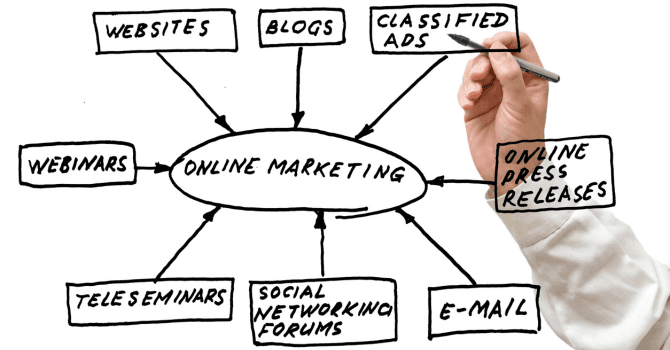
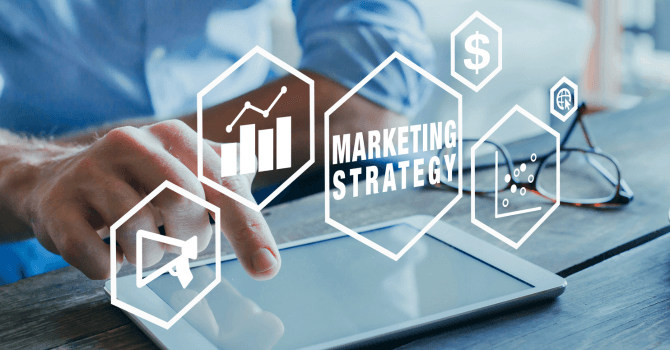
The key to successful digital marketing is using the right management and marketing tools.
Rest assured, not every tool will require an additional monthly or yearly subscription. Most marketing tools are free and powerful enough to help you plan your marketing strategy like a pro.
What Are Some Examples of the Main Marketing Communication Tools Used?
Source: Canva
Digital marketing isn’t the only way to win clients over. The first step in your communication starts with much simpler elements:
Logo
A logo is indispensable for your company’s identity. Even if your core area of expertise is complex, your logo should still be simple. Take examples like Nike, Apple, or McDonald’s—they all have renowned logos because of their simplicity.
When it comes to colour, stick to your graphic charter.
Graphic Charter
Your company should have brand colours. These colours will not only be present in your logo but also featured on the pages of your website.
Consider favouring greens to represent ecology, red for luxury, white for simplicity, or black for elegance.
Business Cards

Source: Canva
Keep it clean, simple, and to the point by including the following essential elements:
Your address
Phone number
Email
QR code linked to your website
Portfolio
Potential clients want to know what you’re capable of. Nothing’s worth more than a good portfolio filled with your best work.
Fortunately, there are some websites like Heyzine that allow you to create up to 5 free portfolios and embed them on your website.
Sponsorships
As a construction company, you can make a name for yourself locally by sponsoring a sports team. How, you ask? By purchasing their team jerseys, for example, and having your company logo printed on them.
Is the local hockey team organizing an annual raffle? Consider offering giveaways to promote your company locally.
Expos
Meet potential new clients not coincidentally, but where they’re actively seeking you out: expos.
When they come up to you, it indicates that you have a solution to a problem they’re struggling to fix. Expo centres provide an opportunity not only to understand clients’ needs but also improve your services and refine your company’s message to better serve them.
5 Digital Strategy Tools for a Construction Company
Source: Canva
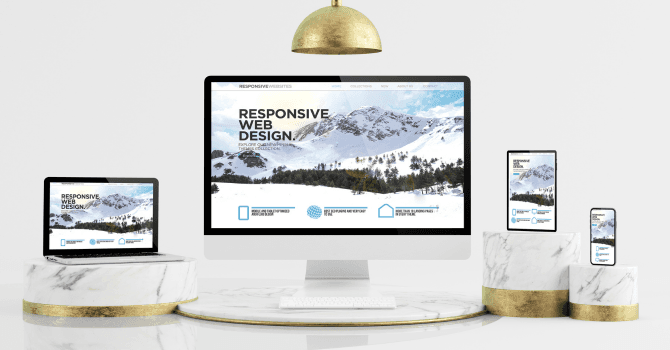
1. Your Website
Accuracy and conciseness should guide you while creating every single page of your website. Potential clients should be able to quickly find answers to their questions.
Within 5 seconds, all users should be able to gather the following information:
Who you are
What you do
What your services are
What sets you apart from the competition
But most importantly, they should know what’s expected of them:
Request a quote
Get in touch
Provide their email addresses
etc.
If your website fails to deliver, redesign it until it becomes straightforward.
2. Social Media Platforms
As a construction company, your work is primarily focused locally. While Facebook is a good social media platform, it may not necessarily be the best option. Achieving high levels of exposure on Facebook without paying is becoming increasingly difficult.
However, many contractors are now creating videos to showcase their work as tutorials and then posting them on YouTube. When it comes to establishing brand awareness throughout the province, few tools are as powerful as YouTube.
Learn more about it in our article: Contractors: Acquiring New Clients Through Social Media.
Social Media Management Tools
To optimize your presence on social media without spending all your time on it, specialized tools are available to simplify content planning, publishing, and performance tracking. Platforms such as Hootsuite or Buffer allow you to schedule posts in advance across multiple networks (Facebook, Instagram, LinkedIn, etc.), centralize account management, and monitor audience interactions from a single dashboard.
With these solutions, it becomes easier to maintain a consistent presence, analyze post performance, and adjust your strategy based on the feedback you receive. These tools offer significant time savings for construction companies looking to build local brand awareness and engage effectively with their community.
3. SEO
Source: Canva
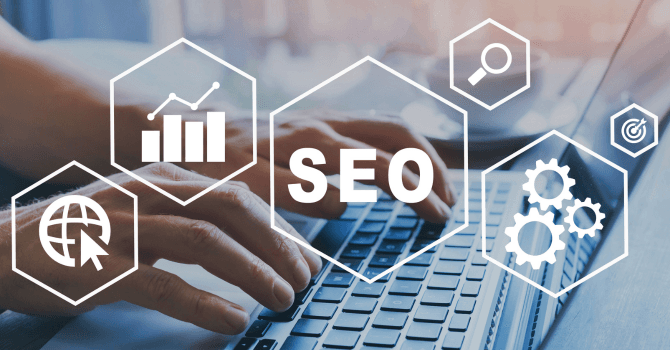
Search engine optimization. That’s your blog articles, specifically written around keywords that you're targeting as a construction company. To ensure your presence among search results, it’s important to ensure that the content you create is:
Up-to-date
Regular
Accurate
Interesting
Original
To outperform the competition, don’t look at what they’re writing. Instead, explain, in your own words, what you do and how you do it (techniques, materials, legislation, perspectives, innovations, etc.).
4. Google Business Profile
This tool enables you to locate your company on Google Maps. Once you’ve done that, you’ll be surprised by the number of new clients who used to drive by your place of business every day without knowing it.
Keep in mind that in this day and age, when people have a need, they often turn to Google as their first resource.
5. Google Ads
It’s advertising, and you can achieve it on Google by targeting specific keywords. The marketing goal is to rank first on the search results page.
The benefit of using this technique is that it provides quick results at low costs, thanks to:
Pay-per-clicks on your ad
Budget control by setting a maximum pay-per-click bid
No minimum budget requirement
Since you have the ability to stop your advertising campaigns at any time, you can manage your scheduling and stay in control.
What Are the Most Used Digital Marketing Tools?

Source: Canva
If you’ve already done some research on the matter, you’re probably familiar with a few popular marketing tools. This is normal since they're the most widely used in digital marketing.
Mailchimp (email)
Mailchimp is one of the most widely-used digital marketing tools for managing email campaigns. Its purpose is to automate your email sequences, increase open rates, generate more clicks, and ultimately drive more sales.
Canva
In digital marketing, design plays a crucial role in creating signs, videos, graphics, and social media posts. Canva allows you to do all of this yourself, like a true professional.
Yoast SEO
Yoast SEO is a WordPress plugin that is essential for your website’s SEO. As its name suggests, it serves as an SEO tool.
It not only enables you to write your meta descriptions for your website but also helps you automatically generate the layout of your pages using schema.org.
Semrush
Semrush is a comprehensive marketing tool that allows you to analyze and monitor your competitors. With Semrush, you can uncover valuable insights such as:
Their sources of website traffic
Their backlinks
Pay-per-click search traffic
Their ads on the Google Display Network
Their website’s ranking for each keyword
Trello
Trello’s a free and user-friendly project management tool. It enables you to efficiently organize workflows among your team members and keep track of ongoing projects.
Two Free Online Strategic Analysis Tools
Source: Canva
If you want to establish an online presence, Google is the way to go, and the good news is that Google offers a range of marketing tools designed to optimize your digital marketing campaigns.
The best part is that all Google tools are free to use.
1. Google Analytics
Google Analytics is the ultimate online tool for digital marketing. By setting up a line of code on your website and configuring Google Analytics, you gain valuable insights into your website’s user behaviour. You can track:
User’s country and city of origin
New users
Visited web pages
Time spent per visit
Source of traffic (Google search, direct, social media)
etc.
Google Analytics provides you with a comprehensive understanding of how users navigate your website. It’s such a valuable tool that nearly every webmaster in the world uses it.
2. Google Search Console
Google Search Console is an ideal add-on to Google Analytics. It’s a free online tool that enables you to:
Monitor how your pages rank on Google’s search engine
Determine the keywords that contribute to your search rankings
Identify any page indexing issues on your website
Evaluate the user experience based on core web vitals
Other Tools Are Also Available to You
Customer Loyalty and Rewards Tools
To encourage clients to come back and recommend your business, loyalty and rewards programs are valuable allies. These tools make it possible to offer points, discounts, or exclusive benefits to repeat customers, helping strengthen their connection to your brand. Solutions such as Smile or Yotpo make it easy to set up customized programs, whether to reward repeat purchases, referrals, or engagement on your platforms. Beyond building loyalty, these tools also help you better understand customer behaviour and tailor your offers to maximize long-term satisfaction and retention.
Lead Generation and Conversion Tools
To attract new prospects and turn visitors into customers, there are tools specifically designed to maximize acquisition and conversion. Among the most popular is Unbounce, which allows you to easily create optimized landing pages that encourage action (quote requests, contact forms, guide downloads, etc.). With customizable templates and built-in A/B testing, you can identify what resonates most with your audience and continuously improve your conversion rates.
Another example is Hello Bar, which lets you add notification bars or pop-ups to your website to capture visitors’ attention at strategic moments. Whether you’re promoting a special offer, encouraging newsletter sign-ups, or highlighting a contact number, these tools help collect leads without disrupting the user experience.
Influencer and Affiliate Marketing Tools
For construction businesses aiming to expand their network and increase visibility, influencer and affiliate marketing tools offer a strategic approach. These platforms simplify connections with influencers or affiliate partners who can recommend your services to targeted audiences, while automating collaboration management.
One leading example is Shopify Collabs, which makes it easy to find relevant creators to promote your offerings, send products or discount codes, and track results and affiliate payments seamlessly. This type of tool saves valuable time while ensuring professional and transparent partnership management.
CRM Tools
Customer Relationship Management (CRM) tools are essential for construction companies looking to organize client information, track project communications, and nurture lasting relationships. With a quality CRM platform, you can centralize customer data, follow up on leads efficiently, and ensure no detail slips through the cracks during complex projects.
Popular CRM solutions like HubSpot and Zendesk offer features tailored to small businesses, such as easy contact management, automated reminders, and integration with email and scheduling tools. These platforms help construction teams manage everything from initial inquiries to post-project follow-ups, making it easier to deliver a professional, responsive client experience. By adopting a CRM tool, your company can streamline communication, improve customer satisfaction, and ultimately drive more repeat business.
FAQ
What does AI bring to marketing and how to use it for your business?
Artificial intelligence (AI) is transforming marketing by automating repetitive tasks, quickly analyzing large volumes of data, and personalizing messages for different target audiences. Generative AI also helps create content, draft communications, and boost creativity when developing campaigns or new ideas—all while maintaining a consistent tone and optimizing resource allocation.
What are the specialized tools of direct marketing?
Direct marketing tools include personalized email campaigns, telemarketing phone calls, letters or direct mail, SMS messages, and online forms for collecting customer data. These tools make it possible to communicate directly with prospects or existing customers, offer promotions, and measure campaign performance in real time.
What are the general tools of place-based (territorial) marketing?
In Quebec, place-based marketing involves tools such as creating a unique brand or slogan for the region (e.g., “VRAIment Beauce”), using traditional and social media, running promotional campaigns to attract workers, residents, investors, and tourists, and showcasing the area’s natural, cultural, and economic assets. Engaging local stakeholders and mobilizing resources are key to building a strong, appealing identity for the territory.
Looking for something else?
Related articles
The latest industry news, interviews, technologies, and resources.

Editorial Team
•17 Apr 2026
More and more women are stepping onto jobsites and reshaping this traditionally male-dominated industry—bringing new perspectives, strengthening teams, and helping companies meet growing demand. In 2023, a record was set: nearly 7,500 women were employed on Quebec jobsites, representing 3.8% of the workforce. That’s a 50% increase since 2020. These numbers point to more than progress—they signal a critical opportunity for construction businesses to build stronger, more balanced teams ahead of the busy summer season.

Editorial Team
•10 Feb 2024
Workplace safety is an overwhelming challenge facing all industries, most notably those dealing with hazardous materials. The construction industry as a whole is highly concerned about this problem, especially since it revolves around significant hazardous energy-related risks. Hence why lockout devices on hazardous materials are essential for ensuring the safety of worksite labourers. In this article, we’ll delve into the reasons why it's paramount to establish such a practice.

Editorial Team
•08 Nov 2023
Every homeowner is likely looking for ways to make their bathroom experience more enjoyable. There are plenty of accessories that can be installed in this room, but none quite as luxurious as the bidet.

Editorial Team
•25 Oct 2024
Aluminum gutters are not only a long-term investment but also offer key benefits, such as:
Équipe éditoriale
•05 Dec 2025
A bathtub can be a serious luxury and a beautiful addition to any bathroom. But when a bathroom is outfitted with an older bathtub and you’d rather have a modern, walk-in shower, it can be an eyesore. In this case, you may be looking to transform your bathtub into a shower and wondering if this is possible.