Mitsubishi Heat Pump: The Best Models
By Editorial Team
Updated on January 13, 2026
Choosing a heat pump suited to the Canadian climate is a strategic decision for comfort, energy savings, and long-term peace of mind. Recognized as a premium brand, Mitsubishi Electric stands out for its performance in extreme cold, precise temperature control, and the exceptional durability of its systems.
Get Your Project Started Today
Submit your details and receive three free quotes from trusted contractors.
In this guide, we present the best Mitsubishi heat pump models, specially designed to handle Canada’s harsh winters while providing efficient and quiet cooling in summer. Whether you’re looking for a wall-mounted or central system, these models are among the most reliable and high-performing on the residential market.
The Best Models to Choose From
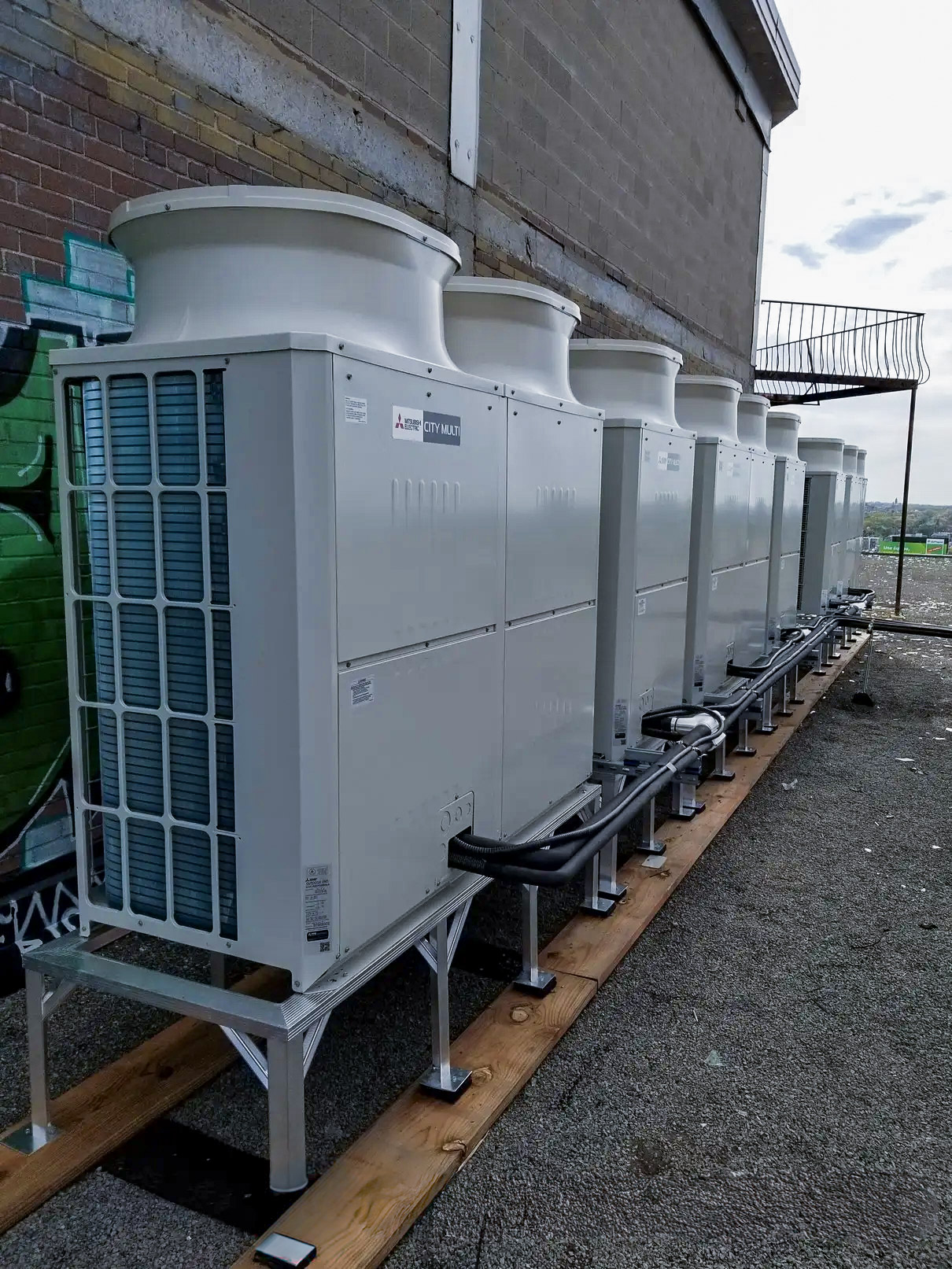
Source : AIR Climatisation VS inc
Zuba Single Plus (MUZ-FS / Zuba Plus)
The Zuba Single Plus represents the pinnacle of Mitsubishi’s offerings for cold climates. Equipped with Hyper-Heat Plus (H2i) technology, it maintains 100% of its heating capacity down to -20 °C and continues to perform even when temperatures drop below -25 °C.
With an energy efficiency rating of up to 33.1 SEER and 12.5 HSPF, this model is ideal for homeowners looking to reduce electricity costs without compromising comfort. Its advanced design, combined with an extended 12-year warranty on parts and the compressor, makes it a premium choice for Canada’s demanding winters.
Zuba Central
The Zuba Central is Mitsubishi’s benchmark for homes with ductwork. Specifically designed for the Canadian climate, it provides full heating capacity at -15 °C and continues to operate efficiently down to -30 °C.
Thanks to Hyper-Heat technology and an intelligent defrost system, the Zuba Central ensures even heating throughout the home, even during periods of intense cold. It is aimed at homeowners seeking a high-end, durable, and long-lasting central solution.
FS Series – Zuba Plus
The FS Series (Zuba Plus) is a premium wall-mounted heat pump known for its balance of performance, quiet operation, and energy efficiency. It provides 100% of its heating capacity at -20 °C and remains functional down to -30 °C, making it an excellent choice for harsh winters.
With performance ratings of up to 29.8 SEER and 10.7 HSPF, this model is well-suited for homes, condos, and duplexes seeking consistent comfort, superior air quality, and discreet operation.
GS Series – Zuba
The GS Series – Zuba offers a very high energy efficiency option while remaining more accessible than the top-tier models. It can deliver 100% of its heating capacity at -15 °C and maintains reliable performance down to -30 °C.
Thanks to Hyper-Heating Inverter technology, the GS Series allows for significant energy savings while providing stable comfort year-round. It’s an excellent compromise for homeowners seeking a high-performing heat pump without moving into the ultra-premium range.
HM Series
The HM Series is known for its excellent value for money. It provides efficient heating down to -20 °C, making it ideal for transitional periods (fall and spring) and moderate winters.
Less oriented toward extreme cold than the Zuba models, the HM Series remains a reliable, quiet, and economical solution for condos, apartments, and mid-sized homes. It is often a smart first step toward installing a Mitsubishi heat pump.
Summary Table
Mitsubishi Heat Pump Model | Energy Efficiency (SEER / HSPF) | Extreme Cold Performance | Noise Level | Durability & Warranty | Estimated Price (Quebec) |
Zuba Single Plus (MUZ-FS / Zuba Plus) | Up to 33.1 SEER / 12.5 HSPF | 100% capacity at -20 °C, performance down to -25 °C and lower | Very quiet – approx. 48 dB outside | Very high – Hyper-Heat Plus, 12-year parts & compressor warranty | $6,500–$9,000 |
Zuba Central | ~22–24 SEER / 12–13 HSPF | 100% heating at -15 °C, effective down to -30 °C | Quiet for a central system | Very high – designed for Canadian climate, up to 12-year compressor warranty | From approx. $8,600 (without installation) |
FS Series – Zuba Plus | Up to 29.8 SEER / 10.7 HSPF | Effective heating down to -30 °C | Very quiet – approx. 48 dB outside | Very high – premium wall-mounted, 12-year parts/compressor warranty | $5,800–$8,500 |
GS Series – Zuba | Up to 28.4 SEER / 9.6 HSPF | 100% at -15 °C, performance maintained down to -30 °C | Quiet – approx. 48 dB outside | High – Hyper-Heating Inverter, 10-year parts/compressor warranty | $4,800–$7,000 |
HM Series | Up to 20 SEER / 10 HSPF | Heating down to -20 °C | Quiet – approx. 49 dB outside | Good to high – excellent value, 10-year parts/compressor warranty | $4,000–$6,000 |
FAQ
Which Mitsubishi heat pump is best for the Canadian climate?
The Zuba Single Plus and Zuba Central models are the best suited for Canada’s climate, as they are designed to maintain excellent performance even at temperatures as low as -30 °C.
What is the difference between a Mitsubishi wall-mounted and central heat pump?
A wall-mounted heat pump heats or cools one or a few rooms without ducts, whereas a central heat pump distributes air throughout the house via ductwork. Mitsubishi is particularly recognized for its Zuba Central line in homes with an existing central system.
Are Mitsubishi heat pumps eligible for subsidies in Quebec?
Yes. Several Mitsubishi models, notably the Zuba and Zuba Plus series, are eligible for subsidy programs like EnerGuide, provided the installation meets the required technical criteria.
What is the average lifespan of a Mitsubishi heat pump?
According to data and field feedback, a well-maintained Mitsubishi heat pump can last between 15 and 20 years, which is above the market average.
Why are Mitsubishi heat pumps more expensive than some other brands?
The higher price is explained by Japanese build quality, advanced Inverter technology, cold-weather performance, and superior system durability, which often reduces long-term costs.
What smart controls are available with Mitsubishi heat pumps?
Many Mitsubishi heat pumps are compatible with smart controls like the Comfort app (formerly kumo cloud), which allows you to adjust temperature, set schedules, and manage each zone remotely from your smartphone or device. This makes it easy to customize comfort and monitor your system from anywhere.
Can Mitsubishi heat pumps integrate with home automation or building management systems?
Yes, select Mitsubishi heat pump models can connect with building automation systems, enabling centralized control over multiple zones and seamless integration with other smart home technologies. This is ideal for both residential and commercial applications seeking advanced system compatibility.
Looking for something else?
Related articles
The latest industry news, interviews, technologies, and resources.
Editorial Team
•09 Jun 2026
A Canair heat pump can be a practical option for Canadian homeowners who want heating and cooling from one system. Because Canada has a wide range of climates, from milder coastal winters to extreme cold in parts of the Prairies, Ontario, Quebec, and Atlantic Canada, the right model depends on your home’s layout, insulation, existing HVAC system, and local installer support.
Editorial Team
•21 Jul 2026
As colder weather approaches, it is a good time to prepare your property for the months ahead. Early planning for insulation, roofing repairs, and heating upgrades can help prevent last-minute problems once temperatures drop.

Cynthia Pigeon
•14 Nov 2024
It seems like cold weather is always around the corner, so there is literally no need to highlight the importance of avoiding cold drafts wafting through your house. Since it causes both discomfort and significant increases in your heating bill, avoid this issue at all costs! Check out these helpful tips and tricks.

Editorial Team
•05 Dec 2023
The dining room is the gathering place of the home and according to the definition associated with these words, must be convivial and accessible. Some use their dining room every day while others reserve it for special occasions. In either case, this room should be adapted to the needs and tastes of the occupants.
Editorial Team
•02 Apr 2026
What are the factors that influence the cost of finishing a basement? What steps should be considered to determine an accurate budget? In this article, we detail the various stages and factors that affect the final cost, from material choices to the complexity of the necessary work.