Understanding R-Value: How to Calculate for Better Insulation
By Cynthia Pigeon
Updated on May 15, 2026
Insulating a home helps slow heat loss. To put it simply, insulation acts a bit like your home’s wool sweater. To do its job properly, it must trap air effectively and, just as importantly, stay protected from water and moisture.
Effective insulation limits the transfer of energy between indoor and outdoor environments. In winter, it helps keep heat inside the home; in summer, it helps reduce heat gain. Beyond improving comfort, good insulation can reduce energy consumption and lower heating and cooling costs. Your heating system does not have to work as hard in cold weather, and your air conditioner is less strained during hot summer days.
When choosing from a wide range of insulation materials, it helps to understand the R-value associated with each one. This value allows you to compare the thermal performance of insulation products and make better decisions when improving your home’s energy efficiency.
What Is R-Value?
Source: Canva
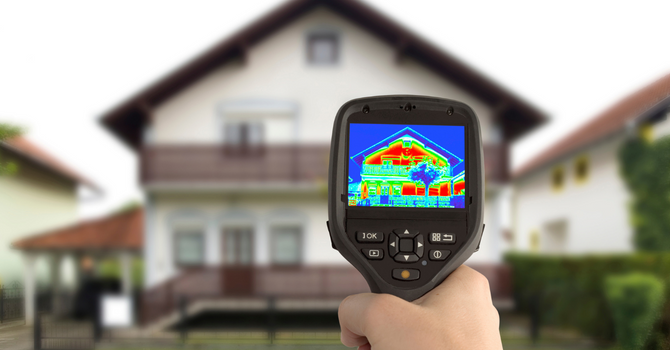
The thermal resistance of a material measures its ability to resist heat flow. In practical terms, it measures how well a material helps keep heat inside the home in winter and outside the home in summer.
Insulation resistance to heat flow is measured using R-value in imperial units, or RSI in metric units. To convert RSI to R-value, multiply the RSI value by 5.678. To convert R-value to RSI, divide the R-value by 5.678.
The higher the R-value, the longer it takes for heat to move through the material, and the better the insulation performs.
Different materials are assigned R-values based on their insulating properties. These values are often shown on the product packaging and can also appear in building code tables, manufacturer documentation, and construction guides.
Since each material has a specific R-value, it is possible to calculate the insulation level of different parts of a building. Minimum requirements vary by province, municipality, climate zone, and building code edition. The key word here is minimum: meeting code does not always mean achieving the best possible energy performance.
Minimum R-Values for Different Parts of a Home
In Canada, minimum insulation requirements vary depending on the region, climate zone, type of building, and applicable building code. For example, colder regions generally require higher insulation levels than milder coastal areas.
As a general reference, roof and attic insulation targets are often higher than wall or basement floor targets because heat loss through the upper part of the building can be significant. Above-grade walls, basement walls, floors, and roof assemblies each have their own requirements.
R-values are used as a baseline to help preserve occupant comfort, protect the building envelope, and reduce energy loss. Increasing thermal resistance beyond the minimum requirements can improve energy performance and help lower heating and cooling costs.
An insulation expert can assess your home’s current insulation level and recommend improvements based on your climate zone, existing construction, ventilation, air leakage, and budget.
Calculating Total Thermal Resistance
Source: Canva
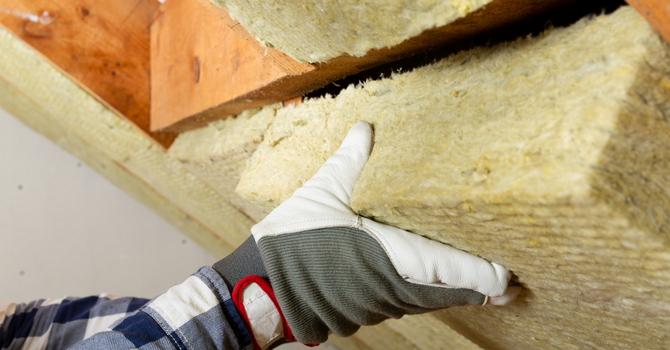
Total thermal resistance is the combined R-value of a complete wall, roof, or floor assembly. To determine how well an assembly is insulated, you must look at the resistance offered by the full system, not just one material.
Because a wall or roof assembly is usually made up of several materials of different thicknesses, the R-values of the layers are generally added together to estimate the total thermal resistance.
For example, a typical above-grade wall could include:
Material | R-Value Example |
Exterior air film | R-0.17 |
Brick veneer | R-0.40 |
Air space | R-1.02 |
Rigid polystyrene insulation | R-5.0 |
Batt insulation in framing cavity | R-19 |
Gypsum board | R-0.44 |
Interior air film | R-0.68 |
This type of calculation gives a rough idea of the thermal resistance of the assembly. However, real-world performance also depends on thermal bridging, air leakage, moisture, installation quality, and how the materials interact.
Important Details Not to Overlook
R-value is measured under laboratory conditions. Once insulation is installed on a construction site, real performance can differ from the manufacturer’s stated value.
That is why you should not look at R-value alone. A building assembly must be considered as a system. The relationship between materials matters, and some combinations can reduce performance if they trap moisture, block ventilation, or create thermal bridges.
Time is another factor. Some insulation materials may settle, compress, or lose performance if they get wet or are poorly installed. Others maintain their performance more consistently over time when protected from moisture and installed correctly.
In short, R-value matters, but so do:
Air sealing
Vapour control
Moisture management
Ventilation
Thermal bridging
Installation quality
Long-term durability
Different Insulation Materials and Their R-Values
Source: Canva
Common Insulation Materials
Fibreglass and Mineral Wool
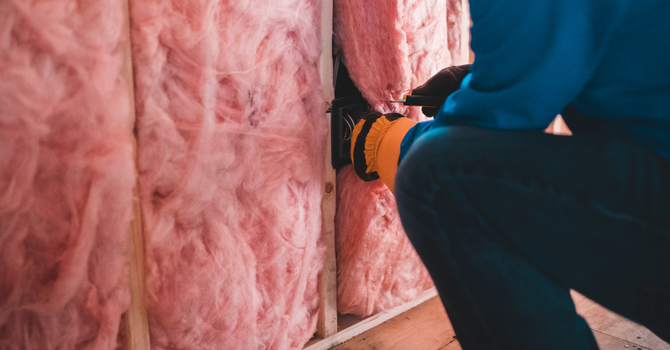
Fibreglass (R-3 to R-4 per inch) and mineral wool (R-3.7 to R-4.3 per inch) are widely used across Canada. They are available as batts, boards, or loose-fill insulation. They are relatively affordable, widely available, and commonly used in walls, attics, floors, and basements.
Fibreglass is sensitive to moisture and can lose performance if compressed or wet. Mineral wool is generally more water-resistant and offers good fire resistance. Both materials should be installed carefully to avoid gaps, compression, and air leakage.
Extruded Polystyrene and Closed-Cell Spray Foam
Extruded polystyrene, often called XPS (R-5.0 per inch), is a rigid foam board. Closed-cell spray polyurethane foam (R-6.0 to R-7.0 per inch) is a sprayed insulation product that expands and hardens after application. These materials are popular because they resist moisture and offer relatively high R-values per inch. Closed-cell spray foam can also act as an air barrier and, at certain thicknesses, may contribute to vapour control depending on the assembly and local code requirements.
However, foam insulation products can have higher embodied energy and environmental impacts, depending on the blowing agents and manufacturing process.
Cellulose Insulation
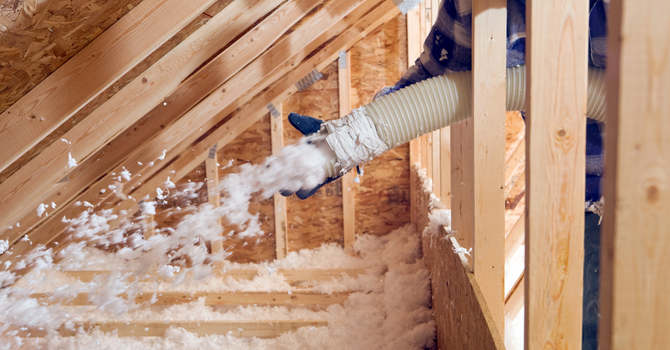
Cellulose (R-3.2 to R-3.8 per inch) is made mostly from recycled paper products. It is usually installed as blown-in insulation in attics or dense-packed into wall cavities. It fills irregular spaces well, has good soundproofing properties, and is often considered a lower-impact insulation option. Cellulose is usually treated for fire and mould resistance. However, it must be protected from bulk water and excessive moisture, and it should be installed at the proper density and depth to account for possible settling.
Newer Eco-Friendly and Economical Options
Source: Canva
Some insulation products offer alternatives to conventional materials while focusing on lower environmental impact.
Wood Fibre and Cellulose Fibre Panels
Wood fibre (R-3.5 to R-4.0 per inch) or cellulose fibre insulation panels (R-3.5 to R-3.8 per inch) are made from plant-based fibres or recycled paper products. They can be used in some wall and roof assemblies, depending on availability and building design.
These products can offer good thermal and acoustic performance, and they are often valued for their lower environmental footprint. However, availability varies across Canada, and installation requirements must be followed carefully.
Straw Bale Insulation
Straw insulation (R-1.5 to R-2.5 per inch) is natural, renewable, biodegradable, and can provide strong thermal performance when used in the right building system. Straw bale construction also allows moisture vapour to move through the assembly, which can help reduce condensation risks when properly designed.
However, straw must be protected from water, and the building design must be adapted accordingly. It is not typically sold as conventional insulation in home improvement stores. It is more often used in specialized construction projects or prefabricated wall systems.
Hemp Insulation
Hemp is a natural, biodegradable, fast-growing material. Hemp insulation (R-3.5 to R-3.8 per inch) can be used in batts, panels, or blocks, depending on the product. It can help regulate moisture and provide good thermal and acoustic comfort.
However, hemp insulation may require specialized installation methods, and availability can vary by region.
Cotton Insulation
Cotton insulation (R-3.0 to R-3.8 per inch) is often made from recycled textile fibres, including denim. It can offer good acoustic performance and may be used in wall or ceiling assemblies.
It is generally considered a low-irritation material compared with some conventional insulation products, but it may be harder to find in some parts of Canada and can cost more than standard options.
What to Remember About R-Value
R-value is one of the most important tools for comparing insulation materials, but it is not the only measure of performance. A high R-value will not deliver good results if the insulation is poorly installed, compressed, wet, or surrounded by air leaks.
For best results, treat insulation as part of a complete building envelope strategy. The right approach should include proper R-value, air sealing, moisture control, ventilation, and installation details adapted to your climate and building type.
Looking for something else?
Related articles
The latest industry news, interviews, technologies, and resources.

Editorial Team
•04 Sep 2024
Slab insulation plays a key role in overall home construction as it improves energy efficiency, controls moisture, increases durability, and reduces energy costs. Although your concrete slab insulation might vary depending on local building codes, it doesn't hurt to install one in your home.
Léa Plourde-Archer
•04 Feb 2025
The bathroom plays a crucial role in our homes, serving as both a serene retreat and a space for quick, everyday routines. As you plan a bathroom renovation, you might wonder: What changes will enhance both functionality and aesthetics? How can you create a layout that maximizes space? With a plethora of options, the first step is identifying what needs improvement, followed by thoughtful design and decor choices.

Editorial Team
•08 Nov 2023
Whether building a custom home or redesigning one that just wasn’t cutting it anymore, taking on a home building project is exciting, but is also a huge job.

Cynthia Pigeon
•28 Sep 2026
Planning home renovation work in Quebec requires rigour and a strong understanding of the local economic reality. Whether you own an older duplex in Montréal, a modern condo in Québec City, or a single-family home in Estrie, using price benchmarks adapted to the Quebec market is essential.
Editorial Team
•18 Apr 2024
Have you noticed the presence of traces of humidity in your crawl space? You're right to wince because a buildup of moisture is never good news.