Everything You Need to Know About Home Insulation
By Editorial Team
Updated on November 8, 2023
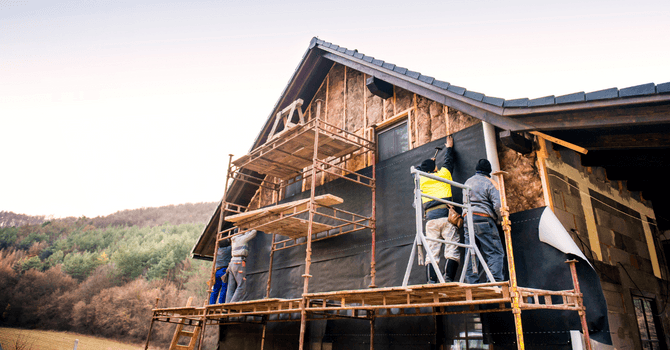
Even though it can’t be seen, insulation is an integral feature of any home. It helps to keep us warm and dry during autumn and winter months, as well as cool and comfortable during spring and summer.
It’s important to understand just how much impact insulation has on the interior temperature and energy efficiency, so how can you know if your home is properly insulated?
If you’re dealing with obscenely high heating bills each year, it could be a sign that your home is poorly insulated. Luckily, we have some tips and general advice to help you better understand the crucial role insulation plays within your home.
Everything you need to know about proper home insulation
What does home insulation do?

Source : Canva
In a nutshell, insulation is a material used to fill spaces such as gaps and crevices behind walls in order to reduce heat flow around cold areas of your home. Heat flows naturally from warmer areas to cooler ones. During winter, the heat inside your home instinctively tries to move to colder areas such as outdoors or other unheated spaces, whereas in summer, heat moves from outdoors into your cool home.
Insulation slows down this process while also improving the energy efficiency of your home by reducing the amount of heat that escapes and enters. Insulation's job is to trap warmth in a home’s interior when it’s cold outside, while also decreasing the amount of heat moving indoors during warm months, working to maintain a consistent, uniform temperature.
There are various types of insulation on the market, and this includes electrical insulation, soundproofing insulation, and thermal insulation. For this article’s purpose, we're discussing thermal insulation, as this is used to increase comfort levels and energy efficiency. Thermal insulation has the ability to reduce and slow heat loss by providing a barrier between areas with very different temperatures. It’s worth mentioning that certain forms of thermal insulation also work as soundproofing.
The thermal insulation of a house

Source : Canva
When it comes to thermal insulation, the air and vapour barriers are factors that must be taken into account. In the case of an older house that may be lacking these barriers, you will need to add them.
We always recommend consulting with a certified contractor before you take any other action as it is possible in this case that a simple vapour barrier paint will sufficiently seal and improve the overall insulation.
What to do in case of mould in your insulation?

Source : Canva
So now that we know how important insulation is, what happens If you find evidence of mould growth in your insulation? It's imperative that you take action to eliminate its presence as quickly as possible so as not to allow it to spread further.
If nothing is done to remove its presence, it may eventually lead to serious health problems as spores can become airborne. In addition, adding insulation will not solve your mould problem, it may just accelerate it.
Improving the energy efficiency of insulation

Source : Canva
If there are openings in the roof allowing air or moisture to bleed in and out, the energy efficiency of your home will be significantly diminished. The roof is of particular importance because heat rises and this is the case for the vast majority of your home. If your house is poorly insulated, it will be particularly noticeable during the winter as you may experience freezing gusts inside. This would make for an unpleasant situation but would also point to a significant loss in heat.
During periods of extreme cold, your energy costs increase significantly as you heat your home. This is why it is ideal to make sure that the heat produced within your home is retained and keeps you warm at all times. Issues with your home’s insulation will cause moderate to severe heat loss which you ultimately pay for.
So, if the heat is being expelled through a weakness in the insulation, fixing the issue and installing effective insulation can turn out to be a worthy investment.
Keeping your attic tempered

Source : Canva
Air circulating throughout the attic must be maintained at a steady temperature that's between the inside temperature of your home and the outside temperature. If the thermostat indicates that the attic’s temperature is the same as outside, this may indicate an insulation problem with regards to the roof.
On the other hand, if the temperature is similar to the interior of your house, this could also point to an insulation problem. For instance, during the summer, if the outside temperature is 40°C and the indoor temperature is 20°C, then the temperature of the attic should be somewhere in between because the air conditioning in your home shouldn’t affect the attic temperature. It is important to insulate well but not to overdo it. Adding an excessive amount of insulation can create problems such as blocking vents and stifling ventilation in the attic.
The R factor of insulation

Source : Canva
The R factor is one of the main attributes to consider when dealing with a home’s insulation. The higher the R factor is, the greater the insulation of your home. In the case of insulating wool, one inch of insulation is more or less equivalent to an R factor of 3. This number applies to mineral wool and fibreglass which are both R3 and fibre cellulose which is closer to R3.7.
On the side of sprayed or injected insulators, polyurethane is in a league of its own with an R factor of 6 or 7 per inch. For areas of the attic which are not directly accessible, it's possible, and in some cases, recommended to use injected polyurethane. Instead of drying immediately, injected polyurethane takes about 10 seconds to set so it can seep deep into the bottom of the cavities before it starts to swell.
Based on the Canadian standard, a house should have an R factor ranging anywhere from 30 to 50. For more recently constructed houses an average R-factor is about 60.
Get 3 renovation quotes for your insulation project
RenoQuotes.com can help you get quotes for your insulation project. If you submit your project to us, we’ll put you in contact with top-rated contractors. Fill in the form on the homepage (it only takes a few minutes), and you will get estimates from trusted professionals.
Dial 1-844 828-1588 to speak with one of our customer service representatives
Looking for something else?
Related articles
The latest industry news, interviews, technologies, and resources.

Amanda Harvey
•06 Jun 2025
Pressure washers are a quick and excellent way to get rid of debris that has built up over winter, as well as other dirt and grime that happens to be stuck on your outdoor surfaces. Driveways, cars, the side of your home and concrete floors can all benefit from a pressure wash, and the end results will surely leave friends and neighbours wondering how you managed to get things so clean.

Amanda Harvey
•15 Nov 2024
The inevitable high heating costs come with the cold front setting in, keeping everyone warm and cozy inside. To avoid skyrocketing bills and limit the amount owed, finding effective ways of reducing your heating costs becomes paramount.

Cynthia Pigeon
•08 Nov 2023
Considering that buildings can lose up to a quarter of their heat by way of their roofs, and on top of that cold air can seep through an improperly insulated roof, it's easy to gauge the importance of opting for well-insulated roofing panels.
Editorial Team
•13 Sep 2024
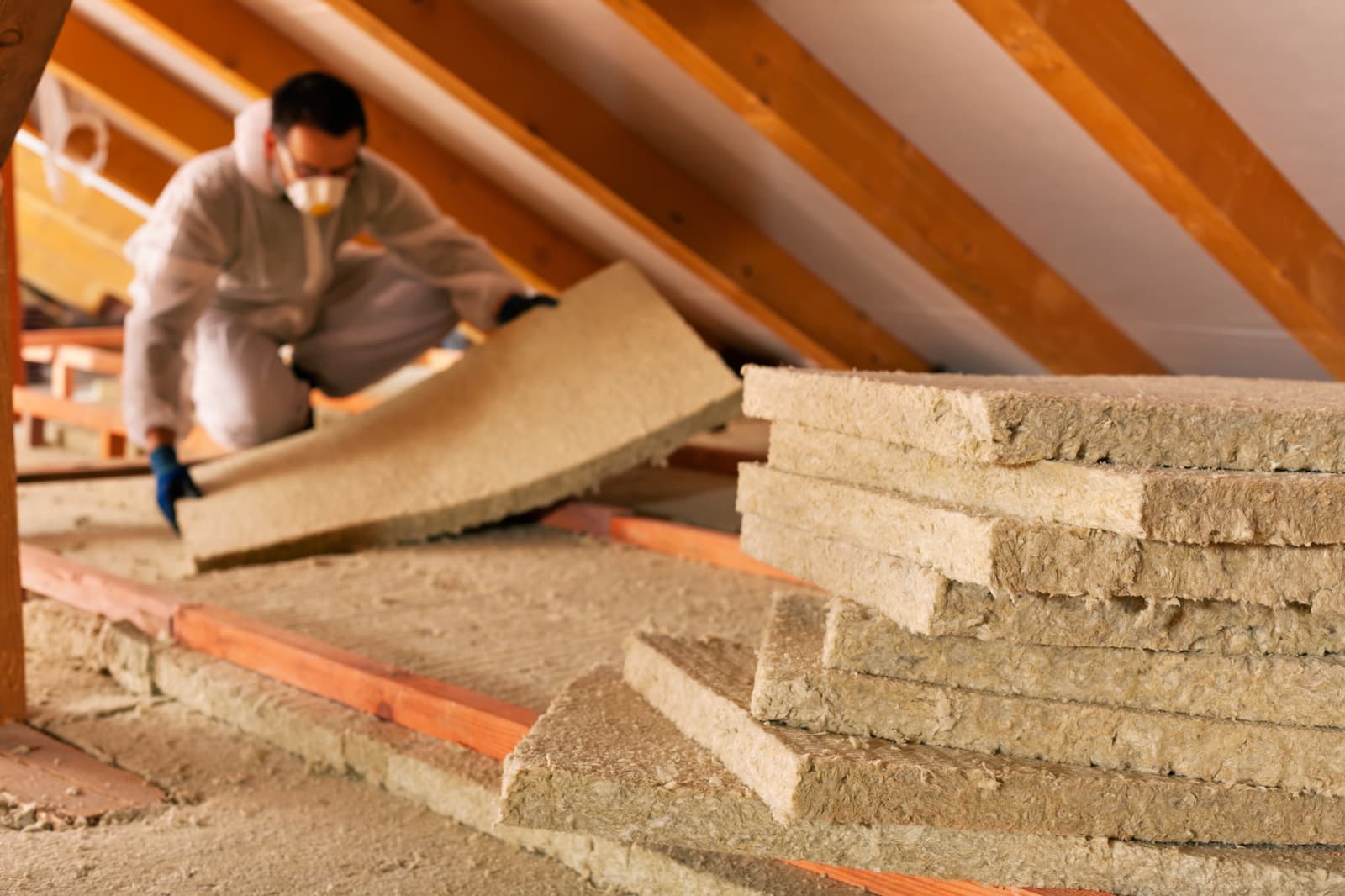
Mineral wool is an effective structural insulation material. In fact, by 2030, its global market, which is valued at no less than 15.6 billion dollars, could grow by as much as 6%.
Editorial Team
•08 Nov 2023
Infestation and the subsequent damage cannot only take you by surprise but also make your home nearly unlivable. If unseen and left to fester, the damage can easily spread and affect the structural integrity of your home. That is why it’s so important to stay on top of any infestation or damage and act as soon as you can.