What Material Is Best Used for a Bathroom Countertop?
By Editorial Team
Updated on December 20, 2023

Renovating a bathroom is more complex than one might think. Have you reached the material selection stage and are at a literal crossroads? Here’s a sweeping analysis of one of the room-specific favourites: the bathroom countertop.
Equally functional and stylish, there’s nothing like it to set the tone. Here are a few pointers to help guide your decision among the myriad products offered.
What kind of bathroom vanity countertop should you choose?
Laminate Bathroom Countertop: The Budget-Friendly Pick
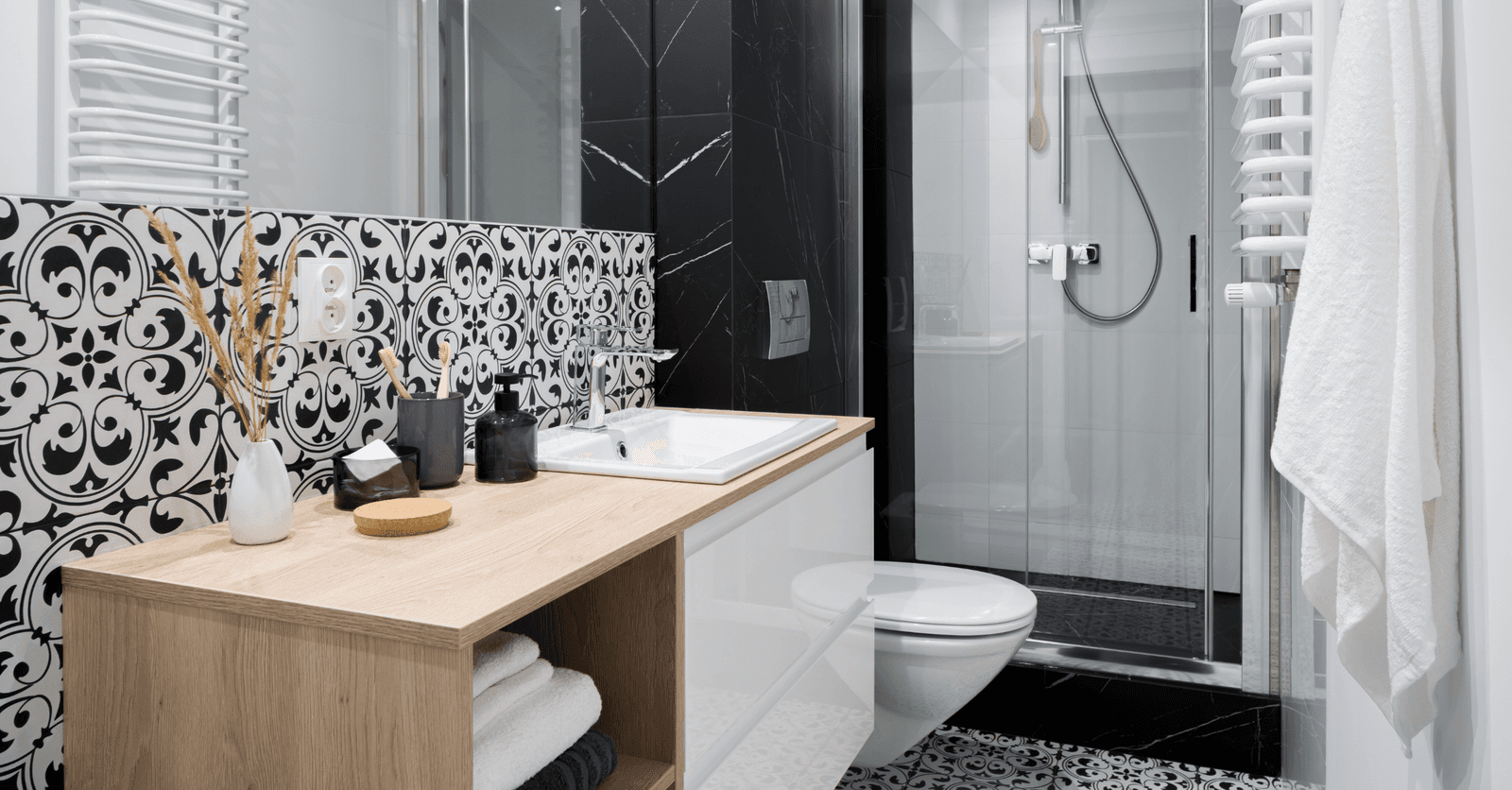
A laminate countertop is made from a combination of materials mixed with melamine resin covered with a decorative sheet. Aside from its price, its key advantage is its availability of a near-endless choice of colours, finishes, and patterns. Therefore, it can easily be tailored to suit any and all décors!
Pros of Laminate
Very durable
Shock resistant
Versatile with a near-endless choice of textures, colours, and finishes
Can mimic noble materials (marble, granite, etc.)
Cost-effective
Waterproof
Stain resistant
Unfavourable to bacteria proliferation
Sold in post-formed or sheet countertops
Cons of Laminate
Some finishes are harder to clean than others
Damaged surfaces are harder to repair
Scuffs easily
Wooden Bathroom Countertop: The Timeless Pick
Classic wooden bathroom countertops complement various styles, including among others, Scandinavian, traditional, and rustic décors. Wood is available in different species, grain, and finish, and it can be customized with a coat of stain or lacquer.
However, a wooden vanity countertop will be more vulnerable to moisture and require a professional sealant to preserve its appealing look. Plan for a minimal maintenance routine.
Quartz Bathroom Countertop: The Robust Pick
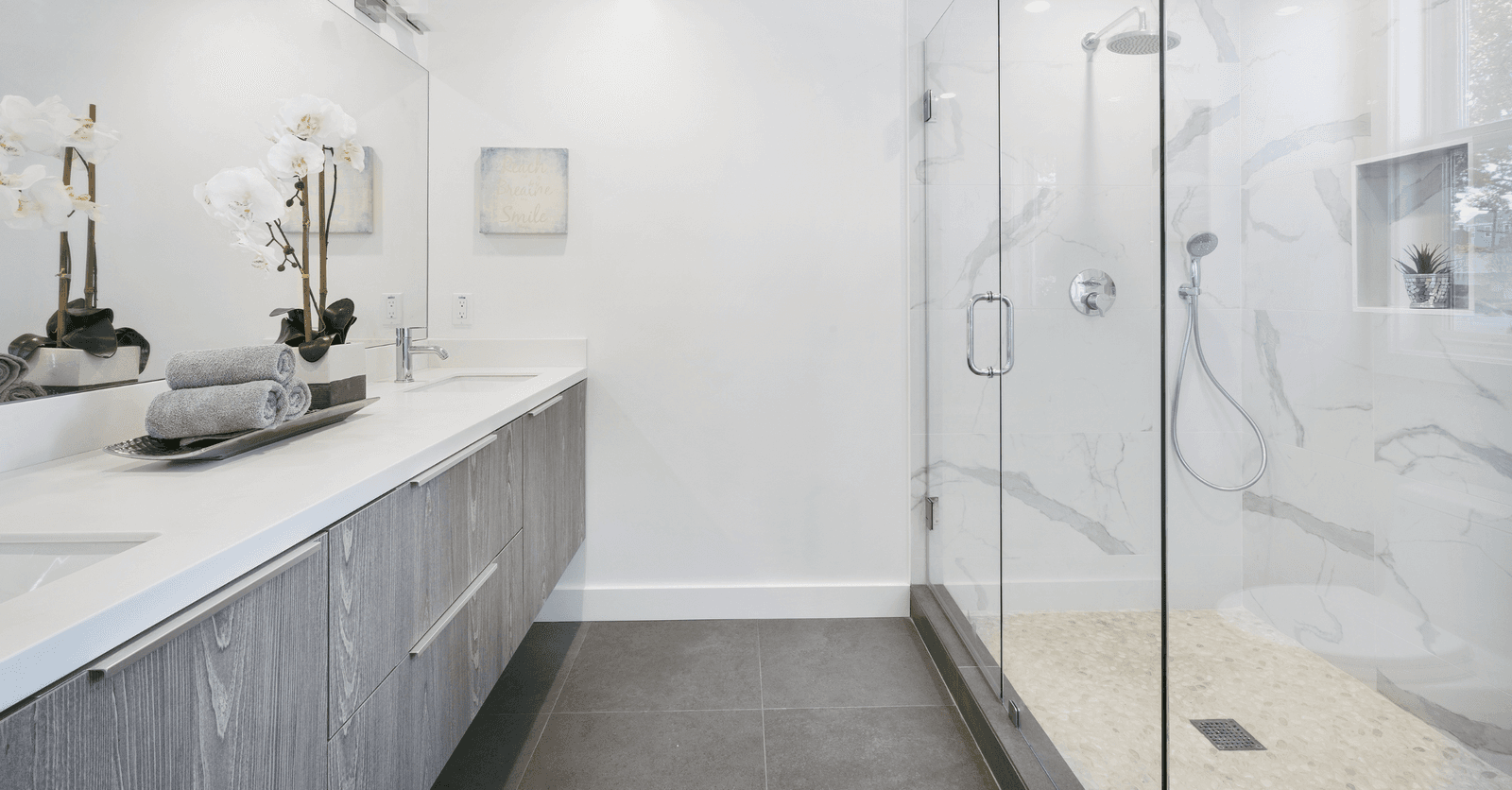
Quite stunning and practically maintenance-free, quartz countertops are a fan favourite at the moment. They're as solid and stable as granite, yet more flexible and less susceptible to chipping and cracking.
Quartz is made from a mixture of natural minerals and polymer resins, which leads to a perfect union between nature and technology.
The Pros of a Quartz Bathroom Countertop
Wide range of colours and patterns
Perfect for a modern or classic bathroom style
Devoid of veins or cracks like marble; more resilient
Low maintenance
Non-porous; very resistant to stains and mould
Scratch resistant
Hygienic (bacteria can’t penetrate this dense material)
It retains its lustre and smooth texture
Hypoallergenic and non-toxic; emits very few VOC
The Downsides of Quartz
May fade over time if exposed to direct sunlight
Visible seams
Since it’s heavy, the structure must be reinforced
Quartz Bathroom Vanity
Quartz not only represents a high-quality bathroom countertop material, but one can also purchase a bathroom vanity made entirely of quartz.
Ceramic Bathroom Countertop: Here’s to Versatility!
A ceramic bathroom countertop can be endlessly tailored thanks to the incredible variety available on the market, whether that be style, colour, pattern, or texture. Not only can you get a unique countertop, but you can also revamp it at will!
While it does have numerous advantages, its main drawback is the countertop seams since they tend to trap dirt and must be sealed every year.
Marble Bathroom Countertop: Prestige, First and Foremost
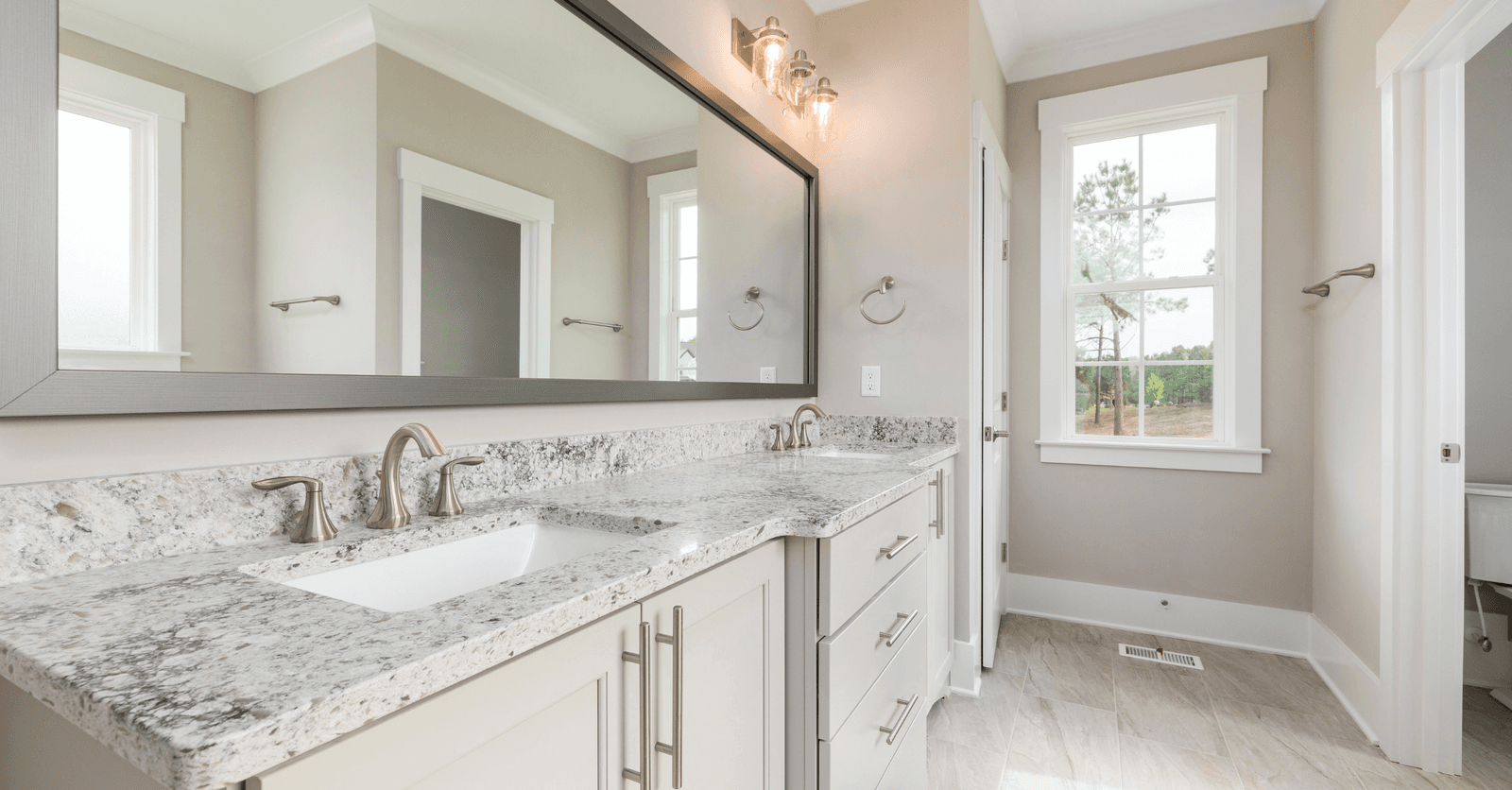
Marble is both elegant and refined, it instantly enhances a bathroom’s appeal. This natural stone is available in a beautiful array of colours, and the uniqueness of each piece adds value.
The Pros of Marble
Available in several finishes: matte, glossy, aged, etc.
Perfect fit for modern or classic looks
Especially heat resistant
Extremely durable if well-maintained
Hygienic (surface minimizes bacteria proliferation)
Waterproof
The Downsides of Marble
Expensive
Stain-prone
Must be sealed
Heavy (the support structure must be reinforced)
Are you looking for experts for your bathroom renovation project?
Fill in this form to be connected with top-rated contractors!
Granite Bathroom Countertop: The Dazzling Pick
Granite is a component of feldspar, quartz, and mica, and it's issued from cooling molten rock. It’s the ultimate timeless option in a fancy-like bathroom.
The Pros of Granite
One of the most solid and resilient natural stones
Available in a stunning array of colours
Resistant to scratches and breakage
Available in a variety of colours and styles
Countertops have few visible seams since they’re between 7 and 10 feet long
Some marble originates from Quebec
Eco-friendly (100% recyclable)
The Downsides of Granite
Porous; must be safeguarded with sealant every 6 months
Resources aren’t limitless
Expensive
Heavy (surface must be reinforced)
What is polymarble?
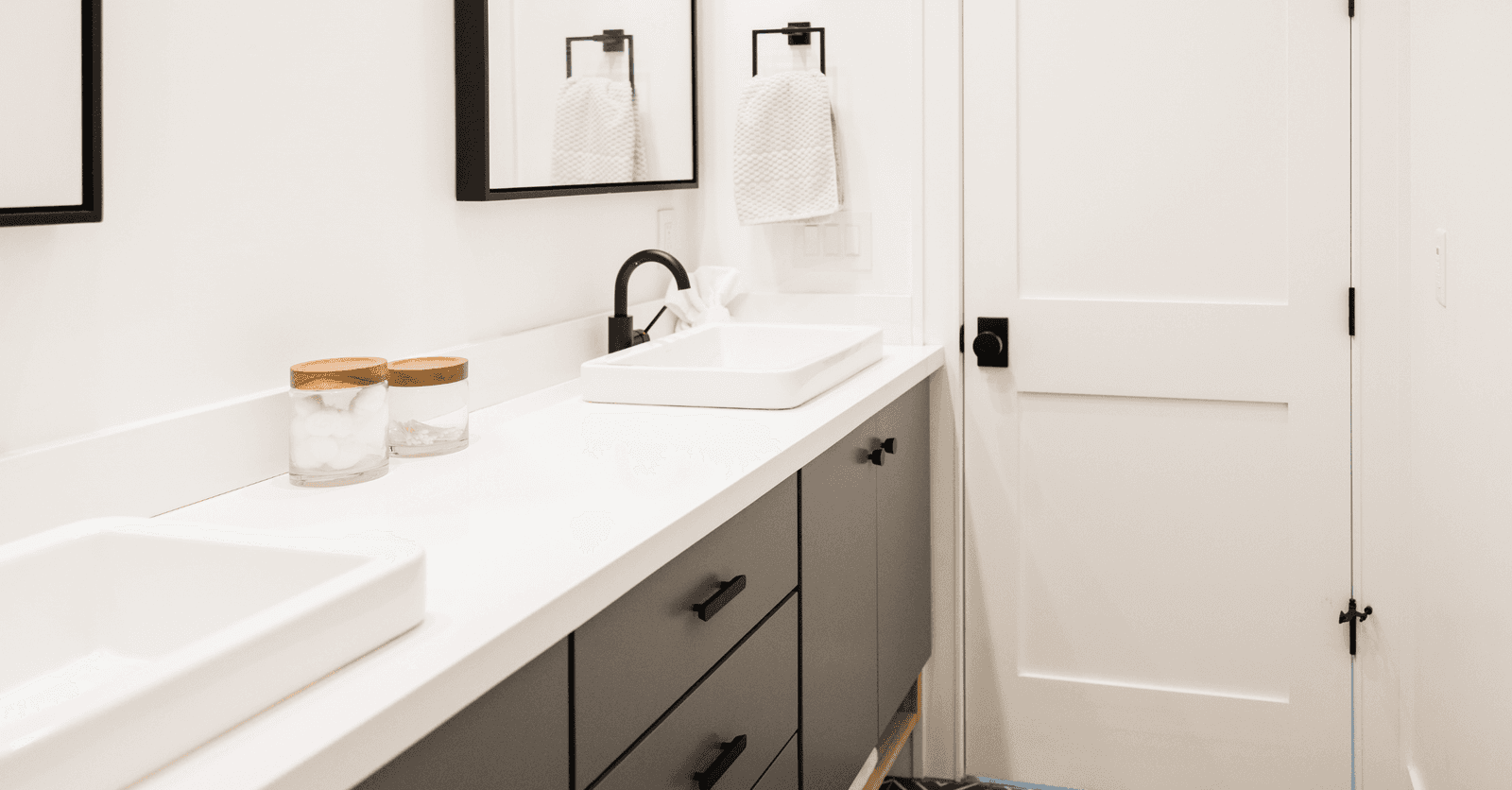
Polymarble is a crystal- and calcium carbonate-loaded resin, with a marble-like appearance. Since polymarble countertop sheets have an affordable price point and a clean, modern look, they're often a choice material for countertops and bathroom vanities.
The Pros of Polymarble
Affordable
Low maintenance
Luxurious appearance
Stain resistant
Its colour withstands both time and sun rays
What is the standard height of a bathroom countertop?
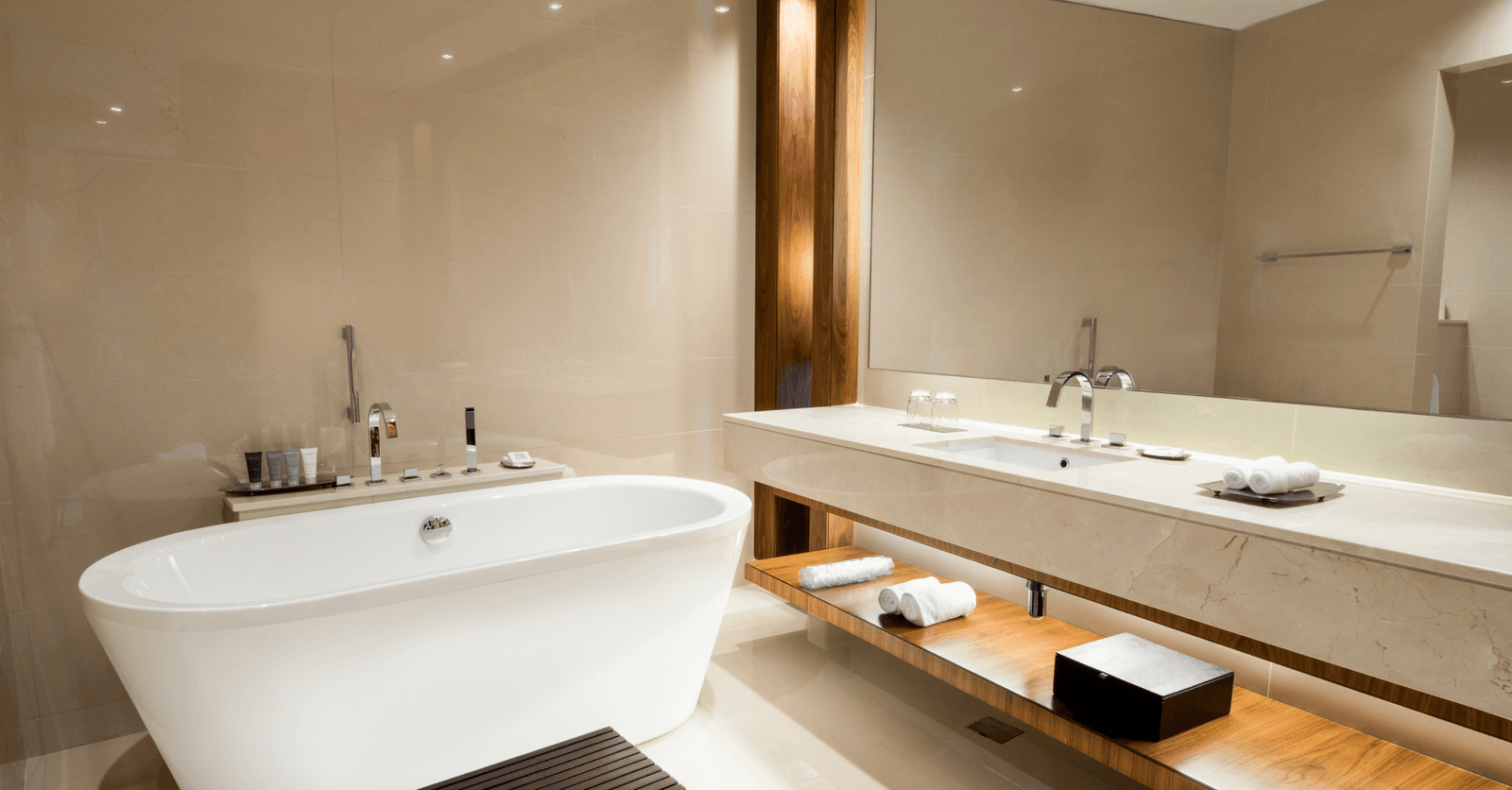
The standard bathroom countertop sits 81.3 cm (32 in) off the ground. However, over the last few years, bathroom vanities have been raised to 91.4 cm (36 in), for optimal comfort.
How was the standard countertop height first established?
This height, which is said to be ideal, was determined at a time when houses had a single bathroom; the countertop had to be within children’s reach too. It also had to be ergonomic for the average-sized Canadian adult (measured to be 177.8 cm or 5 ft 10 inches for men, and 162.6 cm or 5 ft 4 inches for women).
Price guide: How much does a bathroom countertop cost?

Prices vary greatly depending on the option selected. In other words, with bathroom countertops, there’s something for all preferences and price points. Therefore, sticking to your budget isn’t so much of a feat. However, note that certain materials can be properly installed by an avid DIYer (ceramic or laminate countertop), while others do require the help of a professional (marble, granite, quartz). So do plan for installation cost, which runs at about 25% of the project’s total cost.
Cost of Different Bathroom Countertop Materials
Ceramic: $1 to $36 per square foot
Laminate: Between $12 and $45 per linear foot based on the model, finish, etc.
Granite: About $200 per linear foot
Marble: $48 to $240 per linear foot
Quartz: $100 to $200 per square foot, depending on the grade and shape’s complexity
Wood: $12 to $110 per linear foot
Bathroom Countertop: Choosing a Durable and Elegant Material
Choosing the right bathroom countertop material is a decision that requires a thoughtful blend of aesthetics and functionality. The most commonly used materials bestow various options that meet specific requirements concerning style, durability, and maintenance. To make the most optimal choice, consider your personal preferences and budget. By investing in a suitable material, you can add a touch of elegance to your space while guaranteeing both functionality and resilience. The countertop then becomes a centrepiece in your bathroom, merging beauty and practicality.
Get 3 quotes for your bathroom renovation project
RenoQuotes.com will put you in contact with 3 reliable contractors for your bathroom renovation project. Fill in the form on our homepage (it only takes a few minutes), and you will receive quotes from trusted professionals.
Dial 1-844 828-1588 to speak with one of our customer service representatives.
Looking for something else?
Related articles
The latest industry news, interviews, technologies, and resources.
Editorial Team
•08 Nov 2023
Considering updating your bathroom but unsure where to start? A bathroom is one of the most used spaces in a house and as such, it should be both comfortable and functional. Being that it’s so frequently used, an ideal bathroom is one which doesn’t wear out easily and makes use of materials that stand up over time.
Editorial Team
•08 Nov 2023
Whether choosing to renovate the kitchen or bathroom, ceramics are an excellent choice as they allow you to conceive designs as diverse as they are original. Available in a large variety of styles, ceramics make it easy to create custom pieces as they offer an infinite range of possibilities.
Cynthia Pigeon
•11 May 2026
In 2026, the cost of residential renovation in Canada generally ranges from $10/sq. ft. for minor cosmetic updates to over $250/sq. ft. for major reconstruction projects. For a standard full-home renovation (including kitchen and bathroom), the average budget typically falls between $125 and $175 per square foot. These prices reflect recent increases in labour costs across provinces, as well as continued pressure on construction material prices nationwide.

Léa Plourde-Archer
•03 Aug 2024
The floating floor might sound like a magical concept but in fact, this installation method has become increasingly popular in the flooring market. Why, you ask? Well, floating floors are incredibly simple to install, and this can save ample time and money. It’s worth mentioning that floating floors are not a type of flooring, but instead, the installation method by which planks, boards or in some cases, tiles, attach to one another.

Editorial Team
•08 Nov 2023
Well, that’s it! Your renovation project is finally completed and you are satisfied with the end result of your anticipated work. Whether it’s building an addition on your home or installing a brand new kitchen, you know for a fact that this type of work will cause dirt and dust that will accumulate on surfaces including your walls, floors and furniture.