The Different Types of Exterior Walls
By Editorial Team
Updated on November 8, 2023
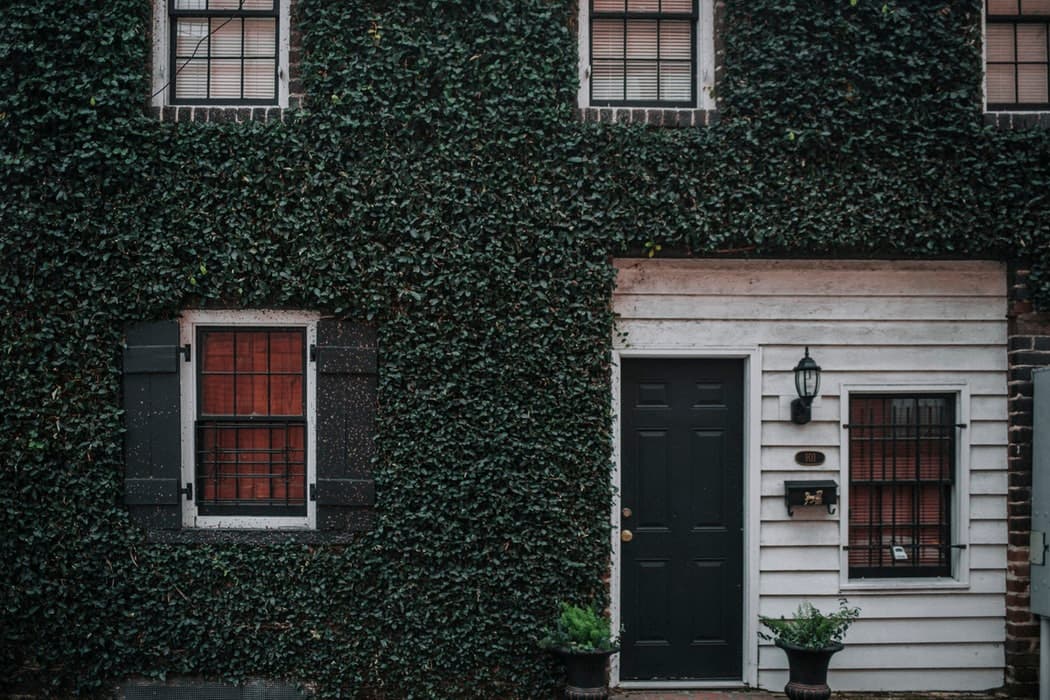
Every homeowner is looking for the ideal amount of curb appeal. Standing out from your neighbours can be a difficult task, but not if you choose to work with unique and sturdy materials.
Depending on the look you’re going for, exterior walls can add another dimension of individuality to your home while offering a variety of benefits including definition, weather protection, and structural efficiency. So, what are the different types of exterior walls and which are right for your facade?
Understanding the different materials and how they relate to things such as insulation, repelling moisture, and air infiltration will allow you to make the smartest choice, while still opting for something aesthetically pleasing. Improving the performance of your home can help keep energy bills down while offering surfaces and materials an extended lifetime. Let’s learn a little bit more about the different types of exterior walls.
Here are the different types of exterior walls!

source: unsplash
How to Choose the Right Type of Wall
When choosing the correct wall for your exterior, there are several considerations that you’ll need to consider. These will come down to where your home is located, seasonal weather conditions as well as where your home sits in relation to your neighbours. You’ll want your exterior walls to be as energy-efficient as possible, so here are some green factors that could affect the walls' performance as well as some questions to consider when devising your exterior walls:
Local building codes: When approaching any renovation project, this should always be the initial consideration. It is paramount that local building codes are carefully followed and that you do ample research regarding height restrictions. If this work isn’t carried out from the start, chances are you may end up with a hefty fine or two.
Insulation: Insulation is one of the most important factors when it comes to wall building. Ask yourself, where will the insulation be placed and what material will you use to best suit the climate of the location of your home? Further, consider ways to seal air leaks, especially if you live in a windy part of the country.
Durability VS Cost: Certain materials for your exterior walls will be a lot more money upfront. However, in most cases, this is because these materials are much more durable, and thus will last exceptionally long. Weigh the cost of the material against its expected lifespan, and think about the long-term instead of the short as no one wants to take on this large-scale renovation project every few years.
Siding: It’s easiest to think about the exterior walls of your home as the house’s skin, a protective layer that keeps things like rain, wind and sun from affecting the interior. Siding is included in this, as it’s the first thing all of the elements will touch. The exterior siding you choose will have a huge impact on how your walls stand up, so make the most of the choice.
Different Types of Exterior Walls

source: unsplash
Exterior walls framed with wood have been a leading choice in North America for many, many years, second to brick walls. However, beyond the materials, there are various types of exterior walls that serve different functions. Here are the best options out there.
1- Separation walls
Separation walls are walls that act as a partition and do not bear any weight. In some cases, they are used adjacent to other walls, or between two. Separation walls are generally made out of steel, and two layers of liner panels. More often than not, these walls are built as fire-protectant and are thus important in areas of the country that experience wildfires. An added bonus is that separation walls are noise-reducing.
2- Tilt-up walls
This type of wall is necessary where time and cost are defining factors and are essential during the building process. If your home is in the early construction phases, tilt-up walls might be your choice. This is because the project requires fewer employees, less scaffolding and less concrete. Of course, this will come down to the size and scope of your project. But if you’re looking for an easy-to-install exterior wall, this could be the way to go.
3- Vinyl siding plus insulation
Insulated vinyl siding is excellent and has many benefits when it comes to the homeowner as well as the home. This is a low-cost alternative to materials like concrete, wood or brick, as modern vinyl siding now has an enhanced impact-resistance capacity. In some instances, there is a vapour foam underlay already built into the material.
4- ICF or Insulated Concrete Foam
ICF exterior walls consist of two pieces of foam with concrete poured between them. This type of wall is quickly growing as one of the most widely popular, and this is mainly due to its strength as well as its energy efficiency. Since this method is so highly rated, many contractors are experimenting with it.
5- OVE Framing
Lastly, this is an exterior wall-building technique that is fairly new and requires a special skill set to complete. Essential OVE or Optimum Value Engineering practices are a way to maximize material usage while still working towards meeting stringent code and structural regulations and requirements.
Get 3 quotes for your exterior renovation project
RenoQuotes.com can help you get quotes for your exterior renovation project. If you submit your project, we’ll put you in contact with the best contractors who will be able to carry out your project with success. Fill in the form on the homepage (it only takes a few minutes), and you will receive quotes from home renovation specialists.
Dial 1 844 828-1588 to speak with one of our customer service representatives
Looking for something else?
Related articles
The latest industry news, interviews, technologies, and resources.

Editorial Team
•09 Oct 2026
A drip edge costs $2 to $4 per linear foot installed during a roof replacement, or $6 to $12 per linear foot to retrofit onto an existing roof. For a typical home with about 200 linear feet of roof perimeter, that's $400 to $800 as part of a new roof, or $1,200 to $2,400 added later.

Editorial Team
•08 Nov 2023
This type of paint is often still linked to large-scale projects. However, nowadays, painting the whole inside of a house is nothing compared to what it was back in the day.
Cynthia Pigeon
•18 Sep 2026
In 2026, a mould test in Quebec can cost $40 to $100 for a home testing kit, $250 to $450 for a basic professional inspection, and approximately $500 to $700 for a comprehensive assessment that includes multiple samples and, depending on the service selected, thermal imaging.

Editorial Team
•08 Nov 2023
It can’t be denied that the summer season is enjoyable for almost everyone, with hot days and warm nights that can finally be spent outside. But sometimes, the temperatures reach a peak and joy slowly moves towards discomfort. Luckily, technology has allowed for the air conditioner.
Amanda Harvey
•29 May 2026
For many homeowners, the hardest part of starting a home renovation project is finding a reliable contractor to carry out the job. So, if you're wondering how you can locate the best tradesperson for the job, then you've come to the right place! For homeowners that are looking for a quick and cheap home renovation experience, it's likely you're going to get what you pay for.