8 Ways to Style a Coffee Table Like an Interior Designer
By Editorial Team
Updated on July 9, 2026
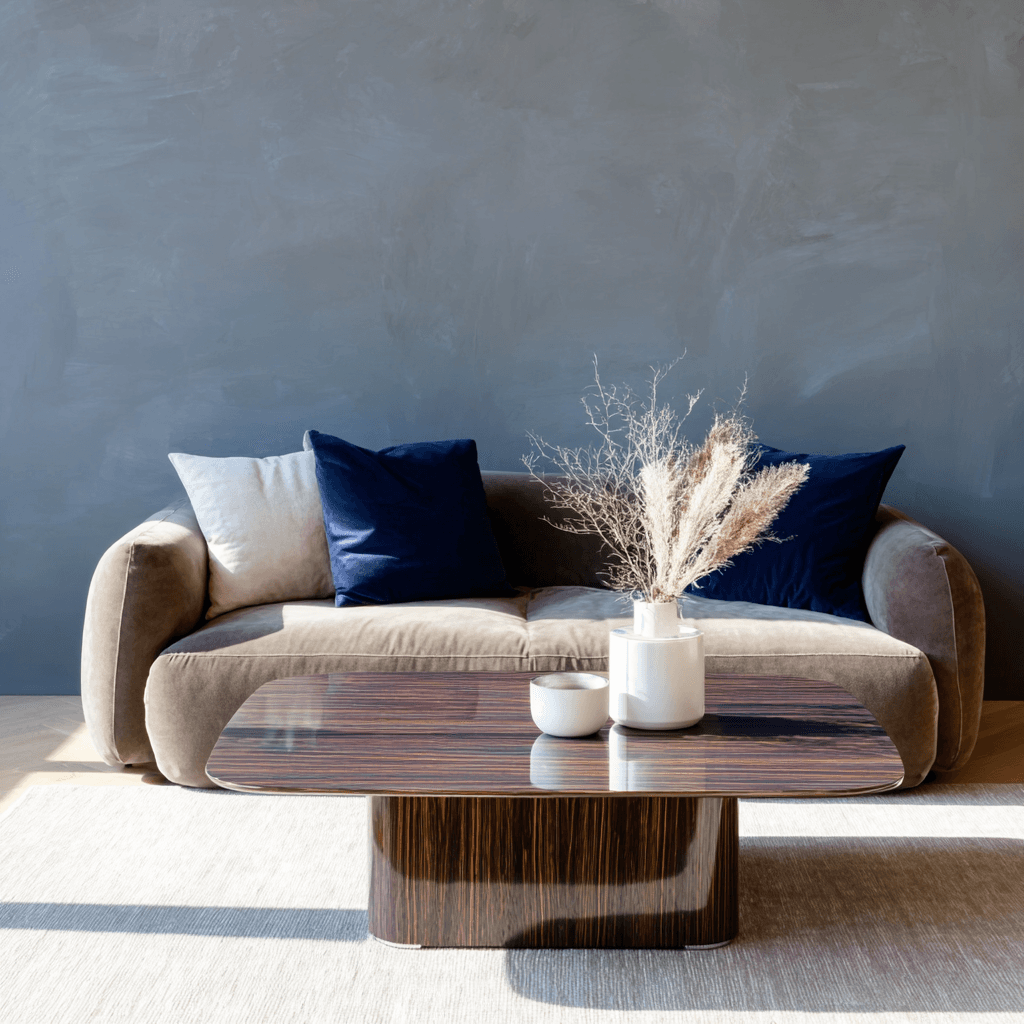
You arrange the cushions, hang the art, choose the rug — and then the coffee table just sits there, covered in last week's mail and a remote no one remembers buying. For a piece of furniture that anchors the whole seating area, it does surprisingly little visual work in most homes. A few deliberate choices change that fast.
The table at the centre of your living room is a natural focal point, which means whatever you put on it either pulls a room together or quietly undermines everything around it. Before comparing coffee tables or rearranging what you already own, it helps to understand a handful of principles that interior designers use every time. They are not complicated, and none of them require a large budget.
Work in Odd Numbers
Source : RenoQuotes
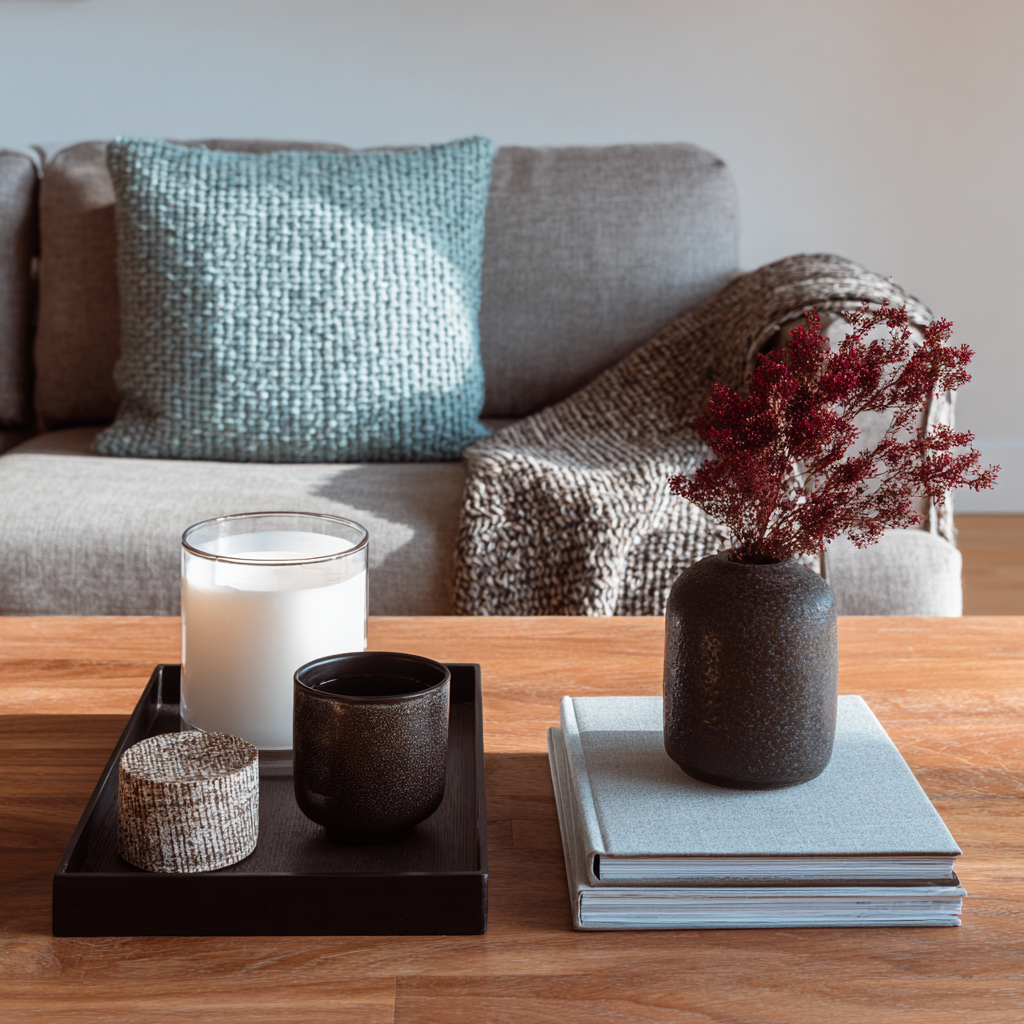
Pairs feel formal; groups of three or five read as relaxed and collected. When you place objects on a coffee table, aim for groupings of three: a tall element, a mid-height element, and something low and flat. A candle, a small sculptural object, and a stack of two books cover the range without trying too hard. The eye moves between them naturally rather than snapping back and forth between two equal points.
Scale matters too. A single large object on a generous surface feels deliberate; three tiny objects on the same surface feel lost. As a rough guide, leave at least 30 to 40 per cent of the tabletop clear — negative space is what gives the arrangement room to breathe and keeps the overall look from feeling cluttered.
Anchor Everything with a Tray
A tray does two things at once: it corrals loose objects into a single visual unit, and it gives you a reason to clear the table fast when guests arrive. Rectangular trays suit rectangular tables; round ones work on round or oval surfaces. Keep the tray proportional — a tray that covers more than two-thirds of the table surface starts to look like a serving station rather than a design choice.
Inside the tray, stick to three to four items. A small candle, a coaster set, and a low object like a dish or small plant fill the space without overcrowding it. Once a tray is on the table, everything outside it reads as intentional contrast rather than overflow.
Vary the Heights
Source : RenoQuotes
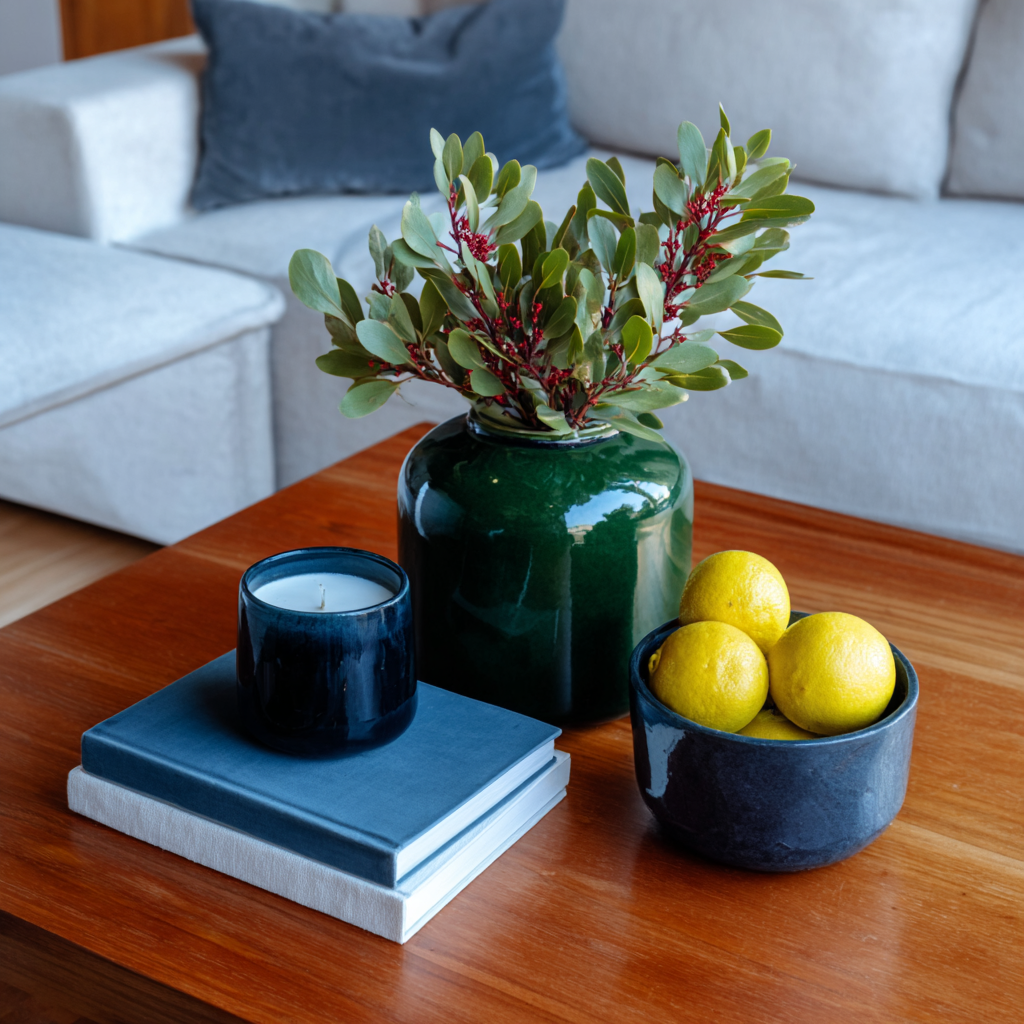
Flat arrangements, where every object sits at roughly the same level, read as accidental rather than considered. A range of heights creates visual weight and movement. A good working range for a standard coffee table is roughly 4 to 14 inches: something low like a tray or a flat dish at the base level, a mid-range piece around 6 to 8 inches such as a small vase or bowl, and one taller element near 12 to 14 inches, a candle, bud vase, or sculptural piece.
Keep that tallest piece below seated eye level so it does not block sightlines across the room. If your sofa seat height is around 17 to 18 inches, objects over 14 inches can start to feel like a barrier rather than a feature.
Use Books as a Design Tool
Coffee table books are genuinely useful in a styled arrangement, not just as filler. A horizontal stack of two or three provides a base that lifts other objects off the surface, adding height without adding visual clutter. Choose spines whose colours relate to something already in the room — a cushion, the rug, the wall — and the stack stops reading as random.
Stack no more than three books before the pile starts to look precarious. Two is often cleaner. Turn one book face-up if the cover is strong; leave the others spine-out. A small object placed on top of the stack ties the grouping together and keeps it from looking like a to-be-returned library pile.
Bring in One Natural Element
Source : RenoQuotes
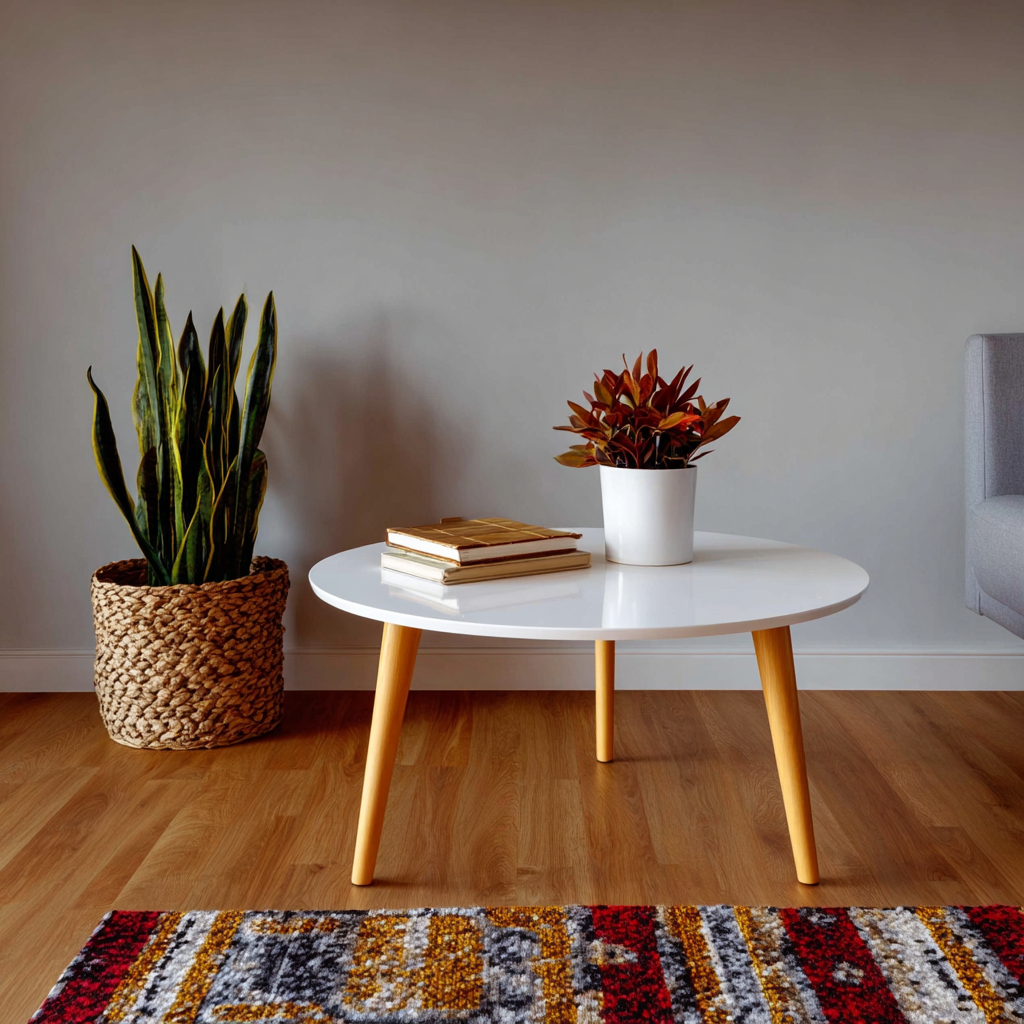
A living or natural element breaks the static quality that styled surfaces can drift toward. A small potted plant, a low bowl of pebbles, a branch in a narrow vase, or even a handful of dried botanicals gives the arrangement a quality that no manufactured object replicates. It does not need to be elaborate: a 4-inch succulent in a ceramic pot is enough.
Trailing plants work especially well on lower surfaces because they add movement without adding height. If natural light near the table is limited, a preserved or dried arrangement gives a similar effect without the maintenance. Change it with the seasons and the whole table feels fresh without buying anything new.
Match the Styling to the Table Shape
Shape should guide arrangement. A long rectangular table has room for two distinct vignettes, one at each end, with clear space between them. A round table works best with a single central grouping, keeping the arrangement compact so the table's geometry reads clearly. Square tables sit between the two: a tray centred on a square surface often works better than two competing clusters.
The table below is a starting point for matching a styling approach to a surface:
Vignette style | Ideal surface shape | Anchor object | Height rule |
Books + object | Rectangular or square | Stack of 2–3 books | Tallest piece ~12 in |
Tray styling | Any shape | Decorative tray | Keep items inside tray footprint |
Single statement | Round or oval | One sculptural object | 8–14 in tall |
Greenery-led | Any shape | Low bowl or trailing plant | Stay under 10 in for sightlines |
Layered mix | Large rectangular | Books + tray + plant | Vary heights across the surface |
Coffee table styling approaches by surface shape (original)
Keep the Proportions Honest
Source : RenoQuotes
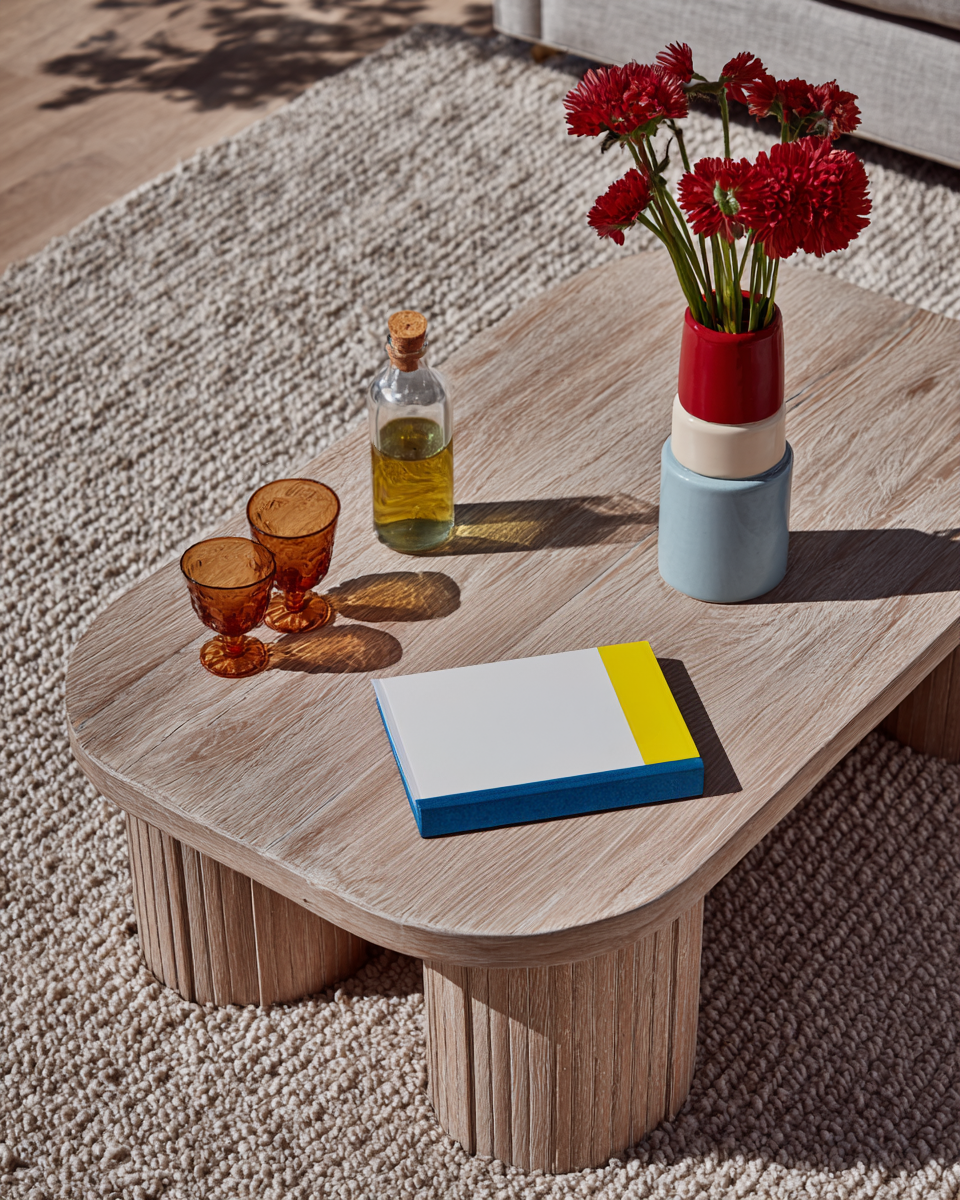
The standard clearance between a sofa and a coffee table is 14 to 18 inches. Closer than 14 inches and you are fighting the table every time you stand up; further than 18 and the table floats away from the seating area and loses its connection to the arrangement. That gap also affects how styling reads: a table that feels far away looks like a display shelf rather than part of the room.
The table itself should relate to the sofa in length. A common guideline is two-thirds the length of the sofa: a 90-inch three-seater pairs well with a coffee table around 48 to 60 inches long. Go much shorter and the table looks mismatched; go longer and the table starts competing with the sofa for dominance in the room.
Refresh It Seasonally, Not Constantly
One reason coffee tables end up cluttered is that objects accumulate without anything leaving. A more useful habit is to treat the surface as a seasonal rotation: two or three items come off, two or three go on. Summer might bring a low bowl with shells or a light ceramic; autumn suits darker tones and heavier textures like a small wooden object or a bundle of dried stems.
Keep a small box or shelf nearby where off-season pieces live. This keeps the table editable rather than permanent, and it means the arrangement stays current without requiring a complete rethink. Swap the books, change the candle colour, and add one new natural element per season: that is usually enough.
The Table That Ties the Room Together
A well-styled coffee table does not call attention to itself. It reads as part of the room rather than apart from it, because the objects on it relate to the colours, textures, and scale of everything around them. Odd numbers, varied heights, one natural element, and a tray to anchor it all: those four things alone move most tables from forgettable to finished.
Start with what you already own. Clear the surface completely, then return only the pieces that earn their place. A coffee table that is half-empty and intentional always looks more considered than one that is full and accidental. If you are ready to start fresh from the ground up, browsing coffee tables with these principles in mind makes the choice considerably easier.
FAQ
How many things should go on a coffee table?
Three to five objects is a practical range for most surfaces. Fewer than three can read as unfinished; more than five tends toward clutter. Leave 30 to 40 per cent of the surface clear so the arrangement has breathing room.
What goes in the centre of a round coffee table?
A single compact grouping works best: a tray with two or three items inside, or one mid-height object flanked by a low dish and a small plant. Keep the arrangement within the inner two-thirds of the surface so the round shape stays visible.
Can you put a tray on a coffee table?
Yes, and it is one of the most practical styling moves available. A tray corrals loose objects into a single visual unit, making the surface look intentional rather than assembled by accident. Size it to cover no more than two-thirds of the table, and keep three to four items inside it.
How do you style a coffee table without it looking cluttered?
Restrict the number of objects to three to five, vary their heights across a 4-to-14-inch range, and keep at least a third of the surface bare. A tray helps consolidate smaller items. Swapping out seasonal pieces rather than accumulating new ones is the easiest way to keep the surface from drifting toward clutter over time.
What is a good coffee table height?
Standard coffee tables sit between 16 and 18 inches tall, which places them at or just below average sofa seat height. This makes it easy to set a drink down and pick it up without leaning. If your sofa cushions sit lower, around 15 inches, look for a table closer to 15 to 16 inches so the two pieces feel related rather than mismatched.
Looking for something else?
Related articles
The latest industry news, interviews, technologies, and resources.

Editorial Team
•23 Feb 2026
Although the most skilled and patient of people will be able to attach and seal drywall joints together successfully, it’s important to recognize that this project can’t be taken on by everyone.

Christine Simard
•23 Jan 2025
As a design and user-friendly appliance, a wood-burning stove makes for a genuine source of well-being, designed to bring additional comfort to households during the harsh winter months. Whether made of steel, brick, cast iron, or glass, a wood-burning stove stands for durability and boasts a slew of advantages.

Cynthia Pigeon
•14 Aug 2026
Planning major work on a residential property in Canada requires a clear understanding of each professional’s responsibilities. Canadian buildings face demanding conditions, including heavy snow loads, frost heave, major humidity fluctuations, and seismic activity in certain regions. The framing and foundations of a single-family home or residential building must withstand these conditions year-round.
Editorial Team
•08 Nov 2023
Thinking of replacing your shower to offer your bathroom a little extra flair? There are plenty of options! Here are some of the possibilities available for you to carry out a new renovation project.

Editorial Team
•28 Aug 2024
Nowadays, it is hardly considered unusual for women to find themselves and thrive in the workplace, nor is it for them to pursue a position that was, formerly, geared toward men.