What Is There to Know About Mandatory Continuing Education
By Editorial Team
Updated on July 25, 2025

Since April 1st, 2022, certain specialized contractors and general contractors are now required to commit to continuing education. Should you be among the many individuals affected by this latest mandatory continuing education, note that you must complete a certain amount of educational training hours every two years to maintain your licence.
Said training must be pertinent to your area of expertise, such as heating, building, plumbing, or electricity.
How does this new measure affect construction contractors in Quebec, and what is there to know about it?
For whom will continuing education be mandatory?
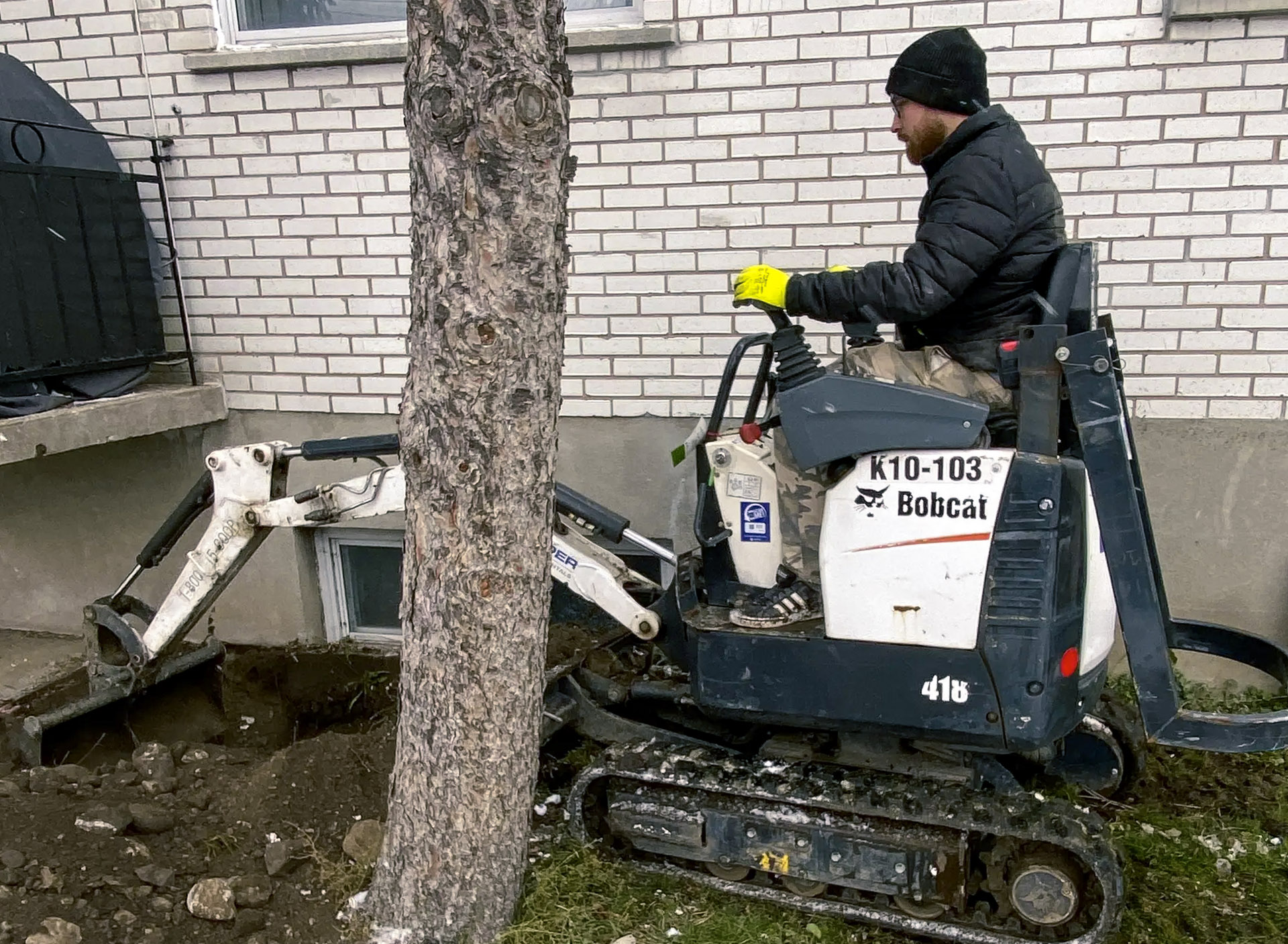
Source : PAYSAGEMENT LE DIABLE VERT
First off, it’s important to highlight that this measure doesn’t apply to all contractors. Yet 27,000 workers must abide by it. It relates to the following general contractor licences:
1.1.1 – New residential buildings covered by a guarantee plan, class I
1.1.2 – New residential buildings covered by a guarantee plan, class II
1.2 – Small building contractor
1.3 – Building contractor of all kinds
As for specialized contractor licences, they’re as follows:
15.1.1 – Pulsed air heating systems for certain work that is not reserved exclusively to master pipe-mechanics
15.2.1 – Natural gas burner systems for certain work that is not reserved exclusively to master pipe-mechanics
15.3.1 – Oil burner systems for certain work that is not reserved exclusively to master pipe-mechanics
15.4.1 – Hydronic heating system for certain work that is not reserved exclusively to master pipe-mechanics
15.5.1 – Plumbing for certain work that is not reserved exclusively to master pipe-mechanics
Mandatory Continuing Education: The Measurable Results
Source : Groupe Excavel inc.
This new mandatory continuing education regulation has several purposes. First off, note that the majority of concerned workers must complete 16 hours of training over a two-year period. Nevertheless, said number of hours will be higher for workers who are qualified for numerous licence sub-categories, which could equate to 24 or 32 hours.
Likewise, it’s important to pinpoint that the same principle applies to workers with licence sub-categories that aren’t solely targetted by the RBQ, but also by the CMMTQ and CMEQ. If this mandatory procedure isn’t adhered to, the company's licence may be suspended and, as for the worker, they will fail to maintain their qualifications.
Why was this measure implemented?
All in all, this new requirement is structured to improve the quality of construction work and better protect homeowners seeking out and hiring workers.
With this in mind, we’re counting on contractors to remain abreast regarding knowledge development in their chosen field of expertise, especially in matters relating to technological progress taking place in the industry. In a similar vein, narrowing the importance of remaining up-to-date with regulatory changes that may occur will naturally impact the way specific tasks are being carried out and how several projects are executed.
Auditor General’s Report
Bear in mind that the Auditor General’s report published back on June 2, 2022, at the National Assembly, pinpointed the RBQ’s shortcomings, most notably regarding the measures implemented to ensure working contractors have the necessary skills to effectively carry out their work.
Secondly, some criticism was brought to the forefront concerning administered examinations to obtain RBQ licences, which haven't been renewed quite as often as they should have. (Some examinations dating back to 2008 are still being used to this day.)
A lack of vigilance regarding background checks, whether that be for specialized contractors or general contractors, a poor oversight when it comes to contractors having numerous non-conformities flagged in their files, on top of scarce construction worksite inspections are all part of the highlighted challenges.
Let’s not forget to underline the criticism stated regarding the deadline granted to report a construction defect, as well as those concerning the required security deposit amounts. According to the Auditor General, and as per the 2022 published report, the latter are considered lacking regarding certain situations.
Looking for something else?
Related articles
The latest industry news, interviews, technologies, and resources.

Editorial Team
•08 Oct 2025
Are you looking for a new career in building and public works, but aren’t sure which trade to turn to? Plastering could be it! A plasterer is an individual who specializes in and performs ceiling and wall preparation work and installation.

Editorial Team
•17 Apr 2026
More and more women are stepping onto jobsites and reshaping this traditionally male-dominated industry—bringing new perspectives, strengthening teams, and helping companies meet growing demand. In 2023, a record was set: nearly 7,500 women were employed on Quebec jobsites, representing 3.8% of the workforce. That’s a 50% increase since 2020. These numbers point to more than progress—they signal a critical opportunity for construction businesses to build stronger, more balanced teams ahead of the busy summer season.

Editorial Team
•08 Nov 2023
When it comes to a septic system, the tank is usually the one thing that comes to mind. Yet, the leaching field, which is out of sight, out of mind… is nonetheless a vital component of this installation. Its proper functioning is primordial, with regard to you and your family and the surrounding community and environment.

Editorial Team
•24 Sep 2024
Do you live in a rural area or have a summer home that isn't connected to a local water system? If so, you probably have a functioning septic system. How can you make sure your conventional on-site disposal system is working properly? What are the best practices to uphold to extend the service life of your sanitary installation and prevent damages? The key to a system's longevity is understanding its inner workings, whether your property is equipped with a conventional or non-conventional system.

Editorial Team
•10 Sep 2024
You likely know of a friend or a family member who started their own business as a contractor. The construction industry is overflowing with lucrative business opportunities for people who take business ventures seriously, but before throwing yourself into the deep end, you might want to know if this career path is right for you.