Cedar Hedge Cost, Installation, and Maintenance Guide
By Editorial Team
Updated on July 8, 2026
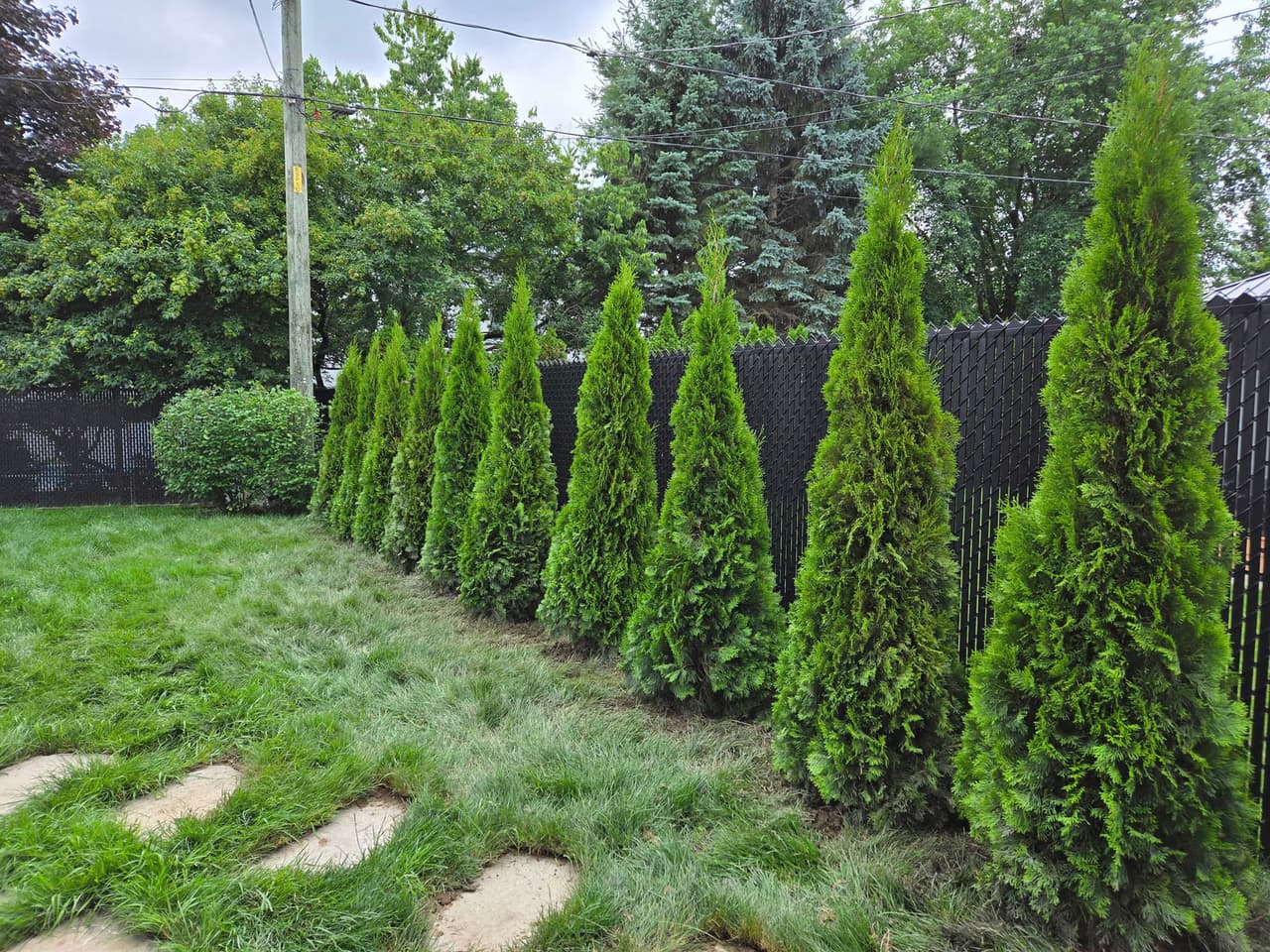
A cedar hedge is one of the most popular ways to add privacy, greenery, and wind protection to a Canadian yard. For many homeowners, the main question is simple: how much does a cedar hedge cost?
In Canada, cedar hedge pricing depends on the tree size, cedar variety, spacing, supplier, site conditions, and whether you buy the trees yourself or hire a company for a full installation. Here is what to expect before planning your project.
How much does a cedar hedge cost in Canada?
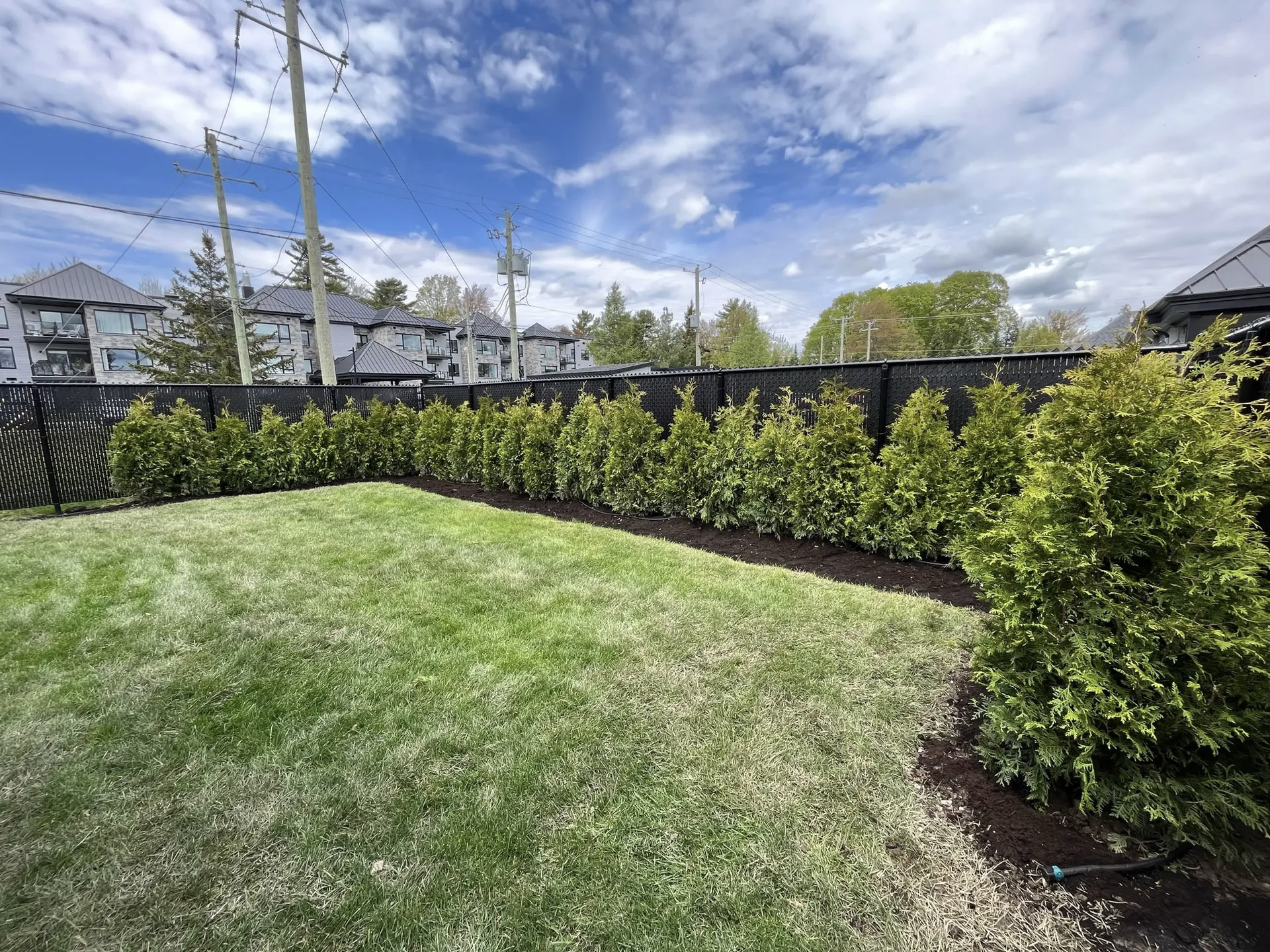
Source: Gouttières KGH
For most residential projects, cedar hedge cost ranges from about $15 to $135 per tree for retail trees, depending on height and type. Smaller 3- to 4-foot cedars are usually the least expensive, while 8- to 12-foot cedars cost much more because they are heavier, harder to transport, and more labour-intensive to plant.
For a professionally installed cedar hedge, homeowners can often expect to pay about $25 to $100+ per linear foot. Basic white cedar hedges are usually more affordable, while taller hedges, cultivated cedars, emerald cedars, and difficult sites can push the price higher.
Cedar Hedge Cost by Pricing Method
Pricing method | Typical canadian price range | What it usually includes |
Retail cedar trees | $15 to $135 per tree | Tree only, usually from a nursery, garden centre, or supplier |
Planting labour only | $15 to $50 per tree | Planting service, not always including soil, mulch, trenching, delivery, or disposal |
Planted per-tree price | $40 to $200 per tree | Tree, delivery, and planting, depending on size and supplier |
Installed per linear foot | $25 to $100+ per linear foot | Trees and planting, often with trenching, soil amendments, and starter fertilizer |
Full privacy hedge project | $1,500 to $8,000+ | Complete hedge installation for a typical residential property line |
A small front-yard hedge may cost under $2,000, while a long backyard privacy hedge with taller cedars can cost several thousand dollars.
Cedar Hedge Cost by Tree Size
Tree size is one of the biggest cost factors. Larger cedars create privacy faster, but they cost more to buy and install.
Cedar height | Retail cost per tree | Installed cost per tree |
3 to 4 ft. | $15 to $40 | $35 to $70 |
4 to 5 ft. | $20 to $60 | $40 to $90 |
5 to 6 ft. | $25 to $90 | $55 to $120 |
6 to 7 ft. | $36 to $110 | $70 to $150 |
7 to 8 ft. | $42 to $125 | $95 to $200 |
9 to 12 ft. | $75 to $175+ | $150 to $300+ |
These ranges are estimates. Prices vary by province, supplier, season, delivery distance, tree quality, and whether the cedars are potted, field-grown, balled and burlapped, or sold in bulk.
Example Cedar Hedge Project Costs
The number of trees needed depends on spacing. Many cedar hedges are planted about 2 to 3 ft. apart, but some suppliers plant certain white cedar hedges closer together for a fuller, faster privacy screen.
Project size | Approximate number of trees | Estimated installed cost |
20 ft. hedge | 8 to 15 trees | $800 to $2,500 |
50 ft. hedge | 20 to 35 trees | $2,000 to $5,500 |
100 ft. hedge | 40 to 70 trees | $4,000 to $10,000+ |
A 50-foot cedar hedge using smaller retail trees and basic planting will be much cheaper than a 50-foot hedge using 7- or 8-foot cedars for instant privacy.
What affects cedar hedge pricing?
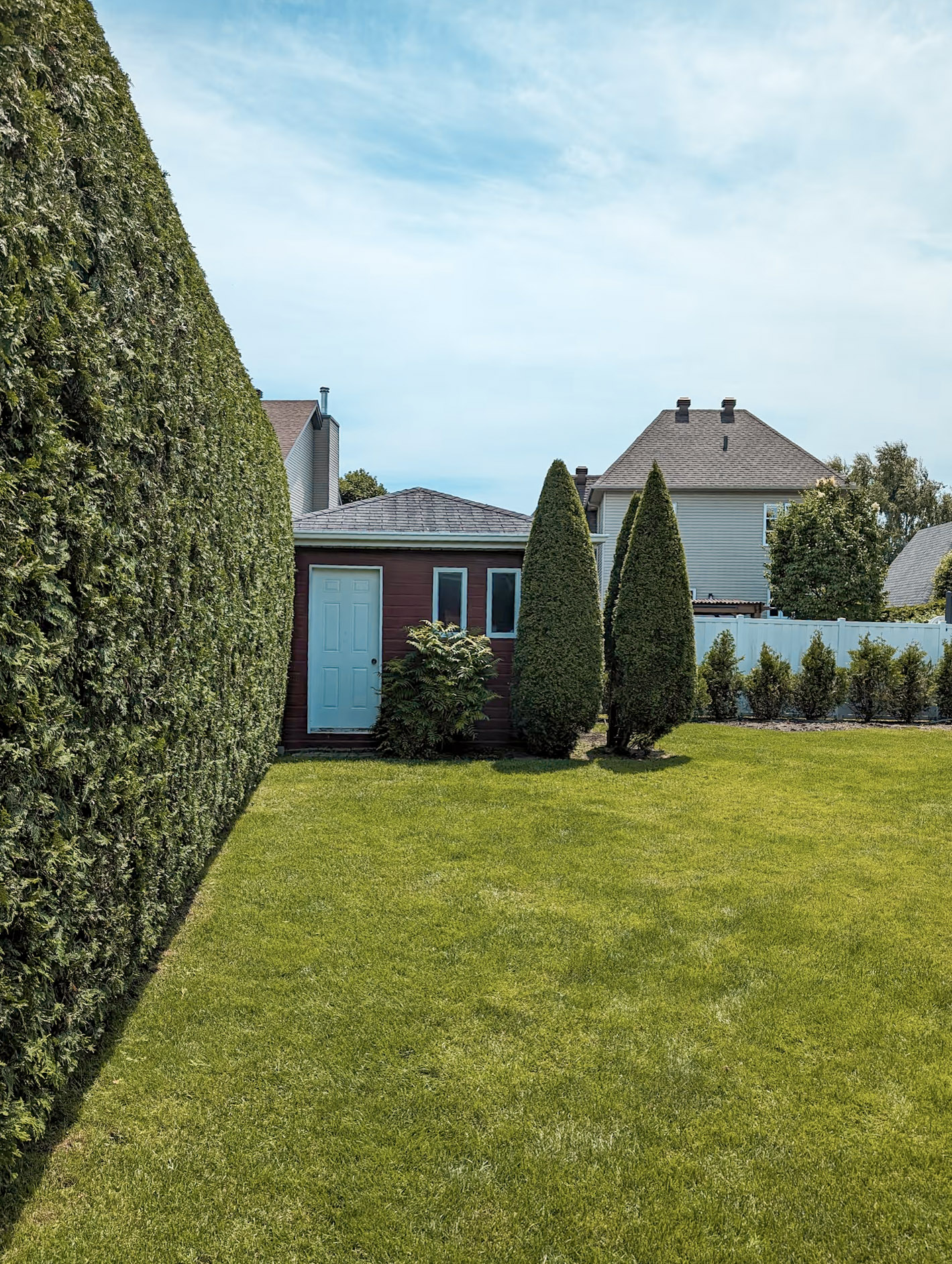
Source: Taillage Haut-Richelieu inc
Tree Size and Maturity
Taller cedars cost more because they take longer to grow and are harder to move. A 4-foot cedar may be affordable, but it will take more time to provide full privacy. A 7- or 8-foot cedar costs more upfront but offers a faster visual barrier.
Cedar Type
The type of cedar also affects the price and final look.
White cedar: Often the most common and affordable choice for traditional privacy hedges. It can create a dense, natural-looking wall when planted properly.
Emerald cedar: Also called Smaragd cedar, this variety has a narrow, conical shape and bright green foliage. It is attractive and popular, but it may look more like a row of individual trees than a flat hedge.
Brandon cedar: A hardy, upright cedar often used for screening. It is narrower than some white cedar hedging options and can work well where space is limited.
Pyramidalis cedar: A columnar form of Thuja occidentalis that is used for formal screening and tight spaces.
Western red cedar: Also known as Thuja plicata, this type is more common in parts of British Columbia and the West Coast. It can be a good choice for larger properties and suitable soil conditions.
Tree Spacing
Closer spacing means more trees and a higher material cost. Wider spacing lowers the number of trees but may take longer to fill in.
For many residential cedar hedges, 2 to 3 ft. apart is a common planting distance. For some larger cedars or taller privacy screens, spacing may be wider. Always confirm spacing with the supplier because it depends on the species, tree size, and desired final look.
Retail vs. Installed Pricing
Buying cedars from a big box store, nursery, or plant wholesaler can reduce the material cost, especially for small trees. However, the homeowner is responsible for delivery, soil preparation, planting, watering, mulch, and replacement if trees fail.
A full installation costs more, but it may include:
Delivery
Trench excavation
Planting labour
Soil or compost
Starter fertilizer
Mulch
A soaker hose or basic irrigation setup
Cleanup
A limited warranty
Site Conditions
Installation costs increase when the contractor has to deal with rocky soil, clay soil, poor drainage, roots, slopes, fences, tight access, or old hedge removal. If the area needs grading, drainage improvements, or irrigation, the total project cost will be higher.
Where can you buy cedar hedges?
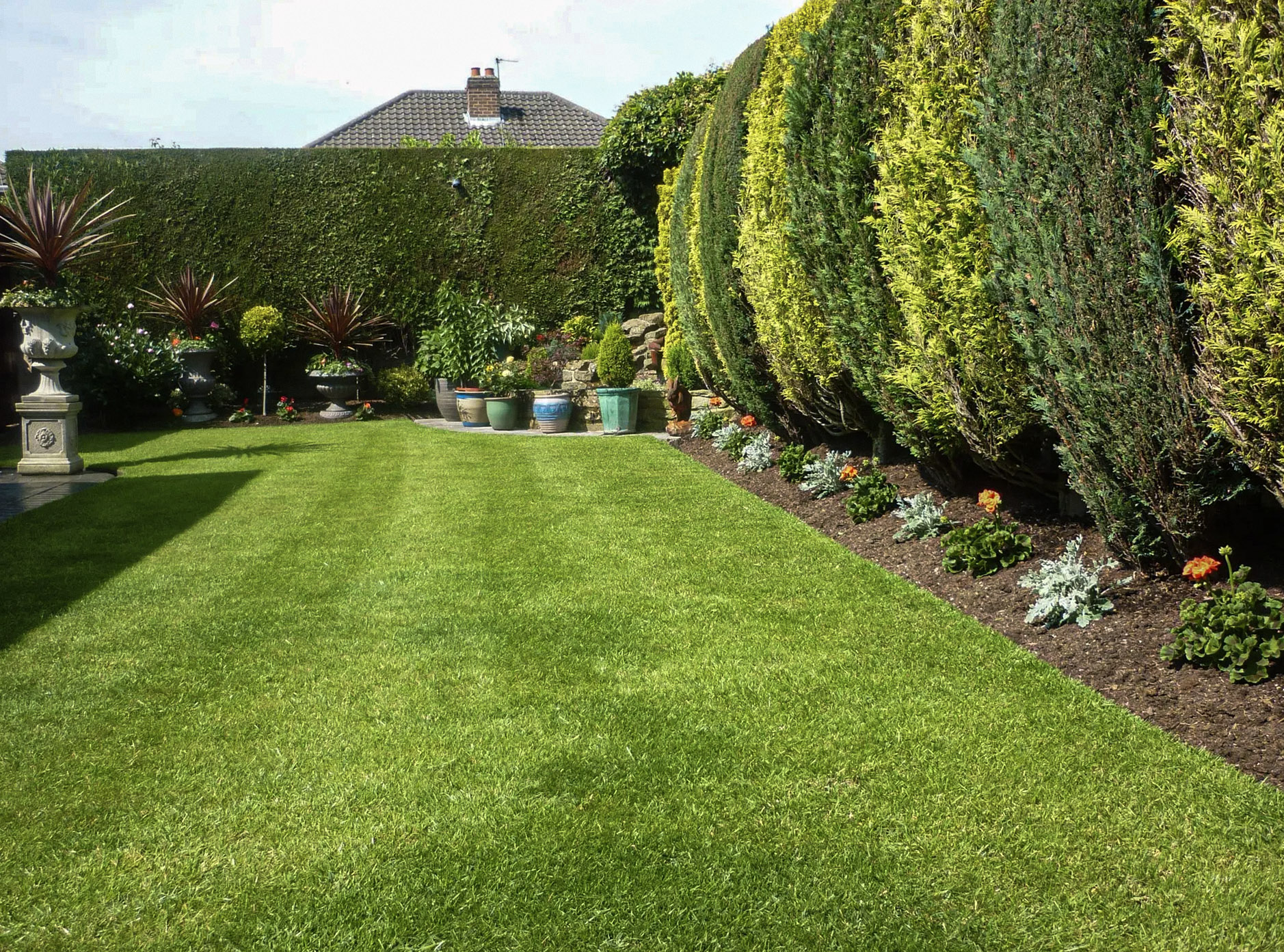
Source: K.W.’s Unique Supplies & Service
Canadian homeowners can usually buy cedar hedges from several sources.
Local Nurseries
Nurseries often have healthier stock, better variety, and staff who understand local growing conditions. They may also offer delivery and planting referrals.
Landscaping Suppliers
Some suppliers specialize in privacy hedge installation. They may offer bulk pricing, planted per-tree pricing, or a per-foot quote.
Plant Wholesalers
Wholesalers can be cost-effective for larger orders, but some sell only to contractors or require minimum quantities.
Big Box Stores
Big box stores may be convenient for smaller projects, especially in spring. Selection and tree quality can vary, and larger hedge-grade cedars may not always be available.
Is a cedar hedge cheaper than a fence?
In many cases, a cedar hedge can be cheaper than a new privacy fence, especially for long property lines. However, the comparison depends on the height of the cedars, the fence material, installation complexity, and maintenance expectations.
A hedge also takes time to grow and needs watering, pruning, and care. A fence gives immediate privacy, but it has its own maintenance and replacement costs. For many homeowners, the best choice depends on whether they want a living screen, a hard boundary, or a combination of both.
Cedar Hedge Installation and Basics
Source: Excavation Provincial
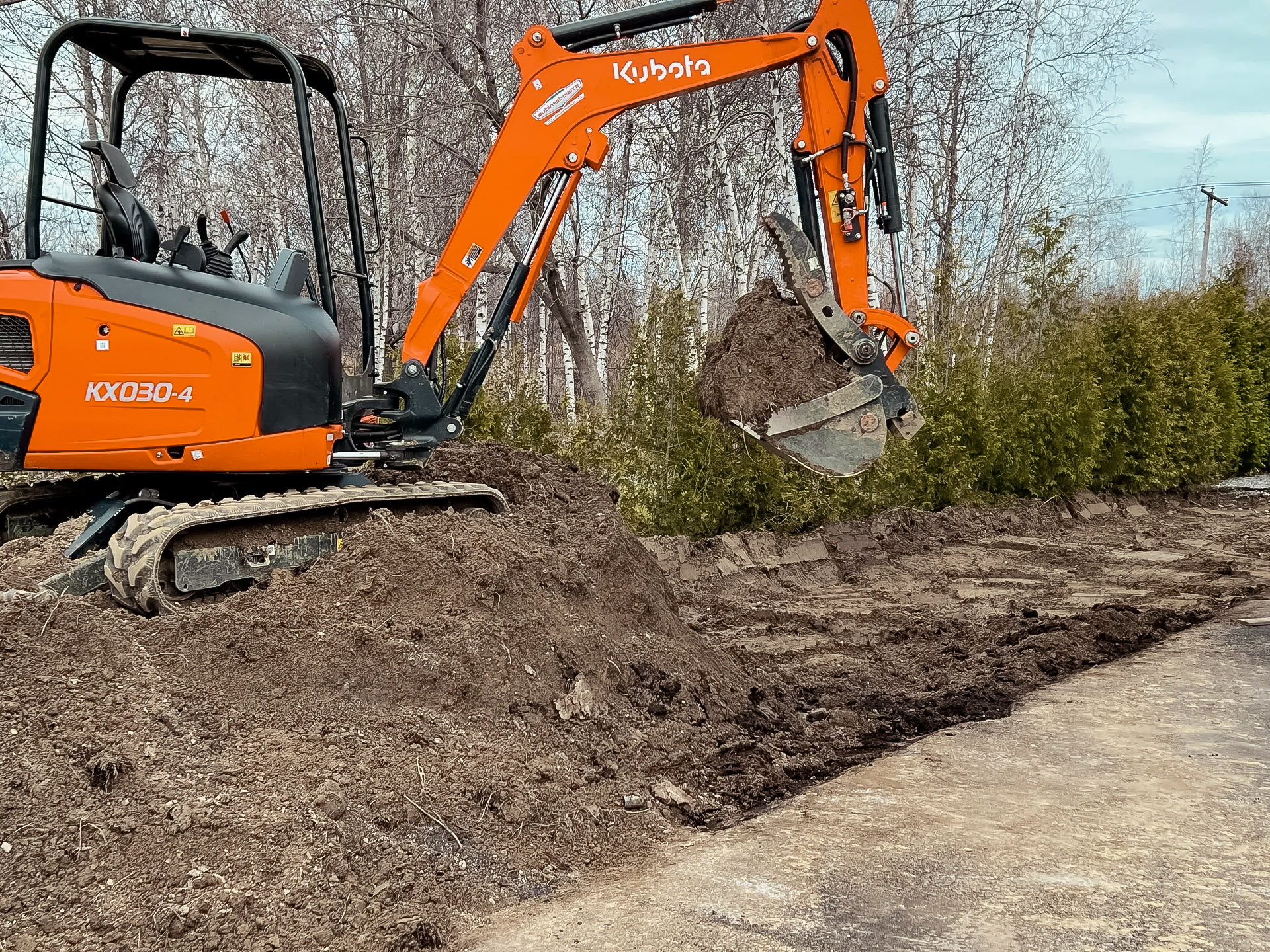
A professional cedar hedge installation usually starts with layout and spacing. The installer may dig individual holes or a continuous trench, depending on the project.
The root ball should be planted at the proper depth, not buried too deeply. Poor planting depth, dry root balls, and inadequate watering are common reasons newly planted cedars fail.
For balled-and-burlapped cedars, installers often fold back the top of the burlap after placing the tree. The exact approach may vary by supplier, so it is best to follow the grower’s instructions.
Cedar Hedge Maintenance Costs
Cedar hedges are fairly low-maintenance once established, but the first year is important. Budget for watering supplies, mulch, fertilizer, and occasional pruning.
Maintenance item | Typical cost |
Soaker hose | $30 to $100+ |
Mulch | $50 to $300+ |
Fertilizer | $20 to $80 |
Annual trimming | $150 to $800+ |
Replacement tree | $20 to $200+ per tree |
Professional hedge trimming costs vary widely based on hedge height, length, access, and cleanup. A small hedge may be inexpensive to maintain, while a tall, long hedge may require professional equipment.
How to Care for a New Cedar Hedge
The first year after planting is the most important period for root establishment.
Water Deeply
New cedars need consistent moisture, especially during dry weather. A soaker hose is often the easiest way to water evenly along the base of the hedge.
Avoid shallow watering. The goal is to soak the root zone, not just wet the surface.
Add Mulch
A 2- to 3-inch layer of mulch helps conserve moisture and protect the roots. Keep mulch away from direct contact with the trunk to reduce the risk of rot.
Prune Lightly
Light pruning can help shape a cedar hedge, but avoid cutting into old bare wood. Cedars do not always regrow well from heavily cut brown areas.
Watch for Winter Burn
Cold, windy winter months can dry out cedar foliage, especially in exposed locations. Proper fall watering, mulch, and choosing the right cedar variety for your climate can help reduce damage.
Check Soil and Drainage
Cedars generally prefer moist, well-drained soil. They can struggle in very dry, compacted, or poorly drained areas. If your yard has heavy clay, standing water, or severe root competition from nearby trees, ask a landscaper or nursery for advice before planting.
In Conclusion
The average cedar hedge cost in Canada depends mainly on tree size, cedar type, spacing, and whether you choose retail trees or a full installation. As a general guide, expect to pay $15 to $135 per tree for retail cedars or $25 to $100+ per linear foot for an installed hedge.
For the best value, compare quotes from local nurseries, cedar hedge suppliers, and landscapers. Make sure each quote includes the same items, such as delivery, trenching, soil, mulch, irrigation, warranty, and cleanup.
FAQ
How much does an emerald cedar hedge cost?
An emerald cedar hedge usually costs more than a basic white cedar hedge. Retail emerald cedars may cost about $30 to $100+ per tree, depending on size. Installed pricing can be higher if the trees are tall, widely spaced, or include soil preparation and warranty coverage.
How far apart should cedar hedge trees be planted?
Many cedar hedges are planted 2 to 3 ft. apart. Some suppliers plant certain white cedars closer together for a denser hedge, while larger cedars may need wider spacing. Spacing should match the tree type, height, and desired privacy level.
Is it cheaper to buy cedar trees and plant them yourself?
Yes, buying retail cedars and planting them yourself can reduce labour costs. However, mistakes with spacing, planting depth, watering, or soil preparation can lead to tree loss. For long hedges, large cedars, or difficult sites, professional planting may be worth the added cost.
When is the best time to plant a cedar hedge in Canada?
Spring and autumn are often good times to plant because temperatures are cooler and soil moisture is easier to manage. Summer planting is possible, but new cedars need careful watering during hot, dry weather.
Do cedar hedges increase property value?
A healthy cedar hedge can improve curb appeal, privacy, and outdoor comfort, which may support property value. However, it should be well maintained. Overgrown, patchy, or poorly placed hedges can have the opposite effect.
Looking for something else?
Related articles
The latest industry news, interviews, technologies, and resources.
Editorial Team
•08 Nov 2023
p.p1 {margin: 0.0px 0.0px 2.0px 0.0px; text-align: justify; font: 14.0px 'Helvetica Neue'; color: #454545} p.p2 {margin: 0.0px 0.0px 0.0px 0.0px; text-align: justify; font: 12.0px 'Helvetica Neue'; color: #454545} p.p3 {margin: 0.0px 0.0px 2.0px 0.0px; font: 14.0px 'Helvetica Neue'; color: #454545} p.p4 {margin: 0.0px 0.0px 0.0px 0.0px; font: 12.0px 'Helvetica Neue'; color: #454545}

Editorial Team
•08 Nov 2023
In Montréal alone, it’s estimated that approximately 300,000 residents are affected by a high level of lead in their water, in particular, due to the pipe connecting their home to the city’s water system. In 2007, the City of Montréal, therefore, committed to changing all of its lead water pipes in the public sector, totalling around 48,000 by 2030, recently investing about $557 million to accelerate the project.
Editorial Team
•08 Nov 2023
Whether choosing to renovate the kitchen or bathroom, ceramics are an excellent choice as they allow you to conceive designs as diverse as they are original. Available in a large variety of styles, ceramics make it easy to create custom pieces as they offer an infinite range of possibilities.
Editorial Team
•15 May 2026
Mineral wool and fibreglass may be more familiar options, but home insulation is rarely the most exciting renovation project to tackle. That said, it can make a noticeable difference on your heating bill and improve soundproofing in your walls. So why not choose a greener and more efficient material? Let’s take a closer look at cellulose.
Paul Riopel
•22 Jun 2026
No matter the workplace, whether it's a construction site, restaurant, or hair salon, safety is always the number one priority. However, despite the importance placed on fostering a secure work environment in Ontario, accidents can and do happen, and workers sometimes get injured or fall ill while on the job.