
Are you looking for a rewarding and worthwhile job? Looking to start a new career and are still debating as to which trade would suit you best? Why not opt for electrical power line installation? Do you know less than nothing about the trade but are still jumping in with both feet? Well, check out this article to learn more about it!
Lineworker
Being a lineworker entails installing, repairing, and maintaining overhead and underground electrical power lines. In fact, these individuals are hired by media distribution and telecommunications companies, amongst others, and their duties include the following:
Inspecting and testing telecommunication cables;
Troubleshooting in case of failure;
Managing teamwork;
Operating heavy machinery such as excavators.
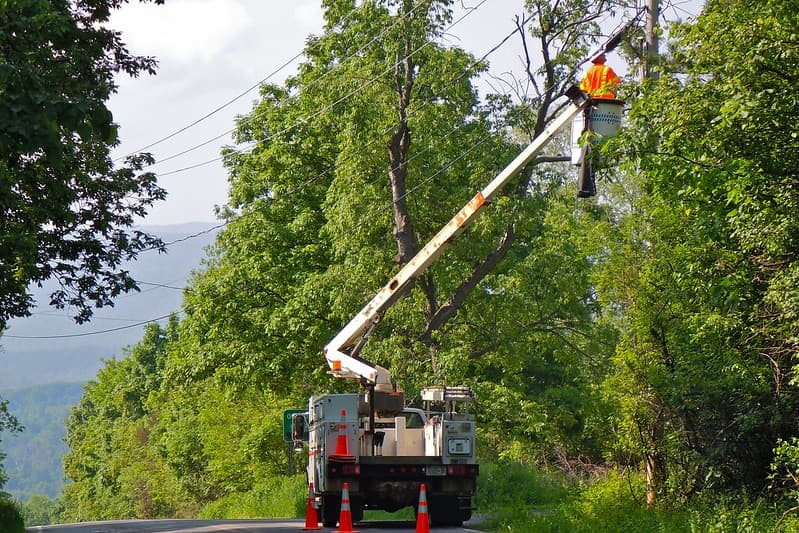
Source: Flickr
Tools Used by Lineworkers
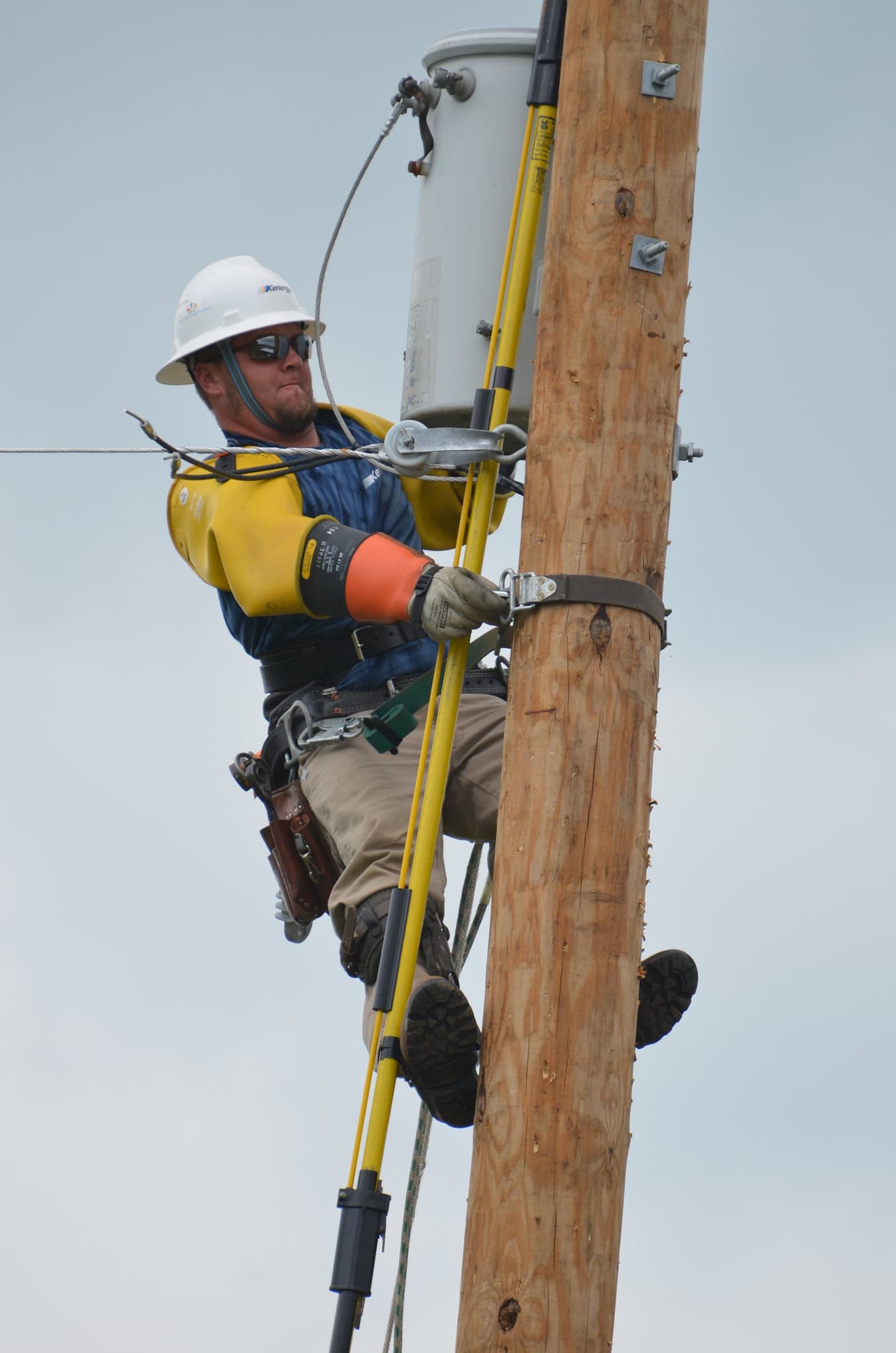
In this line of work, safety first is key. That being said, lineworkers can count on their insulated gloves, tarps, covers, and carpets that will prevent them from directly coming into contact with high-voltage cables. Also, a hard hat will absorb electric currents and protective goggles will shield their eyes.
Hotline sticks or other tools made with insulated fibreglass are used to handle high-voltage cables.
Utility pole climbing accessories are especially useful for lineworkers as they’ll eventually be called upon to climb these wooden masts. The worker will need climbing spikes (affixed to their shoes, ankles, and around each calf) and mast straps (wrapped around the mast and attached to the climber’s harness).
Lineworkers will also need to have certain tools handy such as sockets, a ratchet set, a screwdriver, a hammer, and rubber-handle pliers to protect themselves against burns and electrical shocks in case they come into contact with the high-voltage line.
It’s super important that the workers be able to check the electric wire’s voltage, ohms, amps, and resistance. To do so, there are meters containing a testing function that allows for various high-voltage elements such as power cables, capacitors, and transistors to be evaluated. Amongst the various equipment used by lineworkers, we can highlight the multimeter testers or clamps even.
Average Salary of a Lineworker
In terms of salary, for a mechanic or lineworker, the hourly wage calculation is based on the median salary that was recorded between 2019 and 2021. That said, the low-range hourly wage is $26, the median is $40, and the high range is $46.
Naturally, remuneration for such a line of work is based on the following:
Required duties;
Degree of difficulty of duties;
Travel distance from one job to the next;
Overtime required;
Financial disposition of the company.

Source: Flickr
Lineworker: Training & Requirements
Prior to becoming a lineworker, you’ll need to complete a 1,140-hour training that includes 80% outdoor practical work and 20% theory. Preselection tests are mandatory prior to registration.
To be considered, you’ll need to meet the following criteria:
Be 16 years of age or older;
Hold a high school diploma or diploma of equivalency.
OR
Have successfully completed secondary three (year 10) French, math, and English courses.
Also, a file will need to be submitted containing the following documents: a long format birth certificate issued by the Directeur de l’état civil, proof of residency, as well as the last report card or achievement record.
Additionally, an employer may ask for a Class 1 or 3 driver’s license. Also, taking a CNESST-recognized first aid in the workplace class is considered an asset.
To break into the industry, one has to have the following skills and proficiencies:
No fear of heights and enjoy climbing;
Energetic and curious;
Critical thinking;
Dexterous and agile;
Excellent near-sightedness;
Ability to work in a team;
Rigorous;
Fast & efficient;
Easily adapt to changing weather;
Good physical health.
Job Opportunities for Lineworkers
Source: Flickr
Being a lineworker is truly a long-term trade; the job opportunities are really favourable. Although a male-dominated industry (96.4% men, 3.6% women), the need is ever-growing and everyone has just as many chances of breaking through.
Besides, this trade is ever-present in various lines of work like public utilities, construction, public administration, architecture, civil engineering, and other related fields too, such as electronics and other computer products, etc.
The main reasons that would incite someone to pursue this career path are as follows:
Appealing remuneration: A lineworker’s salary is much higher than the average salary, which makes it quite appealing to most interested people.
Vast arena: Note that being a lineworker doesn’t just mean working for Hydro-Québec, it also means the possibility of working with construction contractors or even for telecommunications companies.
Working outdoors: If you hate being cooped up inside all day long and enjoy working outdoors and climbing, this trade is meant to be.
New perspectives: Becoming a lineworker will allow you to develop skills you never thought you had. You'll also gain insight into a very fulfilling field and discover what you're truly capable of.
Looking for something else?
Related articles
The latest industry news, interviews, technologies, and resources.

Editorial Team
•08 Oct 2025
Are you passionate about computers, electronics, and new technologies? Are you drawn to manual work, in which the words "build," "repair," or "install" sound like true challenges to you? Electricity, intricate components, and problem-solving don't scare you?
Editorial Team
•29 Aug 2025
Do you like getting your hands dirty while pursuing a well paid and interesting trade? Becoming a plumber might be what you are looking for. Becoming a plumber in Ontario is a rewarding career path that offers a blend of technical skills, hands-on experience, and job stability. The journey to becoming a licensed plumber involves several key steps and requirements, which are designed to ensure that individuals are well-prepared for the demands of the profession.

Cynthia Pigeon
•08 Nov 2023
When a kitchen is too small to meet a household's needs, it quickly becomes a nuisance. And, since most people spend several hours a day in their kitchen, the lack of space is definitely felt on a daily basis. Therefore, a bigger kitchen is a recurring item on many homeowners' wish lists.

Editorial Team
•18 Aug 2025
Whether you’re freshening up a bedroom or repainting a façade, painting is one of the most accessible renovation projects. However, a common mistake is buying too much or too little paint. Accurately calculating the required amount allows you to plan your budget, avoid waste, and cut down on trips to the hardware store. This guide will explain how to determine the surface area to be painted, choose the right type of paint, and estimate the number of coats to ensure success.

Léa Plourde-Archer
•10 Mar 2026
Are your ventilation ducts due for a cleaning? Wondering how to get the job done? RenoQuotes.com has exactly what you need to effectively maintain your home’s ventilation system.