Custom Wine Cellar Cooling in Quebec: The Art of Invisible Preservation
By Cynthia Pigeon
Updated on July 1, 2026
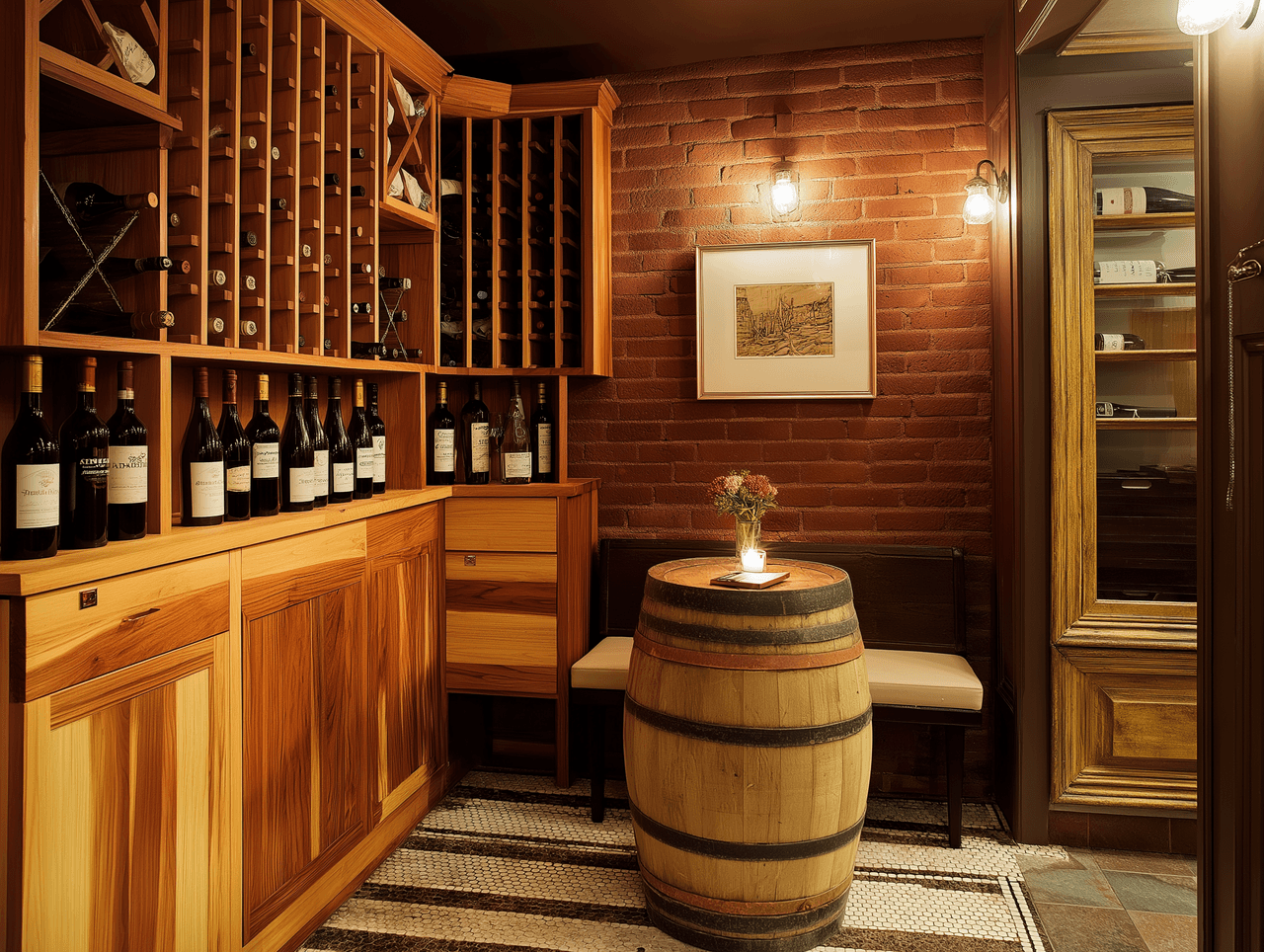
Owning a collection of fine wines in Montréal or the Laurentians goes beyond simple entertaining: it is a matter of passion, heritage and high-level expertise. For owners of luxury residences, interior designers and Quebec architects, designing a residential wine cellar presents a major technical challenge. How can the clean aesthetics of contemporary spaces be combined with the strict physical requirements of wine preservation?
In Quebec, our homes are exposed to extreme climate shifts. Between January’s bitter cold and July’s tropical humidity, indoor air conditions fluctuate constantly. A simple storage space or standard refrigeration unit is not enough to protect age-worthy bottles that may be worth tens of thousands of dollars. This is where thermal engineering meets high-end design. Precision cooling for a custom wine cellar does more than cool the space; it creates a stable, controlled microclimate protected from major fluctuations and Quebec’s changing climate, while remaining visually discreet so the bottles can take centre stage.
Why Is Custom Climate Control the Heart of Your Wine Cellar?
Source: Habikon Inc.
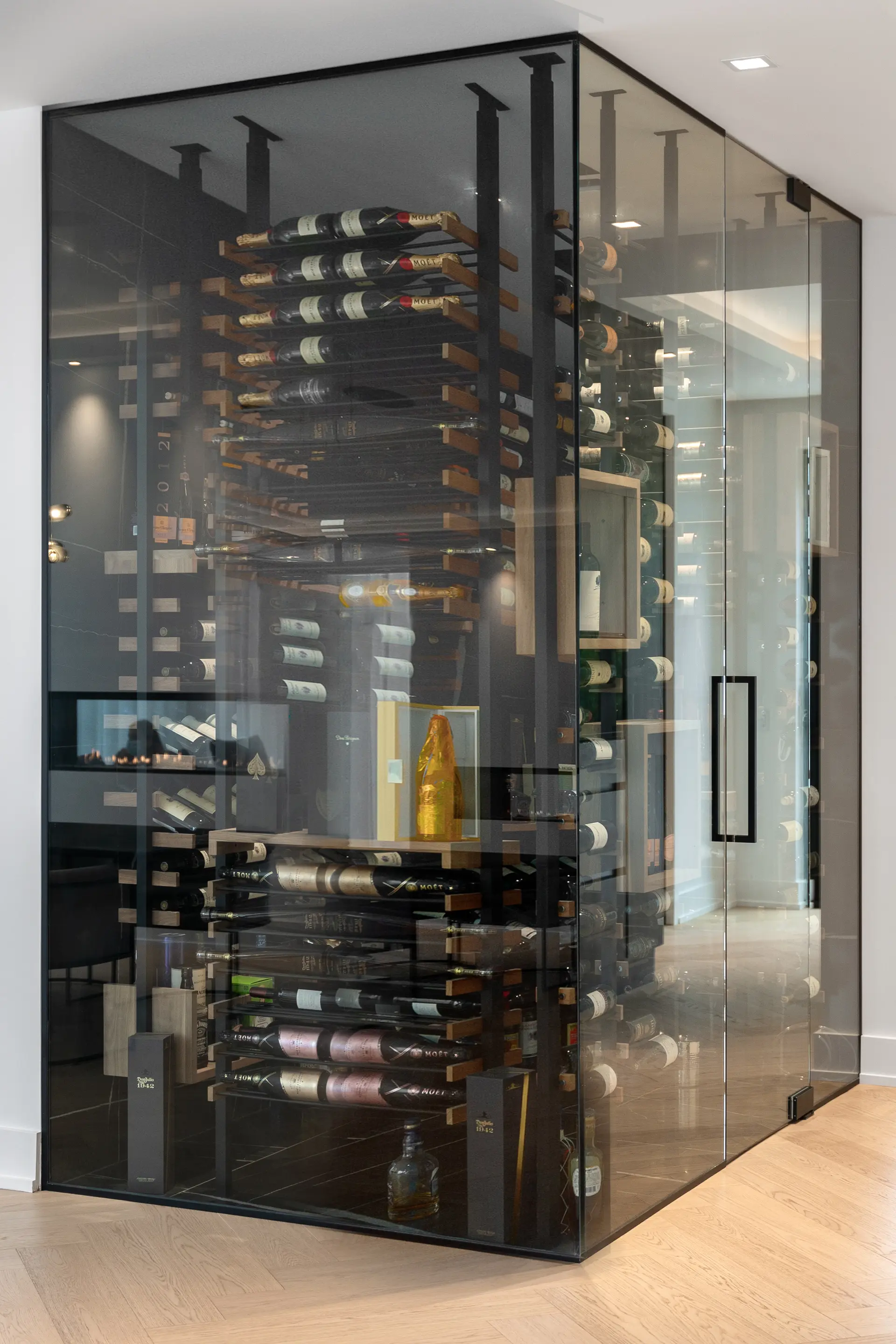
Wine is a living, complex and sensitive material. Its molecular structure evolves over time according to a precise biochemical rhythm. If ambient conditions fluctuate, this ageing process can accelerate or deteriorate, irreversibly affecting the wine’s aromas, colour and balance. In luxury residential projects, custom climate control is not a comfort feature, but the vital infrastructure of the preservation space.
Unlike residential comfort systems, such as a heat pump or standard air conditioner designed to lower temperature quickly and dry the air, a precision wine cellar cooling system manages temperature, thermal stability and relative humidity at the same time. The collector’s main enemy is sudden temperature variation. When the room warms up, the liquid expands, putting pressure on the cork. When it cools down, the liquid contracts, drawing in a small amount of oxygen-laden air. This forced “breathing” accelerates oxidation and can prematurely damage even the finest vintages.
Luxury Standards: Constant Temperature and Humidity Control
To meet the high standards expected by wine experts and luxury home designers, the indoor conditions of a custom wine cellar must be maintained within precise tolerance ranges, regardless of outdoor conditions.
Here are the precision parameters sought in high-end projects in Quebec:
Critical Parameter | Ideal Target Value | Acceptable Tolerance Range | Impact of Deviation |
Temperature | 12 °C (54 °F) | ± 1 °C | Accelerated ageing or slowed evolution |
Hygrometry (Humidity) | 65% (between 60% and 70%) | ± 5% | Cork drying out (<50%) or mould on labels (>80%) |
Vibrations | Minimal | Avoid constant sources of vibration | Sediment resuspension and less stable ageing |
Light | Darkness / Low-UV LED Lighting | Controlled spectrum | Lightstruck flavour caused by UV degradation |
Maintaining precise humidity is particularly delicate. If the air is too dry, the cork loses elasticity, shrinks and allows the wine to evaporate or oxidize. If the air is too humid, labels may peel off, and mould can develop on the cellar’s fine woodwork. Some specialized systems can include or be paired with a humidification or dehumidification device to counter the dry air of our heated winters and the heavy humidity of our summers.
Preferred Cooling Technologies for Luxury Projects
Source: RenoQuotes
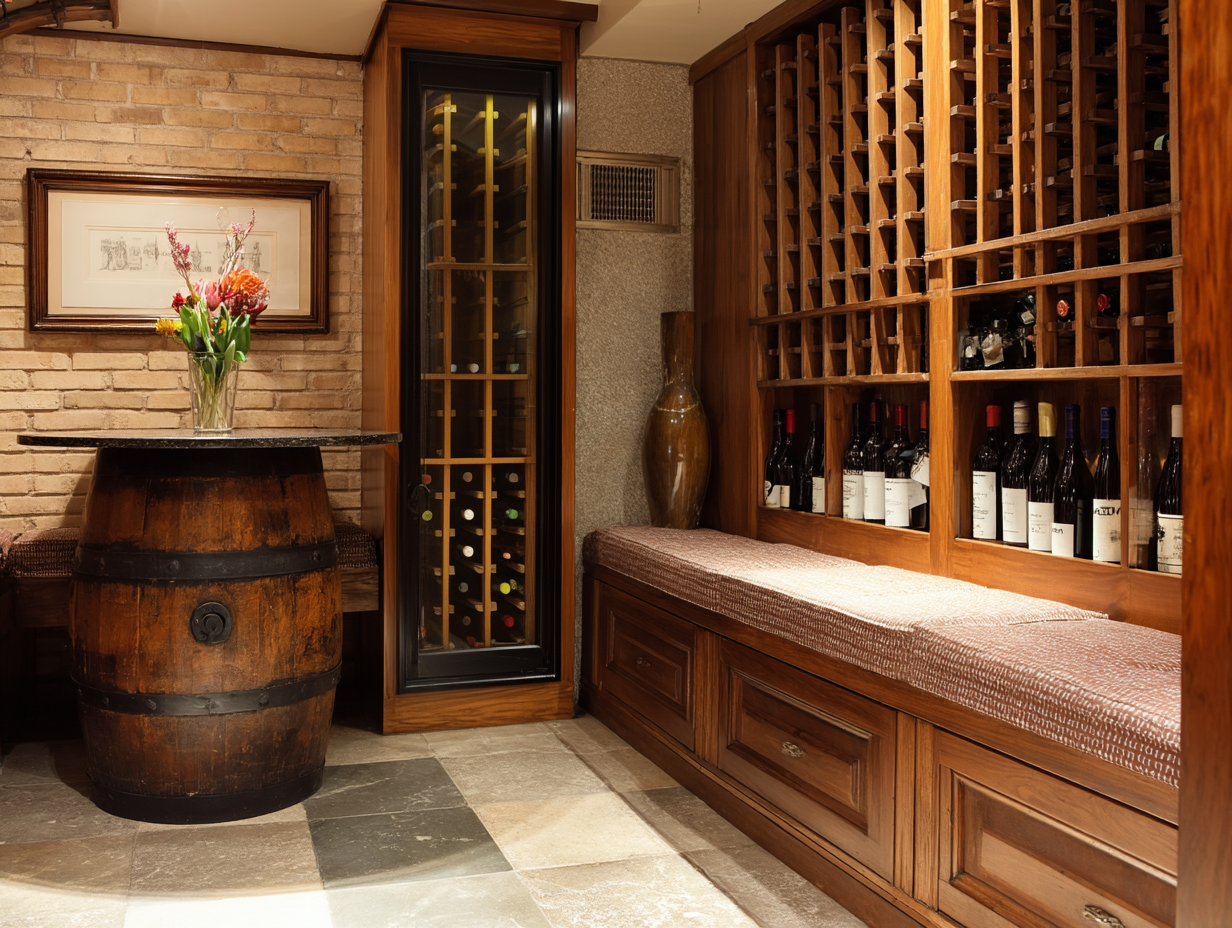
During the design phase of a residential wine cellar, architects and designers must choose a refrigeration technology that can meet the room’s volume and aesthetic constraints. There are three main types of configurations for high-end projects: self-contained built-in systems, ducted systems and split systems.
Although self-contained built-in systems perform well in small spaces, they create visual and acoustic constraints because they pass through a wall to reject heat into an adjacent room. For seamless integration into luxury architecture, home professionals tend to favour remote configurations.
Split and Ducted Systems: Visual and Acoustic Discretion
For refined interiors in a Montréal penthouse or an exceptional property in Westmount, luxury is defined by what cannot be seen or heard. Split and ducted systems offer the highest level of discretion.
Split system: This technology separates the evaporator unit, located inside the wine cellar, from the compressor and condenser, installed outside the home or in a remote mechanical room. The indoor evaporator can be finished with premium materials or hidden behind architectural panels. Refrigerant lines transport the refrigerant discreetly, removing the main source of noise and vibration from the tasting area.
Ducted system: This is the ultimate solution for complete invisibility. The refrigeration unit is entirely located in a drop ceiling or low mechanical room. Cooled air, and when needed, humidified or dehumidified air, is carried to the wine cellar through insulated ducts and diffused through slim, nearly invisible architectural grilles. No equipment is visible inside the cellar; only the clean lines of glass, brushed steel or white oak are highlighted.
From an acoustic standpoint, these configurations create a quiet, subdued environment. The constant hum of a traditional compressor is removed, allowing homeowners to entertain guests in a calm atmosphere suited to weekend wine tastings.
Design and Insulation: Meeting the Challenges of Quebec’s Climate
Source: Vitrerie Écono
Even the most advanced precision cooling system will be ineffective if the wine cellar envelope has structural weaknesses. Quebec’s climate requires strict attention to materials and insulation techniques. When the outdoor temperature drops to -25 °C in winter, the inside of our homes is heated, creating very dry air. In summer, relative humidity rises. A wine cellar kept at 12 °C year-round becomes a permanent thermal conflict zone with the surrounding living spaces, which are usually maintained around 21 °C.
To prevent condensation, water runoff on glass walls and hidden mould growth, the envelope should meet the following criteria:
A continuous vapour barrier: This is the most critical element. A commercial-grade vapour barrier, often closed-cell spray polyurethane foam, should be applied on the warm side of the walls, ceiling and floor. It prevents indoor humidity from migrating into the cold wine cellar.
High thermal insulation: Often around R-19 or higher for walls, and more for ceilings or exterior walls, depending on the load calculation. Perimeter walls and ceilings should have high thermal resistance to reduce compressor workload and prevent overly frequent on/off cycles, which can prematurely wear out the equipment.
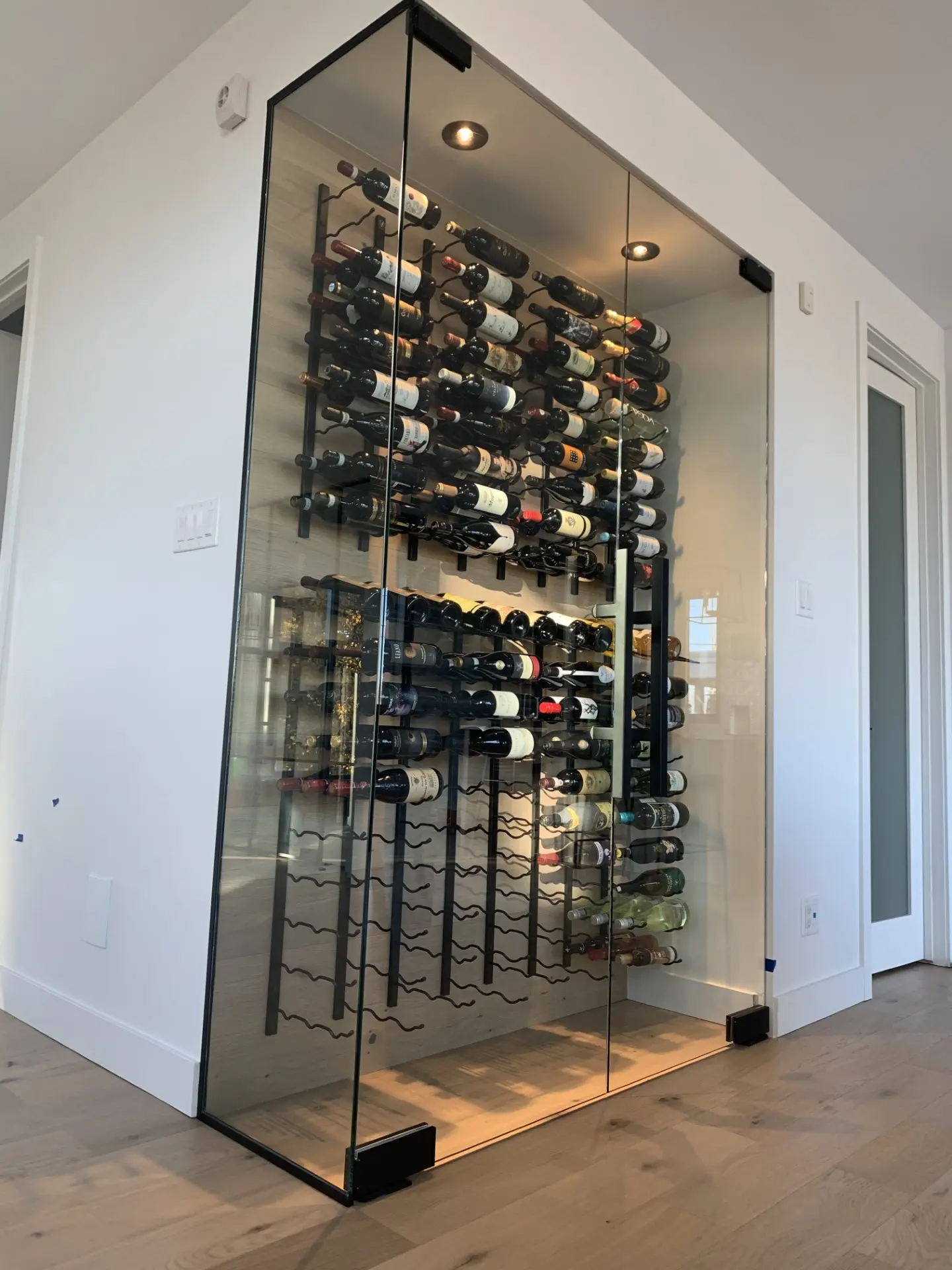
Architectural glazing: Glass walls, highly popular in contemporary design, should be made with double- or triple-sealed insulated glass units, treated against ultraviolet rays and fitted with non-conductive insulating spacers.
Before shopping for components or selecting finishing materials, a thermal load calculation should be completed by a specialist to precisely size the required cooling capacity.
How to Choose Your Residential Refrigeration Contractor in Quebec
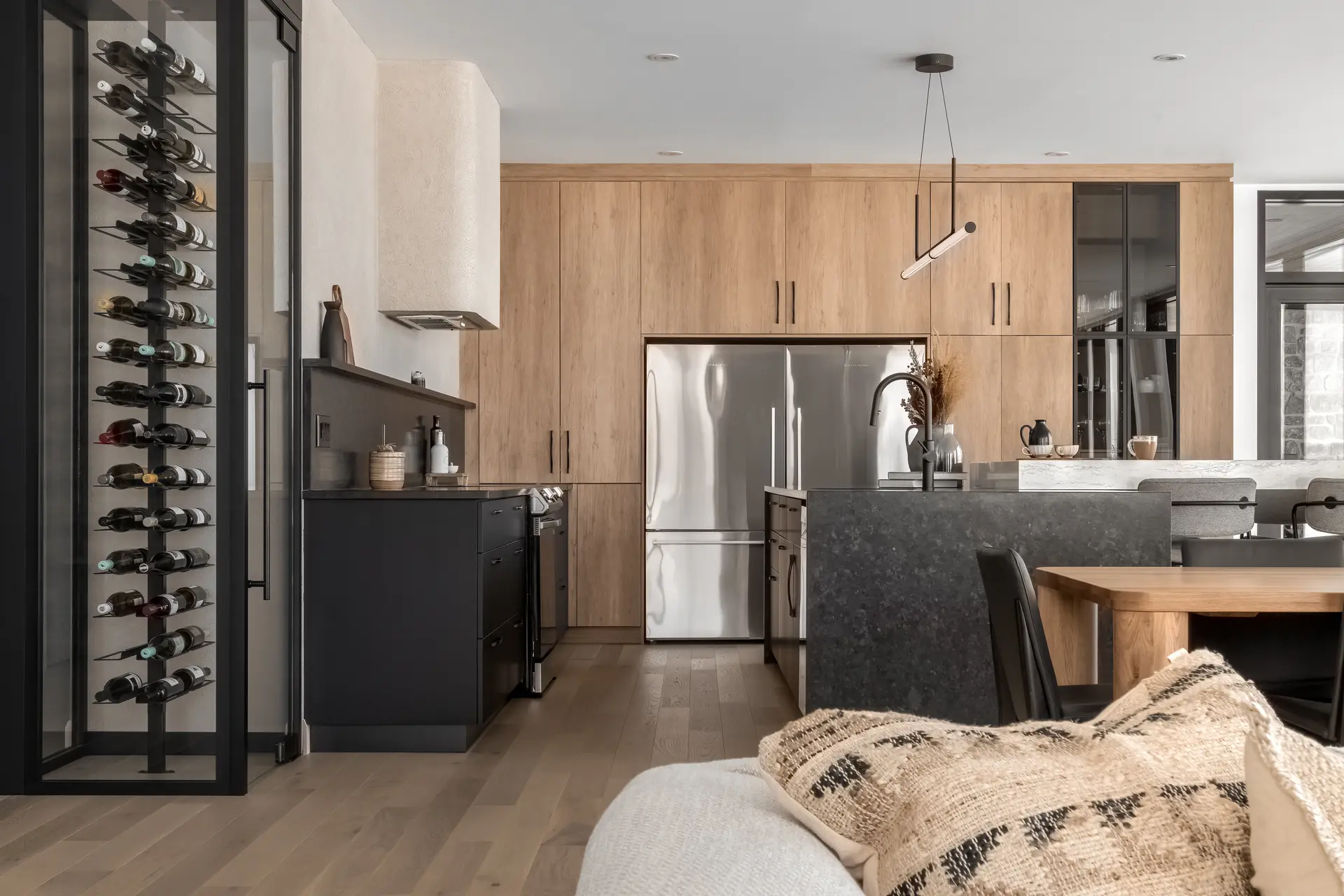
Source: Üpé Atelier
A high-end custom wine cellar cannot be improvised. It requires several trades to work together: woodworkers, designers, electricians and, at the top of the technical pyramid, a refrigeration expert. In Quebec, the regulatory framework surrounding building mechanics is strict and aims to protect occupant safety as well as the environment.
Hire a contractor with the proper RBQ licence, and make sure the workers who handle refrigerants hold the environmental qualification for halocarbons. Under the Environment Quality Act and the Regulation respecting halocarbons, refrigerant gas management is strictly regulated to limit greenhouse gas emissions. A certified professional will use authorized refrigerants that are recovered and handled in accordance with environmental rules, and will perform rigorous nitrogen pressure leak tests before the system is officially started.
To begin planning your space and obtain budget estimates aligned with the residential construction market, you can submit a quote request for your renovation and cooling work to be connected with qualified professionals in your area.
During your discussions with your future project lead, make sure to ask for the following:
A written and detailed thermal load calculation (BTU/h).
An annual preventive maintenance plan for coil cleaning and refrigerant pressure checks.
A written warranty on major components, such as the compressor, and on installation labour.
A demonstration of connected control systems, allowing you to monitor the temperature and humidity of your valuable collection remotely, directly from your smartphone.
By investing in precision engineering and flawless execution, your custom wine cellar will stand the test of time with the same elegance and consistency as the fine wines it is designed to protect.
Looking for something else?
Related articles
The latest industry news, interviews, technologies, and resources.
Christine Simard
•08 Nov 2023
Have you decided to change your floor covering and your choice fell on ceramic? Regardless of the specific tile pattern that caught your attention, you will need to purchase grout.

Editorial Team
•23 Sep 2025
Toronto’s bustling real estate market and extreme seasonal weather make HVAC services a year-round necessity. But with fierce competition among contractors, simply offering quality work isn’t enough to keep your schedule full. To consistently attract new leads and secure contracts, HVAC contractors in Toronto need a proactive, strategic approach. Here’s how to stand out and grow your business.
Cynthia Pigeon
•05 Dec 2025
Are you looking to switch out your old toilet for an upgraded and more efficient model? If you are not overly excited about this upcoming purchase, note that it is nonetheless a major one!

Editorial Team
•03 May 2024
Running a commercial space takes a lot of work. For those managing a restaurant, bar, storefront, office, community organization or another venue with plenty of moving parts, it can be challenging to keep everything in smooth operation. Take the issue of noise as an example, between the constant hum and buzz of street traffic, the sounds of nature or humans in competition with the many noises coming from inside your venue, you might be overwhelmed. Luckily, there are plenty of ways to soundproof doors and windows of a commercial space to control the sound moving inwards.
Editorial Team
•21 Nov 2024
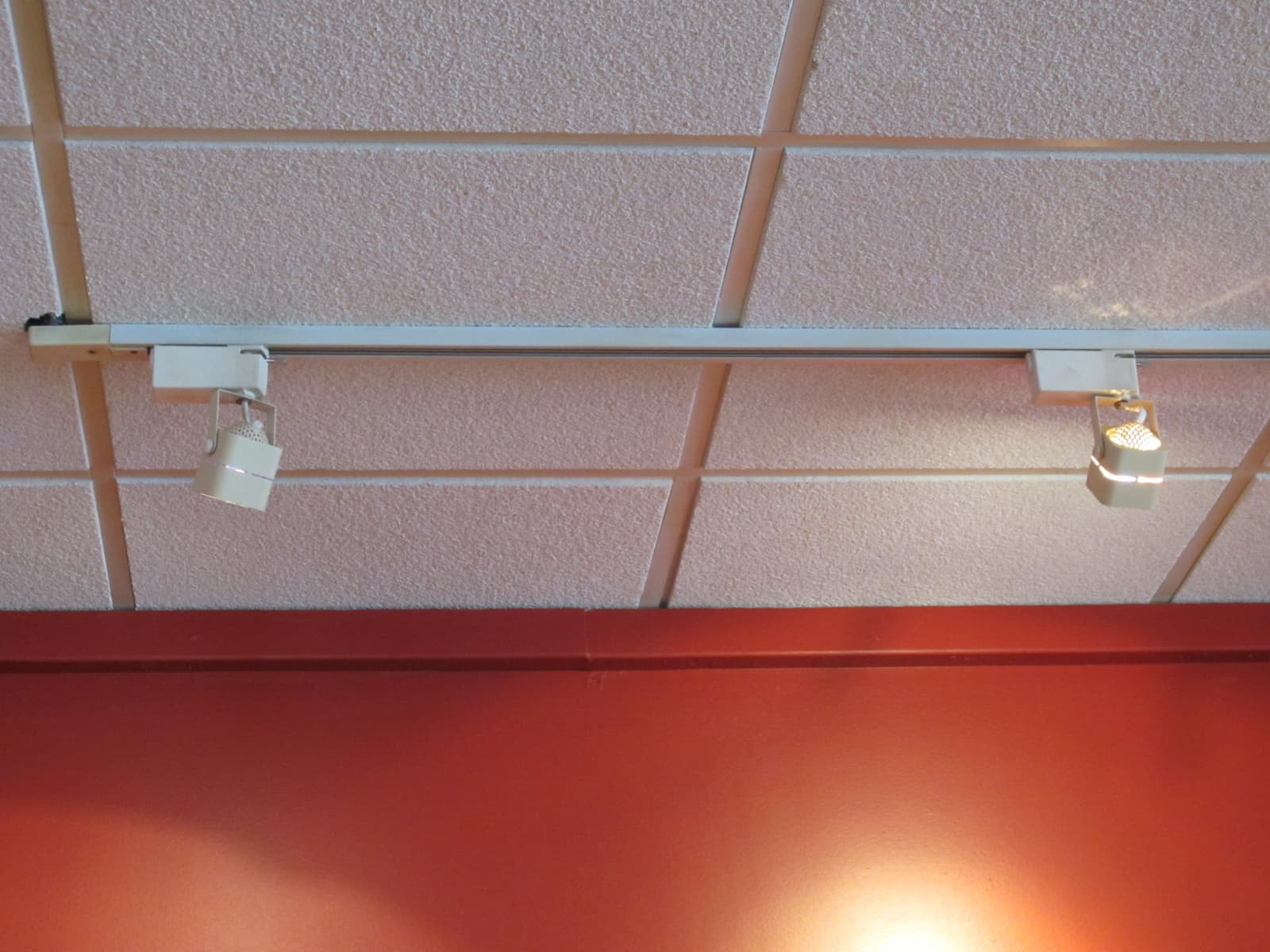
The lighting in a home can completely transform the space, and its importance should not be overlooked. Track lighting is a wonderful option for homeowners who want versatility in their light fixture, as this type of light incorporates several bulbs that can be aimed to face various directions.