What Is the Cost of Residential Architect Plans in Quebec?
By Cynthia Pigeon
Updated on June 12, 2026

Starting a new construction project or a major renovation in Quebec is often one of the biggest investments of a lifetime. Before the first shovel hits the ground or the first wall comes down, drawing up blueprints is one of the most important steps. Blueprints are not just drawings: they form the technical, legal, and aesthetic foundation of your future living space.
The cost of hiring an architect often raises many questions. Many homeowners worry that professional fees will push their budget too high. However, understanding how residential architect pricing works helps you better plan your investment and avoid unpleasant surprises. In Quebec, rates can vary significantly depending on the scope of the work, the reputation of the firm, and the specific requirements of your municipality. Let’s take a closer look at the financial realities behind this essential expertise.
Factors That Influence the Cost of Residential Blueprints
Source: Hauss Architecture Inc.
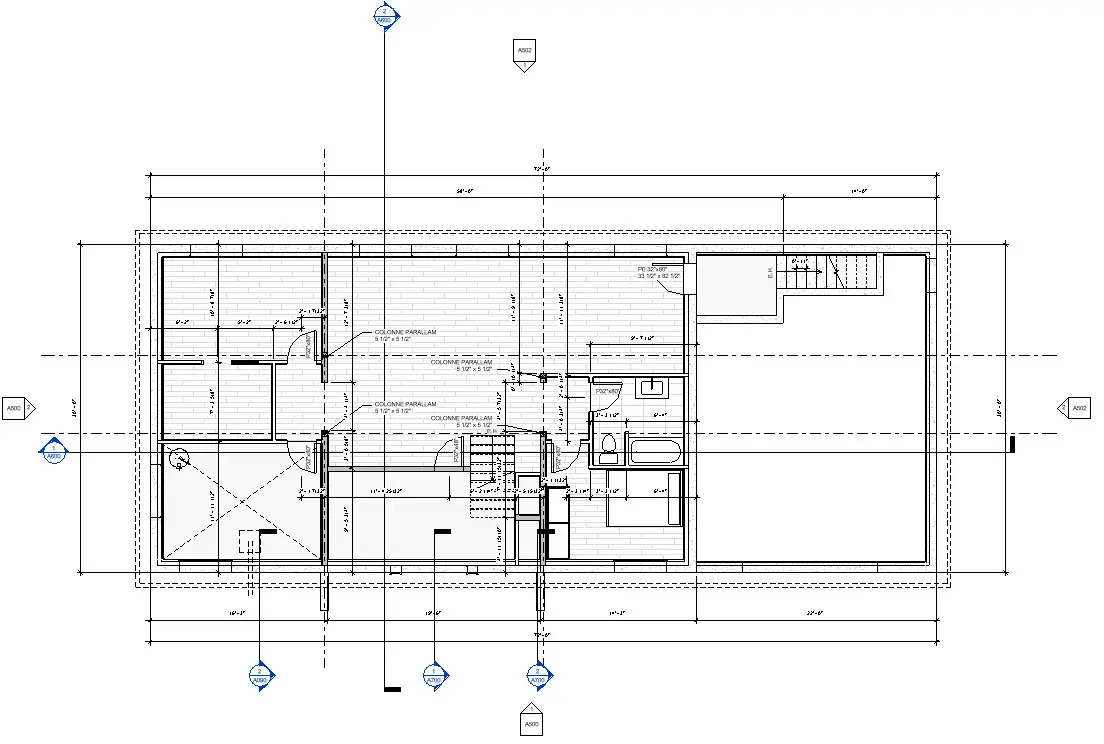
The final price of a set of blueprints is never random. Every residential project has its own characteristics and constraints. Architects evaluate the level of complexity and the time required to design a home that is durable, safe, and adapted to Quebec’s climate realities, such as winter frost and snow loads on roofs.
1. Size and Complexity of the Home
The first indicator used to estimate the cost of plans is the overall size of the building, often calculated as a price per square foot. The larger the living area, the more technical details need to be drawn, including wall sections, electrical plans, and reinforced thermal insulation.
However, size is not the only factor. Architectural complexity also plays a major role. A modern box-style single-family home with large structural spans, extensive glazing to maximize passive solar gain, and cathedral ceilings will require far more design hours than a traditional cottage of the same size. Preliminary engineering requirements and coordination with other professionals, such as structural engineers, can also increase the cost.
Residential Project Type | Average Size (Square Feet) | Design Complexity | Indicative Price Range for Plans |
Standard Cottage or Semi-Detached Home | 1,500 to 2,200 | Low to moderate | $8,000 – $14,000 |
Custom Single-Family Home | 2,500 to 4,000 | Moderate to high | $15,000 – $25,000 |
High-End / Prestige Residence | 4,000+ | Very high | $25,000+ (estimate; may vary depending on the project) |
2. Home Renovation or Addition vs. New Build
Contrary to popular belief, designing plans for a home addition or major renovation can be more complex and sometimes more expensive per square foot than new construction. For a new build, the architect starts with a blank slate and a vacant lot. The main constraints are usually related to the soil and zoning.
For a home extension, such as adding a second storey or building a side addition, the professional must work with the existing structure. This involves:
A precise and detailed survey of the current structure.
An analysis of the load-bearing capacity of the original foundation in relation to the demands of our climate.
A harmonious integration of the new volume with the original architectural style.
Managing structural surprises often found in older Quebec homes.
Before getting started, completing a budget estimate for an addition will help you validate the overall financial feasibility of your plans before committing to a major architecture contract.
Pricing Methods Used by Quebec Architects

Source: RenoQuotes
Architecture firms in Quebec generally use three main methods to structure their professional fees. The chosen method usually depends on the nature of the project, how clearly your needs are defined, and the working habits of the architecture firm.
Average Hourly Rate in Quebec
Hourly billing is often used during the early phases of a project, such as feasibility studies, initial sketches, consulting sessions, or when the client is not yet sure exactly what they want. In Quebec, an architect’s hourly rate usually ranges from $120 to $250 per hour.
This amount reflects not only the professional’s expertise, but also the mandatory professional liability insurance required by their order. If you choose this option, it is essential to request a budget cap or an estimate of the expected number of hours for each phase to maintain strict control over your expenses.
Percentage of the Total Cost of the Work
This is the most common traditional method for medium- to large-scale residential projects. The architect calculates their fees by applying a fixed percentage to the estimated overall cost of the construction or renovation. Depending on the project and the firm, this rate generally ranges from about 5% to 12% of the total cost of the work.
For example, building a high-end cottage with construction costs of $500,000, an 8% fee would represent $40,000, depending on the project and the firm. This formula generally covers the full range of services, divided into key stages:
Sketches and preliminary design (20% of the amount): Site analysis, architectural concept development, and initial 3D modelling.
Construction plans for permits (50% to 60% of the amount): Production of detailed technical drawings required to obtain a municipal building permit and comply with the building code.
Site supervision (15% to 20% of the amount): Regular visits by the architect to ensure that the general contractor is following the plans and proper construction practices.
Architect or Architectural Technologist: What Is the Price Difference?

Source: RenoQuotes
This is an essential question for anyone looking to have blueprints drawn up: Should you hire an architect or an architectural technologist? The price difference is often the first thing people notice, with technologists often charging somewhat lower fees than architects, sometimes in a range of 30% to 50%, depending on the project and the firm. However, this choice should not be based on cost alone, because responsibilities and legal limitations can vary significantly.
In Quebec, the architecture profession is strictly regulated by the Ordre des architectes du Québec (OAQ). Under the Architects Act and other regulatory texts, some situations require an architect’s signature, depending on the type and size of the building. For a detached single-family home, in some cases, regulations may allow plans signed by a technologist, provided the area and dimensions meet the applicable exemption thresholds. Requirements should always be verified based on the project and the municipality.
However, when the project goes beyond the standard framework or involves a multi-unit building, such as a triplex or a large semi-detached property, an architect’s involvement is often required, depending on the regulations and the type of project.
An architect can also bring greater conceptual value. They analyze sunlight, site topography, views, and design a custom home that can maximize your property’s resale value. A technologist, on the other hand, is often specialized in the technical drafting of already defined concepts or more traditional house models. If your budget is limited and your project is simple, a technologist may be a suitable choice. If you are looking for a strong visual identity, advanced spatial optimization, or if your lot has significant constraints, an architect is often recommended.
How to Get an Accurate Quote for Your Blueprints
Source: Hauss Architecture Inc.
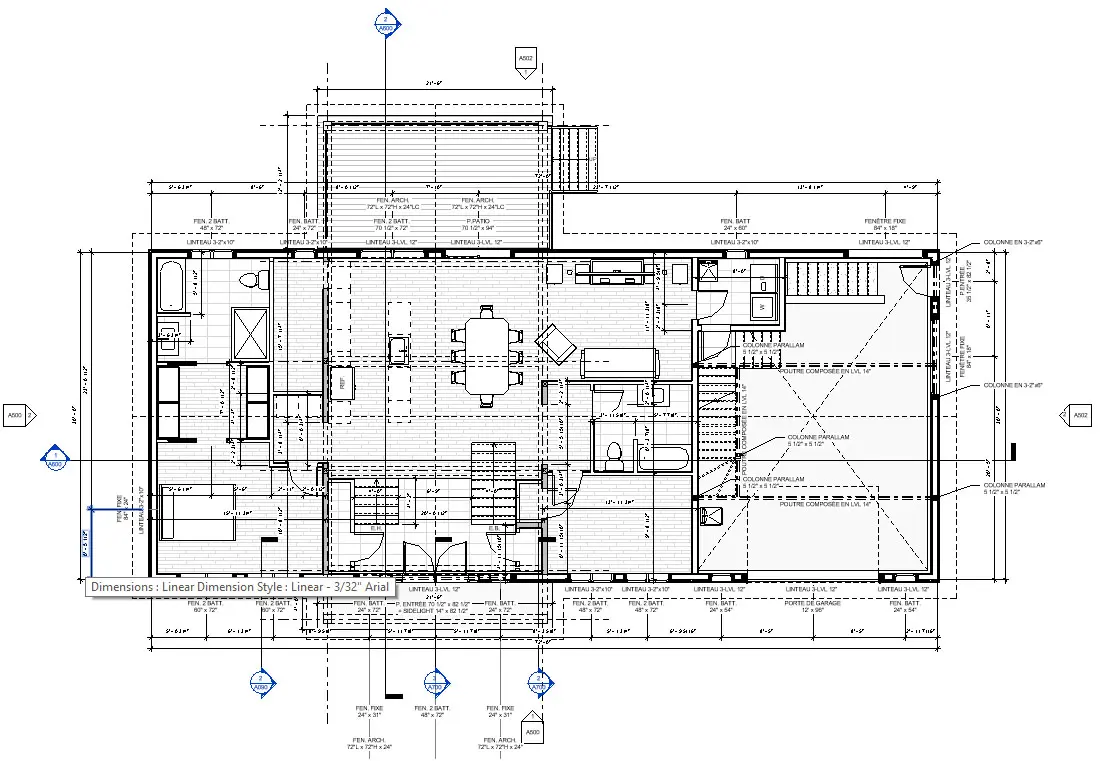
To avoid rising costs during the process, you should properly prepare for your first meeting with architecture professionals. A vague quote request will inevitably lead to an imprecise estimate or one that is inflated as a precaution.
Here are the key steps to prepare a solid file before contacting a designer:
Write a clear brief: List the number of bedrooms and bathrooms, your work-from-home needs, the architectural style you want, such as contemporary, Scandinavian, or farmhouse, and your energy-efficiency priorities.
Establish your total budget envelope: Be transparent about what you can afford for the overall construction. The architect will adapt their solutions accordingly.
Provide the certificate of location and survey plan: These documents make it possible to quickly verify the setback requirements imposed by the municipal building permit and zoning constraints.
Ask about the PIIA: Some municipalities subject projects to a Site Planning and Architectural Integration Program, known in French as a Plan d’implantation et d’intégration architecturale (PIIA). If this applies, the architect will need to prepare additional documents for the urban planning advisory committee, which can affect the quote.
Once your architect’s plans are completed, depending on the case, they must fully comply with the requirements of the Quebec Construction Code. At that point, it becomes wise to compare building professionals in order to obtain several construction cost estimates.
To turn these drawings into reality, it is generally mandatory to select and hire a general contractor with a valid Régie du bâtiment du Québec (RBQ) licence, depending on the type of work. The contractor will use the plans as a contractual reference document to carry out the work without technical deviations.
To begin your process with confidence and properly structure your budget, you can start getting quotes today for your design and renovation work from certified professionals across Quebec.
Looking for something else?
Related articles
The latest industry news, interviews, technologies, and resources.

Amanda Harvey
•08 Nov 2023
Thinking of building an interior staircase to replace the one you currently have? If this is the case, it’s imperative that you know which standards to observe to respect building codes, especially those put in place for the sake of safety and comfort. But what exactly are they?
Cynthia Pigeon
•01 Jul 2026
Owning a collection of fine wines in Montréal or the Laurentians goes beyond simple entertaining: it is a matter of passion, heritage and high-level expertise. For owners of luxury residences, interior designers and Quebec architects, designing a residential wine cellar presents a major technical challenge. How can the clean aesthetics of contemporary spaces be combined with the strict physical requirements of wine preservation?
Cynthia Pigeon
•15 Sep 2026
Some homes built before 1990 may contain vermiculite insulation in the attic. Some of the vermiculite sold in Canada, particularly under the Zonolite® Attic Insulation brand, came from the Libby mine in Montana, where the ore could be contaminated with amphibole asbestos. However, not all vermiculite installed before 1990 necessarily contains asbestos.

Léa Plourde-Archer
•05 Jun 2024
Are you looking to change your kitchen counter but don’t know where to start? Here are the 4 main steps that will help you select the best countertop for your kitchen:

Editorial Team
•23 Jul 2024
Renovations often focus on the surface; the glitz and glam-based concerns in the creation of your dream home. However, the foundation is the most important aspect of any structure and could be considered the bones of the home. With this in mind, proper foundation upkeep is necessary, as issues can become more costly the longer they're left as is, and also decrease the value of your home.