How to Get Your Workspace Lighting Just Right
By Editorial Team
Updated on March 14, 2025
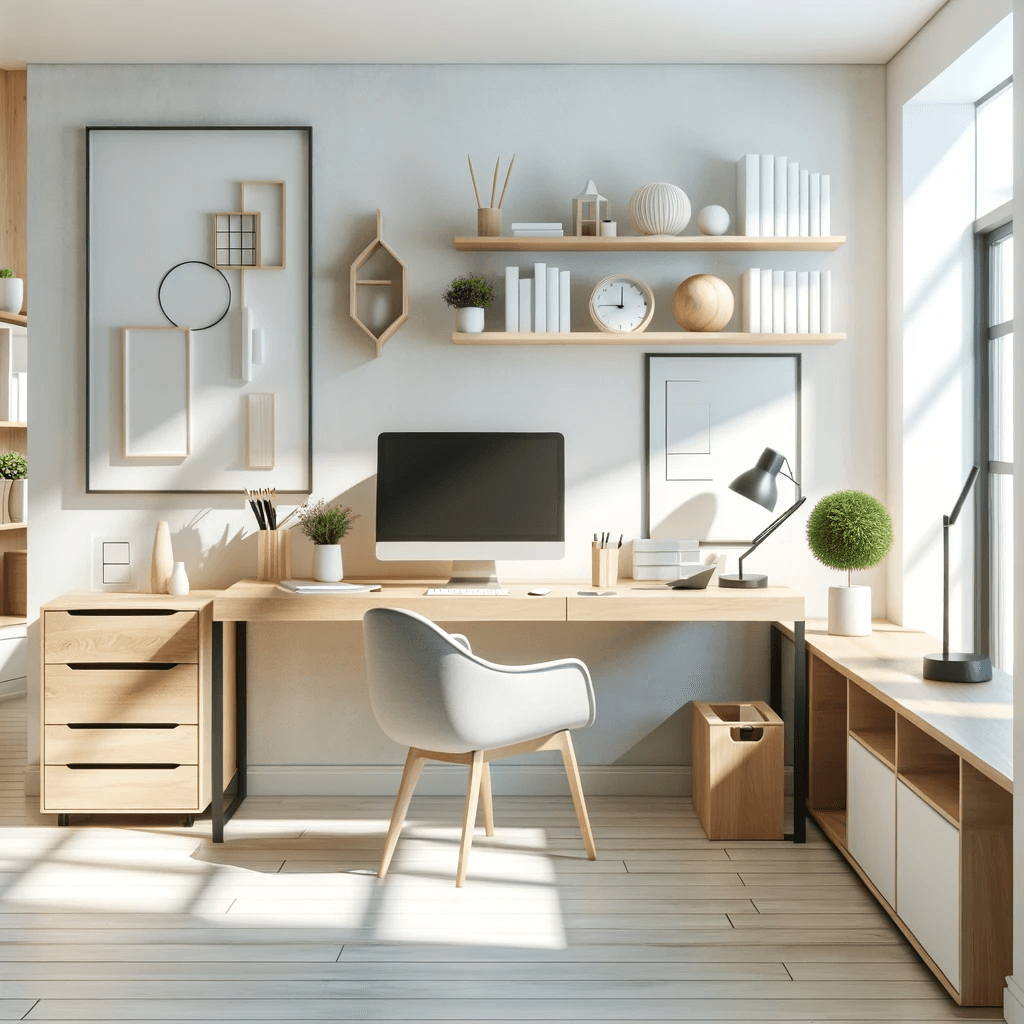
Office lighting is an essential component of creating an enjoyable workspace; it’s also crucial for maintaining eye health and increasing productivity.
In this article, we take a closer look at the different ways one can successfully create an office lighting scheme, all the while considering the importance of natural sunlight, light fixture selection, and ideal layout to create a functional and aesthetic workspace.
The Importance of Lighting When Designing a Workspace
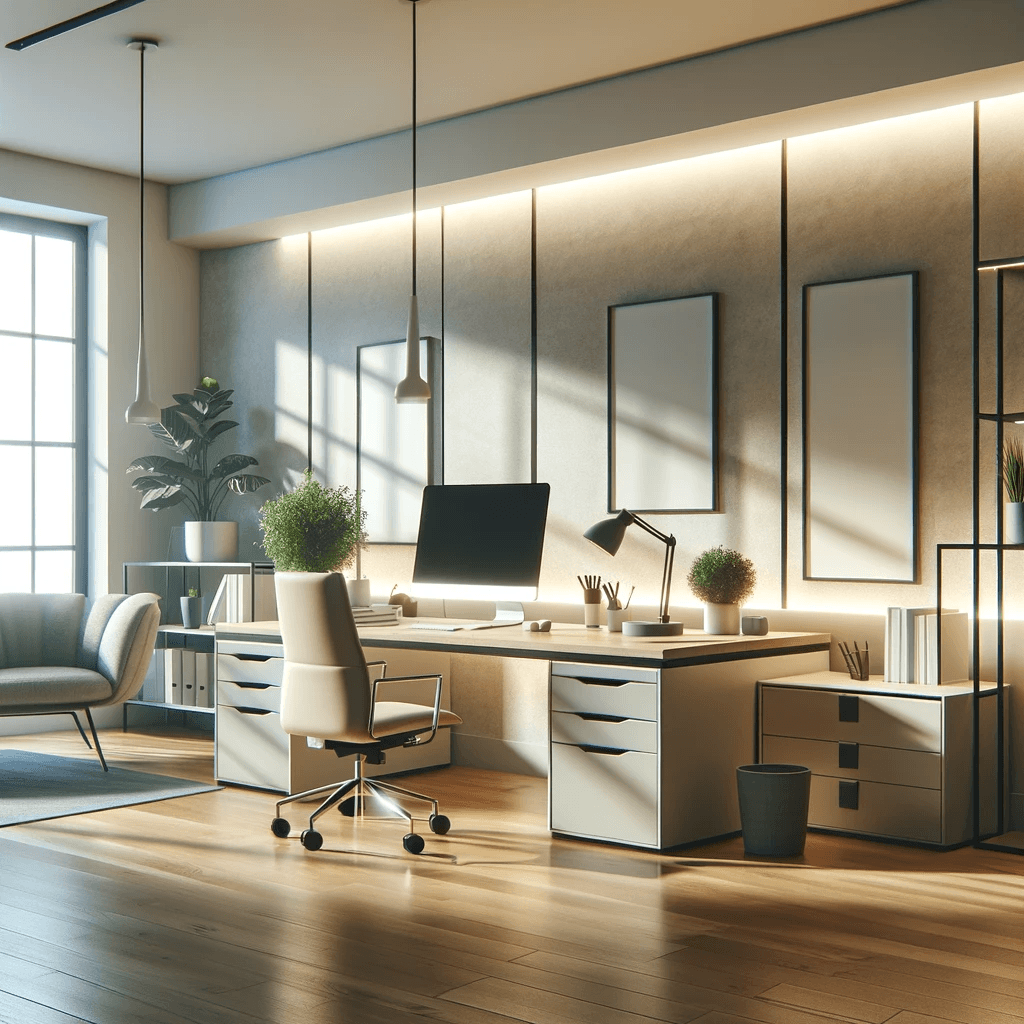
Lighting should never be considered a standalone element; it has to be an integral component within the workspace’s overall design.
This means creating a lighting scheme that complements the furnishings, wall colours, and even houseplants. For instance, houseplants not only improve air quality but also create a dynamic lighting scheme, which adds visual depth to the space.
Additionally, choosing wall colours that reflect light can enhance the effectiveness of both artificial and natural light.
The Psychological Impact of Lighting
Lighting isn’t limited to practical considerations; it also plays an important role in an individual's psychological well-being.
Good lighting can help alleviate stress, raise morale, and foster a more positive and productive workspace. As such, it’s essential to consider the psychological impact lighting can have when designing a workspace, ensuring the creation of a setting that supports both the mental and emotional well-being of users.
The Importance of Natural Light
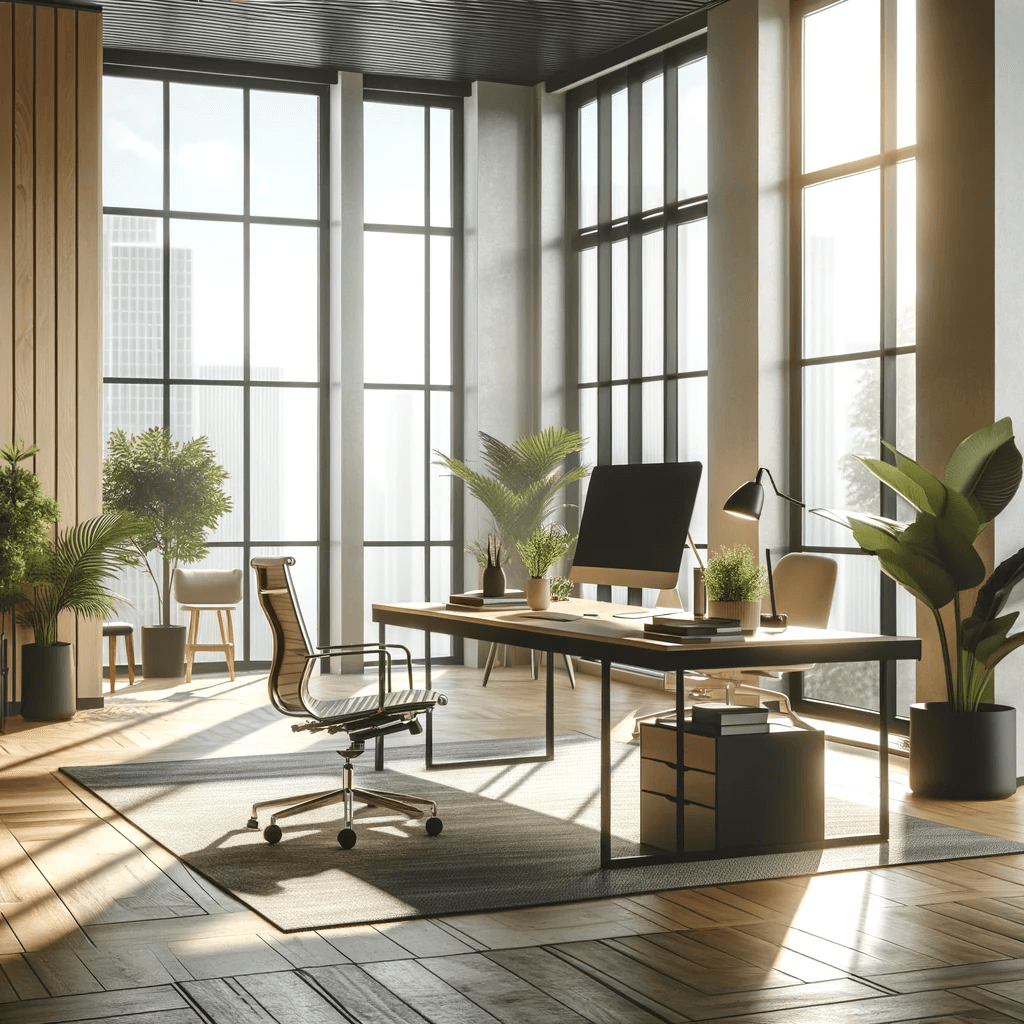
Natural light must be prioritized in all office spaces. Not only is it beneficial health-wise, regulating the circadian rhythm, but it also helps alleviate eye strain, maximizing concentration.
To maximize natural light in your workspace, make sure your desk is set up near a window. Use window treatments that allow you to control the intensity of the light that filters through without so much as completely blocking out daylight.
The Best Light Fixture Spacing and Layout
Your workspace’s light fixture spacing and layout should be focused on eliminating shadows and reducing high contrasts between lit and non-lit areas.
Position light sources in such a way as to avoid shining a light directly on your computer monitor, and avoid setting up a light source right behind you to avoid glares.
Lighting Flexibility
Curate your lighting scheme to suit different tasks and times of day. Doing so is crucial to creating an efficient workspace.
Modular lighting systems, such as dimming lights or adjustable colour temperature, allow users to personalize their workspaces based on their specific needs and the amount of daylight filtering in at any given moment.
This flexibility helps reduce eye fatigue during long work days and improves efficiency by tailoring the lighting to suit specific tasks.
Lighting as a Design Feature
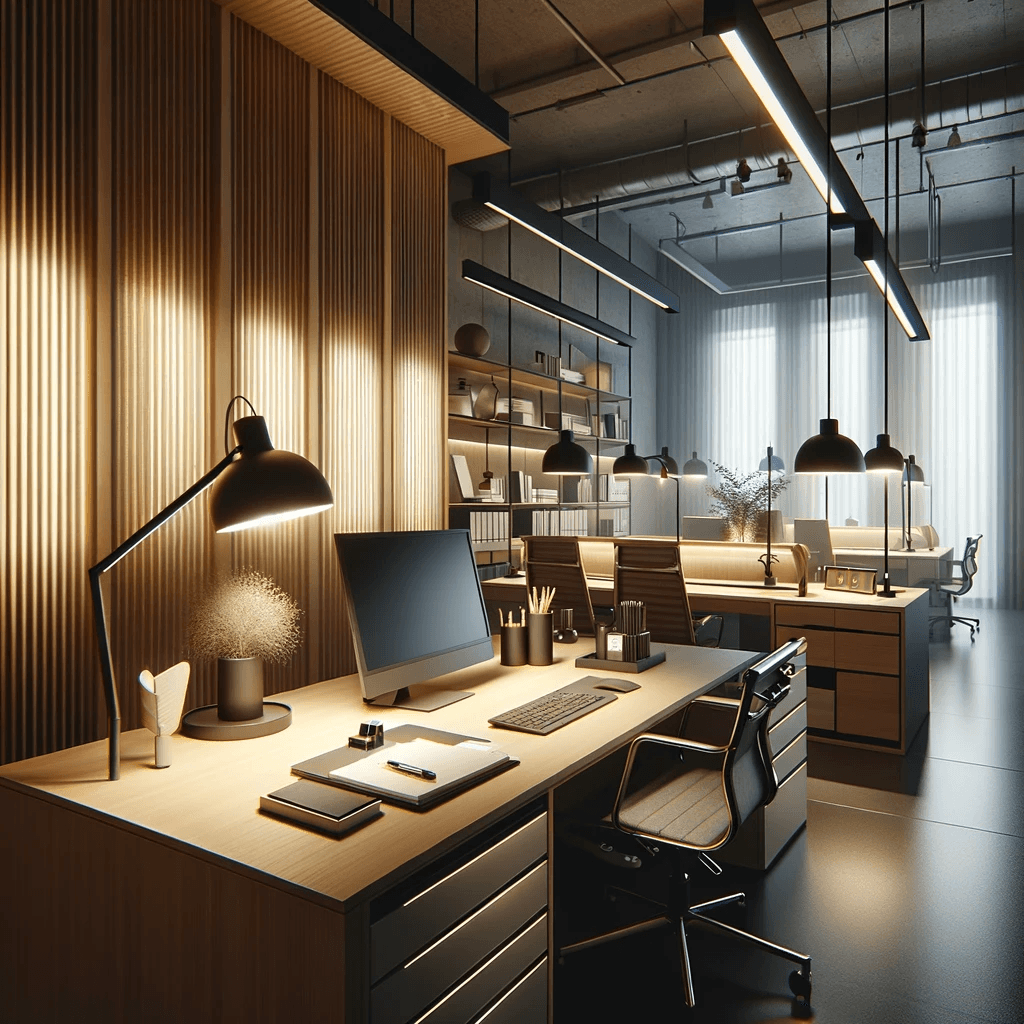
Beyond functionality, lighting can be a key feature when designing a home office or workspace.
Carefully selected light fixtures can become centrepieces, reflecting the workspace’s vibe and style.
Whether it be through the use of stylish desk lamps to add an elegant flair or by installing suspended light fixtures to create a unique ambience, lighting gives way to a wide range of possibilities to elevate a workspace's aesthetic.
How to Decorate for Ideal Lighting
A Scandi design, with its straight lines, muted colours, and abundant use of wood, is perfect for maximizing the brightness in a dedicated workspace.
A carefully chosen piece of vintage Scandinavian furniture does more than just complement the natural light filtering in; it also fosters the use of light fixtures that complement the minimalist and functional aesthetic characterized by said style.
Integrating Scandinavian features around your workspace can create an appealing setting, one that’s favourable to productivity and one’s well-being.
Choose the Right Light Fixtures
The light fixture selection process is essential for rounding off natural light and providing adequate lighting during those hours when daylight is just not cutting it.
Choose LED light bulbs, as they provide better light quality, use less energy, and last longer.
Desk lamps with a swing-arm and adjustable head are prescribed, given that they allow users to direct light where needed, alleviating eye fatigue.
Colour Temperature
Colour temperature, measured in kelvins (K), directly impacts the vibe within select spaces and can affect productivity.
Light bulbs with warm colour temperatures (under 3,000 K) create a cozy setting, ideal for lounge areas.
Neutral light bulbs (3,000–4,500 K) are perfect for workspaces, as they closely mirror that of natural daylight.
Colder colour temperatures (above 4,500 K) are bright and can sustain focus, especially in environments designed to foster high levels of concentration.
Direct Lighting vs. Indirect Lighting
Direct or task lighting shines a light on a specific area, making it ideal for tasks needing attention to detail. However, too-bright task lighting can create unpleasant glares and worsen eye strain.
On the other hand, indirect lighting diffuses light more evenly, creating a soothing ambience, one without glares or harsh shadows.
To achieve the perfect balance, use both types of lighting in your workspace.
Lighting-Specific Innovations
Tech innovations drive new possibilities for optimizing workspace lighting.
Smart lighting options, for instance, can be automatically adjusted based on the amount of daylight at a specific time of day or be remotely controlled via a smartphone app.
This sort of technology doesn’t solely improve energy efficiency, but it also allows users to personalize their workspace lighting according to their preferences.
Integrating motion sensors can also guarantee that lights aren’t left on uselessly, limiting energy waste.
Well-Lit Workspace, Well-Done Work
In a nutshell, well-designed workspace lighting calls for a holistic approach, one that takes into account a slew of factors, such as flexibility, innovation, psychological impact, and more.
Successfully curating your workspace’s lighting scheme is essential to creating an appealing and functional work environment.
Don’t forget that a well-lit office space is key to boosting productivity, reducing eye strain, and creating an appealing workspace.
Looking for something else?
Related articles
The latest industry news, interviews, technologies, and resources.

Editorial Team
•08 Oct 2025
Are you thinking about becoming an electrician but hesitant about moving forward with this adventure for one reason or another? Of course, learning a trade involves a lot more than simply sitting in a classroom, and thus, we’re here to offer a glimpse of what this exciting job will hold for you. This includes information about the prospects it offers.
Cynthia Pigeon
•07 May 2026
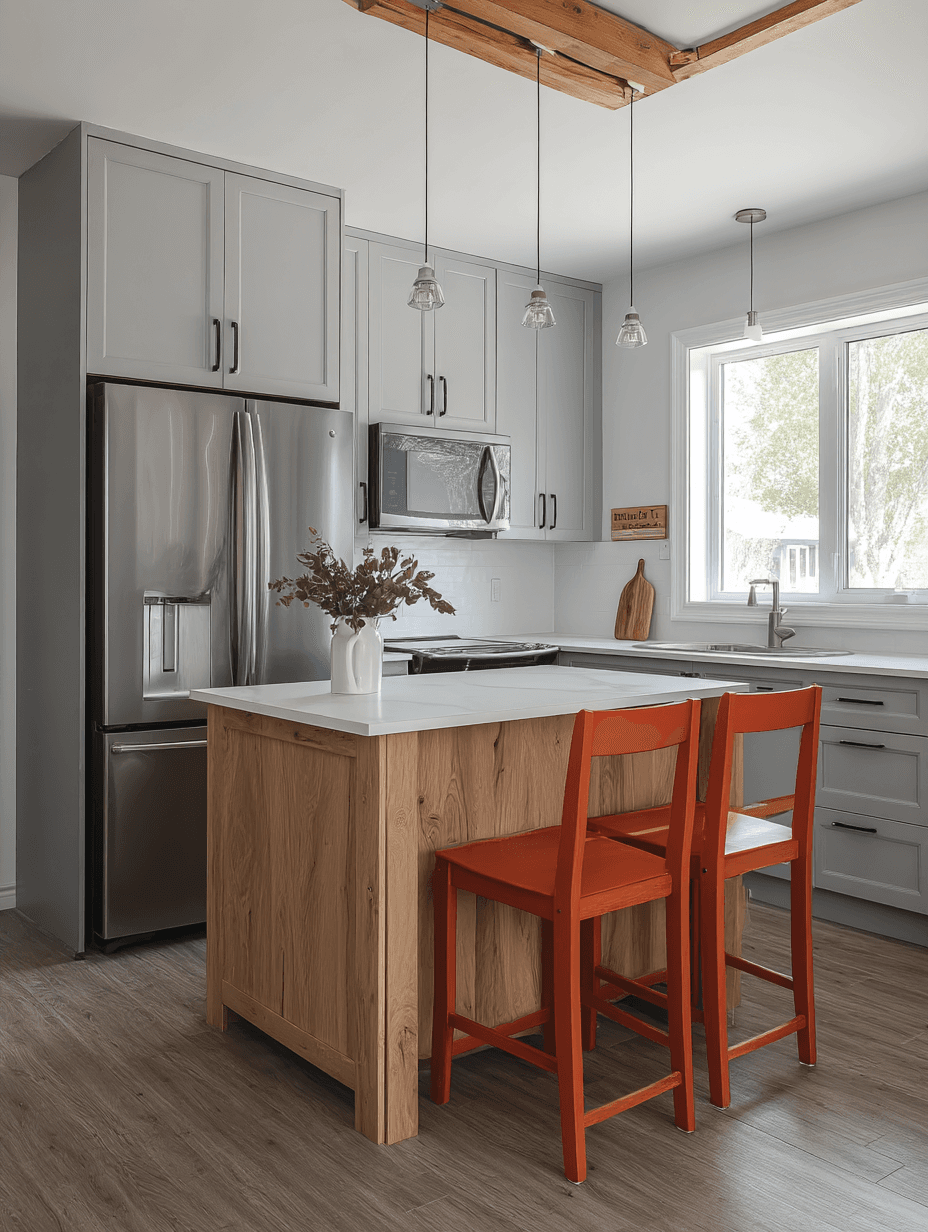
To make the most of a small condo kitchen in Canada, a mobile or narrow “skinny” island can be a particularly useful way to maximize space. It is important to keep about 36 to 42 inches of clearance around the island to allow for smooth traffic flow, while also respecting the kitchen work triangle: sink, stove and refrigerator. By combining smart storage, appropriate materials and safely planned electrical outlets, even a compact kitchen can become a highly functional and welcoming space.

Editorial Team
•08 Oct 2025
Are you particularly handy, meticulous, and love working with machinery? You’re not afraid of heights, consider yourself a problem solver, and can manage your stress levels…how about considering specializing in elevator installation, repair, and maintenance! This type of work, with diverse duties, has excellent employment prospects; just consider the number of apartment and condo towers that are being built every month in urban and suburban areas.

Editorial Team
•07 Nov 2024
When looking to optimize storage space around the house, every little nook or cranny available becomes priceless. You can even transform areas like that void sitting beneath your quarter-turn stairs. Instead of leaving it unutilized, the space can be converted into storage or a practical area. With a creative eye and a clever mind, there are no limits to what you can do with the space available under quarter-turn stairs.

Editorial Team
•30 May 2025
Are you looking to build a retaining wall on your property, but do not really know where to start? RenoQuotes.com has all the information you will need to adequately build a retaining wall.