Kitchen Cabinet Refacing Cost in Canada in 2026: Complete Price Guide
By Cynthia Pigeon
Updated on September 10, 2026
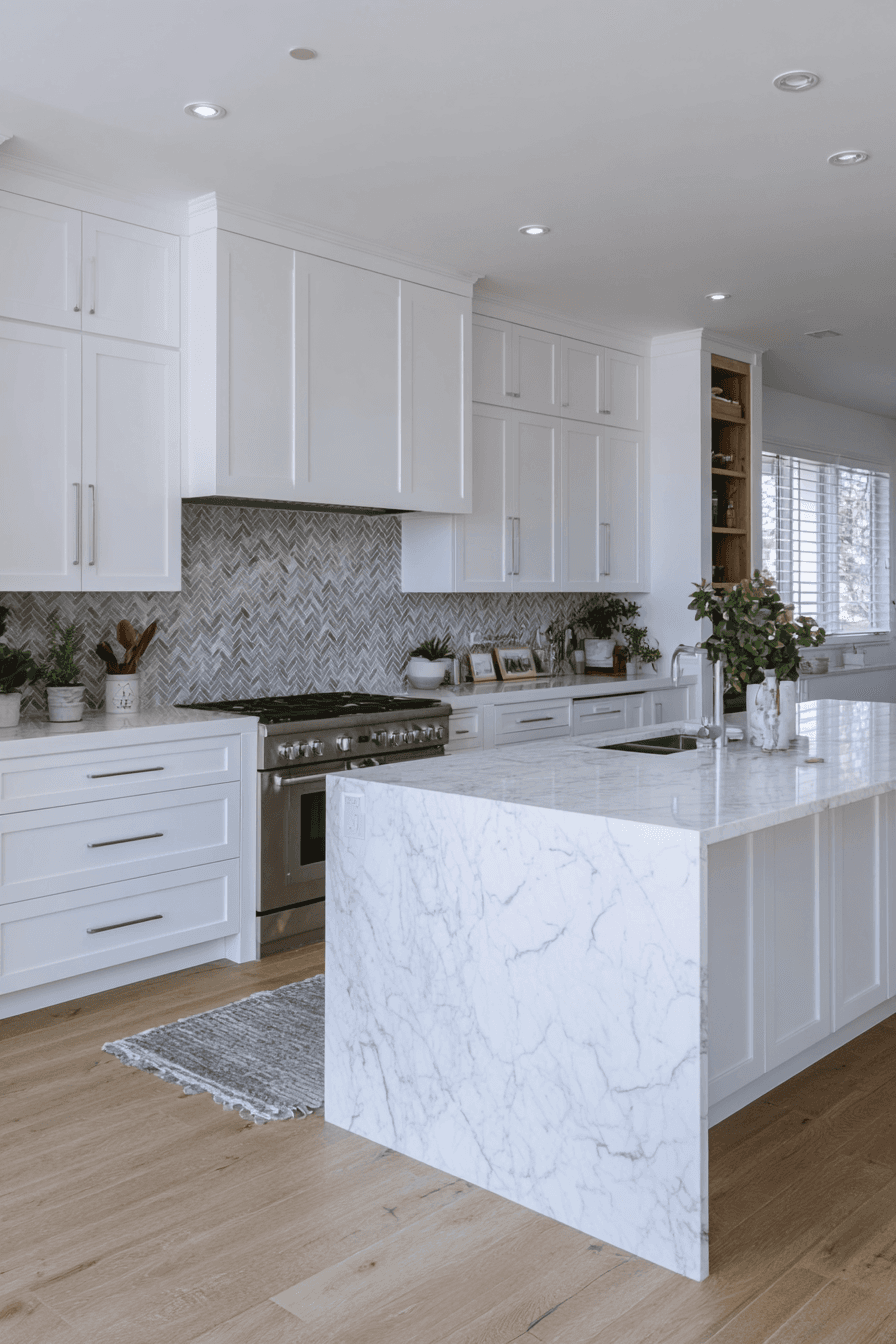
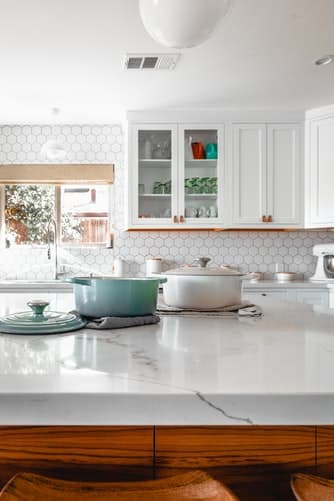
The cost of kitchen cabinet refacing in Canada in 2026 generally ranges from $2,500 to $8,500, including installation, for an average-sized kitchen. This option can save homeowners approximately 30% to 50% compared to a full cabinet replacement, while still giving the kitchen a fresh, modern look. The final price depends mainly on the material selected, the number of cabinet doors and drawers, the condition of the existing cabinet boxes, and the complexity of the hardware and installation.
Kitchen Cabinet Refacing Prices in Canada in 2026
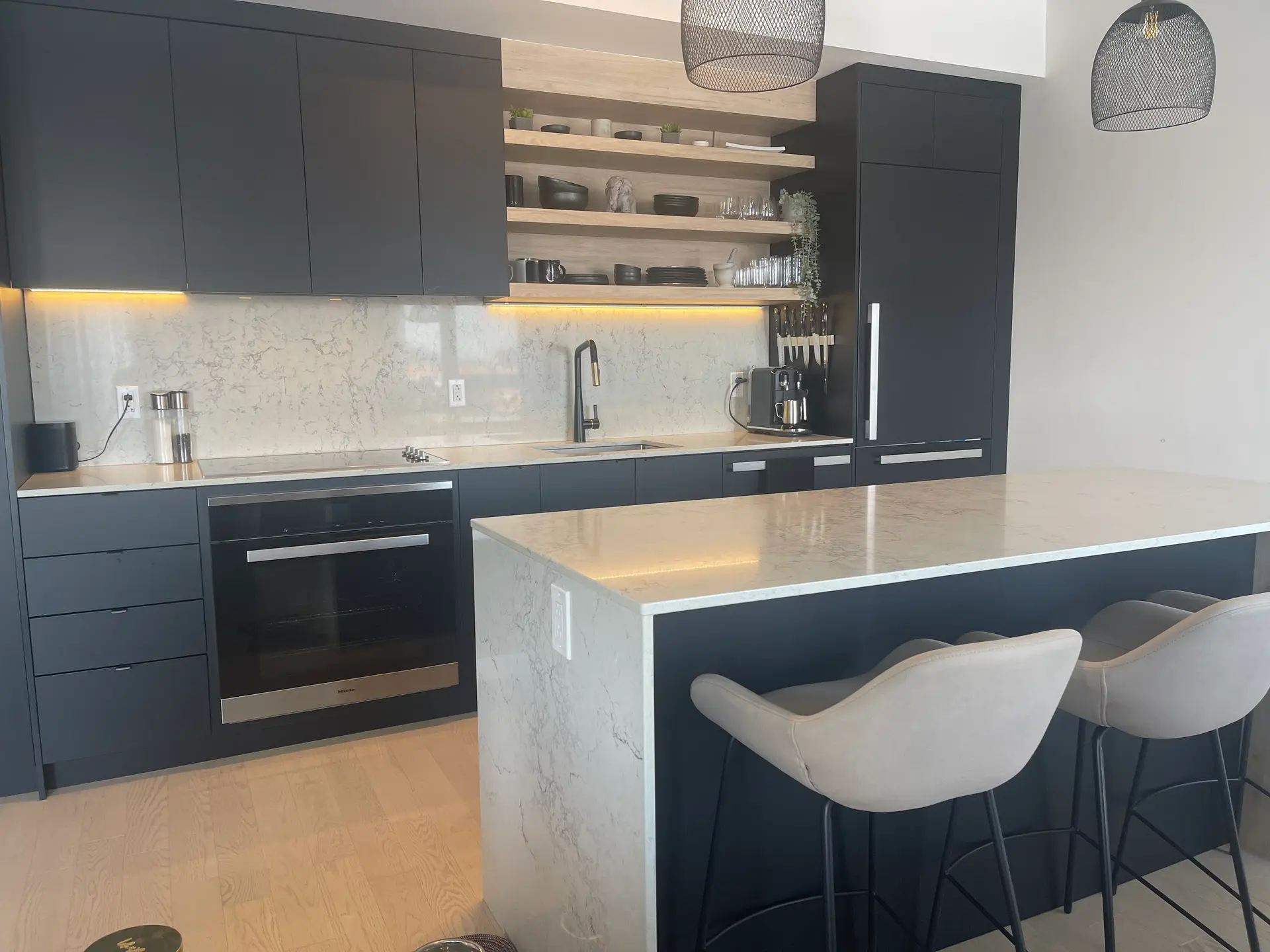
Source: Projets Planicor Inc.
Renovating a kitchen is often one of the top home improvement projects for Canadian homeowners, but it can also be one of the most expensive. In 2026, with construction and material costs remaining high across the country, kitchen cabinet refacing has become a smart way to update a home without committing to a full kitchen renovation. Whether you live in Toronto, Vancouver, Calgary, Montréal, Halifax, Winnipeg, Regina, Edmonton or another Canadian city, this guide provides a realistic overview of cabinet refacing prices so you can plan your project with confidence.
What Is Cabinet Refacing and Why Choose It?
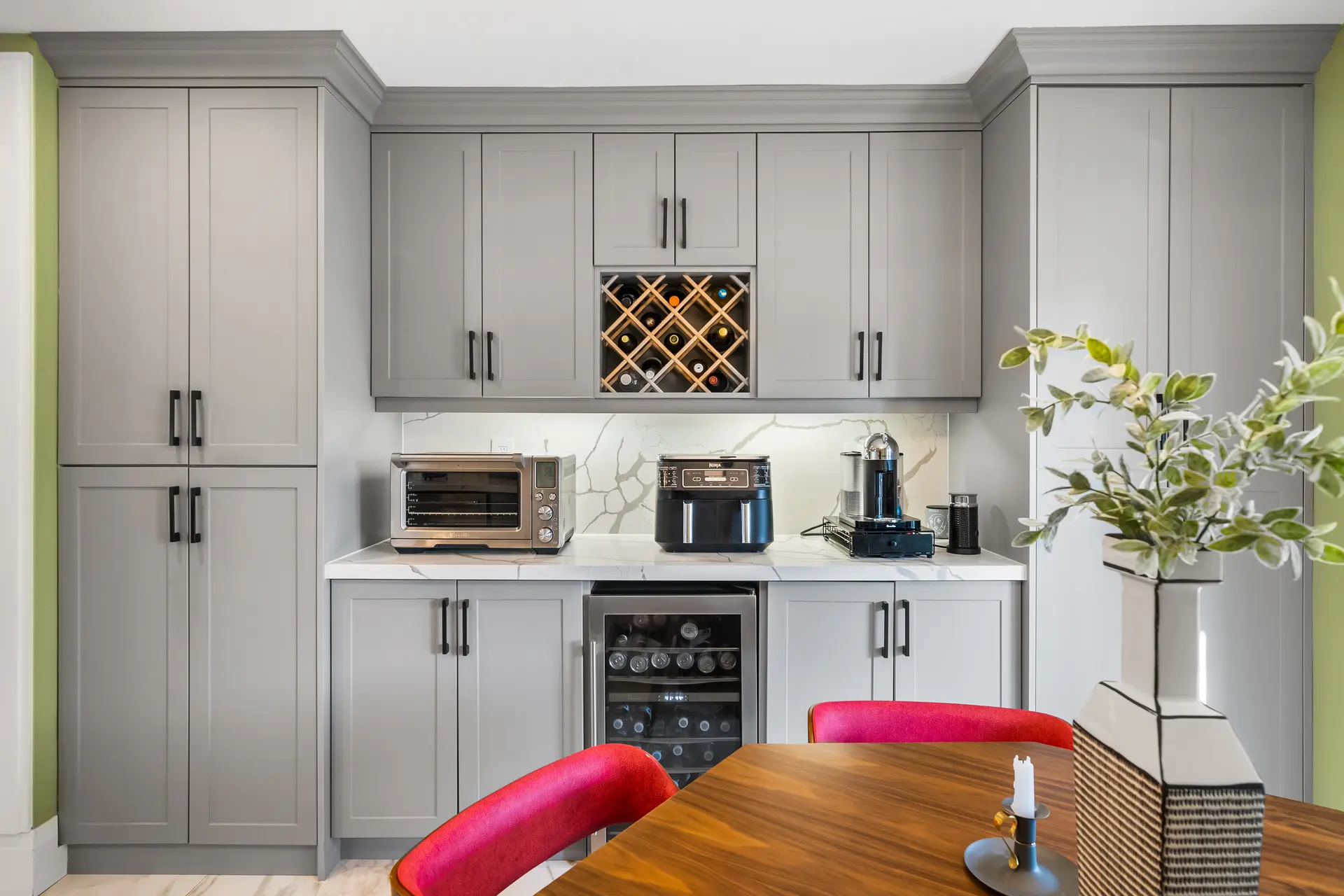
Source: Canadian Constructor Creations Inc.
Cabinet refacing means keeping the existing cabinet boxes and replacing only the visible components: the cabinet doors, drawer fronts, side panels and finishing panels. In most cases, the hardware is also replaced, including handles, pulls and hinges, to give the kitchen a completely updated appearance. This is a practical solution when the cabinet structure is still solid, but the exterior looks outdated, worn or no longer matches the style of the home.
A More Sustainable Renovation Option
Beyond the financial savings, cabinet refacing is also a more sustainable approach to renovation. Instead of sending solid cabinet boxes, made of wood or melamine, to the landfill, homeowners extend the life of the materials already in place. This can reduce renovation waste and make the project more environmentally responsible. Across Canada, where many homeowners are looking for ways to renovate more efficiently, refacing offers a strong balance between budget, design and sustainability.
Durability for Canadian Homes
Canadian homes face major seasonal changes, from dry indoor winter air to humid summer conditions. These fluctuations can affect older cabinets, especially wood and lower-quality finishes. Modern refacing materials such as high-quality laminate, thermofoil, polymer and wood veneer are designed to better handle everyday use, humidity changes and cleaning. Choosing the right material is especially important in busy family kitchens and in regions with significant seasonal temperature shifts.
Factors That Influence the Cost of Cabinet Refacing
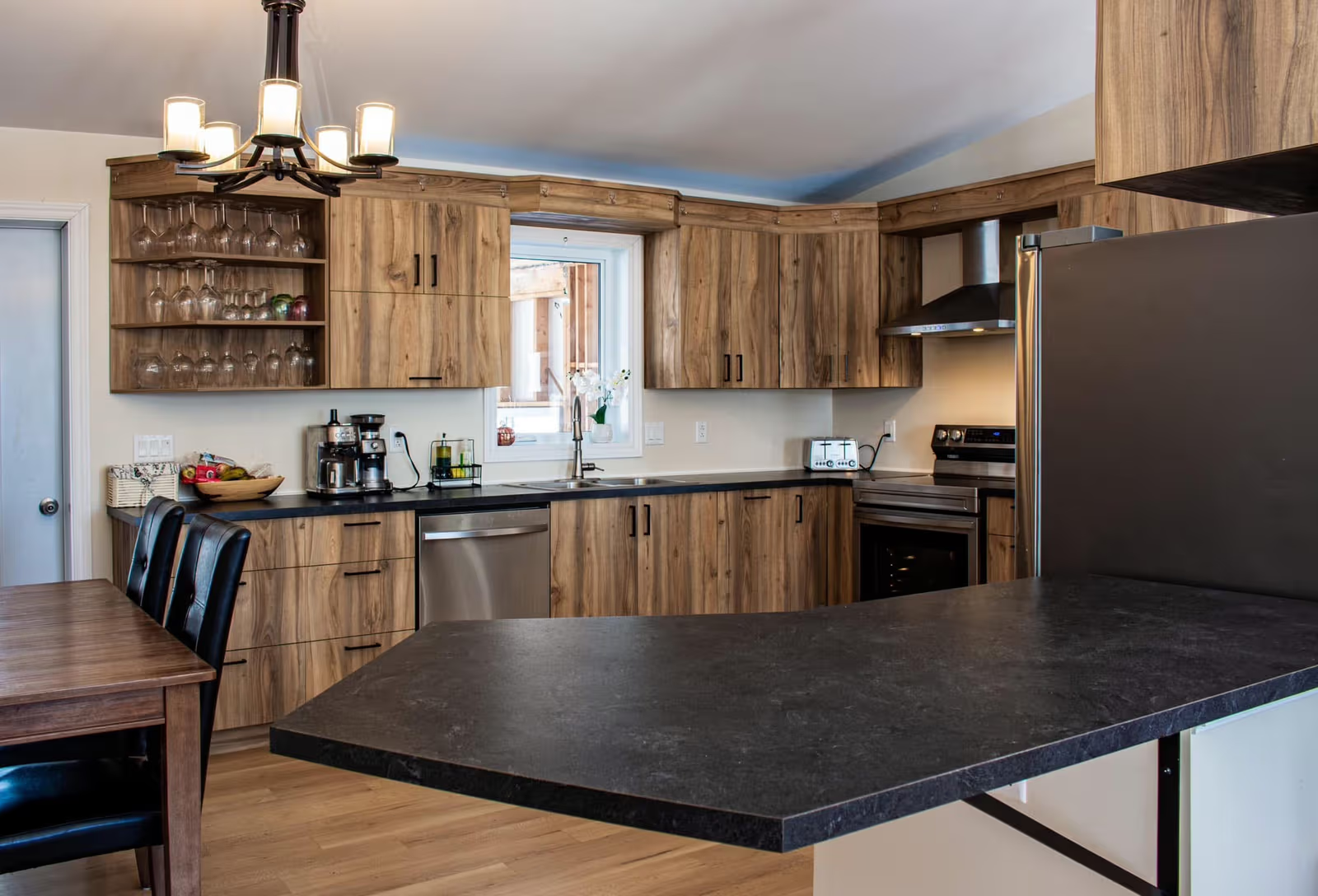
Source: Armoire de cuisine et comptoir MRC 9
The price of a cabinet refacing quote is not random. Several factors can affect the final cost:
Number of doors and drawers: A standard kitchen usually has 15 to 20 doors and drawer fronts. The more surfaces you need to replace or cover, the higher the material and labour costs.
Material selection: Laminate, thermofoil and melamine are usually more affordable, while wood veneer and solid wood options cost more.
Hardware: Adding soft-close hinges, premium drawer slides or designer handles can add several hundred dollars to the project.
Kitchen layout: Cabinets that extend to the ceiling, corner cabinets, crown moulding and custom trim increase the complexity of the installation.
Additional work: If you also replace countertops, backsplash, lighting or plumbing fixtures, the overall kitchen renovation budget will increase.
Cabinet Refacing Cost by Material in Canada
The cost is often estimated by linear foot or by the number of cabinet components, including doors, drawer fronts, side panels and installation.
Material | Average Price per Linear Foot | Estimated Total for Average Kitchen |
High-quality melamine / laminate | $80 – $160 / linear ft. | $2,500 – $4,500 |
Thermofoil / polyester-style doors | $110 – $220 / linear ft. | $3,500 – $6,000 |
Polymer / acrylic finishes | $160 – $320 / linear ft. | $4,500 – $7,500 |
Wood veneer / solid wood | $220 – $450+ / linear ft. | $6,000 – $9,500+ |
Prices can be higher in major urban markets such as Toronto, Vancouver, Montréal, and parts of the Greater Toronto Area due to higher labour and operating costs.
Budget-Friendly Options: Laminate, Melamine and Thermofoil
For homeowners working with a tighter budget, laminate and melamine are often the most affordable options. Modern finishes have improved significantly and can imitate wood grain, matte colours or contemporary flat-panel designs. Thermofoil is another popular option because it offers a clean, smooth look at a moderate price. It is often chosen for rental properties, starter homes and budget-conscious kitchen updates.
Mid-Range Options: Polymer and Acrylic Finishes
Polymer and acrylic-style cabinet fronts are popular for homeowners who want a more modern, durable finish. These materials are often available in matte, satin or high-gloss styles and can give the kitchen a sleek, updated appearance. They are also relatively easy to maintain, making them a strong choice for families and high-traffic kitchens.
Premium Options: Wood Veneer and Solid Wood
For homeowners looking to increase the perceived value of their property, wood remains a strong option. Oak, maple, walnut and other wood finishes bring warmth and character that synthetic materials cannot fully replicate. Although more expensive, wood veneer or solid wood refacing can be a worthwhile investment in higher-end homes or competitive real estate markets.
Labour and Installation Costs
Source: H Man Reno
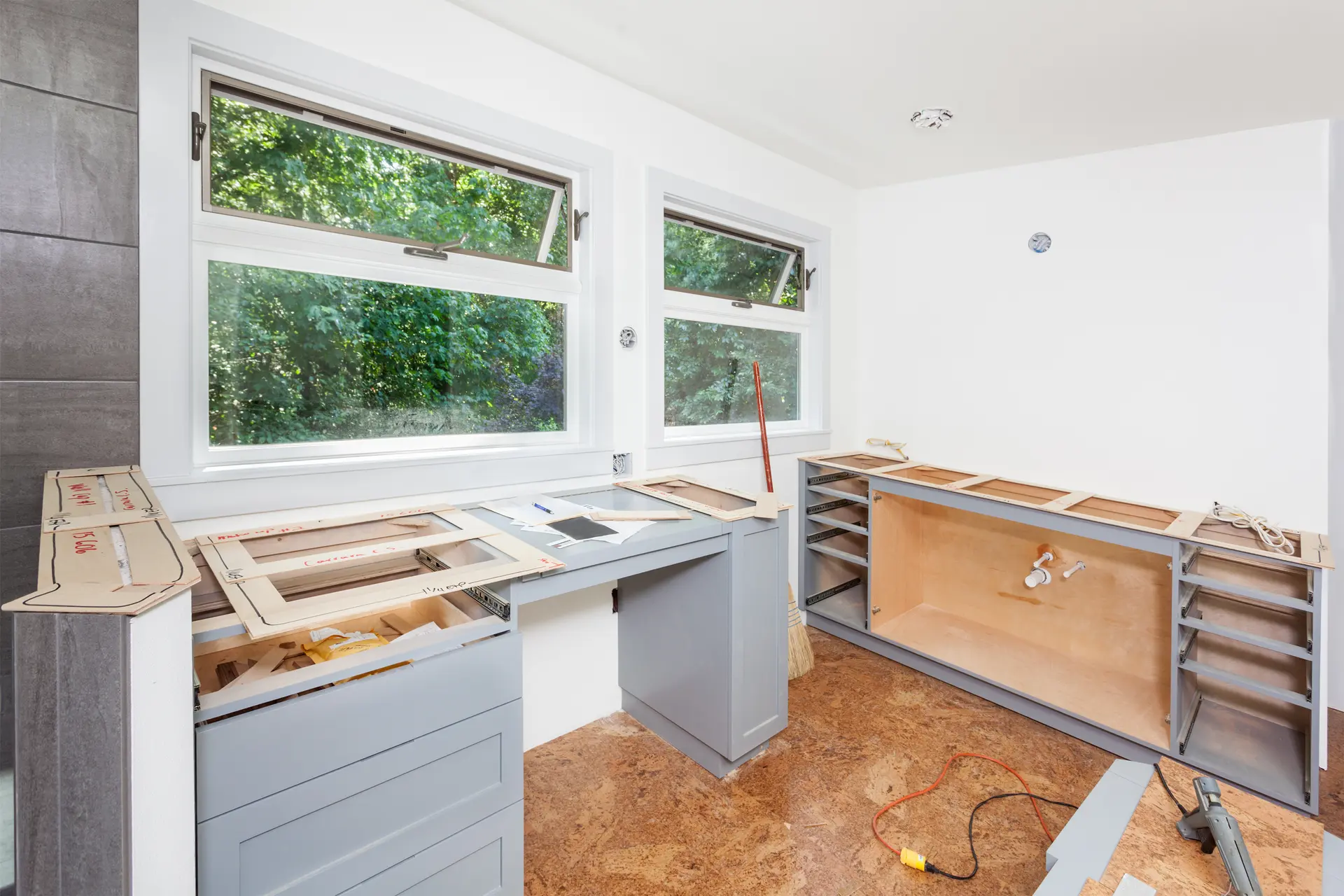
Cabinet refacing requires precision. Proper measurements, clean alignment, hinge placement and finishing details are what make the final result look like a new kitchen rather than a partial update. Across Canada, professional installers generally charge between $60 and $110 per hour, depending on the region, level of experience and complexity of the job.
Before hiring a contractor, homeowners should verify that the company has the appropriate provincial or municipal licensing, insurance and references. Requirements vary by province, so it is important to check local rules before signing a contract. If the project includes electrical, plumbing or structural changes, licensed trades may be required.
How to Save Money on a Kitchen Cabinet Refacing Project
Source: Reno Elite Pro Inc
Cabinet refacing is already a cost-saving option, but there are several ways to keep the budget under control:
Keep your existing cabinet boxes: If the structure is solid, there is usually no need to replace it.
Choose a cost-effective material: Laminate, melamine and thermofoil can provide an updated look at a lower price.
Update the hardware strategically: New handles, pulls, and soft-close hinges can transform the look and feel of the kitchen without a major cost increase.
Avoid unnecessary layout changes: Moving plumbing, electrical or structural components can quickly increase the budget.
Plan during off-seasons: Some contractors may have more availability during winter months, which can sometimes make scheduling easier.
Getting a Cabinet Refacing Quote in Canada
Kitchen cabinet refacing is one of the most effective ways to modernize a kitchen without the high cost of a complete renovation. It allows homeowners to refresh the most visible part of the kitchen while keeping the existing structure in place.
To get the best value, compare several quotes from experienced cabinet refacing contractors in your region. A qualified professional can inspect your current cabinet boxes, recommend suitable materials and help you choose the best option for your budget, style and long-term needs.
Looking for something else?
Related articles
The latest industry news, interviews, technologies, and resources.
Cynthia Pigeon
•04 Sep 2026
In 2026, the average cost of a full kitchen renovation in Canada is around $35,000 to $45,000, depending on the region. A budget-friendly refresh may start at $15,000 to $25,000, while a high-end kitchen with a large island and premium materials often exceeds $65,000.
Amanda Harvey
•26 Jul 2024
The electric panel has the hardest job in any home, as its' smooth functioning is essential to the safety and satisfaction of the daily routine. An electric panel is a connection between your home and your utility company, as it distributes electricity to your appliances through major as well as smaller electrical connections.
Editorial Team
•08 Nov 2023
Are you looking for a tile model that will add a touch of originality to your decor? Whether you're renovating your kitchen, bathroom or another room of your home, tile replacement will likely be an integral part of your home improvement project.

Christine Simard
•08 Nov 2023
Are you one of those people who tend to be nostalgic for past eras and not too fond of modern decors? If polka dots, bright colours and geometric forms are all things you like, maybe it's time to give your home a little retro makeover! Here are some examples that could inspire you!
Cynthia Pigeon
•05 Sep 2024
Like bathrooms, powder rooms are designed with a sole purpose: for people to attend to their personal hygiene.