How to Verify a Contractor’s Licence: RBQ and HCRA
By Cynthia Pigeon
Updated on August 27, 2026

Planning residential construction or renovation work in Quebec represents a significant financial commitment. Whether you want to rebuild the framing of your roof after a harsh winter, upgrade your heating system with a heat pump, or build a new home in the Outaouais region, the first step before signing any contract is to verify that the company is legally authorized to perform the work.
In urban areas such as Montréal and Québec City, as well as border regions around Gatineau and Ottawa, homeowners can choose from many service providers. However, hiring an unlicensed contractor can increase the risk of poor workmanship and may limit your access to certain protections provided by the RBQ licensing system.
This practical and legal guide explains how to verify a contractor’s licence with the Régie du bâtiment du Québec (RBQ) and Ontario’s Home Construction Regulatory Authority (HCRA) to verify the administrative status of your renovation project.
Why Verify a Contractor’s Licence Before Work Begins?
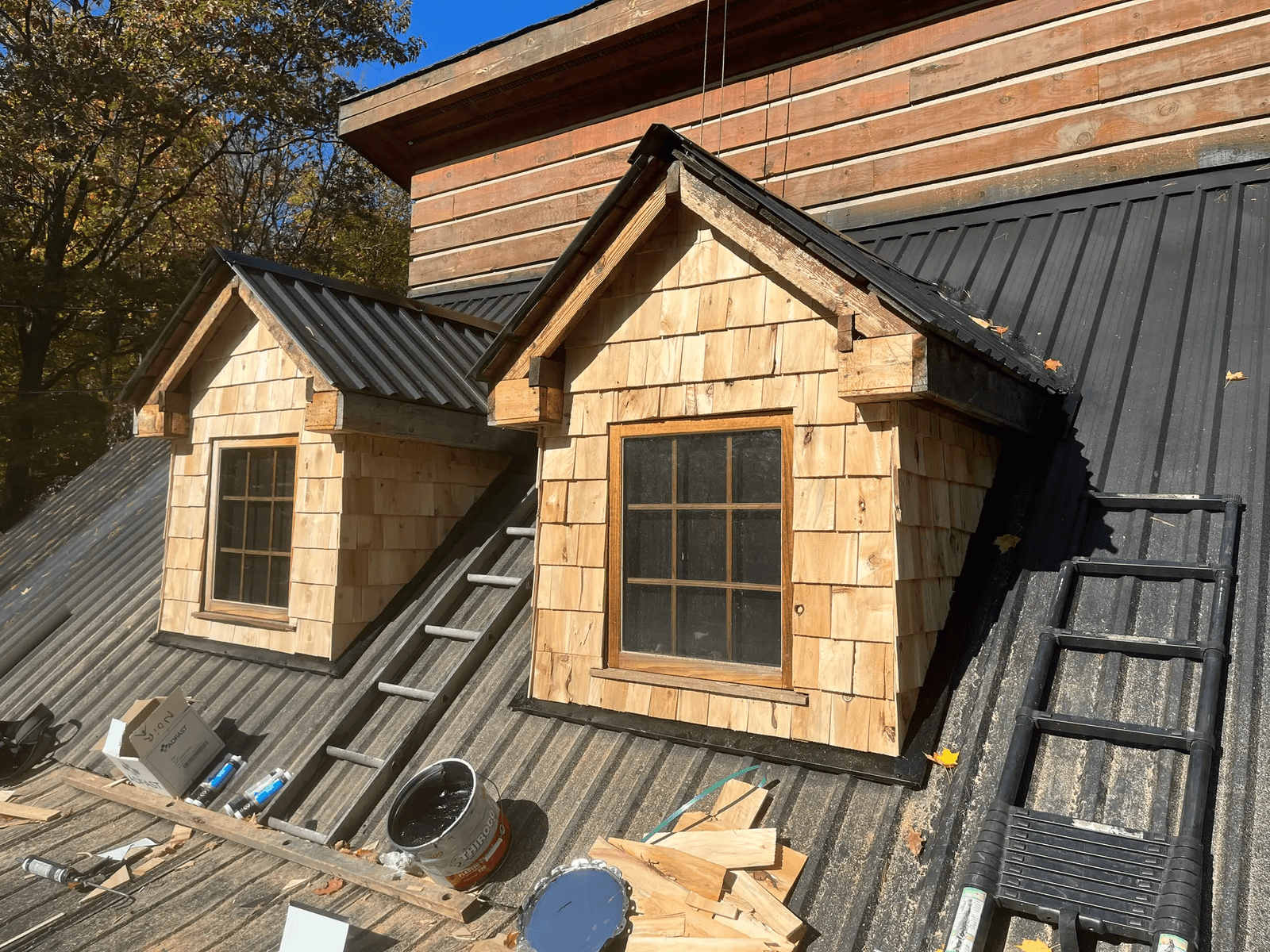
Source: Bernier Couvreur Inc
According to the Office de la protection du consommateur (OPC), residential renovation, improvement, and maintenance services regularly rank among the sectors generating a significant number of consumer complaints. In 2023–2024, the OPC handled 4,346 information requests and 1,796 complaints in the construction, maintenance, and home renovation services category.
Statistics and observations for residential construction in Quebec:
Nearly 2,000 complaints related to construction, maintenance, and home renovation services were handled by the OPC in 2024–2025.
The RBQ carries out inspections, verifications, and investigations each year to monitor compliance and address illegal contracting activities.
A licence bond protects clients of contractors subject to this requirement, within the conditions and limits established by regulation.
Checking a contractor’s licence confirms that the company has met the applicable qualification requirements and holds the licence subclasses required for the work involved.
The Risks of Hiring a Contractor Without a Valid Licence

Source: Peinture J. Lessard S.E.N.C.
Hiring an unlicensed worker or company can limit your access to certain protections associated with the RBQ licensing system and increase your legal and financial risks.
1. Loss of Certain Financial Protections and Compensation
In cases involving poor workmanship, construction defects, or abandoned work, a valid licence provides access to the licence bond. The licence bond may compensate an eligible client for certain losses related to deposits paid, incomplete work, poor workmanship, and certain defects, subject to the applicable conditions and limits.
2. Complications with an Insurance Claim
Non-compliant work or work performed by an unqualified person can complicate an insurance claim depending on the circumstances and policy terms. Confirm your obligations with your insurer before work begins.
3. Risks Associated with Illegal or Undeclared Work
Hiring someone who is illegally acting as a contractor can create legal and financial risks. Performing the functions of a contractor without the required licence is an offence under Quebec’s Building Act. The presence of undeclared workers or workers whose CNESST status is not in order can also create legal and financial complications if an accident occurs.
To help avoid these issues, consider working with a pre-vetted general contractor whose administrative status has been checked in advance.
How to Verify an RBQ Licence in Quebec
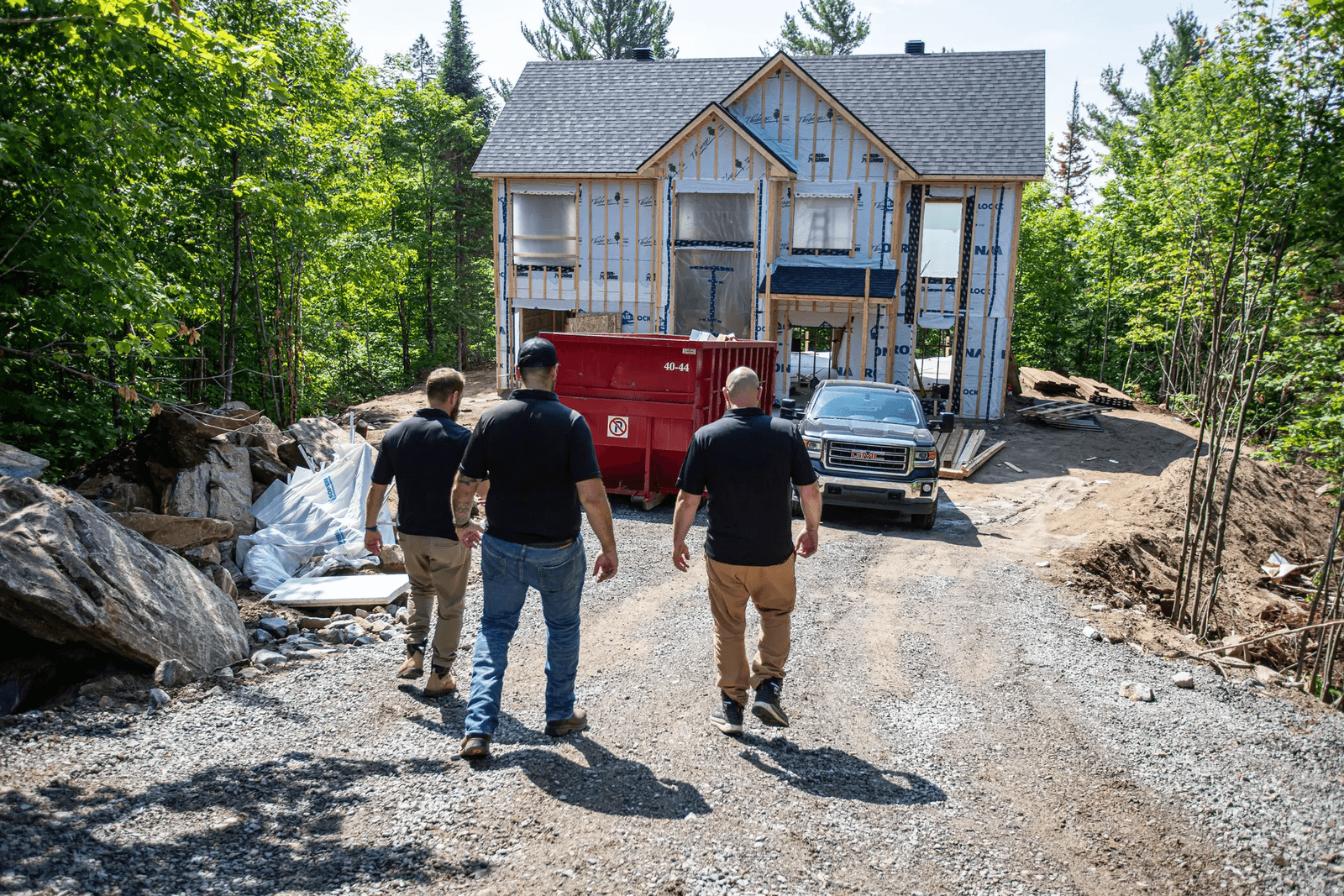
Source: SI.T Construction
The Régie du bâtiment du Québec provides a free online tool that is updated regularly. The verification process takes only a few minutes on the organization’s official website.
Steps for checking a licence in Quebec:
Ask for the RBQ licence number on the contractor’s quote
Access the RBQ licence holder registry
Search by company name, NEQ, or licence number
Confirm that the licence status is valid and that the appropriate subclass covers the work
Steps for Using the RBQ Licence Holder Registry
To check a contractor’s administrative qualifications:
Go to the RBQ licence holder registry through the official Régie du bâtiment du Québec website.
Enter the 10-digit licence number, often formatted as XXXX-XXXX-XX, which should be available on the contractor’s quote.
If you do not have the licence number, search using the company’s legal name or Quebec Enterprise Number (NEQ).
Review the company profile for information about licence status, history, and bonding.
What to Check: Subclasses, Status, and Claims
The company profile allows you to review several important elements:
Licence status: The licence should clearly be shown as valid. If the registry indicates that the licence is suspended or cancelled, do not hire the contractor for the work concerned. If the licence is restricted, check the nature of the restriction before signing a contract.
Licence subclasses: The subclasses required depend on the exact nature of the work. For some general projects, subclasses 1.2 or 1.3 may be relevant, while specialized work requires the corresponding subclasses.
Licence bond: The registry confirms the required financial security.
RBQ licence bond amounts:
General contractor: CAD $40,000
Specialized contractor: CAD $20,000
* This bond may compensate eligible clients for certain losses resulting from incomplete work, poor workmanship, or certain defects, up to the applicable amount.
Claims history: The registry allows you to see the number of bond claims involving the contractor as well as compensation paid by the contractor’s surety to previous clients since 2014.
Before signing a contract, it can be useful to request a renovation quote from professionals whose licence subclasses match the requirements of your project.
How to Verify an HCRA Licence for a New Home in Ontario
In areas bordering Quebec, particularly the Outaouais region around Gatineau, Hull, and Aylmer near Ottawa, cross-provincial licensing questions come up frequently. Many Quebec homeowners hire Ontario-based companies or purchase new homes located across the Ottawa River.
In Ontario, the Home Construction Regulatory Authority (HCRA) oversees the regulatory framework for new-home builders and vendors.
When Does HCRA Licensing Apply in Ontario?
For projects located in Ontario, builders and vendors of new homes that are subject to the regulatory framework must hold a valid licence issued by the HCRA.
Contractor licences can be checked through the Ontario Builder Directory available through the Home Construction Regulatory Authority (HCRA).
Provincial jurisdiction rules:
Rule 1 — Work carried out in Quebec:
RBQ licence required
An Ontario company holding an HCRA licence must also hold the appropriate RBQ licence to perform work in Quebec
Rule 2 — New home built or sold by a regulated builder or vendor in Ontario:
HCRA licence required
Home registration with Tarion according to the applicable rules
If you hire an Ottawa-based company to perform basement renovation or insulation work at your home in Gatineau, it must hold a valid RBQ licence in Quebec. Holding an Ontario HCRA licence does not authorize a construction worker to physically carry out work in Quebec.
To plan your project according to the applicable provincial requirements, you can request a construction cost estimate.
Comparison Table: RBQ (Quebec) vs. HCRA (Ontario)
This table summarizes the main administrative and regulatory differences between the two provincial organizations:
Evaluation criterion | Régie du bâtiment du Québec (RBQ) | Home Construction Regulatory Authority (HCRA) |
Jurisdiction | Province of Quebec | Province of Ontario |
Scope | Renovation, alterations, new construction | New-home construction and sale |
Verification tool | RBQ licence holder registry | Ontario Builder Directory (OBD) |
Financial protection | Mandatory licence bond ($20K / $40K) | Statutory warranty administered by Tarion for eligible new homes |
Licence categories | Detailed subclass system (e.g., 1.2, 1.3, 11.2, 15.5) | Builder / vendor licence |
Legal requirement | Required to act as a construction contractor in Quebec, subject to exceptions provided by law | Required for the regulated new-home market |
What Should You Do If the Contractor Does Not Have a Valid Licence?

Source: RenoQuotes
If your checks show that the contractor does not hold an active licence or does not have the appropriate licence subclass for your project, there are several steps you can take to protect your interests.
Recommended actions:
Stop the contracting process: Do not sign documents or provide a deposit cheque, even if the company claims its licence is “being renewed.”
Report the issue to the RBQ: You can contact the RBQ about suspected illegal contracting activity. The organization has enforcement personnel who can investigate potential violations.
Consult legal information resources: Organizations such as Éducaloi provide useful information about rights related to cancelling service agreements or renovation contracts.
To get your project back on solid footing, take time to compare pre-vetted licensed contractors, subclasses, and qualifications required for the work involved.
Verifying the administrative qualifications of your service providers is an important step in protecting your investment. By taking a few minutes to check the RBQ licence holder registry or the HCRA Ontario Builder Directory, you can confirm a contractor’s administrative compliance and better understand the protection mechanisms that may apply to your project.
Looking for something else?
Related articles
The latest industry news, interviews, technologies, and resources.

Christine Simard
•08 Nov 2023
The DIY movement keeps growing every day, especially on YouTube. More and more young adults are taking over the world of easy and creative renovations whilst combining the budgetary aspect, thus respecting the well-known reality of many with regards to budgetary restrictions when renting.

Léa Plourde-Archer
•08 Nov 2023
Once seen as an architectural element only used for outdoor walls and industrial spaces, the interior brick wall has turned into a new staple in Canadian homes. This material is not set to go out of style any time soon! We’ve prepared a small guide to tell you more about interior brick wall installation and maintenance:

Editorial Team
•11 May 2026
Suffice it to say, converting an attic into a living space tends to be a split verdict type of endeavour. Some are indeed charmed by the sloping walls, small space, and dormers for windows, while others are wary of feeling claustrophobic or worry that the space will be too dark.

Cynthia Pigeon
•31 Jul 2026
Given the harshness of Quebec’s climate, where temperatures drop drastically in winter and humidity rises sharply in summer, keeping your home comfortable is a constant financial challenge. In 2026, the financial assistance landscape has changed, particularly with the closure of the main federal programs to new applications and the growing importance of provincial and municipal programs.

Amanda Harvey
•08 Nov 2023
The windows of your home have a multitude of uses: they allow for an excellent view, give access to a cool breeze on warm or stuffy summer days as well as block out the chilly air during winter months. However, even when your windows are closed, one of the main ways that air can escape out into the world is through the small spaces between the window frame, glass and walls.