Cost of a Gas Line for an Outdoor Kitchen in Quebec: Price of Excellence
By Cynthia Pigeon
Updated on July 2, 2026
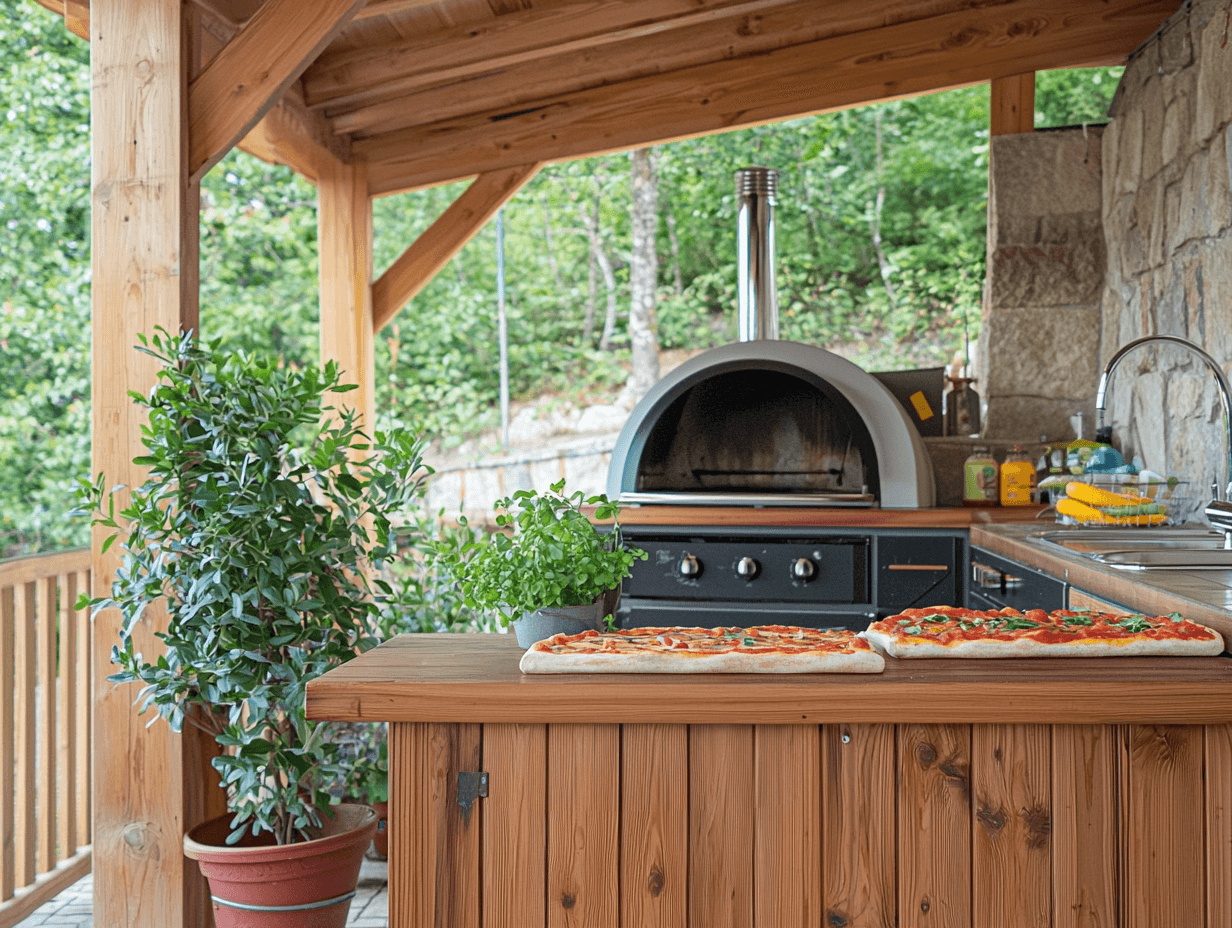
Outdoor living has undergone a spectacular transformation in Quebec. Simple auxiliary grills have given way to true high-end outdoor kitchens, designed as seamless extensions of exceptional properties in Montréal, Westmount, or the natural landscapes of the Laurentians. These outdoor entertaining spaces, which include professional-grade grills, artisanal pizza ovens, and ambient fire features, require an energy infrastructure worthy of their refinement.
Behind the elegance of granite countertops and stainless steel structures lies a critical component: the gas supply. Whether using natural gas or propane, planning an underground distribution network leaves no room for approximation. For owners of luxury residences, landscape architects, and designers, assessing the cost of a gas line for an outdoor kitchen means understanding the value of invisible engineering. This technical investment ensures a continuous and safe supply, designed to withstand the rigours of our climate while preserving the visual integrity of even the most complex landscape designs.
Key Factors That Affect the Cost of Installing a Gas Line
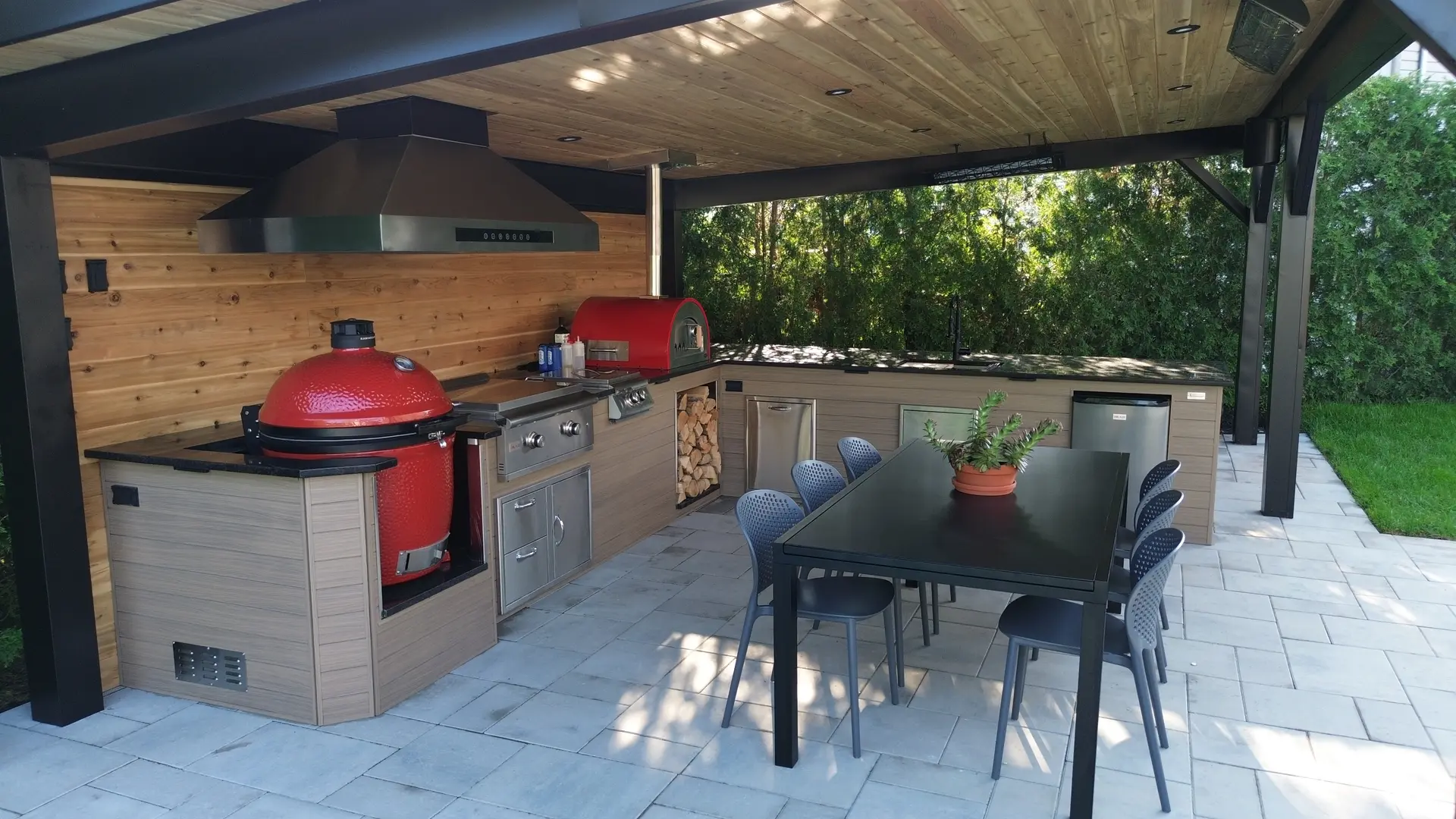
Source: Espace Terrasse Inc
Determining the budget required to bring gas to a custom outdoor kitchen is not simply a matter of calculating distance. Each property has a unique topographical, geological, and architectural configuration that directly influences the complexity, and therefore the cost, of the work. A precision distribution system must be calibrated to provide the exact BTU output required by all appliances, while also withstanding structural ground movement.
Connection Length and Excavation Complexity Under Pavers
The distance between the main supply source, whether the Énergir meter or the propane tank area, and the outdoor kitchen island is the first cost factor. Underground gas lines may use materials approved for gas, such as certain polyethylene pipes designed for burial, depending on the system design and code requirements.
The true technical challenge in Quebec, however, lies beneath the surface. In Quebec, freeze-thaw cycles can place significant stress on outdoor landscaping and buried infrastructure. Burial depth must be determined according to the type of installation, route, required mechanical protection, and applicable requirements under the Natural Gas and Propane Installation Code. In practice, many buried residential installations require a trench of about 18 to 24 inches, but the exact depth must be confirmed by the qualified installer.
If your project is part of a complete luxury landscaping plan, the connection trench is dug before the finishing elements are installed, which helps limit costs. However, if the gas line must cross an existing landscape made of sealed interlocking pavers, natural stone retaining walls, or exotic wood decks, the work must be carried out with surgical precision. The use of hydro-excavation equipment or careful manual digging under existing infrastructure can significantly increase the labour portion of the budget, while ensuring that no visible scar remains after the work is complete.
Natural Gas Network vs. Propane Tank: Choice and Logistics
The choice of energy source influences the technical design of the network and the initial installation costs.
Natural Gas from the Énergir Network
This option offers absolute convenience: the energy source is virtually unlimited, eliminating the need to manage fuel deliveries. Installation requires a direct connection from the home’s meter. If the combined BTU load of your indoor appliances and new outdoor kitchen exceeds the available capacity, a review of the meter, regulator, or service connection capacity may be required with Énergir and the qualified contractor.
Propane Tank
If the natural gas network is not available in your area, particularly for exclusive lakeside properties in the Laurentians, propane is the preferred alternative. The initial cost may include the construction of a stable and compliant base to hold the tanks, as well as the purchase or rental of the required regulators. From an aesthetic standpoint, the logistics then involve concealing the tanks behind architectural screens or dense plantings, while respecting the legal clearance distances from house openings and ignition sources.
What Budget Should You Expect for a High-End Outdoor Kitchen Gas Supply?
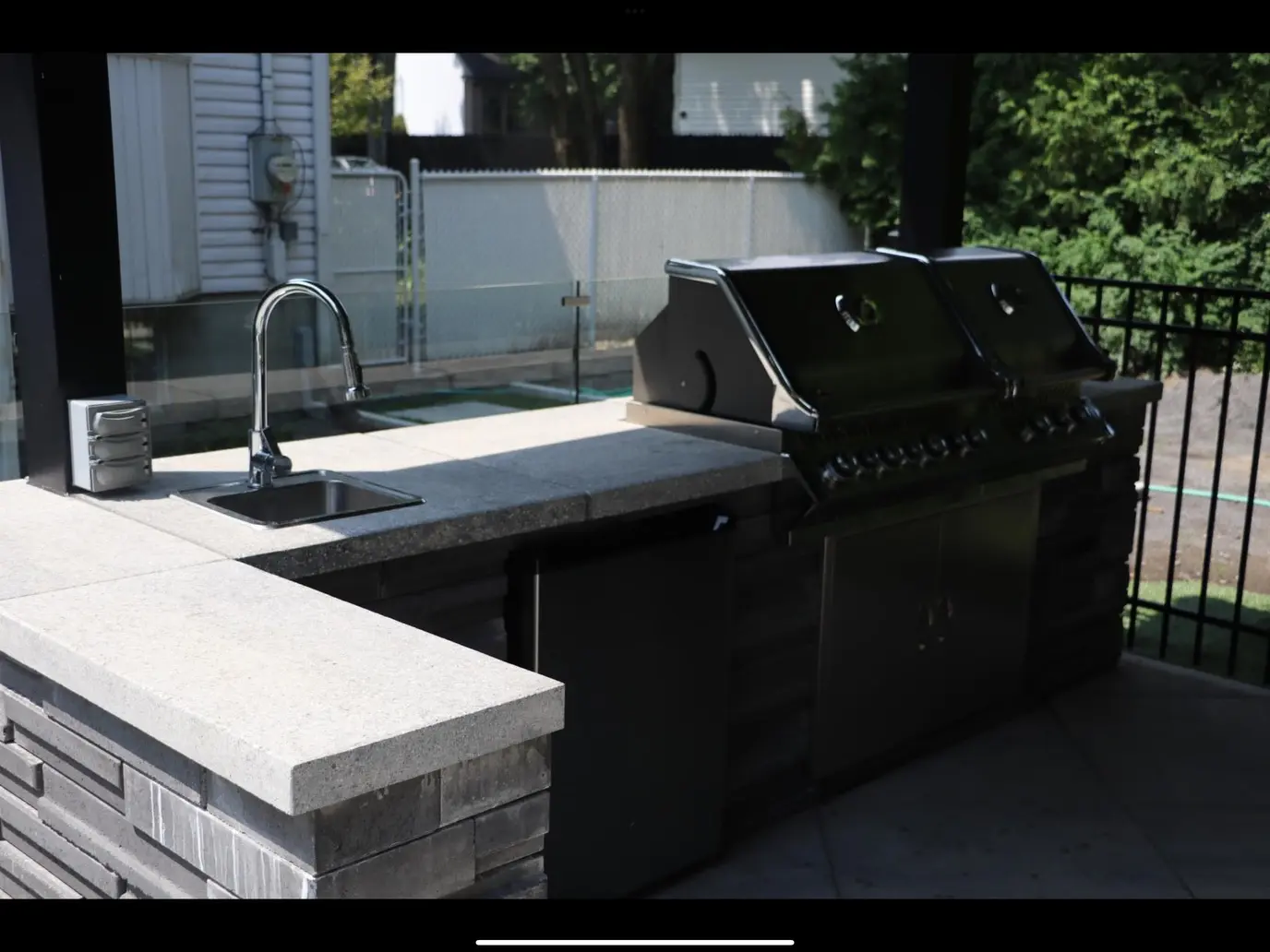
Source: Entreprise pbh
A high-end residential outdoor project calls for complete budget transparency. Hourly rates can vary depending on the region, the company, the nature of the work, and any additional fees that apply, such as materials, specialized equipment, travel, and taxes. The reference rates published by the CMMTQ can serve as a benchmark, but the actual cost must be confirmed by a quote.
To guide your financial planning for an outdoor living renovation, here is a detailed overview of budget ranges based on the scope of work.
Project Component | Standard Configuration (Nearby, Soft Soil) | High-End Configuration (Long Distance, Pavers, High Power) |
Engineering, Load Calculation, and Permits | $150 – $300 | $400 – $800 |
Trench Excavation and Backfilling | $400 – $800 | $1,200 – $2,500+ |
Materials (PE Pipes, Fittings, Valves) | $200 – $500 | $800 – $1,800 |
Labour (Installation, Fusion, Connection) | $500 – $1,200 | $1,500 – $3,500 |
Pressure Testing and Commissioning | $250 – $400 | $500 – $900 |
Estimated Total Budget | $1,500 – $3,200 | $4,400 – $9,500+ |
Note: These amounts are general estimates intended to help with budget planning. The actual cost may vary depending on distance, accessibility, the type of gas, excavation work, connected appliances, required permits, travel fees, and site-specific conditions.
In the most exclusive projects, where the outdoor kitchen resembles a complete garden pavilion with multiple cooking zones, ceiling-integrated patio heaters, and architectural flame features, the cost of gas piping can exceed $10,000. This amount reflects the installation of a large-diameter black iron distribution manifold inside the home, followed by multiple independent lines routed to the backyard.
CMMTQ and RBQ Regulatory Requirements in Quebec
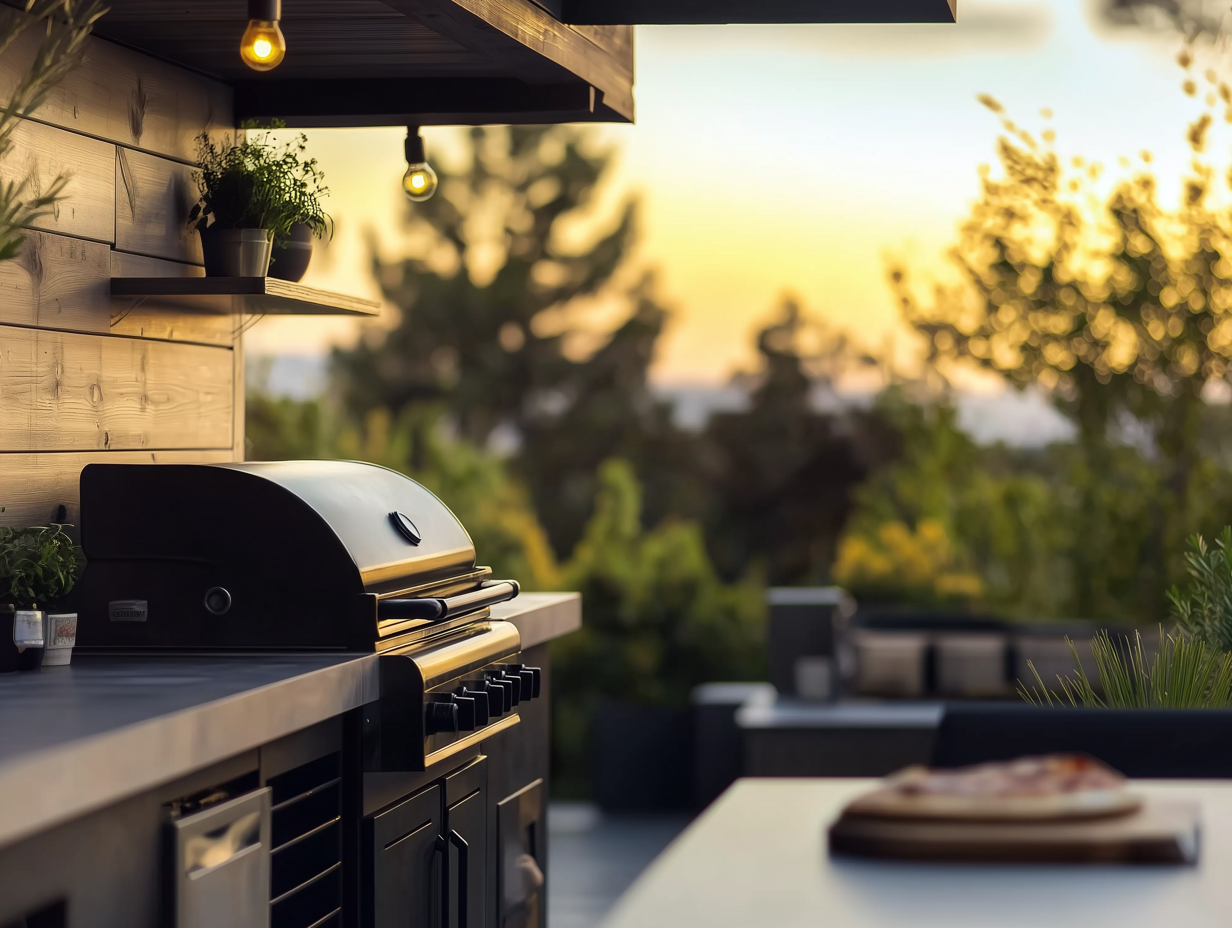
Source: RenoQuotes
In Quebec, work on gas systems is one of the most strictly regulated areas of construction. The safety of occupants and the long-term integrity of the building are central to this legislative rigour. A homeowner or non-specialized general contractor is not permitted to install or modify a gas line themselves. In addition to safety and non-compliance risks, unauthorized work can have significant consequences with the insurer in the event of a loss.
The qualified contractor is responsible for carrying out the work according to applicable requirements, performing the required inspections or checks, and providing the necessary documents or confirmations depending on the project. Their expertise applies at every critical step of the project:
Pressure drop calculation: The contractor ensures that the pipe diameter is sufficient to keep gas pressure stable, even when the large grill, wok side burner, and outdoor fire features are operating at the same time on a weekend.
Mechanical protection measures: Depending on the type of installation and applicable requirements, the line may need to be protected with a sand bed, appropriate backfill, warning tape, or other measures designed to reduce the risk of damage during future work.
Rigorous leak testing: Before commissioning, the installation must undergo a pressure and leak test that complies with applicable requirements, in order to verify the absence of leaks before the final appliance connection and use.
It is recommended to have the project assessed by a qualified gas contractor, who can coordinate excavation, grading, and reinstatement work as needed.
By entrusting the design of your outdoor kitchen to certified contractors in Quebec working in collaboration with your landscape architect, you ensure that every technical component is integrated smoothly. This respect for best practices is the price of peace of mind: the certainty of enjoying outdoor living safely, season after season, in a setting of absolute refinement.
Looking for something else?
Related articles
The latest industry news, interviews, technologies, and resources.

Editorial Team
•29 Jul 2024
For many aspiring homeowners, buying a home doesn’t necessarily mean opting for something new. In fact, some may have their eye on a home that was built several years, maybe even decades ago.
Editorial Team
•11 Mar 2026
Are you second-guessing the quality of the air you’re breathing in but have no idea how to fix the situation? Rest assured, this article details everything you should know about cleaning your home’s ventilation ducts.
Cynthia Pigeon
•27 May 2024
Regardless of the reason behind the emergence of a hole, damaged drywall never looks good, period. And, since it's not aesthetically pleasing, it's important to properly fix it.

Christine Simard
•08 May 2026
With fall at our doors, the feeling of wanting to cuddle up in a cozy blanket with a hot beverage is being felt by many. While in relaxation mode, your bedroom's ambiance will play an important role on your mood. This is why the colour of your walls should be chosen according to what you want to reflect.
Cynthia Pigeon
•05 Dec 2025
The fenestra cochleae, more commonly known as a round window, has quite a distinctive flair, which adds a certain uniqueness to your home. However, its installation requires a certain dexterity and presents some particularities that should be considered before undertaking such a project.