Quartz vs Granite Countertops in Canada 2026: Which Should You Choose?
By Cynthia Pigeon
Updated on May 4, 2026
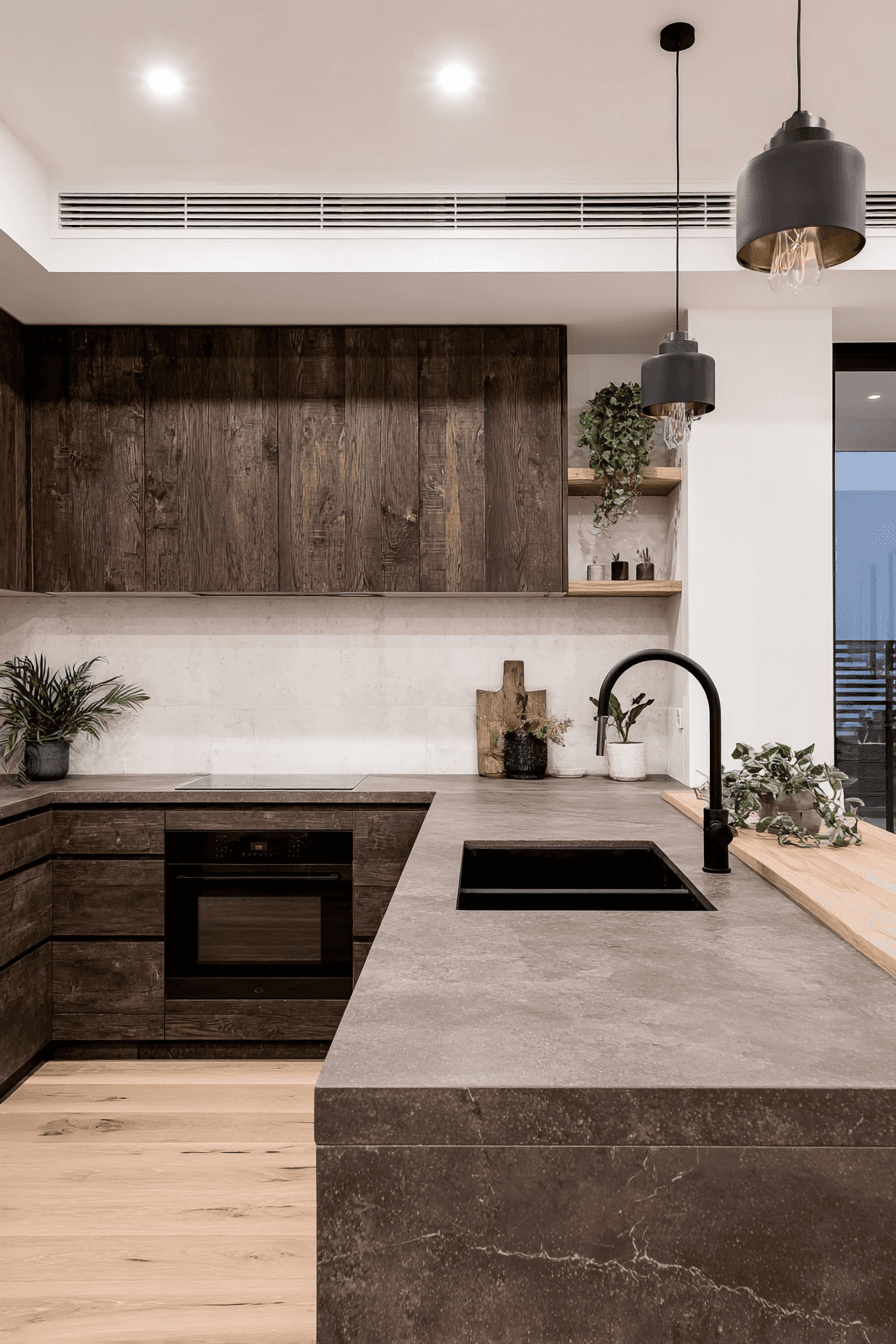
In 2026, choosing between quartz and granite for your kitchen is no longer just about aesthetics—it’s about balancing technical performance with environmental impact. While low-carbon quartz is gaining traction thanks to its maintenance-free surface and emerging bio-based resins, Canadian granite remains the benchmark for heat resistance (up to 650°C). Sourcing stone locally can also reduce transportation-related emissions. With an average installed cost ranging from $60 to $190 per square foot, Canadian homeowners are prioritizing durable materials that can withstand heavy daily use while supporting healthier indoor air quality.
Choosing a Kitchen Countertop in Canada: Key Criteria for 2026
Source: Décor Service Concept
Shopping for a new countertop is one of the most critical steps in any kitchen renovation. Across Canada, homeowner priorities have shifted. Beyond visual appeal, material origin, durability, and indoor air quality are now central decision factors.
Whether you’re renovating a suburban home in Ontario or a condo in downtown Vancouver or Montréal, the same question applies: Should you choose the engineered consistency of quartz or the natural authenticity of granite? This guide breaks down both materials through the lens of today’s Canadian realities.
2026 Trends: The Rise of Low-Carbon Quartz
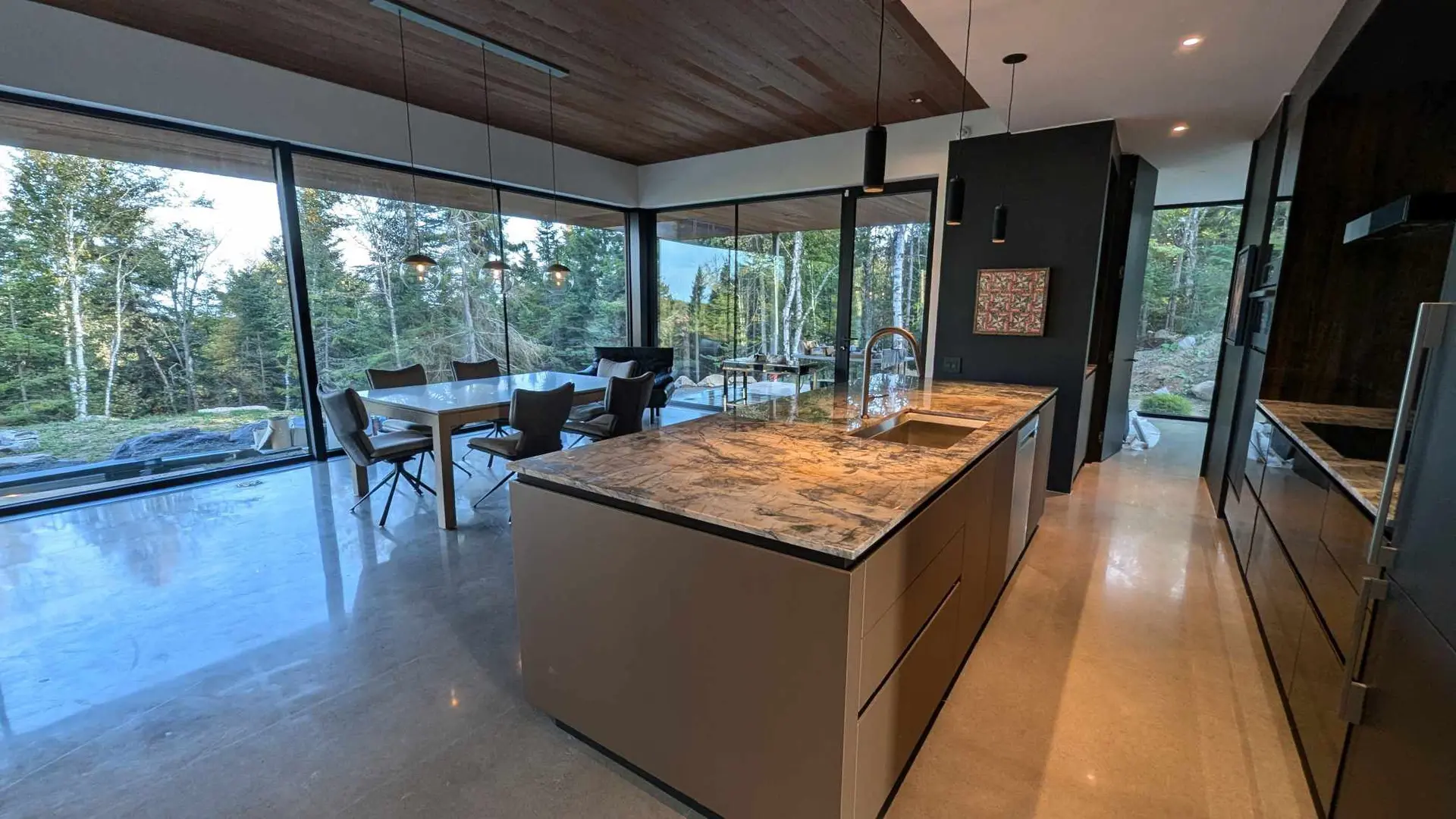
Source: Les Entreprises Gino Ouellet Inc.
Quartz was once criticized for its environmental footprint due to mineral extraction and petroleum-based resins. In 2026, that narrative is evolving, and manufacturers now offer lower-carbon options, an innovation that directly addresses the growing environmental concerns of Canadian homeowners.
Bio-Based Resin Innovation
One of the most important developments is the integration of bio-based resins, replacing traditional synthetic binders. These plant-derived materials help reduce manufacturing energy requirements, lower the overall carbon footprint, and contribute to the development of low-VOC certified products. This is particularly important in Canada, where homes remain tightly sealed for extended periods during winter, increasing the importance of indoor air quality.
Why Quartz Still Dominates Renovation Projects
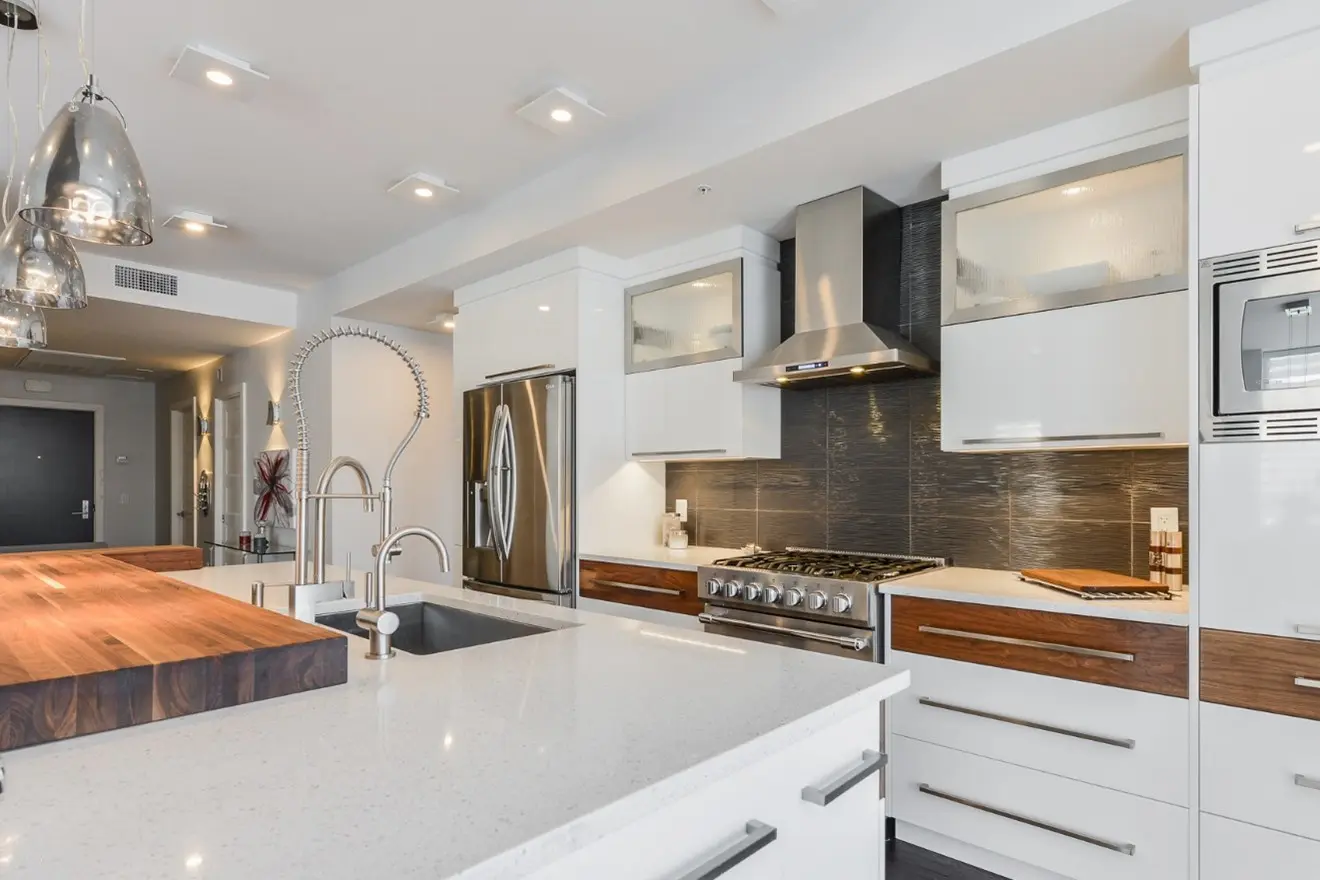
Source: H Man Reno
Despite growing interest in recycled materials, quartz remains one of the most widely chosen countertop options across Canada during kitchen renovation projects. Its popularity rests on three key advantages:
No sealing required: Quartz is non-porous, unlike natural stones, meaning it does not absorb liquids like wine, coffee, or oils. There’s no need for annual sealing.
Superior stain resistance: Its dense, engineered surface makes it highly resistant to everyday household stains—ideal for busy families.
Consistent aesthetic: Quartz offers uniform patterns and colours, making it easier to match cabinetry—especially for large kitchen islands.
Granite’s Comeback: Local Sourcing and Long-Term Durability
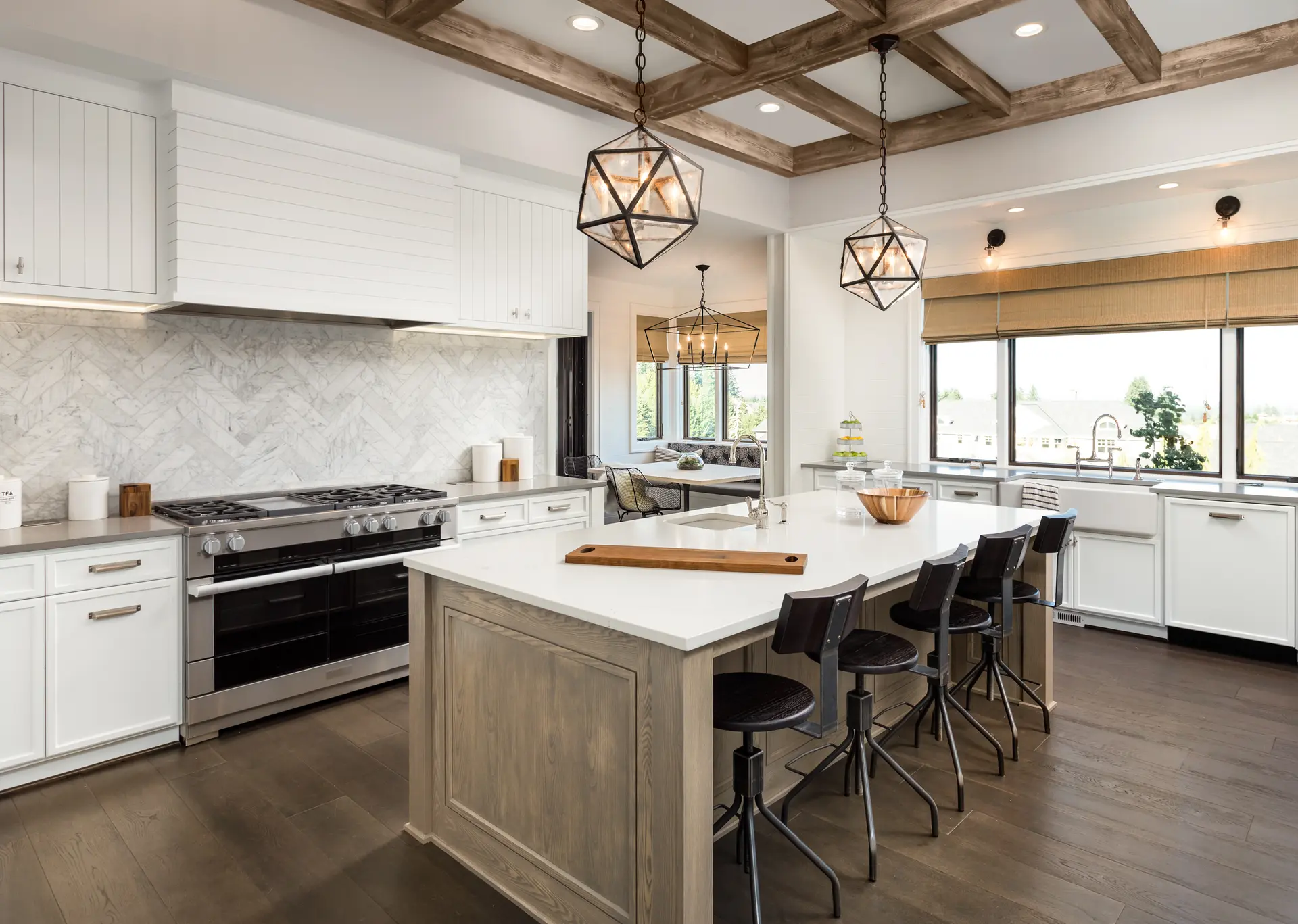
Source: Décor Service Concept
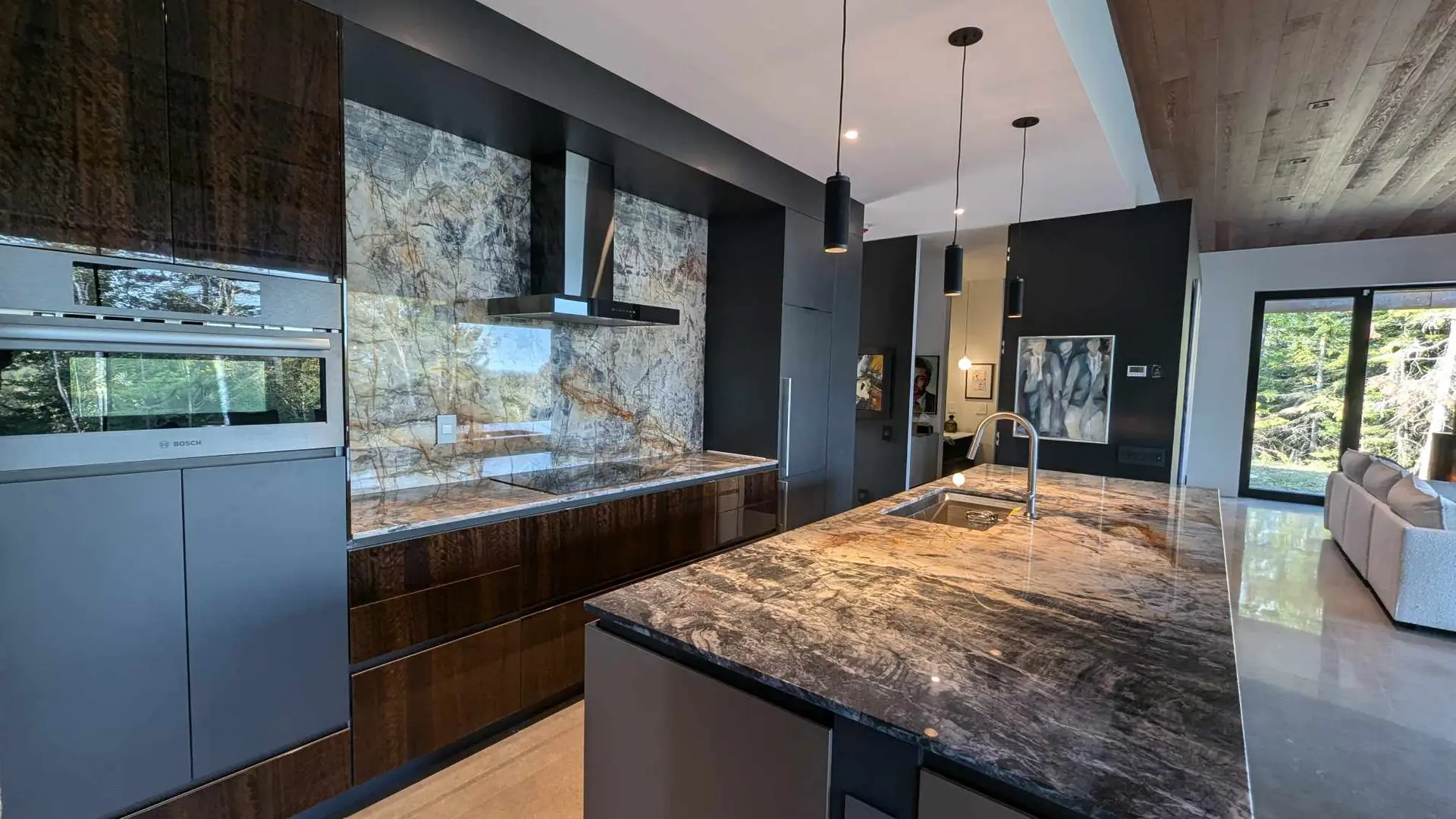
While quartz leans on innovation, granite stands out for its natural strength and longevity. Across Canada, there is renewed interest in locally sourced stone. Using granite from Canadian quarries—whether from Ontario, Quebec, or Western Canada—can reduce transportation costs, lower environmental impact, and support local industries.
A Material Built to Last
Granite is an igneous rock formed through slow magma cooling, giving it exceptional hardness. Choosing granite means investing in a surface that has endured millions of years—and will easily outlast most modern kitchens.
Heat Resistance: Where Granite Wins
Source: RenoQuotes
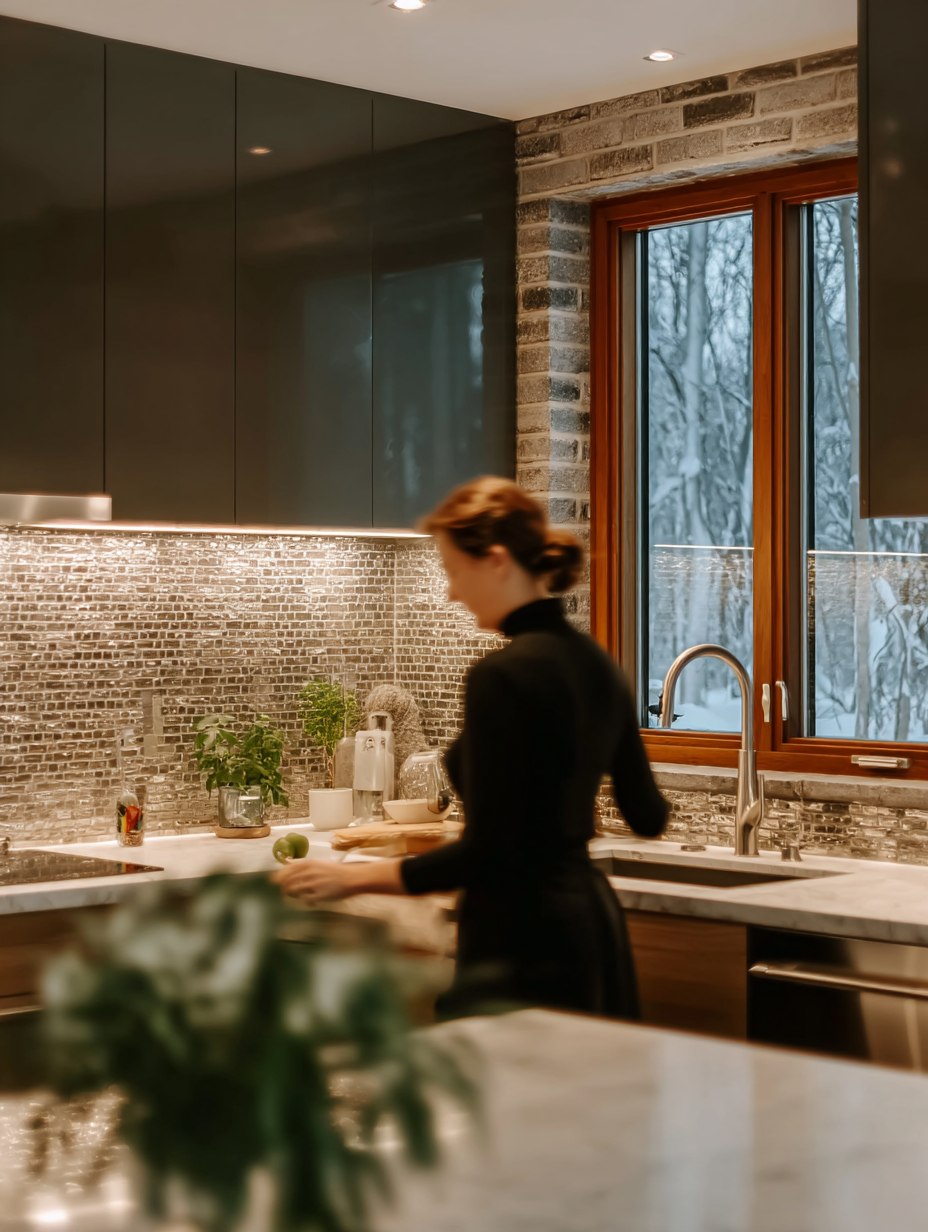
This is where granite clearly outperforms quartz. For those who cook intensively—using heavy cast iron cookware or placing hot dishes straight from the oven—granite offers superior heat resistance.
Did you know? Granite can tolerate extremely high temperatures—well beyond typical kitchen use—while quartz, which contains 7–10% resin, may suffer damage such as discolouration or cracking at temperatures around 150 °C.
As a result, placing a hot pan directly on a quartz surface carries some risk, whereas granite provides greater flexibility and peace of mind in high-heat cooking environments.
2026 Cost Comparison Across Canada
The cost of a countertop goes beyond the slab itself; it typically includes laser measurements, fabrication and cutting, edge polishing, cutouts for an undermount sink, and professional installation. Based on current market trends across Canada, here are the average prices homeowners can expect.
Material | Average Price (per sq. ft.) | Lifespan | Maintenance |
Standard Quartz | $55 – $85 | 25–30 years | Very low |
Premium / Low-Carbon Quartz | $90 – $140 | 30+ years | Very low |
Local Granite | $50 – $110 | 50+ years | Sealing required (every 1–5 years) |
Exotic / Imported Granite | $120 – $180 | 50+ years | Sealing required |
Transportation plays a major role in pricing. Locally sourced granite is often more cost-effective—and more environmentally responsible—than imported options. To get the best value, it’s always recommended to compare multiple quotes from qualified contractors.
Maintenance and Longevity: Real-World Performance

Source: RenoQuotes
Maintenance is often the deciding factor in the final selection. Here’s how these two materials perform after a few years of use:
Quartz: It can be cleaned easily with warm, soapy water and requires very little maintenance. However, it is sensitive to highly abrasive cleaners and prolonged exposure to direct UV rays—something to consider for outdoor kitchens or spaces with large south-facing windows, as the resin can yellow over time.
Granite: While extremely durable, granite is a natural porous stone. Applying a stone sealer is essential to prevent liquids like oil and water from penetrating the surface. In 2026, newer long-lasting sealers using nanotechnology have made maintenance easier, reducing application frequency to every 3 to 5 years instead of annually.
In terms of longevity, granite has a slight edge. A well-maintained granite slab can last for decades—even a lifetime—and can be polished after 20 years to restore its original finish. This type of restoration is more complex, and sometimes not possible, with certain types of quartz.
Which Material Performs Best in Canadian Homes?
The final choice depends on your homeowner profile. If you’re looking for peace of mind, a clean, modern aesthetic, and certified indoor air quality (look for Greenguard Gold labels), quartz is an excellent option. It’s particularly well suited to contemporary interiors and busy households that want a low-maintenance solution.
If you’re passionate about cooking, value locally sourced materials, and want a surface with natural character and exceptional heat resistance, Canadian granite is a smart and environmentally responsible choice. Its ability to stand the test of time without going out of style also makes it a solid investment for your home’s resale value.
In all cases, be sure to work with a qualified and insured professional to ensure your installation meets local building standards. To get started, consider visiting kitchen showrooms or consulting design experts to see these materials in person and make a confident, informed decision.
Quartz vs Granite: Choosing What Fits Your Lifestyle
In 2026, choosing between quartz and granite comes down to your priorities. Quartz offers low maintenance, consistency, and ease of use, while granite stands out for its durability, heat resistance, and natural character. The key is to align your choice with how you actually use your kitchen, as well as your expectations around maintenance and environmental impact. To make the right decision, compare your options carefully and request multiple quotes from qualified professionals to maximize your long-term investment.
Looking for something else?
Related articles
The latest industry news, interviews, technologies, and resources.
Cynthia Pigeon
•09 Sep 2024
For the majority of people, embarking on a renovation project is synonymous with substantial financial implications. While the level of financial investment often ensures that the end result will be satisfactory, it is nevertheless possible to achieve the desired results on a smaller budget, without having to compromise in terms of quality and aesthetic value.
Editorial Team
•08 Nov 2023
Are your melamine cabinets starting to wear out and you’re inclined on giving them a little sprucing instead of swapping them out for new ones? In most cases, if the surface isn’t too damaged, you can definitely consider a coat of paint to give them a much-needed face-lift.

Editorial Team
•28 Sep 2024
In December 2022, Benoit Charette, Minister of the Environment, the Fight Against Climate Change, Wildlife and Parks, announced a ban against installing and repairing oil-fired heating systems in residential homes.

Amanda Harvey
•08 Nov 2023
Welcome back for the second installment of our monthly round-up! If you've found yourself about to dive into this article, we imagine that you’re a fellow home design, decor and renovation enthusiast. We too share this passion and thought it’d be fun to create a series that looks at the most interesting articles we've found on the internet that covers these subjects.

Editorial Team
•15 Apr 2024
Global warming, deforestation, acid rain, plastic microbeads, oil spills, blue-green algae, holes in the ozone layer, endangered species, ecosystem destruction, heat islands, public health issues… Clearly, the 21st century sees no shortage of environmental problems.