Replacing Knob-and-Tube Wiring in Canada: How Much Does It Cost in 2026?
By Cynthia Pigeon
Updated on October 1, 2026
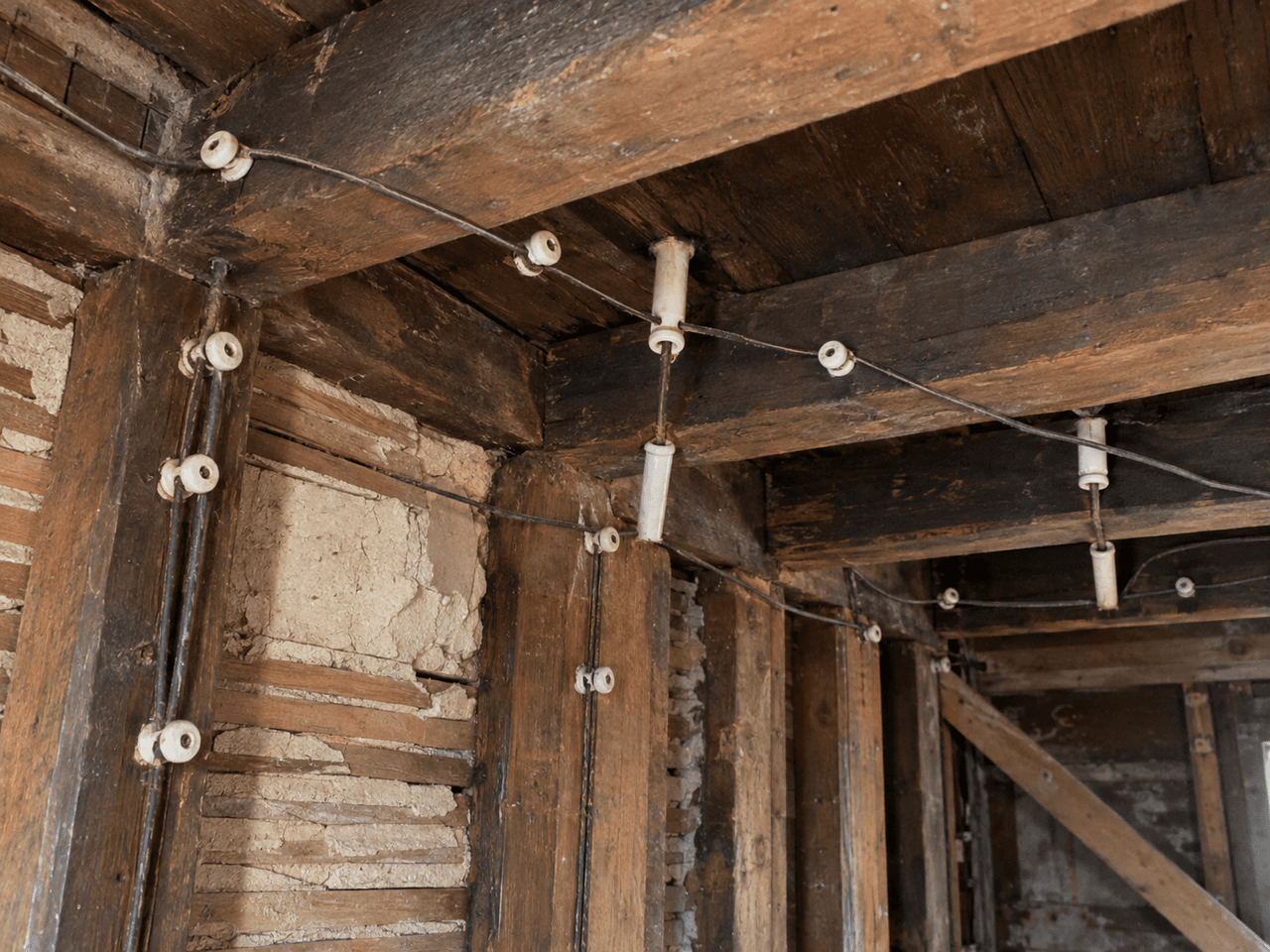
Older Canadian properties, whether post-war bungalows, traditional cottages, older detached homes, or city plexes, have undeniable architectural charm. However, their hardwood floors and lath-and-plaster walls often hide an electrical system from another era: knob-and-tube wiring.
Designed when household electrical needs were largely limited to powering a few light bulbs and a radio, knob-and-tube wiring should be evaluated by a qualified electrical contractor. The condition of the wiring, circuit alterations, connected loads, and the presence of insulation can increase the risk of fire or electric shock.
For homeowners or buyers of an older home in Quebec, and elsewhere in Canada, bringing the electrical system up to current standards is not simply a cosmetic renovation project: replacement may be necessary depending on the condition of the installation, the work planned, and the insurer's requirements.
What Is Knob-and-Tube Wiring and Why Replace It?
Source: RenoQuotes
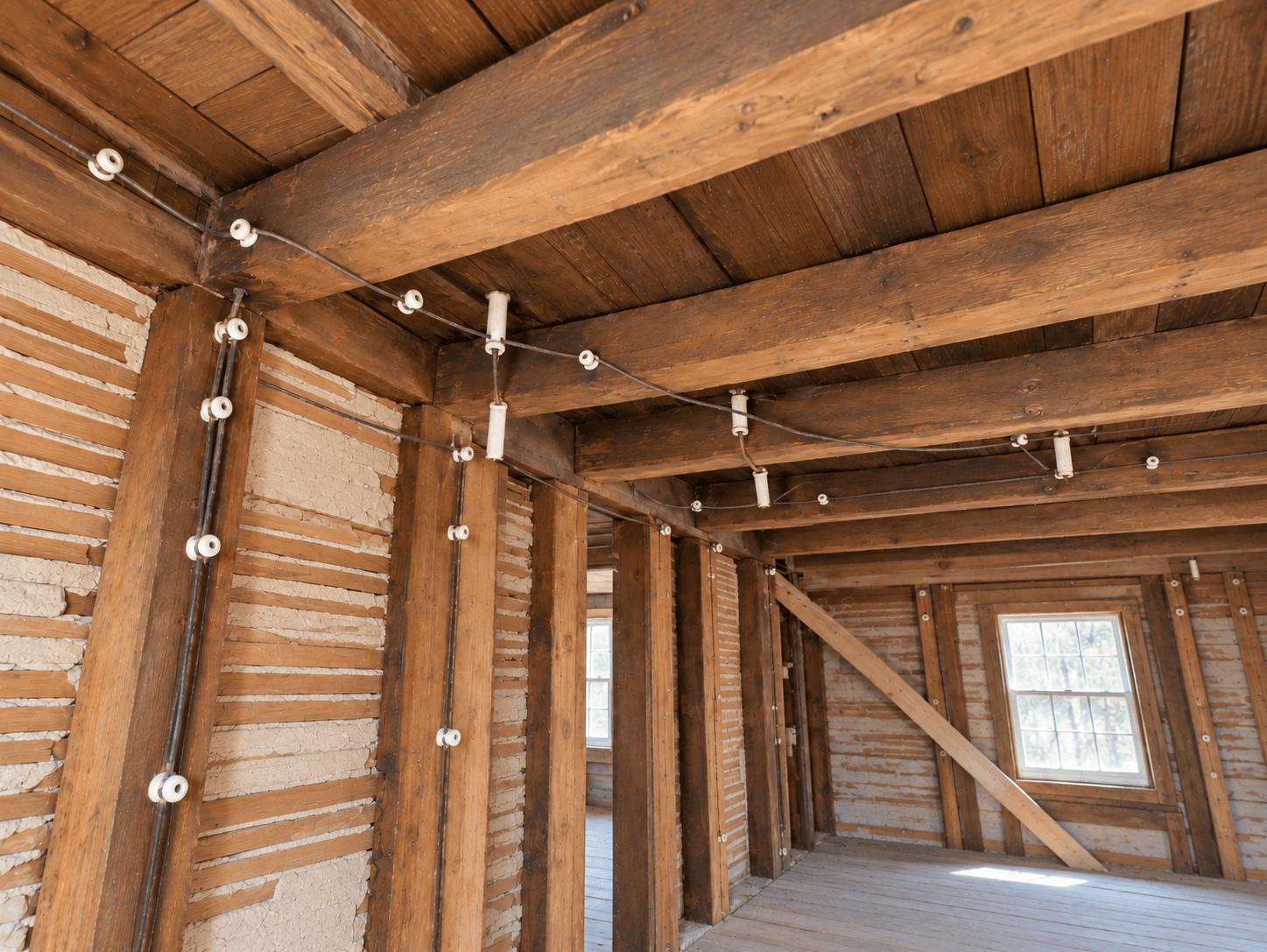
Commonly used in North America from the late 19th century through the 1940s, and still found in many Quebec homes built before the 1950s, knob-and-tube wiring gets its name from the porcelain components used to guide and insulate the copper conductors:
Knobs: Porcelain cylinders fastened to wood framing to keep wires away from combustible structural components.
Tubes: Porcelain sleeves inserted through joists or wood studs to protect conductors where they pass through framing.
Although the porcelain components are extremely durable, the insulation surrounding the copper wire is not. The insulation used on older conductors varies depending on the installation. Over time, it can become brittle, especially when exposed to heat or disturbed. An electrician should assess its condition.
Major Risks Associated With Knob-and-Tube Wiring
Lack of grounding: This type of system typically consists of two conductors, one hot and one neutral. It does not include a grounding conductor, or third copper wire. The absence of grounding limits protection against certain electrical faults. This should not be confused with surge protection, which is provided by separate devices.
Circuit overloading: Older circuits may not be suitable for today's electrical loads, particularly if they have been extended, modified, or protected by an improperly rated device. An electrician should verify each circuit's load and protection.
Risk associated with modern insulation: Insulation material should not come into contact with energized knob-and-tube wiring. Natural Resources Canada recommends that insulation materials never come into contact with this type of older wiring because of the potential fire risk. Have an electrical contractor assess the installation before undertaking insulation work.
Underlying DIY modifications: Over the decades, some systems may have been improperly altered or extended, including through connections made outside an appropriate junction box. These modifications can lead to loose connections, overheating, or electrical arcing.
How Much Does Knob-and-Tube Wiring Replacement Cost in Canada?
Source: RenoQuotes
The cost depends on the number of circuits that need to be replaced, access to walls and ceilings, finishing work, and any required panel modifications. Ask for detailed quotes that separate these costs.
As a general guideline, completely replacing knob-and-tube wiring in a home can cost anywhere from several thousand to several tens of thousands of dollars. Canadian market references frequently place this type of project between $8,000 and $25,000 or more, depending on the home's size, accessibility, number of circuits, and required finishing work. A quote from an electrical contractor is necessary to determine the actual cost in Quebec or elsewhere in Canada.
Typical budget for replacing knob-and-tube wiring:
Electrical work: $8,000 to $20,000
Interior finishing (drywall, joint compound, and painting): $2,000 to $5,000
Electrical panel upgrade (to 200 A, if required): $2,500 to $4,500
To accurately gauge the costs involved for your home, consider requesting quotes for electrical work from experienced electrical contractors.
Sample Budgets Based on Home Size and Complexity
Electrical costs vary depending on factors such as square footage, number of storeys, number of circuits, and accessibility. Running new wiring through a two-storey home generally requires more openings and labour than rewiring a single-storey bungalow with an unfinished basement.
The amounts below are planning estimates rather than standardized rates in Quebec or elsewhere in Canada.
Type of Home | Average Size | Electrical Cost (CAD) | Drywall / Finishing (CAD) | Estimated Total Budget (CAD) |
Bungalow (1 storey) | 1,000 to 1,200 sq. ft. | $8,000 - $12,000 | $1,500 - $3,000 | $9,500 - $15,000 |
Two-storey home | 1,500 to 2,000 sq. ft. | $12,000 - $18,000 | $2,500 - $4,500 | $14,500 - $22,500 |
Heritage home / large plex | 2,200 sq. ft. and up | $18,000 - $25,000 | $4,000 - $7,000 | $22,000 - $32,000 |
Hidden Costs: Plaster, Drywall, and Joint Finishing
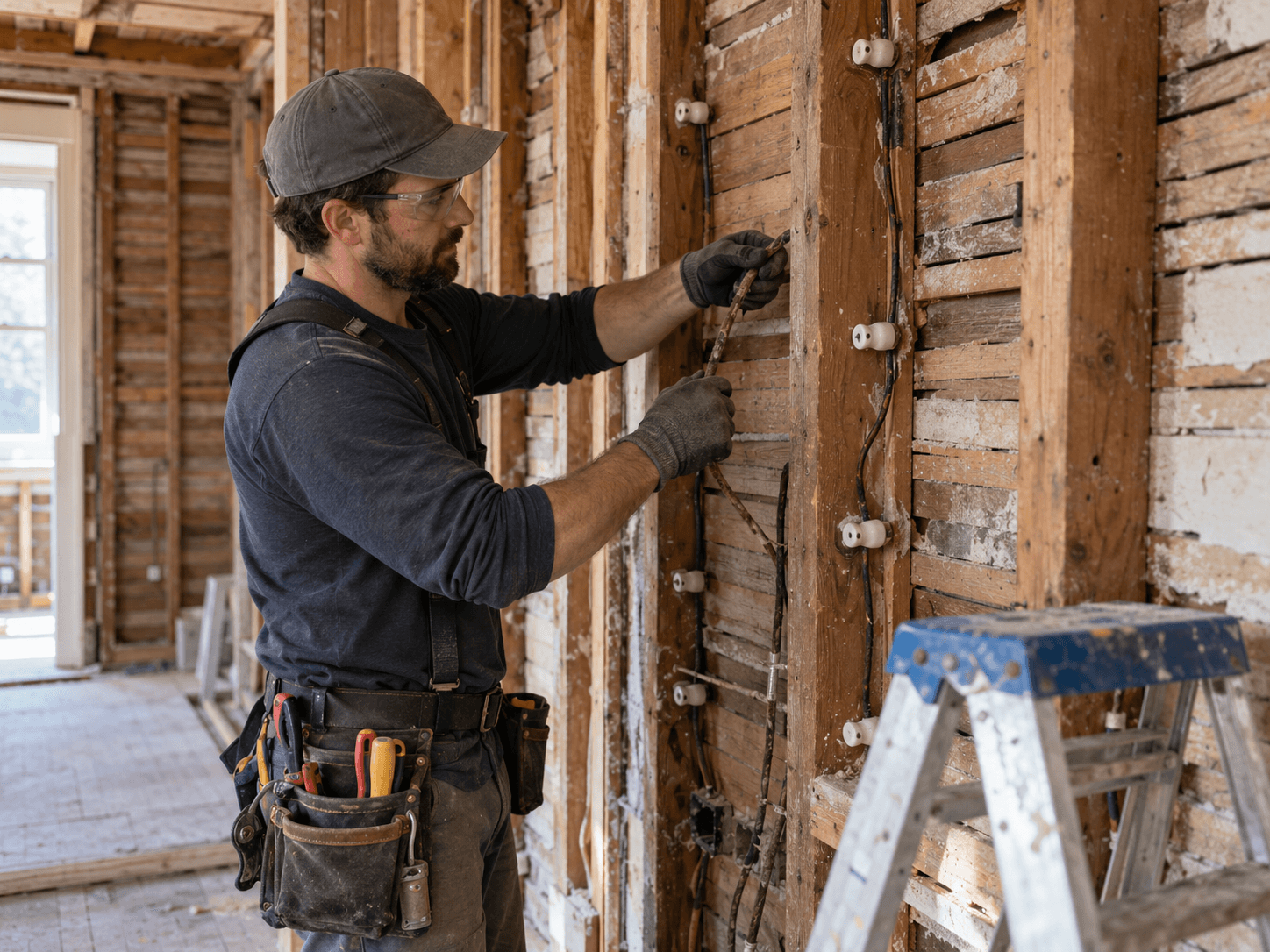
An electrician's work generally involves running new sheathed cable, such as NMD90, where appropriate, from the electrical panel to outlets, switches, and ceiling fixtures.
Unlike new construction, where the walls are open, upgrading an older home's electrical system often requires electricians to "fish" wires through enclosed walls. To make these runs, they may need to create access openings in plaster or drywall.
How Much Should You Budget to Repair Access Holes?
Once the electrical work is done, every access holes must be closed and finished. The work generally includes:
Cutting and installing a drywall patch
Applying joint compound in several coats, with sanding as needed
Applying one coat of primer and two coats of paint
Have the closing and finishing of access openings priced separately. The cost depends on the number and size of the openings, the existing wall finish, the level of finishing required, and the extent of the painting work. For an entire house, this portion of the project can amount to several thousand dollars and should be priced separately in the quote.
Closing openings and applying joint compound are generally not included in the electrical work itself. If these services are not included in the quote, you may need to hire a plasterer or drywall finisher, or complete any finishing work yourself that does not require a specific trade qualification. Include this expense in your initial budget to avoid unexpected costs. To obtain estimates from specialized tradespeople, request quotes from drywall finishers in your area.
A fuse panel or 100 A electrical service does not automatically mean that an upgrade to 200 A is required. The electrician should assess the capacity and condition of the existing system as well as anticipated electrical demand. If an upgrade is recommended, it should be priced separately in the quote. As a general estimate, this could add approximately $2,500 to $4,500 to the total cost.
How Knob-and-Tube Wiring Can Affect Home Insurance
Source: RenoQuotes
In Quebec, the presence of knob-and-tube wiring can be an important consideration during a real estate transaction or when purchasing or renewing home insurance.
Insurance requirements vary by insurer, the condition of the electrical system, and the building's individual circumstances. An insurer may request an inspection, impose replacement conditions, or decline to insure the risk. Confirm the applicable conditions, deadlines, and documentation requirements directly with your insurer before the transaction.
Criteria vary from one insurer to another and can change over time.
Possible refusal or special conditions: Some insurers may refuse to insure a property if knob-and-tube wiring remains energized, while others may require an inspection, replacement, or other measures before providing or continuing coverage.
Replacement deadline: When an insurer requires knob-and-tube wiring to be replaced, it generally establishes a deadline based on the individual file and its own underwriting criteria. There is no standard deadline that applies to all insurers in Quebec.
Premium and coverage conditions: When an insurer agrees to cover a property with knob-and-tube wiring, the premium, deductible, or other coverage conditions may differ from those applicable to a modernized electrical installation. Confirm the terms directly with the insurer.
Typical timeline for a real estate transaction involving knob-and-tube wiring:
Purchase offer accepted
Home inspection: Knob-and-tube wiring identified
Request quotes for electrical work
Notify the insurer
Complete the required work within the deadline established by the insurer, if applicable, and provide the requested documentation
Once the work is complete, ask the contractor for an invoice detailing the work performed and confirm the proof required with your insurer. The insurer may request a detailed invoice, written confirmation of the work performed, or another document it considers acceptable from the electrical contractor. Confirm these requirements before the work begins.
To anticipate these costs when purchasing a property, take the time to estimate the cost of your electrical work before removing the conditions from your offer to purchase.
Steps Involved in Replacing Knob-and-Tube Wiring
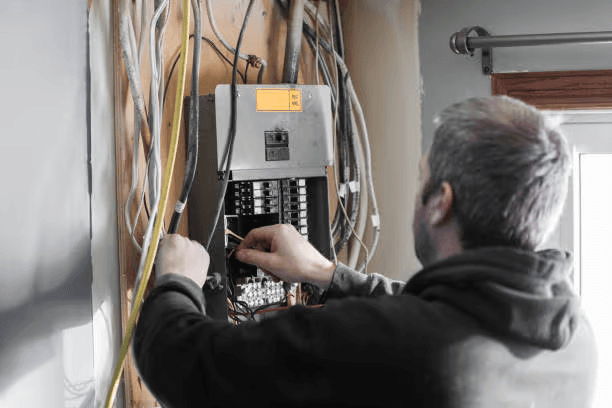
Source: HM Technique Inc
The project's timeline varies depending on building size, wiring access, circuits, and the extent of the required repairs. Depending on the scope of the system being replaced and the accessibility of the wiring, electrical work can take anywhere from a few days to several weeks. Ask for a project-specific timeline in the quote.
The main steps involved in an electrical upgrade typically include:
Electrical system assessment and mapping: The electrician inspects the electrical panel and identifies circuits that are still energized using appropriate testing and tracing equipment.
Preparation and access openings: Small strategic openings are made in plaster or drywall at wall and ceiling junctions to allow wiring to be pulled through.
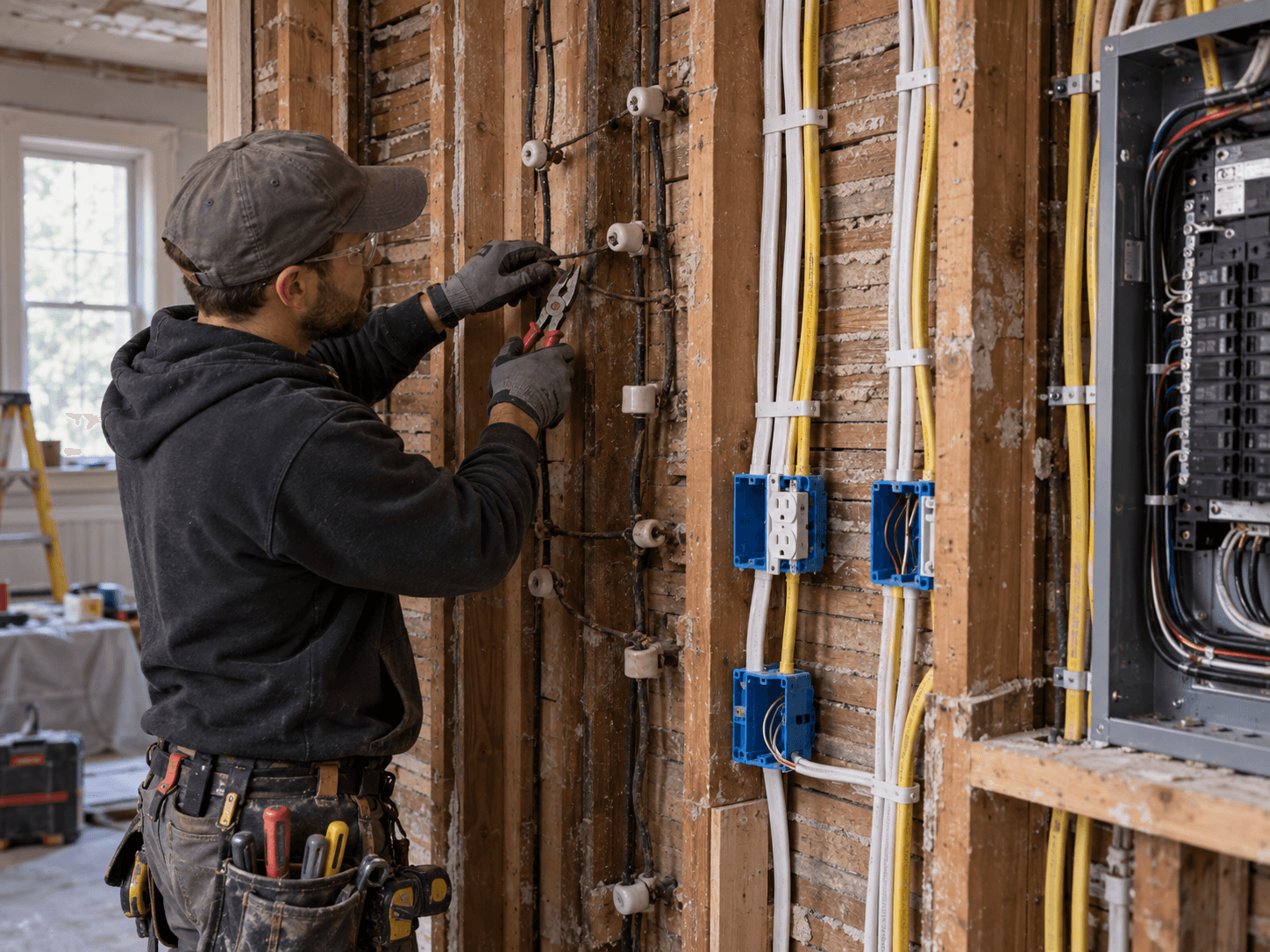
De-energizing and removal: The electrician permanently disconnects the old wiring from the panel. Accessible wiring is removed, while wiring sealed inside the structure may be disconnected, cut at the ends, and safely abandoned in place without power.
Running new wiring: Appropriate new cables are installed, including NMD90 where installation conditions permit, with the required bonding conductor.
Replacing boxes and electrical devices: The contractor determines the arc-fault and ground-fault protection required for each circuit and location under the electrical code applicable in the province or territory where the work is being completed.
Panel connection and testing: The new circuits are connected to the electrical panel, followed by the testing and verification required before the installation is placed into service.
Project documentation: The contractor provides an invoice and documentation describing the work performed. Check with your insurer to determine whether it requires specific confirmation or documentation.
Choosing a Qualified Electrical Contractor
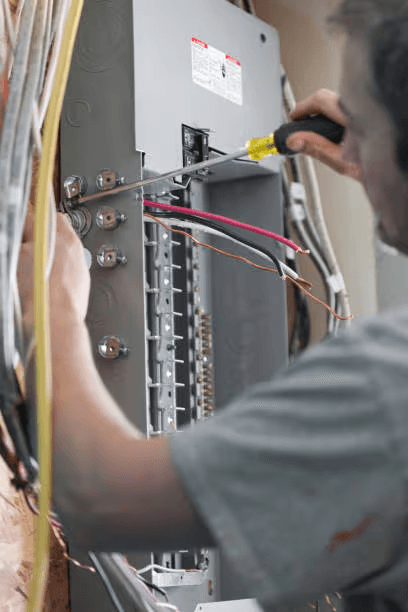
Source: HM Technique Inc
Electrical work in Canada is regulated by province or territory, so licensing and contractor requirements vary depending on where the property is located.
In Quebec, under applicable regulations, electrical installation work is reserved for authorized individuals and businesses. When a homeowner hires a contractor to replace knob-and-tube wiring, the contractor must hold the appropriate electrical contractor licence.
CHECKLIST FOR AN ELECTRICAL CONTRACTOR IN QUEBEC:
Member of the Corporation des maîtres électriciens du Québec (CMEQ)
Holder of a valid RBQ licence, subclass 16.0 - Electrical Contractor
Ask for proof of liability insurance and verify that the coverage amount is appropriate for your project
Verify that the company holds the appropriate licence and ask for a description of the work and inspections to be performed. In Quebec, the work must comply with the edition of Chapter V, Electricity, of the Quebec Construction Code that applies to the project. The 2026 Code, which came into force on March 26, 2026, incorporates the 2021 edition of the Canadian Electrical Code with Quebec-specific amendments. A transition period allows the 2018 Code to continue applying under certain conditions to work started before October 17, 2027; after that date, the 2026 Code becomes the only applicable edition.
To begin your project safely, it is strongly recommended that you find a qualified electrical contractor and obtain detailed, comparable quotes.
Looking for something else?
Related articles
The latest industry news, interviews, technologies, and resources.

Léa Plourde-Archer
•08 Nov 2023
Chandeliers, ceiling lamps, recessed or semi-recessed luminaires, hanging or rail lamps, etc. There is no shortage of options to illuminate the different rooms of a house! In addition to being fun decorative objects to choose from, the selected type of brightness will bring comfort and the desired atmosphere to your home.
Léa Plourde-Archer
•07 Nov 2024
At first glance, the role of a general contractor can seem vague. Acting as a conductor of sorts for home renovation projects, general contractors are responsible for ensuring the successful completion of the project, making sure that the whole process runs smoothly.

Editorial Team
•08 Nov 2023
Albeit the bathroom is almost always the smallest room in a home, it isn’t any less important. With a bit of creativity and strategically devised tips, a small bathroom can be both functional and aesthetic. In this article, we’ll delve into the five decoration tips that can help you use the space in your small bathroom to your advantage without compromising comfort or design. These tips can help you design a practical and elegant bathroom. So, get ready to transform your small bathroom into a genuine interior décor masterpiece!
Editorial Team
•09 Sep 2024
Nowadays, in our homes, one of the rooms in which we spend the most time is the kitchen. Not only is it where we cook, but it’s the ideal place to spend time with friends and family, usually over a good meal. Hence, there’s value in making it cozy and welcoming. So, without further delay, why not give your kitchen the makeover it deserves to make it as homely as possible? This space can be revamped with the help of just a few clever ideas! Here are some interior décor tips that’ll make your dated kitchen look modern in no time!

Cynthia Pigeon
•18 Jul 2026
For buyers of older homes, property managers, or homeowners planning major renovations in Canada, the word “asbestos” often raises concerns. Asbestos was widely used in various Canadian building materials, particularly before 1990, because of its insulating, fire-resistant, and durable properties.