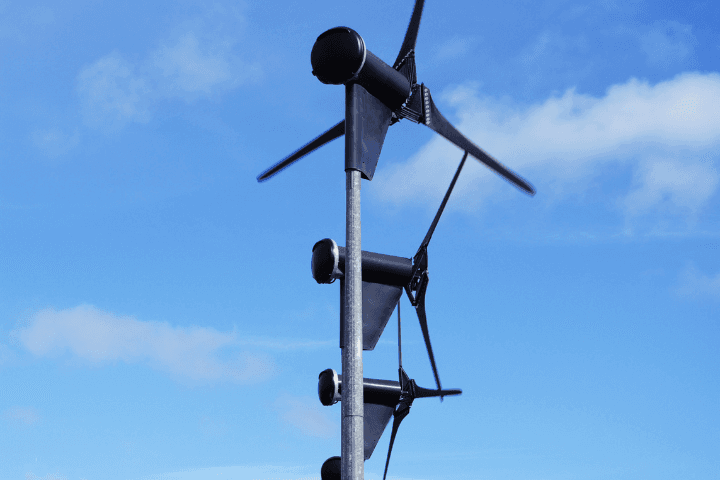
Locally generated clean energy—that’s the promise of a home wind turbine. But do you need a permit to install one? Is it financially worthwhile? Here are the answers to all your questions about this technology.
Basic Principles and Internal Mechanisms of a Residential Wind Turbine
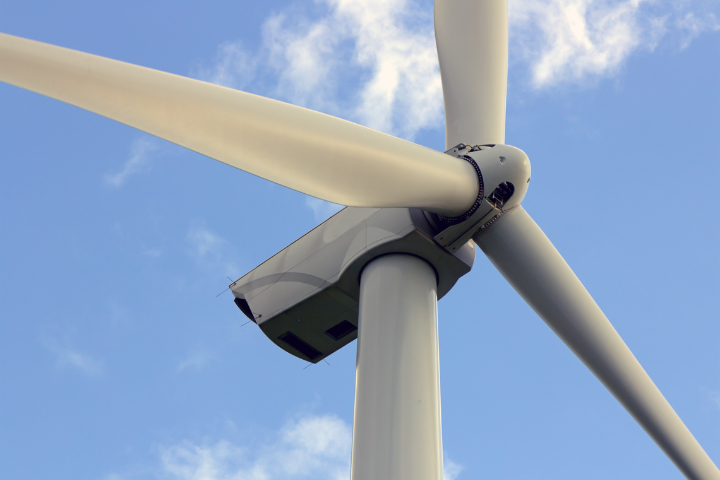
Before looking at the different types of wind turbines, it’s important to distinguish them based on their power output. There are three main categories:
Small wind turbines: Power output of less than 2 kW.
Medium wind turbines: Power output between 2 and 100 kW.
Large wind turbines: Power output greater than 100 kW.
Among residential wind turbines, it is rare to find models with a power output greater than 20 kW, although residential wind systems can reach up to 36 kW. Beyond that, wind turbines are generally intended for commercial or industrial use.
The way a wind turbine generates electricity is relatively simple:
The wind turns the blades.
The blades drive a generator.
The generator produces electricity.
The electricity travels through cables inside the tower.
These cables are connected to either battery storage or the electrical grid.
Now, what is the difference between a vertical-axis wind turbine and a horizontal-axis wind turbine?
Difference Between Vertical-Axis and Horizontal-Axis Wind Turbines
A vertical-axis wind turbine is a model in which the blades rotate around a vertical axis. For example, it may be the entire base of the turbine that rotates and is dedicated to energy production, with a generator located on the ground.
A horizontal wind turbine, meanwhile, consists of a mast that supports a turbine mounted on a horizontal axis called a nacelle. The blades are fixed high up, directly to the turbine's nose. When the wind makes them turn, the entire mast does not rotate, unlike with vertical wind turbines. Only the turbine to which the blades are attached rotates. The generator is located at the top of the wind turbine, inside the nacelle.
However, the major difference between vertical wind turbines and horizontal-axis wind turbines lies in the structural constraints they experience. These include:
Angle of attack
Spanwise loads
Airflow angle
Pressure distribution coefficient
Suction effect
Wake from rotating components for vertical wind turbines
Wake from the nacelle for fixed horizontal-axis wind turbines
Wake from the mast for mobile horizontal-axis wind turbines
To simplify, the blades of horizontal-axis wind turbines must withstand a constant gravitational force combined with a constantly changing inertial force. These constraints also exist for vertical wind turbines, but to a lesser extent.
As a result, vertical wind turbines wear out less quickly and are easier to repair because the generator is located at ground level rather than inside the nacelle.
There are also two operating situations to distinguish. Wind turbines can operate either:
Wind facing
With tailwind
When they rotate facing the wind, the nacelle is fixed. When they operate with a tailwind, they align with the wind direction. It is important to note that blade fatigue is greater on wind turbines operating with a tailwind, with a 50% increase compared to a fixed wind turbine in 7 m/s winds.
How Does a Home Wind Turbine Power a House?
There are two options:
Connect the wind turbine to the grid
Connect the wind turbine to the house
In the first case, you may be able to sell your electricity to Hydro-Québec. In the second, the wind turbine powers your home directly. How? Through two key components:
Controller
Storage batteries
The controller sends the electricity generated by the turbines to the batteries. It also protects the batteries when the wind turbine spins too quickly. Another advantage of the controller is that you can connect solar panels to it. This means that when there is very little wind, you can still recharge your batteries. These batteries then supply electricity to your home.
The Different Power Ratings of Home Wind Turbines
As mentioned earlier, there are three classifications of turbines: small, medium and large. They can also be distinguished by use:
Micro wind: Under 1 kW
Residential wind: 1 kW to 36 kW
Medium wind, for professional or industrial use: 37 kW to 350 kW
Large wind: 2 to 3 MW
The power of a wind turbine depends directly on its diameter. A simple calculation can be used to estimate its potential power:
Power = 0.15 x diameter^2.15 (^ indicates the exponent)
Installing a Home Wind Turbine: What You Need to Know
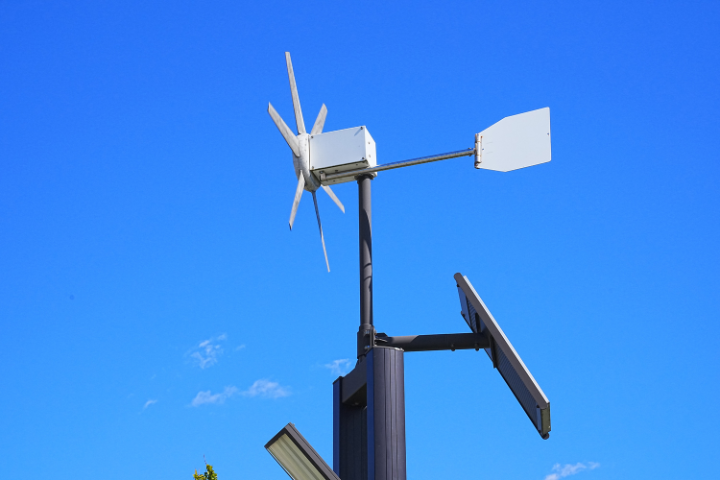
Criteria for Choosing the Ideal Location
Place of residence
Wind direction
Type of wind turbine
Your Place of Residence
Depending on where your house is located, some of the criteria for choosing the ideal turbine location may be outside your control. You may live in one of the following environments:
Densely populated area
Suburb
Partially wooded area
In these cases, the wind is naturally slowed down by obstacles around your home. You will therefore need to choose a home wind turbine capable of producing electricity even in low-wind conditions. We will come back to this in the section on choosing the right home wind turbine model in Quebec.
Wind Direction
Wind direction is especially important for fixed horizontal-axis wind turbines. This type of turbine can be interesting because the prevailing wind in Quebec comes from the west. Only in April and May does the airflow direction change significantly:
April: North-northeast
May: Northwest
For the rest of the year, five months have winds coming directly from the west, while another five months have winds coming slightly at an angle, from the west-northwest in March, southwest in June and west-southwest in July, August and September. In other words, if you choose a fixed wind turbine, electricity production will really only be affected for two months, in April and May.
Type of Wind Turbine
In addition to the first two criteria, horizontal-axis turbines must also be positioned according to the wind. As mentioned earlier, some are designed to rotate facing the wind, while others are designed to operate with a tailwind and align with the wind direction.
You must therefore make sure your horizontal-axis wind turbine is facing the right way: the nose of the turbine should point west for a fixed turbine and east for a turbine designed to operate with a tailwind.
In terms of energy production, both models are similar. However, a tailwind turbine wears out more quickly because of the wake created by the mast. Even if the mast is aerodynamic, a turbine direction change of more than 10 degrees cancels out that advantage.
Buying a Home Wind Turbine: Which One Should You Choose in Quebec?
A study published in the Journal of Cleaner Production in March 2023 showed that the most effective turbines in low-wind conditions are:
3 m/s wind: Savonius-Darrieus model
5 m/s wind: Savonius model
7 m/s wind: Savonius model
10 m/s wind: Savonius model
In Quebec, the windiest months are January, February, March and April, while the least windy months are June, July, August, September and October.
For example, the average wind speed in Quebec City does not exceed 2.96 m/s annually. The hybrid Savonius-Darrieus model is therefore the best-suited option.
In Montréal, the data is slightly different. The average wind speed in the province’s largest city is 4.1 m/s. A Savonius-Darrieus or Savonius model could therefore be considered for optimal energy production, provided that surrounding buildings or trees do not significantly reduce wind speed.
Another example is Gaspé, which is probably the windiest city in the province. With an average annual wind speed of 4.7 m/s, installing a Darrieus-type wind turbine is the most appropriate choice for optimal energy production.
Before investing in a wind turbine of a given power rating, we recommend buying an anemometer and recording readings over a full year. This will give you a much clearer idea of which turbines are suitable for your property.
You may even realize that the cost of such a system can never be recovered. It all depends on where you live.
Ideal Height for a Home Wind Turbine
The ideal height is simple: as high as possible. The table below shows the power gain based on wind turbine height:
Wind Turbine Height | Power Gain |
30 ft | 0% |
60 ft | 41% |
90 ft | 75% |
120 ft | 100% |
150 ft | 124% |
You should therefore place your turbines as high as possible. The Communauté métropolitaine de Québec, through Regulation No. 2007-22, classifies wind turbines according to the following sizes:
Over 35 metres: Large wind turbine
12 to 35 metres: Medium wind turbine
Under 12 metres: Small wind turbine
Naturally, rules apply if you decide to install a small wind turbine. In Québec City, for example, you cannot install a small wind turbine “less than three times its height from any human installation,” except for the main building to which it is accessory, meaning your home.
Another issue concerns neighbours. According to the same regulation, you cannot install a wind turbine “less than four times its height from any property line,” unless you go before a notary with your neighbour to reduce that limit. In other words, you may need your neighbours’ agreement to make your project possible.
Before starting any wind turbine installation, contact your municipality. For example, in the land use and development plan of the MRC du Rocher-Percé in Gaspésie-Îles-de-la-Madeleine, the main conditions are as follows:
Zone: Agricultural, forest or extensive recreational
Number: Only one wind turbine on a residential, agricultural or recreational lot
Lot area: Minimum 4,000 m²
Distance from a property line: Minimum 20 m
Location: Backyard only
Maximum height: 15 m
Shape: Tubular and longitudinal
Distance from a dwelling: 1.5 times its height
Guy wires: Prohibited, except during construction
Colour: White and grey
Steps for Installing a Wind Turbine on a Roof
Step 1: Assess Future Production
Wind resources never deliver the energy production advertised at the time of purchase. Actual production is always about 20% lower when the turbine is placed in an optimal area. Output can even drop to 50% or 60% of what was expected.
To determine whether your roof is a good wind resource, you need to take measurements with an anemometer. A rooftop wind turbine will usually begin producing electricity at wind speeds of 3 m/s. It will reach full power at around 18 m/s.
If you look at the data mentioned earlier for Québec City, Montréal and Gaspé, it quickly becomes clear that wind resources rarely allow for 100% energy production.
Step 2: Prioritize Roof Edges
Called the corner flow, it refers to the acceleration of wind over buildings as airflow rises along the facade. To take full advantage of it, you need to install your rooftop wind turbine in the centre of the roof and high enough for the blades to be positioned in the airflow.
Again, taking preliminary measurements at different heights with one or more anemometers can be especially useful before installing a wind turbine.
Step 3: Understand the Geometry of the Neighbourhood
Installing a wind turbine on a roof is one thing. Installing it in the right place is another. Corner flow is not the only factor to consider. You also need to consider surface roughness, meaning the number of obstacles the wind must pass through or around before reaching your turbine blades.
These obstacles can include trees, house facades or apartment buildings. You need to consider the layout of the buildings around your home, as well as the shape of their facades.
All of these factors strongly affect airflow quality.
Small or Mini Wind Turbine: How to Choose

Advantages and Disadvantages of a Mini Wind Turbine
Let’s start with the advantages.
First, wind resources can be used by homeowners in the small-wind category, from 1 to 36 kW. This level of power can already provide a certain degree of energy independence.
Installing a home wind turbine is relatively simple, and its lifespan ranges from 15 to 30 years. In other words, a return on investment is possible. We will look at this in more detail later in the article.
Other advantages of small wind turbines in the yard or on the roof include:
You can sell electricity to Hydro-Québec
You can power your home directly
You therefore have the choice of sending your direct current directly to the grid or storing it in batteries to run your heating system and appliances.
Now for the disadvantages.
The first issue is the noise produced by a wind turbine in operation. Depending on the model, you may hear between 41.2 dB(A) and 55.6 dB(A), day and night. What does that mean? It is similar to having the sound of a residential street constantly in your yard. This is why neighbour approval is still important, even when it may not be legally required.
Another major disadvantage of a home wind turbine is productivity. We will come back to this when calculating profitability, but a wind turbine only produces 50% to 80% of its theoretical power. As you can see, this depends on your property’s orientation, surrounding obstacles and other factors.
The Government of Ontario rightly notes that, to be profitable, a wind turbine needs wind speeds of at least 4 m/s to 4.5 m/s. In Québec City, average wind speeds are under 3 m/s. In Montreal, the theoretical profitability threshold is just barely reached, with wind speeds of 4.1 m/s. In Gaspé, the annual average of 4.7 m/s leaves some room between theory and reality.
The best option is therefore to choose a Savonius or hybrid Savonius-Darrieus wind turbine. These are vertical wind turbines capable of generating electricity at wind speeds of 3 m/s. They are therefore well suited to the province’s wind conditions.
Why Choose a Small Wind Turbine?
Because you cannot install a wind turbine over 36 kW in your yard, and many municipalities even limit turbine height to 15 metres, including the blades.
You therefore need to choose a wind turbine that complies with your municipality’s local land use plan.
Is a Home Wind Turbine Profitable?
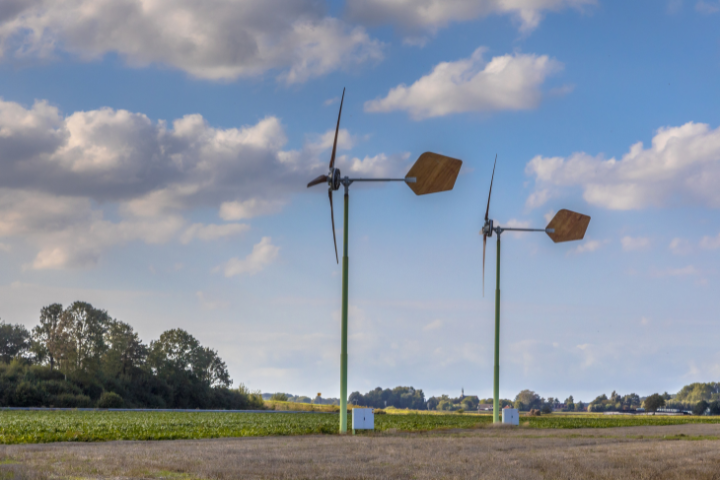
Installation Cost Versus Savings
Although some home wind turbines cost around $3,000, a Bergey Excel 10 kW costs about $60,000 with two batteries or a grid connection, including taxes but excluding installation.
This is a horizontal-axis wind turbine. The manufacturer states that this turbine can produce 13,800 kWh annually with wind speeds of 5 m/s and that it shuts down below 2.5 m/s.
To simplify, let’s say you live in Gaspé and benefit from an average annual wind speed of 4.7 m/s, rounded to 5 m/s.
We previously calculated the profitability of a photovoltaic panel installation based on a single-family home with air conditioning and a pool or spa. According to Hydro-Québec data, this type of property consumes 29,000 kWh per year. The annual cost is therefore $2,911.89 at a Rate D price of 10.041 cents per kWh.
If the wind turbine produces 13,800 kWh per year, you save $1,385.66 on your electricity bill. Over 15 years, that represents savings of $20,784.87.
Over 30 years, the maximum lifespan of a wind turbine, you save $41,569.80 on your electricity bills. As a result, if you invest in a Bergey Excel 10 kW home wind turbine, your return on investment would still be negative, between $39,215 and $18,431.
Return on Investment for a Home Wind Turbine
At this point, the return on investment remains negative. As we just saw, the net loss ranges from $39,000 to $18,500, depending on whether the calculation is based on 15 or 30 years. It could be even higher in Montréal and Québec City, where winds are less consistent than in Gaspé.
Of course, this calculation depends entirely on how electricity prices evolve, but also on climate change. While wind speeds in Quebec appear to be stable, countries such as France are already seeing an increase in wind speeds, suggesting a potential 37% increase in wind power production over five years.
The trend is global. From 2010 to 2017, wind turbines produced 17% more electricity thanks to faster airflow. As a result, investing in wind energy is like any other investment: a bet on the future.
In Quebec, perhaps more than elsewhere, wind energy can help provide electricity during a power outage. We know outages are common during difficult winter conditions.
By visiting Hydro-Québec’s website, you can see, day by day, how many customers are without power. For example, on Christmas Day 2023, 18 customers were without electricity in Gaspésie, Lanaudière and Northern Quebec. Could a wind turbine have helped them?
In reality, no. On December 25, Québec City’s Jean Lesage Airport recorded wind speeds of 0 knots at 7 a.m., with a few gusts reaching 10 knots around 10 p.m., or 5.1 m/s. So, with or without a wind turbine, it was still Christmas without electricity.
Where to Buy a Home Wind Turbine in Quebec
Buying a Home Wind Turbine Online: Top Websites
Large platforms such as ManoMano and Amazon are widely used to buy home wind turbines. However, you can also go directly to the websites of major manufacturers that sell wind turbines in North America:
Bergey Windpower, United States
Kestrel Wind Turbines, South Africa
Kingspan, Singapore
Endurance Wind Power, British Columbia
BritWind, United Kingdom
Xzeres, United States
To make sure you are dealing with a certified reseller, we recommend either requesting quotes from different wind turbine installers through our platform or contacting these manufacturers directly to ask for a list of their official dealers in Quebec.
This will help you avoid buying from a fraudulent website if you purchase outside major platforms such as Amazon.
Specialized Stores Selling Wind Turbines in Quebec
More and more stores are starting to sell home wind turbines, and not only specialized retailers:
Batteries Expert
Canadian Tire
Énergir
Between these three sellers, there is a good chance that one location is close to you.
Connecting and Maintaining a Home Wind Turbine

How to Properly Connect a Home Wind Turbine
A home wind turbine normally has three cables running from the turbine to the ground through the mast. These must be connected to a terminal block in order to pull the cable through the inside of the mast.
At the outlet, you need to bury the cables and bring them back up only to the level of your electrical network, which may be:
A stand-alone system, where your home is powered only by wind energy
A temporary system, using batteries and then the Hydro-Québec grid
A parallel system, switching from one source to the other depending on your needs
To create these systems, and especially to choose the best option for your situation, hire an electrician with a certificate of qualification in electricity.
Maintenance Tips for Wind Turbine Durability
As with any equipment, the key to extending the lifespan of a wind turbine is annual maintenance performed by a professional. This professional will:
Clean the wind turbine
Inspect its components, including the gearbox, blades and alternator
Unusual noise, slower blade rotation or lower output than usual under similar wind conditions should immediately alert you.
If the wind is too strong and your turbine has no braking system, consider shutting it down during storms or changing its orientation.
Home Wind Turbines: An Energy Transition Solution?
Yes and no. On an individual scale, a wind turbine can be seen as a way to reduce your electricity bill and therefore reduce your reliance on the Hydro-Québec grid. However, in Quebec, most electricity is hydroelectric. In other words, it already comes from a clean energy source. No provincial program promoting home wind turbines would eliminate the need for the diesel power plant in the Magdalen Islands, which supplies 13,000 households with 11,000 kW of electricity. Home wind turbines can therefore only serve as a supplemental source of power.
From an ecological transition perspective, wind energy remains an intermittent energy source because it depends on wind, which is inconsistent.
As a result, even large-scale wind power can only be a minor source in the overall energy mix. Why? Because an electrical grid must be constant in order to operate. An imbalance between demand and production immediately causes the grid to drop, and therefore shut down. At present, the only constant energy sources are:
Hydroelectricity
Nuclear thermal power
Conventional thermal power, such as gas, oil or diesel
If nuclear fusion research succeeds, it could replace thermal power plants with the same ability to produce electricity continuously. Unfortunately, neither wind turbines nor solar panels can do this, because they are intermittent.
The Future of Home Energy: Personal Wind Turbines
Adopting a home wind turbine is a significant step toward sustainable, environmentally responsible energy independence. It allows homeowners not only to generate their own electricity, but also to show a commitment to an eco-conscious lifestyle. The long-term benefits for individuals and the planet are undeniable. By bringing wind energy into homes, we open the door to an era of clean, accessible and renewable energy for everyone. Home wind turbines are therefore not just a source of energy. They symbolize a future where sustainable development and energy self-sufficiency are within everyone’s reach.
Looking for something else?
Related articles
The latest industry news, interviews, technologies, and resources.
Cynthia Pigeon
•31 Jul 2026
In 2026, the cost of a major energy-efficient renovation to reach a net-zero standard in Canada typically ranges from $100,000 to $200,000 for an existing single-family home. This large-scale project aims to reduce a home’s energy consumption to the point where it produces as much energy as it uses annually. The investment generally includes high-performance insulation, triple-pane windows, a high-efficiency heat pump, and solar panel installation, often supported by federal and provincial incentives.
Editorial Team
•08 Nov 2023
The globe is becoming more environmentally conscious, taking responsibility for the wear and tear humans impose on our planet. Thus, it should be no surprise that sustainable energy sources are being used by homeowners more widely, and one of the sources growing in popularity is geothermal energy.
Editorial Team
•11 May 2026
Do you often have guests over and would like to offer them a room of their own during their stay? Well, if you’re lucky enough to have a spare bedroom, here are a few ideas to help you create a guest bedroom that your guests will really enjoy.

Editorial Team
•08 Nov 2023
By now, we all know what goes on behind the closed doors of the bathroom. Washing, brushing, putting on makeup in the mornings, going through the steps of your bedtime routine in the evenings. There are plenty of products and devices necessary for the rituals of a bathroom.

Léa Plourde-Archer
•12 Jun 2025
It is often necessary to do some renovations in order to sell your home, especially if your property has been on the market for several months already and few potential buyers have come through your door. Even with a small budget, smart renovations can help make your home more appealing, which can even increase its value.