Biophilic design: a starting guide
By Christine Simard
Updated on November 8, 2023

Over the past two years, we have often mentioned the phenomenon that is biophilic design but never really delved into the depths of this trend. With people growing more and more conscious of the need for a more sustainable future, the architecture and design world soon picked up on those issues and are now working around the inclusion of these principles in their practices.
Although this design often looks inaccessible in its appearance, there are ways you can apply its philosophy and look to your own home. Here are some ways you can familiarize yourself with this trend, its origins and what it’s all about!
Biophilic design: everything you need to know
What is biophilic design?
Beyond plant walls and installations, this design inspires itself through the belief of living harmoniously with nature; bringing the outdoors to your indoors! In an article from Architectural Digest, they quote:
This idea goes for textures, patterns, shapes and textiles used while designing a commercial or personal space. Anything that reminds us of the shape of nature is said to bring calm and balanced energy to your space. It encourages interactions and reinforces connexions through repeated and sustained engagement with nature.
A temporary or a single display of such is not considered biophilic design, as it is not effective in enhancing these meaningful feelings. A popular example of these practices can be sitting areas with closed backs, like pods, for a sense of comfort and security.

Some of the benefits linked to biophilic design and architecture
We’ve mentioned some of these already in the previous paragraph, but studies show there’s more to this trend than boosting morale. In the workplace, it’s been said that incorporating biophilic design or architecture can increase creativity and productivity, as well as reducing absenteeism.
In statistics: studies registered an 8% increase in productivity and a 13% for employee well-being.
In the worlds of healthcare and education, it was noticed that biophilic design helps with patient recovery time in hospitals, as well as boosting learning abilities and grade results in students. Both environments often being sources of stress and anxiety, adopting this philosophy could prove to be extremely beneficial for them to thrive!
Some examples of successful biophilic design
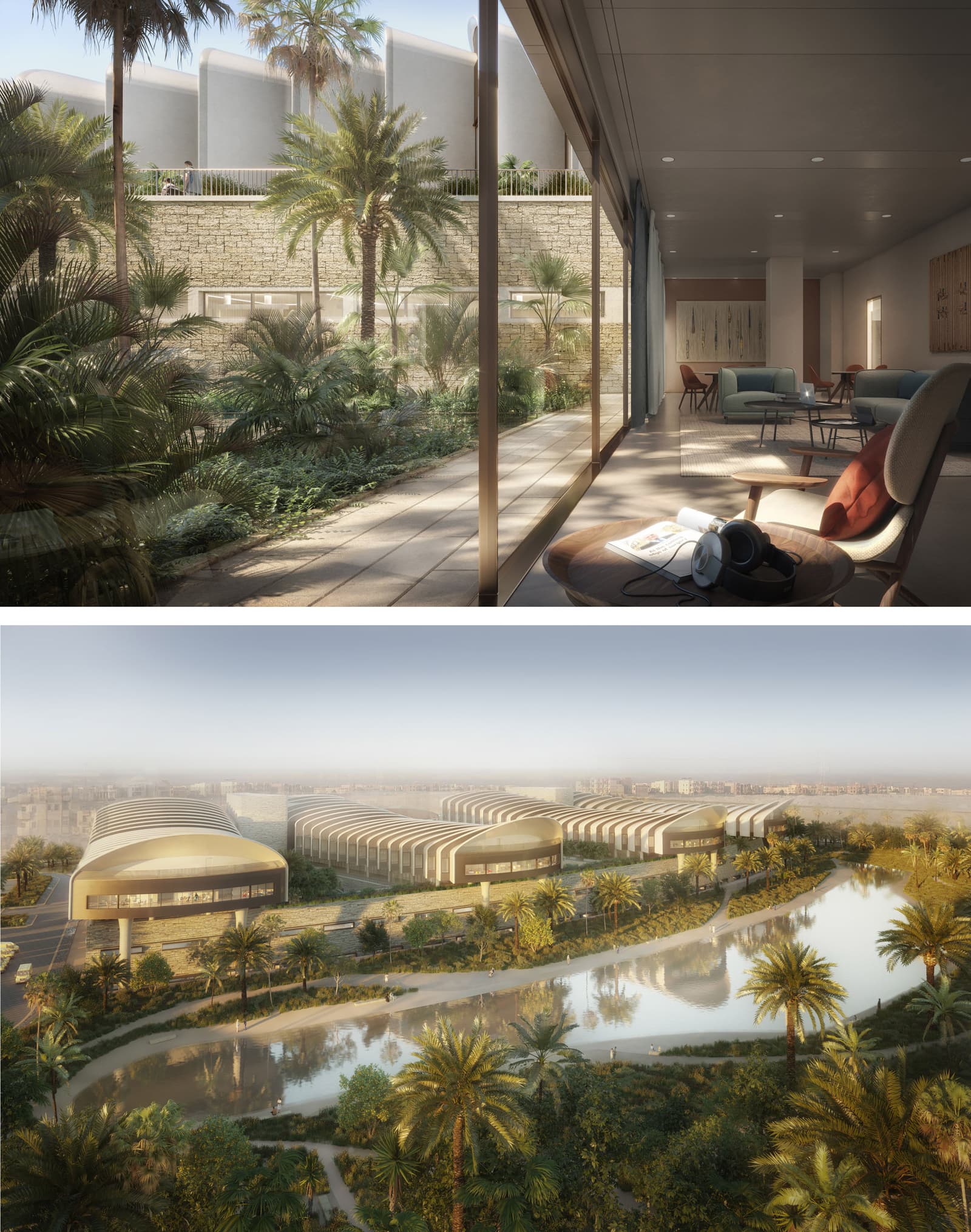
This Cairo hospital imagined by Foster + Partners
Following the latest studies on biophilia, architecture firm Foster + Partners designed the visuals for this Cairo hospital, which was specially designed for patients’ recovery and wellbeing.
Now under construction, it plans on bringing natural light and some greenery, as well as a perfect view of the outside.
Source: Dezeen
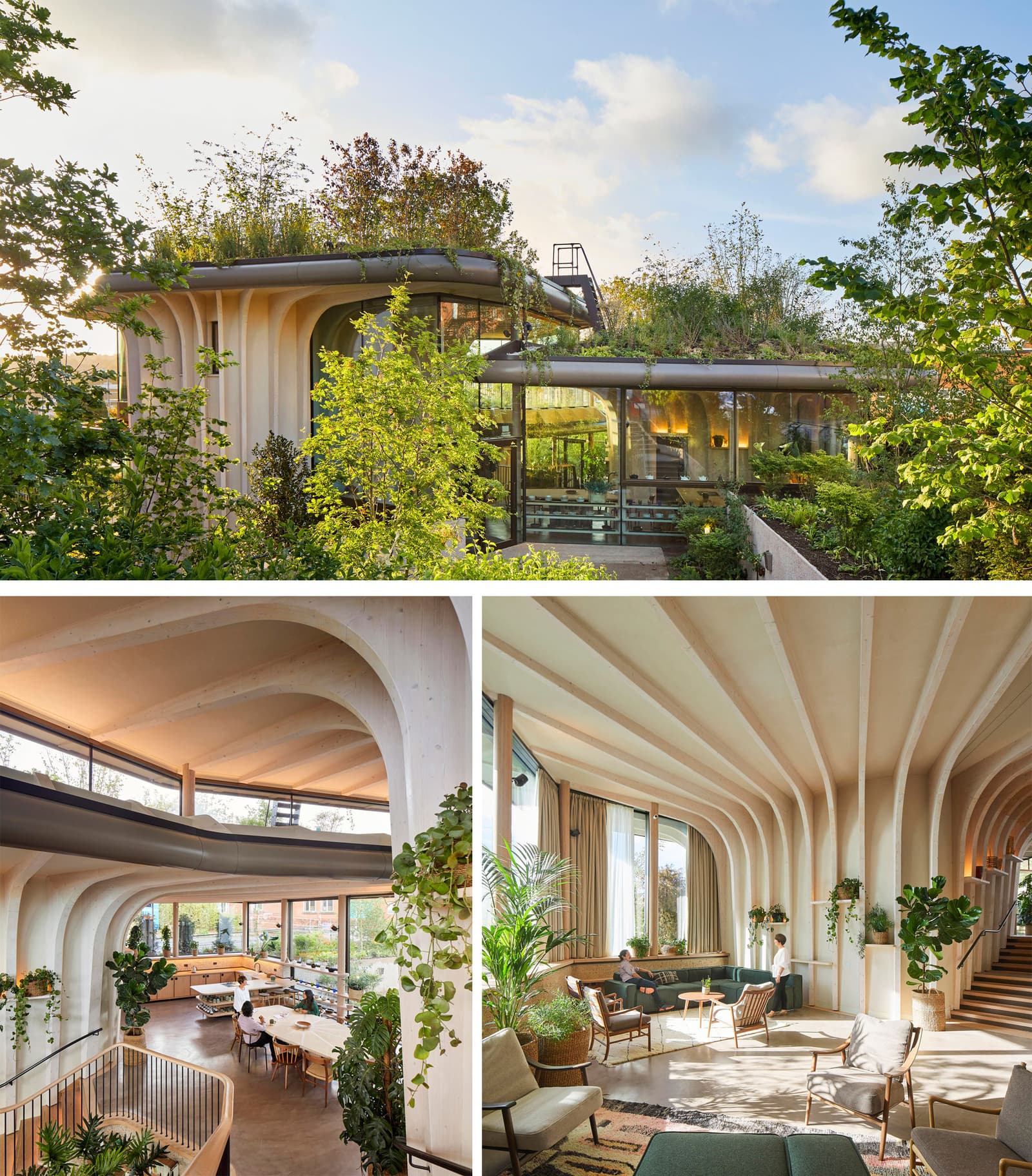
Maggie’s new Leeds center
Another great example of biophilic design mixed with healthcare. We featured this article before on one of our monthly countdowns, and it’s one that stuck to me! Maggie’s is a charity from the UK that helps and supports cancer patients, as well as their loved ones, coping with the disease.
The building’s frame is made of sustainably sourced wood, its timber interior matches its plant-filled decor, reflecting the natural light pouring in from the large windows. Interesting shapes and forms are created on the center’s walls and ceilings made of that wood are a perfect example of biophilic design.
Source: Dezeen
Uncommon’s workspace in London
With furniture that reminds you of natural metals, floor areas that look like they are made of tiny rocks, desk spaces that remind you of the tidal wave, as well as floating pods for a relaxing break, Uncommon’s workspace lives up to its name!
Plant-filled and full of natural light, it’s a complete package when it comes to biophilia.

Source: knightfrank.co.uk
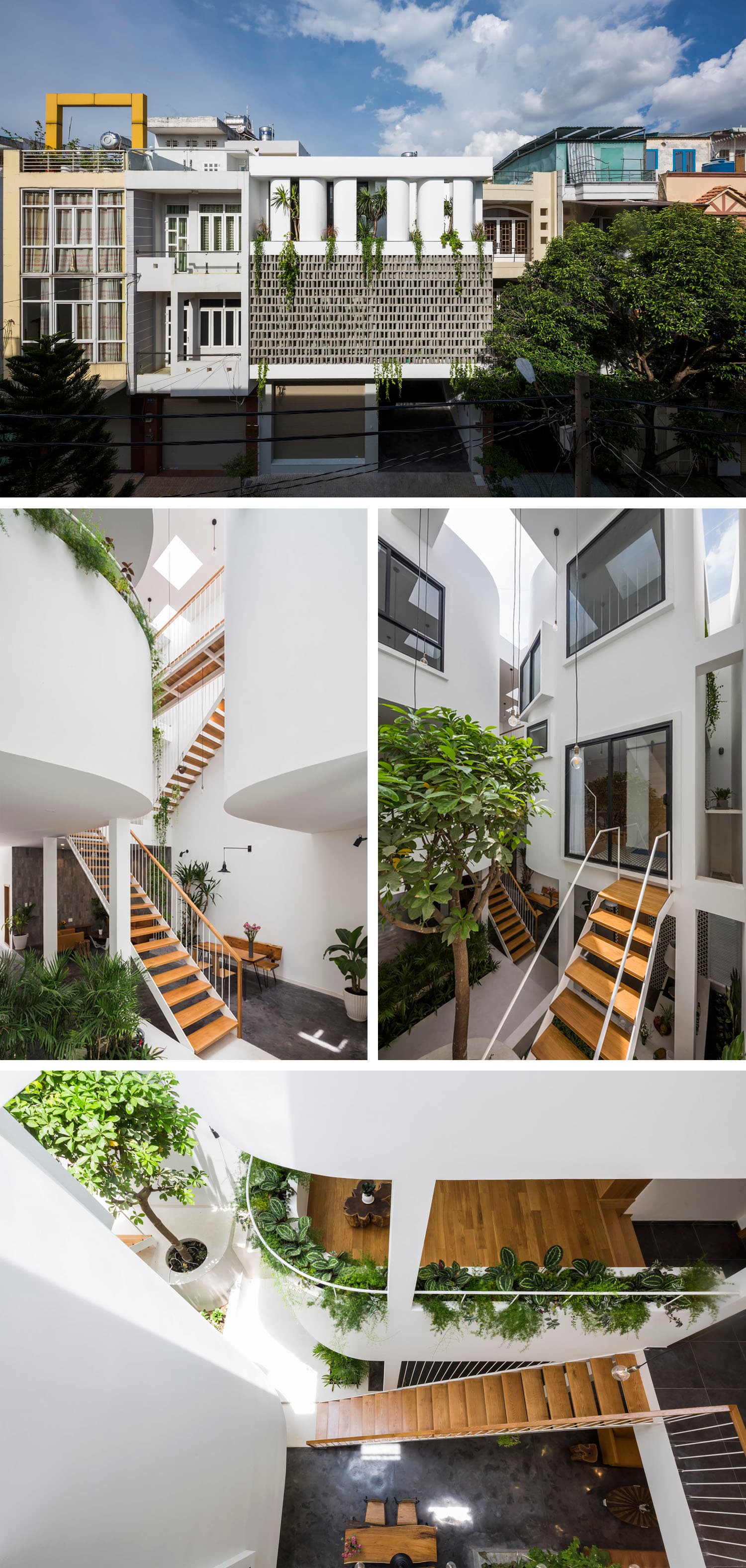
House for a daughter, by KHUÔN Studio
In Ho Chi Minh City, Vietnam, this house is divided into two parts to accommodate a daughter, her parents and her brother. The back for her (a connected bedroom and study split into two floors) and the front for them (bedrooms), these spaces are connected through bridge-like features and windows.
Open spaces are designed for day-to-day living and gatherings, which reinforces family connexions and bonding. The house is a real pool of light and the curves in the walls remind us of the organic movements of nature.
Source: Archdaily
Not ready yet for a full biophilic makeover, but you're interested in other types of ecological or green alternatives? Here are some articles to look at in the meantime!
Get 3 renovation quotes for your home renovation project
RenoQuotes.com can help you get quotes for your home renovation project. If you submit your project to us, we’ll put you in contact with top-rated contractors. Fill in the form on the homepage (it only takes a few minutes), and you will receive quotes from companies that are specialized in home renovations.
Dial 1-844 828-1588 to speak with one of our customer service representatives.
Looking for something else?
Related articles
The latest industry news, interviews, technologies, and resources.

Editorial Team
•08 Nov 2023
The objects in and around our homes are a direct reflection of our personality. This goes for the colours on the walls, the chosen materials, the textures, all the way down to the finishes. Some homeowners may be inclined to follow trends, and with popular sharing platforms like Pinterest, certain trends tend to make the rounds faster than others.

Christine Simard
•08 Nov 2023
You might have noticed a steady stream in paint colour trends in 2020 and 2021. Like we talked about in our article Design trend 2021: curves, shapes and squiggles, the past 2 years had their fair share of ups and downs, with a lot of us stuck at home, probably stuck staring at the same home decor.

Cynthia Pigeon
•24 Oct 2024
Since basements are especially isolated compared to the rest of the house, ventilation is essential to ensure that humidity levels are kept under control.
Cynthia Pigeon
•04 Sep 2026
Replacing the exterior siding on a single-family home, a 1970s bungalow, or a century-old house is an ideal opportunity to improve the building’s energy efficiency. Instead of limiting the project to a cosmetic upgrade, removing old vinyl, CanExel, or aluminum siding provides direct access to the exterior wall assembly.
Editorial Team
•28 Apr 2026
Are you renovating your kitchen and need a new countertop? Should that be the case, you probably already have a few questions in mind about it.