What Is the Purpose of a Heat Recovery Ventilator?
By Editorial Team
Updated on August 18, 2025
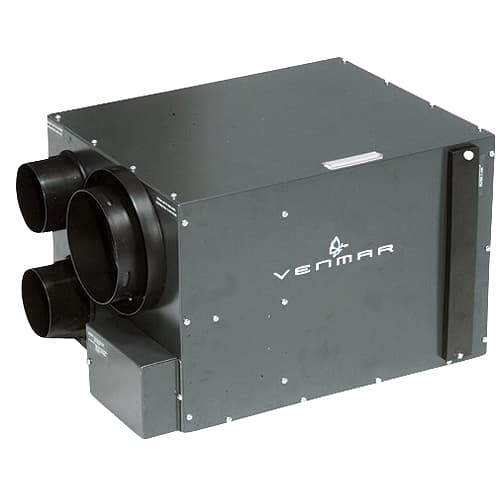
Québec homes are built and insulated to retain heat during the winter and cool air during the summer. The downside of this setup is that stale air remains longer inside the home. To breathe fresh air indoors, natural ventilation has given way to mechanical ventilation.
Indeed, to ensure a circulation of fresh air, the heat recovery ventilator (HRV) has become essential in houses and condos. For many years, the National Building Code has required the presence of such a system in new constructions under 600 m² or for any renovation affecting more than 50% of the residence.
There is greater control over indoor air quality in private residences. Let’s take a closer look at the advantages of having this type of system.
Heat Recovery Ventilator: Why Ventilate the Rooms of Your Home?
First, ventilating the rooms of your home allows occupants to fully enjoy their residence. The expelled air often contains pollutants from cooking odors, tobacco smoke, cleaning products, and humidity. It is worth noting that humidity can create mold on walls over time.
Ventilating spaces prevents cooking smells or cigarette smoke from lingering indoors and absorbing into fabrics such as clothing. In confined spaces, odors are more likely to spread quickly to neighbouring rooms. It is therefore all the more necessary to regularly remove stale air.
Using the Heat Recovery Ventilator in Winter
In winter, this device is very useful, as natural ventilation is not an option. To use it effectively, regular maintenance of ducts and grilles is necessary. Also, check whether the humidity level in your home is adequate. If you begin to feel discomfort in your residence, it is possible that the air quality is reduced.
In this case, either there is too much humidity or the air is too dry. Moreover, you can adjust your HRV so that it operates at full capacity each hour. You also have the option to leave it running all day at low capacity. In this way, you will have greater control over the air quality in each room.
It is worth noting that it can be installed with a central system. The latter includes several additional systems, such as a heat pump, an air filter, a fan coil unit, a coil, a humidifier, and a control system.
It is most often installed in a strategic location in the home so that the ducts can easily reach the rooms. Of course, it always provides access to the outdoors.
Which Heat Recovery Ventilator Should You Choose?
To choose the right device for your home, start by identifying your needs. Indeed, certain factors might reasonably prompt you to choose a more efficient device. These include:
The room being occupied by more than one person
The presence of smokers or allergy sufferers
Faster accumulation of humidity
The habit of cooking frequently
With all this information in hand, a professional can determine the type of device that suits you. Be sure to get information regarding the maintenance required to keep your equipment in good condition (how often the filter must be changed), as well as the warranty offered by the manufacturer.
Looking for something else?
Related articles
The latest industry news, interviews, technologies, and resources.

Christine Simard
•08 Nov 2023
Nowadays, more and more people leave their comfort zone to tackle the adventure of remodelling or renovating their living spaces to convert them into open spaces or loft-style apartments. Also, for fans of the authentic loft lifestyle, it's always possible to buy a space in an old industrial building and transform it in order to have a beautiful and trendy loft as a final result.

Editorial Team
•07 Dec 2023
Choosing bathroom furniture involves more than just considering the style or vibe you’re looking to convey inside this enclosed space. While this aspect of it is important, suffice it to say, there are other factors to take into account, like your budget and the space available.

Amanda Harvey
•08 Nov 2023
Renovation and remodelling projects aren’t the cheapest ventures. Not only do they take time and effort, but they can also leave your home in a state of unrest.
Editorial Team
•18 Aug 2026
A vapour barrier is a material used in a home's building envelope to limit the movement of water vapour through walls, ceilings, and other assemblies. In Canada's climate, it plays an important role in moisture control by helping prevent indoor water vapour from reaching colder parts of an insulated assembly, where it could condense.

Editorial Team
•19 Jun 2024
Warm summer temperatures come as a major hurdle for all construction workers. With increasingly warm days, and humidity added into the mix, the risks associated with heat-related illnesses, such as heat stroke, become growing concerns for employers and workers. This potentially fatal hazard mandates awareness and appropriate preventative measures to ensure the safety and well-being of construction workers.