Whole House Water Filter Cost in Canada: $800 to $4,500
By Editorial Team
Updated on October 13, 2026
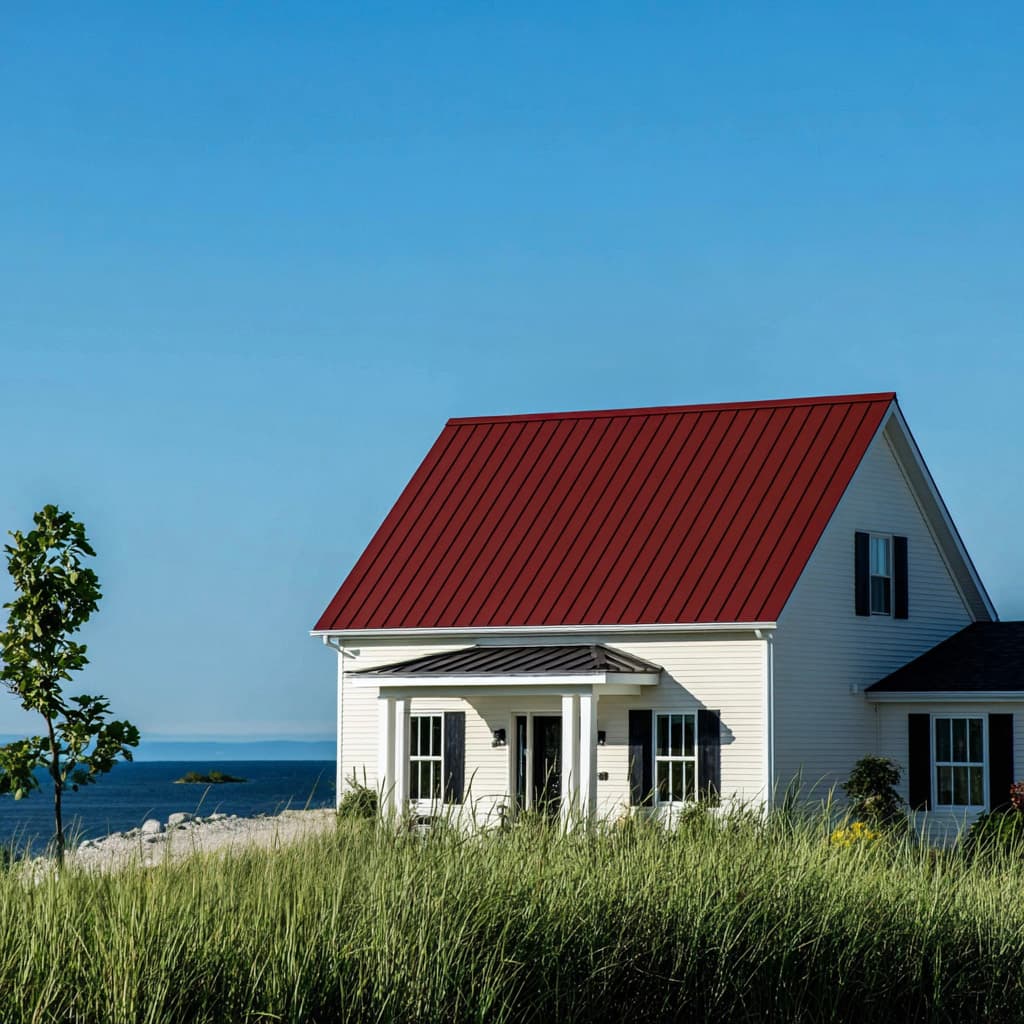
A whole house water filter installs on your main water line where it enters the home, treating every litre before it reaches a tap, shower, washing machine, or water heater. That whole-home coverage is what separates it from a pitcher or an under-sink unit, and it's why homeowners dealing with sediment, chlorine taste, rust stains, or well water tend to end up considering one.
Most Canadian homeowners pay between $800 and $4,500 installed, depending on the system. This guide covers what these systems actually do for your water and your plumbing, what they cost to buy, run, and maintain, and how to match one to your water instead of guessing.
How a Whole House Water Filter Works
Source: Reno Quotes
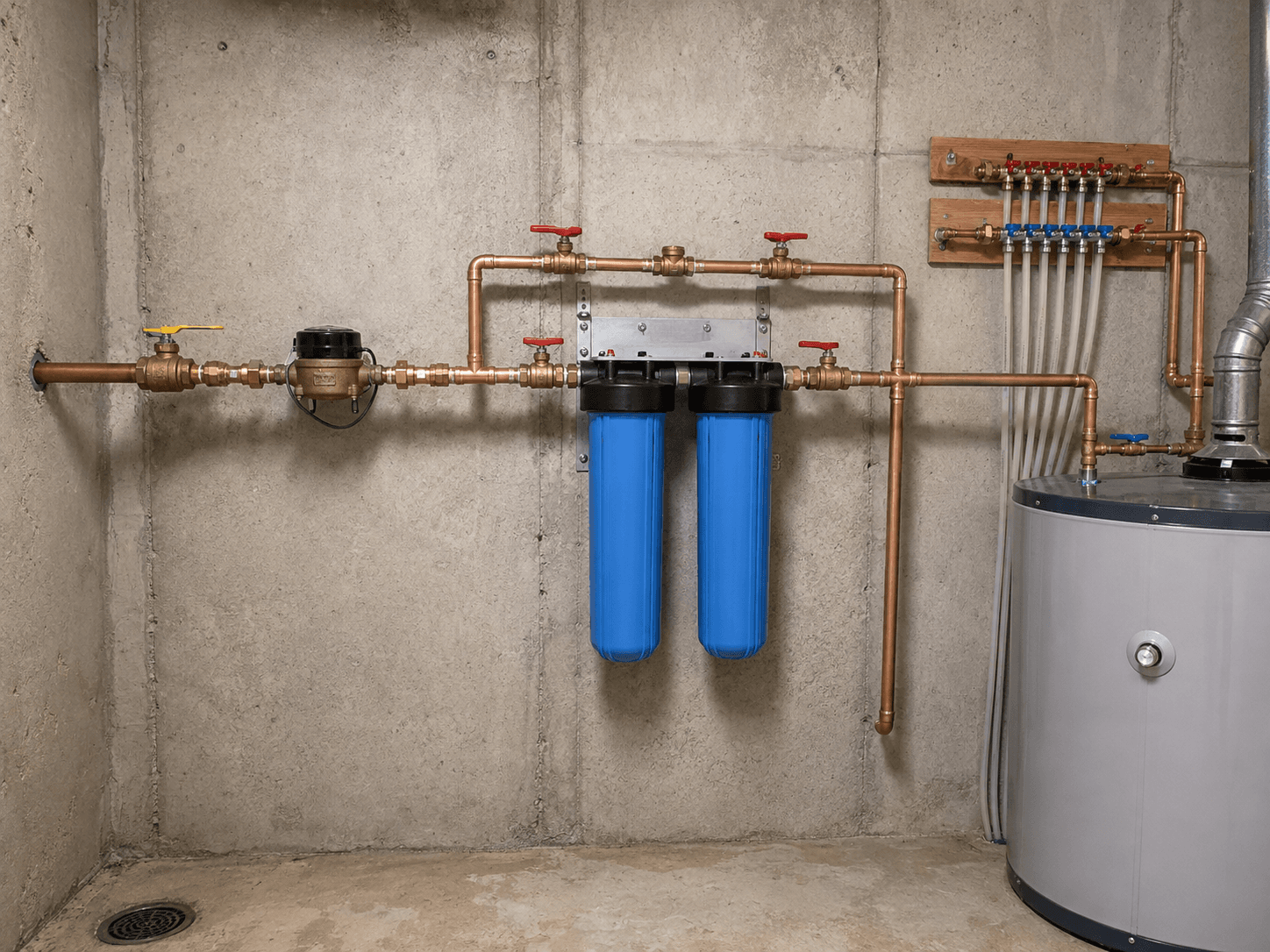
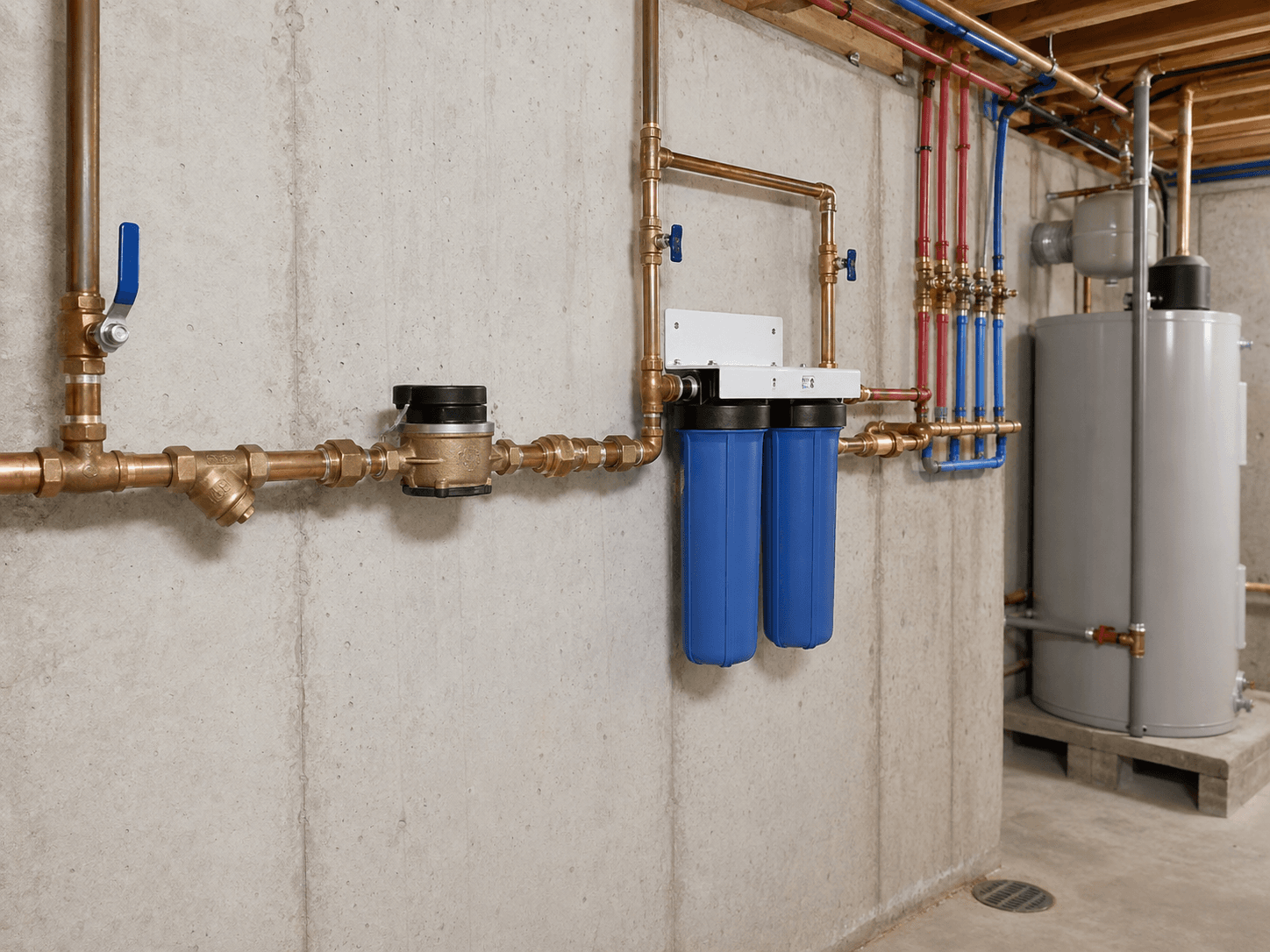
Water enters your home through a single main line. A whole house filter, also called a point-of-entry system, installs on that line so everything downstream receives treated water.
Most systems run water through two or three stages in sequence. A sediment filter comes first, catching sand, silt, and rust particles — the suspended solids that make water look cloudy, a quality measured as turbidity. Water then passes through activated carbon, which reduces chlorine, chloramines, volatile organic chemicals (VOCs), and the compounds behind unpleasant tastes and odours. Carbon works by adsorption, meaning contaminants stick to the surface of the filtration media rather than being strained out by size.
Common Types of Whole House Systems
Cartridge systems: Replaceable filters sit inside a housing on the main line. Simple, and the most common residential setup.
Multi-stage systems: Two or three housings in series, typically sediment followed by carbon block, sometimes with a third stage targeting a specific contaminant.
Backwashing media tanks: A tank of loose media that periodically flushes itself with a self-cleaning backwash cycle, so there are no cartridges to change.
Whole house reverse osmosis: Forces water through a semi-permeable membrane fine enough to remove dissolved minerals and heavy metals. The most thorough option and the most expensive.
UV disinfection: An add-on lamp that inactivates bacteria and viruses. Common on well water, and it filters nothing on its own.
Benefits of a Whole House Water Filter
Source: Reno Quotes
A whole house filter changes two things: the water you drink, cook with, and wash in, and the wear on the pipes and appliances carrying it.
What You'll Notice in the Water
Better taste and smell: Cities add chlorine to keep water safe on its way to your home. It works, but it leaves a faint pool-water taste and smell behind. Activated carbon removes it, and this is the change most people notice within a day. Some Canadian cities use chloramine instead, which is chlorine mixed with ammonia. Ordinary carbon struggles with it, so you need a type called catalytic carbon. Worth asking your municipality which one they use before you buy.
Clearer water: Sediment is the sand, silt, and rust flakes that make water look cloudy and leave grit in the bottom of a glass. A sediment filter catches it before it reaches a tap.
No more orange staining: Iron is what turns tub rings, toilet bowls, and white laundry a rust colour. It takes very little to do it — Health Canada notes that water starts to discolour at levels well below what you could taste or smell. Iron also feeds bacteria that leave a slimy film inside pipes. Removing the iron stops both problems.
Chemicals you can't see or taste: Carbon also captures VOCs, or volatile organic chemicals. These are things like solvents and fuel residues that can seep into groundwater. This matters most if you live near old industrial land, a gas station, or farmland.
PFAS: These are the "forever chemicals" — man-made compounds that don't break down, now found in water supplies across Canada. Health Canada set a limit in 2024 of 30 nanograms per litre for 25 of them combined. Three technologies remove more than 90% of certain PFAS: activated carbon, reverse osmosis, and anion exchange, which is a resin that trades contaminants for harmless particles. A basic sediment filter does nothing for PFAS.
Lead: Older homes may have lead in their pipes, solder, or brass fittings, and it dissolves into the water sitting in them. A carbon block filter rated for lead removal will capture it, and so will reverse osmosis.
What Stops Happening to Your Plumbing
Less wear on appliances: Sediment is abrasive. It wears out the valves in dishwashers and washing machines, clogs the small screens where water enters them, and settles in the bottom of your water heater. Filtering it at the main line keeps it out of all of them.
Protection from corrosive water: Acidic water slowly eats at metal pipes and dissolves lead and copper into whatever comes out of the tap. Health Canada points to pH — the measure of how acidic or alkaline water is — as the main factor behind this. A carbon filter won't change pH. That requires a neutralizing filter, which runs water over crushed limestone to raise it. It's a common addition on well water, which is often naturally acidic.
A caution about energy savings: Many companies advertise lower energy bills, and the claim is thinner than it sounds. Scale is the chalky mineral crust that hard water leaves inside a water heater. One study of home water heaters found that softened water left only about 1% of the scale that hard water did, which is a real difference. But the same study found that small amounts of scale barely changed how efficiently the heater ran. The honest benefit is a heater that lasts longer, not a smaller hydro bill.
One more thing worth knowing: a filter does not soften water. Scale comes from hardness, meaning calcium and magnesium, and removing that takes a water softener — separate equipment, separate cost.
Whole House Water Filter Costs in Canada

Source: Reno Quotes
System | Equipment | Installed |
Sediment and carbon | $500 to $1,500 | $800 to $2,000 |
Multi-stage cartridge | $1,000 to $3,000 | $2,000 to $4,500 |
UV disinfection | $400 to $1,200 | $700 to $1,800 |
Water softener | $600 to $2,500 | $900 to $3,000 |
Whole house reverse osmosis | $1,500 to $5,500 | $2,000 to $7,500 |
What Drives the Price
Two homes can receive quotes that differ by thousands of dollars for reasons that have nothing to do with the equipment brand.
Number of stages: Each additional housing or media tank adds equipment and plumbing.
Flow rate capacity: A system built for a five-bathroom home costs more than one sized for a condo.
Water conditions: Well water with iron, manganese, or bacteria typically needs two or three technologies working together rather than one cartridge.
Main line accessibility: An exposed line in an unfinished basement is a straightforward job. A line behind finished walls or in a crawl space adds hours.
Permits: Some municipalities require a plumbing permit. For example, the City of Toronto charges $150 to $400.
Installation on an accessible main line usually takes 3 to 5 hours of labour, and prices in the Greater Toronto Area, for instance, sit toward the upper end of the ranges above.
Ongoing Maintenance Costs
Item | Cost | Interval |
Sediment pre-filter | $30 to $80 | Annually |
Carbon cartridge | $50 to $120 | Annually |
Reverse osmosis membrane | $80 to $200 | Every 2 to 3 years |
UV lamp | $60 to $150 | Annually |
Service call | $100 to $200 | As needed |
Over ten years, a mid-range multi-stage system installed at $3,000 with roughly $150 a year in cartridges and an occasional service call lands near $5,000 in total ownership cost. Worth calculating before comparing a purchase against a rental, since the monthly figure on a rental agreement rarely gets presented as a ten-year total.
Renting Versus Buying
Most Canadian water treatment companies offer both rental and purchase options, and the right choice mostly depends on how long you plan to stay in the home.
Buying costs more upfront but the cost ends there. A rental agreement spreads it into a monthly fee that typically bundles equipment, installation, and scheduled servicing, so filter changes and repairs don't arrive as separate bills — though over a long enough period you will pay more than the purchase price. Many companies also offer financing or flexible payment plans on purchases, which splits the difference.
Two things to check before signing a rental agreement: the contract term, and what happens if you sell the house. Some agreements transfer to the new owner and others require a buyout.
When comparing installed quotes, confirm what each price includes. A complete installation covers the shut-off and bypass valves, the labour of a qualified technician, and removal of old equipment if you're replacing a system. Some newer systems also include monitoring that tracks filter life and flags servicing, which is worth having if you'd rather not track replacement intervals yourself.
Choosing the Right System for Your Water
Source: Reno Quotes
Start With a Water Test
Test your water before buying anything. A filter only helps if it targets what's actually in your supply, and testing costs a fraction of the wrong system. In Nova Scotia, as a reference point, a bacteria test runs about $30 to $50 and a full chemical package $200 to $300.
A complete test reports far more than contaminants. Nova Scotia's recommended panel covers hardness, pH, turbidity, total organic carbon (TOC), total dissolved solids, and metals including arsenic, lead, iron, manganese, and uranium. Total organic carbon matters because it's the material that reacts with chlorine to form disinfection by-products. If your property sits near former industrial land or a fuel storage site, ask separately about petroleum hydrocarbons and industrial solvents — the standard package doesn't include them.
Interpreting the report is where most homeowners stall. The results determine the equipment, so it's worth having trusted professionals review the numbers before you commit.
Matching Technology to the Problem
Problem | What addresses it |
Sediment, grit, turbidity | Sediment filter, typically 5 to 50 microns |
Chlorine, taste and odour | Activated carbon |
Chloramines | Catalytic carbon |
VOCs, industrial solvents | Activated carbon |
Iron, manganese, rust stains | Oxidizing or backwashing media filter |
Hydrogen sulphide (rotten-egg smell) | Oxidizing filter or KDF media |
Hardness and scale | Water softener (NSF/ANSI 44) |
Bacteria and viruses | UV disinfection (NSF/ANSI 55 Class A) |
Lead and heavy metals | Carbon block (NSF/ANSI 53) or reverse osmosis |
PFAS | Granular activated carbon, reverse osmosis, or anion exchange |
Low pH, corrosive water | Calcite neutralizing filter |
Most homes with real water problems need two or three of these in sequence, not one. Order matters: sediment removal goes first so the finer media downstream isn't fouled by particles it was never meant to catch.
Sizing the System to Your Household
Source: Reno Quotes
Sizing is measured as flow rate, in gallons per minute (GPM), and it's the specification homeowners most often get wrong. A filter rated below your household's peak demand becomes a bottleneck that restricts flow to every fixture downstream.
Peak demand is what happens when a shower, a dishwasher, and a washing machine run simultaneously — not what the household uses on average. Individual fixtures draw roughly:
Fixture | Flow rate |
Shower | 2 to 4 GPM |
Kitchen sink | 2 to 3 GPM |
Dishwasher | 2 to 4 GPM |
Washing machine | 3 to 6 GPM |
Bathtub | 3 to 7 GPM |
As a general guide, a three-bathroom home with four occupants should look for around 10 GPM, and a four-bathroom home with five occupants closer to 13 GPM. When your calculation falls between two ratings, round up. A high flow design costs marginally more and avoids the pressure complaints that undersizing guarantees.
Well Water Versus Municipal Water
About 9% of Canadian households rely on private wells, rising to nearly 40% in Nova Scotia, New Brunswick, and Prince Edward Island. If you're among them, water quality is your responsibility — no utility is testing it for you. Provinces generally recommend testing for bacteria every six months and chemical parameters every two years, and well water commonly carries naturally occurring iron, manganese, arsenic, or hydrogen sulphide.
Well water also frequently tests low on pH, which is what makes the neutralizing filter mentioned earlier a common addition rather than an exotic one. And because groundwater can carry bacteria, UV disinfection is standard on wells in a way it isn't on municipal supply.
On municipal water, disinfection is already handled, so filtration is usually about taste, odour, chlorine by-products, and lead leaching from older household plumbing. PFAS is the growing concern here, and if it's your reason for filtering, the system needs granular activated carbon, a reverse osmosis system, or anion exchange specifically.
Certification to Look For
Certification is what separates a verified claim from a marketing claim. Health Canada advises choosing products certified by an accredited third-party body — NSF International, the Water Quality Association, CSA Group, UL, or IAPMO.
The standards worth knowing:
NSF/ANSI 42: Aesthetic effects, including chlorine, taste, odour, and particulate.
NSF/ANSI 53: Health-related contaminants, including lead, mercury, cadmium, and asbestos.
NSF/ANSI 44: Water softeners using cation exchange.
NSF/ANSI 55: Ultraviolet systems, with Class A rated to inactivate bacteria, viruses, and cysts.
NSF/ANSI 58: Reverse osmosis systems.
NSF/ANSI 401: Emerging contaminants, including pharmaceuticals.
Certification is specific rather than general: a system certified under Standard 42 has not been verified to remove lead. Check the components as well as the system — housings, tanks, and fittings should be CSA- or NSF-certified, since materials in constant contact with drinking water can leach if they aren't.
What Installation Involves
A licensed plumber cuts into the main line, adds shut-off valves and typically a bypass so the house still has water during filter changes, then mounts the housing or tank. In a finished basement, expect additional work to reach the line.
This is not a good candidate for DIY. A main-line connection that fails floods the house, and improper installation can drop your incoming pressure enough to affect showers and appliances upstream of the fix. For related budgeting, see our article "Plumbing Renovation Costs: What Should You Budget for 2026?"
In Conclusion
A whole house water filter earns its cost when you have a specific, identified problem: visible sediment, chlorine taste, rust staining, or well water carrying iron, manganese, or bacteria. Be clear-eyed about which benefits apply to your situation — filtration improves water quality and keeps debris out of your appliances, but scale and corrosion are separate problems requiring different equipment.
Budget $800 to $4,500 installed for most systems, plus roughly $100 to $300 a year in filter replacements. Since installed prices vary considerably by system type, water conditions, and how accessible your main line is, comparing several quotes is the most reliable way to know whether a price is fair.
Frequently Asked Questions
How long do whole house water filters last?
Filter life depends on the stage and your water quality. Sediment pre-filters typically last three to six months, carbon cartridges six to twelve months, and reverse osmosis membranes two to three years. Heavy sediment loads shorten all of these. The housings and tanks themselves generally last ten years or more.
Will a whole house filter reduce my water pressure?
A correctly sized system causes little noticeable change. Pressure loss happens when the filter is undersized for the home's flow rate, or when a cartridge is overdue for replacement and clogged. Sizing to your household's peak demand prevents the problem.
Does a whole house water filter soften water?
No. Filtration removes particles and chemical contaminants, while softening removes the calcium and magnesium that cause hardness and scale. They address different problems, and homes with hard water often need both, installed in sequence.
Can a whole house filter remove PFAS?
Some can. Granular activated carbon, reverse osmosis, and anion exchange all achieve high PFAS removal rates according to Health Canada. A basic sediment filter will not. Look for certification to NSF/ANSI 53 or 58 that names PFOA and PFOS specifically.
Looking for something else?
Related articles
The latest industry news, interviews, technologies, and resources.
Cynthia Pigeon
•12 May 2026
Replacing a bathtub with a shower in Canada is a strategic renovation that generally costs between $5,000 and $12,000, depending on the materials, the existing plumbing, and the complexity of the work. This upgrade can improve the functionality, comfort, and perceived value of a home, especially when it supports accessibility, aging in place, or a more modern bathroom layout. Given that this type of project may involve plumbing, drainage, waterproofing, ventilation, and sometimes floor preparation, it is important to plan carefully. Depending on the province or municipality, plumbing work may need to be completed by a licensed plumber or qualified contractor. In many bathtub-to-shower conversions, the existing drain may also need to be assessed or upgraded to meet the requirements of the new shower installation.
Cynthia Pigeon
•03 Nov 2025
Time is rarely in your favour when it comes to sanitation facilities, and it is to be expected that your bathtub will start to look dull, the stains harder to remove and the scratches more apparent.

Editorial Team
•25 Jul 2025
Between Bricks and Binders is the podcast that bridges the gap between construction entrepreneurs and the business world. In this introduction episode, Frédérique from RenoQuotes and Ronaldo share why this podcast was created and what you can expect from future episodes.

Cynthia Pigeon
•24 Apr 2026
Are you envisioning transforming your outdoor space into a haven of relaxation and beauty? Whether you're already the proud owner of a house boasting a patio, greenhouse, pergola, or veranda, or you're contemplating adding these features to your property, the choice of roofing material is crucial.

Cynthia Pigeon
•08 Nov 2023
Are you looking to close off your double living room, kitchen, closet, or guest bedroom? The space itself is already divided, all you need is a door, really. Hinged, swinging, sliding, pocket, folding, pivoting: there are a ton of door models out there, and you are bound to find one that will fit your needs, and that will not clash with your decor.