
Pressure washers are a quick and excellent way to get rid of debris that has built up over winter, as well as other dirt and grime that happens to be stuck on your outdoor surfaces. Driveways, cars, the side of your home and concrete floors can all benefit from a pressure wash, and the end results will surely leave friends and neighbours wondering how you managed to get things so clean.
These instruments can be purchased or rented for a day or two depending on the needs of the homeowners. Once acquired, it is important to know the correct method to use a pressure washer. Although straightforward to use, a pressure washer is a powerful machine that needs to be handled correctly and safely. If you’re all ready to clean using this type of equipment, follow our concise steps on how to get the cleanest surfaces with the smallest amount of damage!
Here’s how to correctly operate a pressure washer!

Source: Canva
1-Know your machine!
There are two types of pressure washers, and these are gas powered and electric powered. Regardless of how they are powered, pressure washers require access to a garden hose, as they will pressurize the water and force it out through the spray wand. The cleaning job will directly depend on the amount of power distributed to the wand, and higher power will cause the water to work harder.
Electric pressure washers should be employed for lighter cleaning jobs, such as car washing or floor cleaning. Electric powered washers usually cost less than gas-powered washers. Make sure when using an electrically powered pressure washer that it is connected to an outlet that is protected by a ground fault circuit interrupter, as this will help homeowners to avoid electrocution.
Gas powered pressure washers are more common than electric washers, and this type is made for tough cleaning jobs as they deliver higher power. Since this type of washer uses more power, more water is required. Gas-powered washers are best to rent, as buying one new can often cost a pretty penny.
2- Preparations before using a pressure washer
Source: Canva
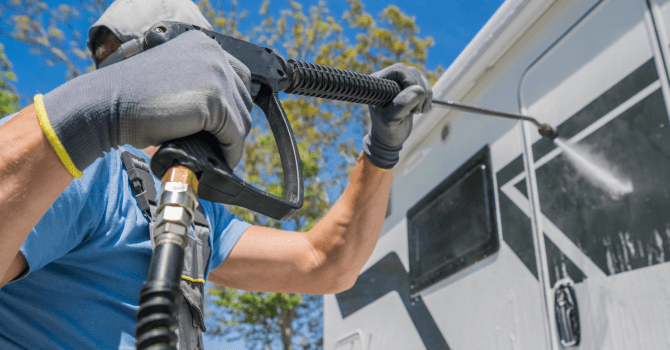
Before starting the job, make sure you are dressed for it. Wearing the proper gear to operate your pressure washer is important, and this includes wearing protective footwear as well as safety goggles. Footwear should be compatible with wet surfaces, so avoid anything that isn’t slip-proof, as you won’t want to take a fall while using your pressure washer!
Depending on the job, long pants and sleeves are also recommended, as there is a risk of dirt and debris flying! Also, prepare the area that you’re washing by removing all breakable or sensitive objects from around the surface. If your pressure washer is gas, start by filling it with engine oil or gasoline. Hold the start grip and pull to start the engine. An electric power washer will simply need to be plugged into a properly grounded outlet.
3- Prepare the pressure washer
Next, connect your pressure washer to the garden hose. There will be an available inlet in your pressure water where the hose should easily fit. Make sure to turn on the water supply before starting the pressure washer, as this will avoid causing any damage to the washer’s pump. Then, fill the bucket that will hold your cleaning solution.
Choose a solution that has been specifically made for use in the pressure washer. Now, you will want to attach the proper spray tip to the pressure washer nozzle. Certain tips are used for certain things, and will drastically affect what you clean as well as how you clean it. Choose the right tip for the right job and you’re all set to start pressure washing!
4- Wash!

Source: Canva
Now, position the spray tip between 2 to 3 feet from the surface you are planning on washing. As you begin, move the tip gradually closer to the surface. Bear in mind that having the tip too close to the surface risks damaging it or causing water to spread underneath which could lead to deterioration later. Further, hold the nozzle of the pressure washer at a 45-degree angle, helping to steer debris that has come loose away from your person.
Next, pull the trigger and begin spraying the surface, moving in a side-to-side motion and never resting in one spot for too long. If you are only using water, work in a top to bottom motion in segments. If you are applying detergent, allow it to soak into the surface for a moment before rinsing it away with water though make sure that it doesn’t dry as this will stain the surface! Clean surrounding surfaces if any spray from the washer has affected them, including wiping down windows and doors.
Once you have completely cleaned the surface and your job is done, follow the pressure washer or manufacturer instructions to flush the system of detergent.
For a gas-powered pressure washer, expect to pay between $400 and $2,000 on average. The electric model, on the other hand, typically costs between $100 and $600. If you don’t want to purchase a unit, why not rent one? The gas-powered model is available for around $100 to $200 per day, while the electric model will cost approximately $30 to $50 per day.
Get 3 renovation quotes for your pressure washing project
RenoQuotes.com can help you get quotes for. By submitting your pressure washing project to us, we’ll put you in contact with top-rated contractors. Fill in the form on the homepage (it only takes a few minutes), and you will get estimates from trusted professionals.
Dial 1-844 828-1588 to speak with one of our customer service representatives.
Looking for something else?
Related articles
The latest industry news, interviews, technologies, and resources.

Cynthia Pigeon
•03 Nov 2025
Regardless of style or material, windows all serve the same purpose: To create an unimpeded view of the outside world and allow one to view its beauty throughout the seasons.

Léa Plourde-Archer
•08 Nov 2023
With the new year starting and the wind of renewal that is blowing in, paint companies are currently announcing their colour of the year. These companies are offering eclectic and creative palettes, which perfectly follow the trends of the coming year.
Editorial Team
•06 Jul 2025
Every self-build project inevitably begins with the following question: how much will it cost? It’s nearly impossible to set aside this important consideration.

Editorial Team
•28 Jan 2026
Flat roofs are increasingly sought-after in both residential and commercial sectors due to their design advantages and versatility. All things said, how much does it cost to build or renovate such a roof? What materials can be used, and how variable are the repair costs? What factors are likely to affect overall roofing project costs? This detailed financial guide is an overview of the options available, price points, and factors to consider to plan a realistic budget and make informed decisions when planning a new roof-building project.
Editorial Team
•23 Jul 2025
Given that your kitchen floor is exposed to it all, from dirt, grime, and wear and tear from heavy foot traffic, boiling and oily spills from falling pots and pans, flooring has to be as tough and resilient as they come. Yet, it still has to look good, stylish even, blending seamlessly with the overall decor.