8 things that are overlooked during home renovations | Reno Quotes
By Amanda Harvey
Updated on May 14, 2026

Remoulding and upgrading your home is a necessary venture every once and a while. There are plenty of reasons why you might choose to renovate your home, including wanting to add space, upgrading surfaces and materials or because your home needs appliances to function smoothly. Of course, any form of home renovation is a big undertaking, and oftentimes, several important aspects are overlooked.
Before you get started, it’s necessary to make sure you know exactly what you’re getting involved in. While television shows and magazines may make home renovations look like a straightforward process, the reality is that they are not. With that in mind, here is a list of...
8 things that are often overlooked during home renovation projects!
1) Don’t assume every home renovation will be the same

source: Pixabay
Before starting any DIY or home renovation project, make certain that you know exactly what you’re getting yourself into. Often, the smallest yet more important aspects are completely overlooked. Determine your own skill set and what is needed for you to safely and smoothly execute the renovation project.
Some renovation projects will require a specific set of expertise that you might not be aware of in the initial steps. For example, if your project requires any form of electrical work, it is best to leave this to a professional or an electrician. Working with electricity can be exceedingly dangerous if you aren’t sure exactly what you’re doing, even if you’ve read a manual or two (also note that in some places, working on electricity without a licence is illegal). Be realistic about your skill set and take on projects that you know you can handle.
2) Never underestimate the budget
Before launching any renovation project, it is important to map out your budget carefully. However, no matter how much you plan, it is still possible for serious problems to arise and thus, for you to end up spending more than your budget. Unfortunately, most remoulding and renovation projects will involve unforeseen issues that no amount of homework can resolve. Ripping up flooring or walls can reveal rooting or mould, deterioration, leakage or lack of sealing. Therefore, plan to spend more than what you budget.
3) Consider building and municipal codes and regulations
You may feel completely prepared for your next renovation project, but half-way through, the city or local authorities show up on your doorstep. What’s next? Unfortunately, this is a real possibility, as many homeowners completely overlook the fact that local building and municipal codes may be in effect for the type of work that is being completed.
If your renovation project involves any form of outdoor work, including digging outdoors or indoors, repairing or resetting your foundation, or installing any form of electrical wiring, plumbing, or updating structural components, you should contact an inspector or complete ample research to make sure you aren’t in need of a permit. If you think your renovation might cost a lot, make sure you don’t get stuck with a hefty fine for overlooking a permit for your project.
4) Factor in more time than you intend
In the same regard as your renovation budget, the time you intend on taking may be carefully organized. However, the time it takes to complete a project, no matter how big or small, should not be underestimated. A home improvement show may complete the same project in a matter of days, but it’s important to remember that this isn’t necessarily realistic.
Home improvement shows employ many different people working behind the scenes to help complete all projects. If you’re taking on a DIY job with only yourself and a few others, it will likely take much longer then anticipated or planned. Further, you need to take into consideration your skill and experience levels. If you are undertaking an unfamiliar renovation, it might take some initial time to get comfortable. Consider this when planning your schedule, especially if you must take a bit of time off from your job!
5) If you are hiring a contractor, do not underestimate meeting with them!

source: Pixabay
If you’re taking on a large job and don’t feel completely qualified to undergo the project, it will be recommended that you hire a contractor. When hiring a contractor, meeting with them and explaining exactly what you want is essential.
Bring along a collection of photographs that will offer the contractor an idea of what exactly you’re looking for, as a verbal explanation may sometimes not fully convey what you want. Of course, your renovation may not turn out exactly like the pictures you provide, but at least yourself and your contractor will have the same vision in mind.
6) Do not risk your safety for a cheap or quick renovation
As we’ve mentioned, if you don’t feel like you’re qualified to take on the renovation it is recommended that you hire a professional. Home renovations can be risky ventures, as they require serious and specific skills. If you do decide to take on the project yourself, make sure to wear protective clothing including eyewear, gloves and fall-safety clothing. If you are using a ladder or any equipment you are unfamiliar with, make sure that you read up on how to use them as well as testing them out in a concentrated environment beforehand.
7) Don’t start renovations without a proper plan
As we have stated, a plan is paramount to the success of any renovation project. Often, you may feel completely prepared without having all the materials on hand. Maybe you’re eager to get started, but it’s important to make sure you have everything necessary to your home renovation project before beginning. Just think, you wouldn’t want to rip up a floor or tear down a wall to discover the pieces you need aren’t available or won’t be arriving for weeks. Wait until everything is in your possession and then go ahead with your renovation.
8) Consider how the project will affect your home

source: Pixabay
So, you’ve carefully mapped out a plan, gathered materials and taken the necessary measures to make sure everyone is safe during your home renovation project, but what about the rest of the house? You may be focusing so much attention on the project itself that you may forget to consider how this will affect your living situation.
Will you be able to continue to live in your home? Will you be staying with friends or should you factor in the cost of your hotel? Will hot water and electricity continue to run? Make sure to consider your home renovation project from every angle, and then you'll be certain it can be executed as smoothly as possible.
Looking for something else?
Related articles
The latest industry news, interviews, technologies, and resources.
Editorial Team
•08 Nov 2023
The doors of your home play a significant role in keeping things looking and feeling comfortable. Your front door is a portal into the interior, whilst the doors of each individual room allow for privacy and maintain proper temperatures.

Editorial Team
•08 Nov 2023
If you’re lucky enough to have a deck or an outdoor space of some kind adjacent to your home, you also know, without a doubt, that it’s a huge responsibility. While a deck is a super-valued and sought-after commodity, it can also quickly turn into a thing of pure chaos.

Christine Simard
•08 Nov 2023
Are you one of those people who tend to be nostalgic for past eras and not too fond of modern decors? If polka dots, bright colours and geometric forms are all things you like, maybe it's time to give your home a little retro makeover! Here are some examples that could inspire you!
Cynthia Pigeon
•17 Aug 2026
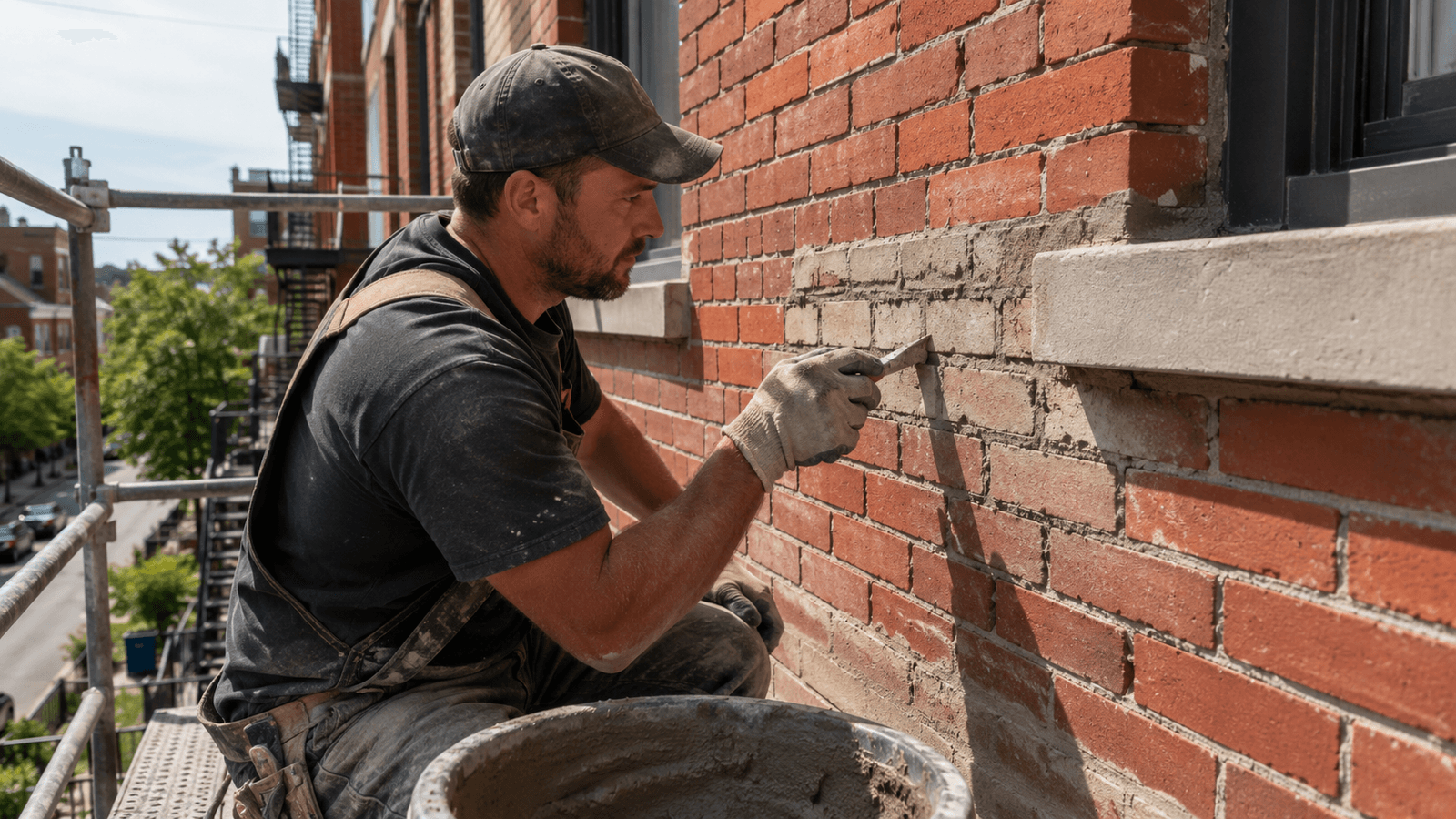
In Quebec, brick cladding is a defining architectural feature. Whether it is a 1970s bungalow in the Québec City area, a century-old plex with a red-brick facade in Montréal, or a heritage commercial building, masonry offers remarkable durability. However, while clay brick can last for more than a century, the mortar that binds the masonry units gradually deteriorates over time and is affected by weather (wind and precipitation).

Editorial Team
•13 May 2026
Mould or mold, no matter how you spell it, it’s universally abhorred by all residential and commercial building owners. Mould is a fungal species that's especially skilled at embedding itself on various parts of a structure.