Cellulose vs Fibreglass Insulation: Which is right for your home?
By Editorial Team
Updated on August 12, 2026
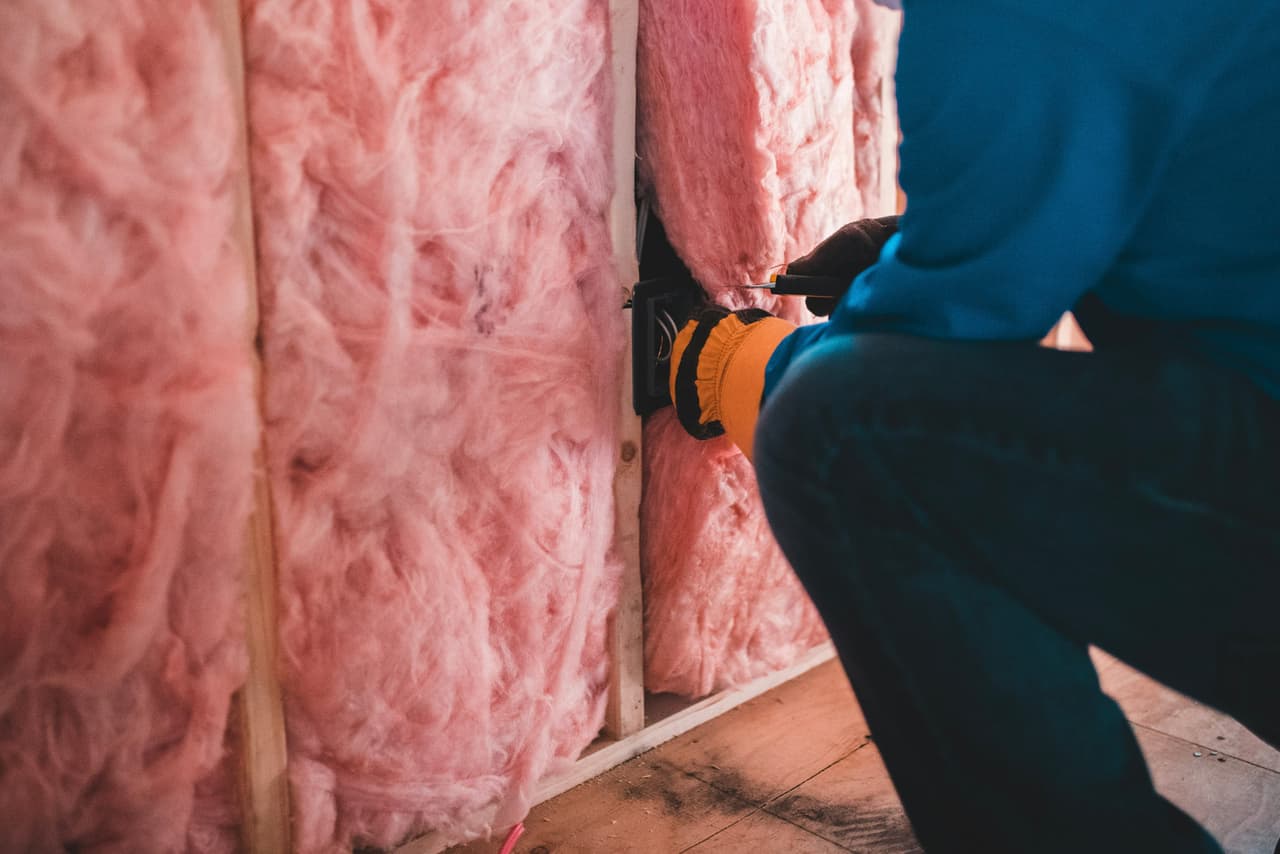
When comparing cellulose vs fibreglass insulation, there is no single winner for every Canadian home. Cellulose generally provides a higher R-value per inch and fills irregular spaces effectively, while fibreglass offers strong fire resistance, broad availability, and several installation formats.
As homeowners enter the final renovation sprint before winter, insulation upgrades often compete with indoor remodels, basement finishing, and last-minute exterior work. If improving comfort and reducing heat loss is on your list, choosing the right insulation now can help you complete the project before colder weather sets in. The better option depends on where the insulation will be installed, the condition of the space, your target R-value, moisture risks, installation quality, and budget.
Cellulose and Fibreglass Insulation at a Glance
Source: RénotechM. Construction inc.
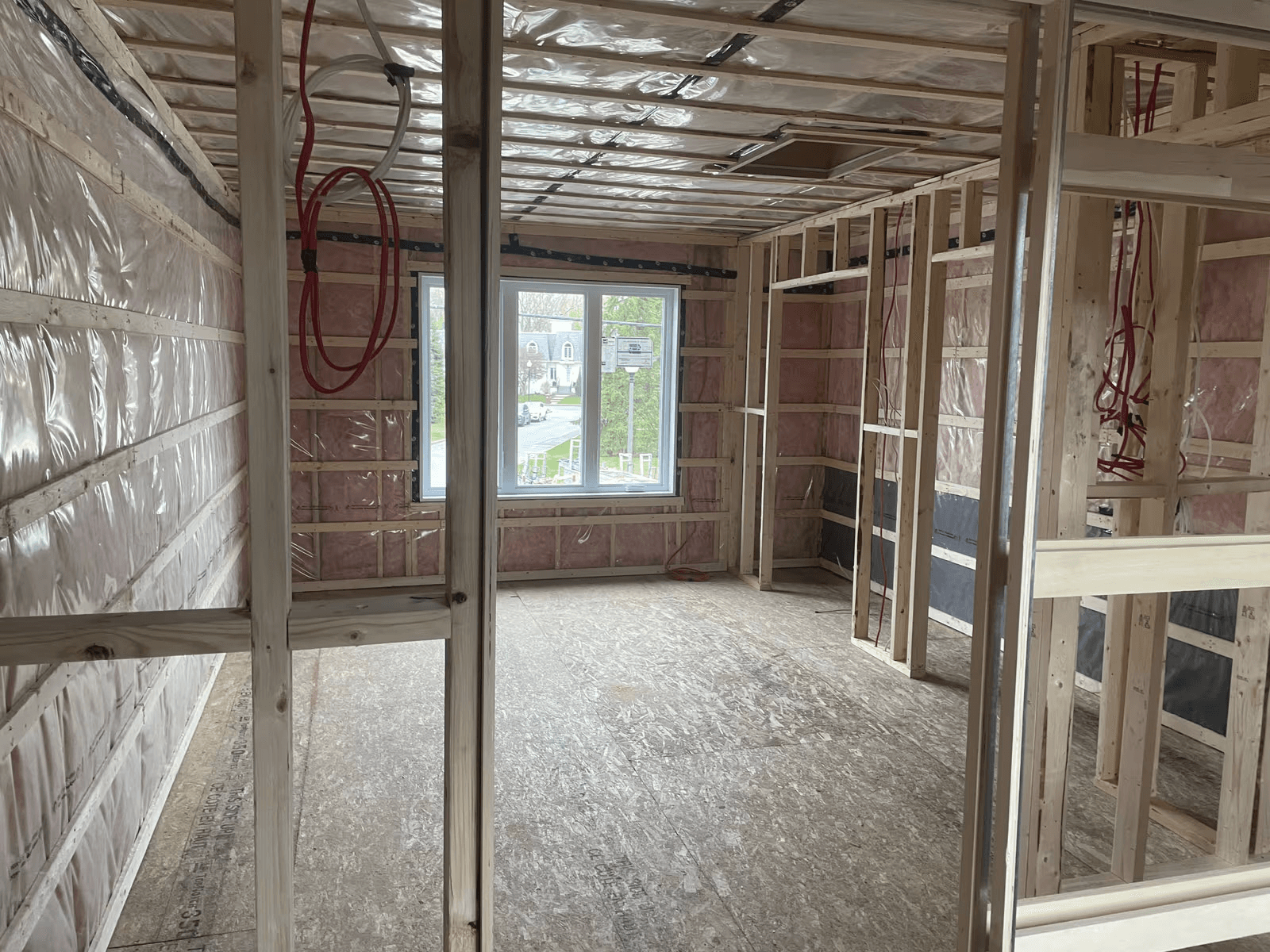
Cellulose is a fibre insulation typically made largely from recycled paper and cardboard. Fire-retardant additives are incorporated into the material, and many products use borate-based treatments. It is most commonly installed as loose-fill or dense-pack insulation in attics and wall cavities.
Fibreglass insulation is made from fine glass fibres, using materials such as sand and recycled glass. It is available as batts, rolls, and blown-in insulation, making it suitable for a wide range of walls, floors, ceilings, and attic applications.
Factor | Cellulose | Fibreglass |
Typical composition | Mostly recycled paper fibre with additives | Glass fibres, often incorporating recycled glass |
Common forms | Loose-fill, dense-pack, wet-applied | Batts, rolls, loose-fill |
R-value | Often around R-3.6 to R-3.7 per inch for loose-fill or dense-pack products | Varies considerably by product and installation method |
Typical installed cost | About $1.50 to $3 per square foot for blown-in cellulose | About $1.75 to $3.50 per square foot for blown-in fibreglass; fibreglass batts may cost about $2 to $3 per square foot |
Fire behaviour | Combustible base material treated with fire retardants | Glass fibre itself is non-combustible |
Moisture | Can absorb and redistribute some moisture but should not remain wet | Does not readily absorb water into the glass fibres, but moisture in the assembly can still reduce performance |
Recycled content | Typically high | Varies by manufacturer and product |
Installation | Usually blown into place | Batts, rolls, or blown-in |
Settling | Loose-fill products are installed to account for settling | Some blown products are designed to resist significant settling |
Key Aspects to Consider
Source: KC Renovation
Thermal Performance and R-Value
R-value measures a material's resistance to heat flow. A higher number indicates greater thermal resistance, but the R-value printed on an insulation product only tells part of the story.
Loose-fill cellulose commonly provides roughly R-3.6 to R-3.7 per inch, depending on the product and installed density. Fibreglass R-values vary more widely because batts, rolls, and loose-fill products have different densities and specifications.
Cellulose therefore often provides more insulating power per inch than loose-fill fibreglass. This can be useful where cavity depth is limited.
However, installation quality can matter as much as the insulation material itself. Gaps, compression, uneven coverage, thermal bridging, and uncontrolled air leakage can reduce the effective thermal performance of an insulated assembly.
Does cellulose air-seal better than fibreglass?
Dense cellulose can restrict air movement better than loosely installed fibreglass because it fills cavities and spaces around obstructions very effectively. That does not mean cellulose should replace proper air sealing.
Before adding either material, penetrations and air leakage points around plumbing, wiring, ducts, attic hatches, and other openings should generally be addressed separately.
Moisture Resistance and Durability
Neither cellulose nor fibreglass should be expected to solve a moisture problem.
Cellulose is hygroscopic, meaning it can absorb and release moisture. Small changes in humidity do not automatically ruin the material, but persistent water intrusion can lower its insulating effectiveness and create conditions that require removal or replacement.
Glass fibres themselves do not readily absorb water, giving fibreglass an advantage when comparing the basic materials. However, fibreglass can still become wet, and moisture can collect in surrounding dust, framing, facings, and other building materials.
If attic insulation is wet because of roof leakage, condensation, or uncontrolled indoor air escaping into the attic, the moisture source should be corrected before insulation is replenished or replaced.
What about mould?
It is misleading to call either insulation entirely "mould-proof." Mould growth depends primarily on sustained moisture and the presence of suitable organic material.
Proper air sealing, vapour control, ventilation, drainage, and correction of leaks are therefore more important than choosing one fibre insulation solely because of a mould-resistance claim.
Fire and Safety Considerations
Fibreglass has an important advantage in this category: glass fibre insulation can be non-combustible when the specific product and assembly meet the applicable requirements.
Cellulose is made primarily from paper fibre, so manufacturers add fire-retardant treatments to control flame spread and smouldering. Properly manufactured cellulose insulation is tested to applicable safety requirements, but "fire-resistant" should not be confused with "non-combustible."
Regardless of the material, insulation must be installed with appropriate clearances around heat-producing equipment and fixtures. Canadian code requirements and manufacturer instructions apply, particularly around chimneys, recessed lighting, vents, ducts, and fuel-burning appliances.
Environmental Impact
Cellulose normally has the stronger case when recycled content is a priority. Many products contain up to about 85% recycled paper and cardboard, diverting fibre from the waste stream and reducing the need for virgin material.
Fibreglass manufacturers can also incorporate recycled glass into their products, although recycled content varies.
The environmental impact of insulation should not be judged on composition alone. A properly insulated and air-sealed home can reduce heating and cooling demand for many years, meaning thermal performance, durability, installation quality, and the energy saved during the product's service life also matter.
Health and Installation Safety
Both materials can create airborne particles during installation or removal.
Fibreglass fibres can irritate the skin, eyes, and respiratory system during handling. Cellulose is less likely to cause the characteristic itching associated with glass fibres, but blowing or removing cellulose can generate significant fine dust.
Protective clothing, eye protection, and suitable respiratory protection should be used according to product safety information and the work being performed. Professional installation is particularly useful when insulation must be removed, confined areas are involved, or the home contains possible hazardous materials.
Older homes also deserve extra caution. Do not disturb unidentified insulation or building materials if asbestos contamination is suspected. Appropriate testing and professional assessment may be required before renovation work proceeds.
Installation Methods and Practicality
Source: CPO Isolation
The biggest practical difference is the range of installation formats.
Fibreglass Batts and Rolls
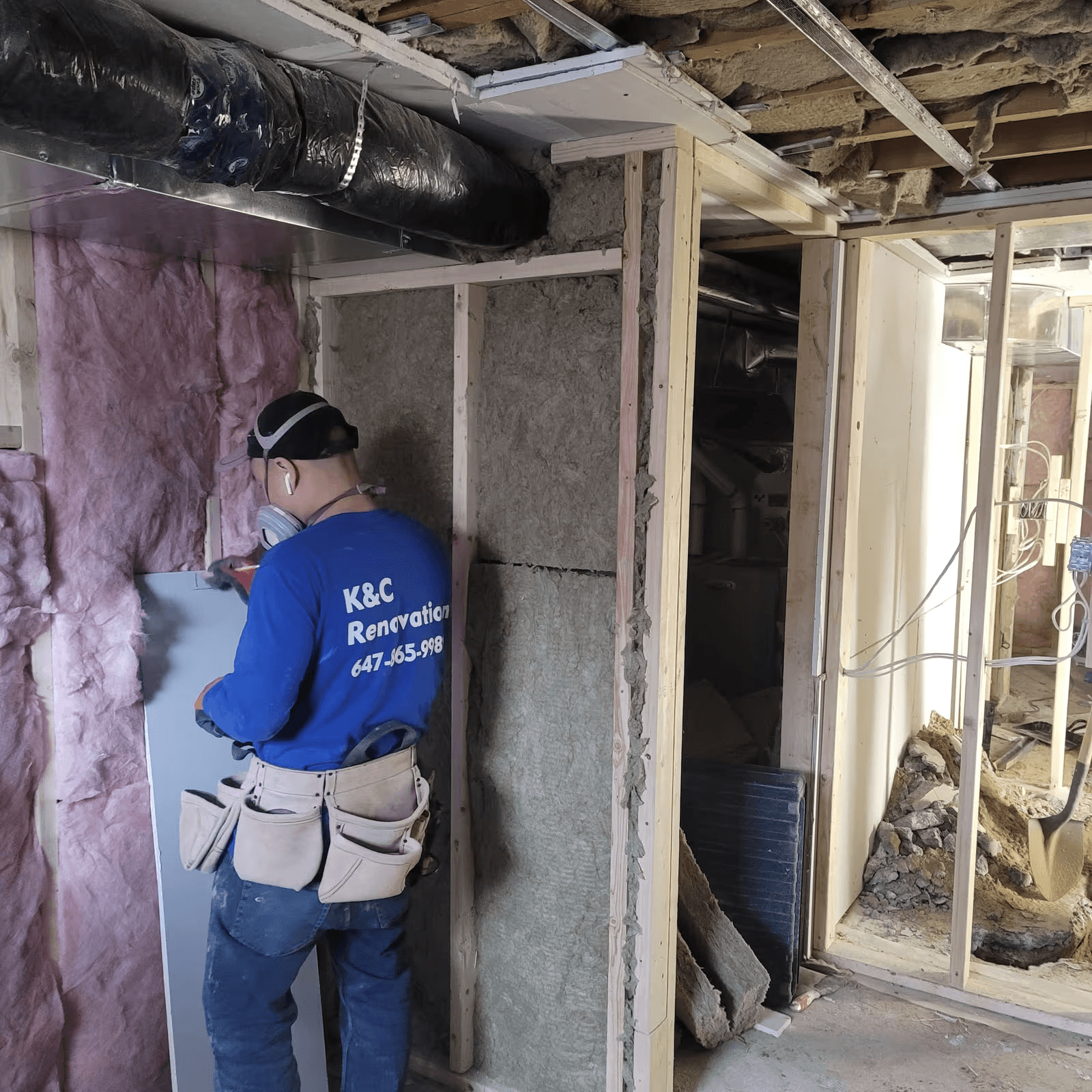
Fibreglass batts fit between standard framing members and can be convenient for open walls during new construction or major renovations. Their performance depends on careful cutting and fitting around wires, pipes, electrical boxes, and irregular framing.
Poorly fitted batts can leave gaps that reduce thermal performance.
Blown-In Fibreglass
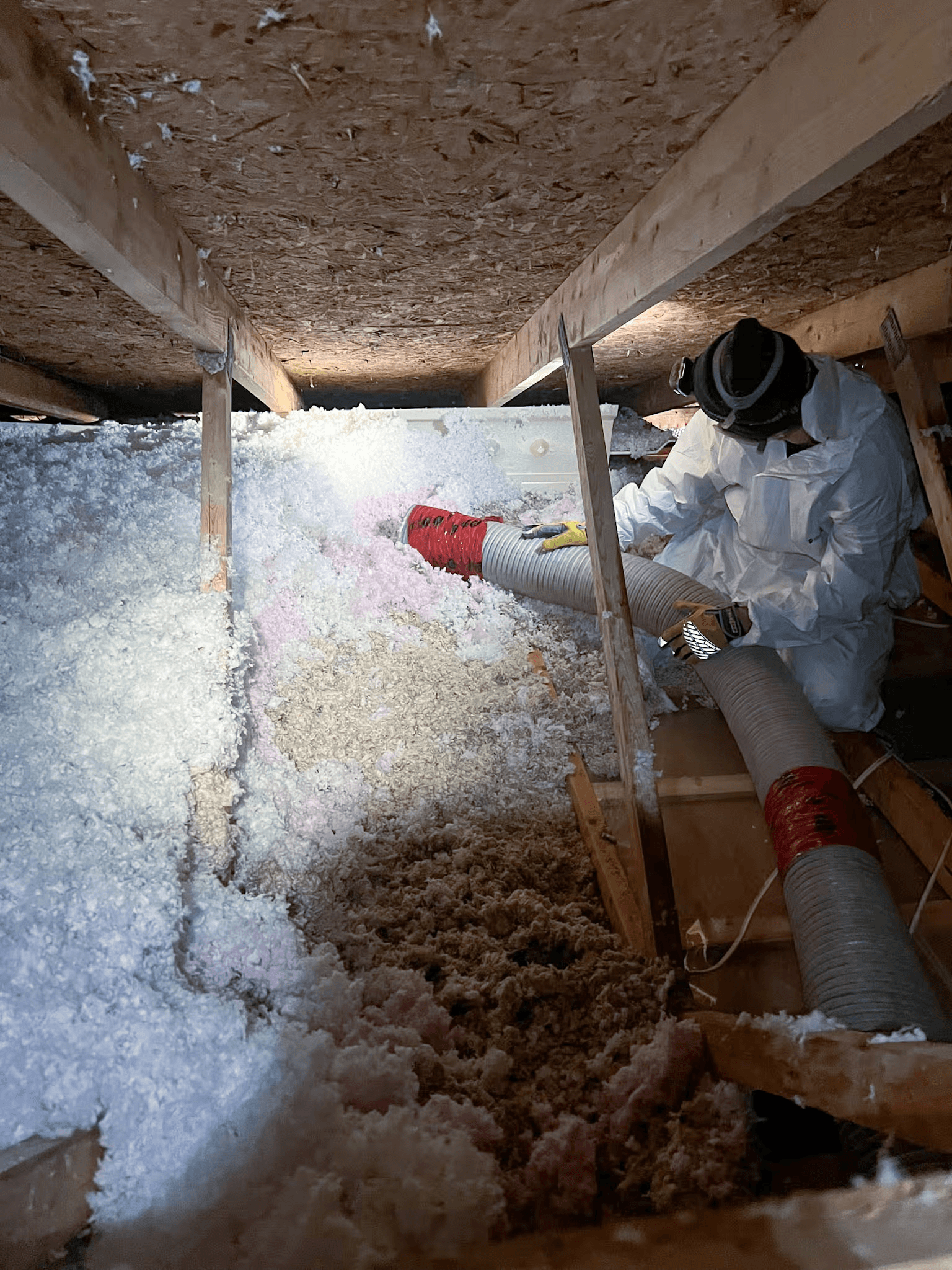
Loose-fill fibreglass is commonly blown across attic floors. Certain Canadian products are designed not to settle significantly when installed according to their coverage charts, although specifications vary by manufacturer.
Blown material can provide more uniform coverage around framing than batts.
Blown-In and Dense-Pack Cellulose
Loose-fill cellulose is widely used for attic insulation. Dense-pack cellulose can also be blown into enclosed wall and floor cavities, including some retrofit applications where installers drill access holes and fill the existing cavity.
Natural Resources Canada identifies both cellulose and glass fibre loose-fill insulation as options for certain retrofit applications.
Professional equipment and correct installed density are important. Simply adding more loose material without following the manufacturer's required depth and coverage does not guarantee the target R-value.
Cellulose vs Fibreglass Insulation Cost
For a professional attic installation in Canada, blown-in cellulose generally costs about $1.50 to $3 per square foot installed, while blown-in fibreglass costs about $1.75 to $3.50 per square foot installed. These ranges make cellulose slightly less expensive in many blown-in applications, although the final price difference may be small.
Fibreglass is also available as batts, so its cost depends partly on the installation method. As a regional example, professionally installed fibreglass batts in Alberta can cost roughly $2 to $3 per square foot. Batts can be cost-effective in accessible spaces with regular framing, while blown-in products are often better suited to attics with numerous obstructions or areas requiring more uniform coverage.
The price per square foot also changes with the target R-value. Reaching a higher R-value requires more insulation, so comparing two quotes based only on their square-foot price can be misleading. Homeowners should confirm the material, installed depth, target R-value, and scope of work included in each estimate.
Additional work can also increase the overall project cost, including:
Air sealing
Removing or vacuuming out old insulation
Moisture or mould remediation
Attic ventilation corrections
Access improvements
Vapour or air barrier repairs
Higher target R-values
Difficult attic layouts
Costs vary by region, project size, labour rates, season, accessibility, existing insulation, and local market conditions. For the most useful comparison, request quotes for the same target R-value and scope of work rather than choosing cellulose or fibreglass based on material price alone.
Advantages and Disadvantages of Cellulose and Fibreglass Insulation
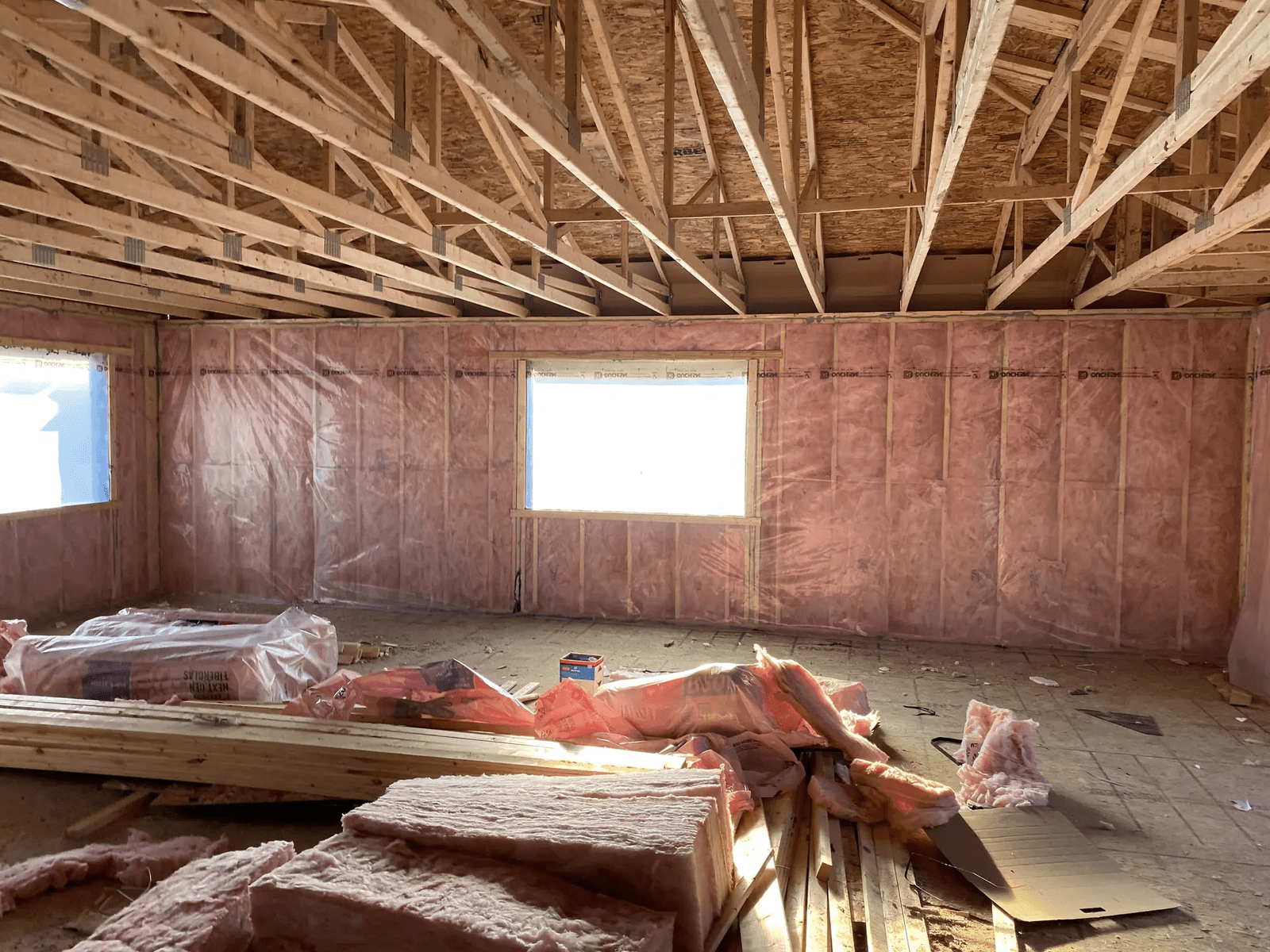
Source: Gestion Carufel Inc
Pros and Cons of Cellulose Insulation
Advantages
Higher R-value per inch than many loose-fill fibreglass products
Fills irregular cavities and spaces effectively
High recycled-paper content
Well suited to attic top-ups and dense-pack wall applications
Can help limit air movement when installed at the correct density
Drawbacks
Loose-fill material settles and must be installed according to settled-depth requirements
Can lose performance when exposed to significant moisture
Requires fire-retardant chemical treatment
Blowing creates considerable dust
Professional equipment is normally needed for dense-pack installation
Pros and Cons of Fibreglass Insulation
Advantages
Available as batts, rolls, and loose-fill products
Glass fibre can provide non-combustible insulation
Widely available
Batts work well in accessible, regularly framed cavities when fitted carefully
Certain loose-fill products are designed to maintain their installed thickness over time
Drawbacks
Poorly installed batts can leave performance-reducing gaps
Fibres can cause skin, eye, and respiratory irritation during handling
Loose-fill products may have a lower R-value per inch than cellulose
Does not eliminate the need for separate air sealing
Moisture problems can still compromise the surrounding building assembly
Common Myths About Cellulose and Fibreglass
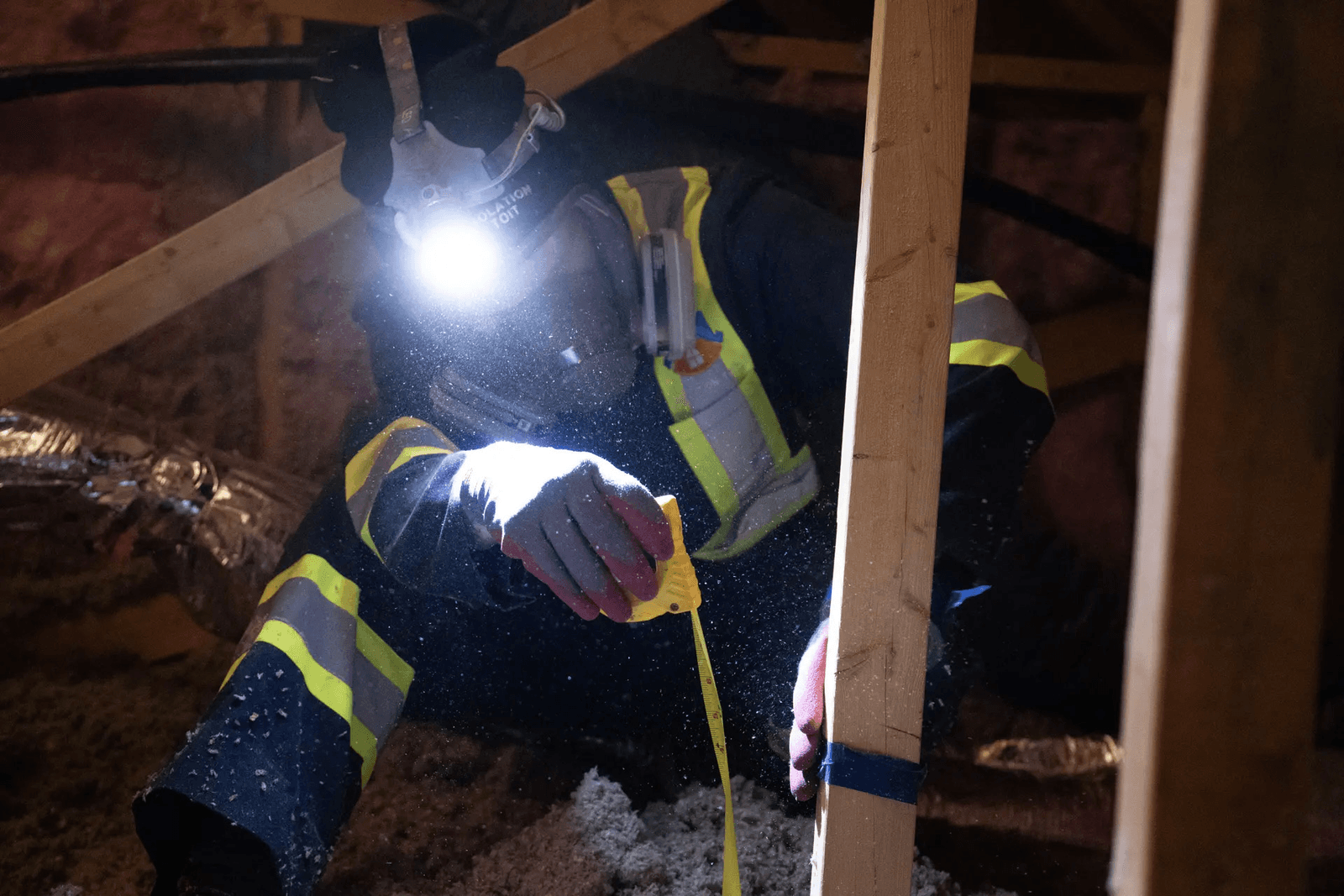
Source: Isolation Toit
Many insulation rules of thumb focus on a single characteristic, such as R-value, material type, or settling. In practice, the best insulation depends on the application, product specifications, building assembly, and quality of installation.
Myth: One Material Is Always Better Than the Other
There is no universal winner between cellulose and fibreglass. Cellulose may make sense when high R-value per inch or dense cavity coverage is a priority, while fibreglass may be preferable for other applications because it is available as batts, rolls, and blown-in material.
A well-installed product that suits the particular wall, attic, floor, or retrofit can perform better than a theoretically "better" material installed poorly.
Myth: Fibreglass Batts Always Outperform Blown-In Insulation
Batts are not automatically better because they come in a solid, preformed piece. Their thermal performance depends on fitting tightly around framing, wires, plumbing, electrical boxes, and other obstacles without gaps or excessive compression.
Blown-in cellulose or fibreglass can provide more uniform coverage in irregular spaces. Conversely, properly fitted batts can work very well in open, regularly framed cavities. Installation conditions matter more than assuming one format always wins.
Myth: The Highest R-Value Per Inch Automatically Makes the Best Insulation
R-value is an important comparison point, but it should not be the only deciding factor. The amount of available space, air leakage, thermal bridging, moisture conditions, installation density, cavity configuration, and required total R-value can all affect real-world performance.
A material with a higher R-value per inch will not compensate for gaps, poor air sealing, or an insulation system that is unsuitable for the building assembly.
Myth: Cellulose Settling Means It Inevitably Stops Working Properly
Loose-fill cellulose does settle after installation. That does not automatically mean it will lose an unacceptable amount of thermal performance within a few years.
Cellulose coverage charts account for settled thickness, and installers must apply enough material to achieve the specified R-value after settling. Problems are more likely when the material is installed at an incorrect depth or density than simply because settling occurs.
Myth: Cellulose or Blown-In Insulation Replaces Air Sealing
Blown material can fit tightly around obstructions, and dense-pack cellulose can provide some additional resistance to airflow. However, neither cellulose nor fibreglass should be treated as a substitute for a continuous air barrier and proper sealing of leakage points.
Natural Resources Canada specifically advises homeowners not to rely on batt, blown-in, or poured insulation in place of proper attic air sealing.
Myth: New Insulation Will Fix a Damp or Uncomfortable Attic
Replacing or adding insulation does not repair roof leaks, condensation, uncontrolled air leakage, drainage problems, or inadequate moisture management.
If an attic, wall, or crawlspace has an underlying building-envelope problem, it should be identified and corrected before new insulation is installed. Otherwise, even high-quality insulation may not deliver the expected results.
Myth: More Insulation Is Always Better, Regardless of How It Is Installed
Adding insulation can improve thermal resistance when a home is under-insulated, but simply blowing in more material does not guarantee better performance. The material must be installed to the correct depth, density, and coverage for the target R-value, while maintaining required clearances and ventilation pathways.
The more useful question is not "Which material is always better?" but "Which insulation system can be installed correctly for this part of the home?"
So, which insulation should you choose?
For an attic retrofit, cellulose is often attractive when you want high R-value per inch and even coverage around joists and obstructions. Blown-in fibreglass is also a practical attic option and may appeal to homeowners who prioritize a non-combustible glass-fibre product.
For open stud walls, fibreglass batts can be simple and economical when the framing is regular and installation is meticulous. Dense-pack cellulose can be especially useful for certain existing walls because it can fill cavities around obstructions without completely opening the wall.
Crawlspace and basement insulation require greater attention to moisture, air barriers, vapour control, and the location of the insulation within the building assembly. The best material therefore depends on more than R-value alone.
Cellulose or Fibreglass: The Bottom Line
Cellulose generally offers more R-value per inch, high recycled content, and excellent cavity-filling ability. Fibreglass provides versatile installation options, wide availability, and strong non-combustibility characteristics in qualifying products.
For either material, good results depend on proper air sealing, moisture management, adequate installed thickness, and correct application. A qualified insulation contractor can assess the existing assembly and determine which approach is most practical for the target R-value and conditions in your home.
FAQ
Does one insulation type create more myths than the other?
Yes, but for different reasons. Fibreglass is often misunderstood as always being itchy, unsafe, or automatically better in batt form, while cellulose is often dismissed as “just shredded paper” or assumed to fail as soon as it settles. In reality, the important question is whether the product is installed correctly and suited to the space.
Does recycled content matter if both materials reduce energy use?
Yes. Recycled content is worth considering because it affects how much virgin material is used before the insulation even reaches your home. Cellulose typically has a stronger recycled-content story, while fibreglass may still include recycled glass depending on the product. If your priority is lowering material waste as well as improving efficiency, recycled content can be a meaningful tie-breaker.
Can insulation dust affect people with allergies or asthma?
Yes. Both cellulose and fibreglass can release fine particles during installation or when the material is disturbed. Those particles may irritate the nose, throat, eyes, or lungs, especially for people with allergies or asthma. Fibreglass is more likely to cause skin and breathing irritation, while cellulose can create a lot of dust when blown in or removed. The safest approach is to avoid disturbing insulation unnecessarily and to use proper protective gear if work is required.
Looking for something else?
Related articles
The latest industry news, interviews, technologies, and resources.

Cynthia Pigeon
•06 Aug 2026
With rising real estate costs and limited land availability in major Canadian urban centres, many homeowners are looking for smart ways to make better use of their existing space. Whether your family is growing or you dream of creating a private primary suite, the solution may be directly beneath your roof.

Editorial Team
•13 Sep 2024
Insulating water supply pipes is a necessary measure that'll help protect pipes from freezing, bursting, or leaking. By insulating your pipes, you’re ensuring the safety and well-functioning of your home or business during the wintertime. It also helps reduce losses and improves the overall system.
Léa Plourde-Archer
•04 Feb 2025
The bathroom plays a crucial role in our homes, serving as both a serene retreat and a space for quick, everyday routines. As you plan a bathroom renovation, you might wonder: What changes will enhance both functionality and aesthetics? How can you create a layout that maximizes space? With a plethora of options, the first step is identifying what needs improvement, followed by thoughtful design and decor choices.

Christine Simard
•08 Nov 2023
With seasons changing fast, we suddenly feel the urge to redecorate our space. When we think of an idea for a simple, yet drastic change that is both easy and economical, repainting walls seems to be the logical option.
Cynthia Pigeon
•28 Sep 2026
Planning home renovation work in Quebec requires rigour and a strong understanding of the local economic reality. Whether you own an older duplex in Montréal, a modern condo in Québec City, or a single-family home in Estrie, using price benchmarks adapted to the Quebec market is essential.