Ceramic Tile Installation Cost per Square Foot in Canada in 2026: Budget Your Renovation Costs
By Cynthia Pigeon
Updated on May 27, 2026
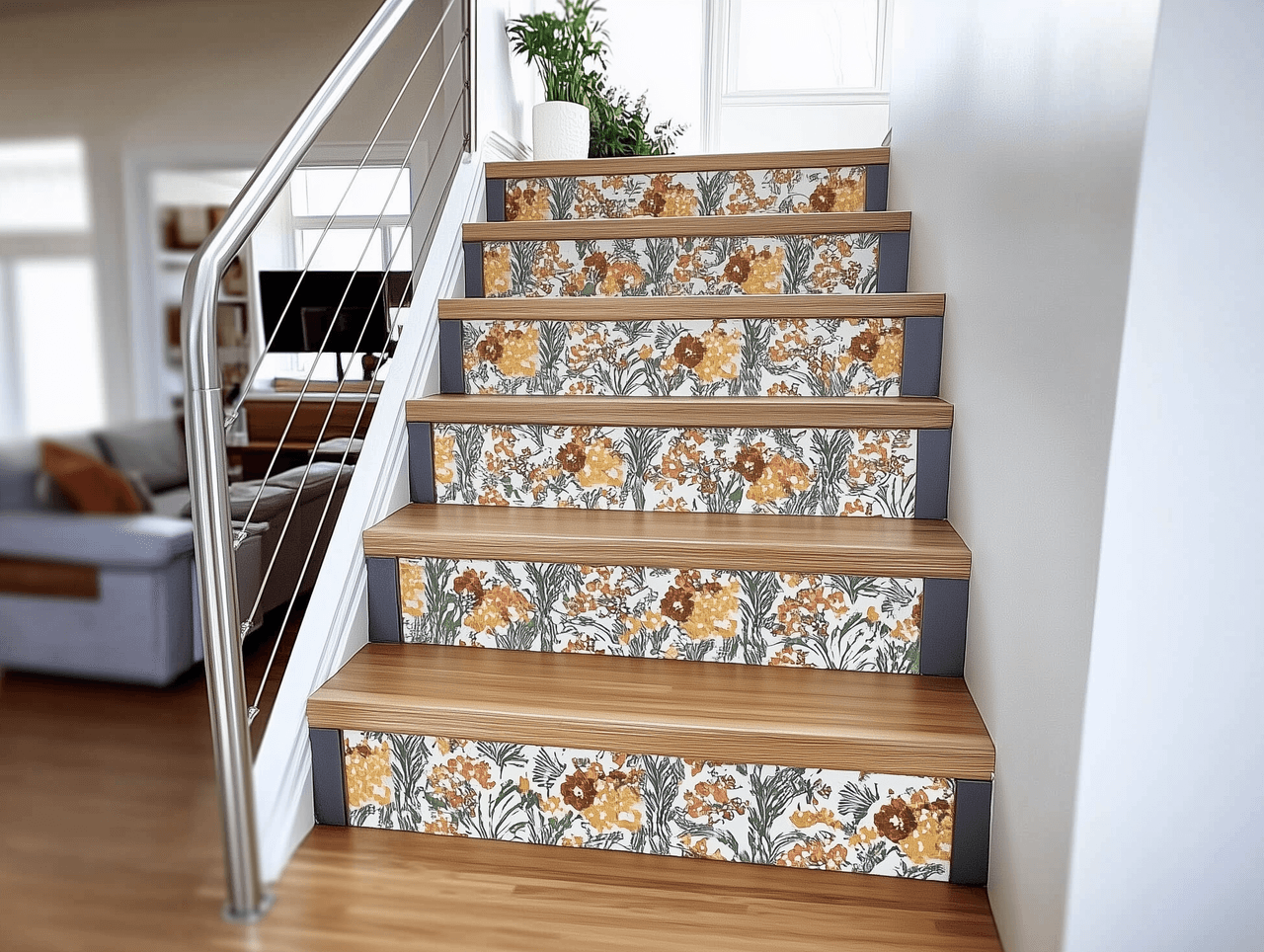
Bathroom renovations, kitchen backsplash upgrades, and basement floor finishing projects can all add significant value to a Canadian home. Durable, attractive, and easy to maintain, porcelain and ceramic tiles are, to this day, common choices for homeowners across the country.
However, the project's outcome depends largely on the quality of the installation. In Canada, temperature swings, humidity, freeze-thaw cycles, and regional construction practices can all affect how a tile installation performs over time. Understanding how a qualified contractor prices this work can help you plan your budget more accurately and avoid unpleasant surprises.
What Is the Labour Cost to Install Ceramic Tile?
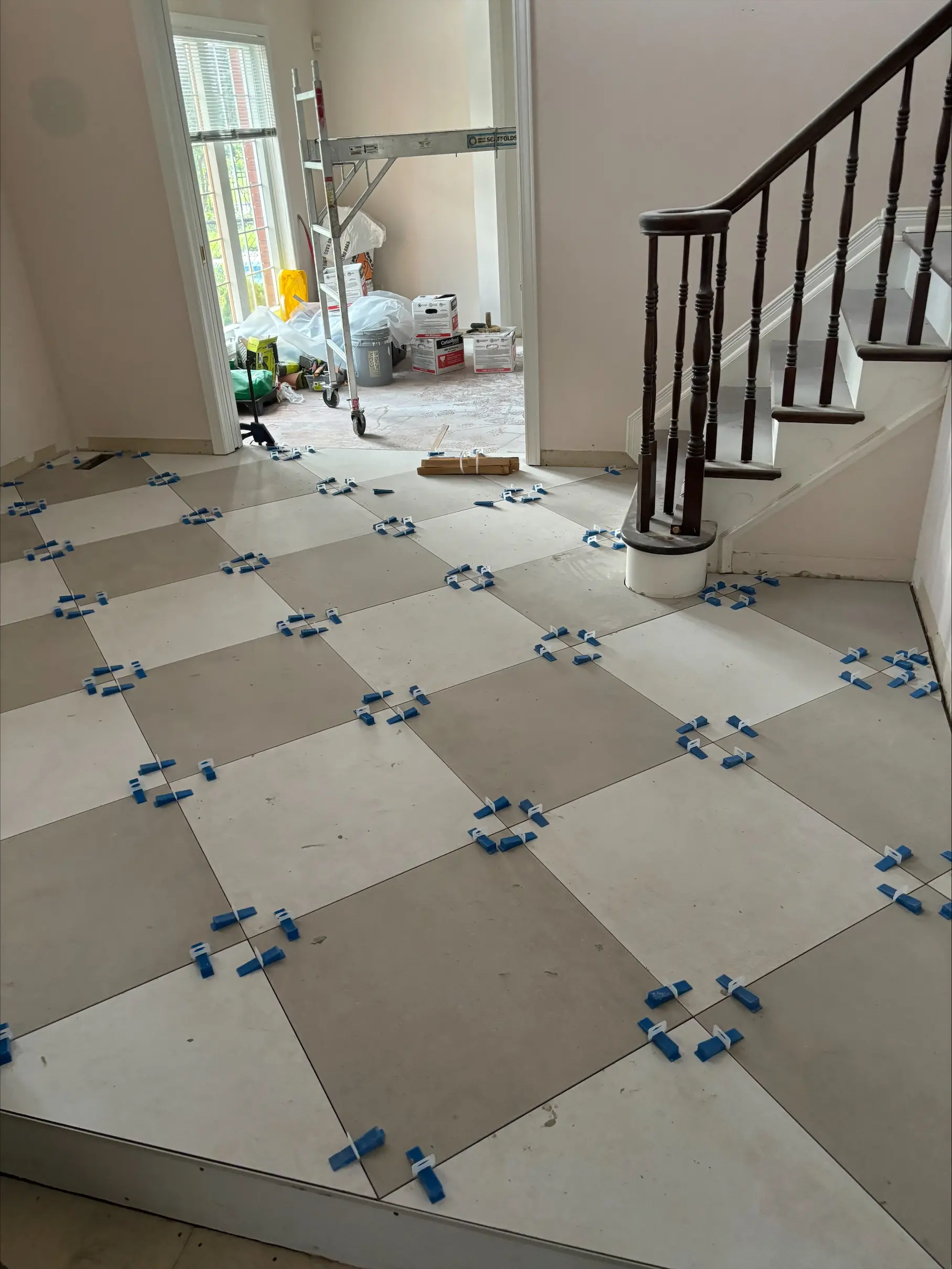
Source: 11276140 Canada Inc.
Calculating the cost of a tile installation project is not always straightforward. Professionals generally price their work by the square foot, which makes it easier to estimate costs based on the actual surface area to be covered. However, the final price depends on several factors, including the type of room, the surface being tiled, and the type of tile selected.
The labour involved in a professional tile installation can include several technical steps:
Assessing the flatness and stability of the substrate
Marking layout lines to ensure a balanced, symmetrical result
Applying the appropriate mortar or tile adhesive
Carefully installing and levelling the tiles
Applying grout and completing the final surface cleanup
As a general guide, labour costs can fall within the following ranges:
Type of Work Labour Only | Average Price Range per Sq. Ft. |
Standard straight-lay installation (regular tiles) | $7 to $15 |
Complex installation or large-format tiles 24x24 in. and up | $15 to $25 |
Kitchen backsplash (mosaic or restricted space) | $18 to $30 |
Removal of old flooring | $1.50 to $4 |
Levelling and substrate preparation | $2 to $6 |
These prices are provided as general estimates and may vary depending on your province, city, contractor, substrate condition, tile format, pattern complexity, and the items included in the quote.
Average Price for a Standard Straight-Lay Installation
A straight-lay pattern, where tiles are aligned parallel to the walls, is the most classic and often the most affordable option. For standard-sized rooms using common tile formats, such as 12x12-inch or 12x24-inch tiles, tile installation labour generally ranges from $7 to $15 per square foot.
This base price usually applies when the surface is already flat, clean, stable, and ready to receive mortar. It is a practical option for finishing a basement floor, updating a kitchen, or creating a clean, consistent look without significantly increasing the overall budget. Although this type of installation may appear simple, it still requires professional precision to avoid visible misalignment, especially across larger surfaces.
Additional Costs for Complex Patterns and Large-Format Tiles
Once you move away from a standard straight-lay installation, the technical difficulty increases, as does the time required to complete the work. In 2026, many homeowners are choosing sleek, modern spaces featuring large-format ceramic or porcelain tiles, such as 24x24-inch, 24x48-inch, or even oversized slab-style tiles. These heavier, more fragile units often require specialized handling tools, back-buttering, and tile levelling systems to reduce lippage.
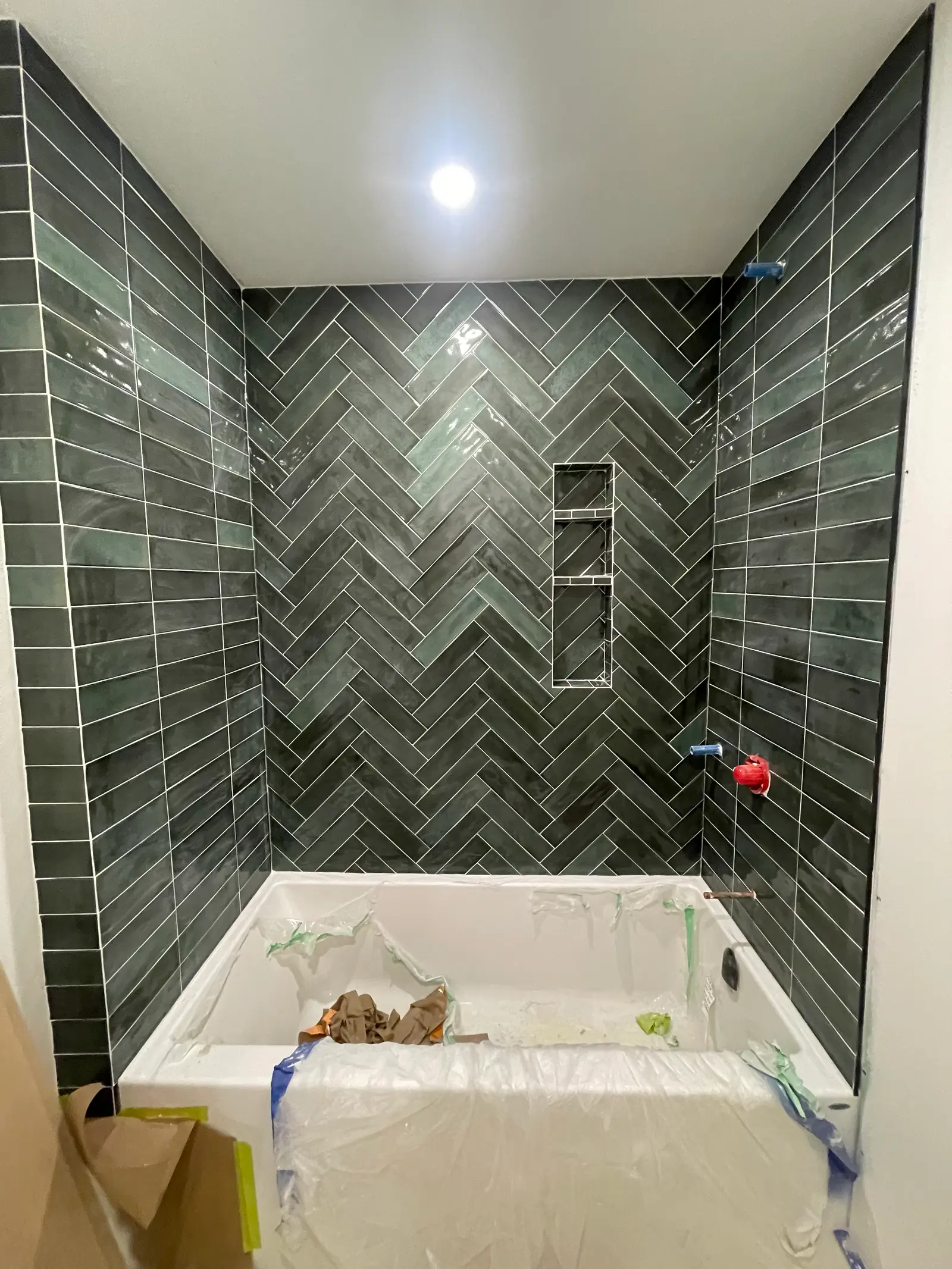
Patterns such as herringbone, a 33% offset brick pattern, fine mosaics, or decorative inserts can also slow down the installation process because they require more cuts, more layout planning, and greater attention to detail. For these higher-end projects, tile installation labour can range from $15 to $25 per square foot.
Surface Preparation Costs to Keep in Mind
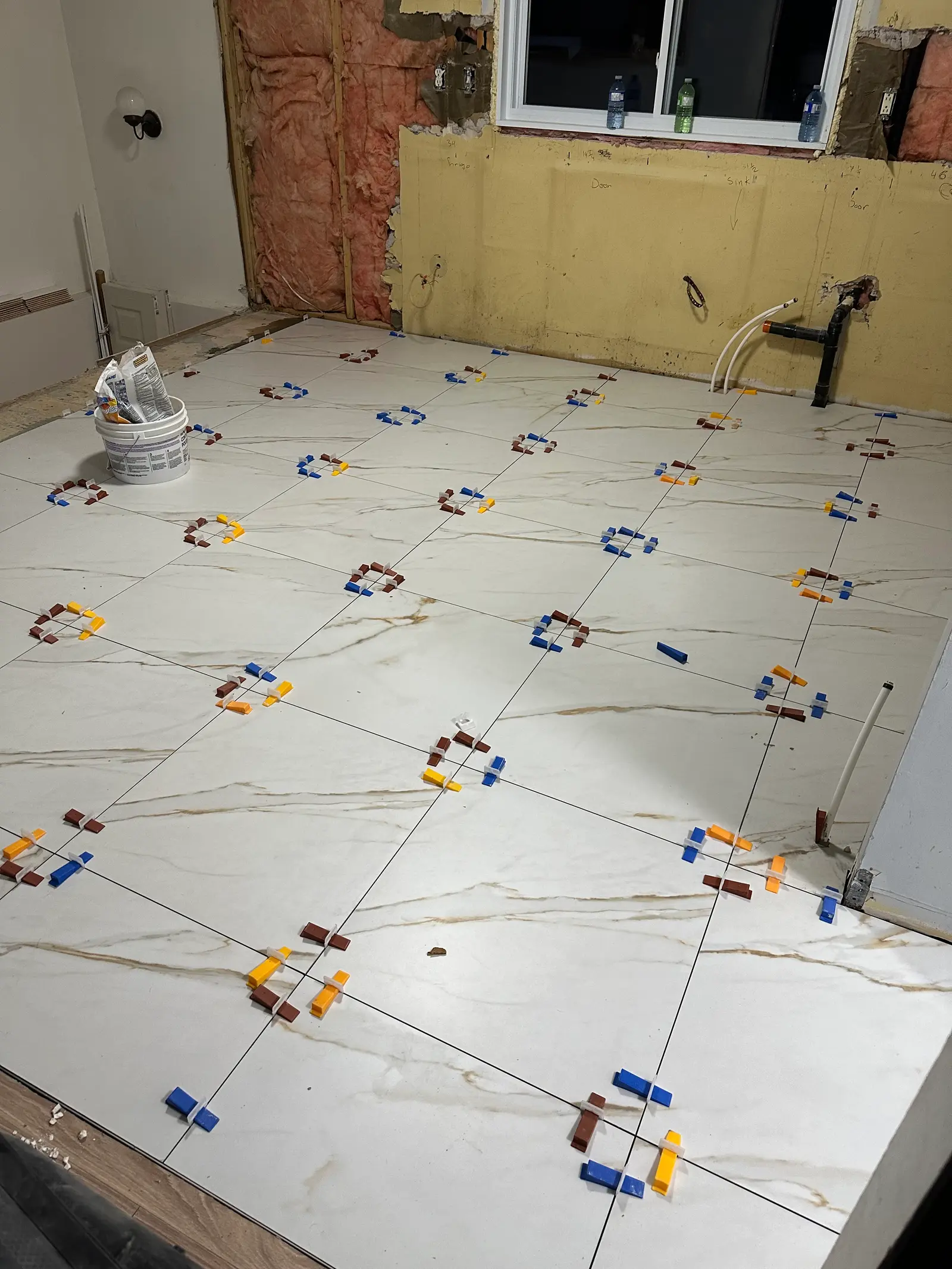
Source: Shamila Construction
A ceramic tile floor that cracks or grout that deteriorates prematurely is often linked to poor substrate preparation, building movement, or improper installation. In many parts of Canada, freeze-thaw cycles, soil movement, moisture, and drainage issues can contribute to movement in certain structures, especially where the foundation or subfloor already has weaknesses. If the surface beneath the tile is not stable, properly prepared, or adequately isolated from structural movement, small shifts can eventually lead to cracks in the tile or grout, even when durable materials such as porcelain or ceramic are used. Preparation costs should therefore be taken seriously, as they can make a major difference in the long-term durability of the installation.
Removing Old Flooring
Before installing a new tile surface, the old flooring usually needs to be removed. Whether the existing surface is carpet, glued-down vinyl, laminate flooring, or old tile set in mortar, this step can be labour-intensive.
Professionals generally charge between $1.50 and $4 per square foot to remove old flooring. The price varies depending on how strongly the existing material is bonded and whether mechanical scrapers or light demolition tools are needed. Depending on the quote, this step may also include debris collection, adhesive residue removal, and disposal at an appropriate local facility.
Floor Levelling and Uncoupling Membranes
Once the substrate is exposed, the tiler must make sure the surface meets the flatness tolerances required for the selected tile format. Even a difference of a few millimetres can cause issues when installing large-format tile. Pouring self-levelling cement or applying a patching compound generally costs between $2 and $6 per square foot, depending on the condition of the surface and the materials required.
Another important step may be the installation of an uncoupling or waterproofing membrane, such as a Schluter-DITRA system. This type of membrane acts as a buffer between the substrate and the tile covering. It helps neutralize stresses caused by differential movement between the substrate and the tile, reducing the risk of cracking or delamination when the installation is done correctly.
During a bathroom renovation, a membrane installed according to the manufacturer’s recommendations can also help improve the system's waterproofing and protect moisture-sensitive structures. This can be especially useful in bathrooms, laundry rooms, entryways, and installations involving heated floors.
For more information on planning your project and estimating the overall cost of your renovation, click here to start by calculating the expected price range for your work so you can put together a realistic budget.
Choosing a Tiler in Canada: Licensing, Certification, and Insurance
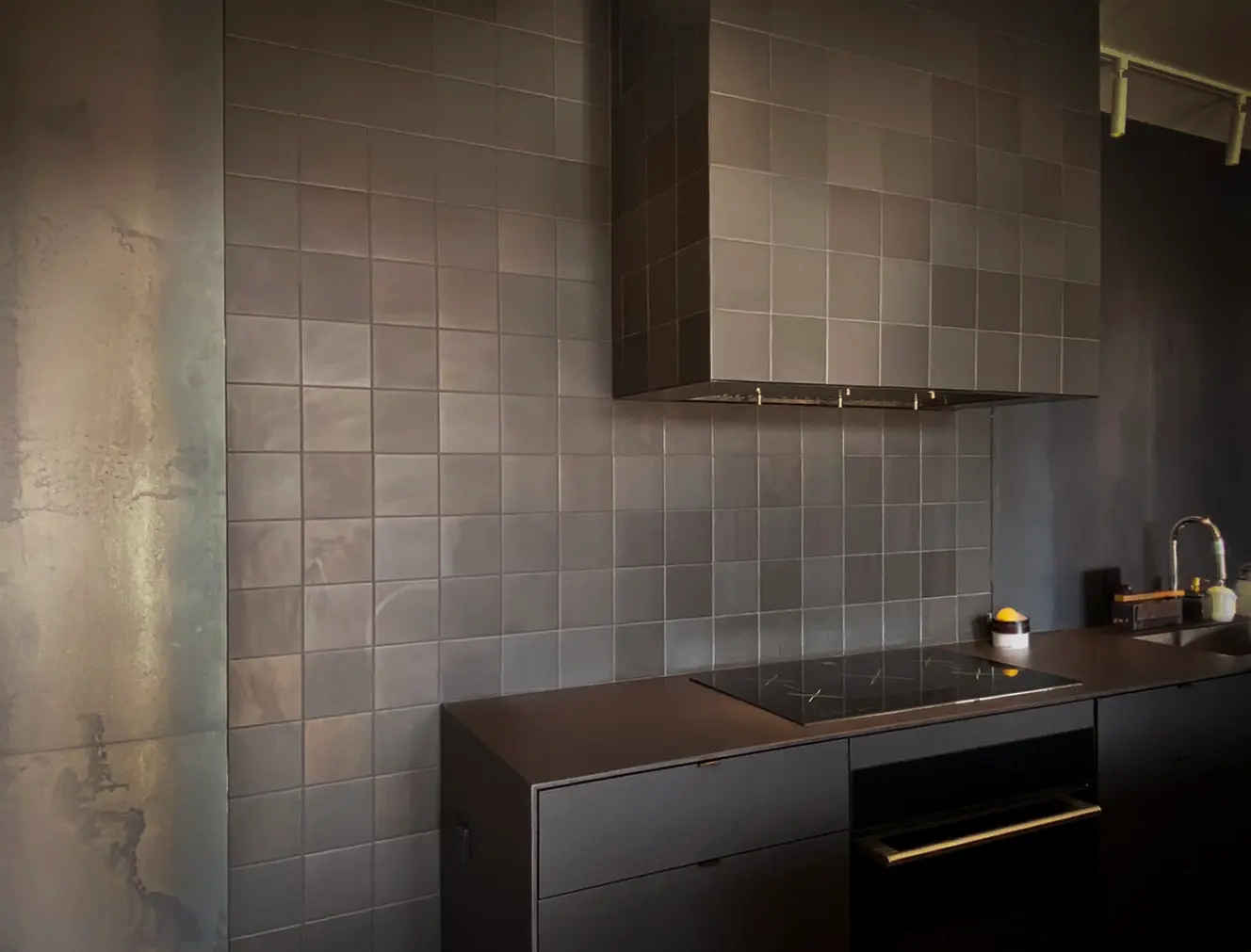
Source: GUERTI
Choosing a contractor should never be based only on the lowest price. Across Canada, requirements can vary by province and by the type of project. In general, homeowners should look for a contractor who has relevant experience, proper insurance, clear written quotes, and, where applicable, the appropriate licence, certification, or trade qualification.
Key elements to verify include:
Relevant trade certification or experience
Tile setting is recognized under the Red Seal program as the Tilesetter trade. In Quebec, trade certification is compulsory (under subclass 4.2), while in several other provinces it is available but generally voluntary.Quebec construction industry rules
Workers on the jobsite may also need competency cards issued by the Commission de la construction du Québec CCQ.Outside Quebec
In other provinces and territories, tile setting certification requirements vary. In many provinces, tile setting is not a compulsory certified trade for all residential work, but formal apprenticeship, Red Seal endorsement, and industry certification can still be strong indicators of skill and professionalism.Liability insurance
Liability insurance helps protect the homeowner if accidental damage occurs during the work. Before signing a contract, ask for proof of insurance and make sure the scope of work is clearly described in writing.
In Quebec, a contractor carrying out ceramic tile work must hold the appropriate Régie du bâtiment du Québec licence. For ceramic, marble, granite, and terrazzo work, the category to verify is generally 4.2 Contractor – Non-structural masonry, marble and ceramics. Depending on the exact nature of the work, other categories related to finishing work may also be relevant. The safest option is to verify the contractor’s licence directly in the RBQ register. Working with an unqualified, uninsured, or non-compliant contractor can make recourse more complicated and may create issues with warranties, insurance claims, or workmanship disputes. Before hiring, it is best to verify the contractor’s qualifications, insurance, references, and written quote.
In addition, if your work falls under a framework that requires the Application of the Collective Agreements, workers present on the jobsite must hold competency cards issued by the Commission de la construction du Québec (CCQ). Working with an unlicensed contractor or non-compliant labour can expose you to more complex recourse, insurance issues and, in some cases, penalties. It is therefore best to verify the RBQ licence, liability insurance and, when the jobsite is subject to CCQ rules, the required competency cards.
How to Get an Accurate Quote for Your Tile Installation Project
Source : Frank’s Flooring
To get a fair and transparent price that reflects the real scope of your project, it is strongly recommended to request several detailed estimates. A proper tile installation quote should include:
The total surface area to be covered in square feet, including an extra 10% to 15% for tile waste and cuts.
Detailed labour cost based on the type of installation.
A list of preparation work required, such as removal, levelling, or membrane installation.
The type of mortar and grout included in the price.
Any added labour cost for epoxy grout, complex patterns, large-format tiles, or mosaics.
The payment terms and project timeline.
During the quoting process, take the time to explain your expectations clearly. An experienced tiler can advise you on layout, grout joints, tile orientation, and installation details that will improve the final look and durability of your project.
To streamline the process and find a qualified contractor who can adapt to your project, you can use a specialized contractor-matching platform. To start your project safely, request renovation quotes or use our platform to find a qualified tile installer in your area.
Looking for something else?
Related articles
The latest industry news, interviews, technologies, and resources.

Cynthia Pigeon
•12 Jun 2026
Starting a new construction project or a major renovation in Quebec is often one of the biggest investments of a lifetime. Before the first shovel hits the ground or the first wall comes down, drawing up blueprints is one of the most important steps. Blueprints are not just drawings: they form the technical, legal, and aesthetic foundation of your future living space.

Editorial Team
•08 Nov 2023
Looking to change your kitchen countertop? To achieve the desired result, thoroughly follow a series of well-defined steps. Without further ado, here's how to install your kitchen countertop just like a professional.

Editorial Team
•23 Sep 2025
Are you an HVAC contractor in Montreal looking for new contracts? The heating, ventilation, and air conditioning market continues to evolve rapidly in 2025, driven by building modernization, energy efficiency demands, and residential renovations. To stand out, you not only need to provide high-quality services but also know where and how to find the right projects.
Editorial Team
•15 May 2026
If you plan on renovating your house, whether it’s a transformation, remodel, or extension, checking whether you need to apply for a building permit with the city is paramount.
Editorial Team
•01 Sep 2026
Plumbers in Canada charge $60 to $150 per hour for standard work, with most homeowners paying $80 to $120. Common repairs run $150 to $600, while fixture replacements land between $200 and $2,500 depending on the job.