Chimney Repair and Repointing in Quebec: How Much Does It Cost in 2026?
By Cynthia Pigeon
Updated on September 24, 2026
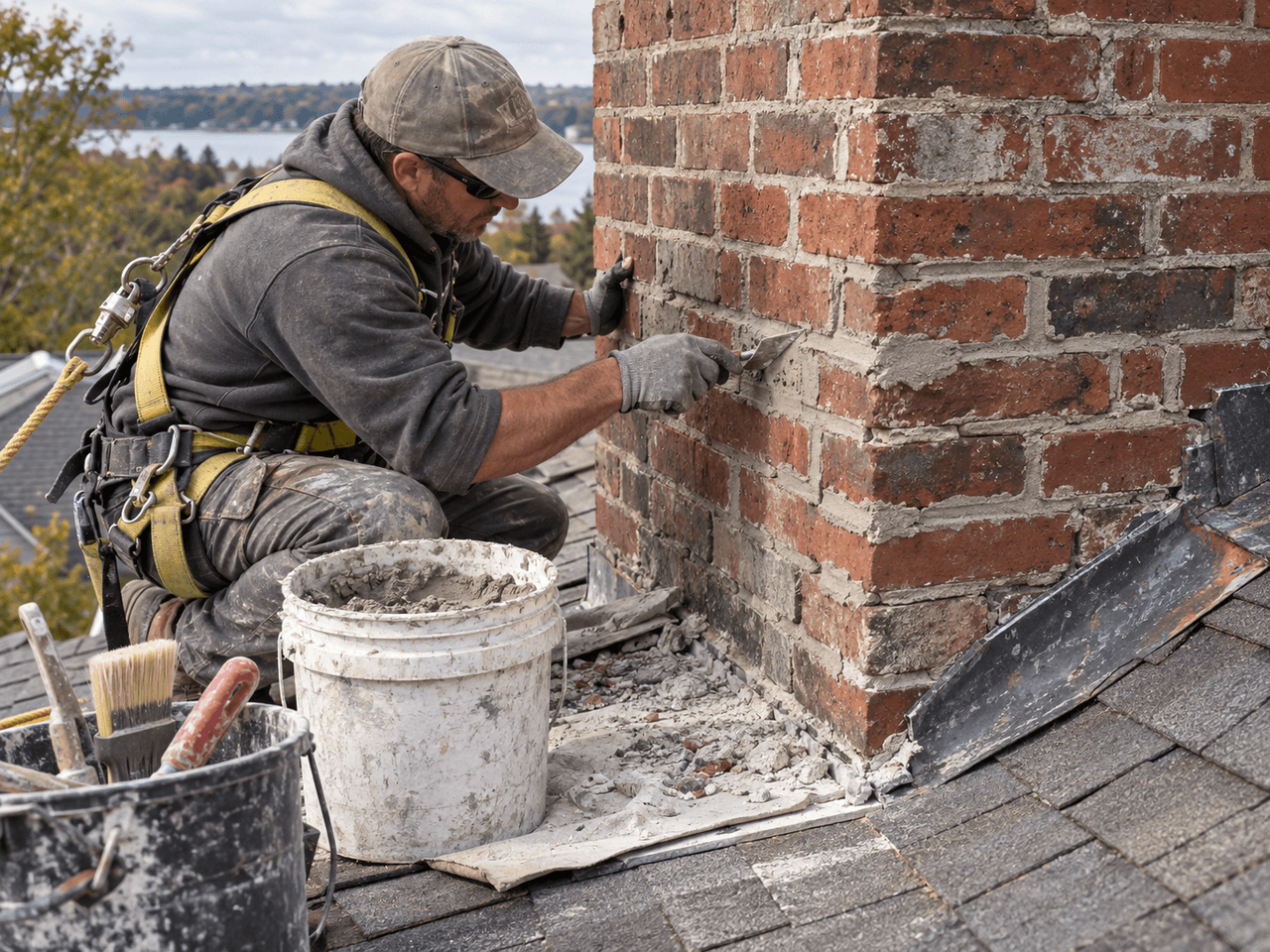
In Quebec, masonry chimneys face relentless exposure to harsh weather. Between fall rainfall, winter blizzards, and extreme temperature fluctuations, bricks and mortar joints undergo numerous freeze-thaw cycles every year. Over time, water seeps into the porous mortar, freezes, expands, and can cause the brickwork to crack and deteriorate from within.
If you notice mortar debris on your roof, cracked bricks, or signs of moisture buildup on the ceiling near your chimney, it's time to take action. Neglecting deteriorating mortar joints can expose your home to serious water damage and, in cases of advanced deterioration, the risk of partial structural collapse.
From basic chimney repointing to extensive rebuilding of the chimney's upper section, this technical and pricing guide outlines the costs involved to help you plan your masonry repairs with confidence.
How Much Does Brick Chimney Repointing Cost in Quebec?
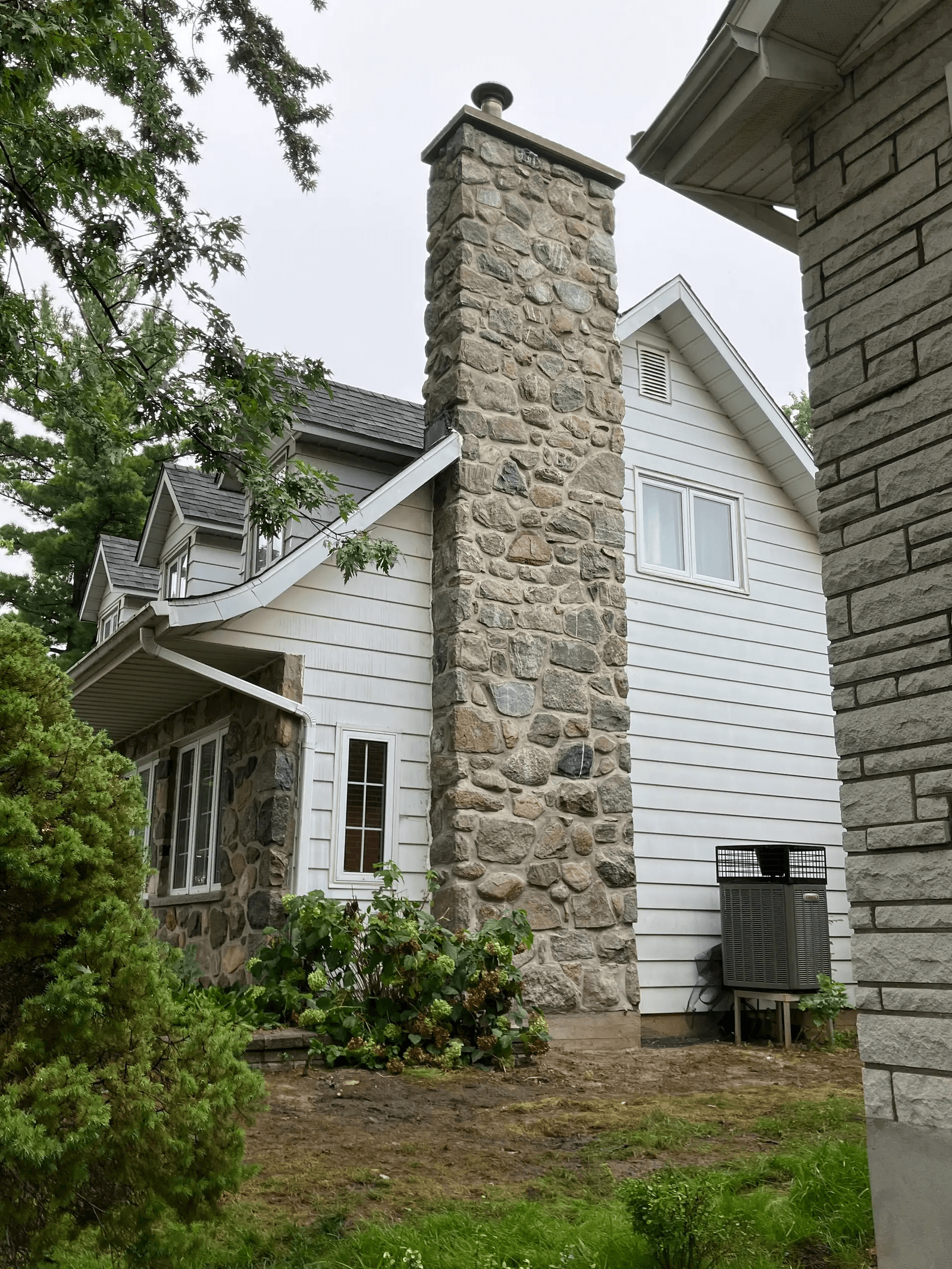
Source: KLM Maçonnerie Inc.
The cost of masonry repairs at roof level depends primarily on the surface area requiring work, measured in square feet (sq. ft.), the condition of the existing bricks, and roof access.
For a residential chimney, repair costs can vary considerably depending on the scope of work, materials, chimney dimensions, and accessibility. As a general guide, a budget of $1,200 to $7,500 can help you plan certain repairs, ranging from repointing to partially rebuilding the chimney's upper section. A complete rebuild or more complex repairs may exceed this range.
Type of Chimney Repair | Estimated Budget (CAD) |
Mortar joint repointing | $1,200–$3,500 |
Chimney crown repair and replacement of several bricks | $2,500–$4,500 |
Partial chimney stack rebuild and crown replacement | $3,000–$7,500 |
Note: These figures are indicative budget estimates, not verified average prices across Quebec in 2026. Actual costs depend on the chimney's condition, dimensions, roof accessibility, and the work required. Only a detailed contractor quote can establish the cost of your project.
Chimney Repointing Costs: Pricing Example
Here's an example of how to calculate repointing costs for an 80-square-foot chimney, based on different levels of complexity and accessibility. These figures are for illustrative purposes only and do not represent verified average rates in Quebec.
Total surface area: 4 sides × 2 ft. wide × 10 ft. high = 80 sq. ft.
Easy access, minor deterioration: 80 sq. ft. × $15/sq. ft. = $1,200.
Moderate complexity: 80 sq. ft. × $25/sq. ft. = $2,000.
Steep roof, difficult access: 80 sq. ft. × $35/sq. ft. = $2,800.
These estimated rates include the controlled removal of deteriorated mortar joints to an appropriate depth, dust removal, fresh mortar preparation, application and compaction of the new mortar, and finishing the joints. To obtain an accurate estimate for your property, you can compare chimney repointing quotes from contractors in your area.
Partial Chimney Crown Repair vs. Complete Crown Replacement
The chimney crown is generally a concrete slab or masonry structure designed to cover and protect the top of the chimney around the flue. Its purpose is to direct rainwater away from the masonry. The chimney cap, meanwhile, is a separate component, usually made of metal, installed above the flue opening to help prevent rainwater and debris from entering.
Option A: Partial Chimney Crown Repair (Estimated Budget: $600–$1,500)
This budget can serve as a starting point when planning repairs to a chimney crown with superficial damage. Work may include sealing cracks and applying a compatible repair coating. However, the actual cost must be confirmed through a contractor quote, as this range does not represent a verified average price in Quebec.
Option B: Complete Chimney Crown Replacement (Estimated Budget: $1,800–$3,500)
When a chimney crown has sustained extensive damage, replacement may be necessary. The work can include demolishing the existing crown, building formwork, pouring a new concrete crown, and incorporating a drip edge. This price range is provided for preliminary budgeting purposes and should be confirmed with a contractor.
When several courses of bricks beneath the crown are severely deteriorated, partially rebuilding the upper chimney stack might be warranted. An indicative budget of $3,000 to $7,500 can be considered when planning this type of repair. Actual costs depend on the extent of the damage, materials used, and accessibility.
Factors That Affect Masonry Contractor Rates
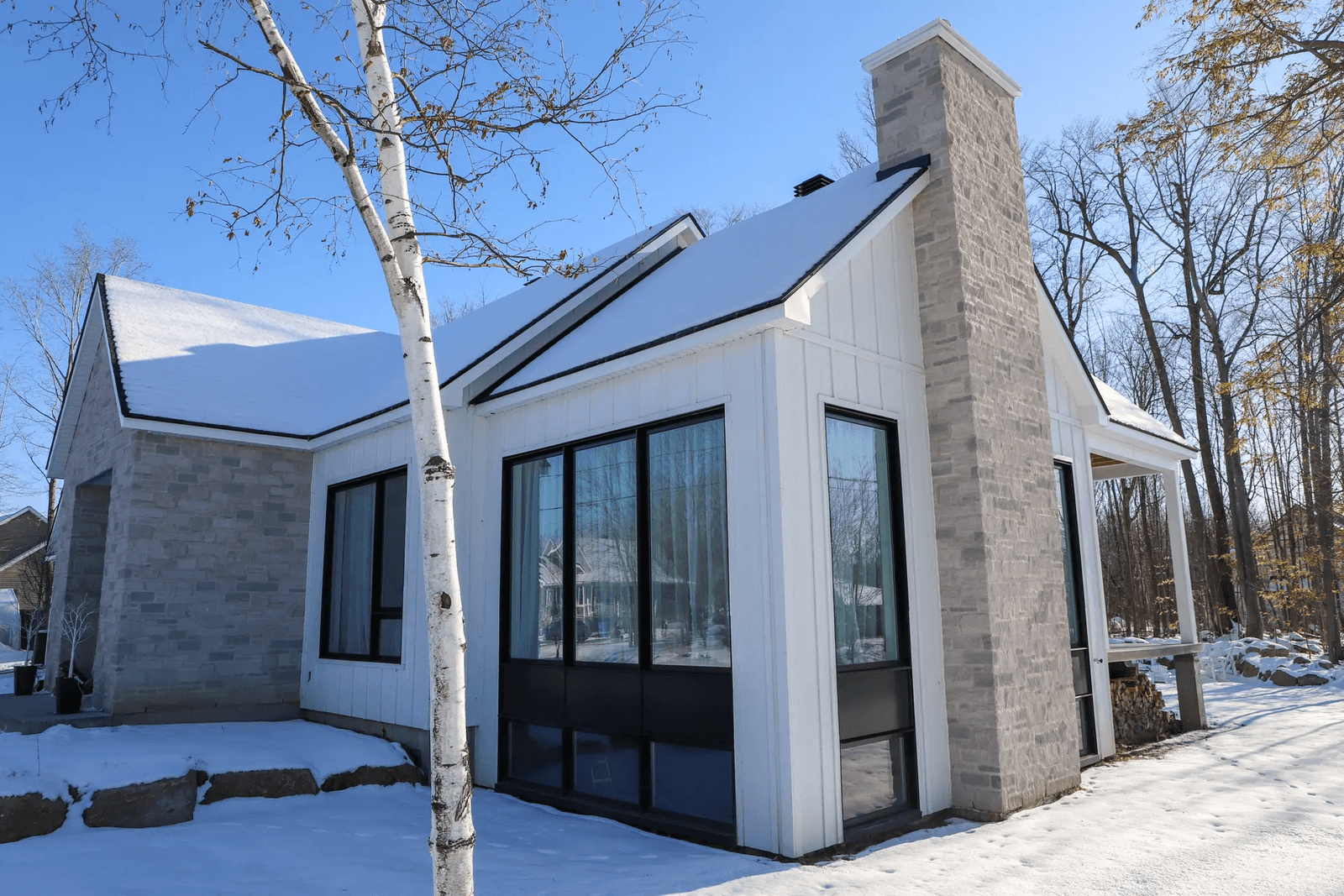
Source: Aluminium Sauvé inc
Two chimneys of identical dimensions can generate significantly different quotes. Masonry contractors adjust their rates based on site logistics, working conditions, and the severity of the damage.
Roof Accessibility, Slope, and Scaffolding Requirements
Working at heights involves significant safety risks. Your roof's configuration directly influences the personal and collective protective equipment required under CNESST regulations.
Single-storey home with a low-pitched roof: A lower roof and easily accessible chimney can simplify repairs and reduce costs. However, the equipment and protective measures required must be determined according to site conditions.
Two-storey home or urban multiplex: Repairs may require scaffolding, an aerial work platform, or other equipment suited to the job. These requirements can increase project costs, depending on the building's height, accessibility, roof slope, and necessary fall protection measures.
Steeply pitched roof (e.g., traditional Canadian or Victorian-style homes): A steep roof can make the chimney harder to access, require specialized safety equipment, and extend work time.
Roof accessibility also affects the time required to complete the project.
Flat or Low-Pitched Roof
Relatively straightforward setup, allowing work to proceed with fewer interruptions.
Steeply Pitched Roof or Work at Greater Heights
Scaffolding installation: Setting up scaffolding and safety equipment can extend the project schedule. The time required depends on the roof configuration, working height, equipment used, and accessibility constraints.
Manual handling and transportation of mortar buckets and bricks.
Brick Deterioration and Replacement of Cracked Bricks
Repointing alone is no longer sufficient when bricks have deteriorated beyond repair. When brick spalls, its outer face breaks away, potentially as a result of freeze-thaw damage. This deterioration can compromise the masonry's resistance to water infiltration.
Replacing individual damaged bricks involves removing deteriorated units, preparing the surrounding masonry, and installing compatible replacement bricks using suitable mortar. Costs depend on the number of bricks requiring replacement, their availability, the condition of the surrounding masonry, and site accessibility. It's generally preferable to obtain a comprehensive contractor quote rather than relying exclusively on a per-brick price.
The chain reaction caused by spalling bricks:
Microcracks develop in the mortar joints.
Water penetrates the cracks during the fall.
Winter freezing causes the water to expand by approximately 9%.
Repeated freeze-thaw cycles contribute to the outer faces of bricks breaking away.
Masonry deterioration can eventually compromise the support of the upper brick courses.
For heritage or older buildings, sourcing reclaimed bricks that match the original dimensions, texture, and colour can require additional research and procurement. This may increase material and labour costs.
To accurately assess the condition of your masonry, you can request masonry repair estimates from qualified professionals.
Steps for Long-Lasting Chimney Repointing
Source: RenoQuotes
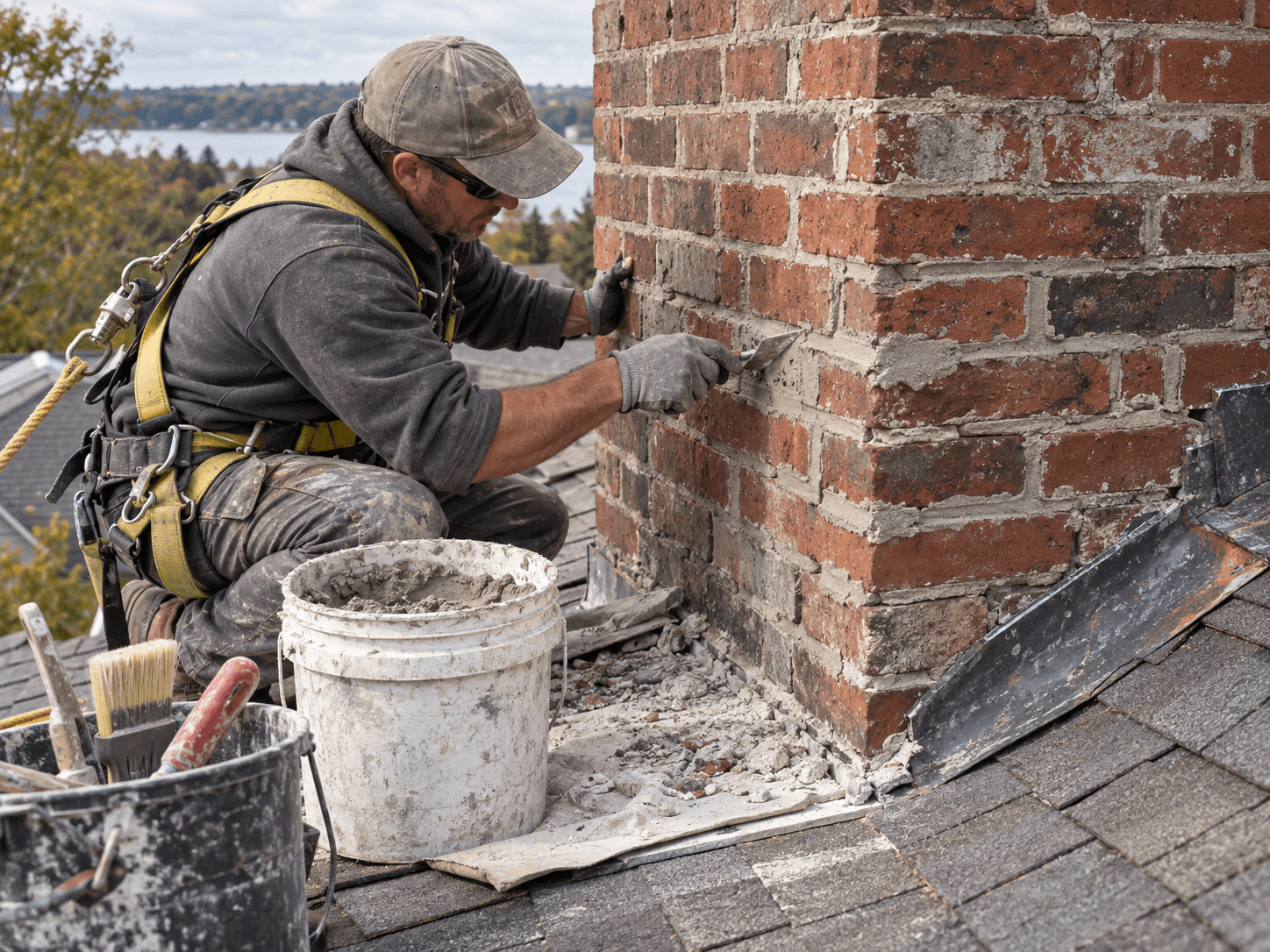
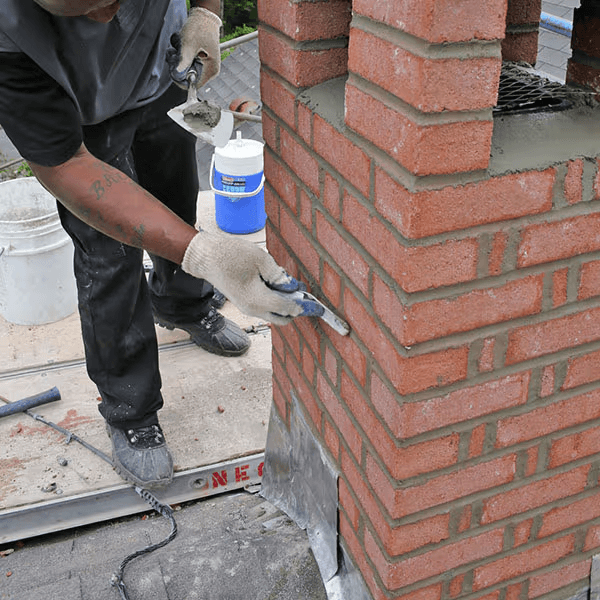
Simply applying sealant over deteriorated mortar joints does not constitute a durable repointing repair. Proper repairs generally require removing deteriorated mortar, preparing the joints, and applying new mortar compatible with the existing masonry. To achieve long-lasting results, a bricklayer or masonry contractor must follow an appropriate procedure.
The main steps involved in chimney repointing are:
1. Removing deteriorated mortar: Using appropriate tools, the masonry contractor carefully removes damaged mortar until sound material is reached. The removal depth must be appropriate for the joint width, masonry condition, and applicable technical recommendations. On older buildings, hand tools are often preferred to minimize the risk of damaging the bricks.
2. Cleaning the joints: The cavities are carefully brushed, cleared of dust using compressed air, and washed to remove loose particles that could interfere with adhesion.
3. Moistening the bricks: Before applying new mortar, the contractor dampens the joints and masonry surfaces when required by the materials and site conditions. This preparation helps prevent the bricks from absorbing water too quickly from the fresh mortar, promoting proper bonding and curing.
4. Applying fresh mortar: The mortar is applied using a mortar bag or pointing trowel and firmly compacted into the joints.
5. Finishing the joints: The joints are shaped, generally with a slightly concave or sloped profile, to help rainwater run down the masonry.
6. Optional application of a water-repellent treatment: A water-repellent treatment may be considered in certain situations after evaluating the masonry's condition and potential moisture sources. The selected product must be compatible with the existing bricks and mortar and allow appropriate moisture vapour movement. Such treatments are not always necessary, particularly for heritage buildings. Before applying any treatment, existing waterproofing defects must be fixed, and the curing periods specified for the mortar and treatment must be respected.
Choosing the Right Mortar for Quebec's Freeze-Thaw Climate
One of the most important considerations in residential masonry is choosing an appropriate mortar mix. Using mortar that is too hard or incompatible with the existing bricks can accelerate masonry deterioration, particularly in older buildings. Mortar selection must account for the bricks' strength, porosity, and composition, as well as the original mortar's characteristics. Type N mortar may be appropriate for certain modern chimneys, while heritage masonry may require a specially formulated lime-based mortar.
The following mortar types are commonly considered for different applications.
Type N Mortar (Residential Masonry)
Offers moderate compressive strength and greater flexibility than some higher-strength mortar types.
Can accommodate certain thermal movements while helping to limit the risk of brick cracking.
Type S Mortar (Structural Applications)
Offers high compressive strength.
Commonly used for foundation walls and masonry subjected to significant structural loads.
Hydraulic Lime Mortar (Heritage Buildings)
Offers good water vapour permeability.
May be suitable for restoring older masonry, depending on the properties and strength of the existing bricks and mortar.
A professional masonry contractor will carefully select the appropriate mortar mix to ensure that the joints remain the sacrificial component of the masonry assembly. Ideally, the mortar should gradually weather over time rather than contribute to the deterioration of the surrounding bricks.
To find a professional with the appropriate technical expertise, you can request quotes from qualified masonry contractors in your area.
Why Choose a Masonry Contractor with an RBQ Licence?
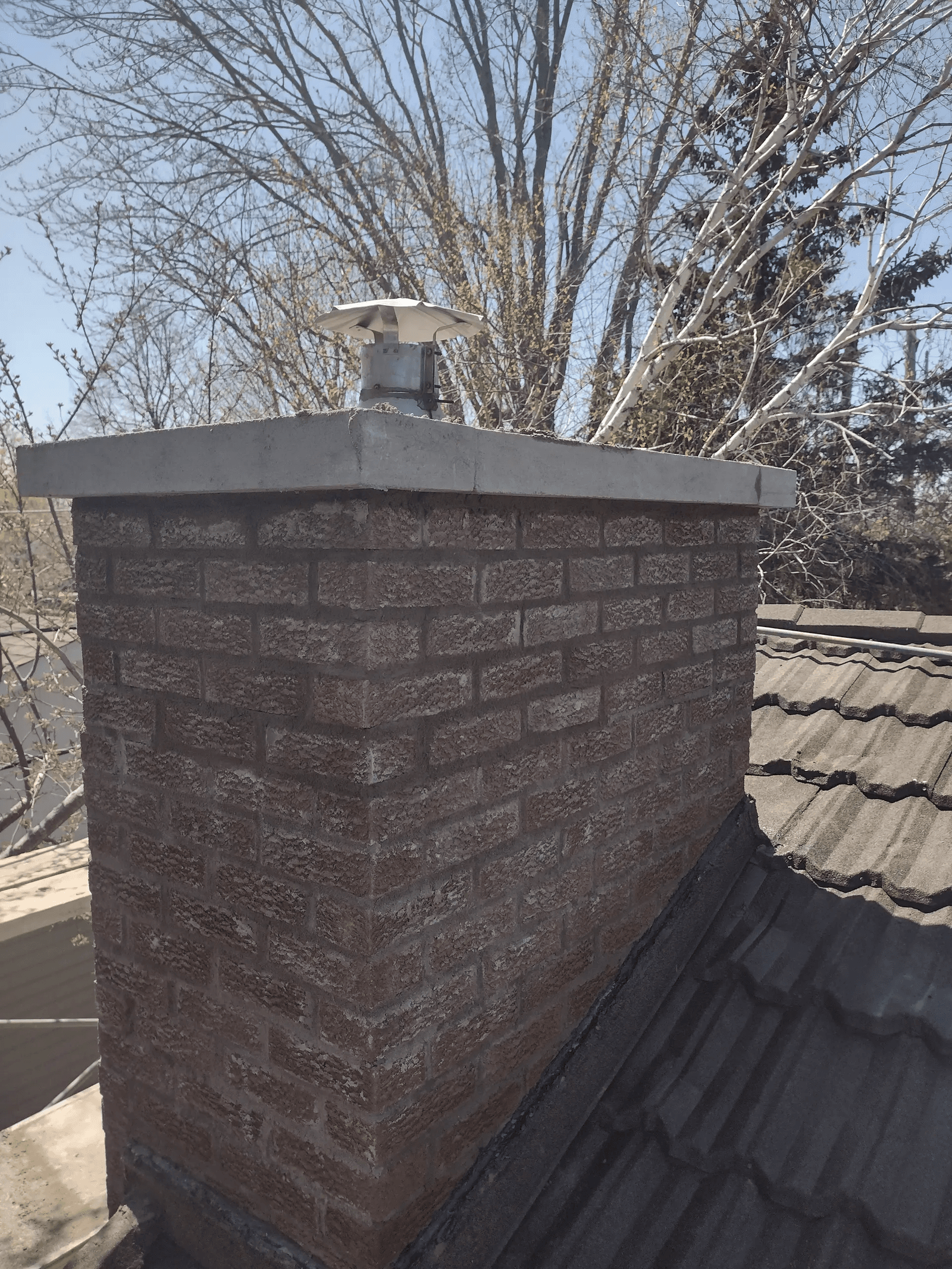
Source: Maçonnerie etg
In Quebec, construction legislation strictly regulates structural and building-envelope work. Masonry chimney construction and repairs should be entrusted to contractors holding the licences appropriate for the work being performed.
Qualifications and requirements to verify when hiring a masonry contractor:
RBQ Licence – Subcategory 4.1
Verify that the contractor holds the appropriate licence for the planned masonry work.
CNESST Compliance
Ensure that the contractor follows applicable workplace safety requirements, particularly those concerning fall protection when working at heights.
Licence Bond and Insurance
Verify the contractor's licence bond and commercial general liability insurance coverage.
In Quebec, a contractor carrying out masonry chimney construction or repairs must hold the appropriate licences for the work being performed.
The Régie du bâtiment du Québec (RBQ) subclass 4.1, Masonry Structures Contractor, covers the construction of masonry chimneys, among other activities. Depending on the exact nature of the work, other licence subcategories or qualifications may also be relevant.
Home Insurance and Preventing Water Infiltration
Water leaking through deteriorated chimney masonry can cause damage beyond the chimney itself. It may travel along the chimney, penetrate the roof sheathing, cause wooden roof framing components to rot, and eventually damage mineral wool insulation and drywall ceilings.
Potential interior damage resulting from untreated water infiltration includes:
Mould growth in the attic caused by persistent moisture infiltration.
Rotting wooden roof framing due to prolonged exposure to moisture.
Water stains and deteriorating drywall ceilings, potentially leading to sagging.
Corrosion and deterioration of the metal flashing designed to provide a watertight seal around the chimney's base.
Water infiltration caused by the gradual deterioration of a chimney is not necessarily covered by home insurance. Whether a claim is eligible depends on the coverage purchased, exclusions specified in the insurance policy, and the circumstances surrounding the damage. Regular maintenance is therefore important. Homeowners should also consult their insurance provider to understand which protections apply to water infiltration originating from the roof or chimney.
Chimney Repair: Protect Your Home and Prevent Water Leaks
Source: Absolve construction
In short, maintaining your chimney and taking action at the first signs of deterioration can help prevent water infiltration, avoid costly repairs, and preserve your property's value. Repointing your chimney at the right time can make all the difference and save you a lot of headaches down the road.
Whether your chimney needs minor repairs or more extensive restoration, it's best to act before winter arrives. To determine what work is needed and get an estimate that fits your budget, take the time to compare quotes from experienced professionals.
Looking for something else?
Related articles
The latest industry news, interviews, technologies, and resources.
Editorial Team
•15 May 2026
If you plan on renovating your house, whether it’s a transformation, remodel, or extension, checking whether you need to apply for a building permit with the city is paramount.
Editorial Team
•03 Nov 2025
Water is essential to the wellbeing of humans, but as we know, this natural element can be both a blessing and a curse. Flooding is common in regions with high rainfall levels and proximity to large bodies of water.

Léa Plourde-Archer
•08 Nov 2023
Renovation work on a home is often a major financial investment for homeowners. As a result, if they are not well carried out, this situation can turn into a nightmare. If this is the type of situation you are experiencing, do not lose hope: there are recourses to crack down on the offending contractor.
Editorial Team
•04 Oct 2024
Technically speaking, DIYing your entryway decor with tile is entirely possible. However, from an aesthetic point of view, the whole process can be quite risky.

Editorial Team
•08 Oct 2025
Are you looking for a new career in building and public works, but aren’t sure which trade to turn to? Plastering could be it! A plasterer is an individual who specializes in and performs ceiling and wall preparation work and installation.