Concrete Balcony Repair in Montréal: Price Guide and Repair Solutions
By Cynthia Pigeon
Updated on June 16, 2026
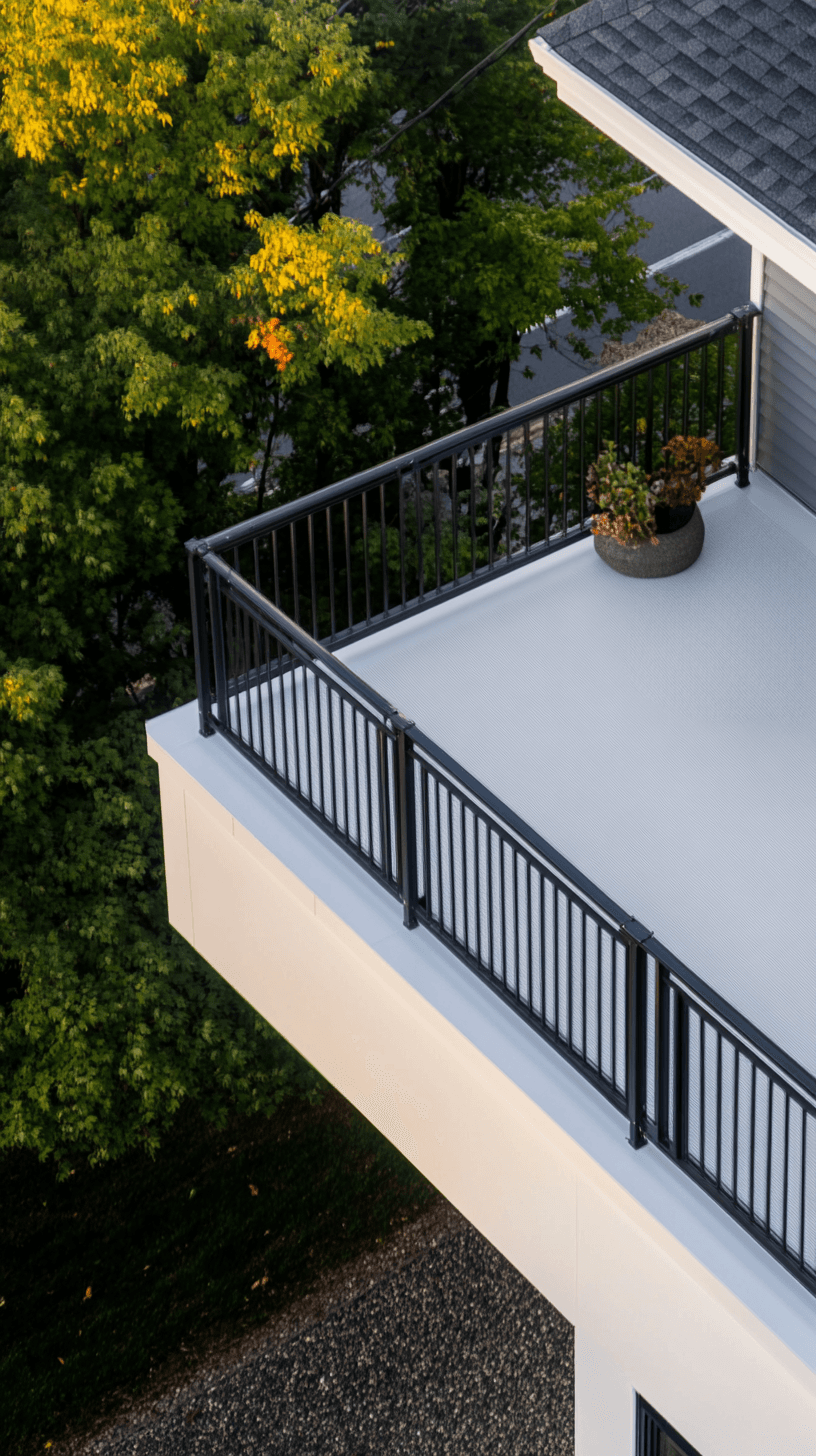
In Montréal, a concrete balcony is more than just an architectural feature: it is an extension of the living space, an essential component of the well-known plexes in our historic neighbourhoods, and a key structure in modern condo buildings. However, the exterior envelope of Montréal buildings is exposed to extreme weather conditions. Over the years, concrete structures eventually show signs of wear that, if neglected, can quickly compromise the safety of occupants and passersby.
For residential property owners, condominium syndicates, and building managers, planning the repair of a concrete balcony is a strategic investment. This comprehensive guide presents technical solutions adapted to our climate, cost estimates per square foot, and the essential criteria for choosing the right expert to carry out your renovation work.
Why Repair Your Concrete Balcony in Quebec?
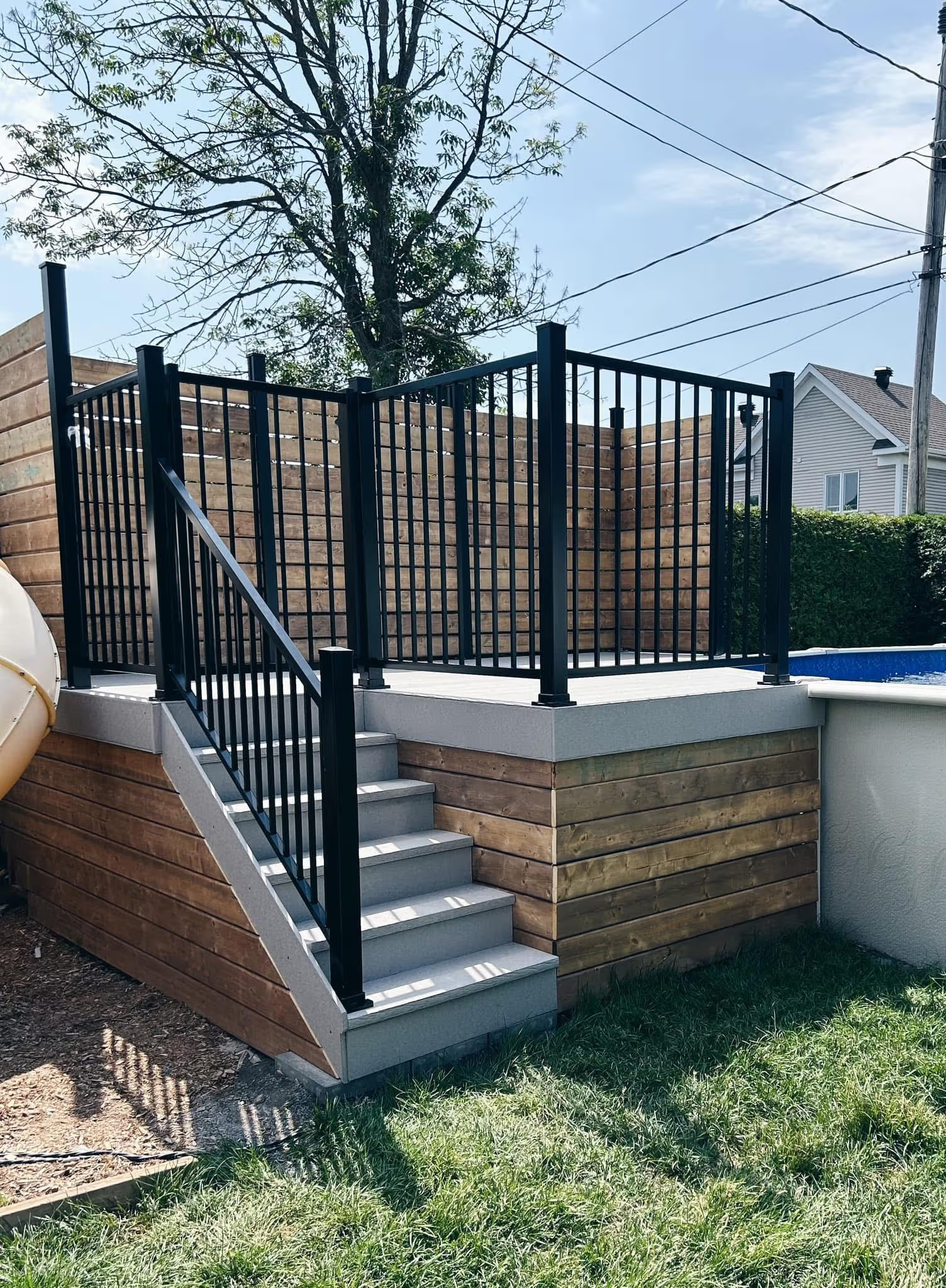
Source: Groupe MAJ inc.
Quebec’s climate is unforgiving on exterior reinforced concrete structures. Unlike interior slabs that benefit from a controlled environment, a balcony's concrete slab is directly exposed to thermal shocks, snow accumulation, heavy rain, and constant moisture.
The number one enemy of exterior concrete is the freeze-thaw cycle. In the fall and spring, water seeps into the concrete's natural pores and microfissures. When the temperature drops below freezing, this water turns into ice and expands by about 9%. This internal expansion puts tremendous pressure on the concrete matrix, gradually weakening its structural bonds from the inside.
In addition, de-icing salts are used heavily during the cold season. These chemicals accelerate moisture penetration and cause a corrosive reaction when they come into contact with the steel reinforcement embedded in the concrete. As the steel rusts, it produces oxides that occupy a much greater volume than the original steel, sometimes reaching several times its initial volume. In Montréal, where urban density is high, a crumbling balcony can represent a serious liability risk if debris falls onto a public walkway or neighbouring property.
Critical Signs of Deterioration to Watch For
As a manager or property owner, you should regularly inspect your exterior structures, ideally in the spring and before winter. Here are the main visual signs that indicate the need for prompt action:
Efflorescence: The appearance of white stains or streaks on the surface or underside of the concrete slab. This phenomenon generally indicates that moisture is moving through the concrete and dissolving mineral salts in the cement, and may reveal an infiltration or water migration issue.
Surface and structural cracks: While fine shrinkage cracks, about the width of a hair, are common, wider, deeper cracks or cracks that go all the way through the concrete slab should be taken seriously.
Concrete spalling: This problem occurs when entire pieces of concrete break away, often exposing rusted metal reinforcement beneath the surface. The structural safety of the balcony may then be compromised, and a professional inspection is recommended.
Crumbling and dusting: If the balcony surface crumbles underfoot or turns to dust, this shows that the original concrete mix has been weakened by Quebec weather conditions or by poor proportioning during the original pour.
The Best Repair Options for Montréal’s Climate
Source: Hauss Architecture Inc.
Depending on the level of deterioration identified during the inspection of your property, a specialist will guide you toward one of two main approaches: surface restoration or major repair. The chosen method will depend directly on the condition of the internal reinforcement and the overall solidity of the slab.
Polymer Concrete Resurfacing or Acrylic Coating
When the concrete slab is structurally sound, meaning it does not show major deflection or completely corroded steel reinforcement, resurfacing is an economical and aesthetic solution.
This technique involves thoroughly cleaning the surface, often using high-pressure water or scarification, to remove all loose and friable material. The cement finisher then applies a polymer concrete coating or a high-performance acrylic coating. These modern materials offer excellent flexibility and better adhesion than traditional concrete.
The major advantage of this option is its ability to seal imperfections and help prevent future water infiltration through the final application of a protective sealer. These coatings also provide a modern, slip-resistant finish that can be customized in several colours, making it possible to refresh your façade in as little as one weekend.
Complete Reconstruction of a Reinforced Concrete Balcony
If the diagnosis shows that the core of the structure is affected, that the concrete sounds “hollow” over a large part of its surface, or that the reinforcing bars have been severed by rust, resurfacing would only be a temporary fix. Complete reconstruction is necessary to ensure long-term safety.
This major project is carried out in several rigorous steps:
Controlled demolition: The old balcony is broken up and removed safely, a delicate step in Montréal because of the proximity of neighbouring buildings and electrical wires.
Formwork: Technicians build a temporary wood or metal structure, called formwork, that will shape the new slab while ensuring an adequate outward drainage slope of at least 2%.
Reinforcement: A new grid of reinforcing steel, often epoxy-coated to resist corrosion, is installed according to the engineering standards applicable in Quebec.
Local concrete pour: The choice of concrete mix is crucial. To withstand our northern climate, ready-mix concrete is often designed with a strength of at least 32 MPa and generally includes air-entraining admixtures to improve resistance to freeze-thaw cycles. These admixtures create billions of microscopic air bubbles in the hardened concrete, acting as expansion chambers that absorb pressure when water freezes, helping prevent future spalling of the structure.
What Is the Price Per Square Foot for Balcony Repair?
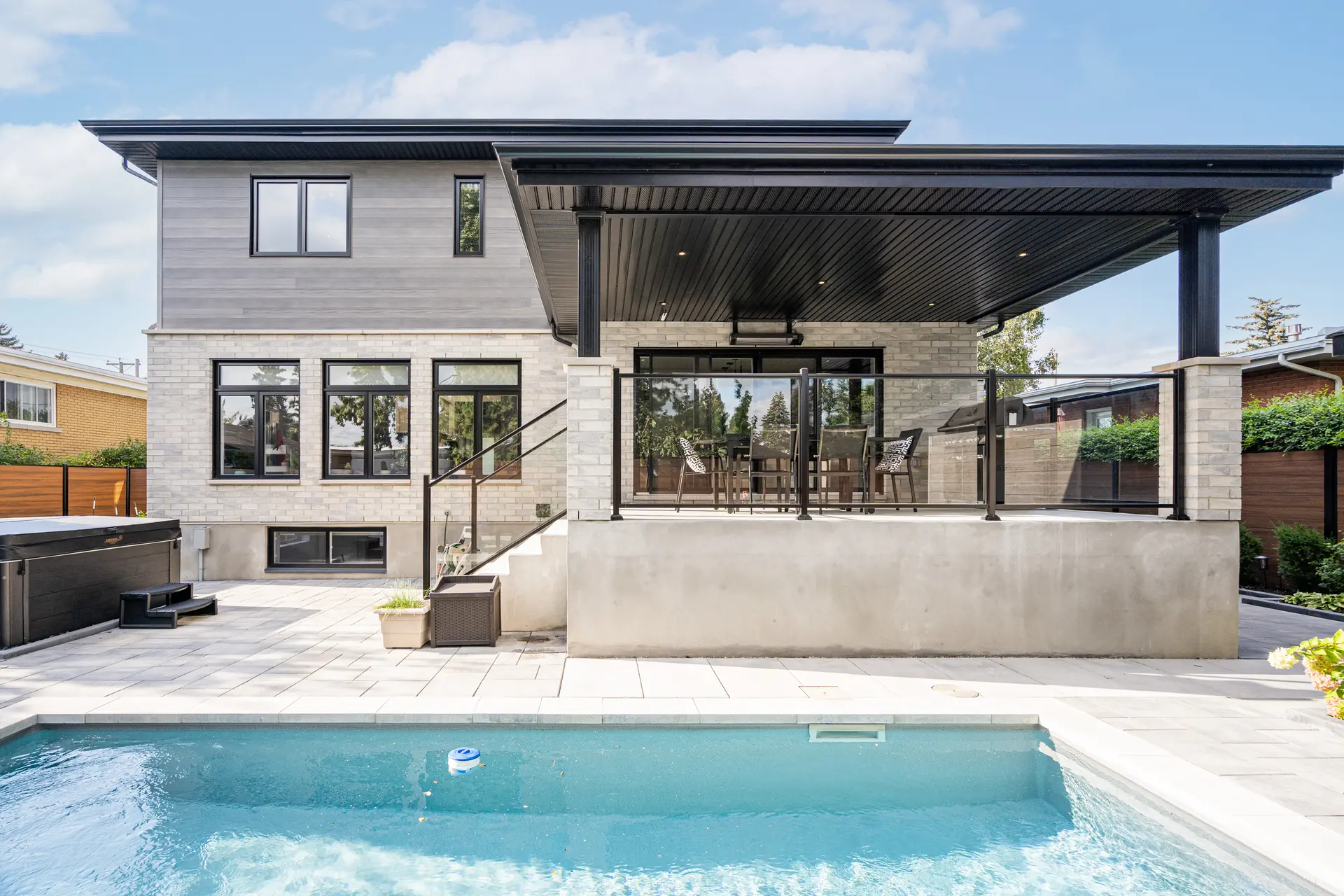
Source: AJG Architecture
The budget required to repair a balcony in Montréal varies considerably depending on the initial condition of the structure, site accessibility, and the type of finish selected. Market prices generally fall within the following ranges:
Type of Work | Estimated Price Per Square Foot, Labour Included | Average Service Life |
Surface resurfacing, polymer concrete or acrylic coating | $50 to $85 | 5 to 12 years depending on exposure conditions, work quality, and maintenance. |
Localized repair and sealer, concrete patching | $75 to $110 | 10 to 15 years |
Complete demolition and reconstruction, 32 MPa reinforced concrete | $110 to $250 and more, depending on project complexity, site access, and required structural work | 30 to 40 years |
Several factors specific to the Montréal market can affect these rates:
Height and accessibility: Repairing a balcony on the third floor of a triplex in a narrow Plateau-Mont-Royal alley requires lifting equipment or complex scaffolding, which increases logistical costs compared to a ground-floor project.
Project size: For condominium syndicates managing multi-unit condo buildings, unit costs per square foot may sometimes be lower due to shared machinery mobilization costs.
Related work: Balcony slab repair often requires removing and reinstalling, or replacing, aluminum guardrails and railings, as well as masonry repairs at anchor points in the building’s brickwork.
To get a precise idea of the investment required for your building, it is strongly recommended that you request a free quote to compare the technical approaches proposed by experts.
How to Choose the Right Contractor for Concrete Work
Source: Amix Construction
Concrete and structural work should never be improvised. To avoid unpleasant surprises and defects that resurface after only two winters, a rigorous selection process is essential.
First, make sure the company you are considering holds a valid licence from the Régie du bâtiment du Québec (RBQ). This licence is mandatory for anyone who carries out or has construction work carried out in Quebec. It confirms that the contractor has the required qualifications, as well as the necessary licence bonds to protect your deposits and work in the event of a dispute or bankruptcy. For this type of project, the expert should hold a general contractor category or a specialized subcontractor category for concrete structures.
Second, in Montréal, municipal regulations concerning exterior architecture are very strict. If your project involves repairing or modifying a balcony visible from the street, especially on the façade, the work often requires a building permit from your borough office. In several heritage or historic sectors, the project must comply with the requirements of a Site Planning and Architectural Integration Program (SPAIP) to preserve the visual character of the city. An experienced contractor will be able to guide you through these local administrative steps.
Finally, take the time to verify the company’s professional references. Ask to see photos of local projects that have gone through at least three or four winter seasons. To simplify the process and ensure peace of mind, you can compare quotes through recognized contractor-matching platforms that pre-screen the financial stability and legal compliance of general contractors and cement finishers in your area.
Looking for something else?
Related articles
The latest industry news, interviews, technologies, and resources.

Editorial Team
•01 Aug 2024
If you noticed significant changes in your house and detected a structural shift over time, the odds are that the stability of your foundation has been weakened. By that, we mean that the foundation may have collapsed. The latter may be the result of the soil, which can’t adequately bear the load of the structure, the presence of clay soil, a water table, or full-grown trees, whose roots have reached the outer walls of the foundation.

Editorial Team
•08 Nov 2023
This type of paint is often still linked to large-scale projects. However, nowadays, painting the whole inside of a house is nothing compared to what it was back in the day.
Cynthia Pigeon
•10 Sep 2026
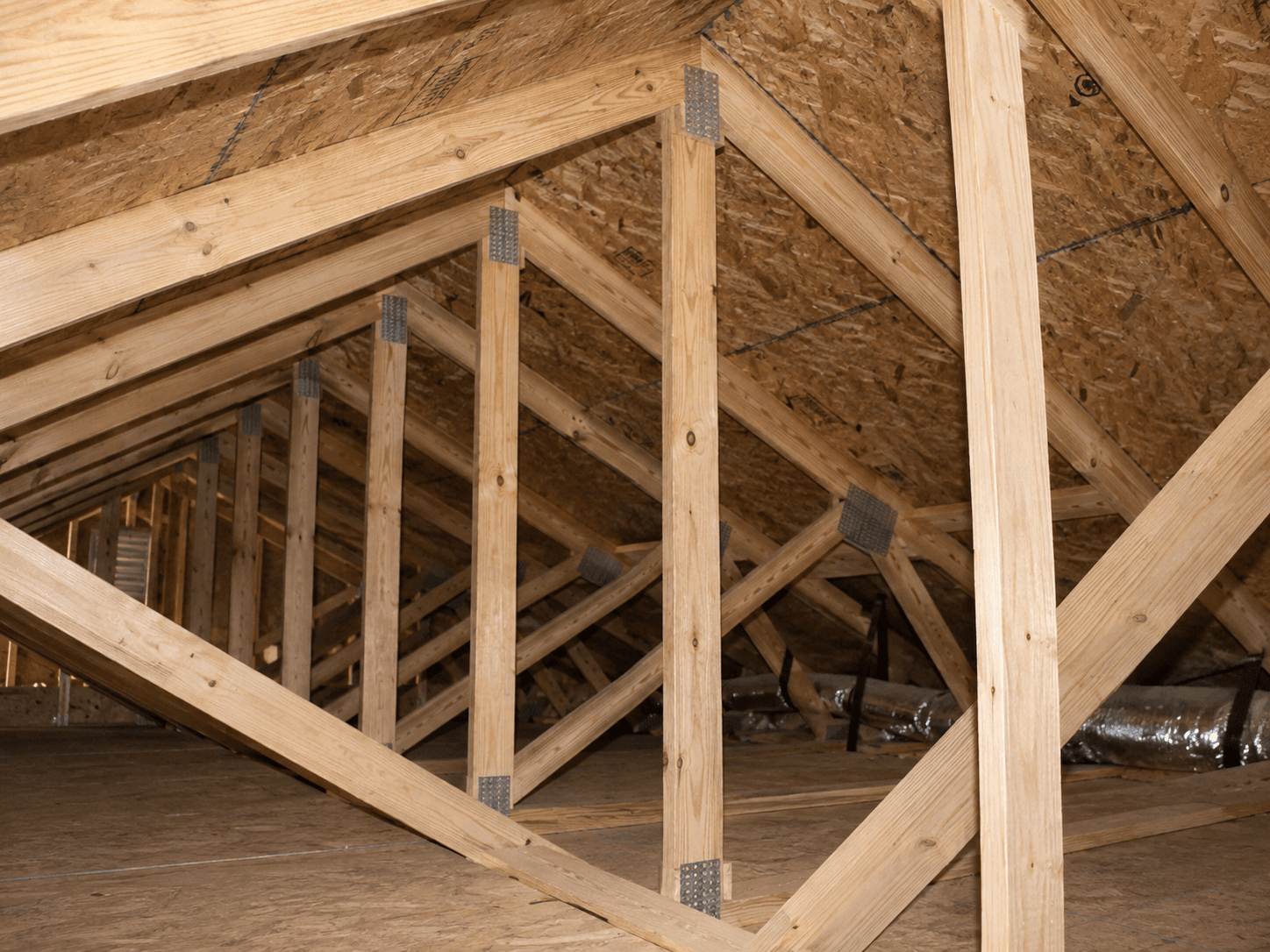
Single-family homes, bungalows, and cottages built in Quebec since the 1960s are very commonly topped with prefabricated roof trusses (also known as engineered roof framing). Designed in a factory using sophisticated structural calculation software, these wood assemblies joined with toothed metal connector plates provide excellent strength while remaining lightweight and cost-effective.
Editorial Team
•28 Jan 2026
Doors and windows are essential openings, ensuring a building’s proper functioning. They’re crucial access points, allowing dwellers to come and go and air out indoor areas. If left in a less-than-desirable state, building occupants are swiftly affected. Windows and doors must also be sealed properly to limit noise pollution and maintain the desired temperature in every room.

Cynthia Pigeon
•08 Nov 2023
For some people, the prospect of living in a house that is a genuine time capsule is something of a reality. Perhaps you’re one of the many who’ve decided to keep the original retro design going since you’re drawn to its history. However, after a while, your home may need a little tweak here and there.