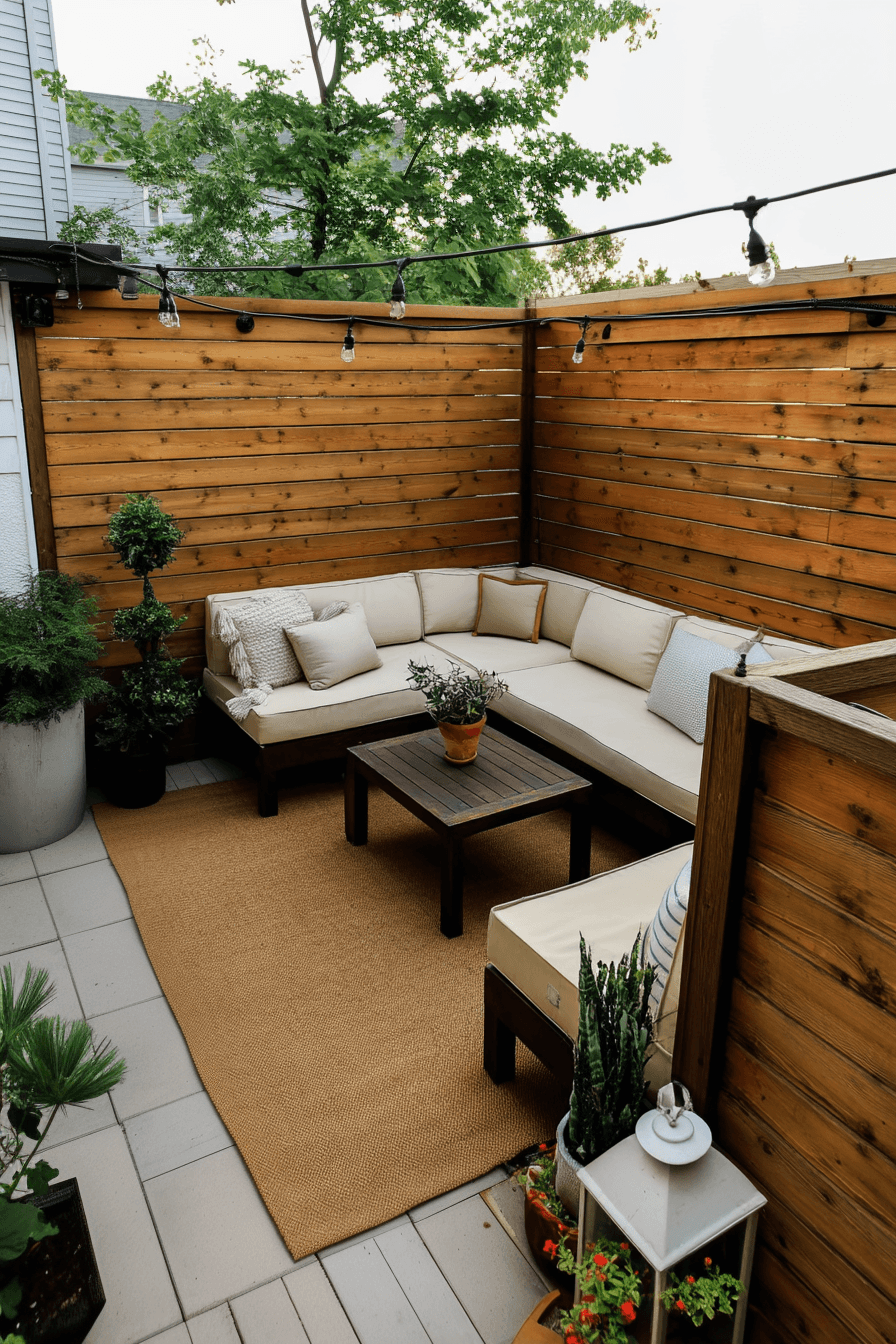
In 2026, the average cost to build a deck or patio in Canada typically ranges from $35 to $130 per square foot, installation included, with higher-end prices usually tied to premium materials such as high-end composite, aluminum, and glass railing systems. For a standard 12 x 12-foot deck (144 sq. ft.), homeowners can generally expect a budget starting at around $5,500 for pressure-treated wood and climbing to $18,000 or more for a premium composite build with glass railings and helical piles. Material choice and foundation type remain two of the biggest factors affecting your final quote.
How Much Does a Deck or Patio Cost in Canada in 2026?
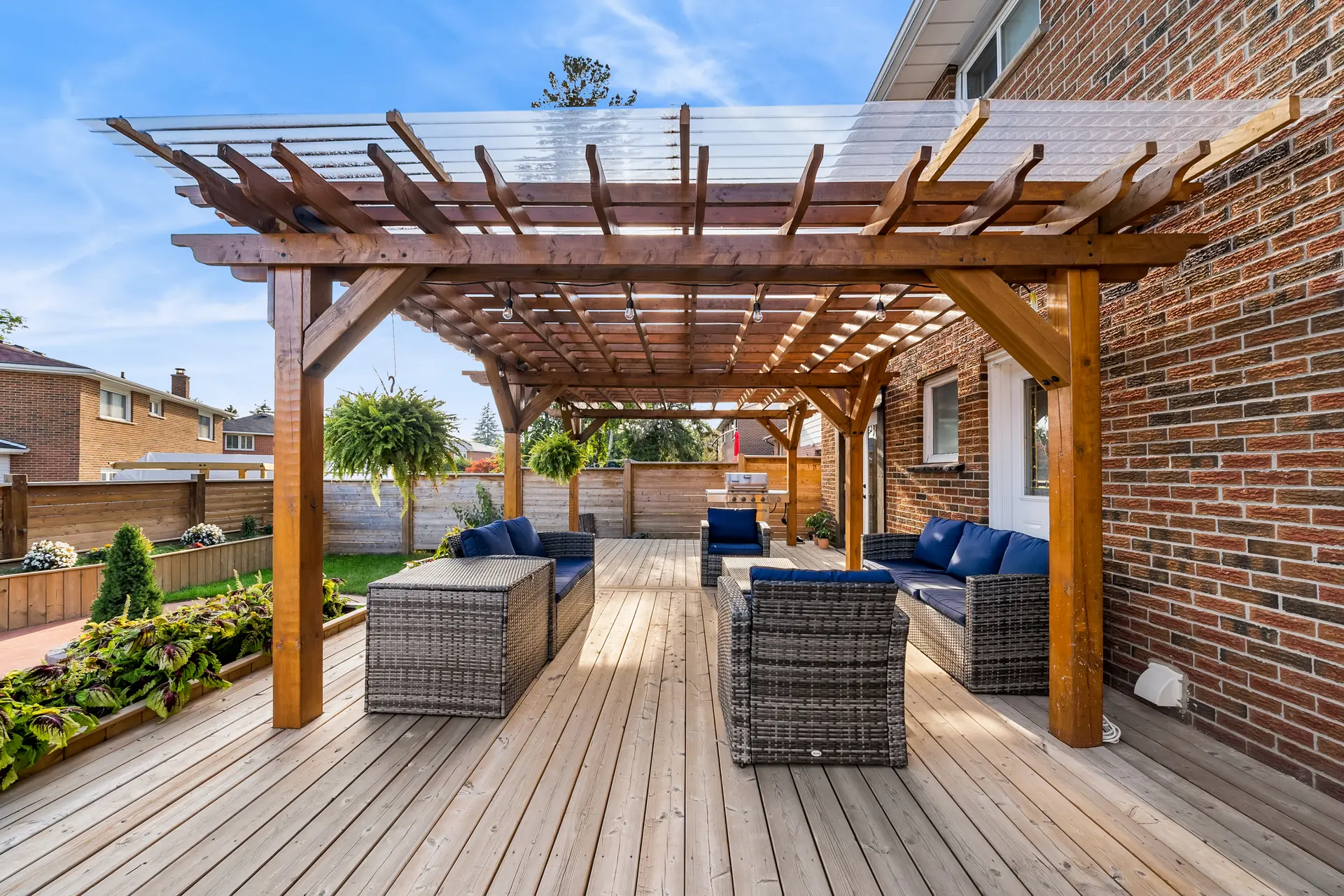
Source: Canadian Constructor Creations Inc.
Planning an outdoor living project starts with understanding today’s market prices. Across Canada, material costs have stabilized somewhat in 2026, but skilled labour continues to represent a major share of the budget. Whether you’re planning a simple ground-level platform or a multi-level deck with stairs and railings, knowing the installed cost per square foot is the first step toward setting a realistic budget.
Deck Cost Per Square Foot in Canada by Material
Here is an overview of average installed costs for the 2026 season, including framing, decking, and basic labour:
Material | Average Price (Installed / sq. ft.) | Estimated Lifespan | Maintenance Required |
Pressure-treated wood | $35 – $60 | 10 to 15 years | High (annual staining or sealing) |
Western red cedar | $60 – $90 | 15 to 20 years | Moderate (oil or stain) |
Thermally modified wood | $75 – $105 | 20 to 25 years | Low to moderate |
Composite / PVC | $100 – $130 | 25 to 30+ years | Very low (basic cleaning) |
Aluminum | $95 – $135 | 30+ years | Minimal |
Pressure-Treated Wood: The Most Affordable Option
Pressure-treated lumber remains the go-to choice for tighter budgets. With an installed cost ranging from $35 to $60 per square foot, it allows homeowners to build a functional outdoor space at a lower upfront price. That said, the lower initial cost often comes with more maintenance over time. To help reduce greying, cracking, and premature wear, pressure-treated wood usually needs regular cleaning, staining, or sealing.
Cedar and Thermally Modified Wood: A Mid-Range Upgrade
For homeowners who want the look and feel of real wood without choosing chemically treated lumber, Western red cedar remains a classic option across many parts of Canada. Thermally modified wood, which is heat-treated to improve dimensional stability, is also becoming more common. These materials typically range from $60 to $105 per square foot installed. They offer a more refined appearance and improved natural resistance to insects and decay, making them a popular middle-ground choice between pressure-treated wood and premium low-maintenance products.
Composite and Aluminum: A High-End, Low-Maintenance Investment
If your priority is long-term durability with very little upkeep, composite or aluminum is often the best fit. Composite decking, made from a blend of polymers and wood fibres, is especially popular among homeowners who want a clean, modern finish without the need for repeated staining or sealing. Although pricing often rises above $110 per square foot, these materials resist rot, warping, and fading far better than many traditional wood products. For many households, this is a “peace of mind” investment that pays off over the long run.
Hidden Costs That Can Increase Your Quote
A contractor’s quote is never based on surface boards alone. Several project variables can push the final price up by 20% to 40%, including the following:
Deck height: A raised structure requires more framing support, bracing, and often longer stair systems. The more elevation involved, the more complex the build becomes.
Demolition and disposal: Removing and disposing of an old deck or patio can add $500 to $1,500 or more, depending on the size of the existing structure and site conditions.
Access to work area: If materials need to be carried in by hand or moved with smaller equipment because of limited access, labour costs can increase significantly.
Structure and Foundation: Why Helical Piles Matter
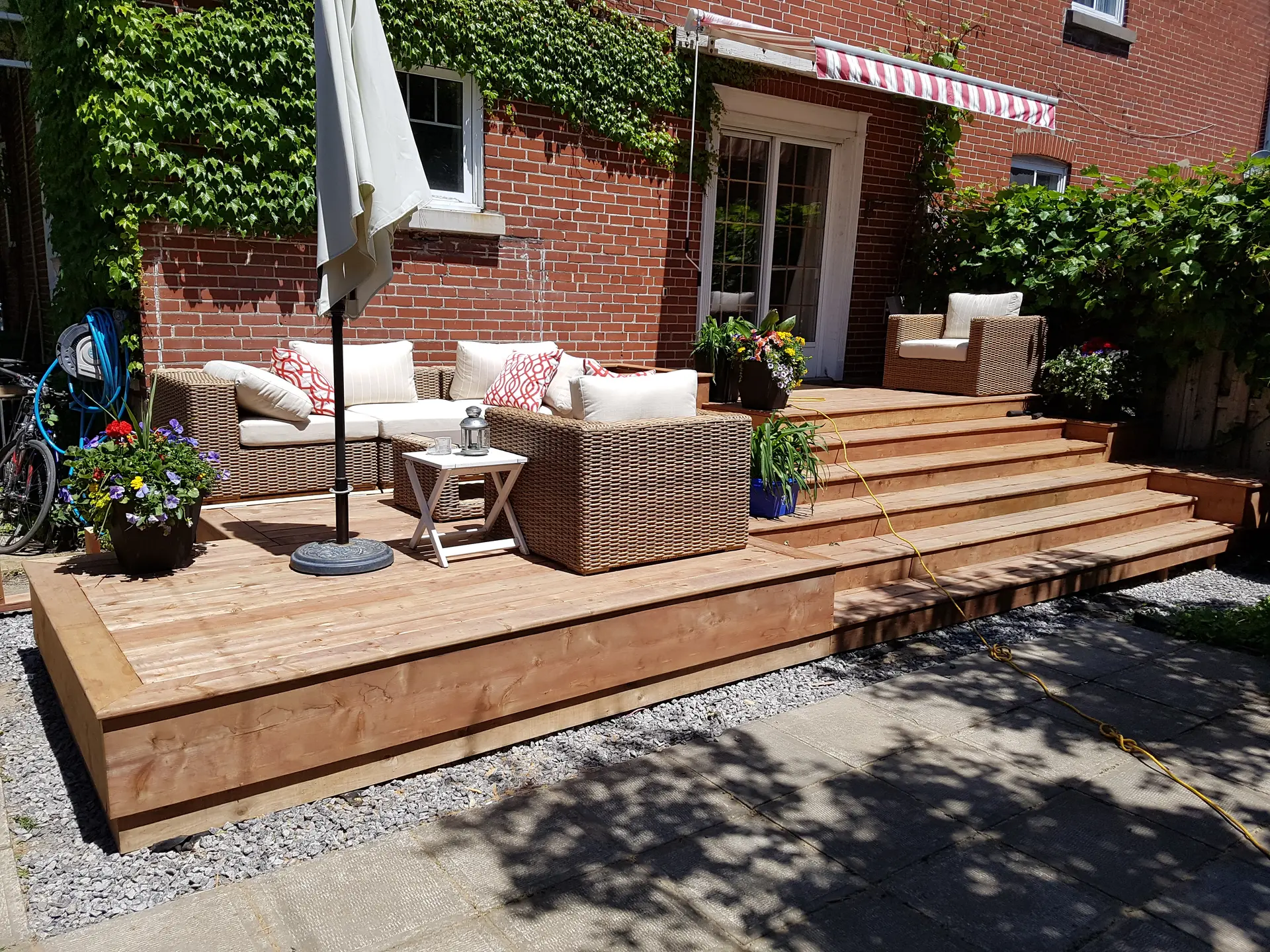
Source: Maisonfort inc
In many parts of Canada, freeze-thaw cycles can be tough on outdoor structures. To improve long-term stability and reduce movement over time, helical piles are increasingly recommended for deck foundation, especially for elevated or permanent builds.
Cost per pile: In 2026, homeowners can generally expect to pay between $200 and $350 per installed pile, depending on the required depth and load-bearing capacity.
Long-term stability: Compared to deck blocks or poorly installed concrete sonotubes, helical piles are often considered a more reliable option because they can anchor well below the frost line. This added stability can help reduce settling, shifting, and seasonal movement.
Stairs and Railings: Important Finishing Costs
Source: Demex Deck Inc.
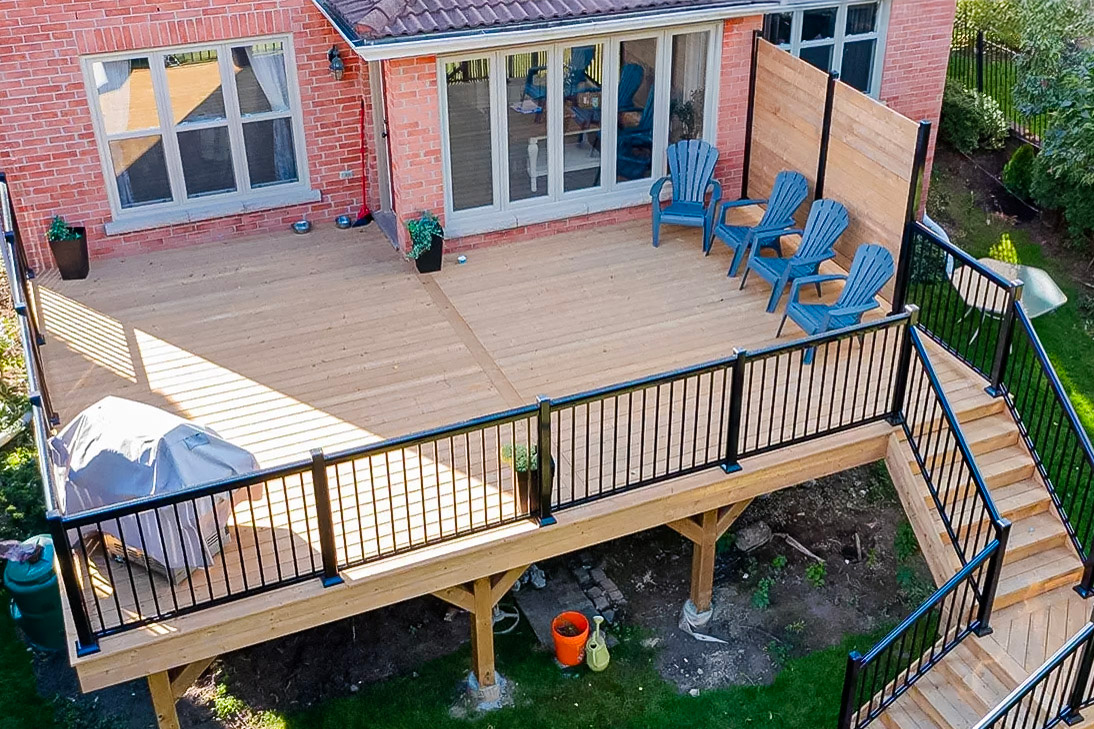
Railings are often one of the most overlooked line items in a deck budget, yet they can represent a substantial share of the final cost.
Aluminum picket railings: Expect to pay roughly $80 to $150 per linear foot for aluminum railings with pickets.
Aluminum and tempered glass railings: For a more open view and a more upscale finish, aluminum-and-glass systems can range from $150 to $400 per linear foot.
Stairs: A standard 3- to 4-step staircase made with pressure-treated wood generally costs about $400 to $700, though the price can easily triple for extra-wide stairs or premium materials such as composite.
DIY vs. Hiring a Licensed Contractor

Source: RenoQuotes
Building your own deck may seem like a good way to save on labour, which often accounts for 40% to 50% of the total bill. However, there are trade-offs to consider.
Warranty protection: A qualified contractor may offer workmanship coverage on the installation. If a structural issue appears later, that added protection can make a major difference.
Code compliance: A professional can help ensure the railing height, stair design, framing, and fastening methods meet local code requirements. In many areas, guardrails must meet minimum height standards, often around 36 or 42 inches, depending on the application and local rules.
Time commitment: A project that takes a professional crew three days can easily take a homeowner several full weekends, especially without prior experience or specialized tools.
To get a more accurate idea of pricing in your area, it is worth comparing multiple quotes from deck contractors before making a final decision.
Conclusion: Build for Long-Term Value
The cost of a deck in 2026 reflects both the quality of the materials and the technical requirements needed to handle Canadian weather conditions. While a pressure-treated wood deck may be the more affordable choice today, investing in a stable foundation and lower-maintenance materials such as composite can often deliver better long-term value over a 15-year period.
Looking for something else?
Related articles
The latest industry news, interviews, technologies, and resources.
Editorial Team
•08 Nov 2023
For both humans and the home, winter is difficult to endure. Between the cold weather, the strong winds, the ice, and the snow, we all require a little bit of cold weather protection.

Karine Dutemple
•16 Jun 2026
Summer is just around the corner, and for many homeowners, that means it’s time to start planning a backyard reno. If you’ve been searching for patio inspiration for several years, this could be the year your dream outdoor space finally comes together.
Editorial Team
•18 Aug 2025
Whether you’re freshening up a bedroom or repainting a façade, painting is one of the most accessible renovation projects. However, a common mistake is buying too much or too little paint. Accurately calculating the required amount allows you to plan your budget, avoid waste, and cut down on trips to the hardware store. This guide will explain how to determine the surface area to be painted, choose the right type of paint, and estimate the number of coats to ensure success.

Editorial Team
•27 Jul 2026
While the summer heat is much appreciated throughout Canada, that doesn’t make it easy to bear. Have you ever dreamed of lounging by the pool while the sun is at its hottest? Does the idea of spending your summer weekend entertaining around a pool sound enticing? Imagine taking a cool dip or swimming a few laps to help alleviate the intense summer heat!
Amanda Harvey
•08 Nov 2023
Rain gutters aren’t the most glamorous part of your home's exterior. They work hard to collect and carry rainwater away from the roof of your home but most homeowners pay little mind to these important structures. Gutters, also known as eavestroughs, work to keep basements or crawl spaces from collecting water. Therefore, they’re crucial in maintaining the structure and both the interior and exterior surfaces of your home.