DIY Appliance Repair or Call a Pro in Montreal? The Decision Is Less Obvious Than It Looks
By Editorial Team
Updated on May 25, 2026

Montrealers love a good DIY moment. There’s something in the culture that says: why pay someone for a simple fix when a screwdriver and a ten-minute video might do it? Fair. Sometimes that’s exactly the right move.
But appliances have a way of punishing confidence. Especially in this city, where a “small leak” can turn into a neighbour’s ceiling stain, and where winter makes certain breakdowns feel urgent, not annoying. When the situation calls for appliance repair in Montreal, it’s usually because the downside of guessing is bigger than people want to admit.
Montreal is a special environment for appliances (and repairs)
Source: Ayon Design & Build Corp.
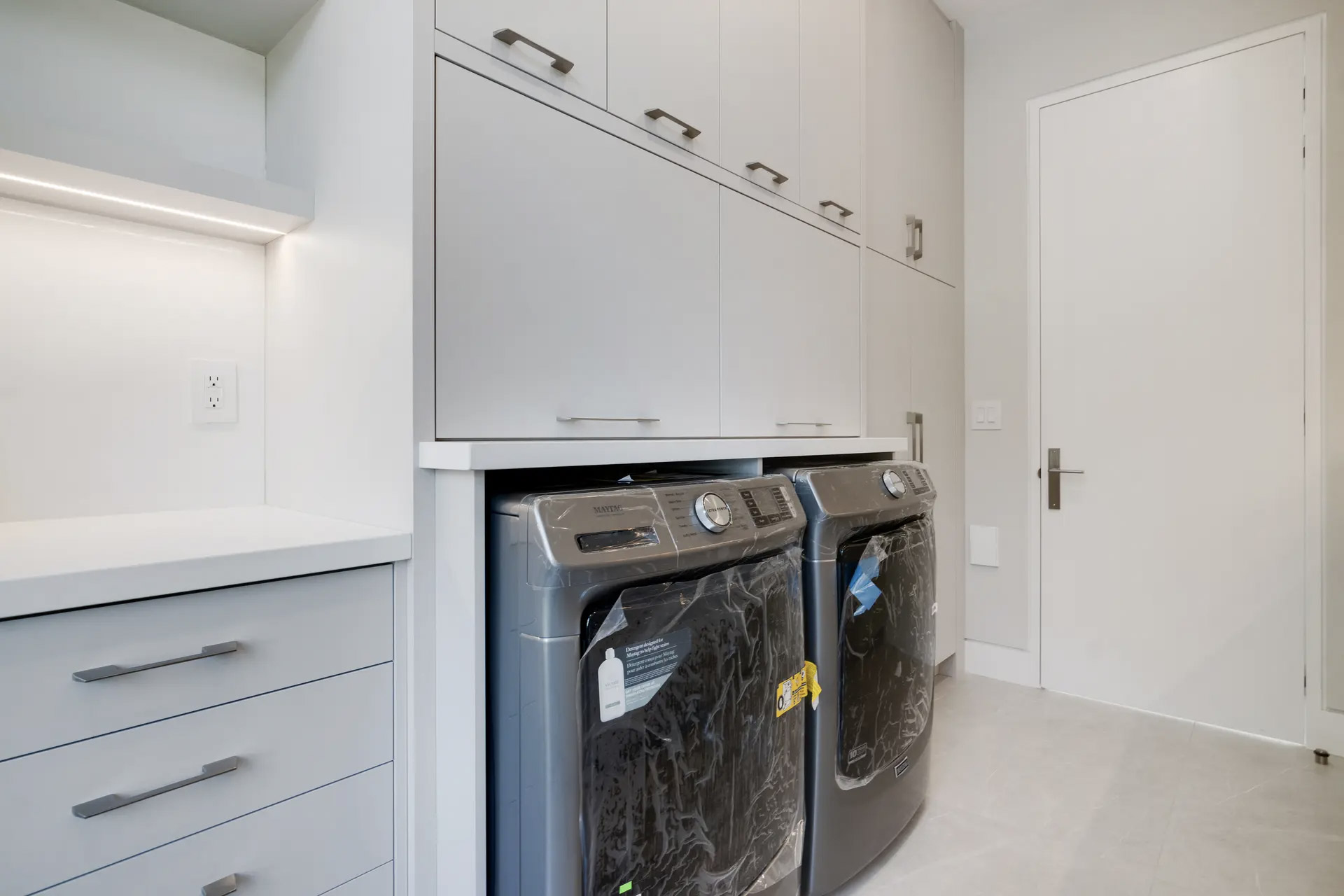
Not because Montreal appliances are different, but because Montreal homes are. A duplex in Villeray is not a downtown condo tower. A triplex in Rosemont has quirks that don’t show up in newer builds. Add old plumbing, tight laundry closets, vintage electrical panels in some buildings, and it becomes clear why “just try a quick fix” can be a gamble.
A few local realities shape the DIY vs technician choice:
Water damage here spreads fast
In condos, it’s obvious: one dishwasher leak can migrate through floors and drywall. In older plexes, it can slip behind baseboards, under hardwood, into ceilings. The damage is often deeper than the original appliance problem.
Winter changes the urgency
A fridge failing in July is a headache. A fridge failing during a cold snap can be even more chaotic because deliveries get delayed, parts shipments slow down, and nobody wants doors open for long. Dryers also work harder in winter, and vent issues show up quickly.
Time is a cost, not just money
Waiting three days for a part sounds manageable until it’s a freezer full of food or a washer needed for a family of four. DIY saves labour fees, but it can stretch downtime.
What DIY is actually good for (the practical version)
Source: Kim Lacharité designer d'intérieur
DIY appliance repair works best when the problem is simple, the risk is low, and the appliance can be tested properly after. That last part matters. Lots of “successful” DIY fixes are really just temporary resets.
DIY is usually reasonable when:
The appliance can be unplugged or shut off safely.
The issue is maintenance-related (clogs, lint, grime, leveling).
The part is inexpensive and easy to access.
There is no water on the floor, no burning smell, no gas smell.
The unit is out of warranty, or the warranty rules allow basic owner maintenance.
DIY tasks that often make sense in Montreal apartments and homes
Cleaning a dishwasher filter and checking the drain area for debris.
Clearing a dryer vent line (and checking the exterior vent flap).
Vacuuming accessible refrigerator coils and removing dust buildup.
Checking and cleaning washer drain filters (when the model has one).
Leveling a washer to reduce shaking and “walking”.
Replacing a worn fridge door gasket if it’s a simple slip-on style.
Resetting a tripped breaker and confirming the outlet has power.
These are not glamorous jobs, but they prevent a lot of service calls. They also don’t usually require opening electrical housings or messing with gas lines.
Where DIY becomes a bad idea
The internet makes everything look doable. That’s the problem.
Many appliance repairs are easy in theory and annoying in practice. Tight screws. Plastic clips that crack if they’re a decade old. Panels that don’t sit right after reassembly, so the machine vibrates or leaks later. A connector that looks “close enough” until it arcs.
DIY tends to go wrong in three classic ways:
Misdiagnosis and the parts spiral
A fridge isn’t cooling. Someone replaces the thermostat. Still warm. Then a fan. Still warm. Then maybe a control board because a forum said so. Suddenly the repair cost is close to a new fridge, and the appliance is still unreliable.
Creating a second problem
A hose clamp isn’t tightened enough. A gasket is pinched. A wire is routed poorly and rubs against metal. The appliance works today, then fails next week with a bigger issue.
Safety gets brushed off
Some repairs are not “watch a video and be careful” territory. Electricity, gas, high heat, pressurized refrigeration systems, these are the lines.
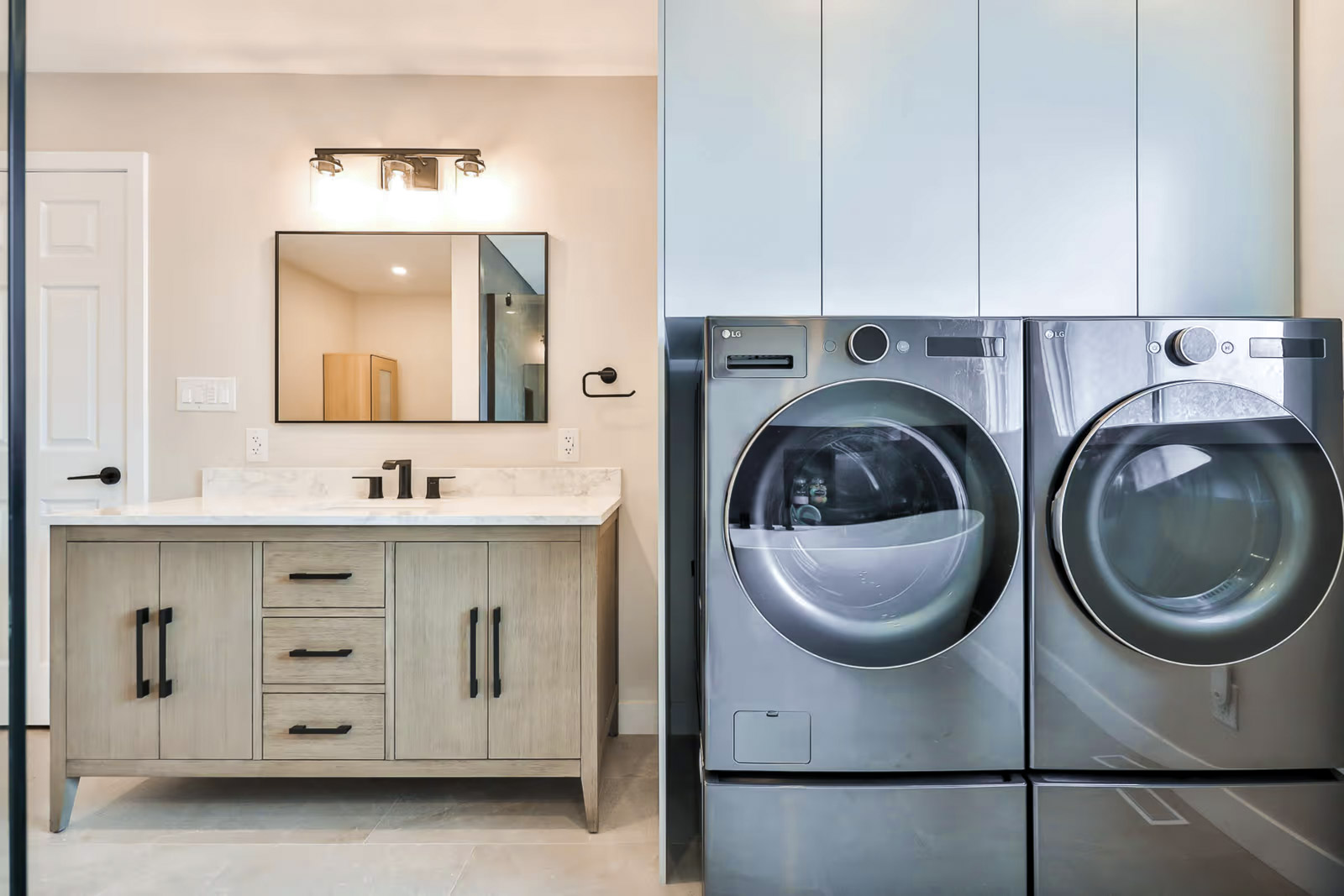
Montreal’s tight spaces make this worse. Many laundry setups are crammed into closets or corners, where one awkward move can kink a hose or stress a connection.
Montreal condos: the leak factor and the paperwork factor

Source: Groupe INOVCON
In a condo building, one mistake has an audience. Sometimes it’s a literal audience, like the downstairs neighbour who comes knocking. Sometimes it’s the condo board, insurance adjusters, and a stack of emails that never ends.
Many buildings also have rules about appliance installation and plumbing connections. Some require specific hoses, specific shut-off valves, or proof of professional installation for certain work. It varies, but it’s common enough that it should be assumed until proven otherwise.
Even renters should be careful. In Quebec, responsibilities depend on what’s in the lease and who owns the appliance. If the landlord provided the dishwasher and it leaks after a DIY attempt, that can get messy. “It was already acting up” is not a strong defense when there’s water damage.
The warranty trap nobody thinks about until too late
Newer appliances are expensive, and manufacturers know it. Warranties often come with conditions, and unauthorized repairs can complicate coverage. Not always, not in every case, but enough that it’s worth reading the basics.
DIY maintenance like cleaning filters is generally fine. Opening control panels, swapping boards, cutting wires, or modifying anything is where trouble begins. A warranty claim with evidence of amateur repairs can go sideways quickly.
Also, modern machines store fault codes and operating history. That’s not conspiracy talk, it’s how diagnostics works now. A technician can pull information that shows repeated overheating, failed sensor readings, or abnormal cycles. It’s useful for repair, and it can also reveal “creative” DIY attempts.
Cost: the real calculation isn’t the service call
People compare a $60 part to a service fee and feel clever. But the real comparison is outcome vs risk.
A better way to think about cost in Montreal:
DIY is cheaper when
The fix is clearly maintenance or a simple replacement
The appliance can be tested fully the same day
There’s no risk of water damage or electrical hazard
The part is returnable and not a “final sale” special order
Downtime is manageable
A technician is cheaper when
Diagnosis is unclear and parts are expensive
The appliance is built-in or difficult to access
The unit is in a condo or above another unit (leak risk matters)
The issue involves heat, gas, or repeated electrical faults
A wrong move could damage flooring, cabinetry, or wiring
There’s no shame in DIY. The mistake is doing DIY in situations where the penalty for being wrong is high.
A simple way to decide in under two minutes
Montreal households don’t need a philosophy of repair. They need a quick filter.
Ask these questions:
Is there any sign of water, burning smell, overheating, or gas smell?
Can the appliance be safely shut off and accessed without forcing panels or lifting heavy units?
Is the likely fix cleaning, unclogging, leveling, or a basic wear part?
Can the appliance be tested through a full cycle afterward (wash cycle, dry cycle, cooling stability)?
Would a failed attempt risk damaging the home, not just the appliance?
If the answers point toward risk, call a pro. If the answers point toward maintenance, DIY is fine.
The bottom line for Montreal residents
DIY appliance repair is worth it for the boring stuff that keeps machines healthy: cleaning, clearing, tightening, leveling, replacing simple parts. That’s the good DIY. It’s practical, it saves money, and it prevents breakdowns.
But when the symptom hints at heat, water, gas, electrical trouble, or a complex electronic issue, Montreal is not the place to gamble. Too many homes are stacked, too many installations are tight, and the cost of a “small mistake” can jump from appliance-level to building-level in a hurry.
The best choice is the one that gets the appliance fixed safely, without turning a manageable problem into a week-long headache. In Montreal, that often means knowing when to stop tinkering and bring in the right technician.
Looking for something else?
Related articles
The latest industry news, interviews, technologies, and resources.

Editorial Team
•06 Aug 2024
The digital realm has evolved exponentially over the years, and home automation systems are following suit. A home automation system allows you to remotely control a myriad of devices and equipment in your home thanks to technology such as the Internet of Things (IoT) and artificial intelligence (AI). However, while these systems offer unprecedented connectivity, they also present some downsides.

Editorial Team
•08 Nov 2023
Every once and a while, we’re hoping for a way to update the rooms of our homes, adding creative, practical and innovative elements without spending a fortune. The bedroom is a special space in that it needs to be cosy and comfortable but also functional.

Editorial Team
•08 Nov 2023
If you haven’t heard of a wet room before, we recommend you start paying attention to this growing trend. The wet room is becoming more desirable as a minimalist, one-of-a-kind feature that works to add value to your home.
Editorial Team
•24 Sep 2024
Floors bear witness to years gone by… Floor wax facilitates upkeep and extends the flooring’s lifespan. Although once part of a housekeeper’s duties, more homeowners are now choosing to hire professional service providers to ensure flawless results.
Editorial Team
•08 Nov 2023
Are you in the process of renovating a part of your home and would like to create an impeccable finish? Adding moulding, like quarter rounds, is indispensable in this regard and will surely add a lot in terms of aesthetics. Want to know more about this type of moulding? Keep reading!