Septic System for a Chalet in Quebec: Price, Installation, and Maintenance
By Editorial Team
Updated on April 22, 2026
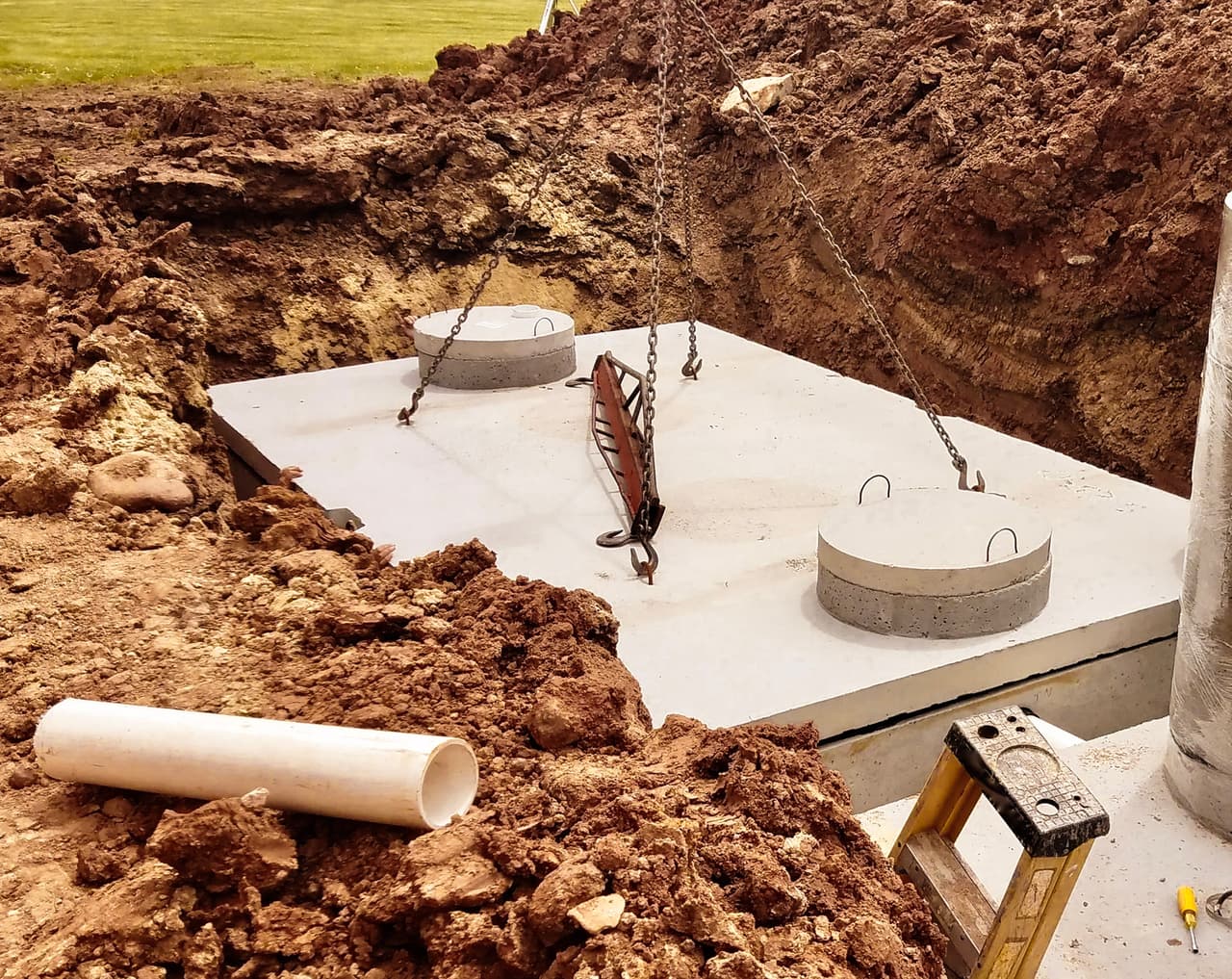
Installing a septic system for a chalet in Quebec is rarely a “catalog purchase.” Two homeowners may choose a similar system and pay very different amounts simply because their land, site access, and municipal requirements don’t tell the same story. Before even talking about concrete, polyethylene, or capacity, one thing must be understood: the price depends primarily on the treatment solution your land allows, and what will be required to install it properly.
This guide has a clear objective: to help you estimate a realistic budget by explaining what influences quotes. We review the main types of systems for chalets, the role of the leaching field and alternative solutions, installation and maintenance costs, and the factors that drive price variations. You’ll also learn what soil tests are for, how to compare contractors, and what steps to plan for compliance and financial assistance.
How Much Does It Really Cost for a Chalet?
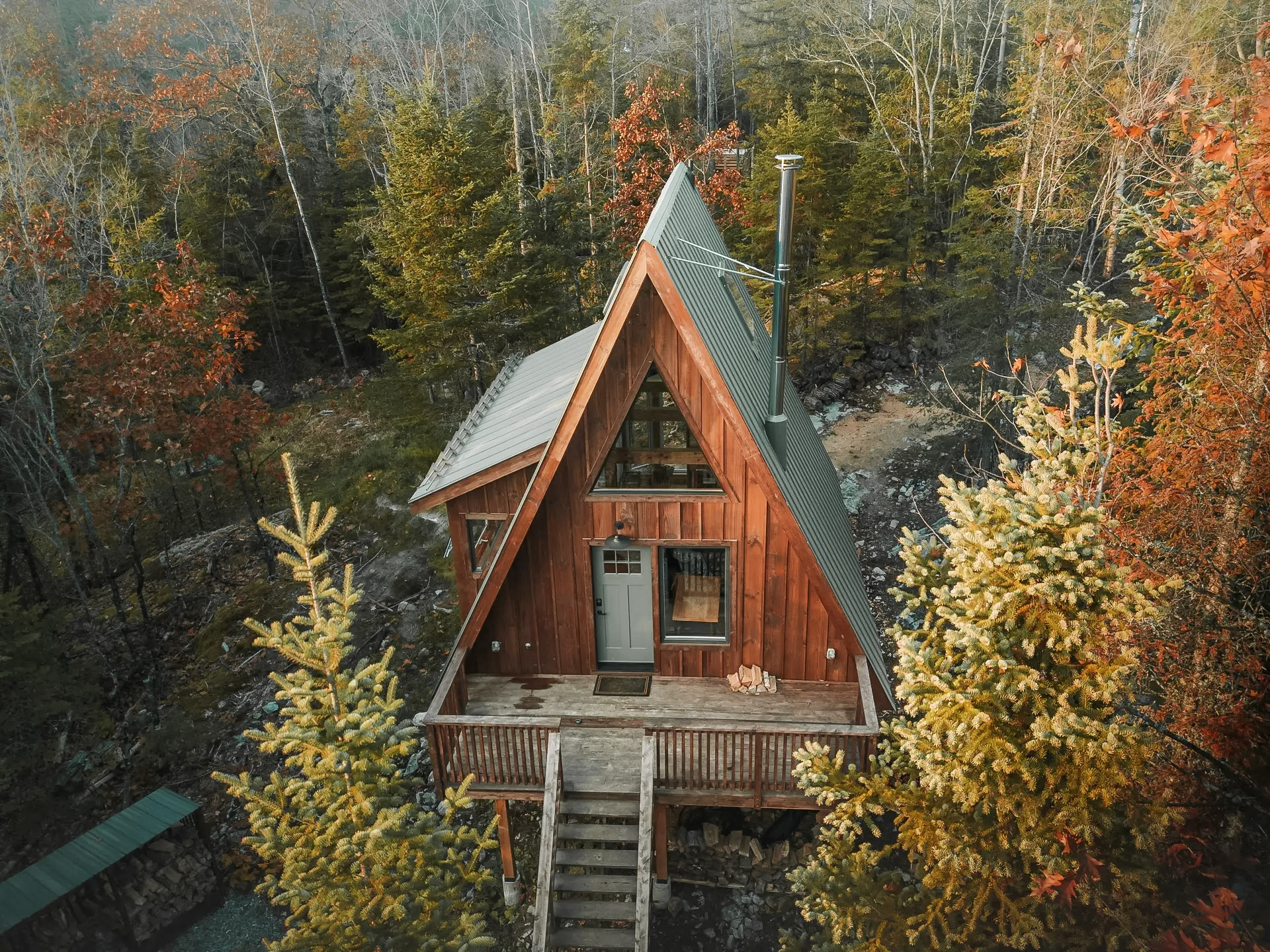
Source: Cubiq Architecture inc.
The natural reflex is to ask: “What’s the price of a septic tank for a chalet?” But the more useful question is: how much does the entire septic system cost, installed on my land and adapted to my usage level? The price varies mainly based on four variables: the type of system, the land, accessibility, and local requirements.
On a favourable lot, with compatible soil, enough space, and easy access, a standard setup—septic tank and leaching field—is often the simplest option to understand and maintain. Conversely, as soon as the site imposes constraints such as a high water table, low-permeability soil, bedrock, proximity to a body of water, or limited space, you often have to turn to a secondary treatment system, sometimes advanced secondary, or in some cases a sealed tank, also called a holding tank. That’s where the budget increases, because you’re paying either for more sophisticated components or for higher recurring costs.
Finally, “chalet use” changes the dynamic. A seasonal chalet can reduce certain maintenance expenses, especially the frequency of septic tank pumping, without eliminating installation requirements or soil constraints. In other words, maintenance may be lighter, but installation remains a technical project.
Purchase Price: Types of Tanks, Sizes, and Materials
Capacity (Size): What It Means in Practice
Tank capacity is not chosen “at random.” It is tied to occupancy level and building configuration, often interpreted based on the number of bedrooms or an equivalent occupancy measure. In the chalet context, you may see references such as a 3,900-litre capacity, but this is not a “universal size.” The right capacity is the one that matches your actual usage and the sizing of the entire system, including post-tank treatment.
Two chalets may look similar yet have different needs: a two-bedroom chalet used heavily in summer and on weekends is not comparable to a similar chalet occupied full time. And if you rent your property on short-term rental platforms, sizing and wear may be more demanding.
Compartment Tanks and Primary Treatment
In quotes, you may see references to “chamber systems,” meaning compartmentalized tanks. The goal is to improve settling and solid separation, which helps primary treatment and protects the leaching field or final treatment unit. For a chalet, this is particularly useful when usage happens in bursts, with arrivals, showers, dishwashing, and laundry concentrated over a few days.
Materials: Concrete, Polyethylene, Fiberglass
Material affects price, logistics, and durability.
Concrete: Often valued for its strength and stability. Its weight helps prevent flotation in certain conditions, especially with a high water table, but it requires heavier transport and handling. For accessible sites, it is a common choice.
Polyethylene: Lighter, which can be advantageous when access is difficult, such as narrow roads or limited machinery capacity. However, installation conditions and backfilling must be carefully managed. Its lightness can become a drawback if the site is water-prone, with a risk of flotation if design is inadequate.
Fiberglass: Less common depending on the market and installers, but used in some cases. As with any material, quality also depends on the manufacturer, installation, and soil conditions.
In an estimate focused only on the tank, prices vary based on capacity and material. But in a full quote, the tank is rarely the most expensive item when there are site constraints, because final treatment, excavation, and materials usually dominate.
Comparison: Traditional Septic System vs Sealed Tank (Holding Tank)
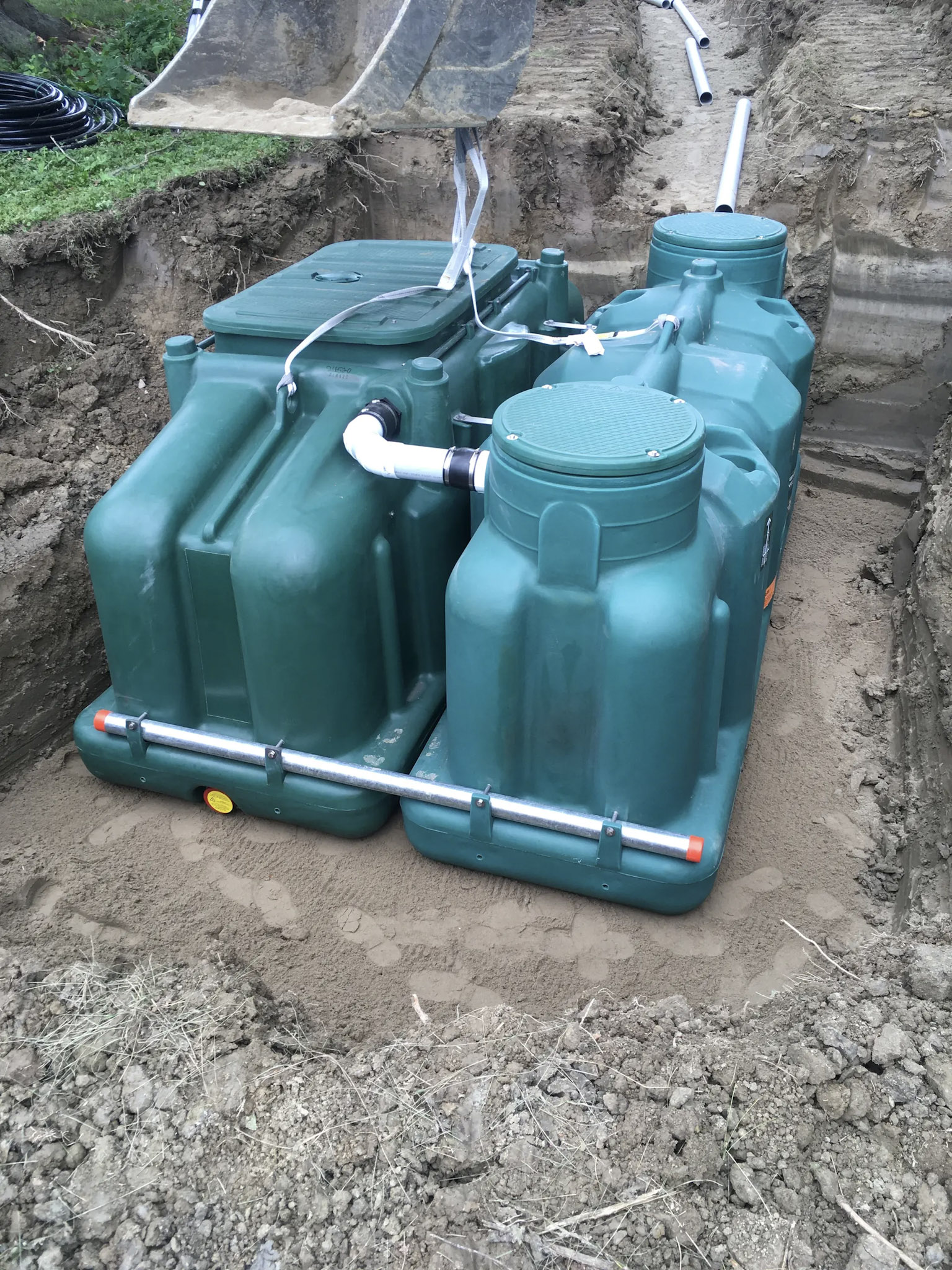
Source: Excavation S.I. Inc.
How It Works (and Why It Affects Cost)
A septic tank provides primary treatment: solids settle as sludge, grease floats, and the effluent is then directed to a final treatment system, usually a leaching field or equivalent solution. Maintenance exists, with pumping and inspections, but it is generally predictable and less frequent.
A sealed tank, also called a holding tank, is a watertight reservoir that stores wastewater and must be pumped as soon as it nears capacity. As a result, installation may appear simpler on paper, but long-term maintenance costs can become significant because you pay for repeated pumping. For a heavily used chalet, a sealed tank can become a major recurring expense.
Appearance and Installation Constraints
Visually, both systems look similar: a buried tank with covers and access points. The difference lies mainly in what surrounds them. A conventional septic system requires a designated area for soil treatment, such as a leaching field or equivalent, with usage constraints: no compaction, no construction, no traffic. A sealed tank mainly requires safe, simple access for the pumping truck, which is critical for a chalet: private road, distance, slope, year-round access, and maneuvering space.
How to Choose for a Chalet
In practice, the choice depends first on what the land allows. If a leaching field or another approved solution is feasible, it is often more stable over the long term. A sealed tank becomes relevant when soil-based treatment options are impractical, or when local regulations and site constraints make other solutions disproportionate.
Leaching Field: Role, Cost, and What Drives Variations
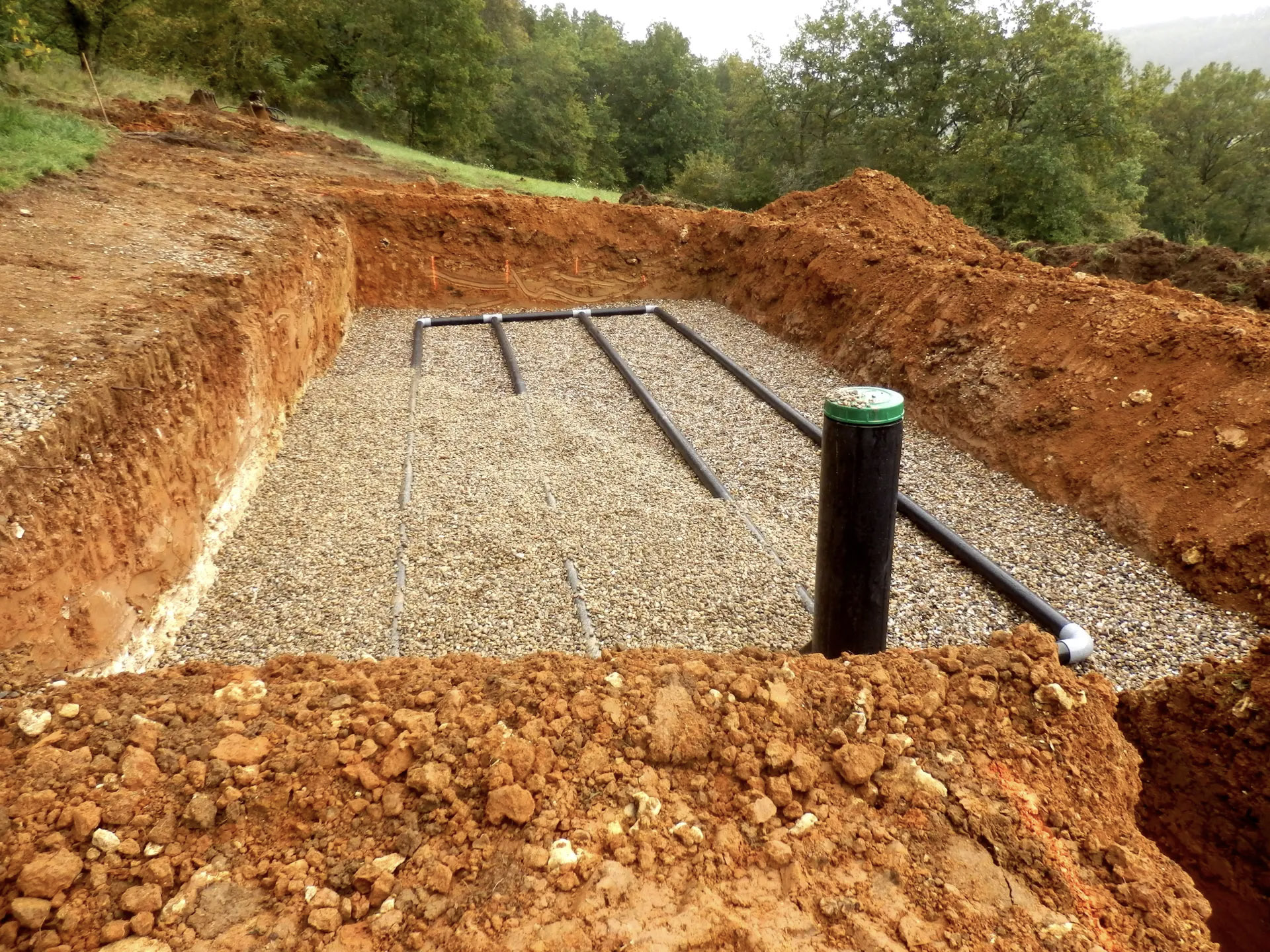
Source: Terrassement-expert.ca
The Role of the Leaching Field in the Septic System
The leaching field is the core of final treatment. The tank retains solids, but it is in the soil that the effluent is filtered and treated, through a dispersal area and a network of pipes or drains. The field is sized based on flow, soil conditions, and infiltration capacity.
It is not just “pipes in gravel.” It relies on a precise structure and installation: distribution, slope, depth, filtering layers, and often granular materials such as sand and gravel. These details determine whether a field lasts a long time—or quickly develops issues.
What Influences the Cost of a Field
The cost of a field depends mainly on space, soil, and logistics. The more limited the available surface area, the more the design must be optimized, which can increase costs. Soil type—clay, silt, sand, or organic soils—as well as the water table directly influence the type of final treatment system, allowable depth, and the amount of imported material required.
Transport is often underestimated for chalets. Delivering multiple loads of sand and gravel on a recreational property road, sometimes in peak season, can be expensive. This is even more true if access is restricted and the contractor must use smaller equipment or make multiple trips.
Complementary or Alternative Solutions to a “Traditional” Field
When a traditional field is not possible, there are approved solutions that fulfill the same final treatment role, sometimes combined with advanced secondary treatment systems. In sensitive contexts, higher-level systems may be required, such as tertiary systems focused on phosphorus removal or disinfection. These options increase initial costs and may add ongoing requirements such as maintenance contracts, mechanical components, and electricity consumption.
What About an Artesian Well?
An artesian well is not part of wastewater treatment; it is a water source. It is mentioned here because, on a chalet property, the well and septic system must coexist while respecting separation distances and protection zones. A well positioned too late in the project can reduce the available area for the dispersal zone or require design workarounds—and added costs—that could have been avoided.
Installation Cost: Steps That Increase a Quote
1) Site Study and Soil Tests
This step dictates almost everything: soil type, infiltration capacity, water table depth, slope, and the best dispersal area. The soil test, often called a “site study” or “percolation test,” is used to design a compliant, adapted system. Without it, prices remain estimates.
2) Municipal Permit and Local Requirements
In Quebec, the municipality is involved in permits, compliance, and sometimes stricter rules than provincial minimums, for example near lakes or in sensitive areas. Timelines and requirements can also affect project timing, especially the construction season, which is important for chalets because work is often concentrated in a short window.
3) Excavation, Equipment, and Site Access
This is often the most variable cost. An easy site with wide access allows for standard excavation. A chalet in the woods, with a narrow road, slope, or rock, may require more time, more project management, and sometimes a different access strategy, such as staging areas, temporary paths, or ground protection.
4) Materials and Technical “Extras”
Even with a simple system, extras add up: piping, connections, vents, access risers, inspection ports, frost protection depending on conditions, and sometimes alarm systems, especially for advanced systems or sealed tanks. Site restoration is also a factor, including backfilling, grading, drainage, and seeding.
5) Directional Drilling: When and Why
Directional drilling may be used when a conventional trench is difficult or risky: crossing under a driveway, avoiding damage to a sensitive area, bypassing large rock, or working where open excavation would be too disruptive. For a chalet, this typically arises when preserving existing features such as decks, stairs, or stabilized driveways, or when dealing with natural constraints.
Maintenance and Pumping: Frequency, Costs, and Common Issues
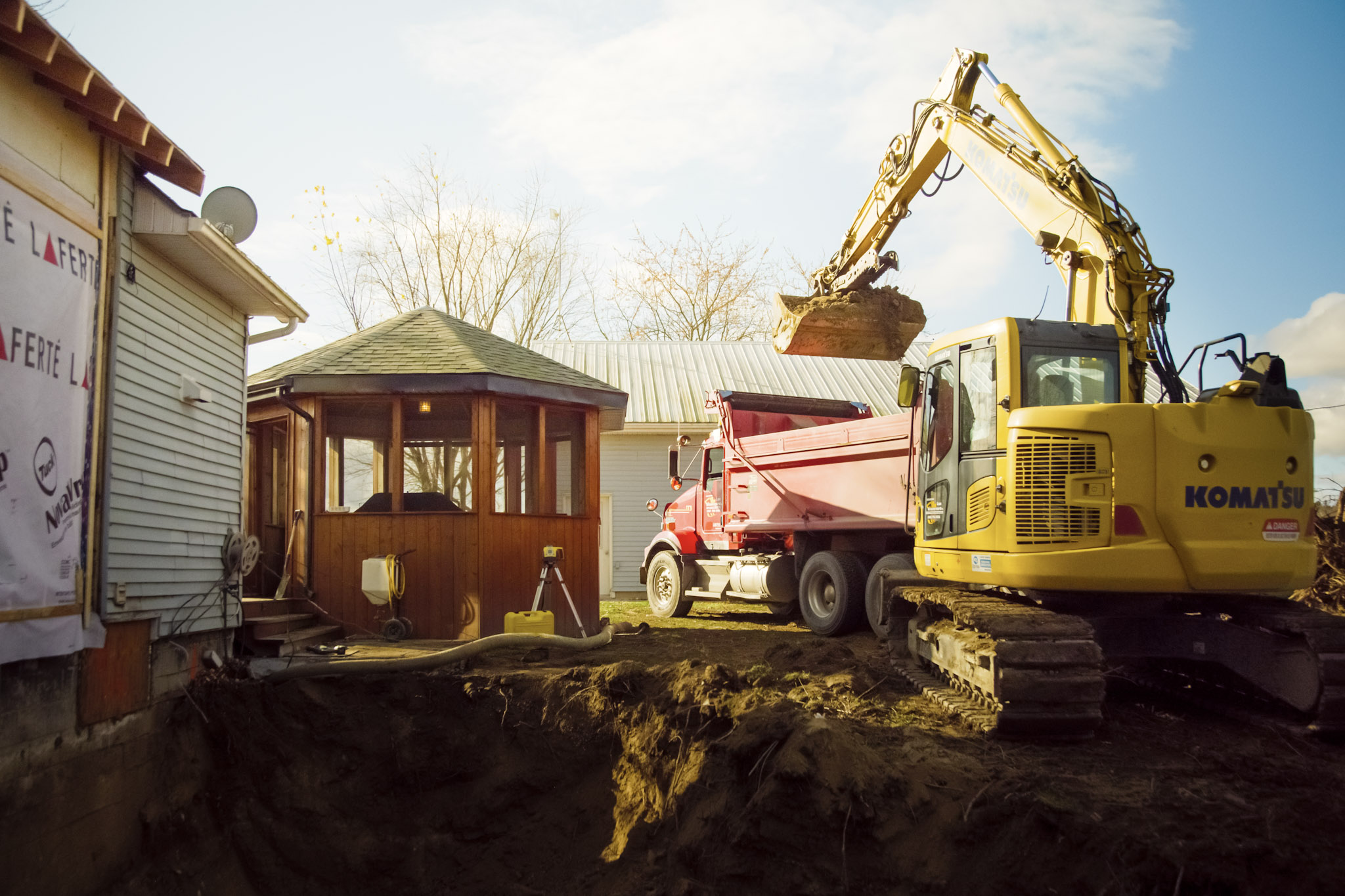
Source: Reno Quotes
Septic System: The Maintenance Logic
A septic system functions well when sludge and solids do not accumulate to the point of migrating to the final treatment unit. This is why regular pumping is essential. For a chalet, intervals may be longer than for a year-round residence, but they always depend on actual usage. A rental chalet, for example, may wear a system faster than a family chalet used moderately.
Beyond pumping, a best practice is to keep a maintenance log: pumping dates, inspections, repairs, and observations such as odours or slow drainage. This record becomes very useful during resale, renovation, or compliance processes.
Sealed Tank: More Frequent Maintenance, Recurring Costs
For a sealed tank, maintenance is mainly about capacity management. You must plan more frequent pumping, and the annual cost becomes highly dependent on water usage, local rates, and truck accessibility, including distance, slope, and season. This is why sealed tanks are often less attractive over a 5- to 10-year horizon, even if installation seems simpler at first.
Signs That Action Is Needed
Common issues are relatively easy to recognize: unusual odours, slower drains, gurgling sounds, abnormal wet areas near the field, or worse, overflow or sewage backup. In these cases, prompt intervention often prevents damage to the final treatment system, which is much more expensive to repair.
Maintenance Contracts and Inspections
Some systems, especially advanced secondary or tertiary systems, may require annual maintenance contracts or regular supervision. For a remote chalet, this should be evaluated upfront: service availability in your area, annual cost, and obligations—especially if the chalet is rented.
Factors Influencing the Price of a Septic System for a Chalet
The price of a septic system for a chalet can vary significantly depending on several key factors. Understanding these elements will help you better anticipate the budget required for your project.
Type of Installation
The choice between a traditional septic system, a compact system, or an integrated treatment system has a direct impact on cost. Each system has its own technical and installation requirements, which influence the final price.
Tank Size
Septic tank capacity, usually expressed in litres or cubic metres, depends on the number of occupants and expected usage. A larger-capacity tank costs more to purchase and install.
Material
Septic tanks can be made of concrete, plastic—often polyethylene—or fiberglass. Concrete is durable but heavier and often more expensive to install, while plastic models are lighter and sometimes cheaper, but may be less durable depending on site conditions.
Site Accessibility
The chalet’s location and site accessibility play a major role in cost. A difficult-to-access site, far from the road or requiring significant grading work, will lead to additional transport and installation costs.
Soil Conditions
Soil type—clay, sandy, rocky, etc.—affects project complexity and may require specific equipment or techniques, which impacts the overall price.
Percolation Tests
Before installation, percolation tests are often required to assess the soil’s ability to absorb wastewater. These tests represent an additional cost, but they are essential to ensure compliance and proper system performance.
By considering these factors, you can better estimate your project budget and avoid unpleasant surprises when installing your septic system for a chalet.
Upgrading or Replacing an Existing System: What to Expect
Source: Excavation A à Z inc.
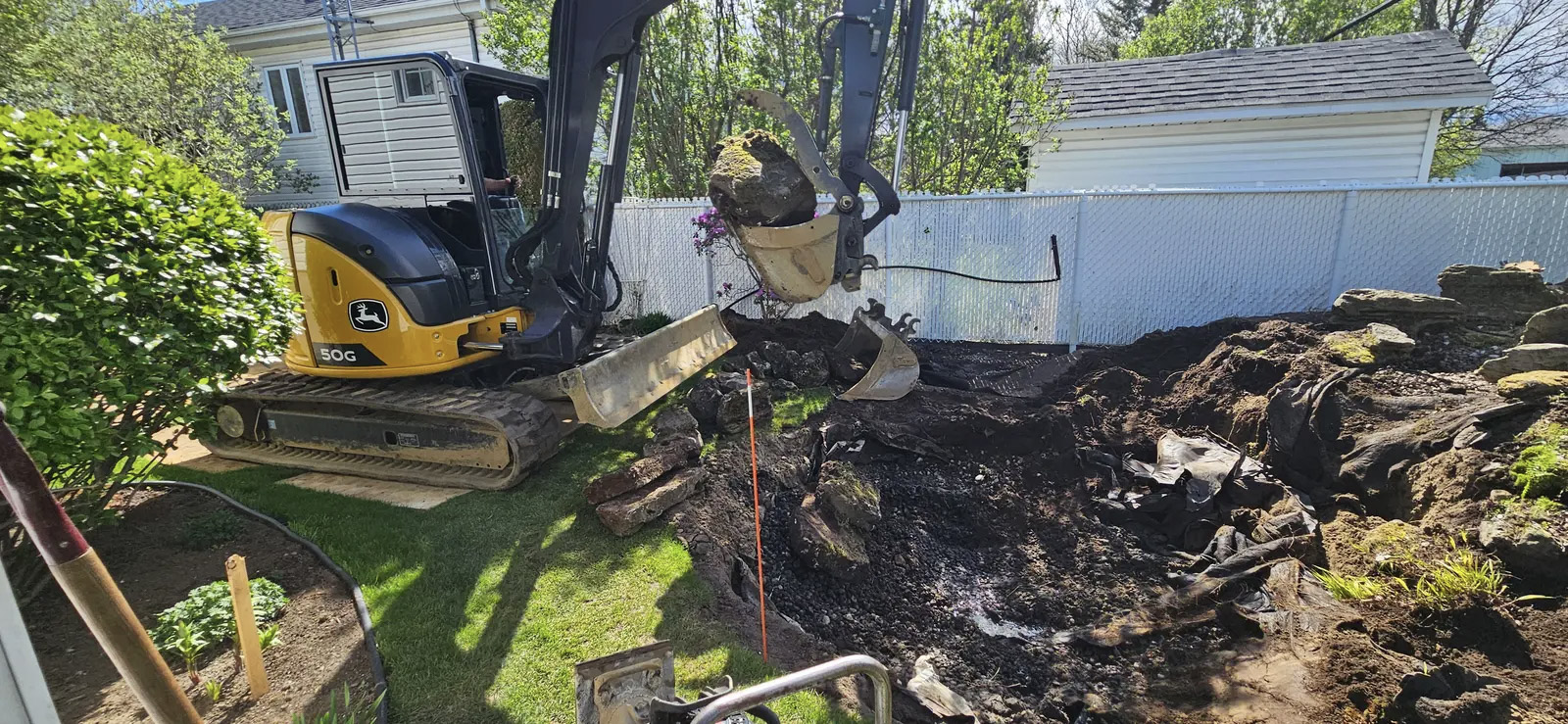
Many chalets have older systems, sometimes installed when standards were different or without complete documentation. Upgrading usually begins with a septic system inspection, sometimes called an initial inspection, as well as a compliance check. Depending on the system’s condition and constraints, you may need to replace only the tank, rebuild the leaching field, or upgrade to a more advanced solution, such as an advanced secondary or tertiary system, to meet current requirements or municipal standards.
Costs are often higher for upgrades because you must work with existing conditions: limited access, fixed location, mature vegetation, and existing infrastructure. Most importantly, a “simple replacement” may trigger the obligation to bring the entire system up to current standards.
Regulations and Grants: Permits, Compliance, and Financial Assistance
Legal Framework: Environment Quality Act and Q-2, r.22
In Quebec, wastewater disposal and treatment for isolated dwellings fall under the Environment Quality Act, with a specific regulation: the Regulation respecting wastewater disposal systems for isolated dwellings, known as Q-2, r.22. This regulation governs location, installation, use, and maintenance of systems and serves as the basis for municipal decisions regarding permits, compliance, and corrective measures.
A practical implication is that you are not simply choosing a tank model. You are getting an approved, compliant project based on soil tests, a site plan, and an accepted solution for your specific conditions. This also explains why a property may require an alternative solution, such as an advanced secondary, tertiary, or sealed system, even if the owner would prefer a cheaper option.
Municipal Permit: What the Municipality Actually Verifies
In most projects, the municipal permit is the entry point. The municipality ensures that the project complies with regulations and, where applicable, local requirements—for example in waterfront areas, watersheds, sensitive zones, or higher-density sectors. The permit is generally based on documents such as the site study, including soil tests, plans, and a description of the proposed system.
For a chalet, two points are often critical at the permit stage: the availability of sufficient surface area for the system, and the ability to ensure future access for inspection, pumping, and maintenance. This is especially important when comparing a leaching field to a sealed tank.
Certificate of Compliance: A Document to Plan For (and Useful for Grants)
In compliance projects, a certificate of compliance related to the completed work and the contractor often comes into play. This document, or an equivalent form, demonstrates that the work was carried out as planned by a qualified professional, and it is often required for tax or administrative processes. It is something to secure from the start: make sure it is included in the final project handover, along with “as-built” plans, where applicable.
Installation by Specialized Contractors: Why It Matters
Beyond compliance, the issue is responsibility and execution. A septic installation is not a “halfway” project: improper slope, inadequate backfilling, or incorrect granular material selection can be costly to fix and can compromise the lifespan of the system. This is also why, in assistance programs such as certain tax credits or grants, installation by a qualified contractor is often a requirement.
Alternative Solutions: Composting Toilets and NSF/ANSI 41
When discussing alternatives, composting toilets—also called dry toilets—are sometimes considered. In Quebec, this is not simply an unregulated option: acceptability depends on the regulatory framework and specific conditions. In many technical references, the NSF/ANSI 41 standard is associated with composting toilets and certain installation requirements, such as operation without water or effluent and indoor installation. For a chalet, this may be relevant in certain scenarios, but it is not automatically simpler, since greywater often still needs to be managed separately and local regulations must be followed.
Financial Assistance: Tax Credits and Upgrade Programs
In Quebec, there is a refundable tax credit related to upgrading residential wastewater treatment systems. In practical terms, this is a tax benefit that can reduce your net cost, provided you meet the criteria: eligible property, eligible expenses, recognized work, and required documentation and forms. Key parameters are published by Revenu Québec, including maximum amounts and eligibility periods.
In addition to the provincial credit, targeted municipal grants may exist, for example in certain watersheds, as well as programs where municipalities finance compliance upgrades, sometimes through borrowing bylaws, to help homeowners complete the work. In these cases, assistance may take several forms: direct subsidies, advances, or structured municipal programs. This is why it is useful to check at two levels: provincial, through the tax credit, and local, through the municipality or regional county municipality.
For a chalet, a good approach is to verify financial assistance before finalizing your quote, because some programs require specific documentation from the outset, such as permits, detailed invoices, and the certificate of compliance. If you discover a program after the work is completed, you may miss an administrative requirement.
Environmental Impact and Water Protection
When installing a septic system for a chalet, especially near lakes, rivers, or wells, protecting the environment and local water sources should be a priority. A properly designed, installed, and maintained system treats wastewater on-site and helps reduce the risk of contaminating groundwater and nearby surface waters. If the system is undersized, poorly installed, or neglected, harmful substances such as pathogens and nutrients can seep into the soil and eventually reach water sources.
Several factors influence environmental impact, including soil type, system placement, and required separation distances from wells and water bodies. In Quebec, provincial rules and municipal bylaws may impose minimum setbacks and, in sensitive areas, require more advanced treatment systems or site-specific design measures. Regular maintenance, such as inspections and timely pumping, is also essential to help prevent leaks, overflows, and system failures that could lead to pollution.
To minimize risks:
Ensure the system is sized and located based on a professional soil study and local regulations.
Respect required separation distances from wells, lakes, and streams.
Avoid overloading the system with excessive water use or non-biodegradable materials.
Schedule regular inspections and pump-outs, even for seasonal chalets.
Address warning signs such as odours, slow drainage, or wet areas promptly.
Following these practices helps protect both your property and the surrounding environment, while supporting clean water and a healthier ecosystem over the long term.
Conclusion: How to Approach Your Budget Without Getting It Wrong
For a chalet in Quebec, the best way to control costs is to think in terms of a “complete project” rather than a “tank price.” Start with the site study, verify municipal requirements, then compare quotes that clearly describe the system type, capacity, materials, layout—leaching field or alternative solution—expected maintenance, and compliance. Long-term costs, such as pumping, maintenance contracts, and truck accessibility, matter just as much as the initial cost, especially if you are hesitating between a conventional septic system and a sealed tank. Finally, if you are upgrading to meet standards, check financial assistance early: the right timing and proper documentation can make a real difference in the net cost.
Looking for something else?
Related articles
The latest industry news, interviews, technologies, and resources.

Editorial Team
•08 Nov 2023
Although summer is drawing to a close, it’s never too late to plan how to decorate the exterior of your home. Whether it’s a new construction project or you’re the owner of an apartment, you have several options to refresh your exterior.
Amanda Harvey
•08 Nov 2023
Let's be honest, modern life is busy. Between work, cooking, cleaning and additional day-to-day activities, every hour's filled to the brim. It's normal that you don't have the time to think about out-of-sight household things like attic ventilation. But you may not realize how important proper roof and attic ventilation actually is, not only for the maintenance and lifespan of your roof but for lower energy bills as well as the longevity of your home. Lack of proper ventilation can lead to a world of problems, and we're going to offer some information on a common solution: attic ventilation!

Editorial Team
•20 Sep 2024
Limewash paint is an eco-friendly and aesthetic option. Its antibacterial and antifungal properties make it ideal for those suffering from allergies. And, its broad range of colours and unique wash makes for a plethora of interior and exterior decoration possibilities.

Karine Dutemple
•05 Dec 2025
With summer at our feet, one can't help but quickly take out their lounge chairs and outdoor patio furniture to make the most out of the nice weather. While you may be barbecue ready, your patio, on the other hand, might need a bit more TLC!

Léa Plourde-Archer
•13 Nov 2024
This article is aimed at both the client and the contractor who will be responsible for the renovation project. Both have a vested interest in making sure that the contract they sign is clear and contains all the information that is important to specify. For both parties, this is a question of protection and clarity.