Home EV Charger Installation in Canada: 2026 Costs, Rebates and Steps
By Cynthia Pigeon
Updated on September 30, 2026
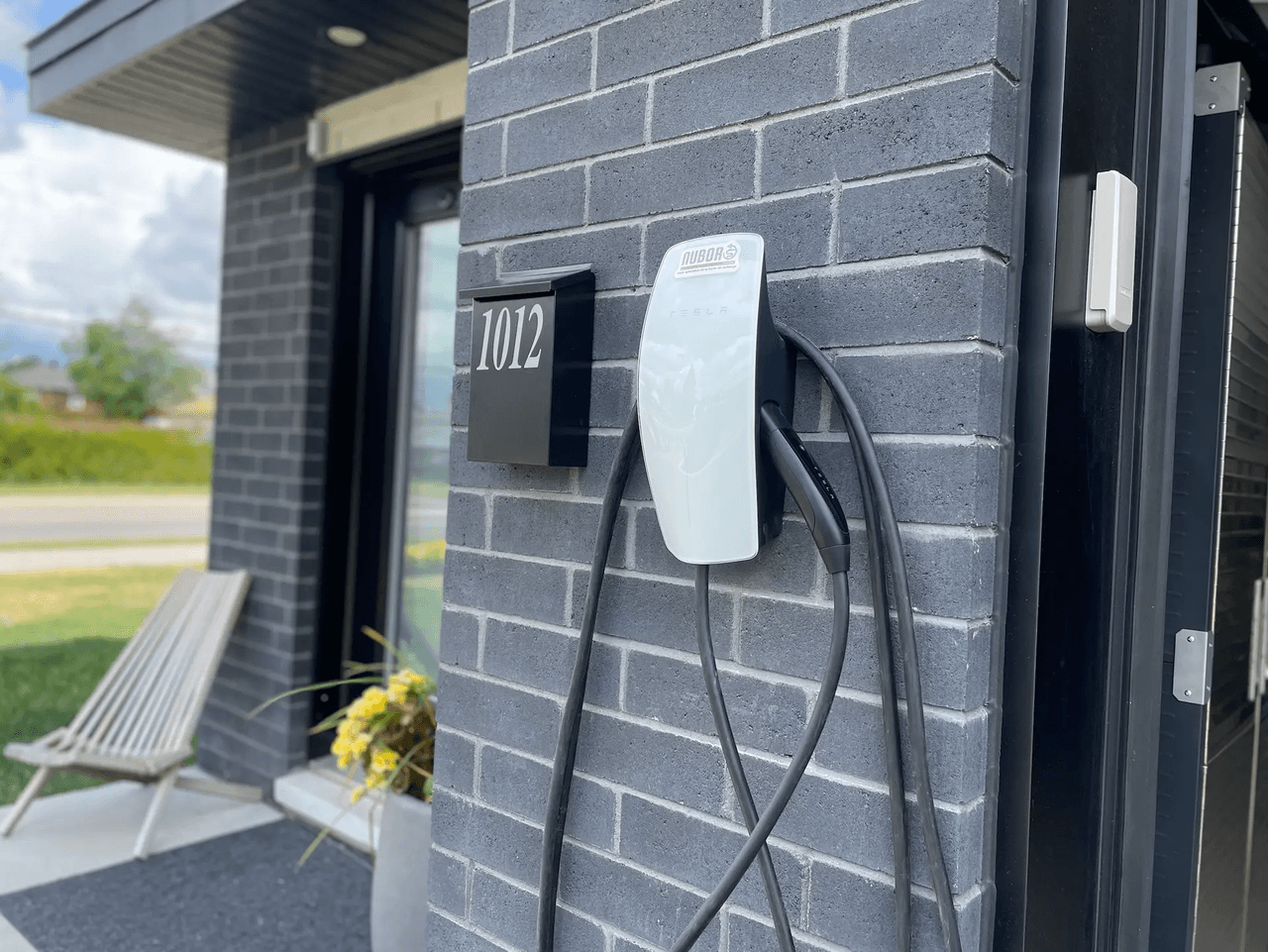
Installing a Level 2 EV charger at home allows Canadian homeowners to charge their electric vehicles faster and more conveniently than with a standard 120 V outlet. In 2026, a practical budget for a typical residential installation is approximately $1,500 to $4,500 before taxes, including the charging unit and professional installation. However, major electrical upgrades, extensive wiring or excavation can increase that cost considerably.
Installation prices vary across Canada depending on local labour rates, electrical permit requirements, the distance between the charger and the electrical panel, and the home's available electrical capacity. Provincial incentives can also reduce your out-of-pocket expenses, although eligibility varies considerably.
Before purchasing a charger, have a licensed electrician assess your electrical panel and proposed charging location. Here's how to compare your options, estimate installation costs across Canada, identify available rebates and prepare your project.
Which Home EV Charger Should You Choose: Level 1 or Level 2?
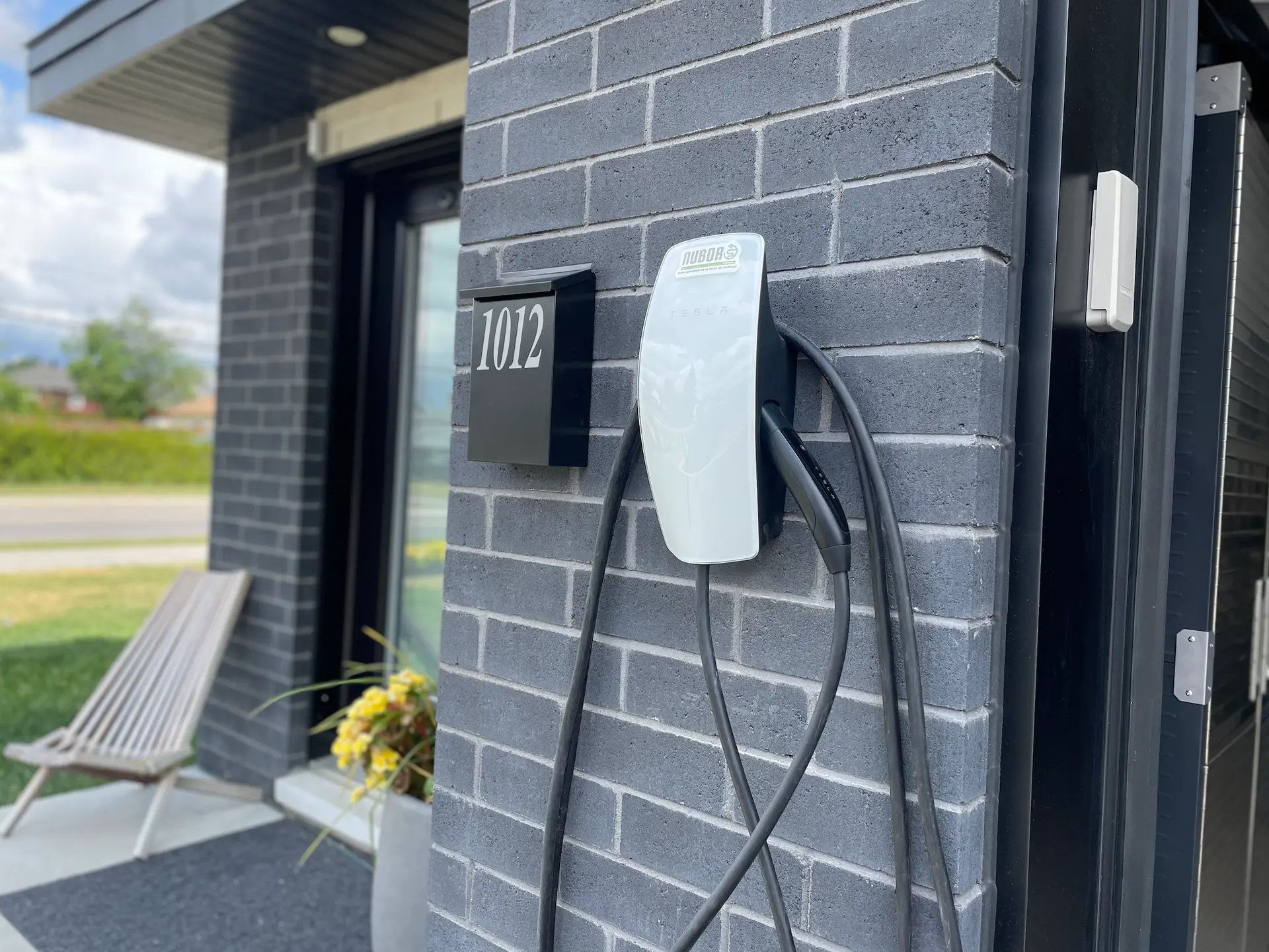
Source: Les installations NUBOR inc.
A standard 120 V household outlet provides Level 1 charging, but its limited power can be inconvenient for drivers covering longer distances or charging during cold Canadian winters. A Level 2 charger, typically connected to a 240 V residential circuit, generally delivers faster charging. Actual performance depends on the available amperage, the vehicle's onboard charger, battery conditions and temperature.
Feature | Level 1 Charging | Level 2 Charging |
Power supply | Suitable 120 V household outlet | 208 V or 240 V circuit |
Typical use | Short daily commutes and occasional charging | Regular residential charging |
Charging speed | Generally slower | Generally faster, depending on the vehicle and circuit |
Electrical work | Inspection of the existing outlet and circuit | Electrical capacity assessment and potentially a dedicated circuit |
Installation cost | Minimal if a suitable outlet already exists | Higher initial cost, depending on the electrical work required |
Potential rebate eligibility | Generally not eligible | May qualify for provincial incentives |
Winter tip: Choose a charger with a cable and enclosure suitable for Canadian winter conditions. Pay attention to the manufacturer's operating temperature specifications, particularly if the charger will be installed outdoors. Level 2 charging can also be useful when your vehicle draws additional energy to precondition its battery.
How Much Does It Cost to Install a Home EV Charger in Canada in 2026?
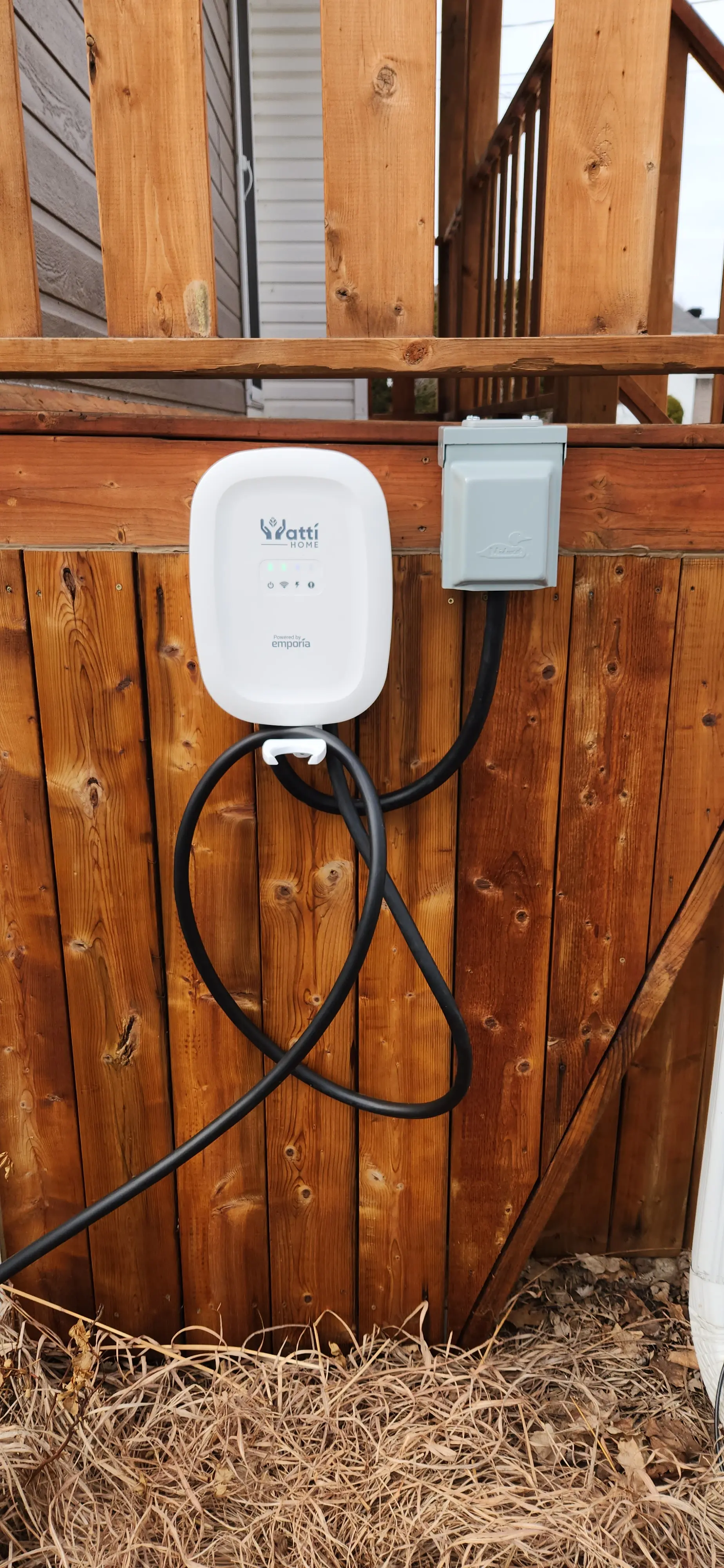
Source: BJF Électrique inc.
The cost of installing an EV charger depends on the charging unit, installation complexity, electrical capacity and labour rates in your province. For a typical Canadian home, the following budget provides a starting point. It assumes that no major electrical panel replacement or extensive excavation is necessary.
Average Home EV Charger Installation Costs in Canada
Expense | Estimated Cost Before Taxes |
Level 2 EV charger | $500–$1,500 |
Standard professional installation | $1,000–$2,000 |
Total estimated budget | $1,500–$3,500 |
More complex installation | $3,500–$4,500+ |
These are approximate planning figures, not guaranteed prices. The total budget is based on the cost of the equipment and installation work, rather than the sum of independently selected minimum and maximum quotations. Industry pricing guides indicate that the total can exceed $4,500 when additional electrical work is required.
EV Charger Installation Costs by Canadian Province
Home EV charger installation prices are not standardized across Canada. Published regional estimates cover different equipment, wiring distances and installation requirements, making them useful for preliminary budgeting rather than direct comparisons.
The following estimates include the charger and installation, before taxes and rebates. Several provinces have published regional benchmarks; where reliable province-specific estimates could not be established, the general Canadian planning range is provided instead.
Province | Estimated Total Cost | Pricing Basis |
Ontario | 2,000–4,500+ | Published provincial estimate |
British Columbia | 2,000–4,000+ | Published provincial estimate |
Quebec | 1,800–4,100+ | Published provincial estimate |
Alberta | 2,700–6,700+ | Published provincial estimate |
Manitoba | 1,500–4,500+ | Published provincial estimate |
Saskatchewan | 2,500–5,000+ | Published provincial estimate |
New Brunswick | $1,750+ | Published starting estimate; no verified upper limit |
Nova Scotia | 1,500–4,500+ | General Canadian planning range |
Prince Edward Island | 1,500–4,500+ | General Canadian planning range |
Newfoundland and Labrador | 1,500–4,500+ | General Canadian planning range |
Sources: EV Quotes' 2026 provincial installation estimates and MetroEV's August 2026 Canadian installation cost guide. The figures are approximate and have not been independently established as statistical provincial averages.
What Can Increase Your Installation Costs?
Situation | Potential Impact |
Charger near the electrical panel | Generally simpler installation |
Long wiring run or pedestal installation | Additional materials and labour |
Underground wiring or trenching | Additional excavation and electrical costs |
Limited available panel capacity | Electrical load assessment and possible load management equipment |
Electrical panel replacement | Significant additional expense |
Additional electrical permits or inspections | Costs vary by jurisdiction |
If you're planning other home improvements, consider coordinating the electrical work. For example, if you're adding a sunroom, it may be useful to plan the charger's wiring alongside the electrical requirements of the new space. Coordinating renovations may simplify scheduling and reduce unnecessary openings in finished walls, although it does not guarantee lower installation costs.
Home EV Charger Rebates in Canada: What's Available in 2026?
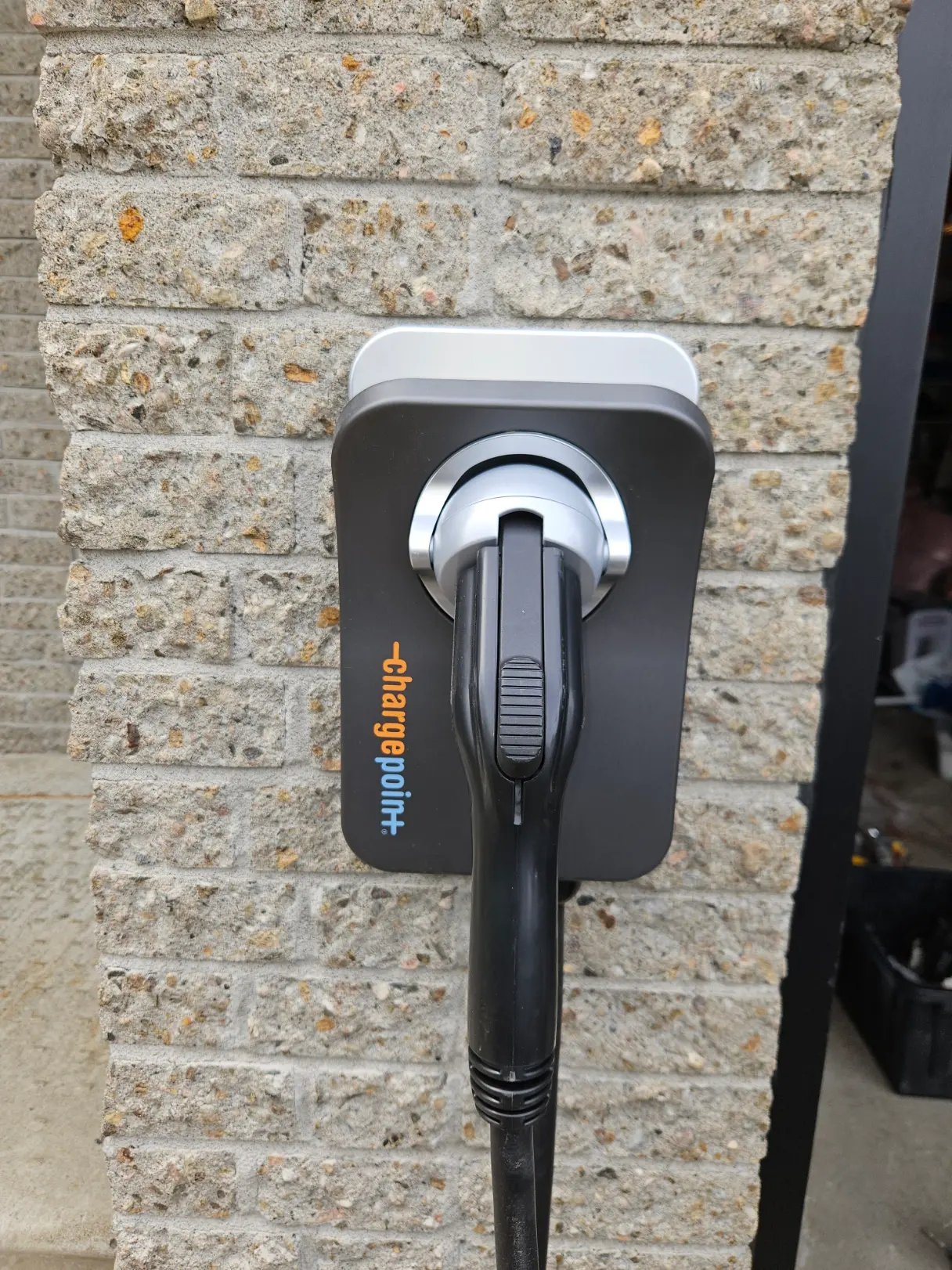
Source : Electricité LR inc.
Depending on where you live, you may qualify for financial assistance toward purchasing or installing a Level 2 EV charger.
However, not all provinces offer residential charging incentives. Some programs are limited to specific housing types, require pre-approval or are temporarily suspended.
As of September 2026, the following programs and restrictions are particularly relevant.
Province | Residential Charger Incentive or Assistance |
Quebec | $600 through Écorecharge, subject to eligibility |
British Columbia | 50% of eligible costs, up to $350; higher limits for eligible Indigenous applicants |
Ontario | No verified province-wide rebate for standard single-family installations |
Alberta | No verified province-wide residential charger rebate |
Manitoba | Financing of up to $3,000 per eligible charger, including installation |
Saskatchewan | No verified province-wide residential charger rebate |
New Brunswick | Previous Plug-In NB rebate ended in 2025 |
Nova Scotia | No verified province-wide single-family charger rebate; previous multi-unit program closed |
Prince Edward Island | Previous charger incentive discontinued; provincial EV incentive paused |
Newfoundland and Labrador | No verified province-wide residential charger rebate |
Program information and status are drawn from provincial governments, utilities and program administrators. Municipal or utility-specific offers may differ.
Quebec: How to Qualify for the $600 Écorecharge Rebate
Since March 17, 2026, Quebec's residential EV charging assistance has operated through the Écorecharge program. Eligible applicants can receive $600 toward purchasing a qualifying home charging station. For chargers purchased or leased on or after April 1, 2026, the equipment must be connected, meaning it supports remote communication and control through an application.
To prepare your application:
Confirm that you own or have an eligible long-term lease on an electric vehicle.
Select a new Level 2 smart charger appearing on Quebec's official list of eligible models.
Ensure that the charger's acquisition cost meets the program's minimum purchase requirement.
Arrange any necessary electrical work with an appropriately licensed contractor and retain the installation documentation.
Submit your application once the charger is installed, including the required invoices and supporting documents.
Prior to purchasing, consult Quebec's official Écorecharge program before purchasing equipment.
Depending on where you live, you may qualify for financial assistance to purchase or install a Level 2 EV charger. However, not all provinces offer incentives for residential charging. Some programs are limited to specific housing types, require pre-approval or are temporarily suspended.
How to Install a Home EV Charger in Canada
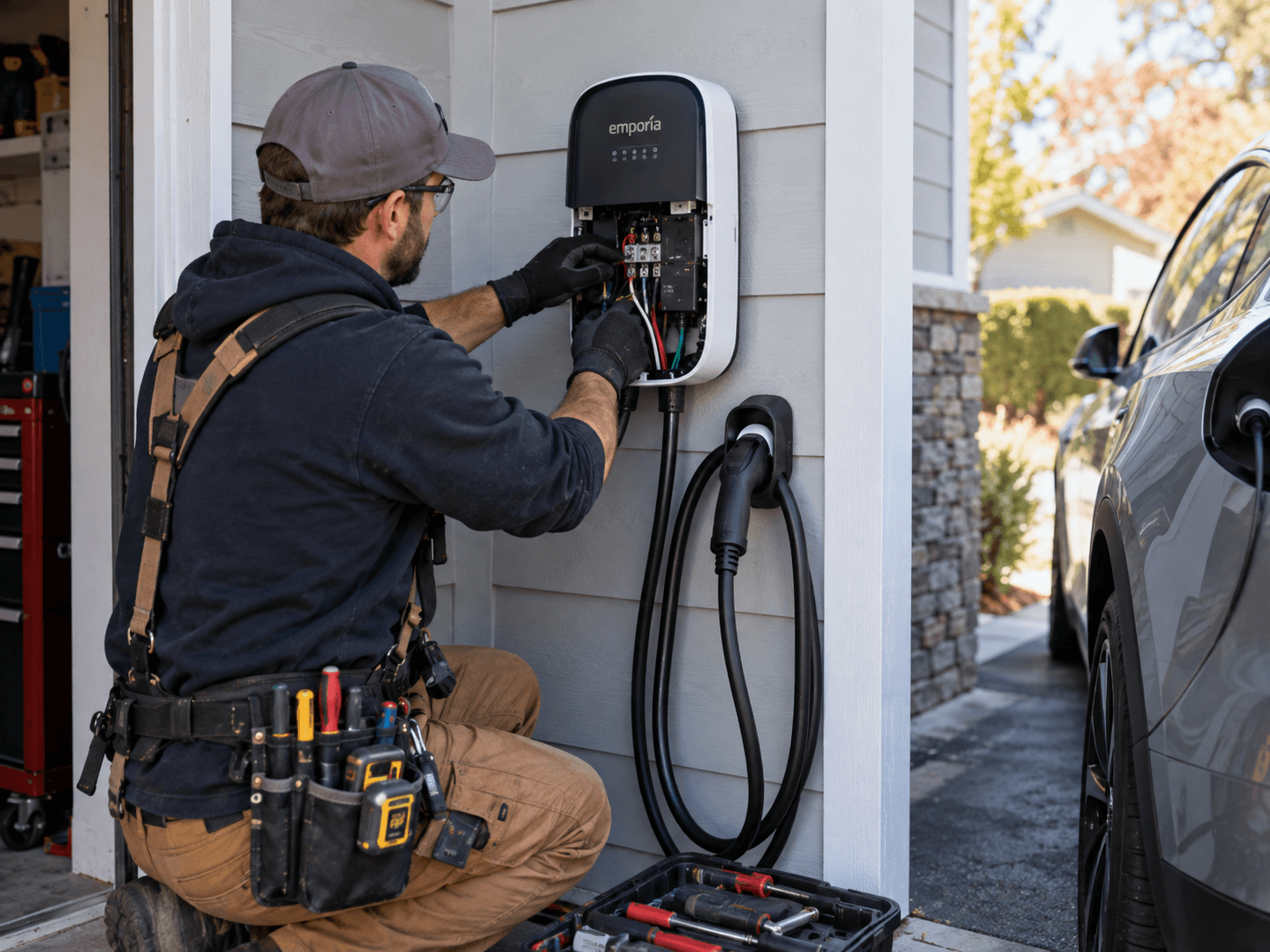
Source: RenoQuotes
Installing a home EV charger involves several steps, from assessing your electrical capacity to selecting a suitable location and obtaining any required approvals. Electrical codes, contractor licensing requirements, permits and inspections vary by province and municipality. In Quebec, electrical contractors must carry a valid RBQ licence with the appropriate subclass.
1. Check Your Electrical Panel's Capacity
Before purchasing a charger, have a qualified electrician assess your home's electrical system. The electrician should evaluate your existing electrical loads, available panel capacity and the requirements of the proposed charging circuit. A home with 100 A electrical service may still accommodate a Level 2 charger. However, the decision depends on the load calculation, charger configuration and available load management options.
If you're planning to install a heat pump or other electrical equipment, consider the requirements of these projects together before authorizing panel modifications.
2. Choose the Right Charger Location
Your charging station should be conveniently positioned relative to your vehicle's charging port while minimizing unnecessary electrical work. Consider the required cable length, outdoor exposure, snow accumulation and the distance from your electrical panel. Depending on the equipment, your charger may be mounted inside a garage, on an exterior wall or on a dedicated pedestal.
If you're renovating your home's exterior or replacing your CanExel siding, coordinate the charger's mounting location and wiring with your renovation project. This can help minimize unnecessary openings and ensure that wall penetrations are properly sealed.
3. Install the Charging Circuit
Depending on the model, your Level 2 charger may be hardwired or connected to an appropriately rated electrical outlet. Your electrical contractor will determine the required circuit, protective devices, wiring and installation method.
Have the contractor identify and obtain the permits and inspections applicable in your jurisdiction. Ensure that both the equipment and installation comply with local electrical requirements. For outdoor installations, verify that the charger is suitable for its intended environment and follow the manufacturer's instructions.
4. Test the Charger and Keep the Paperwork
After installation, confirm that your charger operates correctly and that all required electrical inspections have been completed. Keep your purchase invoice, installation invoice, applicable permit or inspection documents, and warranty information. These records may be necessary for rebate applications and future maintenance.
If your charger offers smart features, configure its charging schedule and application according to the manufacturer's instructions. Compare quotes from electrical contractors to determine the installation costs for your property.
Home EV Charging: How Much Can You Save Annually in Canada?
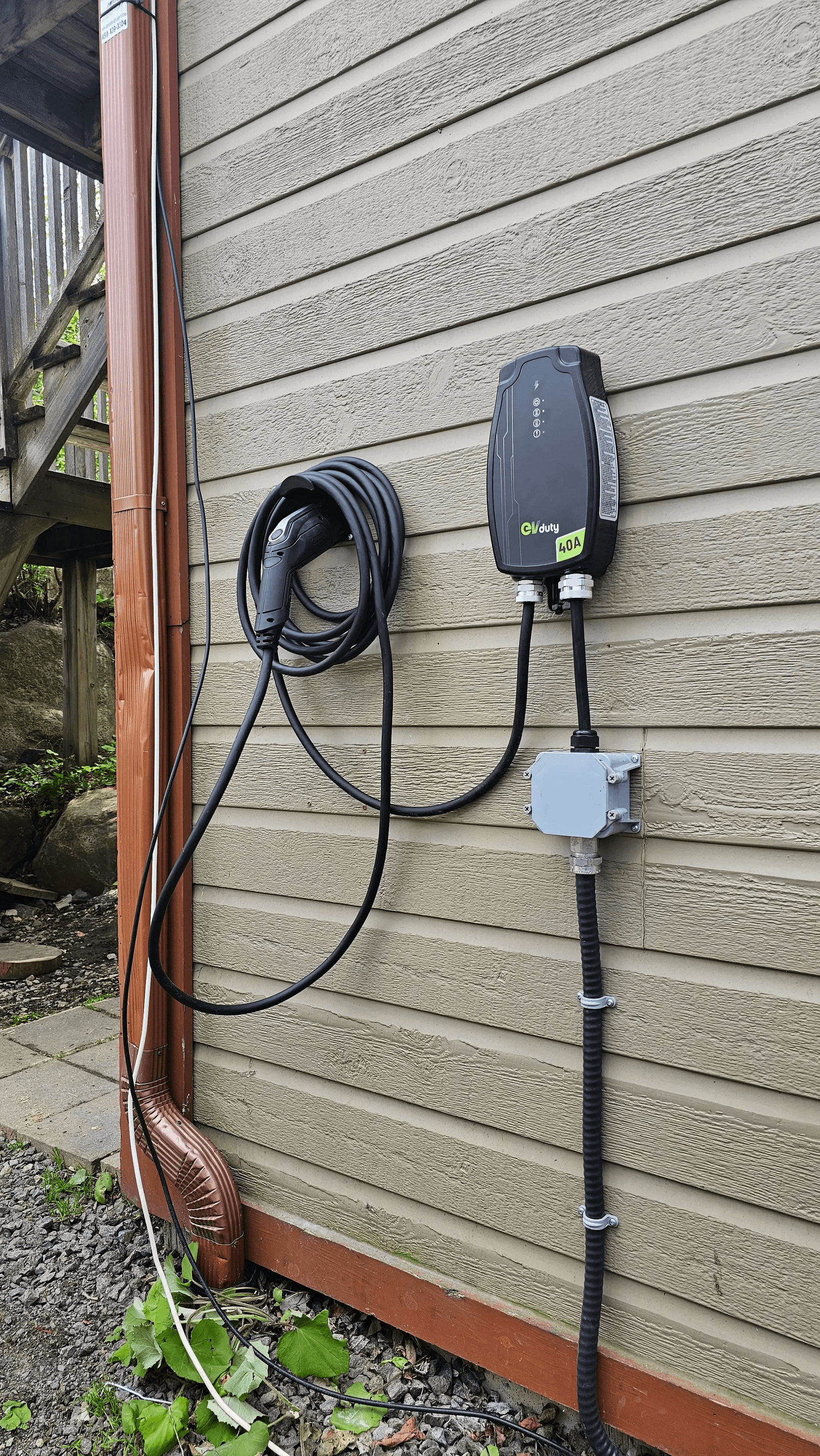
Source: Gr. Electriquo
Charging costs depend on annual mileage, vehicle efficiency, local electricity rates, charging losses and the proportion of charging completed at home.
Electricity rates vary substantially across Canadian provinces. Some utilities also offer time-of-use pricing, which can affect the cost of overnight charging. Natural Resources Canada explains that home charging is generally more economical than purchasing gasoline, although actual savings depend on the circumstances.
The following hypothetical example illustrates how to estimate annual energy expenses using an assumed residential electricity rate rather than a specific provincial tariff.
Annual Assumption | Amount |
Annual distance travelled | 20,000 km |
Gasoline vehicle consumption: 8 L/100 km | 1,600 L |
Assumed gasoline price (example: $1.70/L) | $2,720 |
Home electric charger based on government estimates and hypotheticals presented | $300 - $400 |
Estimated difference between annual gasoline costs and home charging expenses alone | $2,320 - $2,420 |
This comparison excludes the 15% of charging completed elsewhere. To estimate your actual savings, you must also account for these expenses, as well as differences in energy consumption between the vehicles being compared.
For a more detailed calculation, consult your provincial government's cost estimates. (See the Quebec government's charging cost estimates or Hydro-Québec's explanations.)
Planning Your Home EV Charger Installation Before Requesting Quotes
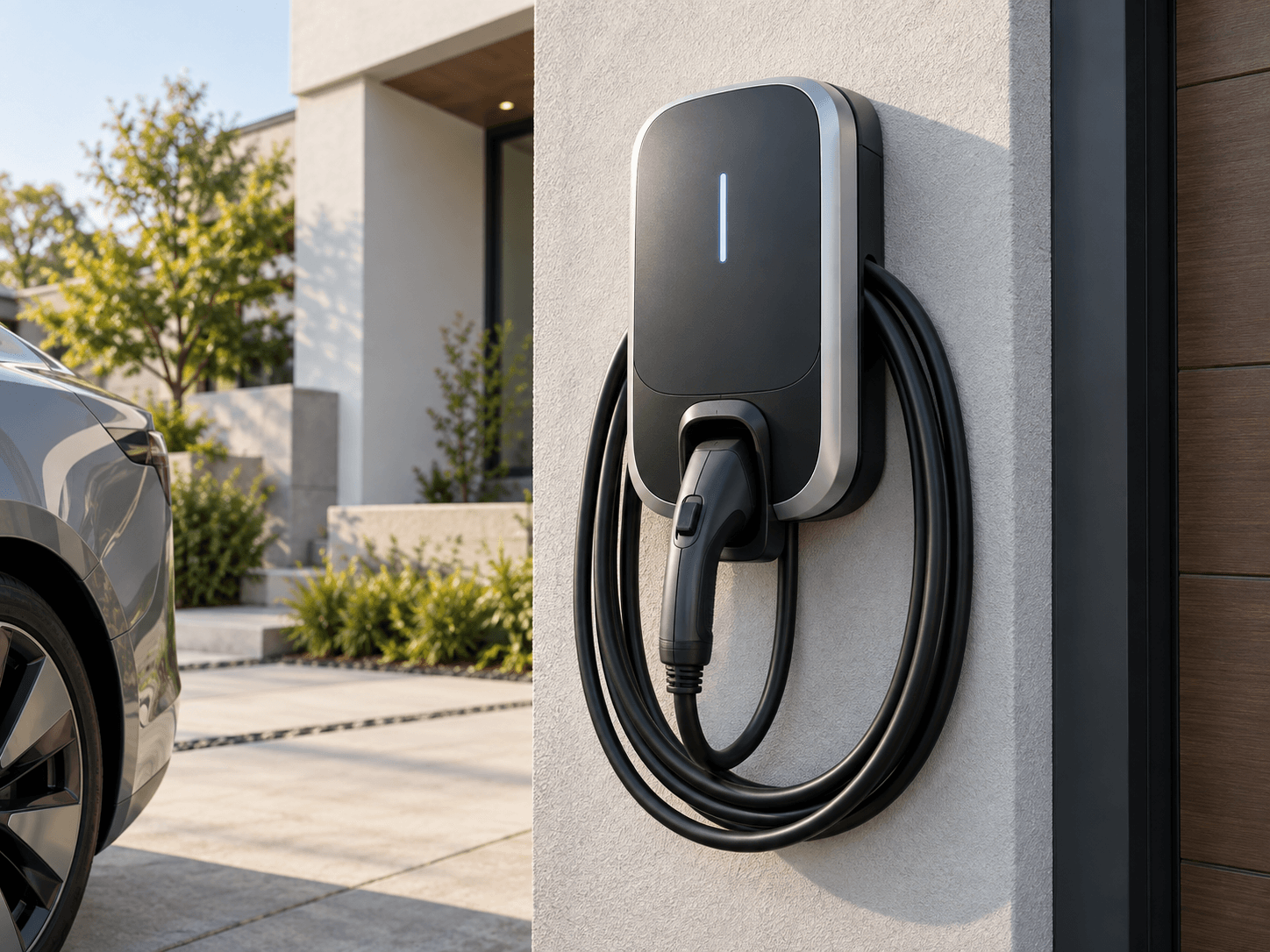
Source: RenoQuotes
Your charger must be compatible with your vehicle, suited to your charging habits and appropriate for your home's existing electrical infrastructure. Before proceeding, obtain a detailed quotation identifying the charger's purchase price, installation costs, required electrical upgrades, applicable permits and taxes. Then, compare equivalent equipment and installation scopes when reviewing contractor quotes. If you're eligible for provincial financial assistance, confirm the program's requirements before purchasing your equipment.
A properly planned installation can help you avoid unexpected electrical expenses while providing convenient home charging for years to come. Find an electrical contractor for your EV charger installation.
FAQ: Home EV Charger Installation in Canada
How much does it cost to install a home EV charger in Canada in 2026?
A typical home EV charger installation can cost approximately $1,500 to $4,500 before taxes, including equipment and installation.
More extensive electrical upgrades, longer wiring runs or excavation can increase the cost beyond this range.
How much does it cost to install an EV charger in Ontario?
A published provincial estimate places the total cost of an Ontario residential EV charger installation at approximately $2,000 to $4,500 or more, including equipment. Actual costs depend on local labour rates and the required electrical work.
How much does it cost to install an EV charger in Quebec?
Published provincial estimates suggest budgeting approximately $1,800 to $4,100 or more before taxes and rebates. Eligible homeowners may qualify for Quebec's $600 Écorecharge incentive, reducing their final out-of-pocket expenses.
Are there government rebates for home EV chargers in Canada?
Yes, but availability depends on your province and eligibility.
Quebec provides a $600 incentive for qualifying equipment, while British Columbia offers residential charging rebates that can cover part of the equipment and installation costs. Manitoba offers eligible homeowners financing rather than a direct rebate.
Is a 100 A electrical panel sufficient for an EV charger?
Possibly. An electrician must assess your electrical service, existing loads and the requirements of the proposed charging circuit.
In some situations, a load management system can eliminate the need for a major electrical panel upgrade.
Can you install an EV charger outdoors during a Canadian winter?
Yes, provided the charger is approved for outdoor installation and meets the manufacturer's operating requirements.
Select equipment suitable for local weather conditions, including freezing temperatures, snow and moisture.
Do you need an electrical permit to install a home EV charger?
Permit and inspection requirements vary across Canada.
Before installation, ask your electrical contractor to identify the applicable provincial and municipal requirements and confirm who is responsible for obtaining permits.
Does a used EV charger qualify for government rebates?
Eligibility varies by program.
For example, Quebec's Écorecharge program requires the charger to be new and to appear on its official list of eligible models. Used or demonstration units are not eligible for this incentive.
Do you need an electrician if you already have a 240 V outlet?
An existing 240 V outlet does not automatically mean it is suitable for charging your electric vehicle. Its circuit capacity, configuration, condition and compatibility with the charging equipment should be checked. If additional electrical work is necessary, arrange for it to be performed by a contractor qualified under your province's requirements.
Looking for something else?
Related articles
The latest industry news, interviews, technologies, and resources.

Editorial Team
•08 Nov 2023
If you’re lucky enough to have a balcony on the facade of your home, it can be guaranteed that you’ll be spending a significant amount of time enjoying it. As beautiful as a balcony is, it likely sits high in the air and therefore, involves a risk of danger. If you have small children in your household or are simply looking for some extra support, we would recommend installing a balcony guardrail.
Amanda Harvey
•14 Mar 2024
Although renovations are often motivated by a search for greater comfort and some aesthetic improvement, some may be planning renovations to sell their home. If this is the case, renovations that work to increase the market value of your home are the ones to consider.

Amanda Harvey
•08 Nov 2023
With the advancement of technology, and with many jobs becoming digitized, it's growing more common for people to work from the comfort of their home. Whether you’re a new mother raising a baby while trying to meet deadlines or a person who has decided to branch out and bring that new business venture to life, having an efficient and relaxing home office will allow you to maintain productivity and get the most out of life.

Editorial Team
•16 Jun 2026
When properly installed, ceramic tiles are a beautiful resurfacing option. The complexity of a tiling project lies not so much in the execution but in the details required to do it right.

Cynthia Pigeon
•02 Jul 2026
Outdoor living has undergone a spectacular transformation in Quebec. Simple auxiliary grills have given way to true high-end outdoor kitchens, designed as seamless extensions of exceptional properties in Montréal, Westmount, or the natural landscapes of the Laurentians. These outdoor entertaining spaces, which include professional-grade grills, artisanal pizza ovens, and ambient fire features, require an energy infrastructure worthy of their refinement.