How Much Does Electric Radiant Heating Cost in Quebec?
By Cynthia Pigeon
Updated on June 8, 2026
Quebec winters are unforgiving. When the temperature drops below -20°C in Montréal, Québec City or Saguenay, thermal comfort becomes a top priority for homeowners. Stepping onto freezing ceramic tile after a shower or while making your morning coffee is an unpleasant feeling that many households choose to eliminate. This is why electric floor heating has become increasingly popular during residential renovation projects. It provides gentle, even and enveloping heat, while optimizing living space by eliminating the need for bulky baseboard heaters.
However, starting this type of project requires careful financial planning. Between purchasing cables, preparing the subfloor and hiring the professionals required by law, calculating the final budget involves several variables. This complete guide breaks down all the costs to help you shop wisely and make an informed decision based on Quebec’s economic reality.
To get an initial overall estimate for your electric radiant heating project, here is an overview of average market prices based on the different stages of the work:
Expense Item | Average Observed Cost in Canadian Dollars | Pricing Type |
Heating materials only (cables or mats) | $7 to $12 | Per square foot |
Uncoupling membrane (cable support) | $2.50 to $5.50 | Per square foot |
Self-levelling cement (25 kg bag) | $80 to $100 | Per bag, depending on thickness |
Smart thermostat (Wi-Fi or programmable) | $200 to $370 | Per unit |
Electrical labour (master electrician) | ~$99.59 | Reference hourly rate |
Complete turnkey project (materials and installation) | $15 to $40 | Per square foot |
Material Costs: Cables, Mats and Accessories
Source: SI-GEM ÉLECTRIQUE INC
Purchasing the components represents a significant part of your initial investment. The Quebec market offers excellent options, including locally developed technologies designed to withstand the demands of our climate. When shopping, you will encounter two main product categories: loose heating cables and pre-assembled radiant mats.
Each option has unique technical characteristics that directly affect the price per square foot, the installation time required and the long-term durability of your floor covering.
Price of Heating Cables and Radiant Mats
The choice between a loose heating cable and a radiant mat mainly depends on the layout of the room being heated, such as a bathroom with complex angles or a large rectangular kitchen.
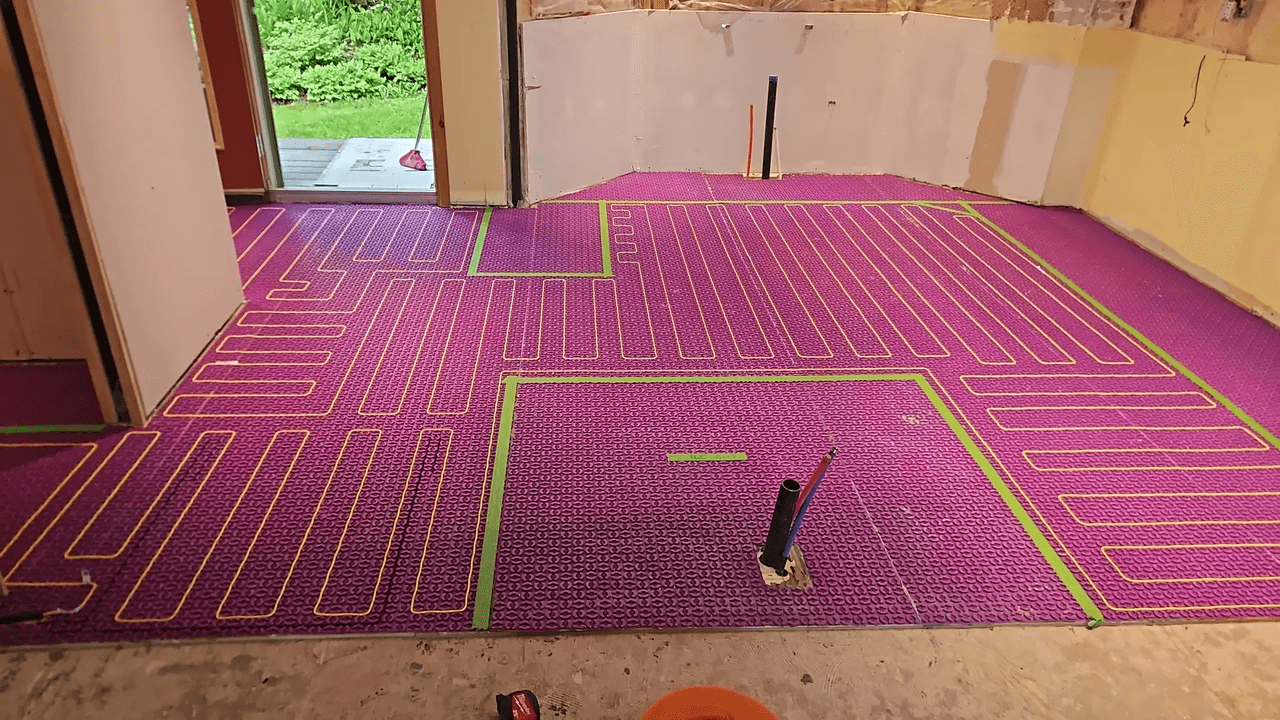
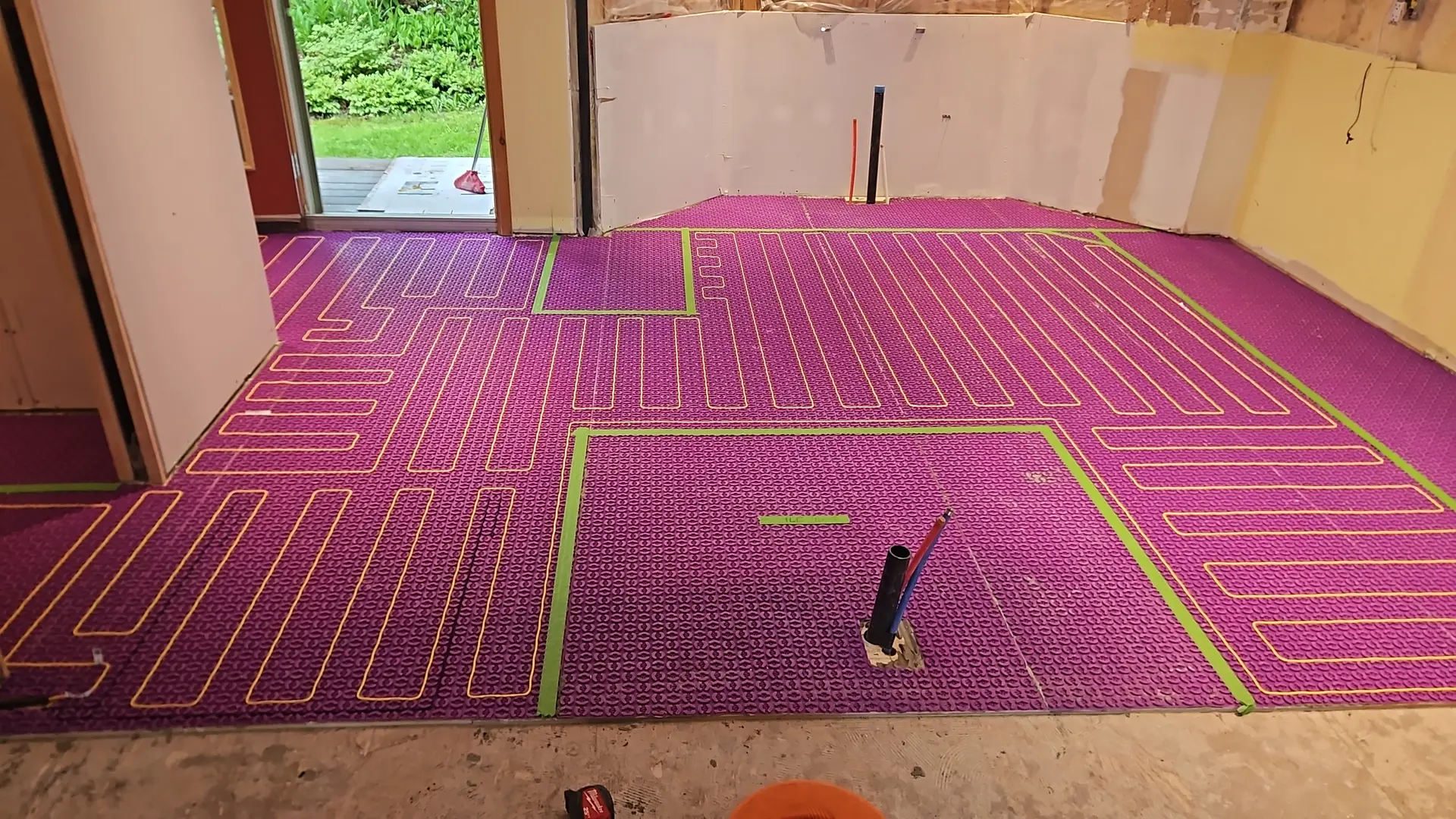
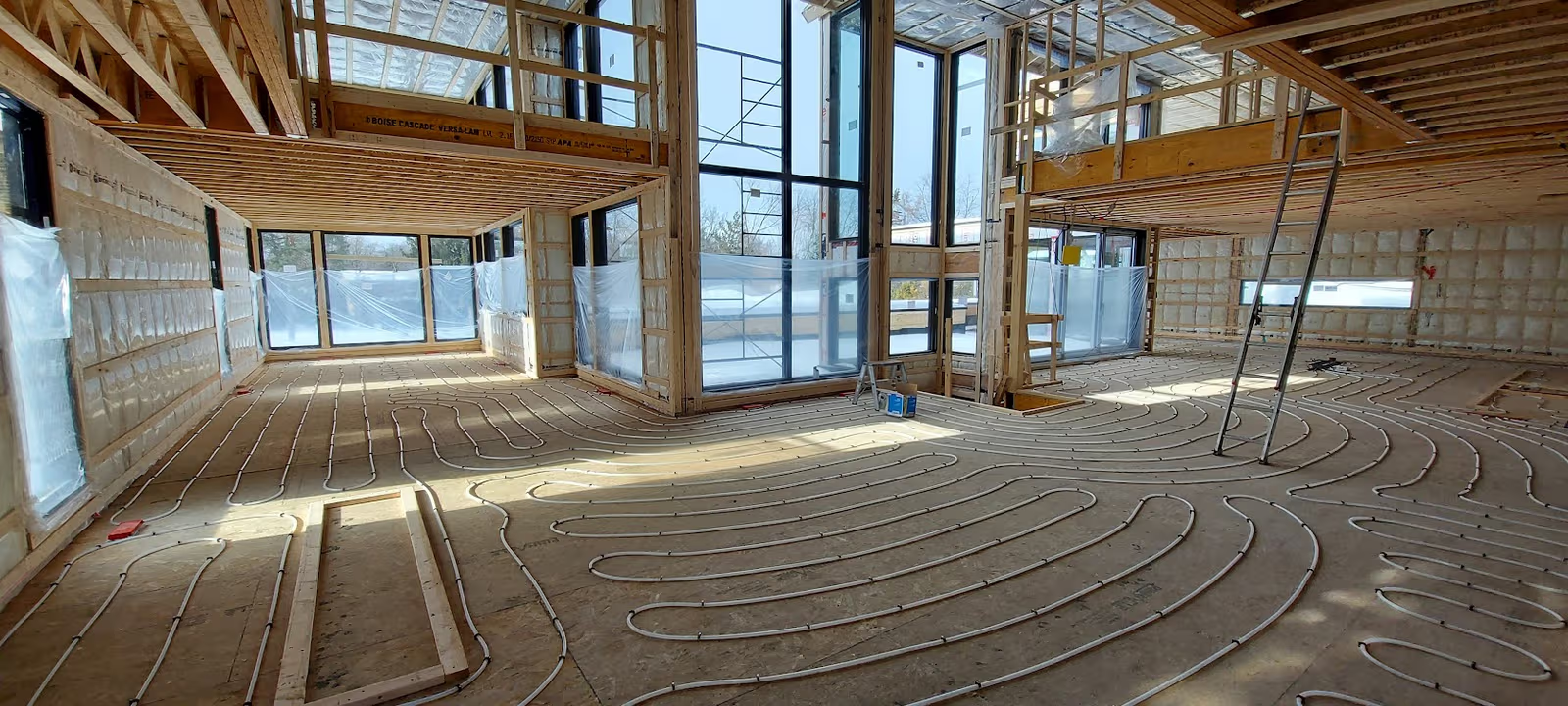
Loose heating cables, $7 to $9 per sq. ft.: This solution is usually the most economical to purchase. The cable is sold in rolls and installed manually by fastening it to anchoring strips or inserting it into the grooves of a specialized membrane. It is the ideal choice for irregularly shaped rooms or areas with fixed elements, such as a bathroom vanity, kitchen island or toilet, because it allows you to work around obstacles with precision.
Radiant mats, $9 to $12 per sq. ft.: In this case, the heating cable is already factory-attached to a fibreglass mesh with perfectly calculated spacing. The mat simply needs to be rolled out on the floor. Although the material is slightly more expensive per square foot, this method greatly reduces installation time, which can be advantageous if you are paying an installer by the hour.
Three major manufacturers dominate Quebec’s residential market:
Flextherm: A true Quebec flagship, this manufacturer offers highly reliable heating cables designed to produce virtually no electromagnetic field emissions. Their loose cables generally retail for between $7 and $9 per square foot. It is an excellent option that supports the local economy.
Schluter Systems, DITRA-HEAT line: This premium integrated system is extremely popular with professional tile installers. It combines a patented uncoupling membrane with specific heating cables. A complete starter kit, including the cable and thermostat, costs around $10 to $12 per square foot. This system is particularly recommended for large-format ceramic tile installation, as it helps prevent cracking caused by structural movement.
Nuheat: This manufacturer specializes in standard and custom heating mats. Their products range between $9 and $11 per square foot. Nuheat is widely appreciated for its ease of installation on large, uniform surfaces such as basements or open-concept kitchens.
Technical rule of thumb: An electric heating cable can never be cut or shortened if it is too long. Modifying its length would alter its electrical resistance, causing immediate overheating and permanent damage. It is therefore crucial to measure the free floor area accurately, excluding fixed furniture, before making a purchase.
Price of Preparation Membranes and Self-Levelling Cement
To ensure the longevity of your tile and optimize the performance of the radiant heating system, subfloor preparation is essential. You cannot simply glue cables onto bare plywood and install ceramic tile over them.
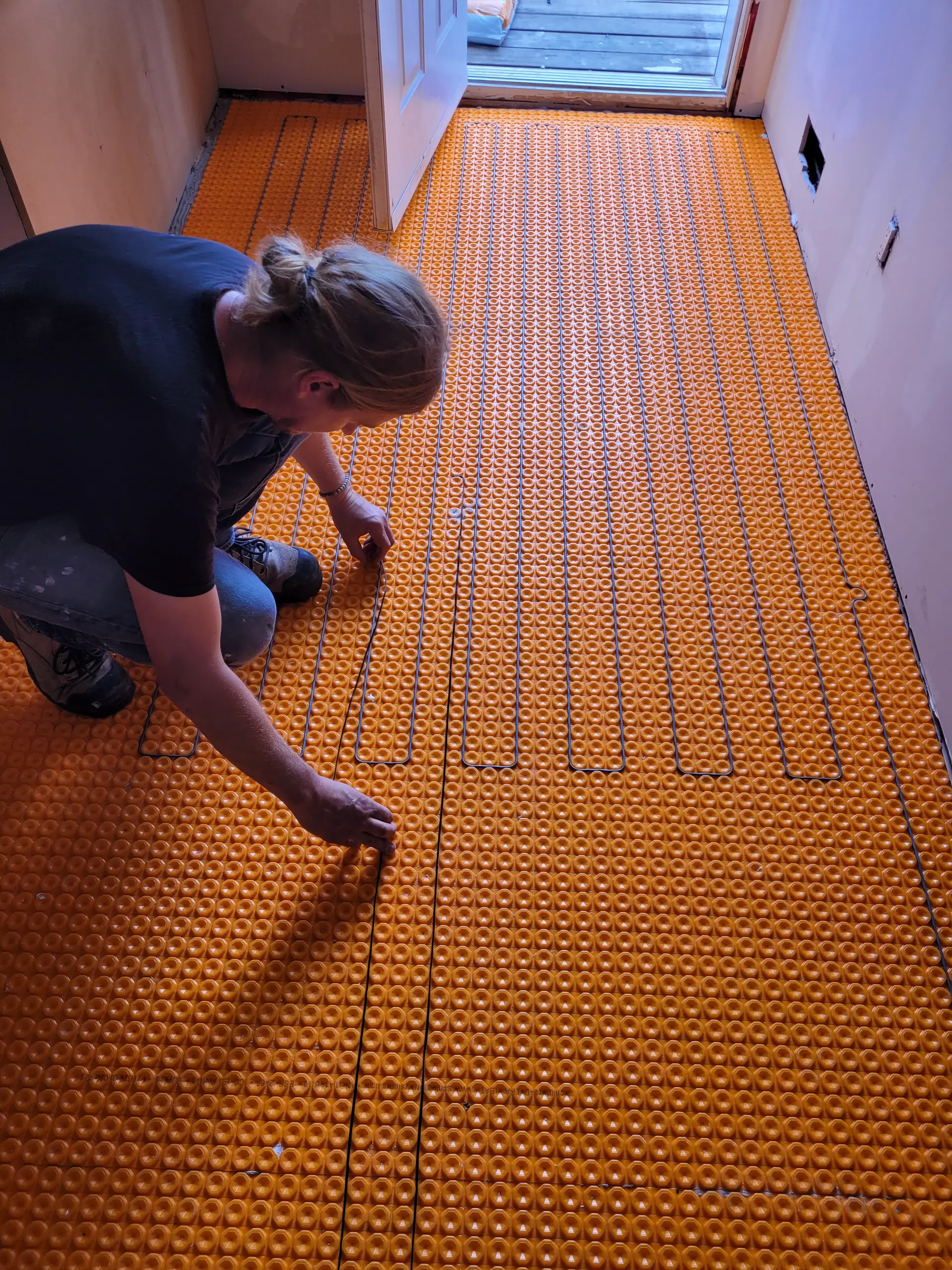
Uncoupling membrane, $2.50 to $5.50 per sq. ft.: Installed between the wood subfloor or concrete slab and the mortar, this membrane absorbs mechanical stress and differential movement, such as wood versus ceramic, caused by freeze-thaw cycles and changes in indoor humidity. It has round or square cavities designed to hold the heating cable in place, ensuring perfect spacing of 3 or 4 inches without complex measuring tools.
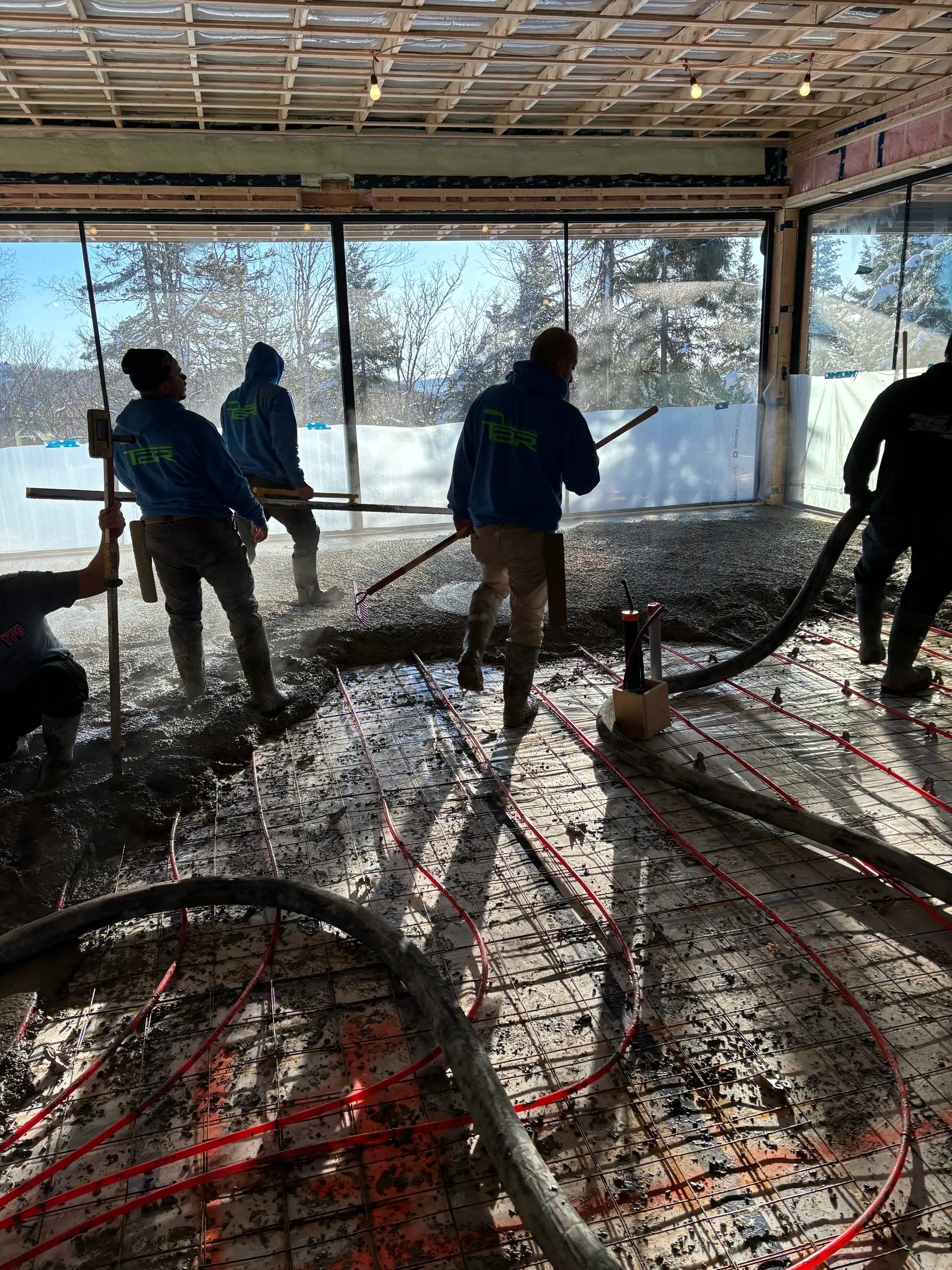
Self-levelling cement, $80 to $100 per 25 kg bag: Once the cables are securely anchored in the membrane or attached to the floor, they must be fully embedded under a layer of self-levelling cement. This fluid product coats the cables and creates a flat surface for the final floor covering. Depending on the thickness required to fully cover the cables, plan for several bags. For a small 50 sq. ft. bathroom, two bags are usually enough, while a large basement may require around ten.
Smart electronic thermostat, $200 to $370: This device regulates the floor temperature using a thermal sensor inserted directly into the cement. Choosing a smart model, compatible with Wi-Fi or Hydro-Québec’s Hilo ecosystem, allows you to program automatic temperature reductions at night or during daily absences, helping improve the profitability of your installation.
Labour Costs for Electrical Installation
Source: Décor Service Concept
In Quebec, the regulatory framework surrounding residential electricity is one of the strictest in North America. The law is clear: all fixed electrical connection work, panel modifications or heating control installations must be performed by a licensed electrical contractor, generally a member of the CMEQ.
If you are an experienced DIYer, you are legally allowed to install the support membrane, insert the heating cables and pour the self-levelling cement to save on general labour costs. You may also hire a general contractor or tile installer to perform these masonry and tile installation tasks. However, connecting the cables to the thermostat, installing the floor sensor and making the final connection to the main electrical panel must be left exclusively to a master electrician.
To guide the industry and protect consumers, the CMEQ publishes annual reference pricing grids. For residential projects, the recommended reference hourly rate is approximately $99.59 per hour.
However, it is important to know that this base rate does not include the company’s operating expenses, the contractor’s profit or travel fees. In reality, for a residential renovation service call, field rates are more likely to fall within the following ranges:
Actual hourly rate billed: Between $115 and $145 per hour.
Fixed travel fees: Between $90 and $150 per trip.
Minimum billable time: Most master electricians apply a minimum two-hour block to cover travel and logistics.
All these installations must be completed in strict compliance with the Quebec Construction Code and handled with meticulous attention under the supervision of the Régie du bâtiment du Québec. Before pouring the self-levelling cement, the electrician will use a measuring device called a megohmmeter to test the insulation resistance of the cable. A second test will be performed after the cement has dried to confirm that no handling has damaged the protective sheath of the heating wire.
For the electrical connection of a standard room, such as a medium-sized bathroom or kitchen, plan for an electrical labour budget of between $300 and $600, provided your current electrical panel has enough space for a new dedicated breaker, generally 15 or 20 amps on a 120 V or 240 V circuit.
Operating Cost: Impact on Your Electricity Bill
Source: Techniques Durables
A common concern among homeowners is the long-term impact of this technology on their electricity bill. With the province’s harsh winters, can an electric heated floor cause your energy costs to skyrocket? The answer is reassuring, especially thanks to Hydro-Québec’s competitive electricity rates.
From a technical standpoint, the consumption of an electric radiant floor heating system is generally between 10 and 15 watts per square foot of heated surface. For demonstration purposes, let’s calculate the real monthly operating cost for a typical installation:
The room: A main bathroom with a total area of 80 sq. ft., of which the actual heated surface, excluding the bathtub, shower and vanity, is 50 sq. ft.
Required power: 50 sq. ft. × 12 W/sq. ft. = 600 W
Operating cycle: A radiant floor does not consume energy continuously 24 hours a day. Thanks to the thermal inertia of ceramic tile and cement, which store heat, the system turns on and off in cycles. With proper programming, the actual accumulated active heating time is around 5 hours per day during the coldest months, January and February.
Total monthly consumption: 0.60 Kw × 5 (hours) × 30 (days) = 90 kWh
Cost: Based on Hydro-Québec’s basic residential rate, Rate D, the real operating cost of this floor ranges between $20 and $35 per month in the heart of winter.
Another important physical factor to consider is air stratification. Unlike traditional electric baseboard heaters, which send warm air directly toward the ceiling, leaving the lower part of the room cooler, radiant heating warms bodies and objects directly from the floor upward.
Because your feet are warm, your perception of comfort increases significantly. Many homeowners find that they can lower the general setpoint of their central system or wall thermostats by 1°C to 2°C without feeling cold. This reduction often helps partially offset the energy consumption of the heating cable.
Profitability: A Smart Investment for Quebec Winters?
Source: Challice Construction
Investing in electric radiant heating in Quebec goes well beyond a simple aesthetic expense. It is a decision that can add value to your property and is particularly worthwhile when planning a bathroom renovation.
Our unique climate brings high humidity levels in the fall and deep freezes in the winter, which cool building foundations. Quebec basements, built on concrete slabs poured directly on the ground, constantly experience cold thermal transfer. Installing electric floor heating in a basement does not eliminate a thermal bridge, but it does compensate for the feeling of cold. A room that was once avoided by the family during the cold season because of its discomfort can instantly become a warm and inviting space to relax on weekends.
From a real estate resale perspective, Quebec buyers have become increasingly demanding when it comes to thermal comfort and energy efficiency. A home equipped with heated floors in key rooms, such as the main bathroom, kitchen or mud room, immediately stands out from the competition during visits. Real estate brokers generally agree that this feature can significantly speed up the selling process and help justify a higher listing price. The initial cost of the work can therefore be largely offset by the added value to the property.
To maximize the profitability of your project, the key step is to shop smart for your components and obtain professional advice. Take the time to compare quotes from certified professionals to get the best price for your materials and work. By combining rigorous preparation with installation by a CMEQ-certified master electrician, you will enjoy unmatched comfort against Quebec’s harsh climate while strengthening the value of your property for decades to come.
Looking for something else?
Related articles
The latest industry news, interviews, technologies, and resources.
Cynthia Pigeon
•04 Sep 2026
In 2026, the average cost of a full kitchen renovation in Canada is around $35,000 to $45,000, depending on the region. A budget-friendly refresh may start at $15,000 to $25,000, while a high-end kitchen with a large island and premium materials often exceeds $65,000.

Editorial Team
•16 Sep 2024
Are you hoping to build a bigenerational home to take care of your elderly parents? Albeit it’s only logical to believe that one will be able to benefit from this cohabitating situation, it’s, nonetheless, a rather large-scale project.

Editorial Team
•08 Nov 2023
When it comes to a septic system, the tank is usually the one thing that comes to mind. Yet, the leaching field, which is out of sight, out of mind… is nonetheless a vital component of this installation. Its proper functioning is primordial, with regard to you and your family and the surrounding community and environment.
Karine Dutemple
•11 May 2026
Whether you're messy or on the contrary, ultra-organized, you'll agree that a tidy pantry is very convenient on a daily basis! We go to the pantry several times a day to pick up snacks, ingredients and to store groceries.

Editorial Team
•17 May 2024
Is your deck finally ready but you’re still on the fence about what kind of railing best suits what you’re looking for?