How Much Does House Lifting Cost in Quebec? (2026 Guide)
By Cynthia Pigeon
Updated on July 8, 2026
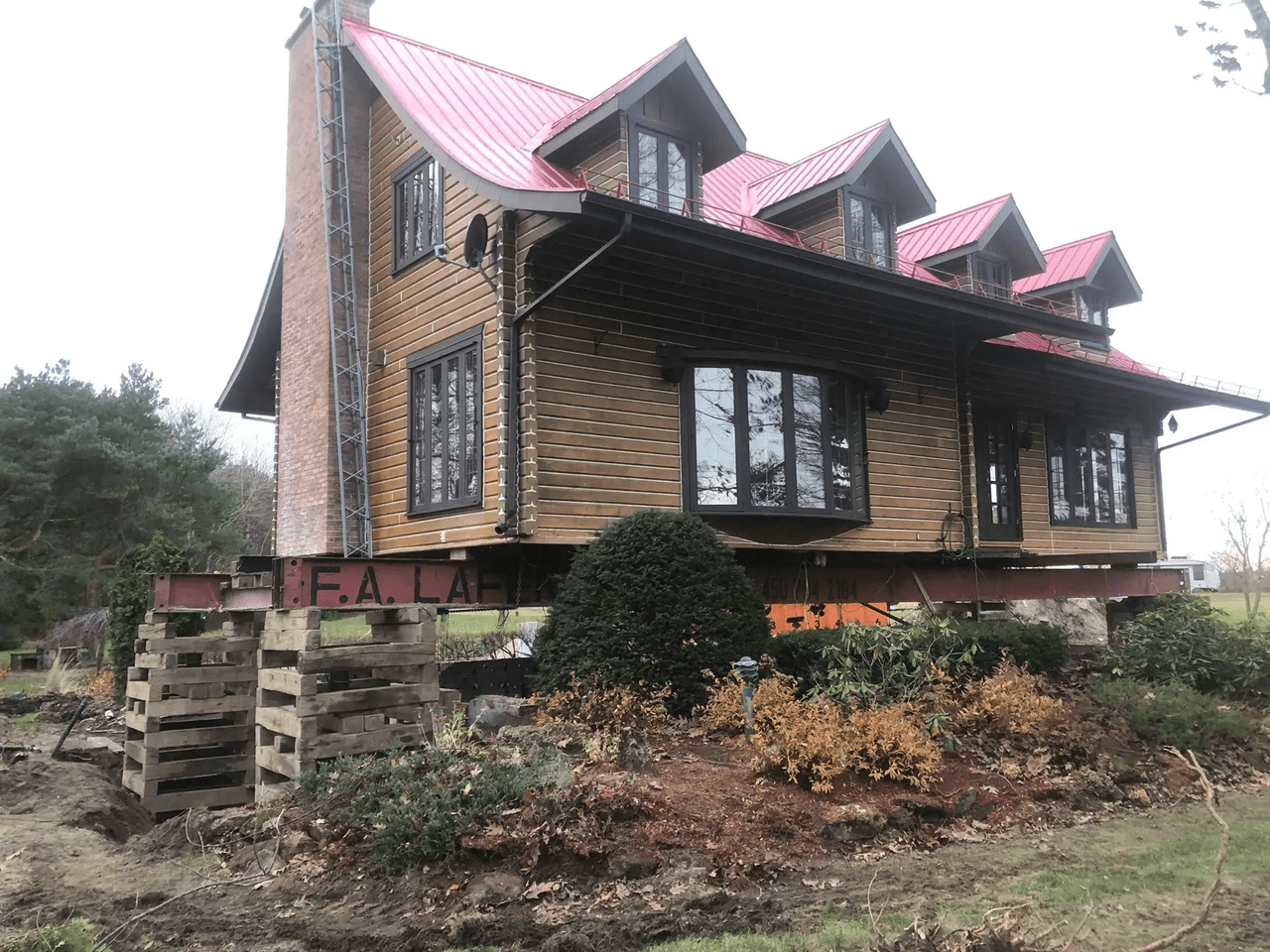
In Quebec, owning an older home or a bungalow with foundations showing advanced signs of wear can be a major challenge. Whether the goal is to correct serious foundation cracks, replace concrete affected by pyrite, or simply gain usable living space by converting a crawl space into a full basement, building lifting is often a durable solution in several complex situations.
However, this major engineering operation immediately raises a crucial question for homeowners: what budget should you expect? Due to rising construction material costs and the shortage of specialized labour in recent years, undertaking this type of work requires careful financial planning. This complete guide presents a transparent estimate of current Quebec market prices in 2026 to help you prepare your foundation quote request effectively.
Factors That Influence the Cost of House Lifting
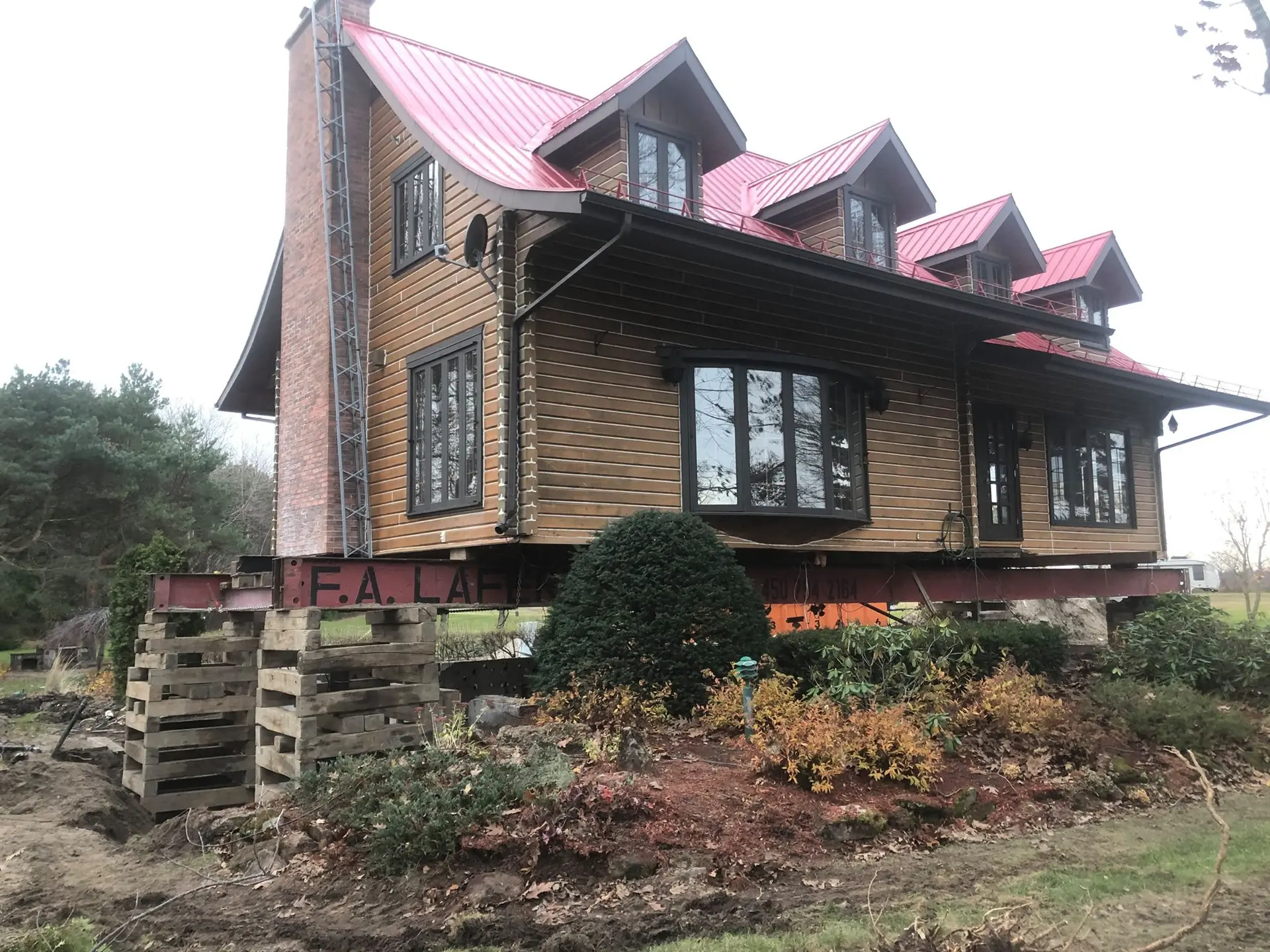
Source: Transport de bâtiment F.A. Laferrière Inc.
The price of lifting a house is never fixed. Each property has its own architectural and geographic characteristics, which determine the complexity of the work. To assess the cost of your project, a specialized contractor will mainly analyze three variables:
The dimensions and footprint: The larger the home’s footprint, the more steel beams and hydraulic jacks are required to support the structure evenly. A 30 x 40-foot bungalow will cost more to lift than a small 20 x 20-foot cottage.
The total weight of the structure: Interior materials, including permanent loads such as the structure, floors and load-bearing walls, make the building significantly heavier. This requires lifting equipment with a higher load-bearing capacity.
Site accessibility: Homes located in dense urban areas, such as a duplex or triplex in Montréal, come with major space constraints. The proximity of neighbours, Hydro-Québec power lines or mature trees limits the manoeuvring room for excavators and increases labour time. Conversely, an open lot in the suburbs or in a region such as the Eastern Townships or the Laurentians makes the work easier and reduces logistical costs.
The Type of Structure and the Home’s Materials
The nature of your home’s building materials plays a key role in the final cost. A wood-frame structure with lightweight siding, such as vinyl or wood clapboard, offers excellent flexibility. It can tolerate slight movements during the lifting phase, which simplifies the work for the technical crew.
By contrast, a home with brick or stone cladding requires extreme precautions. Masonry is a rigid and heavy material that tolerates very little differential movement. If the lifting is not performed with millimetre-level precision, the brick may crack or collapse. The contractor must then install additional temporary structural reinforcements to brace the building, a meticulous step that increases the overall project cost.
Soil Conditions and Quebec’s Climate Constraints
Quebec’s climate, characterized by harsh winters and intense freeze-thaw cycles, puts structures under significant stress. During excavation, the nature of the soil beneath your home can lead to costly surprises:
Clay soils: Very common in the St. Lawrence Valley, clay soils are subject to significant shrinkage and swelling, depending on moisture levels, which may require pile work to stabilize the new footings.
Pyrite: In Montérégie in particular, the backfill under the concrete slab may contain pyrite. When it oxidizes in contact with moisture, it expands and cracks the concrete. If this problem is confirmed, removing the contaminated backfill and replacing it with appropriate aggregate, including DB-certified material under the slab, is generally recommended or required, depending on the project context.
Iron ochre: In several municipalities in the Laurentians or Mauricie, the presence of iron ochre can quickly clog the drainage system. In these cases, a French drain with inspection ports, or cleanouts, should be planned to allow high-pressure cleaning.
Estimated Prices for House Lifting in Quebec
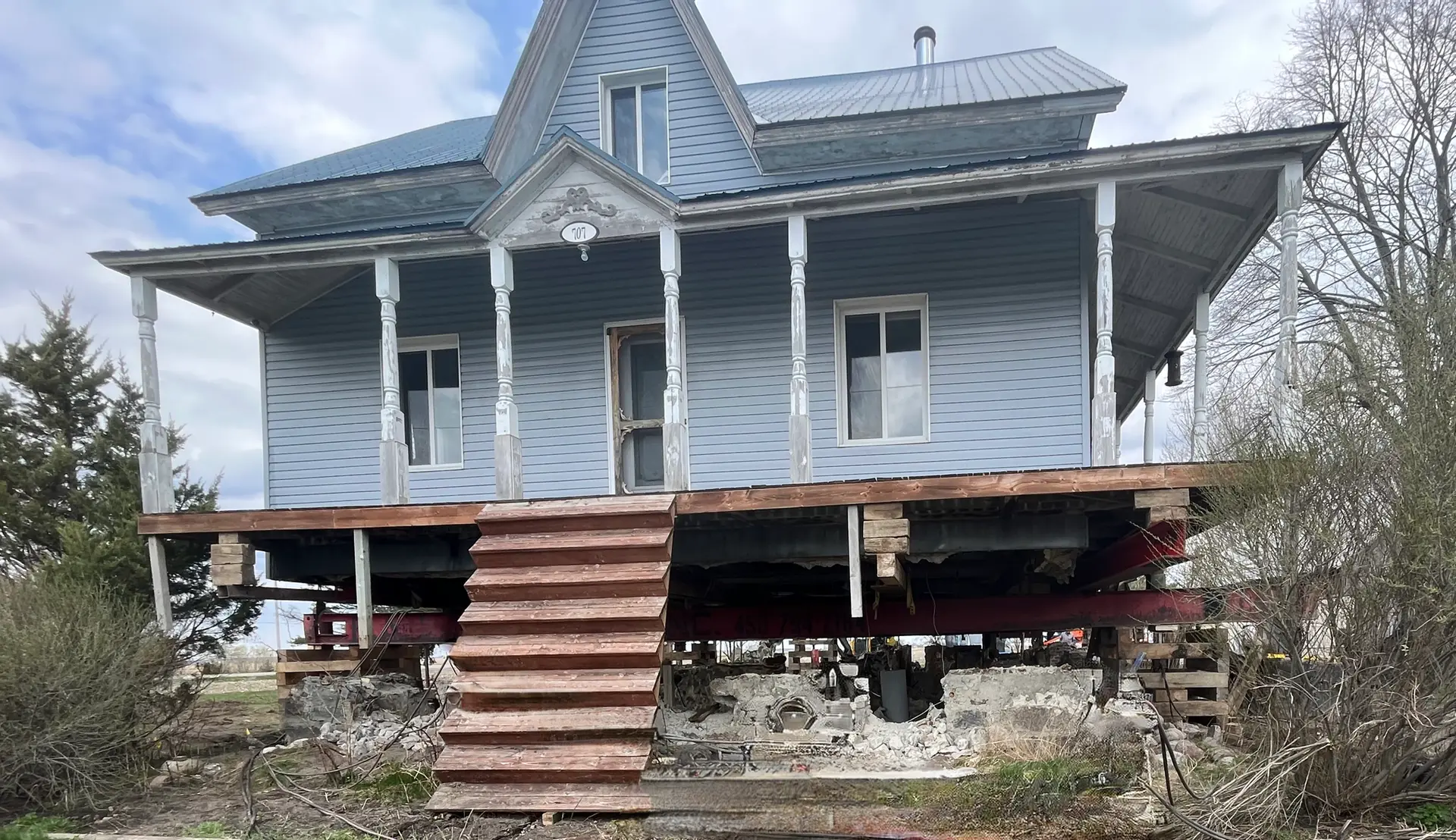
Source: Transport de bâtiment F.A. Laferrière Inc.
To help you budget your project, here is an overview of average market prices in Quebec in 2026.
Type of Work | Low Price Range | High Price Range | Included elements / Key Factors |
Technical lifting only | $15,000 | $35,000 | Steel beams, hydraulic jacks, temporary cribbing. |
Excavation under the house | $10,000 | $25,000 | Removal of the old slab, heavy machinery, soil management. |
Formwork and concrete pouring | $25,000 | $50,000 | Footings, new concrete foundation walls, new slab. |
French drain installation | $10,000 | $25,000 | Waterproofing membrane, clean stone backfill, connection. |
Full turnkey project | $100,000 | $250,000+ | Complete management, from lifting to foundation finishing. |
Note: These ranges generally exclude interior finishing, temporary relocation, full service reconnection and geotechnical surprises.
The Cost of Technical House Lifting Only
If you choose to coordinate the different trades yourself, you can hire a specialized company only for the mechanical lifting stage. This technical operation, priced between $15,000 and $35,000, includes inserting structural steel beams under the home’s joists, connecting them to a system of hydraulic jacks that are often synchronized either manually or through a centralized hydraulic system, gradually lifting the building and safely placing it on temporary wooden support cribs, commonly called cribbing. The house remains suspended while the other contractors carry out masonry or concrete work underneath.
The Total Cost: Excavation, Foundations and French Drain
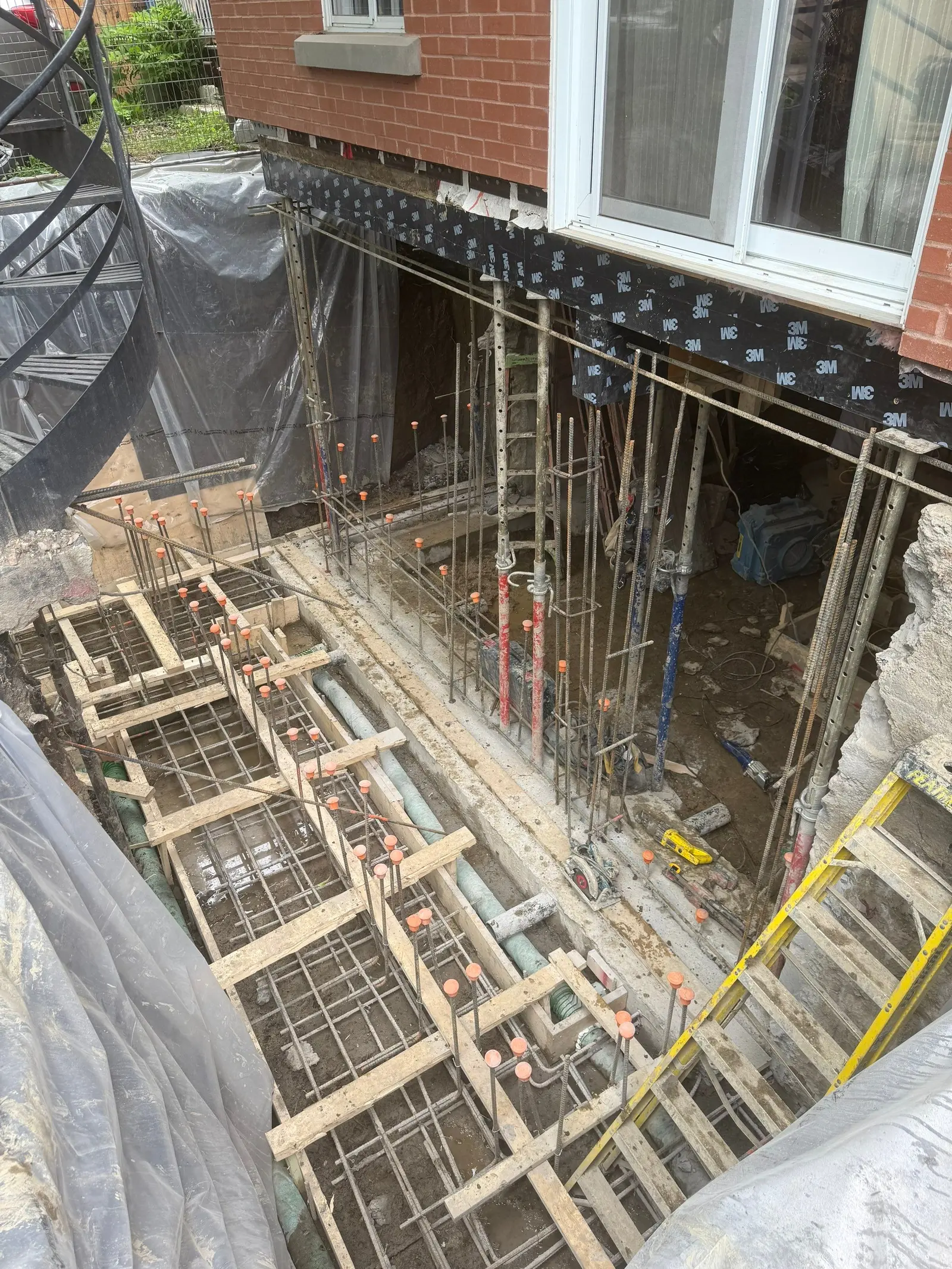
Excavation: Once the house is suspended, small excavators work beneath the structure to dig out the soil, remove old concrete blocks or deteriorated stone foundation, and lower the ground level if you want to create a basement, often around 7 to 8 feet, depending on the intended use and applicable standards.
Formwork and concrete pouring: Formwork contractors install steel reinforcement and pour new footings as well as strong foundation walls that comply with current Quebec Construction Code standards.
Drainage and waterproofing: Before backfilling soil around the new walls, applying an elastomeric waterproofing membrane and installing a new French drain are essential to channel runoff water away and prevent basement moisture.
For major work, the total cost generally ranges from $100,000 to $250,000 or more, depending on the worksite's complexity, the condition of the foundations, site accessibility, the desired height and the finishing work included. Although the initial investment is substantial, this type of project can correct existing structural problems at the source and improve the property's durability, provided that the work is properly designed, executed and drained. To obtain an accurate assessment adapted to your area, it is recommended to request several renovation price estimates.
Regulations, Permits and Legal Obligations in Quebec
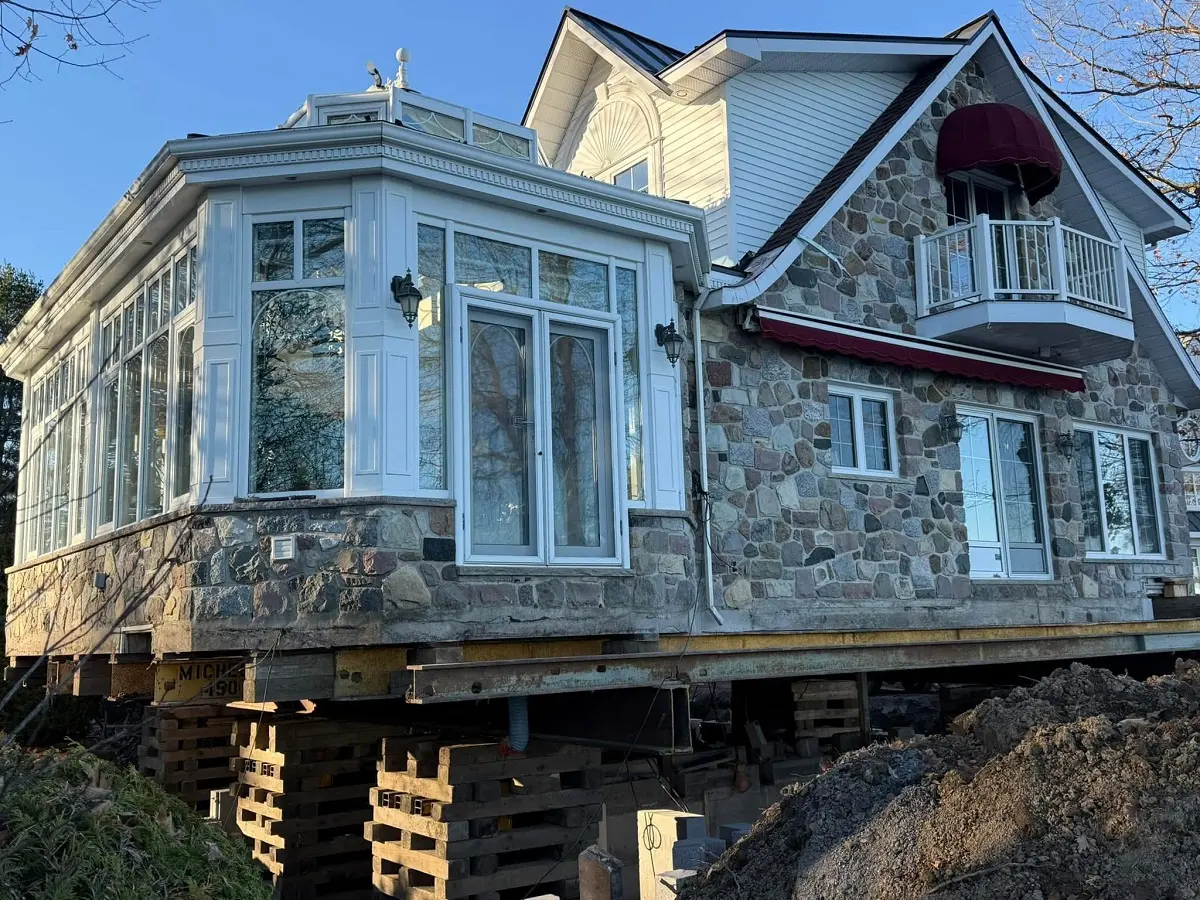
Source: Michel Fallon inc. Levage et transport de bâtiments
In most projects involving the structure or foundations, the municipality may require plans prepared or sealed by an engineer who is a member of the Ordre des ingénieurs du Québec (OIQ). The exact requirements must be confirmed with the municipality before work begins. This expert can also validate load distribution, the temporary support method and the supervision of critical stages of the project.
A building lifting project cannot be improvised and requires strict compliance with a rigorous legal framework to ensure public and structural safety.
Before the start of the project, you must also plan for the temporary disconnection and reconnection of essential services, including electricity, water and sewer lines, according to Hydro-Québec and municipal requirements. When the foundation is rebuilt or excavation is extensive, a geotechnical study is often recommended and may even be required depending on soil complexity. In addition, engineer supervision during critical phases of the project should be included in the mandate, especially for structural work.
Quebec law is also very clear regarding the choice of service provider: the general or specialized contractor you hire must hold a valid licence from the Régie du bâtiment du Québec (RBQ). Depending on the exact nature of the work, the minimum subcategories required may include:
Subcategory 1.2, general contractor: An appropriate general contractor licence, often related to small residential buildings, depending on the nature of the project, may be required to coordinate all the work. The exact subcategory must be verified with the RBQ, according to the building in question and the work planned.
Subcategory 4.1, masonry structures contractor: This applies if the project affects structural stone or brick elements.
Subcategory 3.1, concrete structures contractor: This applies to formwork, reinforcement and pouring of the new foundations.
The exact subcategories must always be validated according to the nature of the building, the type of work and the contractor’s actual role in the project.
Working with an unlicensed contractor exposes you to RBQ sanctions and may lead your home insurance provider to refuse coverage in the event of a claim.
How to Choose a House Lifting Contractor
Source: Indigo Construction Inc.
Given the financial and technical scope of this type of project, shopping for a contractor should not be based solely on the lowest price. Take the time to analyze and compare the quotes you receive based on strict selection criteria:
Check liability insurance: Make sure the company has liability insurance that explicitly covers structural lifting work for “building lifting and moving” operations. Standard residential renovation insurance is often not enough to cover the potential collapse of an entire building. You should also keep in mind that a house being lifted is often temporarily uninhabitable, which may require occupants to arrange alternative accommodation for part of the project. This significant logistical and financial constraint must be included in your planning and discussed clearly with the contractor.
Ask for references and visit past job sites: A contractor who is proud of their work will not hesitate to provide contact information for satisfied clients for whom they have completed similar projects in your area.
Require an extremely detailed written contract: The document must specify the project timeline, how unexpected issues will be managed, such as discovering rock during excavation, and a clear division of responsibilities, including who will disconnect and reconnect municipal water service entrances and communication lines.
To begin the process with confidence and simplify your search, you can use a trusted referral platform to find a verified and certified general contractor, allowing you to receive several competitive quotes for your house lifting project.
Looking for something else?
Related articles
The latest industry news, interviews, technologies, and resources.

Editorial Team
•24 Sep 2024
Do you live in a rural area or have a summer home that isn't connected to a local water system? If so, you probably have a functioning septic system. How can you make sure your conventional on-site disposal system is working properly? What are the best practices to uphold to extend the service life of your sanitary installation and prevent damages? The key to a system's longevity is understanding its inner workings, whether your property is equipped with a conventional or non-conventional system.

Léa Plourde-Archer
•27 May 2025
Building a porch on the façade of your home can offer a beautiful addition to the great outdoors. Whether entertaining or simply enjoying a summer evening breeze, homeowners like yourself often splurge to add this home accompaniment. But with any renovation project, there are always costs involved. So, exactly how much does it cost to build a brand new porch?
Editorial Team
•19 Jun 2026
The dangers of cellulose insulation are worth understanding before colder weather puts more pressure on your home’s attic, roof, and heating system. As Canadian homeowners move from renovation ideas to seasonal preparation, early insulation planning can help identify dust exposure risks, moisture issues, fire-clearance concerns, and installation problems before they affect comfort or indoor air quality.
Amanda Harvey
•08 Nov 2023
When it comes to home renovation, you might want to break out the hammer and nails as soon as possible. Before you do, it’s important to consider the types of permits you might need for the project.

Editorial Team
•25 Apr 2024
In terms of stylish décors and interior design, trends come and go, year after year. Some are timeless, like wood for example. Whereas, other decorative aspects or faux pas can quickly make a room look outdated, and go as far as lowering the resale value of your home.