How to apply ceramic grout in a few steps
By Christine Simard
Updated on November 8, 2023

While some renovations require professional assistance, others can easily be done on your own. Of these jobs, applying grout is probably one of the easiest to perform, especially if you like getting your hands dirty!
Perfect for a DIY project or for the application of new tiles, here is a small practical guide that can help you before carrying out this work.
Applying ceramic grout: how to proceed?
Before you start applying your grout
If the surface to be worked on is close to a wall or in between 2, it is preferable to protect them with masking tape to avoid any spills outside the working surface. Also, if you are working above a counter or working on a specific piece of furniture on the floor, be sure to protect them with a plastic sheet.
Buying the perfect grout for your project
There are several types of grout on the market to give you access to different finishes and a multitude of colors. To make the right choice, it will first be necessary to determine where the grout in question will be placed: on a kitchen or bathroom floor or perhaps on a small piece of furniture to restore or a backsplash?
Each of these projects, although all involving the installation of tiles, must meet different expectations and needs. This is why various types of grout are currently available on the market. Among these, we find:
Grout with sand;
Without sand;
Higher yield;
Pre-mixed;
Caulking grouts;
Epoxy grouts;
Cementitious.
To learn more about the specifics of these products, we invite you to read our article Ceramic grout: products and maintenance.
In terms of color, Rona hardware stores mention:

Source: thedesignfiles
The tools you will need
For an easy and hassle-free application, there are some tools you will need to apply your grout.
To mix the chosen product, you will need:
a bucket or large container;
a trowel (for mixing by hand) or a drill with attached paint mixer.
For the application:
masking tape;
rubber gloves;
a float or a leveler;
a sponge or magic eraser;
a rag or an old cloth.
1. Mix the grout
This step is simple: be sure to follow the directions listed on your product. There are no magic equations to be sure how much you need for your project, but it is recommended that you calculate an extra 10% for your mix.
Once mixed, let the grout sit for 10 minutes and mix again as needed until the desired consistency is reached.
2. Prepare the work surface
To ensure that the grout adheres without problems, it is best to clean the tiles with a damp sponge or cloth to remove any dirt or dust that has lodged on them. It will also be good to moisten the surface before applying the grout to facilitate its adhesion.
If your tiles are made from a porous material (such as natural stone), apply a coat of sealer suitable for the material to prevent the grout from staining the tiles indefinitely.
3. Apply the grout
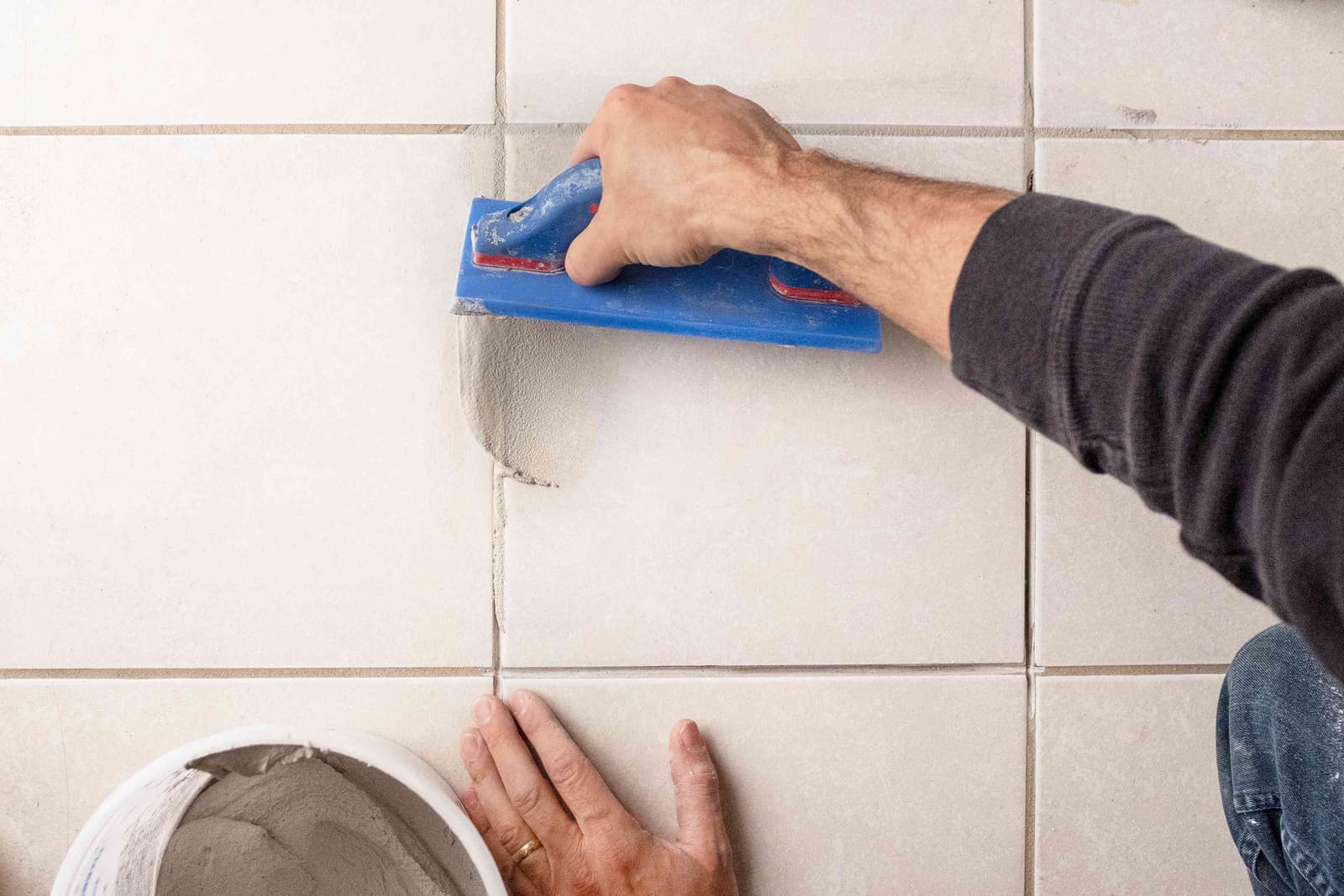
Focusing on small sections at a time, spread the grout diagonally from bottom to top using your leveler, making sure to keep it at a 45-degree angle. We mention the diagonal because this method will force the grout into the joints of the tiles.
When the application is complete, go over the surface a second time, this time at an angle almost perpendicular to it, to remove the excess grout that remains on the surface of the tiles.
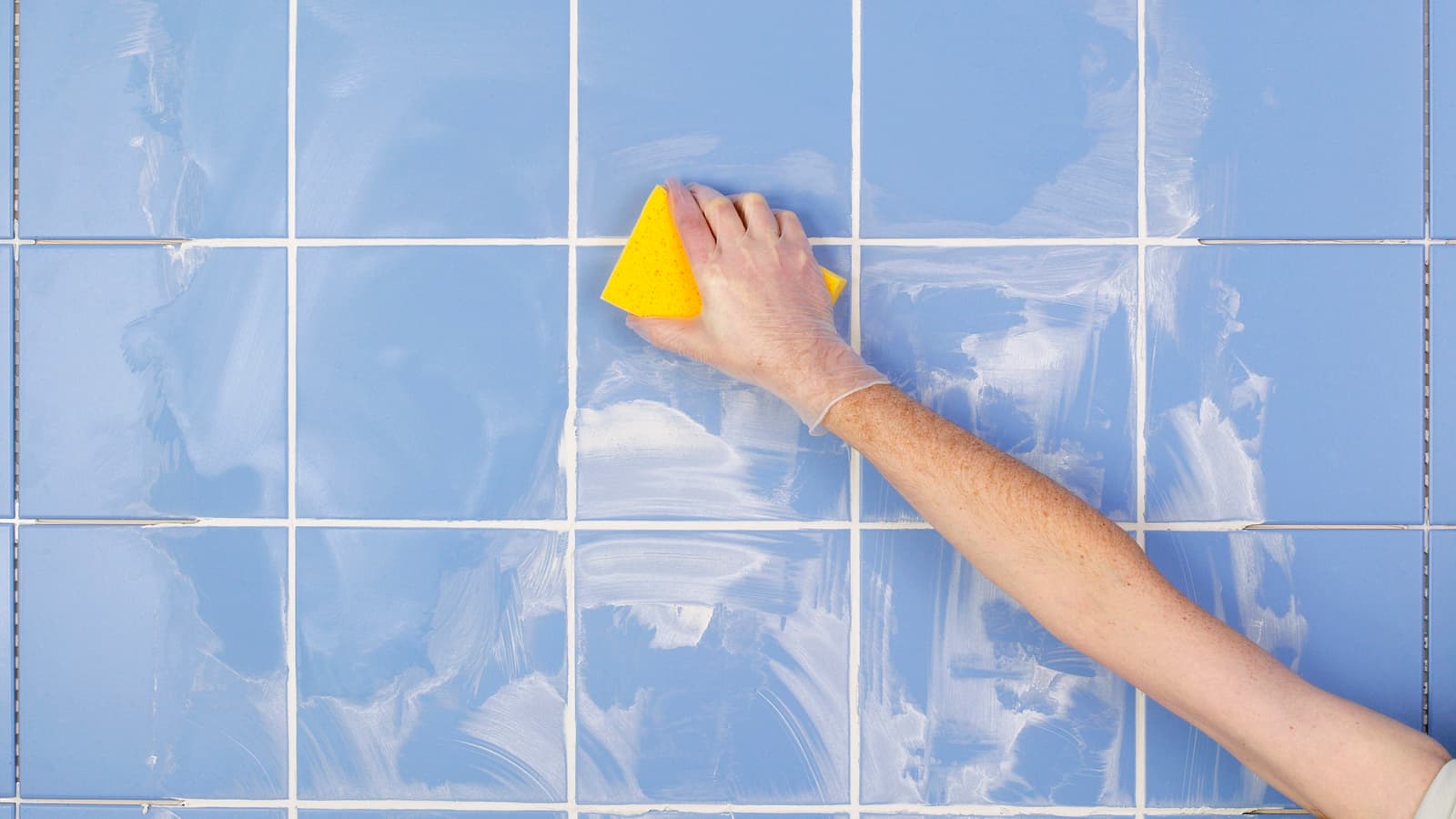
After about 10 to 20 minutes, the grout will have started to set. You can therefore remove the excess grout with a damp sponge, which will also allow you to clean the tiles. Be sure to clean your sponge frequently to avoid soiling the tiles even more.
Source: The Spruce
4. The final finishing touches
Once the surface is cleaned, all you have to do is polish the joints to give the tiles their final look. To do this, you just have to run your finger (with or without a rag) over the joints to flatten them well and remove the excess grout!
It is best to wait 24 hours before applying a second coat.
Get 3 renovation quotes for your bathroom tile project
RenoQuotes.com can help you get quotes for your bathroom tile renovation project. If you submit your project to us, we’ll put you in contact with top-rated contractors. Fill in the form on the homepage (it only takes a few minutes), and you will get estimates from trusted professionals.
Dial 1-844 828-1588 to speak with one of our customer service representatives
Looking for something else?
Related articles
The latest industry news, interviews, technologies, and resources.

Cynthia Pigeon
•14 Jun 2024
Not only is cleaning your fireplace essential to its proper functionality, but it also contributes to its safe use.
Editorial Team
•28 Aug 2024
Hardwood floors are a beautiful but serious investment. Protecting and maintaining the surface of your hardwood floors is an important part of owning them. This flooring material shows all signs of dirt and grime, and therefore, cleaning should happen frequently. However, hardwood floors are a delicate material and must be maintained using soft and specific methods.

Editorial Team
•11 Feb 2025
Undertaking a renovation project entails a lot more than having the necessary know-how or skills, or simply outsourcing the project to qualified professionals. You must submit a building permit request to your municipality to legally carry out the planned work. Here’s everything you need to know about obtaining a building permit.

Équipe éditoriale
•12 Aug 2026
Perhaps you are doing a renovation project and are wondering whether German windows can help. Well, that is a justified concern, and you don’t need to worry any longer because this article will address such concerns. After spending some years in your home, you may want to give it a new look. It could be the windows, doors, paint, or whatever thing.

Editorial Team
•08 Nov 2023
A renovation project can quickly lead to astronomical spending. If we do not monitor the amounts that tend to accumulate, we can quickly end up exceeding the original budget.