How to Install Eco-Friendly, Permeable Pavers in Quebec
By Cynthia Pigeon
Updated on July 8, 2026
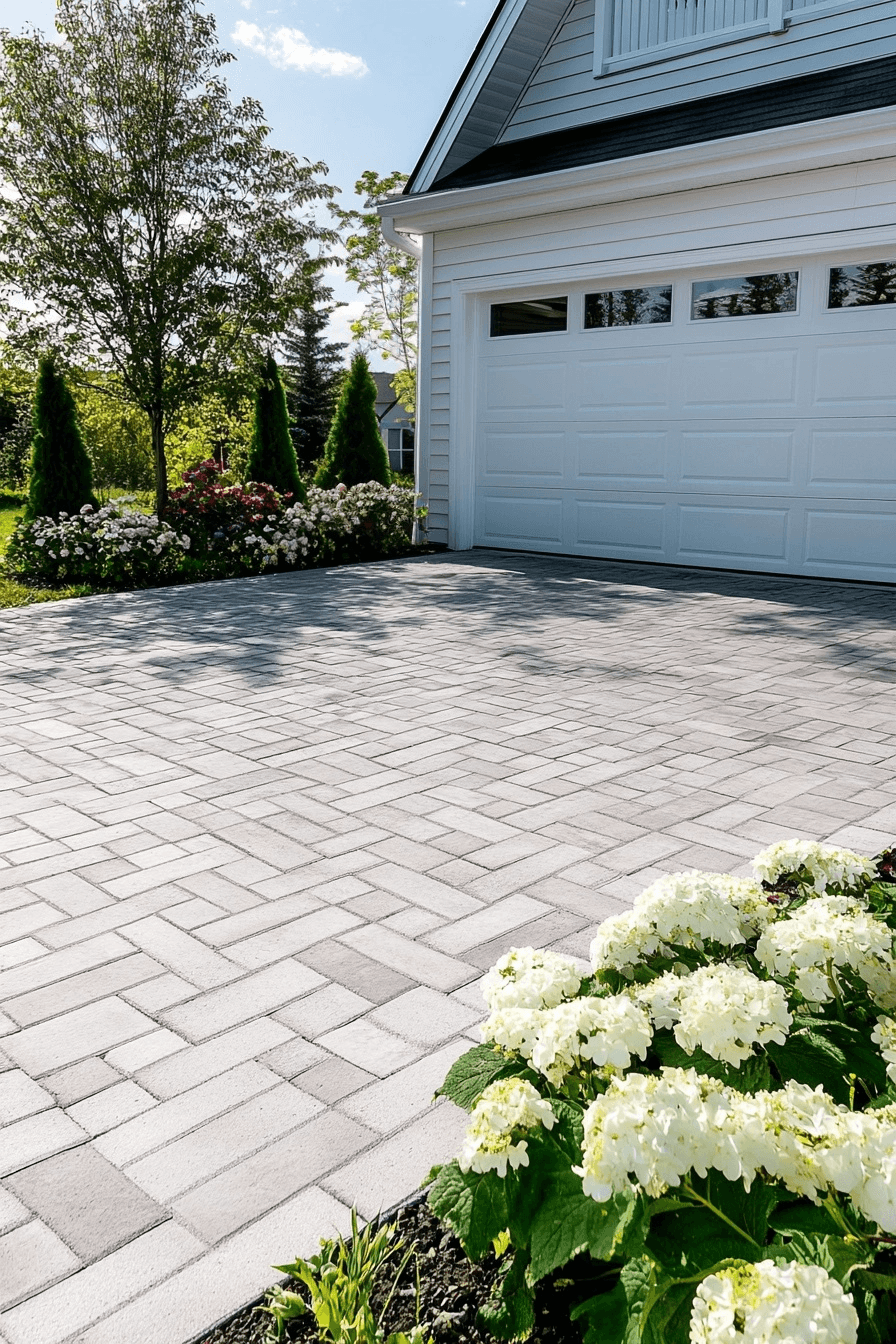
For decades, traditional black asphalt dominated residential driveways across the province. Yet, with rising torrential summer rainfall and sudden winter thaws in Quebec, our waterproof surfaces are showing serious signs of weakness. Water collects, stagnates, seeps where it should not, or overloads municipal sewer systems, causing catastrophic backups.
In this context of ecological transition, creating a permeable parking area is becoming a forward-looking solution for Quebec homeowners. Beyond its polished and contemporary look, this system captures rainwater, allows it to pass through the surface, and temporarily stores it in a stone foundation. Depending on the soil type, groundwater level, and system design, the water can then infiltrate into the ground, be partially drained, or be directed toward an outlet drain.
Whether you are building a new driveway as part of a self-build project or completely replacing an old cracked driveway, this complete guide outlines the technical aspects, market costs observed in 2026, and best practices to know to successfully complete your permeable paving project.
The Benefits of a Drainage-Friendly and Eco-Responsible Residential Driveway
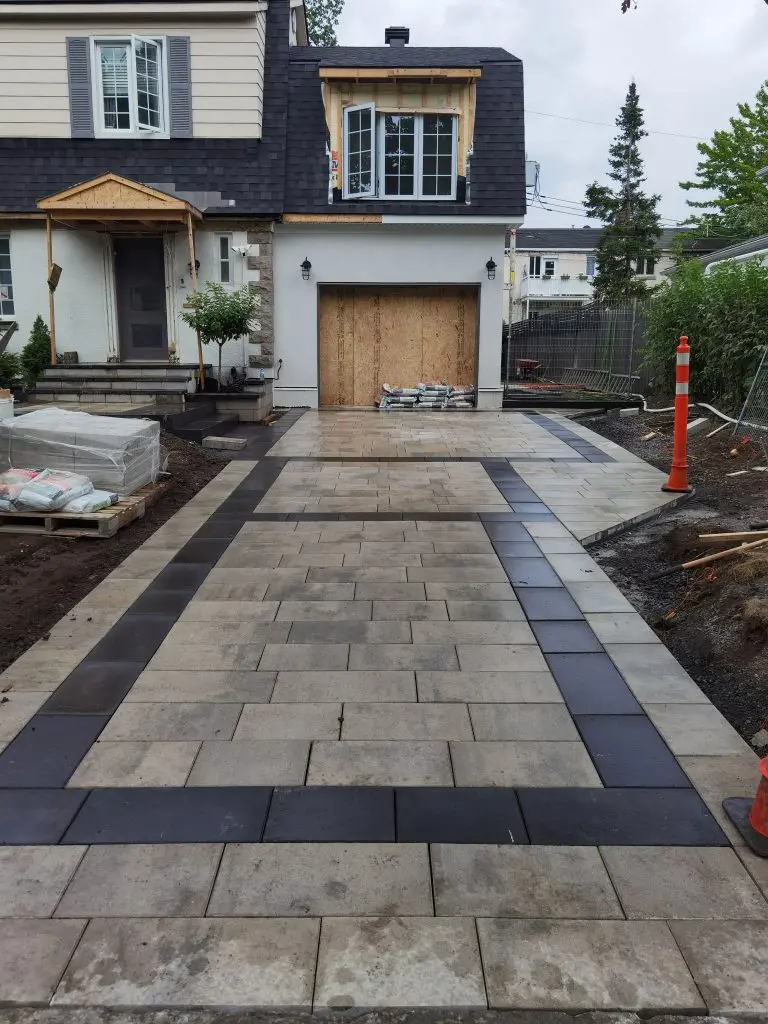
Source: Roy - construction Québec Inc.
Choosing a permeable surface is not just an aesthetic decision for your landscaping; it is a form of environmental engineering applied at a residential scale.
Managing Stormwater at the Source
During violent storms in Quebec, a standard 1,000-square-foot asphalt driveway can generate thousands of litres of runoff in less than an hour. This water flow washes over surfaces, picks up hydrocarbons, heavy metals, and sediment, and eventually ends up directly in the municipal stormwater system.
By contrast, a permeable driveway intercepts this water as soon as it reaches the ground. Whether it is made of interlocking pavers with widened joints or cellular grid pavers, the system allows water to pass through the surface almost instantly. Runoff can be greatly reduced when the system is properly designed, well maintained, and sized according to the soil conditions and expected rainfall. This significantly relieves pressure on public infrastructure and helps protect our waterways from untreated wastewater overflows.
Reducing the Urban Heat Island Effect
Conventional asphalt absorbs solar radiation throughout the day and releases the accumulated heat at night, raising the ambient temperature around your home. The light-coloured concrete blocks used for permeable interlocking pavers have a much higher solar reflectance index.
Even better, the moisture temporarily stored in the underlying stone foundation creates an evapotranspiration effect that naturally cools the surrounding air. If you choose vegetated cellular grid pavers, you reintroduce greenery where there was once a sterile bituminous surface.
Improved Durability in Quebec’s Climate
Contrary to popular belief, a well-designed green infrastructure system is much less vulnerable to structural damage than an impermeable surface. Since water should not stagnate on the surface when the system is properly designed, the risk of freeze-thaw damage can be reduced. However, water is intentionally stored temporarily in the stone foundation, which acts as a reservoir. Your driveway remains stable, straight, and free of seasonal cracks for several decades.
How Much Does It Cost to Install Permeable Pavers in Quebec?
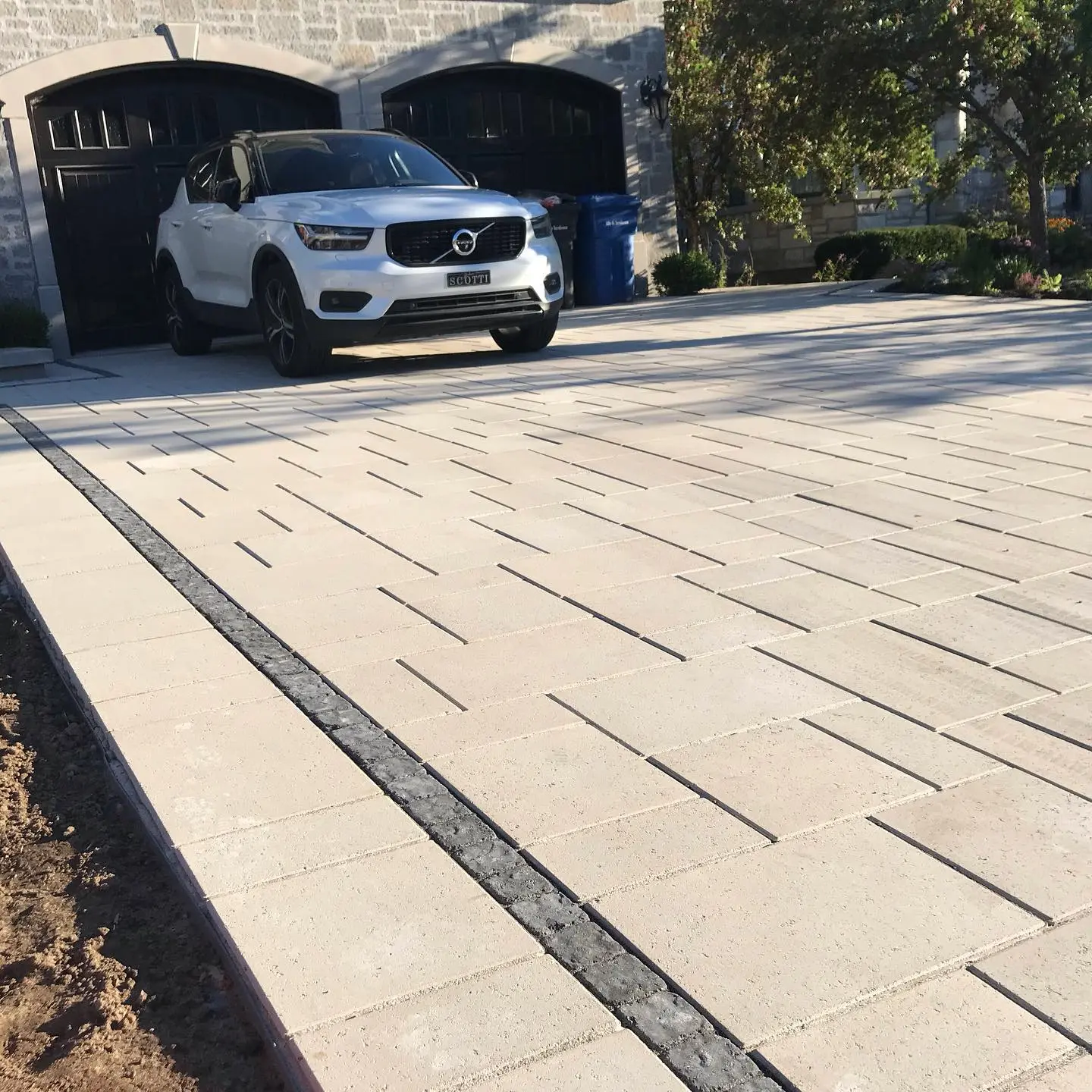
Source: Gestion Carufel Inc
The budget required to build a permeable driveway is generally higher than the cost of standard asphalt paving. This difference is mainly due to the excavation volume required and the specific granular materials and paving blocks used. In 2026, average market rates in Quebec range from $15 to $35 per square foot, including specialized labour.
For a typical residential parking area that can accommodate two cars, or approximately 400 square feet, the total investment will range from $6,000 to $14,000. To plan your expenses accurately, it is strongly recommended that you request a landscaping quote to get a realistic estimate adapted to the topography of your property.
Comparative Cost Table by Type of Permeable Surface
Type of Surface | Average Cost per Square Foot, Materials and Installation | Estimated Lifespan | Required Maintenance |
Plastic Cellular Grid Pavers Filled with Gravel or Grass | $15 to $22 | 20 to 25 years | Low, weeding or adding clean stone |
Concrete Cellular Grid Pavers | $20 to $28 | 30 years or more | Low |
Architectural Permeable Interlocking Pavers | $25 to $35 | 35 years or more | Annual joint cleaning by vacuuming |
Traditional asphalt, for comparison | About $5 to $20/sq. ft., depending on preparation, thickness, region, and the condition of the existing driveway | 10 to 15 years | Sealant every 2 years, crack repairs |
Factors That Affect the Overall Cost
Several elements can affect the final cost of your project:
Type of soil on site: Clay soil, which is very common in the St. Lawrence Valley, retains water and requires much deeper excavation and careful drainage management, which increases the price. Sandy soil, which drains naturally, reduces the required foundation thickness.
Site accessibility: If heavy machinery cannot move around freely, manual work will significantly increase labour hours.
Removal of old materials: If the contractor needs to break up, excavate, and transport an old concrete slab or asphalt layers to a sorting centre, disposal fees will be added to the initial amount. Before starting this type of project, take the time to assess the overall cost of your landscaping work to avoid surprises.
Key Installation Steps to Withstand Freeze-Thaw Cycles
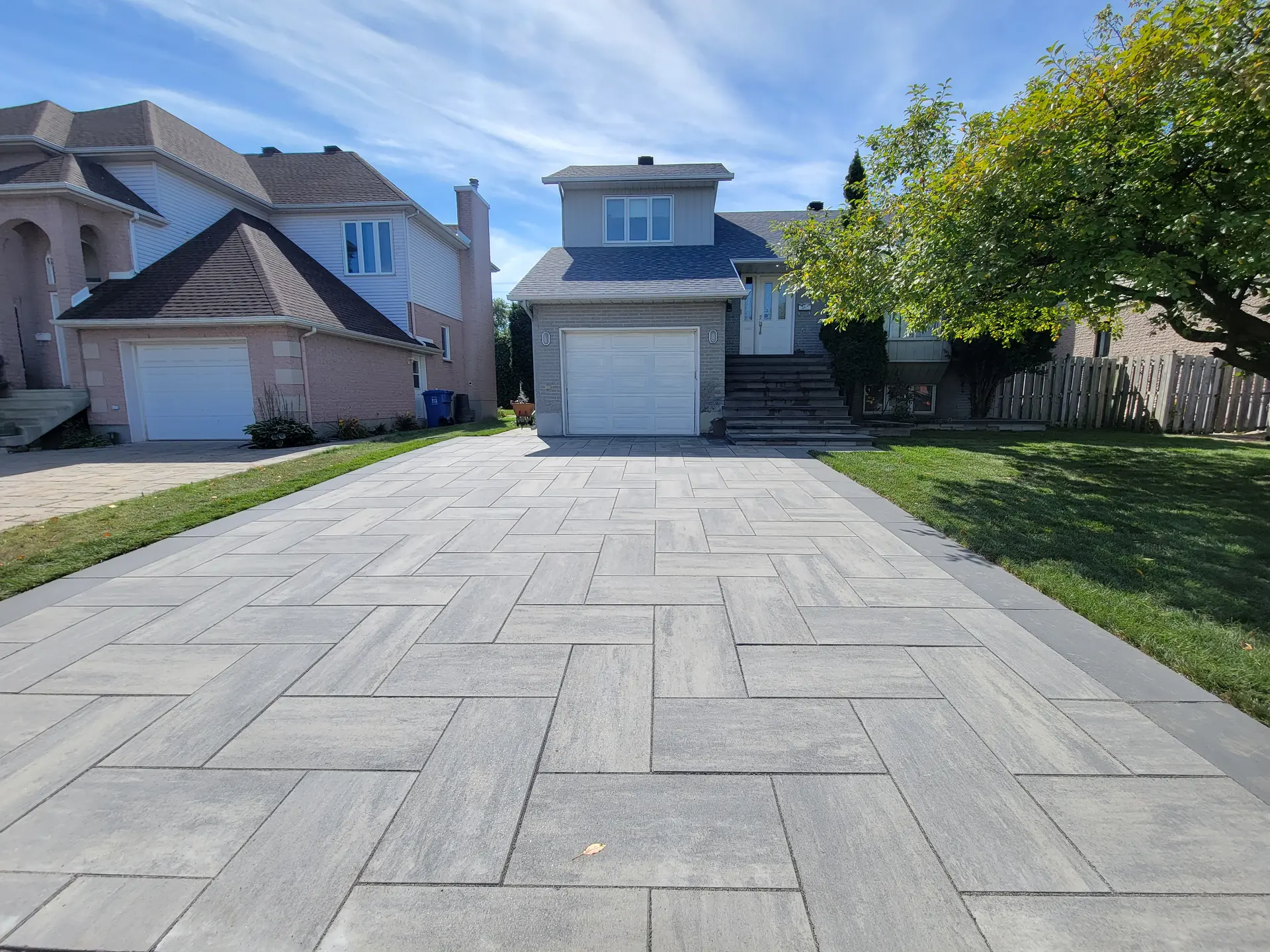
Source: 9400-1849 Québec inc.
In Quebec, the success of a permeable paving project depends entirely on the quality of the invisible work buried beneath the surface. The key is a structure capable of tolerating ground movement without becoming deformed.
Subgrade Excavation and Preparation
For traditional interlocking pavers, a 12-inch excavation is often sufficient. For a residential driveway in Quebec, deeper excavation than traditional pavers is often required, sometimes between 18 and 24 inches. However, the exact depth must be determined based on the soil, expected load, infiltration capacity, and volume of water to be managed. Why dig so deep? Because this stone foundation not only acts as structural support; it also serves as a temporary retention basin beneath the surface during heavy rain or a rapid winter thaw.
The bottom of the excavation, meaning the exposed natural soil, should never be flat. The contractor must shape a minimum slope of 1% to 2% away from the home’s foundation to ensure that excess water moves away from the structure if the saturated soil can no longer absorb it all.
Installing the Geotextile Fabric and Aggregates
Once excavation is complete, the bottom and sides of the pit are lined with a professional-grade non-woven geotextile fabric. This membrane prevents the natural soil, often clay or silt, from migrating upward and clogging the voids between the foundation stones, while still allowing water to pass through freely.
Next comes the crucial step of choosing the aggregates. Unlike traditional driveways, where 0-3/4-inch crushed stone is used, which contains fines, meaning stone dust that compacts into an impermeable layer, a permeable driveway requires the exclusive use of clean stone. Clean stone is free of dust, leaving approximately 30% to 40% air voids between the aggregates in the structure.
Subbase: A 12- to 18-inch layer of big, clean stone, 2 to 3 inches in size, is first installed. This layer provides stability and serves as a water reservoir. Strong mechanical compaction with heavy vibrating plates is carried out in successive 6-inch lifts.
Base: A 4- to 6-inch transition layer of 3/4-inch clean stone, or 20 mm stone, is then added and mechanically compacted as well.
Bedding layer: Finally, a thin 2-inch layer of small clean stone, 1/4 inch or 5 to 10 mm, is spread and screeded to receive the pavers.
Installing the Permeable Pavers and Filling the Joints
Pavers designed for permeable systems generally have wider side spacers than standard pavers. During installation, these spacers create joints that range from 5 mm to 10 mm wide.
Do not use polymeric sand: Traditional polymeric sand should never be used because it hardens and completely waterproofs the space. Instead, the joints are filled to refusal with the same fine crushed clean stone, 1/4 inch, used for the bedding layer.
Finishing: Once the joints are filled, the crew performs a final mechanical compaction over the entire driveway surface, protecting the pavers with a neoprene pad attached under the vibrating plate. This process firmly locks the blocks together through granular friction, creating an ultra-resistant surface capable of supporting the weight of trucks or heavy utility vehicles without sinking.
Municipal Subsidies and Current Regulations
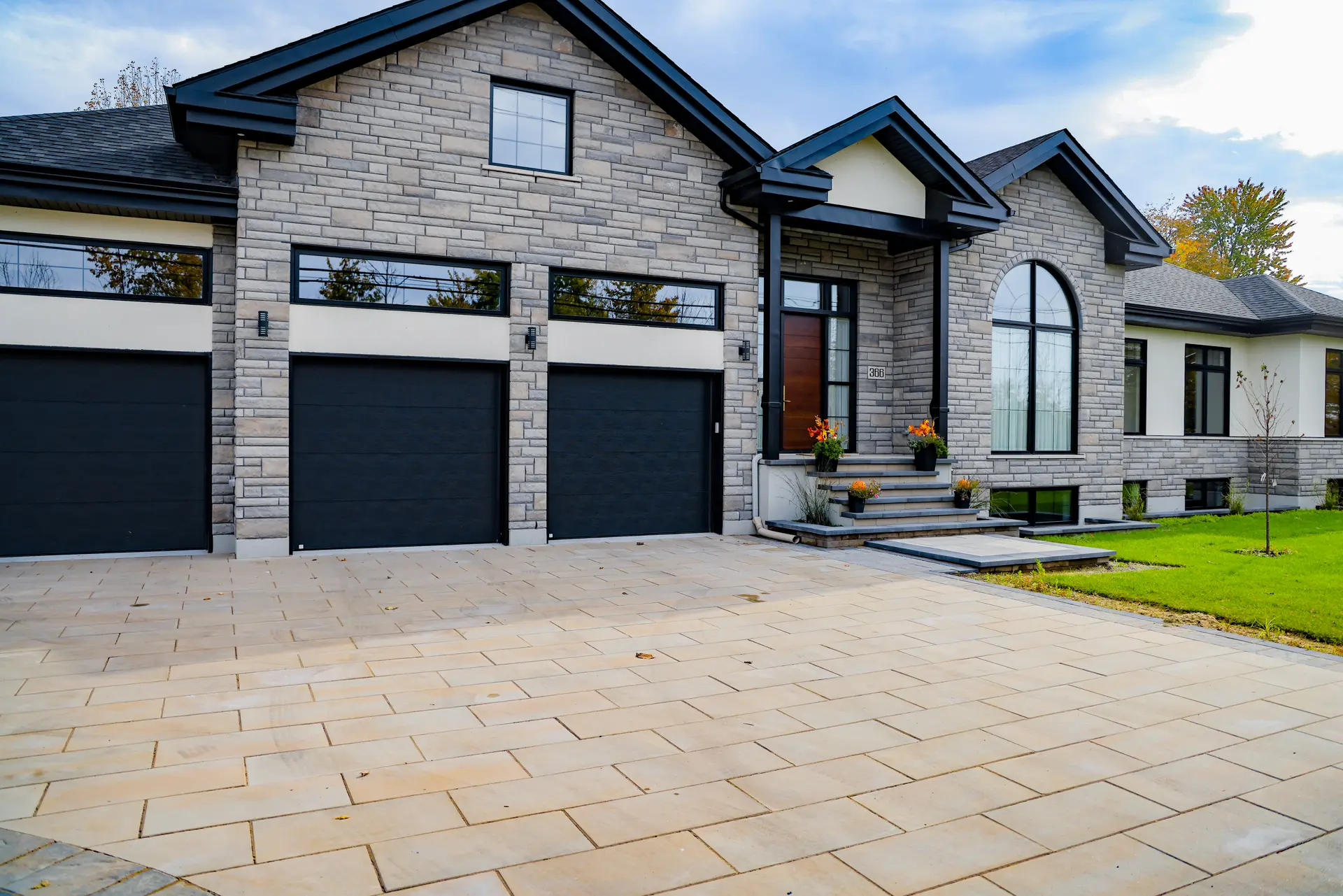
Source: Verdeko Paysagement
Given the enormous costs associated with repairing sewer infrastructure and treating runoff water, Quebec municipalities are tightening their urban planning regulations. Creating a permeable driveway is no longer just an ecological trend; in several areas, it is becoming a legal requirement.
Waterproofing Surface Limits
Several municipalities and boroughs now regulate the materials, width, location, or water management of parking areas. Requirements vary widely depending on the city, borough, building type, and number of parking spaces. In some Montréal boroughs, if you decide to expand your parking area or redo your existing driveway, the city may require a significant portion or all of the new surface to be fully permeable; otherwise, your permit may be refused, or the project may be deemed non-compliant with local regulations.
These measures aim to encourage the creation of private green infrastructure to mitigate the combined impact of intense rainfall events that can overwhelm urban drainage systems.
Financial Assistance Programs and Subsidies
To encourage this ecological transition, several municipal administrations offer very attractive financial incentives:
Per-square-foot subsidies: Some municipalities may require materials that comply with recognized standards or their own technical criteria.
Tax credits or eco-responsible programs: Some municipalities or programs may fund soil demineralization or sustainable stormwater management projects, but the amounts, eligible applicants, and covered work vary significantly. You should check with your municipality before announcing any specific amount. Contact your local urban planning office before starting the process or signing a contract.
The Importance of Professional Certifications
Installing a permeable driveway requires precise calculations for load-bearing capacity and hydraulic capacity. Poorly executed work can saturate the soil near your foundation and cause water leaks in your basement.
It is recommended that you verify insurance, references, experience with permeable paving, and, when the work requires it, the relevant RBQ licence. Some paving or parking area work may fall under an RBQ subcategory, while some landscaping work on private property may also be exempt. In addition, choosing a contractor who is a member of a recognized professional association, such as the Association des professionnels en aménagement paysager du Québec (APPQ), can also be a good indicator of professionalism, especially if the company can demonstrate concrete experience in permeable paving.
Looking for something else?
Related articles
The latest industry news, interviews, technologies, and resources.

Editorial Team
•02 Jul 2024
Are you looking for ways to limit flooding while simultaneously revamping your backyard? Are you familiar with pervious concrete at all? Picture an exterior surface that not only looks good, but one that’s highly functional. Said porous material was designed to facilitate water infiltration, limiting the risks of flooding while also improving stormwater control. Furthermore, it has several aesthetic options, blending perfectly with a range of designs and styles. Learn how pervious concrete can revamp your front or backyard.
Editorial Team
•05 Dec 2025
When it comes to tree care and maintenance, people often confuse trimming with pruning. Yet, these are two very distinctive concepts, with different end goals, and easily distinguishable techniques. In the paragraphs below, we’ll look at the difference between trimming and pruning, including pruning and trimming methods, necessary tools, and tree maintenance budget.

Christine Simard
•08 Nov 2023
Over the past two years, we have often mentioned the phenomenon that is biophilic design but never really delved into the depths of this trend. With people growing more and more conscious of the need for a more sustainable future, the architecture and design world soon picked up on those issues and are now working around the inclusion of these principles in their practices.
Editorial Team
•27 Jan 2026
A kitchen remodel is one of the most common renovation endeavours, especially in terms of flooring. Kitchen floors have to put up with a great deal of daily use, resulting in fast-tracked wear and tear. This area goes through it, from falling pots and pans, boiling liquid or other spills to normal foot traffic.

Cynthia Pigeon
•01 Aug 2026
Modernizing a lighting system involves much more than replacing a burnt-out bulb during a weekend renovation project. In Canadian homes, smart home technology has become an increasingly popular way to improve comfort, security, and energy efficiency. Centralized or automated lighting controls can turn off lights in unoccupied rooms, simulate occupancy while you are away, and create comfortable lighting scenes suited to different seasons and routines.