High-Pressure French Drain Cleaning in Quebec: Complete Guide
By Cynthia Pigeon
Updated on September 12, 2026
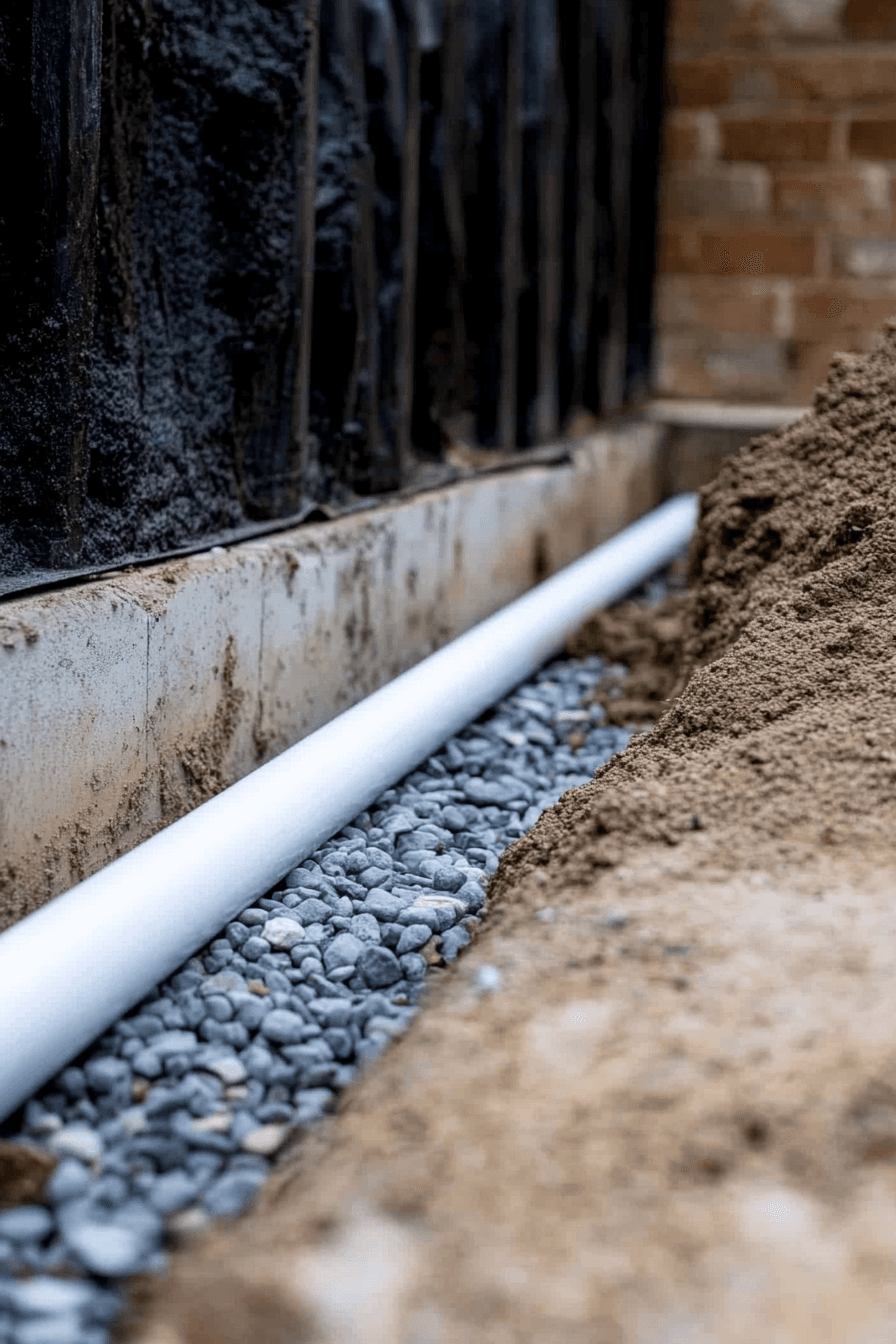
In Quebec, high-pressure French drain cleaning typically costs between $600 and $1,500 in 2026 when a camera inspection is included. A camera inspection on its own can cost about $300 to $500, while adding an access cleanout can cost $500 to $1,200 per unit.
These costs can vary depending on the length of the drain, how easy it is to access, its condition, and issues such as iron ochre. In areas such as Montréal’s South Shore, the Lower Laurentians, and Mauricie, soil and moisture conditions can contribute to sediment or iron ochre buildup in foundation drains.
In Quebec, the foundations of single-family homes are exposed to harsh climate and soil conditions. Heavy rainfall, snowmelt, and varying soil composition all make the drainage system an important part of protecting a home from moisture. When a foundation drain, commonly known as a French drain, starts to clog, water can build up around the footings, increasing the risk of water infiltration into the basement.
If the drain is still structurally sound, high-pressure cleaning, or hydro-jetting, can help restore proper drainage without immediately resorting to major excavation work. This guide explains how much the service costs in 2026, how it works, when it may be needed, and how to choose a qualified contractor in Quebec.
Why Choose High-Pressure Cleaning (Hydro-Jetting)?
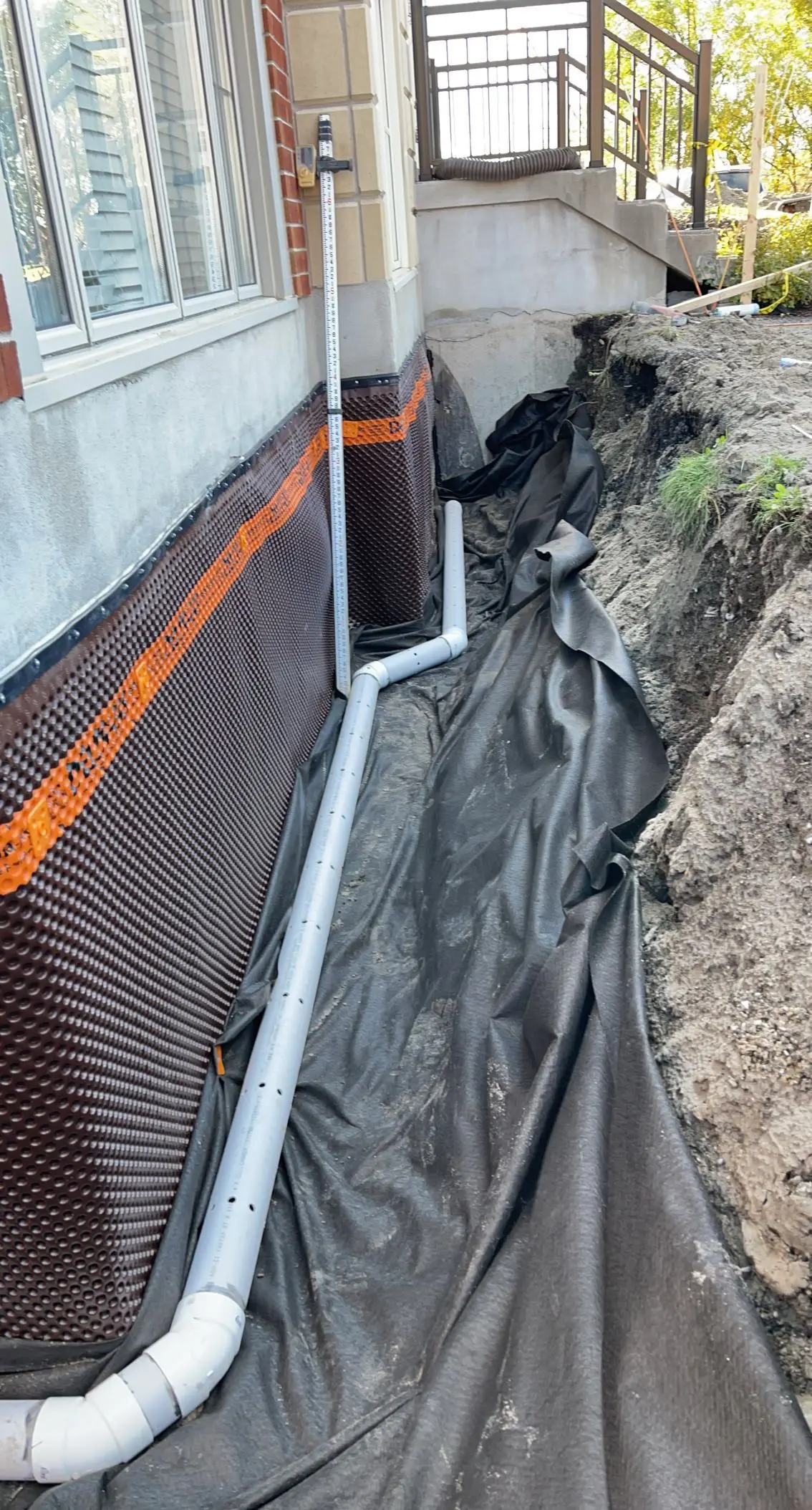
Source: Techno-drains Excavation Inc.
High-pressure cleaning, or hydro-jetting, consists of inserting a specialized nozzle attached to a flexible hose inside the foundation drain. This nozzle projects water jets at a calibrated pressure, generally between 2,000 and 4,000 PSI, backward to propel the hose and forward to dislodge obstructions.
Unlike traditional mechanical snaking methods, which simply pierce a narrow hole through a sediment blockage without cleaning the walls, hydro-jetting provides 360-degree scouring. This technology helps clean the internal walls of the drain and clear several blocked openings, including small openings clogged by soil.
Comparison of Foundation Drain Maintenance Methods
Comparison Criteria | Hydro-Jetting (High-Pressure Water) | Mechanical Snaking (Metal Snake) | Low-Pressure Rinsing (Garden Hose) |
Effectiveness against sand and mud | Very good (removes sediment through rinsing action) | Limited (moves mud without extracting it) | Very low (pressure too weak to lift the mass) |
Removal of iron ochre | Good to high (loosens viscous bacterial sludge) | Low (slides through the gelatinous mass) | None (has no impact on the adhesion of the bacteria) |
Removal of fine roots | Excellent (cutting nozzles destroy small rootlets) | Moderate (can cut larger roots, but misses smaller ones) | None |
Risk of damaging an old drain | Low to moderate (if the pressure is properly calibrated by an expert) | Moderate to high depending on the condition of the drain (rigid spirals can perforate black plastic) | None |
The constant accumulation of fine soil particles and organic debris eventually reduces the usable diameter of your French drain. By choosing hydro-jetting, you improve the drain’s evacuation capacity, extending the useful life of your foundation by several decades. If you notice signs of clogging, it is recommended to request a quote for your foundation work in order to plan a prompt intervention.
Why Iron Ochre Is a Common Issue in Quebec Soils
Iron ochre is an important phenomenon to consider when maintaining foundation drains in Quebec. This phenomenon results from a biochemical reaction: bacteria naturally present in the soil come into contact with iron and water, generating a gelatinous orange or ochre-coloured sludge.
This sticky substance migrates toward the French drain, clings to the interior walls, blocks the pipe perforations, and clogs the geotextile membrane surrounding it. Over time, the drain becomes completely paralyzed, causing water to back up directly toward the basement slab.
Certain areas of the province have conditions that favour the development of this problematic deposit:
Mauricie: Known for its sandy soils rich in iron.
Lower Laurentians: Plain areas where a high water table promotes bacterial activity.
South Shore of Montréal: Several municipalities have soils with high iron concentrations.
When dealing with iron ochre, conventional cleaning methods are completely ineffective. The sticky texture of this sludge requires the targeted action of high-pressure cleaning. Hydro-jetting helps liquefy this bacterial mass and push it toward the sump pump or discharge point so it can be permanently removed from the system. In affected areas, preventive maintenance every 3 to 5 years is often recommended in high-risk sectors to avoid irreversible clogging that would require the complete replacement of the drain.
When Should You Schedule Foundation Drain Cleaning?
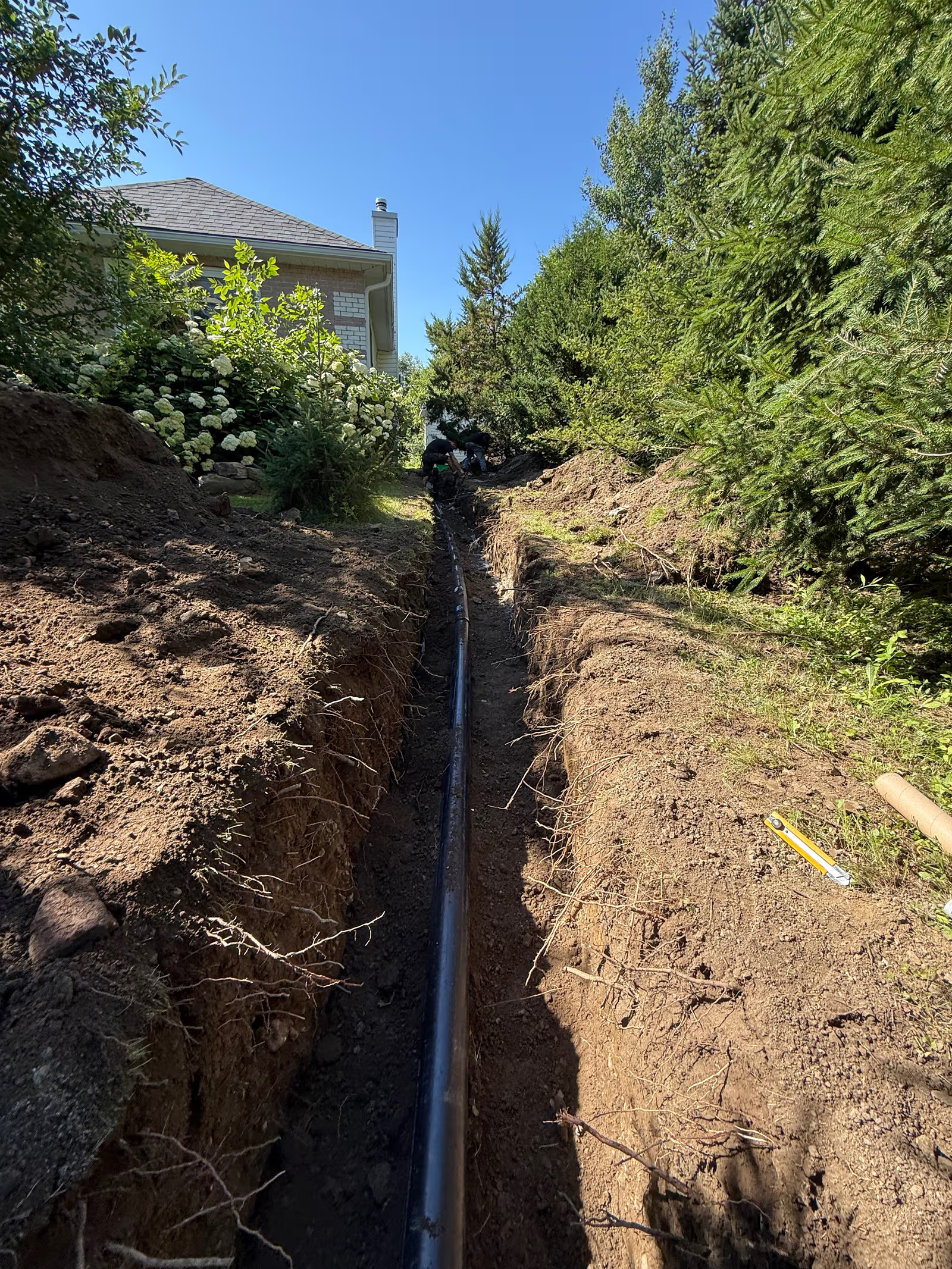
Source: Excavation Hébert Deschênes
A home’s drainage system is underground, which makes it invisible on a daily basis. However, several signs from your home may indicate that it is time to call a professional for high-pressure cleaning:
An abnormally high humidity level in the basement: If you feel dampness or notice persistent earthy or mouldy odours.
The appearance of efflorescence: This white powder visible at the bottom of concrete foundation walls indicates that water is passing through the concrete by capillary action because it is not being evacuated by the drain.
Suspicious sump pump behaviour: A pump that runs continuously, even during dry weather, may indicate that water is having trouble draining naturally. Conversely, if the sump pit remains completely dry while it is raining heavily outside, this may mean that water is no longer reaching it, a clear sign of a blocked drain upstream.
Water marks or weeping cracks: Visible traces of water trying to find a path at the joint between the foundation wall and the basement slab.
The timing of the intervention is strategic. Experts recommend performing high-pressure cleaning in the fall, before the ground freezes, or at the very beginning of spring, just before the snow melts. To avoid unpleasant surprises during these critical periods, you can plan an inspection by consulting a qualified French drain contractor to verify the overall condition of your foundation plumbing.
The Impact of Freeze-Thaw Cycles on Water Drainage
Quebec’s climate imposes extreme thermal constraints on residential structures. Repeated freeze-thaw cycles, especially intense in fall and spring, play a major role in the deterioration and obstruction of drainage systems.
In winter, frost can penetrate deeply into the soil, depending on local conditions. This frost traps moisture in the topsoil. During the spring thaw, the upper layer of soil melts quickly while the lower layers remain frozen and impermeable. This phenomenon creates a massive volume of surface water that suddenly moves down toward the foundation.
Spring flooding
Rapid snowmelt and heavy spring rains increase the amount of water around the house.Saturation of soil during thaw
The surface layer of soil becomes waterlogged, while the deeper layer may still be frozen. Water, therefore, drains less easily.Maximum hydrostatic pressure
Water accumulates along the foundation walls and exerts significant pressure.Two possible scenarios
Functional French drain: The water is collected and directed toward the sump pump or ditch.
Blocked French drain: Water accumulates around the foundation and can cause water infiltration in the basement.
If your foundation drain is partially clogged with sand or iron ochre before spring, its absorption capacity may be reduced. Water will accumulate around the footing, increasing hydrostatic pressure against your concrete walls. This pressure pushes water to infiltrate through the smallest microcrack or through the construction joint between the wall and the basement concrete slab. Preventive hydro-jetting maintenance ensures that the path is clear to evacuate this seasonal surge without obstruction.
How Does High-Pressure Drain Unclogging Work?
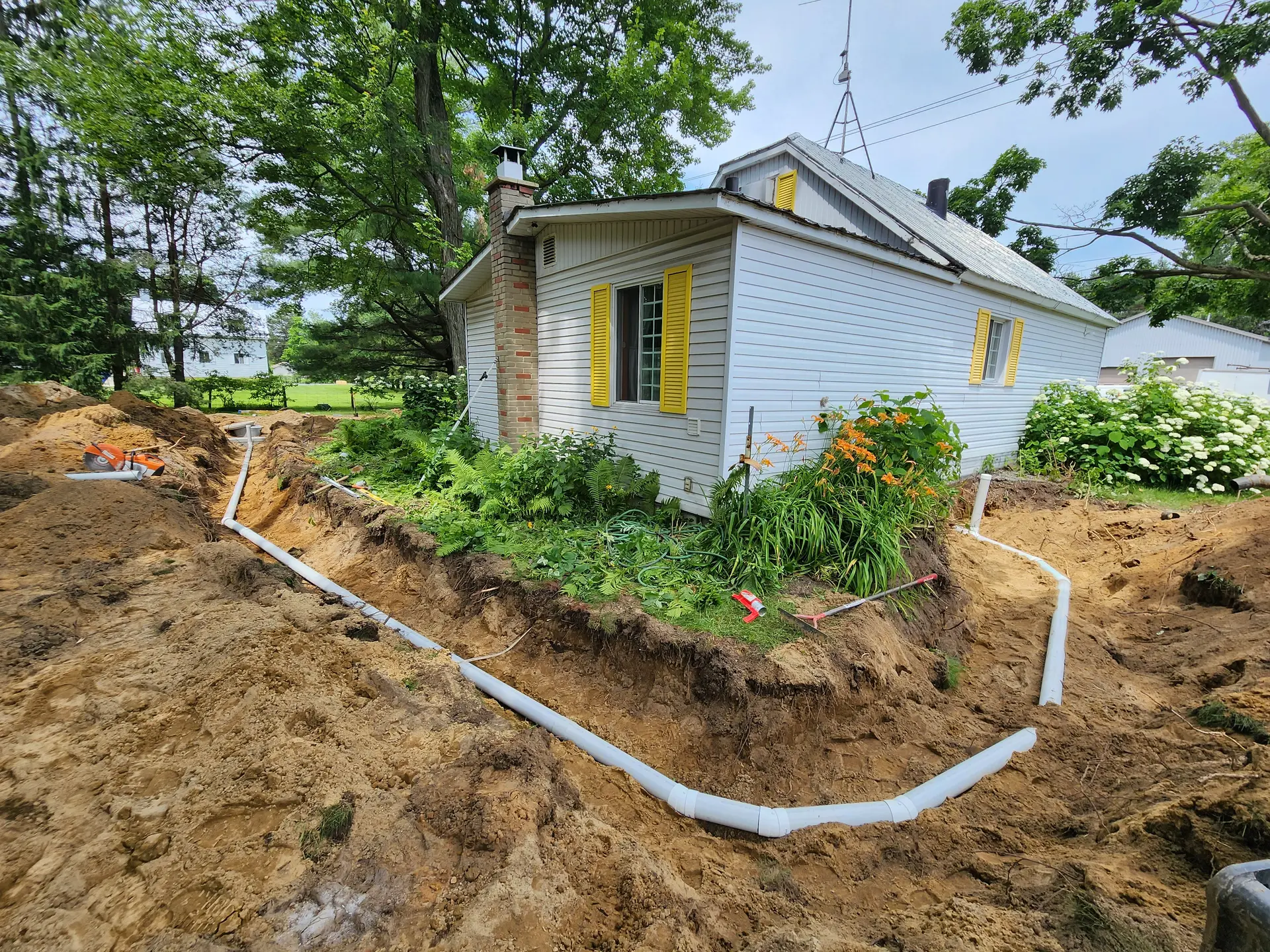
Source: Excavation Collins
A professional high-pressure cleaning intervention follows a rigorous protocol to ensure optimal results without risking damage to the pipes.
Step 1: Accessing the System Through the Cleanout Access
To clean a drain, the contractor must be able to insert the equipment into it. Modern homes are generally equipped with one or more cleanout accesses that extend from the drain to the exterior ground level or into the basement. If your property does not have one, the contractor may, depending on the situation, install a permanent cleanout access.
Step 2: Initial Camera Inspection
Before sending high-pressure water into the system, a qualified technician inserts a waterproof camera equipped with a locating probe into the pipe. This camera inspection is essential to:
Validate the exact nature of the obstruction, such as sediment, iron ochre, roots, or a crushed pipe.
Verify the structural integrity of the French drain. Old clay or concrete drains require gentler water pressure than modern rigid perforated PVC drains.
Step 3: Hydro-Jetting Cleaning
The contractor selects the appropriate nozzle based on the camera diagnosis. The hose is inserted into the cleanout access. The force of the water jets breaks down compacted soil deposits, loosens organic matter, and rinses the internal walls. Dirty water and dislodged debris are generally evacuated according to the system configuration, whether pumped or vacuumed out, as the work progresses to prevent any backup into the basement.
Step 4: Final Control Inspection
Once the cleaning is complete, a second camera pass is performed. This final inspection confirms that the drain is perfectly clean, that the perforations are clear, and that water flows smoothly and continuously toward its discharge point.
How Much Does French Drain Cleaning Cost in Quebec in 2026?
The cost of high-pressure French drain cleaning varies depending on several technical factors: system accessibility, the presence or absence of cleanout accesses, the total perimeter length of the house, and the degree of obstruction, especially in cases of severe iron ochre.
These prices vary depending on accessibility, the condition of the drain, and the region.
Camera inspection only: $300 to $500
High-pressure cleaning (hydro-jetting) with inspection included: $600 to $1,500
Installation of a cleanout access, if required, including light excavation: $500 to $1,200 per unit
To obtain a fair evaluation adapted to your property, it is strongly recommended to compare options and accurately estimate the cost of renovation work with several specialized companies.
Essential Selection Criteria
Never entrust foundation maintenance work to just anyone. Always require the following validations before signing a quote:
Legal requirement - RBQ licence: In Quebec, work involving foundation drainage and waterproofing systems must comply with applicable requirements. The contractor you choose must hold a valid licence from the Régie du bâtiment du Québec (RBQ). Depending on the scope of the work, it may fall under categories related to excavation, earthwork, or general contracting. Holding this licence protects you through a licence bond in the event of faulty workmanship.
In addition, ask about the municipal regulations in effect in your city. Compliance requirements for French drain connections have evolved significantly. In many Quebec municipalities, it is not permitted to connect a foundation drain or sump pump directly to the sanitary sewer system to avoid overloading wastewater treatment plants during heavy rainfall. The system must be directed toward an absorption pit, a separate storm sewer, or a ditch, often through a functional backwater valve to prevent accidental backups into your basement. A certified contractor will ensure that your installation fully complies with your municipality’s local codes.
By carrying out preventive hydro-jetting maintenance, you preserve the value of your most important real estate asset: your home. A drier, better-protected basement starts with a foundation drain that is in good condition and properly maintained.
Looking for something else?
Related articles
The latest industry news, interviews, technologies, and resources.

Cynthia Pigeon
•03 Aug 2024
Regardless of the type of material used to cover your roof, with time and exposure to the elements, grime can quickly build up and compromise the roof's functionality. Therefore, it's essential to clean your roof regularly to prolong its durability and maintain adequate waterproofing. Below are some tips on how to maintain a shingle roof.

Editorial Team
•08 Nov 2023
Today, the importance of having a functional French drain in place to benefit your foundation has been well established. In Quebec, winter and spring weather, as well as the likelihood that your dwelling’s foundation is in proximity to a phreatic zone, can definitely put a strain on concrete foundations if not properly drained.

Editorial Team
•08 Nov 2023
Converting your roof to capture the power of the sun’s energy can benefit your home and wallet depending on how you go about it. Over the years, solar panels have become the go-to option for producing renewable energy.
Editorial Team
•06 Dec 2025
In order for a renovation project to go well, it is essential to attach great importance to the planning stage. If many of us agree with that statement, what exactly is the specific task at hand?

Editorial Team
•14 May 2026
Are you finding yourself treading on sagging floorboards and worrying about the next steps, considering that such a problem can domino into a host of other issues and questions?