How to Successfully Renovate an Accessible Bathroom in Quebec
By Cynthia Pigeon
Updated on June 25, 2026
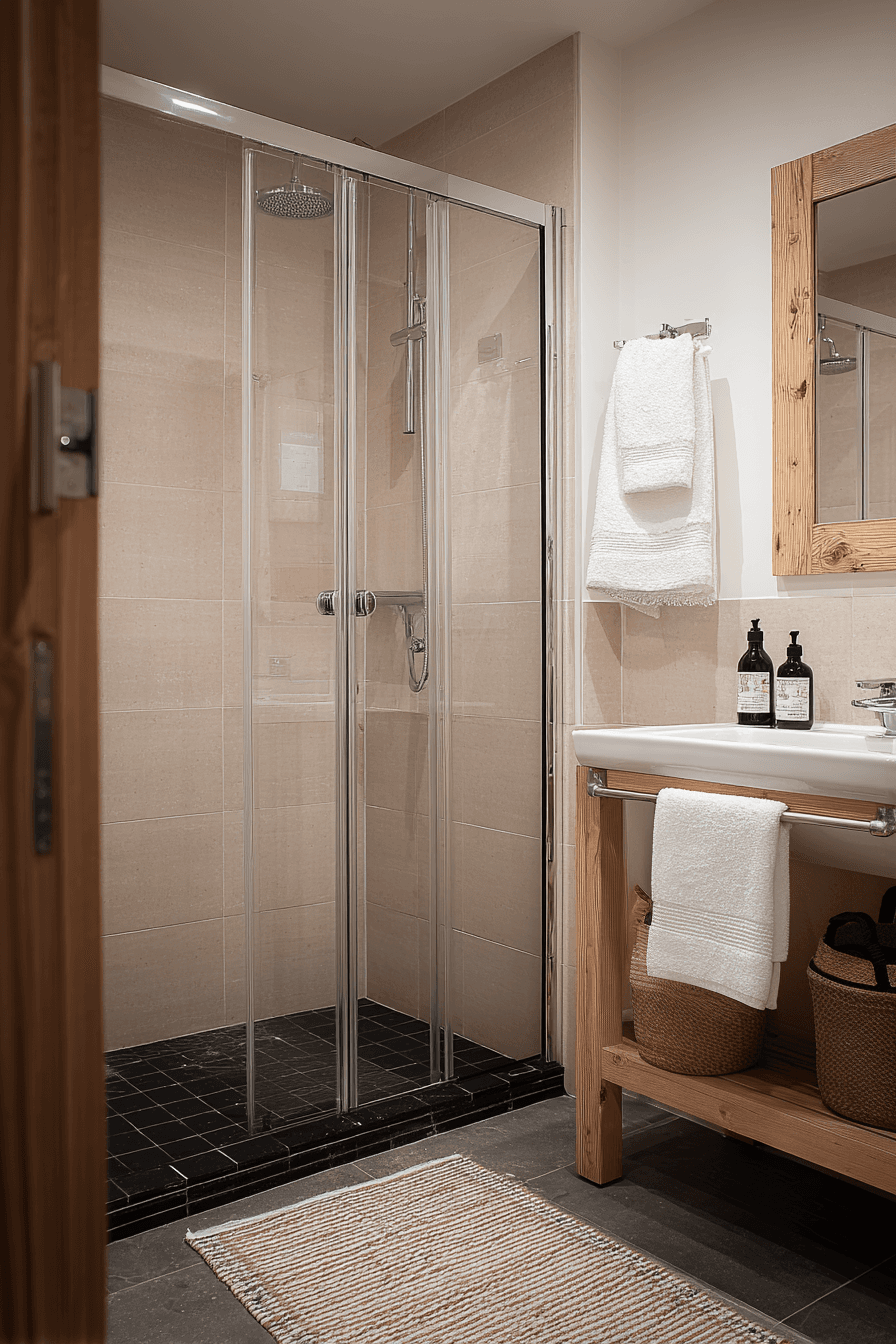
Bathrooms are one of the most important rooms in a home, but it is also one of the areas where household accidents are most likely to happen. With humidity, slippery surfaces and often limited space, the risk of falls is especially high for seniors and people with reduced mobility.
For seniors who want to age safely at home, as well as for their caregivers, adapting this space becomes an absolute priority. In Quebec, transitioning toward a living environment adapted to loss of autonomy should not be seen as a constraint, but rather as a lasting investment in dignity and freedom of movement.
Smart planning, combined with materials suited to Quebec’s realities, such as managing condensation during our long winters, can transform a standard bathroom into a space designed around universal accessibility.
Essential Features for a Safe Bathroom
Source: Céramique Mathieu Lussier
The main goal of universal accessibility is to create an environment where everyone, regardless of physical ability, can function independently. In the bathroom, this means rethinking the layout to allow for smooth turning space, ideally a 1.5-metre or 5-foot circle for wheelchair use, and eliminating all floor-level obstacles.
Walk-In or Curbless Shower
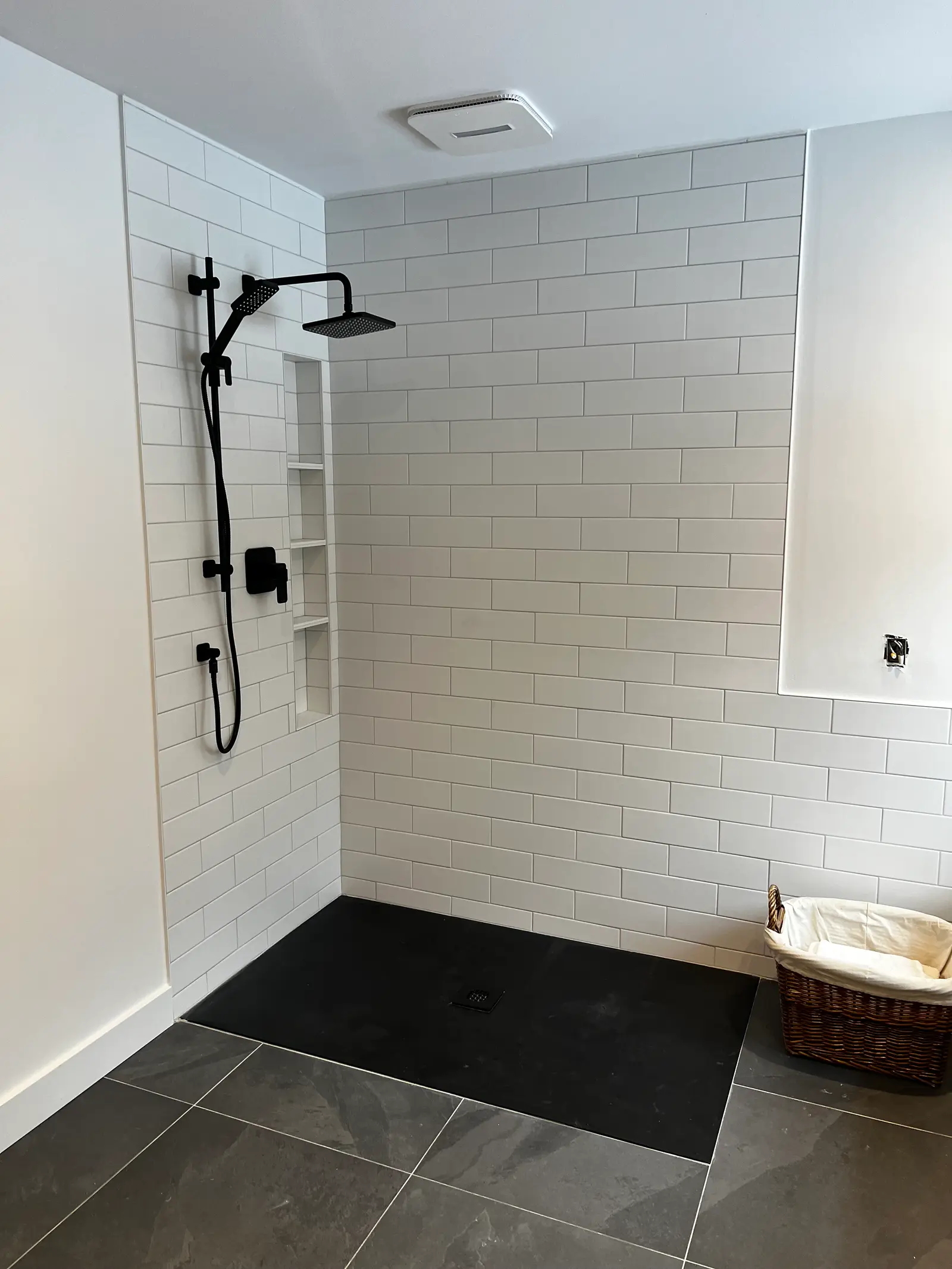
Replacing a traditional bathtub with a no-step shower, often called a walk-in or curbless shower, is one of the most important changes for making the space safer. Stepping over the edge of a standard bathtub is one of the main causes of fractures among seniors.
Level access: A curbless shower completely eliminates the transition between the bathroom floor and the shower area. Entry is continuous, making it possible to access the shower on foot, with a walker or even with an adapted wheelchair.
Flooring: The choice of materials is crucial. Avoid large-format tiles that are too smooth. For the shower area, choose small-format ceramic tile or mosaic tile. The added grout lines increase traction underfoot. Make sure to choose a certified tile with a high slip-resistance rating for safer flooring.
Drainage and waterproofing: To prevent water from spreading across the entire room, the slope toward the drain must be calculated precisely by a professional. Installing a linear drain at the entrance or back of the shower is an excellent technical solution for draining water quickly.
Before getting started, it is wise to plan your overall budget by consulting a guide on bathroom renovation costs so you can properly divide your investment between plumbing, waterproofing and finishes.
Grab Bars and Ergonomic Fixtures
Falls often happen during transfers, such as sitting down, standing up or trying to catch oneself after losing balance. Installing solid anchor points is non-negotiable.
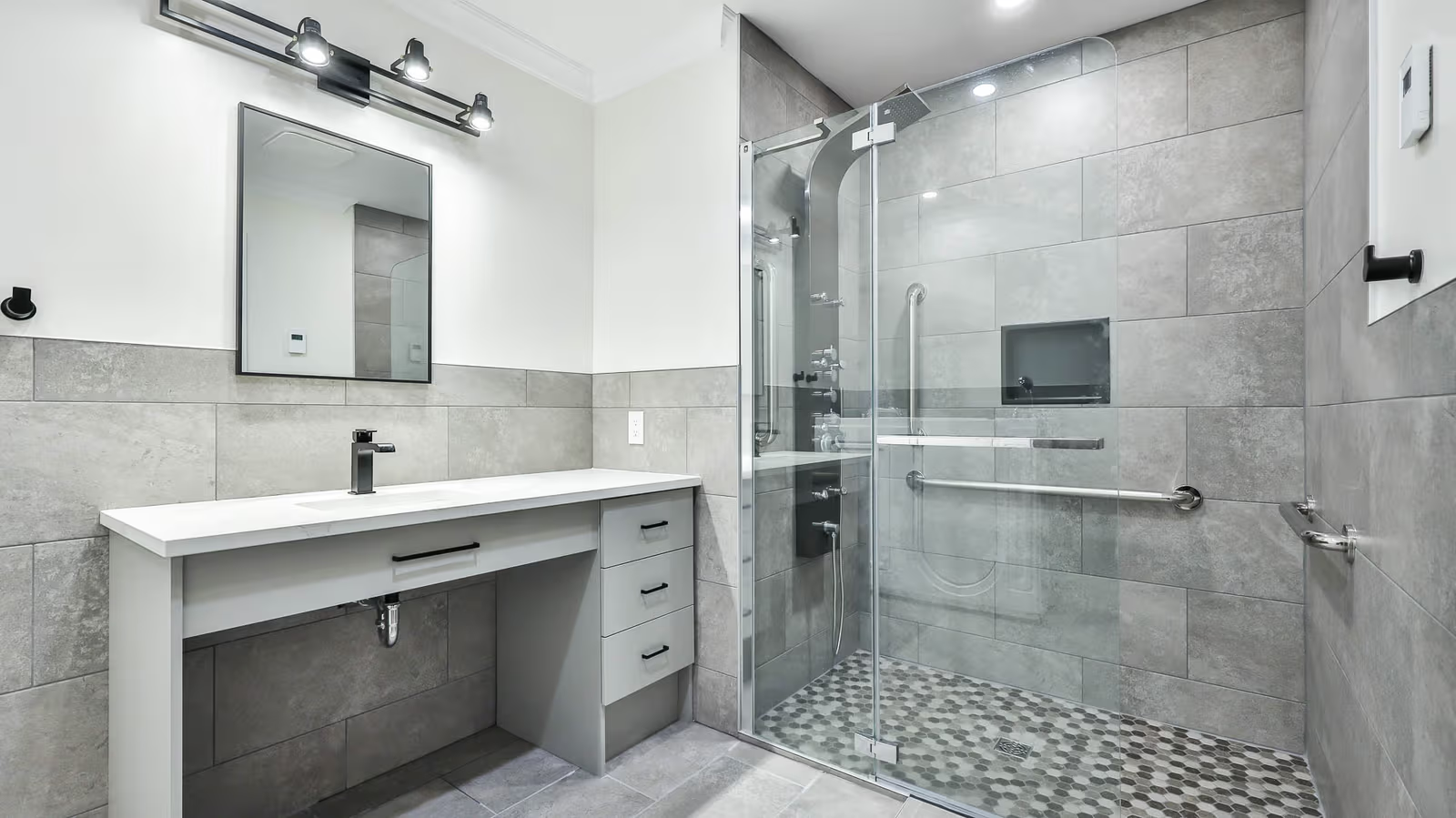
Grab bar placement: Grab bars should never be attached only to drywall or simple plastic anchors. They must be securely screwed into the wood backing installed behind the wall when the wall is opened. There should be at least two in the shower, one vertical bar near the entrance and one horizontal or angled bar on the main wall, as well as one next to the toilet.
Anti-scald fixtures: With age, the skin’s sensitivity to temperature decreases and reflexes slow down. To help prevent serious accidents caused by sudden changes in water pressure in the municipal or residential system, installing a thermostatic mixing valve is essential. This system keeps the water temperature stable. Also choose single-lever or motion-sensor controls, which are much easier to use for people with arthritis or reduced muscle strength.
Hiring a Qualified Contractor in Quebec
Source: RenoQuotes
Modifying a residential structure for accessibility is not something to improvise. This is not simply decorative work, but a project involving structural changes, advanced waterproofing and complex plumbing.
In Quebec, the law is clear: to undertake residential renovation work, you must work with a general or specialized contractor who holds a valid licence from the Régie du bâtiment du Québec (RBQ).
Working with a contractor who holds an RBQ licence provides several important safeguards:
Code compliance: The contractor must follow the Quebec Construction Code, which helps ensure structural soundness, including the anchoring of grab bars, as well as the compliance of plumbing installations.
Financial protection: In the event of poor workmanship, hidden defects or failure to respect the contract, you are protected by the RBQ licence security and by remedies under the Consumer Protection Act.
Professional insurance: It is recommended to verify that the contractor has adequate liability insurance, in addition to a valid RBQ licence.
To avoid unpleasant surprises and under-the-table work, take the time to shop around. It is recommended to compare certified contractors and verify their licence number directly in the RBQ’s public register before signing any contract or paying a deposit.
Grants and Tax Credits for Aging in Place
Source: Kim Lacharité designer intérieur
The costs associated with adapting a home for loss of autonomy can be significant. Fortunately, the provincial and federal governments, aware of the social benefits of helping seniors remain at home, offer major financial assistance programs and tax incentives.
The Home Adaptation Program
The Home Adaptation Program, known in French as the Programme d’adaptation de domicile (PAD), is administered by the Société d’habitation du Québec (SHQ). It provides financial assistance to adapt the home of a person with a disability. However, the status of applications must be verified before starting the process, as new applications have been suspended since April 1, 2025, with a reopening to be announced by Québec.ca when registrations resume. The program is intended for people with a significant and persistent disability, to help them enter and exit their home, access essential rooms and carry out daily activities safely.
Occupational therapist assessment: This is the mandatory first step. You cannot simply decide which work needs to be done. An occupational therapist from the health care system, generally through your local CLSC, must visit your home. This professional will assess your functional limitations in daily life and prepare an official report describing the required adaptations, such as replacing a bathtub with a no-step shower.
Payment of financial assistance: The amount of assistance varies depending on the applicable option. Option 1 can provide up to $50,000 per eligible person, while Option 2 provides up to $12,000 for exterior access work and $12,000 for work inside the home. If the cost of eligible work exceeds the grant amount, the homeowner must pay the difference.
Before starting the work: For Option 1, work carried out or started before authorization from the municipality, or MRC is not eligible. For Option 2, certain rules may differ depending on the situation. In all cases, it is best to verify the official requirements before beginning the work.
Tax Credits for Seniors and Accessibility
In addition to direct grants for renovation work, Revenu Québec supports seniors’ autonomy through specific tax measures.
The tax credit for home-support services for seniors can help pay for certain home-support services for people aged 70 or over. However, it does not cover construction, renovation or repair work. It can, therefore, be mentioned as a complementary note, but should not be presented as direct financial assistance for renovating a bathroom.
The home accessibility tax credit: The federal Home Accessibility Tax Credit allows eligible expenses to be claimed for renovations that help a qualifying person access their home, move around in it, function more independently or reduce the risk of injury. Eligible expenses are limited to $20,000 per year for a qualifying individual or eligible dwelling.
Program / Incentive | Responsible Organization | Main Requirement | Type of Assistance |
Home Adaptation Program (PAD) | Société d’habitation du Québec (SHQ) | Mandatory assessment by a CLSC occupational therapist | Direct grant before the work |
Tax credit for expenses incurred by a senior to maintain autonomy | Revenu Québec | Be 70 years of age or older | Refundable tax credit that may apply to certain eligible goods related to autonomy, such as equipment that helps with access to the bath or shower |
Home Accessibility Tax Credit | Government of Canada / CRA | Work aimed at accessibility, mobility or reducing the risk of injury | Non-refundable tax credit for certain eligible renovations, with eligible expenses limited to $20,000 per year |
Planning Your Renovation Project Today
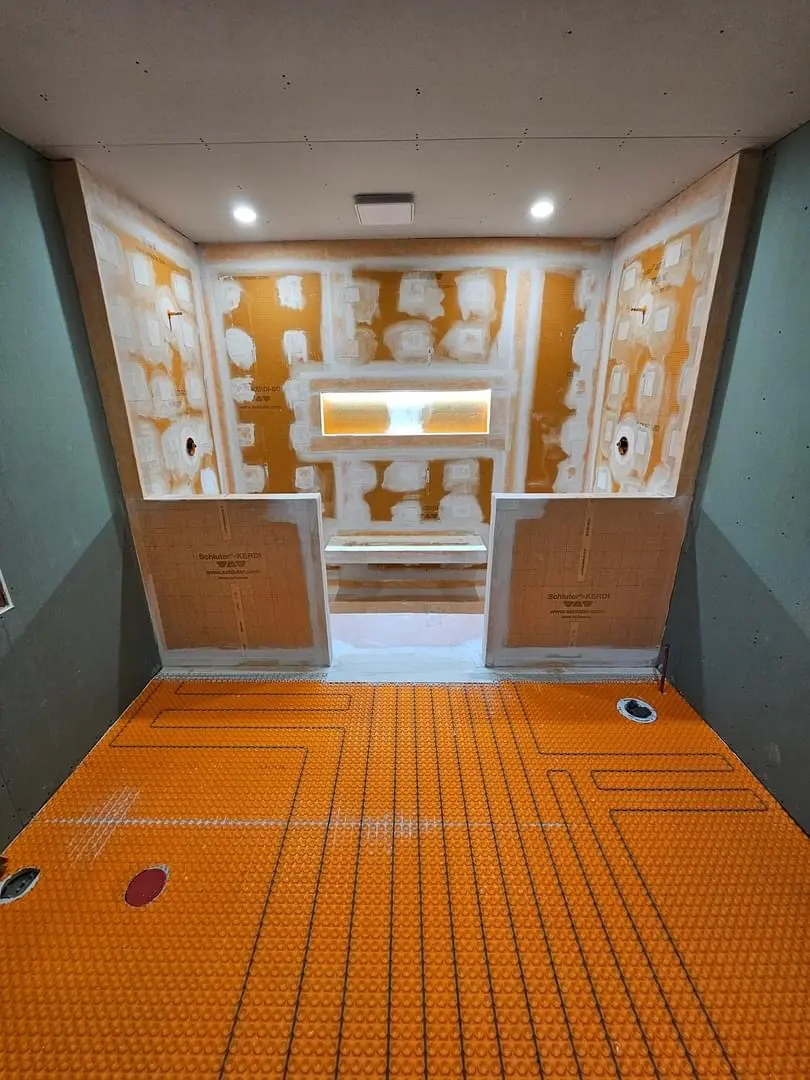
Source: Services DM 2014 Inc
Adapting a bathroom is a forward-looking step that provides tremendous peace of mind, both for the person living in the home and for their caregivers. By removing architectural barriers, you preserve privacy, extend independence and may delay a forced move to a long-term care facility by several years.
To complete this project with less stress, follow these simple steps:
Contact the public health system: Contact your CLSC to request an occupational therapist assessment if you are aiming for a grant through the PAD program.
Determine your exact needs: List your priorities, such as a walk-in shower, toilet height or stronger LED lighting to offset reduced vision.
Get clear quotes: Do not commit blindly. Use contractor-matching platforms to find a general contractor specialized in Quebec residential renovation.
To start your project now and get a clear idea of the cost of the work, take the time to request free quotes from qualified, verified and licensed contractors. It is the first concrete step toward a safer, more comfortable home that is perfectly adapted to your future.
Looking for something else?
Related articles
The latest industry news, interviews, technologies, and resources.
Amanda Harvey
•14 Mar 2024
Although renovations are often motivated by a search for greater comfort and some aesthetic improvement, some may be planning renovations to sell their home. If this is the case, renovations that work to increase the market value of your home are the ones to consider.

Karine Dutemple
•08 Nov 2023
Like many of us, you've probably spent a lot of time relaxing in your living room. Comfortably seated on your couch, you may be unhappy with what you are seeing when you look around the room. You are then hit with the sudden need to find new ideas to redecorate this much-loved relaxation spot.
Editorial Team
•28 Aug 2024
Pursuing a career in professional house painting isn’t as simple as picking up a paintbrush and hoping for the best. In fact, this is an excellent trade for all to pursue, especially if you have a knack for paying attention to detail as well as expert level patience. However, becoming a professional painter requires much more than simply making the surfaces of a home look attractive. So, if you’re interested in this trade or you’re already working in the realm of home renovation, how can you move towards a career in professional painting?

Editorial Team
•02 Jul 2024
Are you looking for ways to limit flooding while simultaneously revamping your backyard? Are you familiar with pervious concrete at all? Picture an exterior surface that not only looks good, but one that’s highly functional. Said porous material was designed to facilitate water infiltration, limiting the risks of flooding while also improving stormwater control. Furthermore, it has several aesthetic options, blending perfectly with a range of designs and styles. Learn how pervious concrete can revamp your front or backyard.
Léa Plourde-Archer
•11 Aug 2026
For thousands of years, humans have understood the importance of protecting their homes with a roof. But what do we really know about modern roofing? Which materials should you choose, what roof shapes are best, and how can you plan a renovation project effectively? Whether you are considering a minor roof repair or a complete roof replacement, this guide will help you better understand the key steps involved in a roofing renovation.