Motorized Blind Installation: A Guide to a Smarter Home
By Cynthia Pigeon
Updated on August 5, 2026
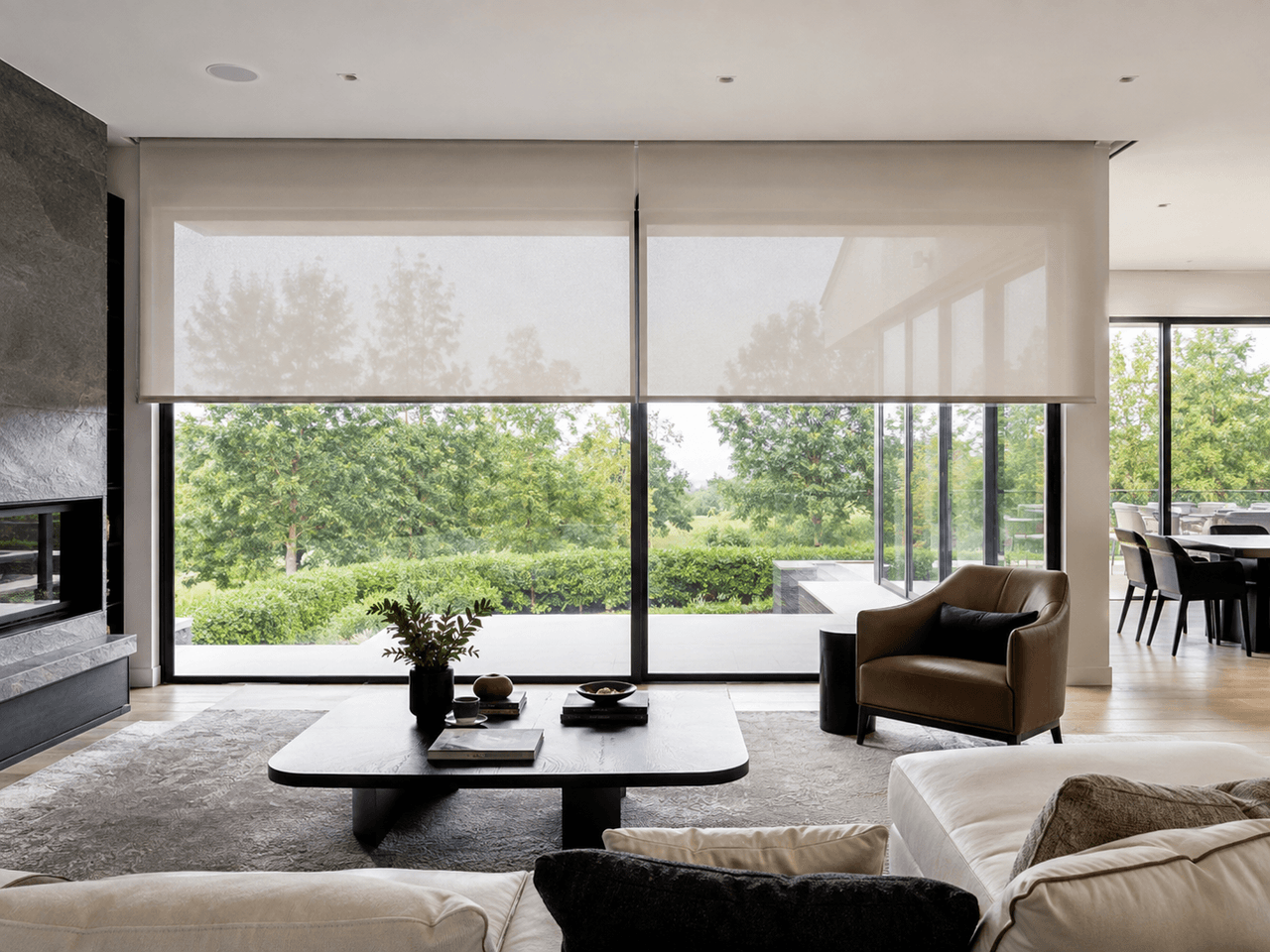
Window coverings have evolved considerably in recent years. Once limited to a decorative or privacy-focused role, they have become a strategic component of smart homes across Canada. Between cold winters and hot, humid summers, managing natural light through windows, patio doors, and skylights requires ongoing attention.
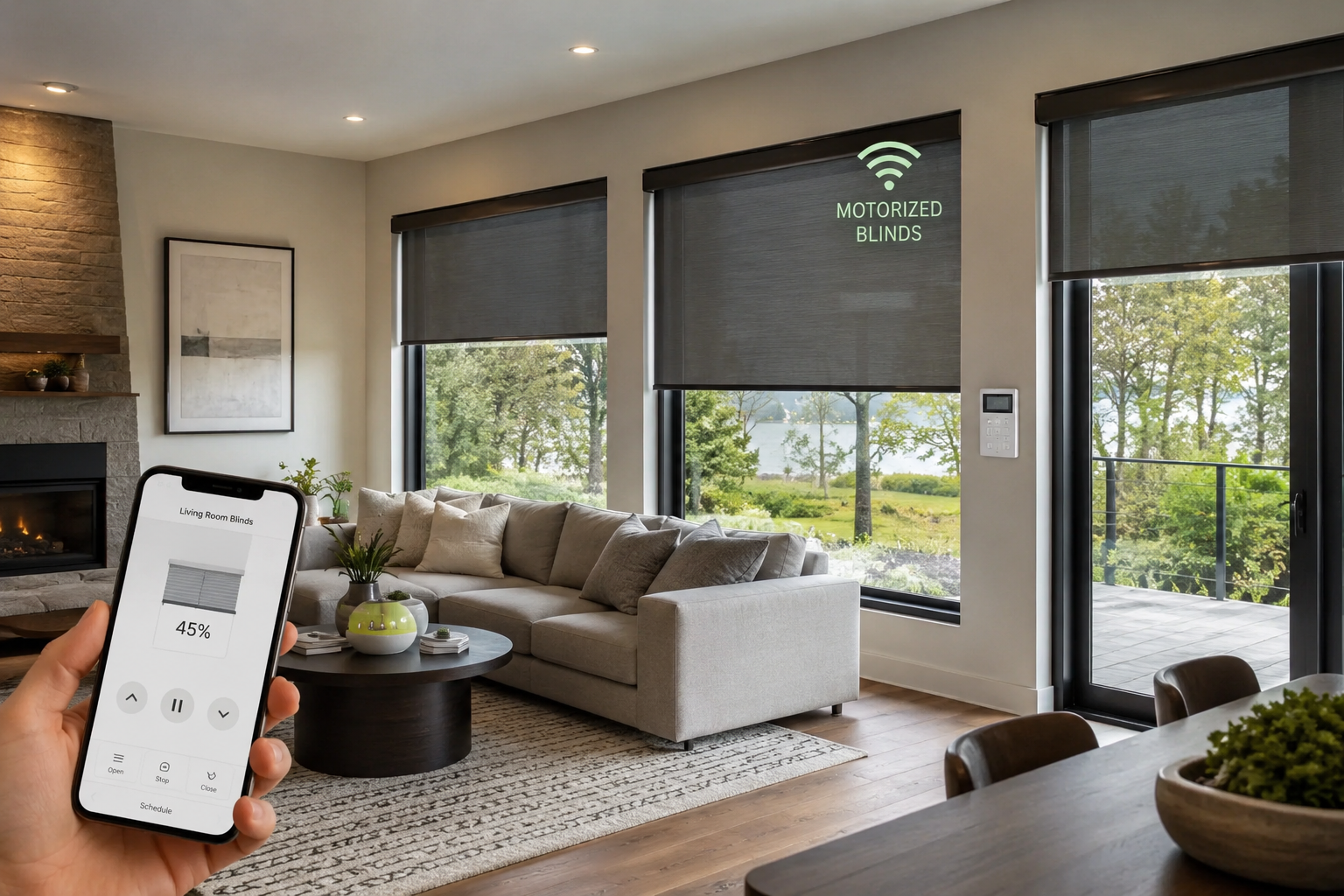
Installing motorized blinds—whether roller shades, zebra blinds, or solar shades—provides a modern and attractive solution. By eliminating repetitive manual adjustments and unsightly cords, automation controls shading precisely using voice commands, a mobile app, or programmed schedules.
Beyond the technology itself, motorized blinds can improve comfort and contribute to the thermal performance of your windows, provided you choose a product that complies with applicable Canadian requirements.
Why Integrate Motorized Blinds Into Your Smart Home?
Source: RenoQuotes
Modernizing your window coverings involves more than adding another technological gadget to your living room. Automation offers practical everyday benefits that are particularly well suited to Canadian homes.
Temperature Control and Energy Savings
In Canada, windows are among the most vulnerable components of a home’s thermal envelope. According to Natural Resources Canada, windows, doors, and skylights can account for up to 25% of a home’s energy loss.
Automation can help maximize passive solar management:
In winter—passive solar gain: When sunlight conditions are favourable, blinds can open automatically, particularly on south-facing windows, to take advantage of passive solar heat. At sunset, they can close to create an insulating barrier between the cold glass and the interior, helping retain heat produced by baseboard heaters, a furnace, or a heat pump.
In summer: Shades can lower automatically based on the time of day, the sun’s position, indoor temperature, or data from a light sensor. This helps block direct solar radiation before it overheats the room, reducing the demand placed on the air-conditioning system.
Presence Simulation and UV Protection
A smart blind system can also help protect your home’s interior finishes and support household security.
Protecting interior finishes: Ultraviolet rays passing through glass can cause hardwood floors, rugs, and leather furniture to yellow or fade prematurely. Light sensors can adjust the shading to filter UV rays without completely darkening the room.
Added security: When you are away for a weekend or an extended vacation, your blinds can continue following their daily routine—opening in the morning and closing at night—to help create the impression that someone is home.
Safer Blinds for Children
Canada’s Corded Window Coverings Regulations, established under the Canada Consumer Product Safety Act and enforced by Health Canada, limit the length of accessible cords and the size of loops to reduce strangulation hazards for young children. Motorized blinds without accessible cords can be a safer choice for families, provided the product complies with all applicable Canadian requirements.
Choosing the Right Motorization: Battery, Wired, or Solar?
Source: RenoQuotes
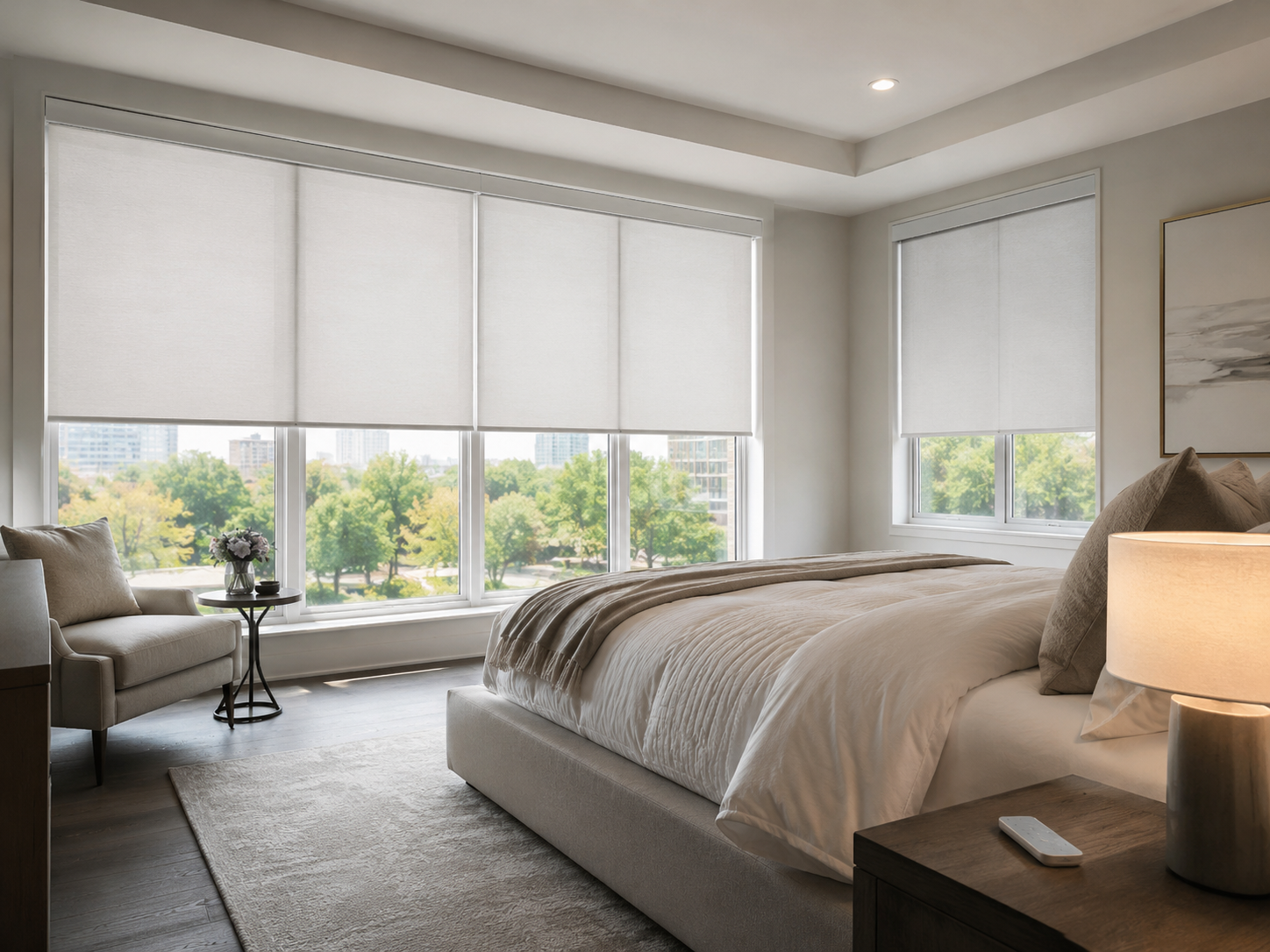
The ideal power source depends primarily on the stage of your project—minor renovation, major remodelling, or new construction—as well as the size of your window openings.
Rechargeable Battery Blinds: Simple Installation Without Major Work
For homeowners who want to modernize their window coverings without opening walls or repainting, an integrated lithium-ion battery motor can be an ideal solution.
How it works: The motor is concealed inside the shade’s roller tube and powered by a sealed rechargeable battery.
Battery life: Depending on the motor, blind size, and frequency of use, a rechargeable battery may operate for several months between charges. Charging methods vary by manufacturer and may require a cable, charger, or proprietary adapter.
Solar option: A small, discreet solar panel can sometimes be mounted inside the window. When light exposure is sufficient, it can extend battery life or reduce the frequency of manual charging.
Wired Blinds—120 V or Low Voltage: A Durable Solution
For new construction or major renovations in which the walls are already open, a wired motorized system can provide a durable and reliable option.
Low voltage—24 V DC: This type of system is commonly used for standard residential shades. Thin wiring can be routed to a centralized distribution panel.
Line voltage or low voltage: The power source for a large-format shade should be selected according to the motor, fabric weight, blind dimensions, and manufacturer specifications. A 120 V power supply is not automatically required for blinds wider than 10 or 12 feet.
To assess the feasibility of concealed wiring, obtain a quote for electrical work and plan the routing before the walls are closed.
Smart Home Compatibility: Somfy, Lutron, Matter, and Voice Assistants
Source: RenoQuotes
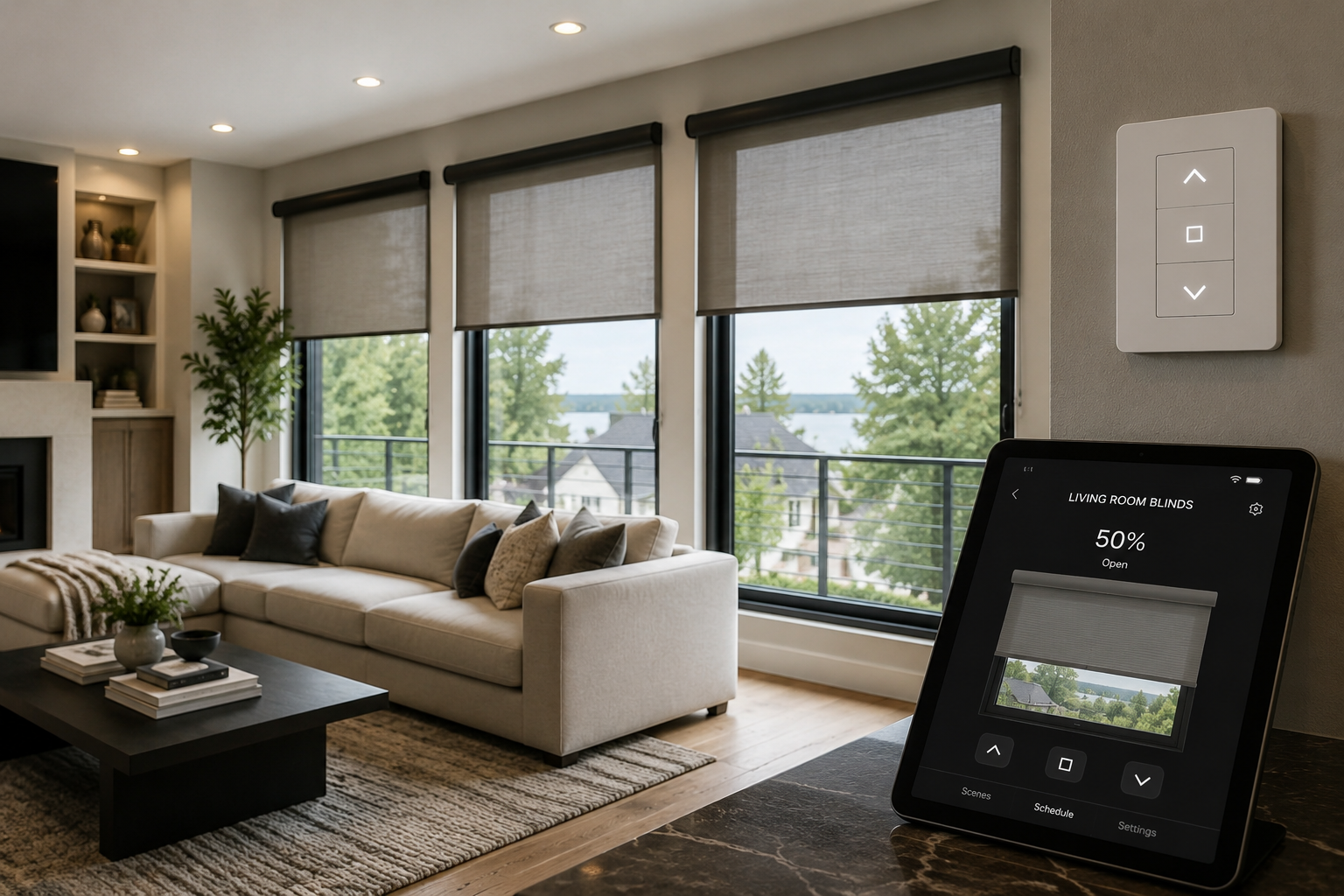
The motor is only the mechanical component. The system’s communication protocol acts as its brain.
1. Specialized Manufacturers: Somfy and Lutron
Somfy—RTS and io-homecontrol motors: Somfy is a major manufacturer of building automation systems. Its TaHoma hub can synchronize solar shades with compatible indoor and outdoor temperature sensors.
Lutron—Caséta, Serena, and Palladiom: Lutron is known for quiet operation and precise alignment when several neighbouring blinds move at the same time.
2. Matter Over Thread
Matter is an interoperability standard that supports automated window coverings. However, bridge-free integration depends on the blind model, its Matter certification, and the network technology it uses. Some systems still require a proprietary bridge or hub. Certain Somfy or Lutron blinds can be controlled through Apple Home, Google Home, or Amazon Alexa using a compatible system or gateway. Compatibility and bridge requirements vary based on motor, product line, and generation.
3. Integration with Home Energy Management
Connected window coverings can complement home energy-management strategies used across Canada. Closing blinds automatically during cold periods may help reduce heat loss through windows.
However, direct integration depends on the devices and energy-management platform being used. Some systems require a separate smart home platform or customized automation to coordinate blinds with thermostats and other connected equipment.
For a broader smart home renovation, centralizing the control of lighting, heating, and shading can help create a more comfortable and energy-efficient home.
Installation Steps and Electrical Safety Requirements
Source: RenoQuotes
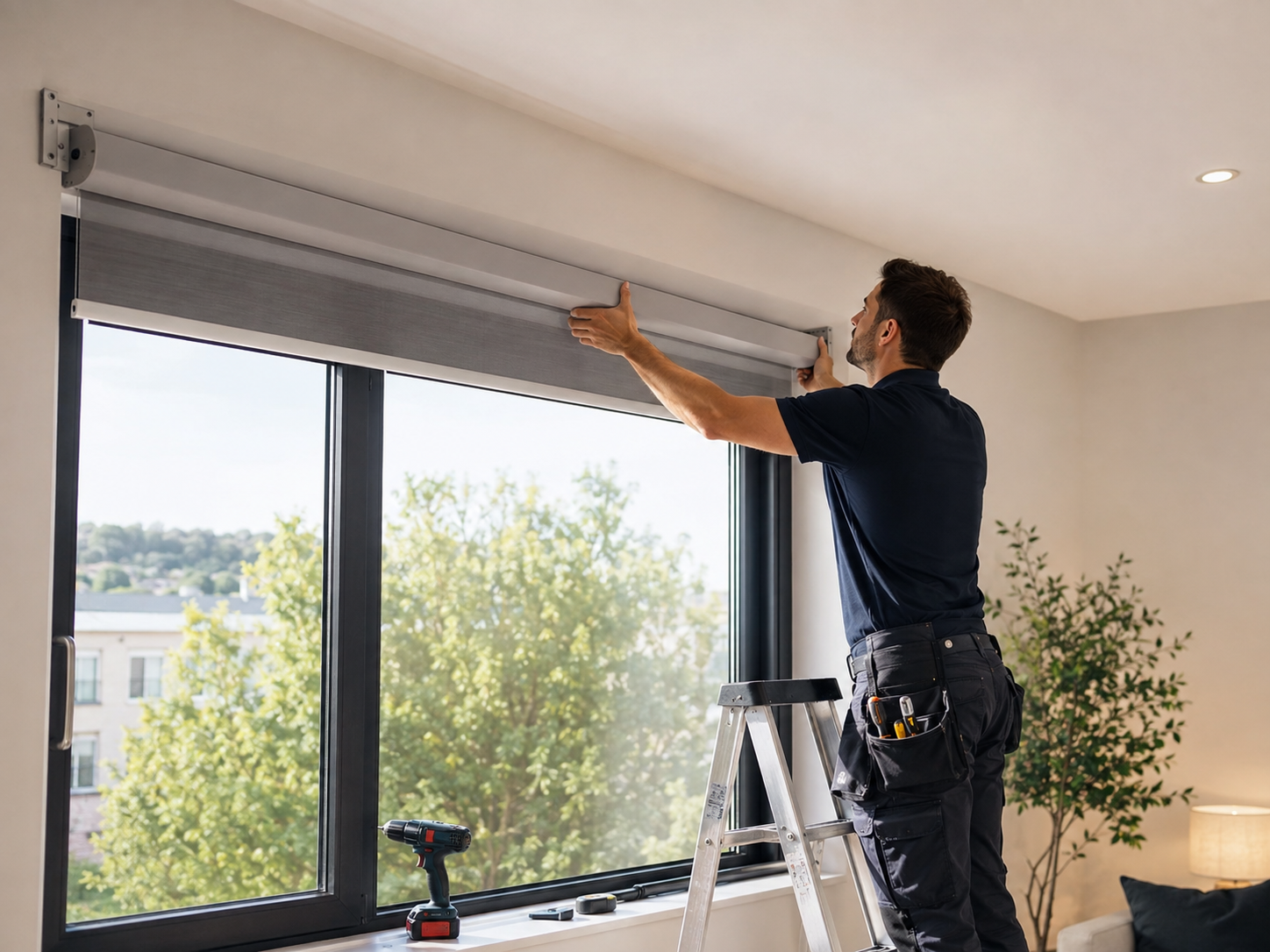
Installing motorized blinds requires careful execution, from the initial measurements to the final programming.
Step 1: Take Accurate Measurements
Determine whether the blinds will be installed inside or outside the window frame.
Inside mount: This option provides a clean appearance but requires sufficient frame depth. The necessary clearance varies according to the roller, motor, brackets, and cassette.
Outside mount: This installation can reduce light gaps along the sides, improve room-darkening performance, or conceal an irregular window frame.
Step 2: Secure the Mounting Hardware
Motorized blinds are generally heavier than manual models because of the motor and battery. Brackets should be fastened to a sufficiently strong material, such as a stud, header, or reinforcement, or installed using anchors suited to the mounting surface and the blind’s weight. Always follow the manufacturer’s installation instructions.
Step 3: Program the Travel Limits
Once the blind is installed, the upper and lower limits must be programmed using the remote control or app. This allows the blind to stop at the desired positions without placing excessive strain on the mechanism.
Hiring a Window-Covering Specialist or Licensed Electrical Contractor
Source: RenoQuotes
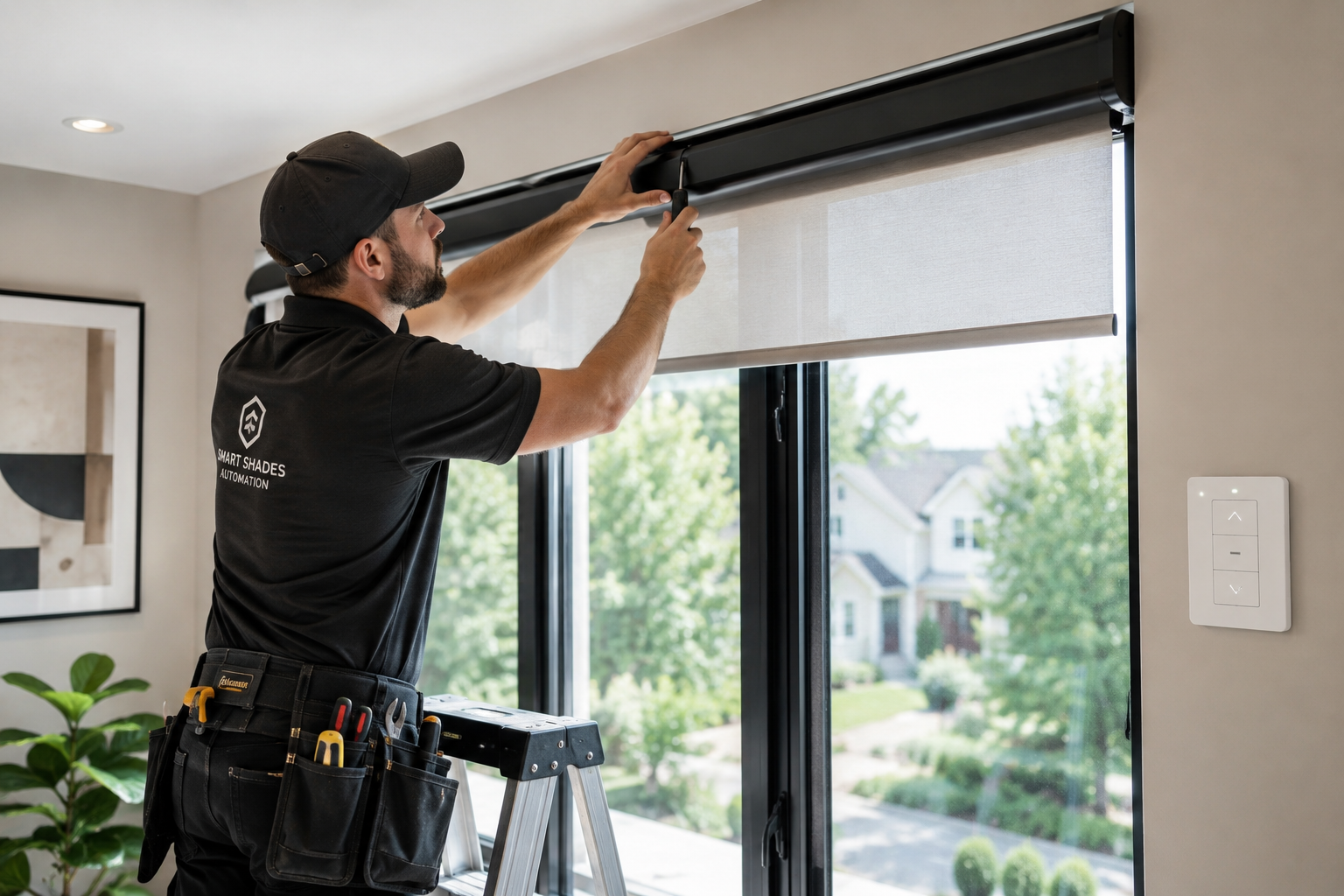
Battery-powered blinds may be suitable for experienced DIYers, but installing a wired system requires compliance with the electrical regulations that apply in your province or territory.
Electrical Code Compliance
Work involving a home’s permanent electrical installation—including new wiring, a new receptacle, or the direct connection of a motor—should be completed by a qualified electrical contractor who holds the licences required in the applicable province or territory.
Performing regulated electrical work without the required qualifications may be illegal and could result in penalties. Non-compliant work may also complicate an insurance claim, property inspection, or real estate transaction, depending on the circumstances and the terms of the insurance policy.
Why Consult a Window-Covering Professional?
Working with a specialized retailer or integrator can help you:
Select suitable technical fabrics: Choose the appropriate openness factor—such as 1%, 3%, or 5% for solar shades—or a room-darkening fabric for a home theatre.
Obtain accurate sizing: Avoid unwanted light gaps along the glass edges.
Synchronize multiple rooms: Ensure that all the shades on the same side of the home rise at a similar speed and operate at a consistent noise level.
To obtain assistance from qualified professionals in your area, request window-covering quotes and compare custom proposals.
Summary of Motorized Blind Options
Blind or Shade Type | Ideal Power Source | Recommended Use | Main Advantage | Recommended Installation |
Solar Roller Shade | Battery or 24 V wired | Living rooms, sunrooms, large windows | Reduces solar heat while preserving the view | Window-covering specialist or experienced DIYer |
Blackout Shade | Battery or wired system | Bedrooms and home theatres | Improved darkness and insulation | Window-covering specialist |
Zebra Blind | Rechargeable battery | Living spaces and offices | Precise privacy adjustment | Experienced DIYer or specialist |
Skylight Shade | Wired or integrated solar power | Cathedral ceilings and skylights | Convenient control of high windows | Window-covering specialist; licensed electrical contractor if permanent electrical work is required |
Modernize Your Home with Smart Motorized Blinds
Source: RenoQuotes
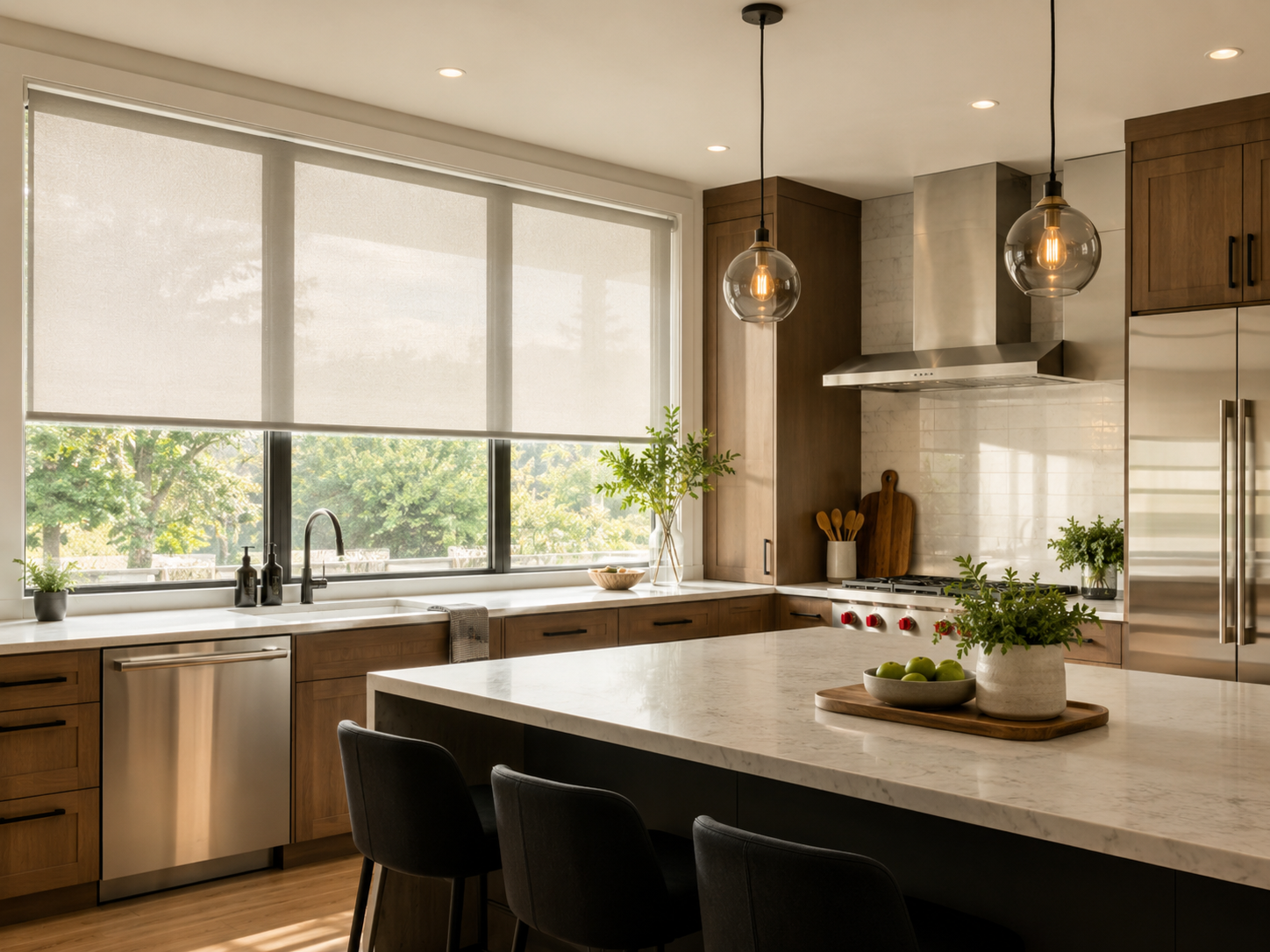
Installing motorized blinds can add meaningful value to homes across Canada. By combining attractive interior design with modern smart home technology, you can turn your window coverings into intelligent shading devices that adapt throughout the seasons.
To help ensure a successful project:
Define your priorities: Choose battery-powered motors for a straightforward installation or wired systems for reliability and large window openings.
Confirm smart home compatibility: Verify that the selected system—such as Somfy, Lutron, or a Matter-compatible product—works with your smart home platform and voice assistants.
Follow electrical requirements: Entrust any connection to a permanent 120 V electrical installation to a qualified electrical contractor licensed in your province or territory.
Prioritize safety: Choose window coverings without accessible cords that comply with Canadian requirements to reduce the risk of strangulation for young children.
Ready to modernize your living space? Request a quote for a smart home project from qualified professionals.
Looking for something else?
Related articles
The latest industry news, interviews, technologies, and resources.

Editorial Team
•28 Aug 2024
The wires running behind the walls of your home are hidden, but that doesn’t mean they aren’t putting in plenty of work. Having electricity that runs smoothly is key to keeping your home safe and comfortable. It’s crucial to keep your home wiring in excellent condition, as doing otherwise will compromise the safety of both your family and your home. Wiring that is outdated, damaged or in poor condition needs to be taken seriously, but how do you spot a problem?
Cynthia Pigeon
•07 May 2026
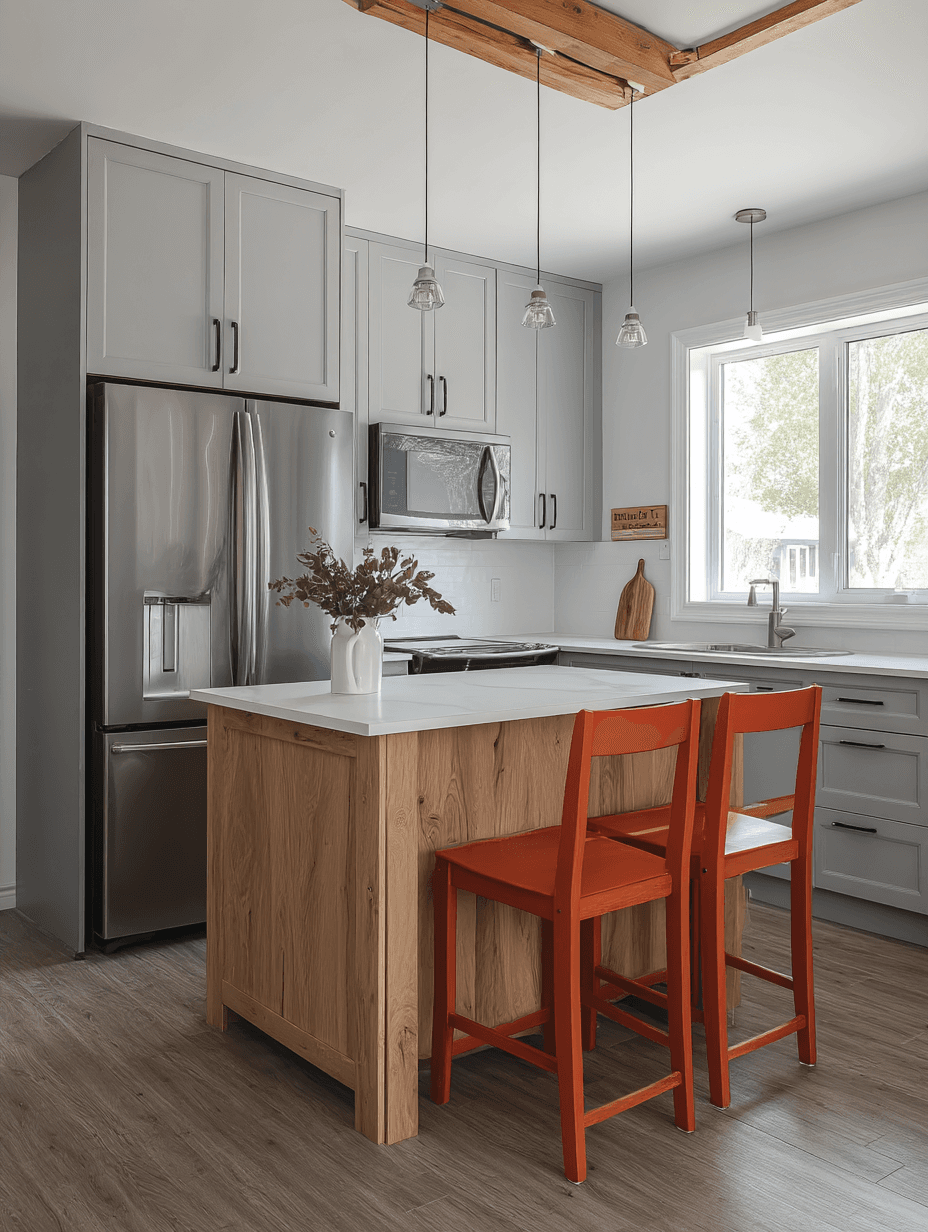
To make the most of a small condo kitchen in Canada, a mobile or narrow “skinny” island can be a particularly useful way to maximize space. It is important to keep about 36 to 42 inches of clearance around the island to allow for smooth traffic flow, while also respecting the kitchen work triangle: sink, stove and refrigerator. By combining smart storage, appropriate materials and safely planned electrical outlets, even a compact kitchen can become a highly functional and welcoming space.

Editorial Team
•11 Oct 2024
There's a wide range of thermal insulation materials on the market, and all of them have the potential to reduce heat transfer in a home. Some materials are more effective and versatile than others. One such material is thermal insulation sheets, which is a material that's used across a wide range of industrial purposes. Want to know more about thermal insulation sheets? Read on to learn all about the features, types, and benefits of this highly effective insulation!
Editorial Team
•07 May 2026
Designing a backyard in Canada requires careful planning to turn your outdoor space into a true extension of your home. To successfully complete your project in 2026, you should divide your yard into functional zones (dining area, lounge area, play area), choose materials commonly used for outdoor landscaping due to their resistance to freeze-thaw cycles—such as interlocking pavers or pressure-treated wood—and comply with local and provincial pool safety regulations. A well-designed layout that incorporates plants suited to your hardiness zone will increase your property value while extending your outdoor living season.

Editorial Team
•08 Nov 2023
If you work in a noisy restaurant, busy boutique or open-concept office, chances are you’ve thought for a moment or two about the sound in the room. In all of these commercial spaces, it’s probably obvious that sound can be difficult to contain: whether this means receiving noise complaints from neighbours, having frustrated customers, restaurant crowd commotion or the roars of construction finding their way into your quiet business. So, what are the ways to soundproof a commercial space?