Smart Lighting Installation in Canada: A Complete Guide
By Cynthia Pigeon
Updated on August 1, 2026
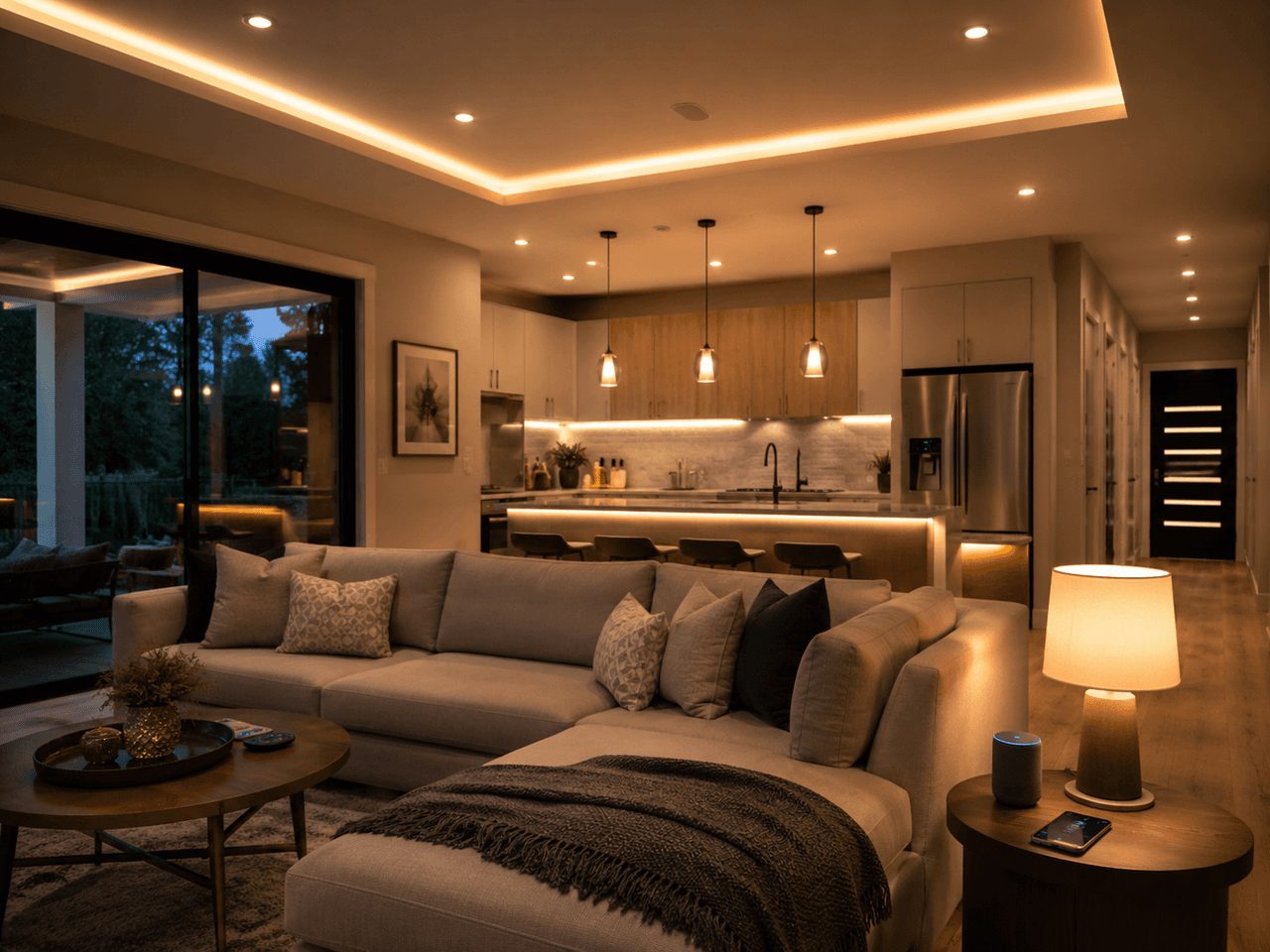
Modernizing a lighting system involves much more than replacing a burnt-out bulb during a weekend renovation project. In Canadian homes, smart home technology has become an increasingly popular way to improve comfort, security, and energy efficiency. Centralized or automated lighting controls can turn off lights in unoccupied rooms, simulate occupancy while you are away, and create comfortable lighting scenes suited to different seasons and routines.
However, upgrading to a smart lighting system involves several technical and regulatory considerations. The possible absence of a neutral wire in an older home, the choice between communication technologies and interoperability standards such as Wi-Fi, Zigbee, Z-Wave, Thread, and Matter, and provincial electrical requirements all require careful planning.
Lighting generally accounts for a relatively small portion of a Canadian household’s annual electricity use. Replacing inefficient bulbs with LED models and adding smart controls can reduce lighting-related consumption, but the actual savings depend on the technology being replaced, household habits, and automation settings.
Smart Lighting Technologies for Canadian Homes
Source: RenoQuotes
The success of a connected lighting project begins with choosing the right network infrastructure. Several communication technologies and interoperability standards are commonly used in Canadian houses and condominiums.
1. Residential Wi-Fi Networks (2.4 GHz)
Many Wi-Fi devices connect directly to the home network without requiring an intermediate control hub, although some systems still use a gateway.
Advantages: Affordable entry cost and simple initial setup for a small number of individual devices.
Disadvantages: Connecting numerous smart switches may place additional demand on the router and affect network performance when several household devices are used simultaneously.
2. Mesh Networks (Zigbee and Z-Wave)
These technologies use their own radio protocols. Zigbee commonly operates on the 2.4 GHz band, which is also used by Wi-Fi, while Z-Wave generally uses a sub-1 GHz frequency band.
Advantages: Good stability, low latency, and fewer devices connected directly to the main Wi-Fi network.
Disadvantages: A compatible gateway or controller is generally required, although it may be built into another smart home device.
3. Matter over Wi-Fi, Ethernet, or Thread
Matter is an interoperability standard designed to make it easier for smart home devices from different manufacturers to communicate. It allows certified devices from different brands to work together over a local network. Some functions can be performed locally, although manufacturers may also provide cloud-based services or controls. Choosing Matter-compatible components can help create a more flexible and future-ready installation.
Smart Switches or Connected Light Bulbs: Which Should You Choose?
Source: RIGO ébénisterie
One of the first decisions involves choosing between replacing the bulbs and replacing the wall controls.
Connected light bulbs: These are practical for accent fixtures, table and bedside lamps. However, when someone turns off the traditional wall switch, the bulb loses power and can no longer be controlled through the app.
Recessed smart switches and dimmers: These replace standard wall controls. Even when the light is manually turned off at the wall, the smart switch remains powered and accessible via the app or smart home system. This is generally the preferred option for a durable and fully integrated renovation.
Neutral-Wire Challenge in Older Homes
The presence of a neutral wire in wall switch boxes is one of the main technical considerations when modernizing a lighting system.
Why is a neutral wire necessary? A conventional mechanical switch simply opens or closes a circuit. A connected switch, however, contains a microprocessor and wireless radio that must remain powered even when the light is off. The neutral wire generally provides the return path for the small alternating current required to keep the switch’s electronic components operating.
Older Canadian homes: In many older electrical installations, particularly when power was first supplied to the ceiling fixture, the switch box may not contain a neutral conductor. Its presence must be confirmed on-site and cannot be determined solely from the age of the home.
Available solutions:
Use smart dimmers that do not require a neutral: Some no-neutral dimmers allow a very small amount of current to pass through the load to power their electronics. Compatibility with LED bulbs must be verified because certain combinations can cause flickering or a faint residual glow.
Have a neutral conductor installed: Depending on the existing configuration, a licensed electrical contractor may modify or replace wiring between the switch box, light fixture, junction box, or another appropriate power source. A new cable does not necessarily have to be run directly from the electrical panel.
Key Steps for a Successful Smart Lighting Installation
Source: Touchette Portes & Fenêtres inc
Careful planning helps protect your home and prevent compatibility or performance problems.
Step 1: Inventory the Circuits and Loads
Before purchasing smart dimmers, verify the following:
Type of lighting load: Dimmable LED bulbs must be paired with dimmers that are compatible with LED loads to reduce buzzing, flickering, and poor dimming performance.
Total wattage connected to the circuit.
Multi-location switching configurations: Systems in which one light fixture is controlled from two locations are known as three-way circuits. Some smart switches require compatible auxiliary switches or companion modules.
Step 2: Check the Depth of the Electrical Boxes
Smart switches, modules, and dimmers are generally larger than conventional mechanical switches because they contain electronic components. Older, shallow metal boxes may provide limited space for wire connectors and conductors. Box capacity, conductor fill, and device dimensions must therefore be checked before installation.
Step 3: Plan the Network Configuration and Integration
Make sure the Wi-Fi network provides adequate coverage throughout the home, including the garage and exterior entrance areas.
Devices can then be connected to major smart home platforms such as:
Apple Home
Google Home
Amazon Alexa
Samsung SmartThings
Voice-assistant integration can be used to create customized scenes. For example, saying “Hey Google, movie mode” could lower the living room lights to 20% and close compatible blinds.
For assistance choosing and installing equipment, request quotes for electrical work from qualified professionals.
Energy Savings and Smart Lighting
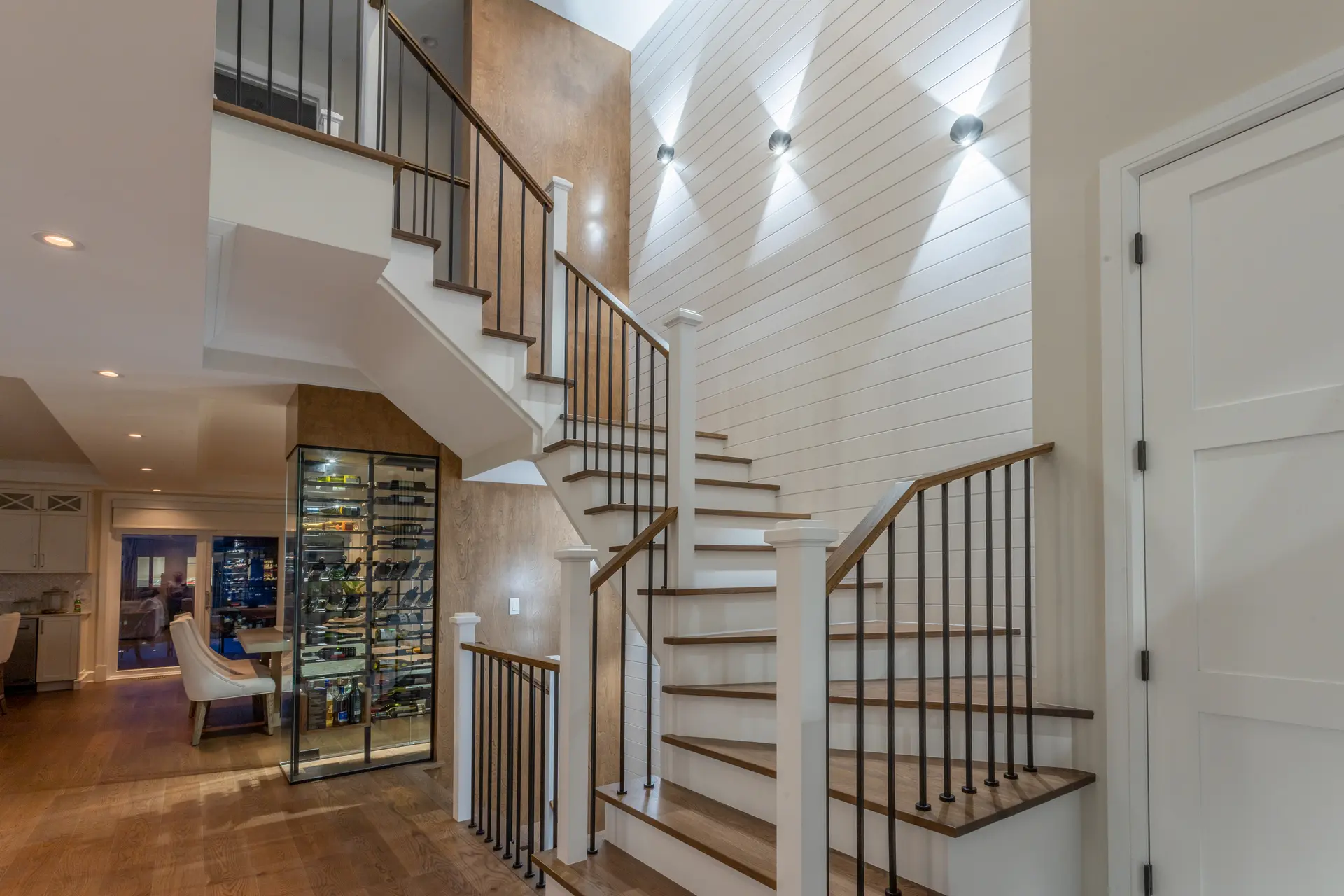
Source: 9515-2955 quebec inc
Energy management is particularly important in Canada during winter, when cold weather can place substantial demand on provincial electricity grids.
Automatic Programming
Smart dimmers can be programmed to reduce light levels during peak-demand periods. Lowering the intensity may slightly reduce lighting consumption, although the effect on the total electricity bill will generally be modest because lighting represents a relatively small share of household energy use.
Certain provincial utilities offer time-of-use rates, demand-response programs, or smart home incentives (Hilo in Quebec). Program availability, eligibility, and compatible equipment vary by province and electricity provider.
Vacancy-Based Shutoff
Connecting smart switches to occupancy or motion sensors in hallways, basements, bathrooms, and other intermittently used spaces can reduce the likelihood that lights will remain on unnecessarily.
For a broader smart home renovation, lighting automation can also be combined with connected thermostats to improve overall energy management.
Electrical Standards and Safety: When Should You Hire an Electrician?
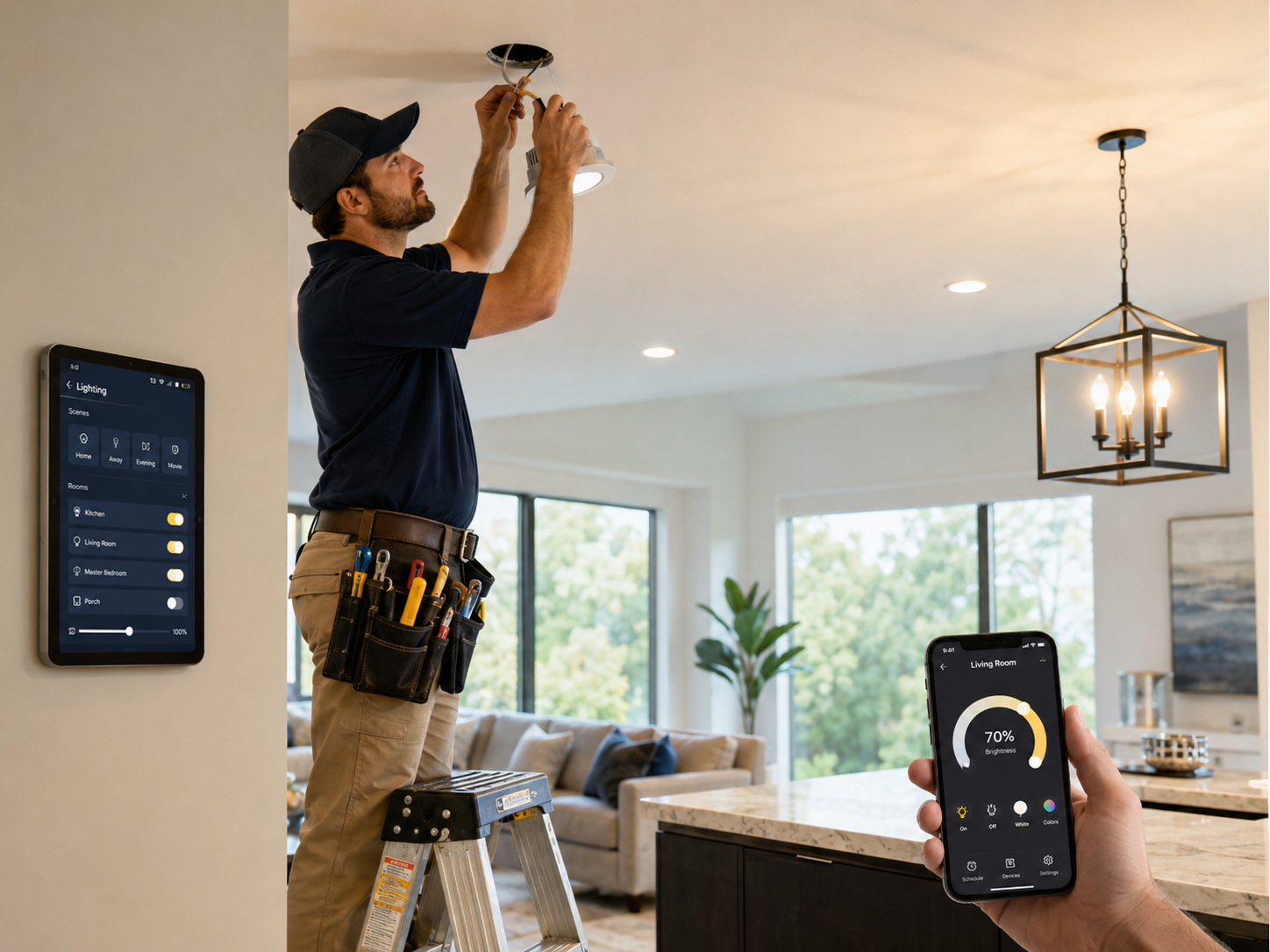
Source: RenoQuotes
Working with electricity presents real risks of electric shock and fire. Loose connections, incompatible devices, overloaded circuits, and overcrowded electrical boxes can all create hazards.
Electrical installation requirements vary by province and municipality. Work involving permanently installed wiring should be completed in accordance with the applicable electrical code and local permit requirements.
Depending on the jurisdiction and the nature of the work, a licensed electrical contractor may be required to install or replace recessed smart switches, dimmers, wiring, and other fixed electrical components.
Homeowners should confirm the applicable requirements with their provincial electrical safety authority or local inspection department before beginning any work.
Risks of a Non-Compliant Installation
Having electrical components installed by an unqualified person may create several serious consequences.
Possible home insurance implications: Undeclared, non-compliant, or unauthorized electrical work may complicate an insurance claim or trigger an exclusion under the policy. A denied claim is not automatic and depends on the wording of the policy, the circumstances of the loss, and the connection between the work and the damage.
Overheating and short-circuit hazards: Loose connections inside an overcrowded wall box may cause overheating or concealed electrical arcing behind the drywall.
Legal and financial consequences: Illegal electrical work may lead to an investigation, corrective work, prosecution, or fines under the legislation applicable in the province or municipality.
To protect your household and maintain a safe, compliant installation, have fixed smart lighting components installed by a qualified electrical professional.
Smart Lighting Component Comparison
Component | Neutral-Wire Compatibility | Recommended Use | Main Advantage | Installation Level |
120 V Smart Switch | Neutral generally required, depending on the model | General lighting, including ceiling fixtures and recessed lights | Maintains manual wall control | Licensed electrical professional where required |
Smart Dimmer | With or without a neutral, depending on the model and compatible load | Dining rooms, living rooms, and bedrooms | Adjustable brightness, depending on bulb compatibility | Licensed electrical professional where required |
Recessed Micro-Module | Neutral often required | Behind an existing switch | Preserves the appearance of the original wall plate | Licensed electrical professional where required |
Connected LED Bulb | No neutral conductor is connected by the user; the bulb is generally powered through a 120 V residential fixture | Table lamps and floor lamps | Easy colour-changing capability | Homeowner |
Modernize Your Home with Smart, Energy-Efficient Lighting
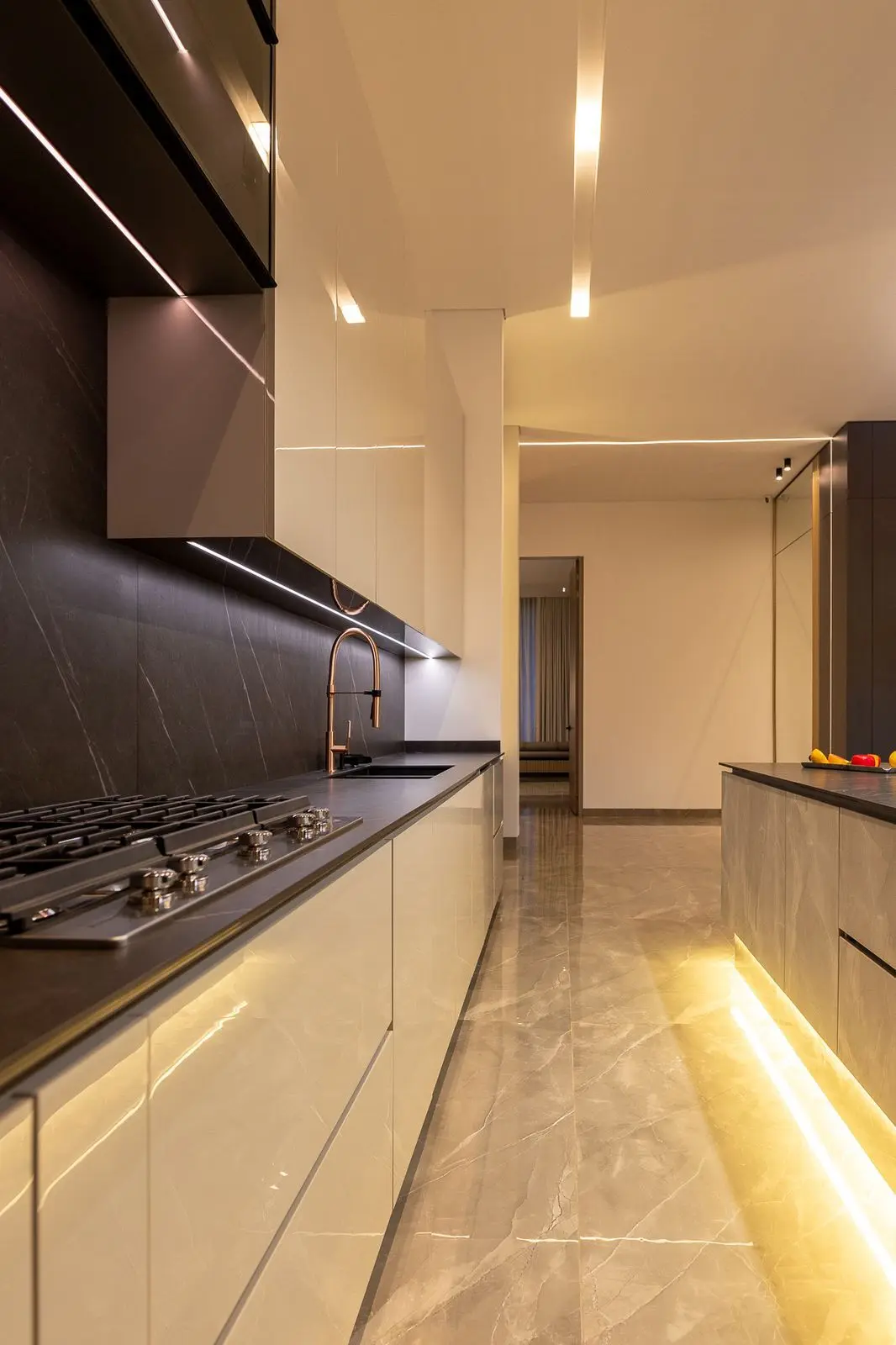
Source: Group Kasa
Installing smart lighting is an excellent way to modernize a Canadian home while combining refined aesthetics, everyday comfort, and better control over electricity use.
For a smooth transition to a smarter home:
Choose the appropriate technology, such as Wi-Fi, Zigbee, Z-Wave, Thread, or Matter, based on the home's size and configuration.
Have the wall boxes inspected to determine whether a neutral conductor is available.
Follow provincial electrical requirements and entrust recessed switches and dimmers to a licensed electrical professional where required.
Check whether the equipment qualifies for utility energy-efficiency, time-of-use, or demand-response programs in your province.
Take control of your home’s lighting and enjoy a smarter, safer, and more energy-efficient living environment.
Looking for something else?
Related articles
The latest industry news, interviews, technologies, and resources.

Léa Plourde-Archer
•08 Nov 2023
Chandeliers, ceiling lamps, recessed or semi-recessed luminaires, hanging or rail lamps, etc. There is no shortage of options to illuminate the different rooms of a house! In addition to being fun decorative objects to choose from, the selected type of brightness will bring comfort and the desired atmosphere to your home.

Editorial Team
•21 Aug 2026
During home renovations, electrical work must be carefully planned to ensure the safety, durability, and reliability of the improvements made to the property. Finding the right balance between cost and quality helps avoid compromises that could affect the proper functioning of electrical systems.
Léa Plourde-Archer
•24 May 2024
Crawl spaces are not that well known in the modern home as more often than not, they are found in older houses. However, in recent years, they have made a comeback in newer constructions and homes appearing on the market.
Amanda Harvey
•29 May 2026
For many homeowners, the hardest part of starting a home renovation project is finding a reliable contractor to carry out the job. So, if you're wondering how you can locate the best tradesperson for the job, then you've come to the right place! For homeowners that are looking for a quick and cheap home renovation experience, it's likely you're going to get what you pay for.

Léa Plourde-Archer
•15 Nov 2024
With the arrival of warmer weather, spring cleaning is in full swing. While many start indoors, the exterior of your home deserves attention as well. How do you ensure your home's exterior siding looks its best for the summer? What are the best techniques for cleaning different types of siding materials? Whether you're tackling aluminum, vinyl, wood, or brick, each material requires a specific cleaning approach. From using pressure washers to scrubbing with soft brushes and applying the right cleaning agents, this guide will answer all your questions about how to effectively clean and maintain your home’s exterior siding.