Renovating your boutique in Ontario | Renovation Quotes
By Amanda Harvey
Updated on November 8, 2023

Are you thinking about renovating your store or undertaking renovations in a brand new location? Regardless of your personality and the desired style of your shop, here are some guidelines that should drive your thinking.
Tips for renovating your shop or boutique in Ontario
Lighting: highlight the products
Contrary to the lighting of a restaurant that you'd want to be subdued because of the atmosphere that one wishes to create, it is quite different for the defining brightness within your boutique. Lighting inside a store should illuminate the highlights of your offerings, such as the insignia of your trademark, as well as the various products offered for sale as well as the different sections. Without overwhelming the shop with blinding light, you must ensure that you clearly highlight the items mentioned above.
The sales space: between moderation and staging

source: unsplash
Any shop owner, or aspiring owner, knows very well that an overload of elements will be like suffocating the customer, as well as hampering the circulation of your store. So, it is important to find the right balance between too few and too many items. Also, the layout of your products should be staged to create a welcoming atmosphere within your shop.
The choice of furniture: solidity and aesthetics
In some renovation projects, it is important to maximize storage and space by taking advantage of the ceiling height. In this case, it's not advised. Why is that? This is because inaccessible products at arm’s length will simply not sell. If in a hurry, your clients may not wait for help to grab that coveted item. In the same vein, be aware that an object too close to the ground may be unpopular due to the lack of visibility.
In reflection, we must, therefore, admit that the integration of very high wall displays is of little use. Although your displays do seem to function as a storage space for your products, do not forget that their appearance is actually a reflection of the style and personality of your store. For this reason, choose carefully and with the aim of integrating them harmoniously within the rest of the shop.
More precisely concerning the central displays of your boutique, it's important to be vigilant as their height risks compromising the reception of the space and the visibility of the store as a whole. If necessary, select models with a modest height than that of taller wall displays.
The shop floor

source: unsplash
To ensure that your customers enjoy a quiet environment and are not overwhelmed by the sound of footsteps, it is important to select a floor with good acoustic properties. Due to high traffic flow within commercial buildings, you will need to choose a wear-resistant floor covering that is also able to withstand shocks or falling objects.
Moisture resistance is also advisable given that wet boots will likely come into contact with the surface of your floor from time to time. In an alternative step, anti-slip properties are necessary to limit the risk of falling. Lastly, your boutique floor must be easy to maintain to avoid unnecessary effort. So, what are your options? Taking the above-mentioned requirements into consideration, our flooring recommendations are oriented towards PVC, porcelain, stoneware or laminate.
Thinking of renovating your shop by yourself?
This avenue is often considered by those who hope to save money. However, in certain parts of Canada, such as Quebec, this may be problematic with respect to the requirements imposed by Bill R-20, which is sometimes severely enforced by the CCQ. Geneviève Lorange, a shopkeeper who started her business on St-Catherine Street in February of 2016, knows a lot about this issue.
A visit from an inspector of the CCQ almost put the brakes on her dream. Forbidding her to paint her own premises, she was able to complete her project thanks to the offer of construction contractors who offered to complete the work covered by the ban. The moral of this story? Find out the local and municipal legislation, rules and regulations before undertaking any modification or work in your future or current store, as plenty of renovation work requires a permit.
If you are renovating a store in Ontario, it is required that you respect the Property Standards and Property Maintenance bylaws and regulations. Failure to comply with these will result in fines and the possibility of closing down your project. Even for minor property improvements, it would be suggested that you draft up a detailed plan.
If you are renting a property, this is especially important. This is because anything you add to your boutique or store will be owned by the landlord, including air conditioners, light fixtures, shelving and cabinets. Even for minor paint jobs, it is necessary to have everything in writing, apply for permits and work with trusted contractors to complete these projects.
Get 3 renovation quotes for your commercial renovation project
RenoQuotes.com can help you get quotes for. By submitting your boutique renovation project to us, we’ll put you in contact with top-rated contractors. Fill in the form on the homepage (it only takes a few minutes), and you will get estimates from trusted professionals.
Dial 1-844 828-1588 to speak with one of our customer service representatives
Looking for something else?
Related articles
The latest industry news, interviews, technologies, and resources.

Editorial Team
•03 Dec 2024
If you're looking to improve the appearance of your commercial space to transform it according to your tastes and needs, you'll need to hire a contractor.

Amanda Harvey
•08 Nov 2023
We often discuss decor and design on the blog, but we usually focus on the home front. This allows our readers to find inspiration to help create the perfect layout for their interiors and exteriors. But what about those looking for ideas for their business?

Amanda Harvey
•15 Nov 2024
The inevitable high heating costs come with the cold front setting in, keeping everyone warm and cozy inside. To avoid skyrocketing bills and limit the amount owed, finding effective ways of reducing your heating costs becomes paramount.
Editorial Team
•23 Jul 2025
Caulking can be defined as the process of sealing or filling gaps, done to prevent leaks and drafts. To do so, numerous caulking or weatherizing products are developed and often sold in retail stores as caulks, sealants, or mastics. They’re made with butyl, silicone, urethane, acrylic, or even latex, and said material diversity makes it all the more difficult to choose the right product.
Editorial Team
•13 May 2026
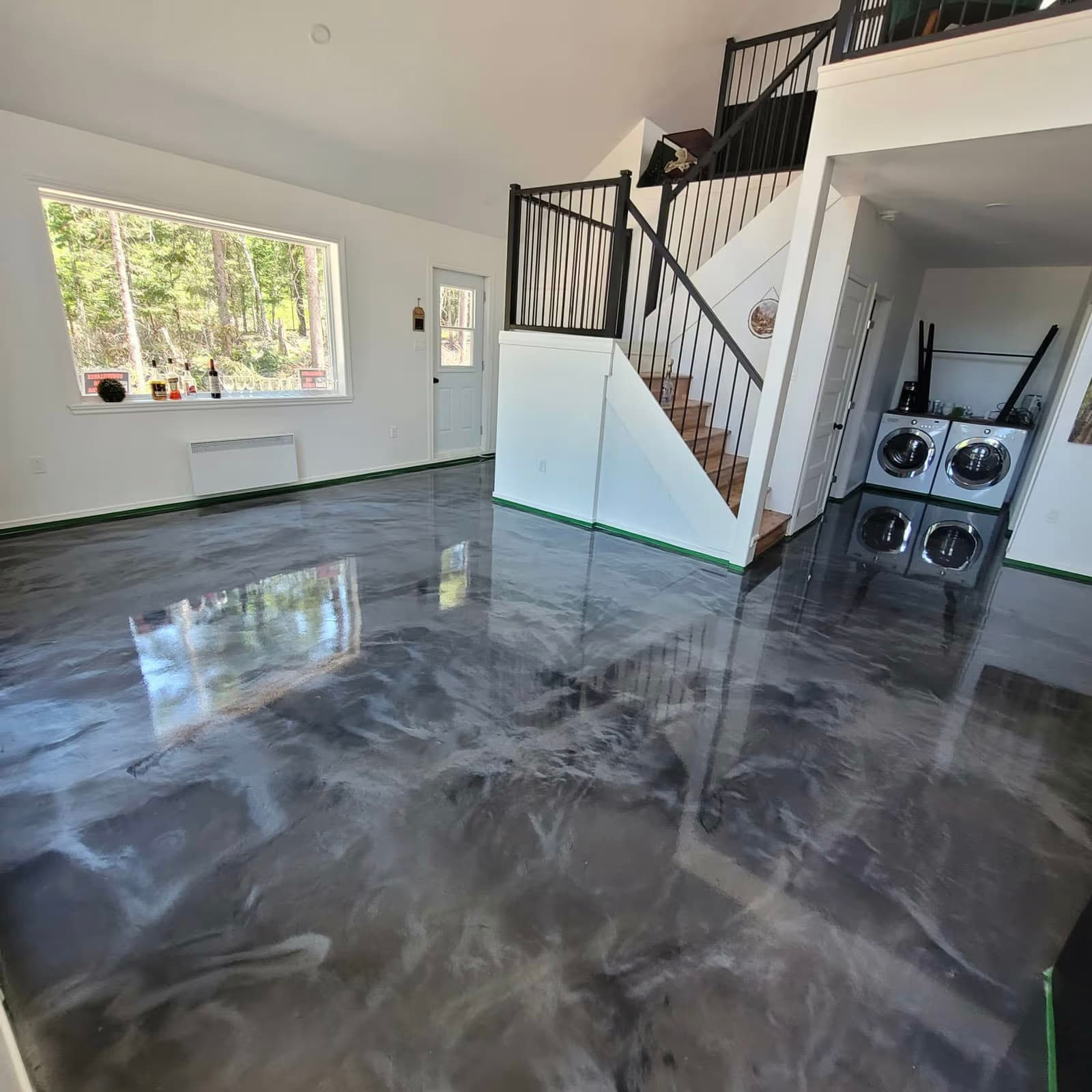
Epoxy basement floors offer Canadian homeowners a durable, easy-to-clean, and finished surface. Made by mixing resin and hardener, epoxy forms a tough layer over concrete. It is known for strong adhesion, chemical resistance, and low maintenance. Contractors can promote epoxy projects in summer to secure steady work for the fall, even as competitors slow down during vacation season.