Stairlift Installation in Quebec: How to Choose the Right Contractor and Make Your Home Safer
By Cynthia Pigeon
Updated on June 26, 2026
The aging population and the growing desire to remain at home for as long as possible have highlighted the importance of residential accessibility. In this context, a stairlift stands out as a practical solution for moving around at home more safely and preserving the independence of people with reduced mobility.
What Is a Stairlift and Why Install One?
Source: Quality Fine Carpentry
A stairlift is a mechanical lifting device designed to move a person safely from one floor to another along a rail installed directly on the steps of the staircase.
For seniors experiencing a loss of autonomy and people with reduced mobility, stairs can quickly become an insurmountable obstacle and a major fall risk. Installing this type of device can restore full and independent access to every part of the home, whether that means going down to the basement to do laundry or going upstairs to reach the bedrooms.
Beyond supporting senior autonomy, installing a stairlift can bring significant peace of mind to caregivers. Knowing that a parent, spouse or loved one can move between floors without physical strain or a high risk of falling can reduce a major source of daily stress. Many modern models are also designed with Quebec’s climate in mind: they include rechargeable backup batteries. During certain winter power outages caused by freezing rain or snowstorms, several models with backup batteries can continue to operate, depending on the model and the condition of the batteries.
There are two main configurations:
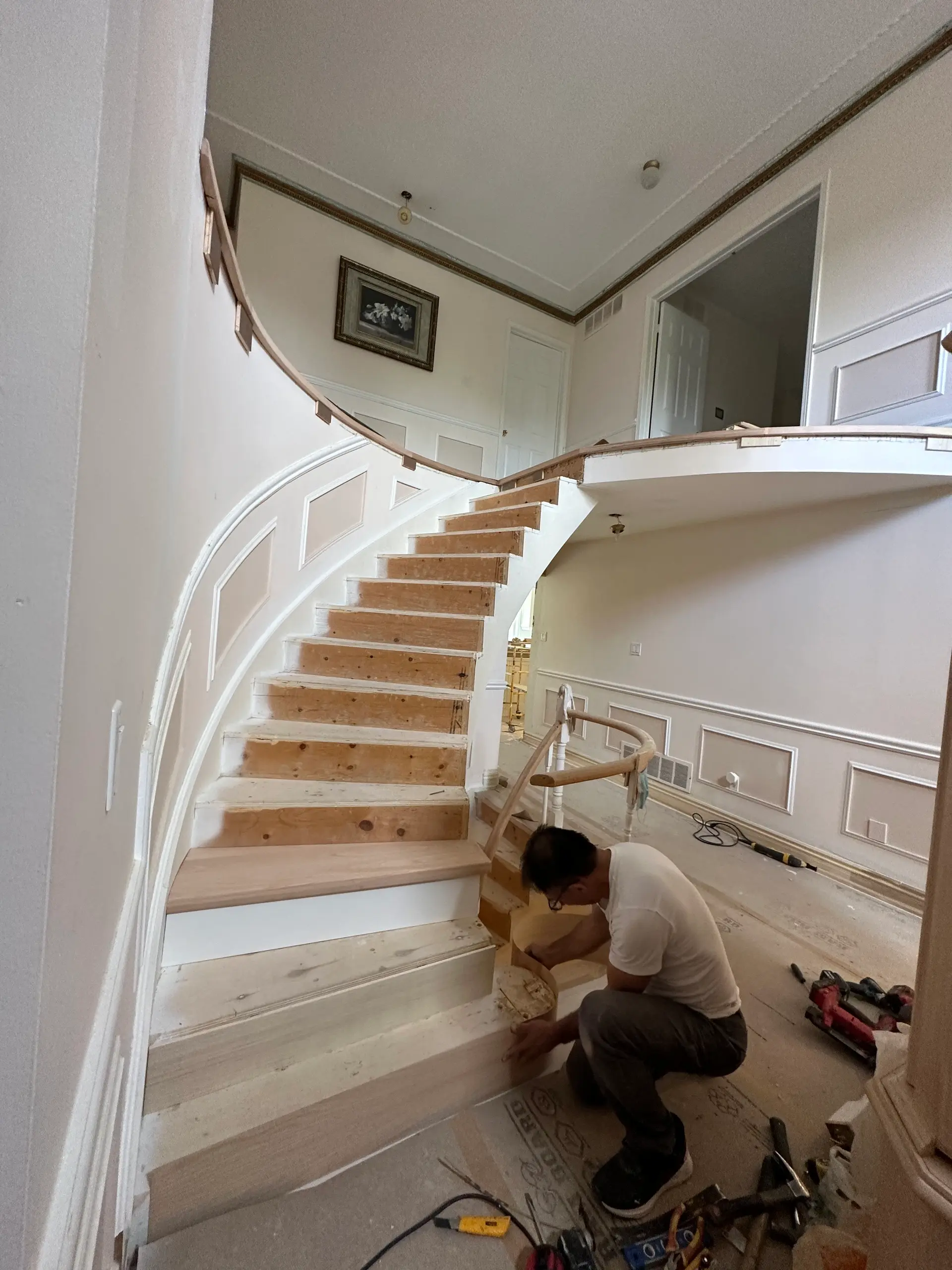
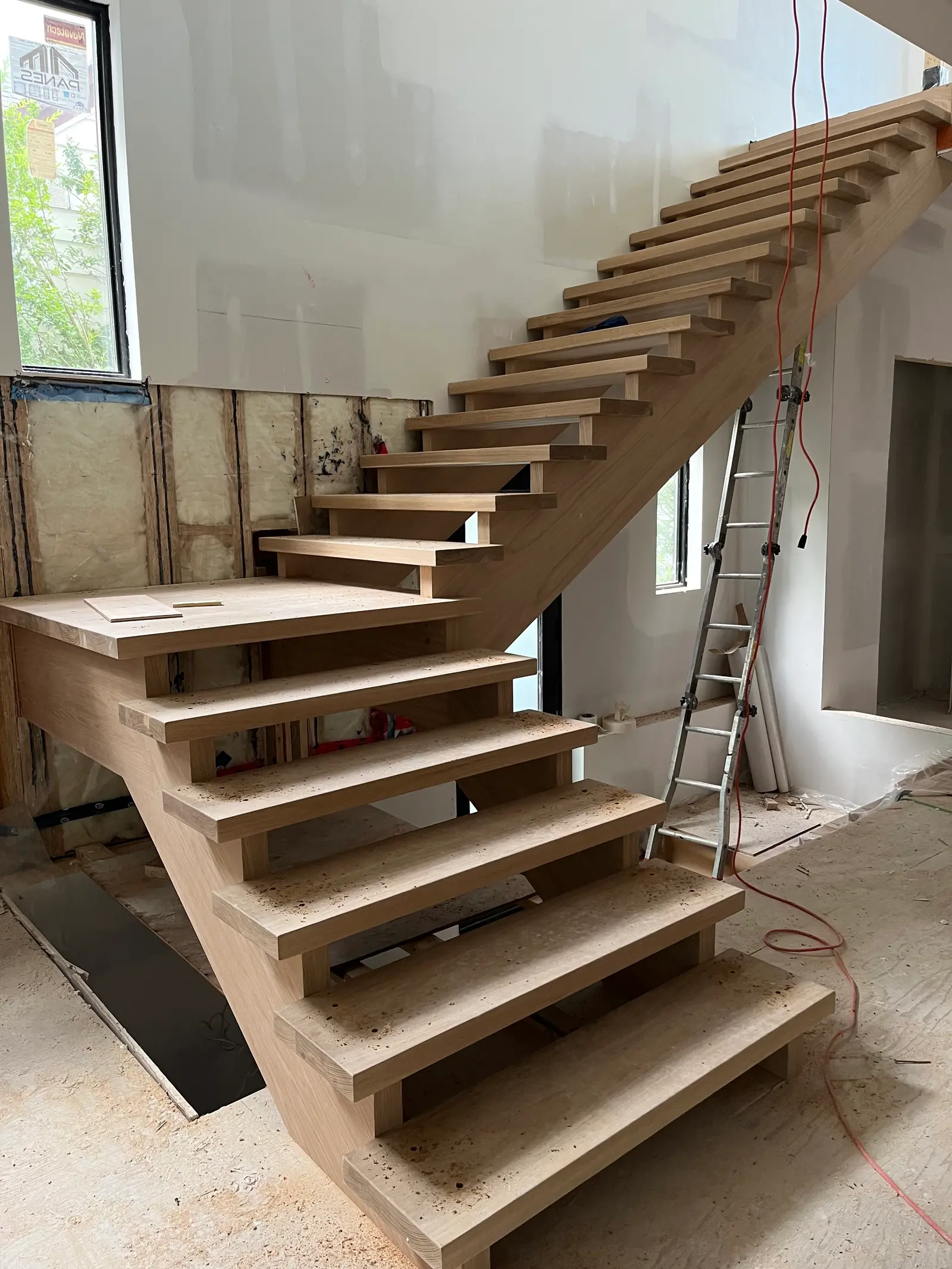
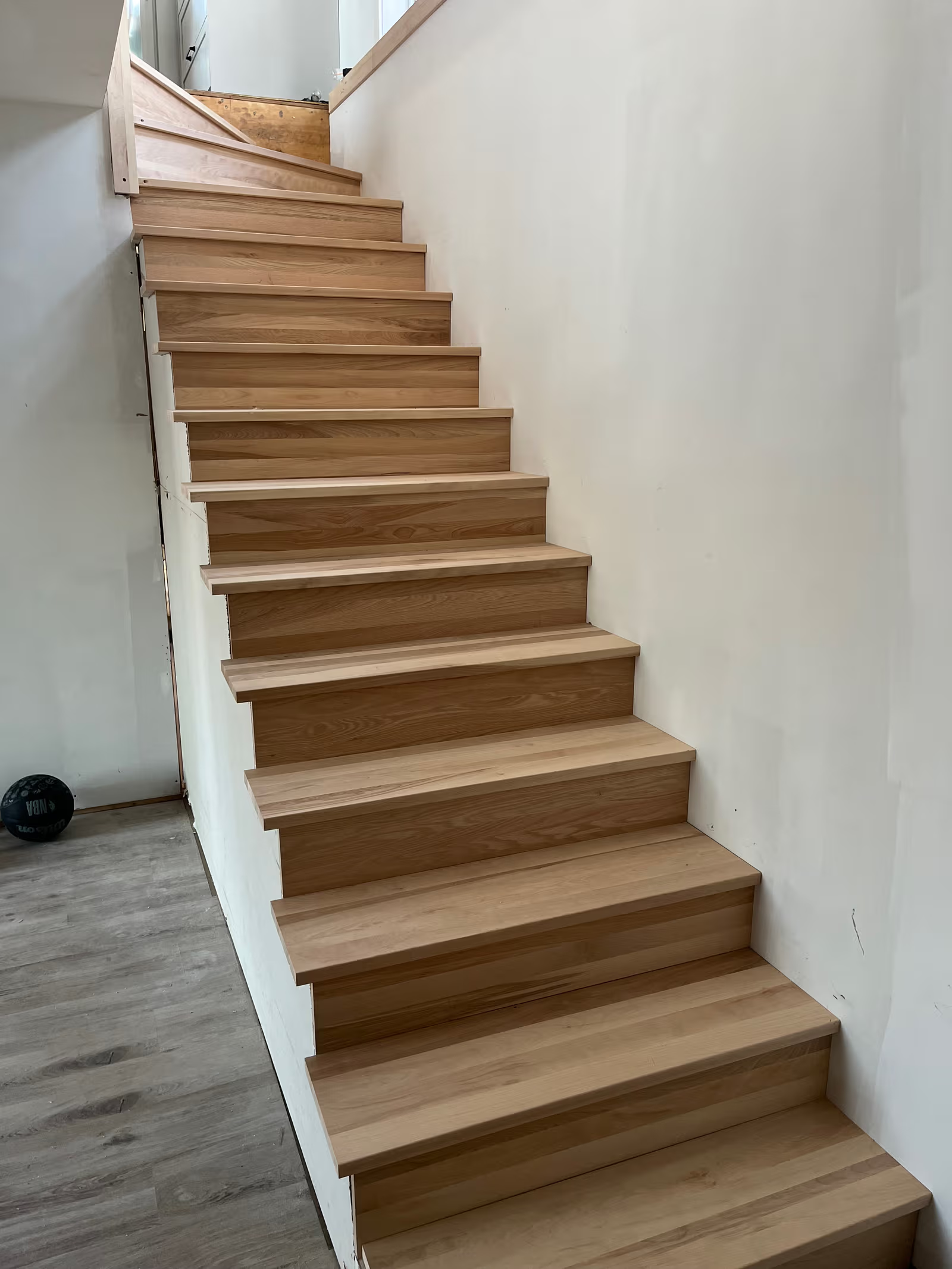
Straight staircases: The rail runs in a straight line with no change in direction, no intermediate landing, and no turn. This is the simplest and fastest installation.
Curved staircases: The rail must be custom-made to follow curves, turns, L-shaped or U-shaped layouts, or intermediate landings.
Criteria for Choosing the Right Accessibility Contractor in Quebec
Source: V&W Floors and Stairs
Buying and installing a lifting device should never be left to an amateur handyman. Since the physical safety of the user is at stake, choosing a qualified contractor for stairlift installation is one of the most important steps in your project. To avoid unpleasant surprises, it is essential to follow a rigorous quote-comparison process.
Régie du bâtiment du Québec (RBQ) Licence
In Quebec, the law is clear: any contractor carrying out lifting-device installation work must hold a valid licence issued by the Régie du bâtiment du Québec (RBQ). More specifically, the installation and maintenance of this type of device must be entrusted to a specialist with the proper licence subclass, including subclass 14.2 for lifting devices intended for people with disabilities or reduced mobility.
Asking for and verifying a contractor’s RBQ licence number provides important protections:
Public safety and standards: Mechanical work must be carried out by a contractor holding the proper licence subclass, and any reserved electrical connection work must be performed by an authorized contractor.
Financial guarantees: The RBQ licence requires a licence security bond. In the case of unfinished work, defects or eligible deficiencies, the licence security bond may provide compensation, subject to certain conditions and within the limits set by the RBQ. It is not an automatic guarantee.
Grant eligibility: Under the Home Adaptation Program (HAP), the selected contractor must hold the appropriate licences and comply with the program’s requirements.
Before signing a contract, take the time to verify the company’s status in the RBQ licence holders register.
Expertise with Local Architecture
Quebec homes have distinct architectural characteristics depending on when they were built. A good accessibility contractor should be able to demonstrate solid experience with these local realities:
Montréal plexes, including duplexes and triplexes: These homes often have very narrow interior staircases that may be steep or include tight turns to maximize living space. The contractor must be able to recommend slim rails and folding stairlift components, such as the seat, armrests and footrest, to leave enough clearance for other occupants.
Bungalows from the 1960s to the 1980s: Very common in cities such as Laval, Longueuil and Québec City, these homes often have a straight staircase leading to the basement. However, the clearance at the bottom of the stairs may be limited by a wall or door. A specialist can install a motorized hinged rail to prevent the end of the rail from becoming an obstacle on the floor.
Accessibility Grants and Financial Assistance in Quebec
Source: Menuiserie Signature DM
Adapting a home to accommodate a loss of autonomy can represent a significant investment. Fortunately, certain public programs and tax credits can help reduce the overall cost for homeowners and caregivers.
The SHQ’s Home Adaptation Program (HAP)
Administered by the Société d’habitation du Québec (SHQ), the Home Adaptation Program (Programme d’adaptation de domicile (PAD)) can provide significant financial assistance for certain adaptation work. However, when planning the work, you must verify the current status of applications on the official program page or with the SHQ, since new applications are not always being accepted. The program is designed to help a person with a disability reduce obstacles in their home, including entering and exiting the home, accessing essential rooms and carrying out daily activities.
To be eligible for the PAD, several strict criteria must be met:
Professional report: Under HAP Option 1, needs are assessed with the support of an occupational therapist, generally through the health and social services network, although it is also possible to use an occupational therapist from the private sector. Eligible work is determined based on the occupational therapist’s recommendations and the assessment of the dwelling.
Prior authorization: Important: Work cannot start before authorization is granted by the municipality or regional county municipality responsible for the file. Under HAP Option 1, any work completed or started before this authorization is not eligible for financial assistance.
Amount of assistance: Under HAP Option 1, the maximum assistance is $50,000 per eligible person. If the cost of eligible work exceeds the amount of the grant, the homeowner must pay the difference.
Tax Credit for Expenses Incurred by a Senior to Maintain Independence
Revenu Québec also offers the tax credit for expenses incurred by a senior to maintain independence. This credit may apply, under certain conditions, to costs paid to purchase, rent or install eligible goods in the principal residence of a person aged 70 or over. However, the eligibility of the equipment and the person’s situation should be verified with Revenu Québec or a tax professional.
Financial Assistance Program | Responsible Organization | Target Customer | Type of Financial Assistance |
Home Adaptation Program (HAP) | Société d’habitation du Québec (SHQ) | People with a significant and permanent disability | Maximum assistance of $50,000 per eligible person under Option 1; the homeowner pays the excess if eligible costs exceed the grant. |
Tax Credit for Expenses Incurred by a Senior to Maintain Independence | Revenu Québec | People aged 70 and over | Refundable tax credit that may apply to certain expenses paid to purchase, rent or install eligible goods intended to help a senior maintain independence. |
Typical Stairlift Installation Process
Source: Atelier F
To ensure your home adaptation project goes smoothly, a certified contractor in Quebec will typically follow a rigorous process with several key steps.
Step 1: Initial Assessment and Measurements
The contractor visits your home to assess the space. Using precision measuring tools or 3D scanners, they evaluate the exact length of the staircase, the slope angle, the clearance at the top and bottom, and the type of walls and steps, such as wood or concrete. This is the ideal time to discuss your specific needs and request a detailed quote.
Step 2: Manufacturing and Electrical Preparation
If your staircase is curved, the rail will be custom-made in a factory based on the digital measurements collected. In the meantime, if there is no electrical outlet near the staircase, the contractor, or a partner master electrician, will plan the electrical connection required to continuously power the chair’s battery charging system.
Step 3: Physical and Mechanical Installation
On installation day, the team of technicians secures the rail support legs directly to the steps, not to the wall, which helps preserve the integrity of your drywall. They then assemble the rail sections, install the motor unit, attach the chair and complete the electrical connections. For a straight staircase, this work generally takes between 2 and 4 hours. For a complex curved model, it may require about half a day.
Step 4: Safety Testing and Commissioning
Once the device is installed, the installer performs a series of rigorous tests, first with no load and then with a load. They verify that the safety sensors are working properly, so the chair stops immediately if an object, pet or child’s toy is on the stairs.
Step 5: User and Caregiver Training
Before leaving your home, the specialist takes the time to sit down with you and your caregivers to explain how to use the controls, including the joystick on the armrest and wall-mounted remotes used to call the chair from a distance. They also explain how to use the seat belt and follow simple maintenance procedures.
Ready to Make Your Home Safer?
Ensuring residential accessibility is a key part of successful and comfortable aging in place in Quebec. By choosing a qualified installer who holds the appropriate RBQ licence, you can get equipment that is better adapted to the constraints of your local architecture while making it easier to verify your eligibility for available financial assistance programs. Do not let stairs limit your independence or that of your loved ones in daily life.
To start your project with confidence and compare the best professional options near you, submit an online quote request today to find a trusted contractor in your area.
Looking for something else?
Related articles
The latest industry news, interviews, technologies, and resources.
Editorial Team
•08 Nov 2023
Your kitchen is one of the most important rooms in the home, not to mention one of the biggest investments. Between appliances, decor, and accessories, it’s crucial that you focus on functionality while keeping things clean and stylish.
Editorial Team
•08 Nov 2023
Have you finally decided to organize your garage and store away the tools that have just been piling up everywhere? Are you looking for the best storage system? If so, go for a garage storage cabinet! It’s a functional, utility cabinet that allows you to organize and secure your tools and other items. Learn more about the various types of garage storage cabinets, their features, and their advantages down below!

Editorial Team
•08 Nov 2023
While a laundry room is, first and foremost, a space designed for practical use, and its aesthetic aspect is often neglected, one shouldn’t overlook the overall appearance of the often-forgotten space to fine-tune it to the rest of the house. With this in mind, here are décor suggestions for your new laundry room.

Editorial Team
•26 Jul 2024
During those summer months when the weather is extremely hot, we try to spend most of our time outside. If we’re lucky, our homes come equipped with a backyard or some green space where we can relax. There are endless ways to enhance outdoor spaces, including certain installations that require plumbing.

Amanda Harvey
•08 Nov 2023
Being subjected to a house fire certainly brings its share of sadness and concern. Whether we’re thinking of lost memories or the work that’s required to restore our home, as well as the expenses that’ll necessarily accompany it, this is not a time of celebration.