What equipment is needed for a well-functioning construction site?
By Editorial Team
Updated on August 13, 2026
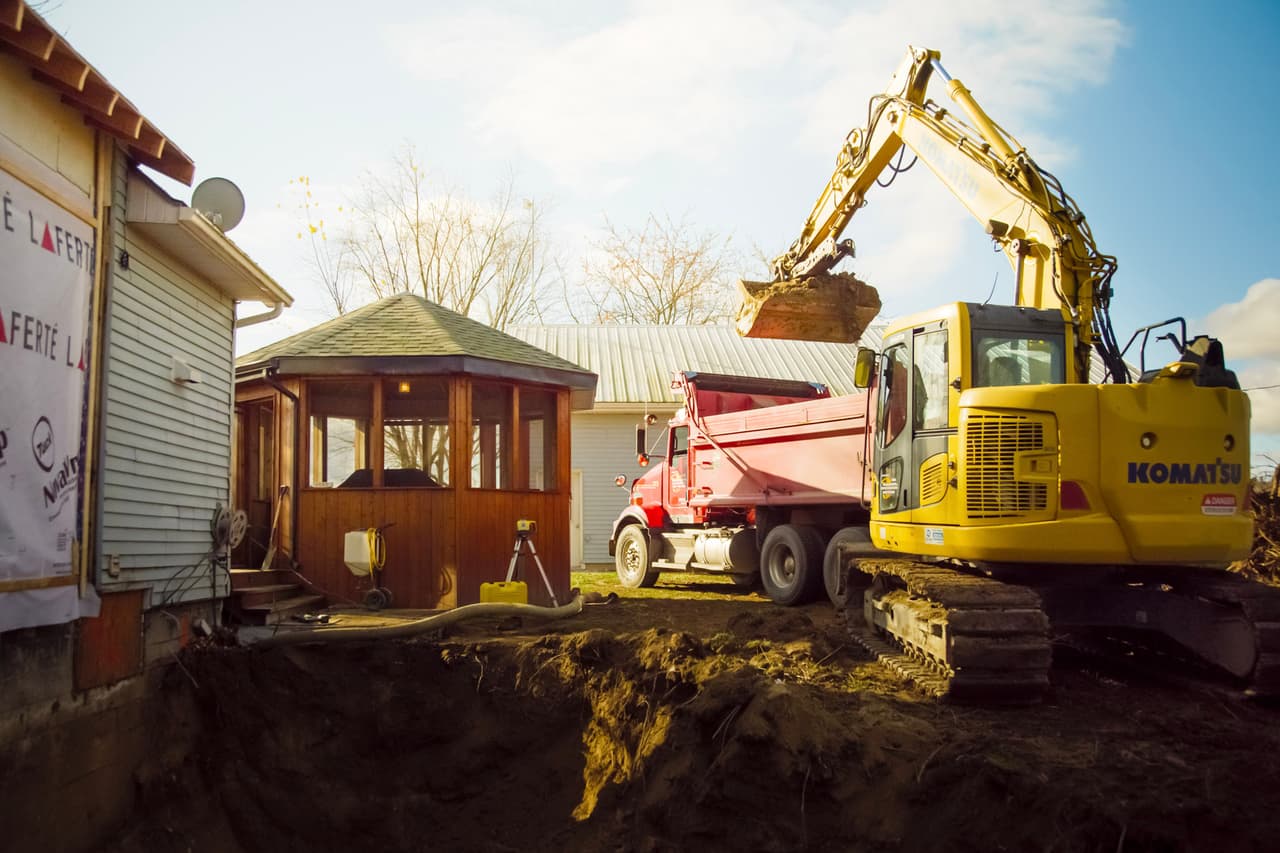
During the busiest renovation months, having the right construction site equipment can help contractors manage demanding schedules, coordinate crews and subcontractors, and keep projects moving efficiently. Choosing equipment that matches the work can also reduce delays and help maintain service quality when workloads peak.
Understanding what equipment is needed for a construction site is especially important when contractors are trying to complete projects before winter. This article covers the main categories to plan for, including heavy equipment, general tools, safety gear, and site office essentials.
Main Types of Construction Equipment
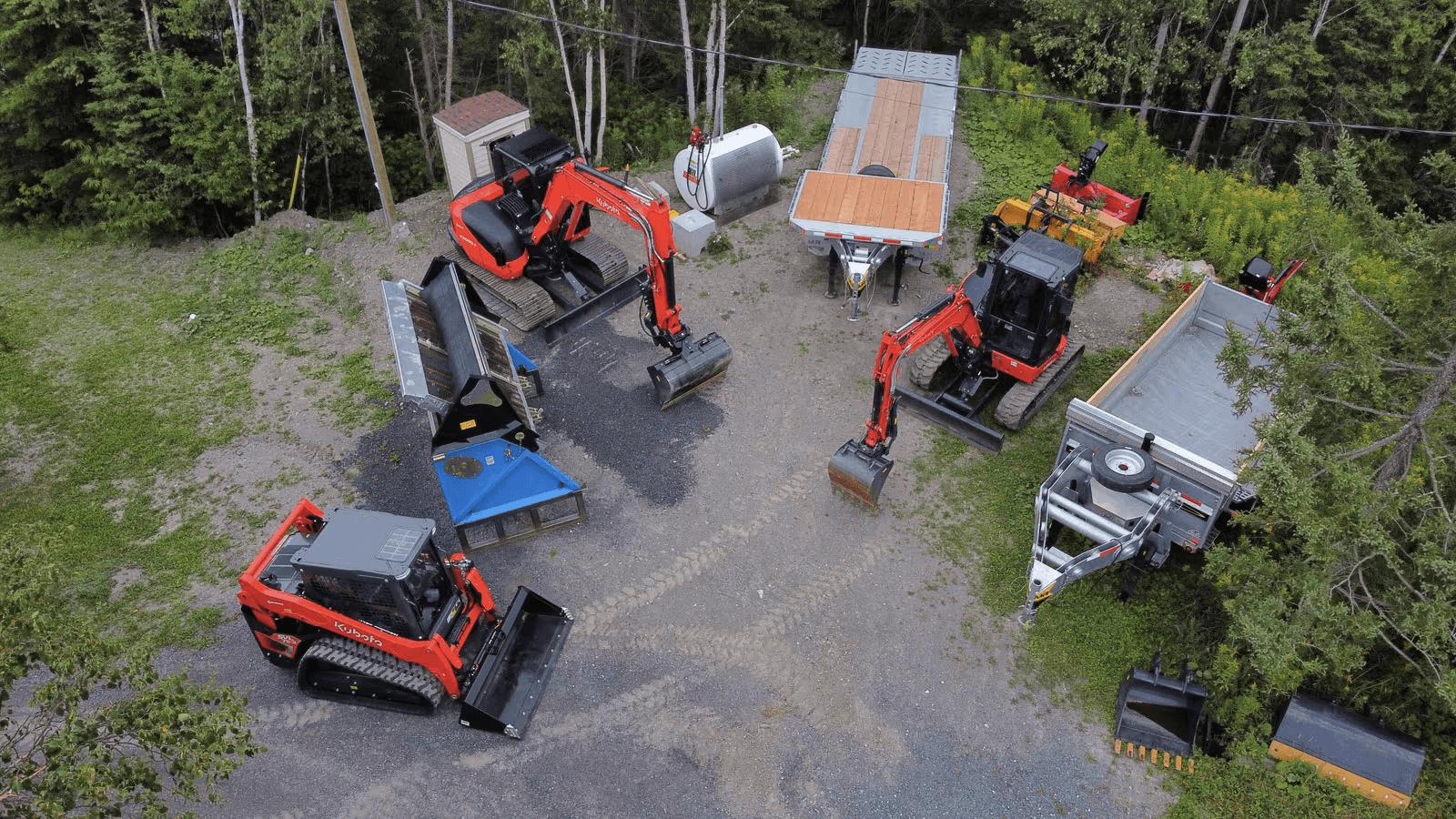
Source: Chic-Chocs Excavations inc
Most construction site equipment falls into four broad categories:
Heavy equipment and material-handling machinery
Hand tools, power tools, and general site equipment
Safety equipment and personal protective equipment (PPE)
Site office and administrative equipment
The exact combination should be established during project planning rather than using the same equipment list for every job.
Heavy Equipment for Construction Sites
Heavy equipment is generally selected according to the work being performed, available space, ground conditions, and materials that need to be moved.
Excavators
Excavators are commonly used for excavation, foundations, trenching, demolition, grading, and material handling. Different machine sizes and attachments allow contractors to adapt them to residential, commercial, and civil projects.
Skid Steers and Loaders
Skid steer loaders are useful where manoeuvrability is important. They can move soil, aggregates, demolition debris, and other materials, while larger wheel loaders are better suited to high-volume material handling.
Forklifts and Telehandlers
Forklifts, all-terrain forklifts, and telehandlers help move pallets and construction materials. Telehandlers are especially useful when loads must be placed at height or across uneven terrain.
Cranes and Lifting Equipment
Cranes and other lifting equipment may be required for structural steel, precast concrete, mechanical equipment, roofing materials, and other heavy components.
Lifting equipment must be appropriate for the load and site conditions, and applicable operator, inspection, and provincial safety requirements must be followed.
Specialized Civil and Infrastructure Equipment
Large civil and road projects can also require equipment such as:
Bulldozers
Graders
Asphalt pavers
Compactors
Dump or flatbed trucks
These machines are usually unnecessary for smaller residential projects.
General Tools and Site Equipment
Even projects using heavy machinery still rely on smaller equipment throughout the workday.
Common construction tools and equipment include:
Drills, impact drivers, saws, grinders, and other power tools
Hammers, pry bars, screwdrivers, wrenches, and hand tools
Measuring tapes, laser levels, measuring wheels, and layout tools
Wheelbarrows, carts, dollies, and pallet jacks
Ladders, scaffolding, and approved work platforms
Concrete mixers and concrete-finishing equipment
Welding equipment where required
Power generators and approved extension equipment
Jobsite lighting
Communication radios
Tool belts and secure tool storage
Electrical tools and equipment should be suitable for their intended use and inspected for damage before use. Contractors should also follow manufacturers' operating and maintenance instructions.
Safety Equipment and PPE
Safety equipment should be chosen according to the hazards identified on the project and the requirements in the province or territory where the work takes place.
Depending on the work, construction site PPE can include:
Hard hats
CSA-certified protective footwear
High-visibility clothing
Safety glasses or other eye protection
Work gloves
Hearing protection
Respiratory protection
Fall-protection equipment
Additional site safety equipment can include first aid supplies, fire extinguishers, barriers, warning signs, and emergency equipment.
The required first aid supplies and arrangements vary according to factors such as the number of workers, workplace hazards, and applicable occupational health and safety rules. Contractors should keep spare PPE available when practical and replace damaged equipment promptly.
Site Office and Administrative Equipment
A site office does not need to be elaborate, but supervisors need a secure place to coordinate work and maintain essential information.
Typical administrative equipment includes:
Laptop, tablet, or computer
Mobile phone and communication equipment
Printer or scanner when paper documents are required
Charging equipment
Project plans, specifications, and schedules
Site diary or digital project log
Notice board
Worker and visitor records where required
Training and certification records
Hazard assessments and safe-work procedures
Equipment inspection and maintenance records
Emergency contacts and procedures
Safety data sheets for hazardous products used on site
Depending on the project and jurisdiction, contractors may also need documentation covering utility locations, environmental or hazardous-material assessments, permits, engineering information, and other project-specific requirements.
Equipment Needs by Project Type
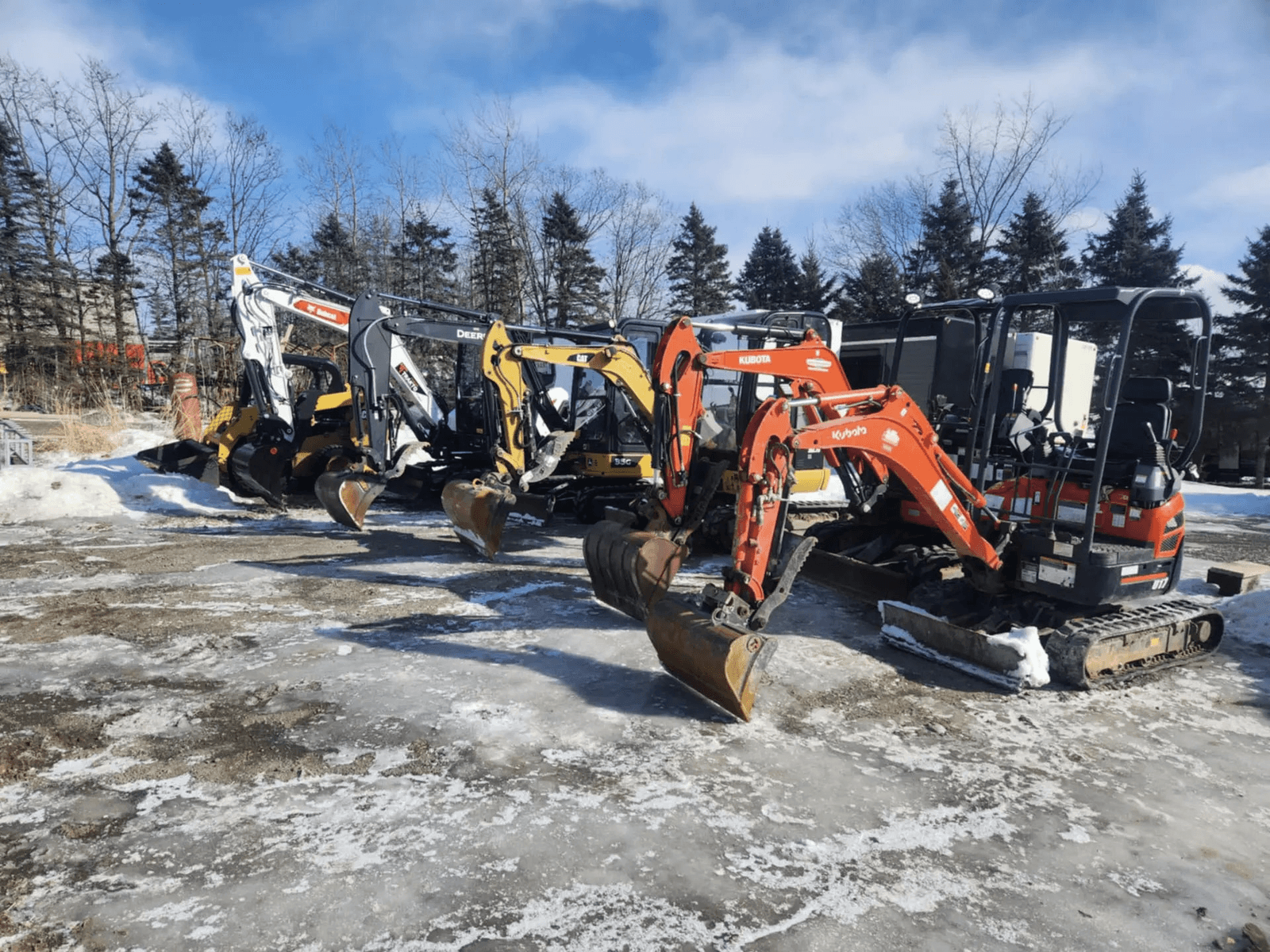
Source: Davico excavation
Residential Construction
Residential projects often rely on compact equipment that can operate in restricted areas. Skid steers, mini excavators, concrete mixers, ladders, scaffolding, power tools, and material-handling equipment are common choices.
Commercial Construction
Commercial projects may require larger excavators, telehandlers, forklifts, cranes, aerial work platforms, generators, and more extensive material-handling systems.
Industrial Construction
Industrial work can require specialized lifting, welding, access, mechanical, and material-handling equipment. Equipment compatibility with the materials, processes, and site hazards becomes particularly important.
Civil and Infrastructure Construction
Road, sewer, utility, and other infrastructure projects commonly require excavators, bulldozers, graders, loaders, compactors, trucks, and asphalt equipment.
How to Choose the Right Construction Equipment

Source: Reno Quotes
Before selecting equipment, consider:
Project requirements: Match each machine or tool to a defined task.
Project size: Avoid bringing oversized equipment to a small site or relying on undersized machinery for high-volume work.
Site access: Check gates, overhead clearances, turning space, ground conditions, slopes, and load restrictions.
Material compatibility: Choose equipment and attachments designed for the material being handled.
Timeline: Equipment availability and productivity can affect scheduling.
Operator requirements: Confirm that workers have the training or qualifications required for the equipment and jurisdiction.
Safety requirements: Review hazards before choosing machinery, access equipment, and PPE.
Maintenance and downtime: Consider service availability and the consequences of an equipment breakdown.
Should contractors buy or rent construction equipment?
Buying generally makes more sense for equipment that will be used frequently across many projects. Renting is often better for short-term work, specialized equipment, or contractors who want to limit upfront investment and preserve cash flow. High utilization can eventually make ownership more economical, but there is no universal break-even point.
The purchase price or rental rate is only part of the cost. Contractors should budget for:
Delivery and pickup
Fuel or charging
Attachments and upgrades
Insurance
Storage
Maintenance and repairs
Operator costs
Downtime
For owned equipment, lifecycle costs can also include financing, replacement, and eventual resale value. Equipment that spends long periods unused may cost more to own than its purchase price suggests.
Before a project starts, include equipment costs alongside labour and materials, with an allowance for transportation, unexpected downtime, and replacement needs. Attachments such as buckets, forks, or augers should also be included in the budget rather than treated as an afterthought.
Before buying or renting, confirm what the quoted price includes, delivery and pickup charges, rental duration and overtime or late-return terms, insurance requirements, servicing, and what happens if the machine breaks down. Rental conditions vary by supplier, so reviewing the agreement before committing can prevent unexpected costs.
Equipment Inspection and Maintenance
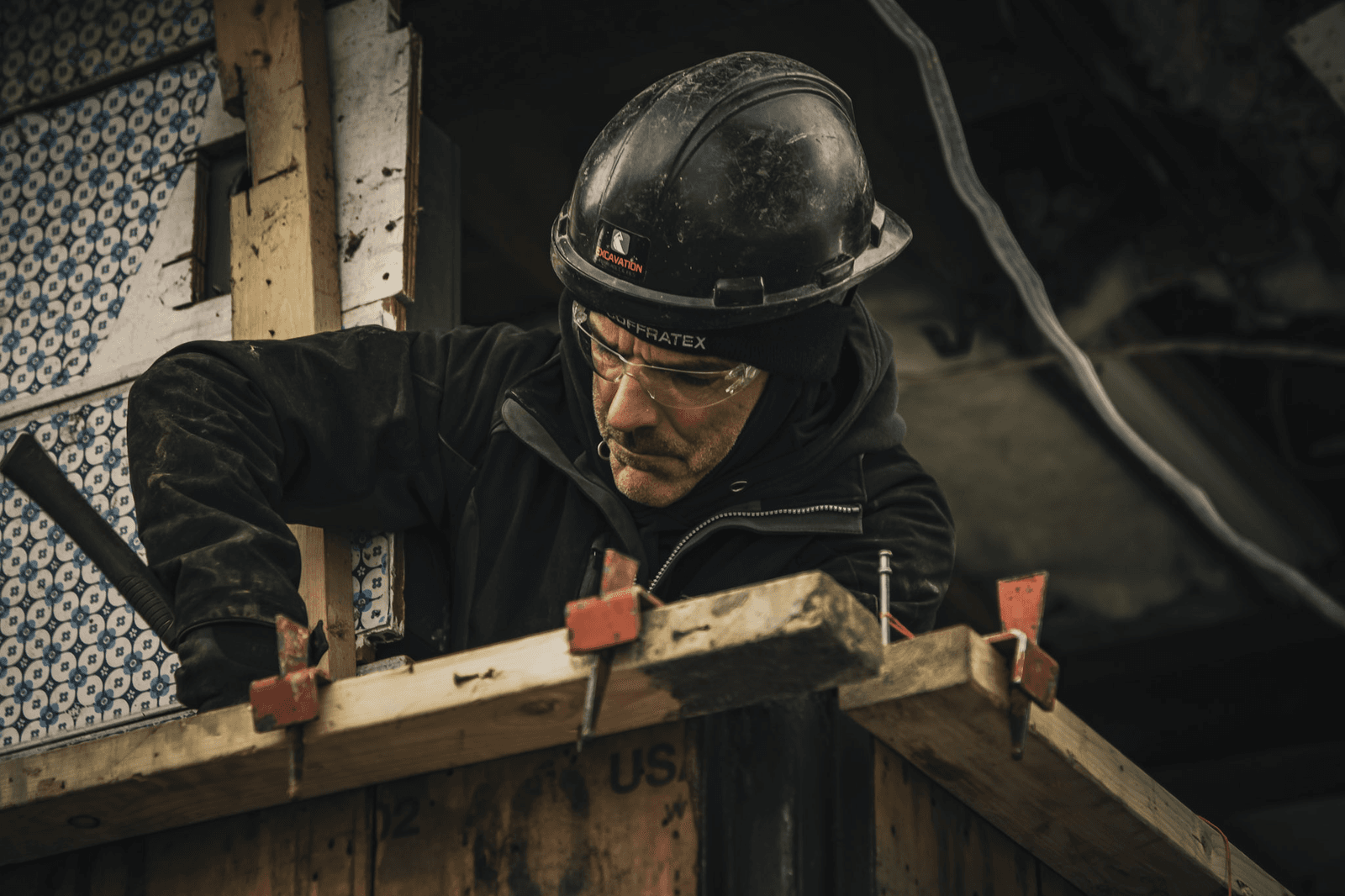
Source: DEMCO Canada
Construction equipment should be inspected regularly and maintained according to the manufacturer's instructions and applicable regulations. Power tools should be checked for damaged housings, cords, batteries, guards, and other defects before use.
Mobile equipment may also be subject to required pre-use or pre-shift inspections depending on the jurisdiction and equipment involved. Unsafe equipment should be removed from service until it can be properly assessed and repaired.
Toolbox talks can reinforce safe equipment use, but they do not replace required worker training, documented procedures, or equipment-specific instruction.
Planning a Well-Equipped Construction Site
The best construction equipment list is one built around the project rather than copied from another jobsite. Contractors should identify each operation, the materials being handled, access limitations, safety hazards, and required productivity before deciding what equipment belongs on site.
Combining suitable machinery with reliable tools, appropriate PPE, organized documentation, and preventive maintenance helps crews work more efficiently while supporting a safer and better-managed construction site.
Frequently Asked Questions
What equipment is essential on most construction sites?
Most sites require hand and power tools, measuring equipment, material-handling equipment, appropriate PPE, first aid supplies, communication equipment, and basic administrative tools. Heavy machinery depends on the work being completed.
What heavy equipment is commonly used in construction?
Common machines include excavators, skid steers, loaders, forklifts, telehandlers, cranes, bulldozers, and graders. Larger infrastructure projects may also require compactors, asphalt pavers, and trucks.
Is it better to buy or rent construction equipment?
Buying can make sense for equipment used regularly across many projects. Renting can reduce the upfront investment when a machine is needed temporarily or for specialized work. Compare utilization, rental duration, transportation, maintenance, storage, and downtime before deciding.
How often should construction equipment be inspected?
Inspection requirements vary by equipment and jurisdiction. Contractors should follow applicable regulations and manufacturer instructions, perform required pre-use or pre-shift checks, and maintain appropriate inspection and maintenance records.
Looking for something else?
Related articles
The latest industry news, interviews, technologies, and resources.

Editorial Team
•10 Sep 2026
Exposure to crystalline silica is so dangerous that the CNESST has decided to instill a “zero tolerance” policy against contractors. In light of the hazardous aspect of this mineral, the administration is far from exaggerating regarding actions taken.

Editorial Team
•26 Aug 2025
One cannot simply launch a company and say that they are a renovation contractor overnight. In fact, this is a field of work that requires great preparation and above all, plenty of motivation. The beginnings represent the most difficult period because you will have to convince potential customers that you know what you are doing, being that a lack of experience is perceived as a handicap for those who embark on this adventure.
Amanda Harvey
•08 Nov 2023
When building a new home, air barriers are not always part of the equation. However, air barriers are crucial structures that assist in aiding with energy efficiency as well as maintaining a comfortable and cozy home environment.
Léa Plourde-Archer
•23 Sep 2026
Are your living quarters feeling cramped? Do you find yourself dreaming of an extra room or a whole new level to expand your space? Next thing you know, you’re setting these home addition plans in motion, looking at options and prices. If you want to take on this kind of home improvement project, we’re here to provide answers to some of the most pressing questions you may have.
Amanda Harvey
•13 Oct 2026
Painting kitchen cabinets is the highest-impact weekend project in a kitchen, and the cheapest way to make an outdated room look current. A professional refinish costs $4,000 to $6,000, while doing it yourself costs $300 to $600 in materials.